• Link to X
  • Link to Facebook
  • Link to Instagram
  • Link to TikTok
  • Link to Youtube
  • About
    • About Us
      • President
      • Board of Directors
      • Board of Advisors
      • Financials
      • Our Methodology
      • Success Tracker
      • Contact
  • Act Now
    • 30 Ways to Help
      • Email Congress
      • Call Congress
      • Volunteer
      • Courses & Certificates
      • Be a Donor
    • Internships
      • In-Office Internships
      • Remote Internships
    • Legislation
      • Politics 101
  • The Blog
  • The Podcast
  • Magazine
  • Donate
  • Click to open the search input field Click to open the search input field Search
  • Menu Menu

Archive for category: Activism

Information and stories on social activism.

Activism, Global Poverty

Lauded Kenyan Author: “I Am a Homosexual, Mum”


Renowned Kenyan author Binyavanga Wainaina, a 43-year -old man, has come out stating that he is gay, becoming one of the most well-known Africans to ever do so publicly. He published a piece on the websites AfricaisaCountry.com and 
Chimurenga.co.za called “I am a homosexual, mum,” in which he imagines telling his mother on her deathbed that he is gay.

“Nobody, nobody, ever in my life has heard this. Never, mum. I did not trust you, mum. And. I. Pulled air hard and balled it down into my naval, and let it out slow and firm, clean and without bumps out of my mouth, loud and clear over a shoulder, into her ear. ‘I am a homosexual, mum,’” Wainaina writes.

Wainaina’s coming out coincides with the debate and passage of stringent anti-gay laws in Nigeria and Uganda, as well as existing laws prohibiting homosexuality in most African nations, including his native Kenya.

In fact, LGBT Kenyans can be put in jail for up to ten years if they are convicted of participating in homosexual acts, though the law is not often applied. Kenya’s culture remains conservative in regards to homosexuality.

In Nigeria, the government passed a ruling outlawing gay marriage, gay organizations and attending social or political gatherings related to gay causes. Moreover, Uganda has been mired in international controversy over its harsh anti-gay rhetoric and laws.

Not all African nations, however, forbid homosexuality. In a groundbreaking move, South Africa’s 1997 constitution legalized gay marriage.

It is within this African cultural framework that Wainaina has received criticism and praise, though he says the support has been overwhelming.

Wainaina took to Twitter, saying, “Ten million thank yous to the thousands of Africans and others who have given all kinds of public love, [and] support. We live in a beautiful continent.”

He elaborated in an interview with The Global Post, saying that, “It seems like doom and gloom, but my feeling is that the law is a reaction to a thing that they know has traction. And that’s a good thing. There’s no way to put that shit back in the box.”

Wainaina had contemplated coming out publically sooner, especially while he tried to reconcile his relatively free lifestyle in Nairobi and knowing that other LGBT Africans were being persecuted.

As a frequent traveler to Nigeria, Wainaina has sharply condemned the country’s new anti-gay marriage law, saying it “shames us all.” He also states that visiting the country now that he has come out will be an “adventure.”

To those who argue that homosexuality is “un-African,” Wainaina also has sharp words. He points to deeply entrenched puritan values stemming from Victorian era churches, as well as propaganda and fear-mongering as the culprits behind the creation of the fallacious idea that homosexuality is wrong, unnatural, and un-African.

The 2002 Caine Prize-winning author is poised to embrace his role in fighting for the rights of LGBT Africans, and he believes people are ready.

“People who live in societies where you are being lied to a lot value truth,” he states. “I’m a pan-Africanist; I belong to this continent.”

– Kaylie Cordingley

Sources: BBC, Global Post, Huffington Post, The Guardian
Photo: Internaz
January 22, 2014
https://borgenproject.org/wp-content/uploads/borgen-project-logo.svg 0 0 Borgen Project https://borgenproject.org/wp-content/uploads/borgen-project-logo.svg Borgen Project2014-01-22 01:32:192024-05-26 23:08:36Lauded Kenyan Author: “I Am a Homosexual, Mum”
Activism, Advocacy, Gender Equality, Global Poverty, Inequality

Forbes’ Inspiring 30 Under 30

forbes’_inspiring_30_under_30
Forbes released its 2014 list of “30 Under 30 who are Changing the World,” which recognizes 30 notable young people in 15 different categories such as education, finance, science and Hollywood who are making a big impact in their chosen field.

Forbes recognized 30 inspiring people in the Social Entrepreneur category who are working in various fields such as girls’ education, rural agricultural development, mobile phone access in remote locations and the creation of online giving platforms.

Those honored were a part of a pool of nominated people who were then selected by philanthropist and former-eBay president Jeff Skoll, Cheryl Dorsey of Echoing Green — which funds social entrepreneurs — and Randall Lane, Editor-in-Chief of Forbes.

Some notable entries in Forbes’ Inspiring 30 Under 30: Social Entrepreneurs include the following people.

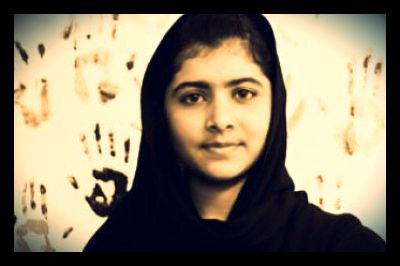
Malala Yousafzai, 16, and Shiza Saheed, 24, joined forces in 2012 after Malala was shot in the head by the Taliban in retribution for her vocal stance on the importance of girls’ education. Saheed became Malala’s “chief strategist” for how Malala’s courage and activism could be utilized on a broad scale to create lasting global change.

They cofounded the Malala Fund, have raised $400,000 in grants from the World Bank and from Angelina Jolie and Brad Pitt, and have become a powerful symbol of the movement for girls’ education and female empowerment around the world.

Kennedy Odede, 29, grew up in the Kenyan slum of Kibera where he was called to action by the community’s desperate conditions, especially for women and girls. He founded the organization Shining Hope for Communities (SHOFCO), which runs the tuition-free Kibera School for Girls, a health clinic, community center, clean water initiatives and revenue-generating activities for adults in the community.

SHOFCO’s overarching idea is that if community development can be visibly linked to gender equity initiatives, people will support the empowerment of girls.

Odede and SHOFCO have been recognized by the Clinton Global Initiative and the Newman’s Own Foundation and will be featured in a forthcoming women’s rights documentary by New York Times contributor Nicholas Kristof.

Esra’a Al Shafei, 27, is the founder of Mideast Youth, which promotes social justice, political dissent, and open journalism in the Middle East and North Africa. Further, the organization runs online platforms for activist musicians (https://mideastunes.com/) and for young members of the LGBT community in the region.

Bryan Baum, 24, is the co-founder of Prizeo, which raffles various experiences with A-listers such as Justin Bieber, One Direction, Muhammad Ali and Alicia Keys in order to benefit non-profit organizations. Prizeo has to-date raised $3 million for charities, including St. Jude, Typhoon Haiyan Relief and Invisible children.

Talia Leman, 18, was only ten years old when she raised $10 million for Hurricane Katrina relief. Since then she has created RandomKid, which facilitates the efforts of young people who want to make an impact on the world.

Ten cents of every fundraised dollar on the site goes into a general pool for future efforts. The site has engaged projects from over 12 million young people from 20 countries.

– Kaylie Cordingley

Sources: Prizeo, Forbes, Shining Hope for Communities, RandomKid, Malala Fund
Photo: NWHM

January 21, 2014
https://borgenproject.org/wp-content/uploads/borgen-project-logo.svg 0 0 Borgen Project https://borgenproject.org/wp-content/uploads/borgen-project-logo.svg Borgen Project2014-01-21 18:55:502024-05-25 00:30:39Forbes’ Inspiring 30 Under 30
Activism, Advocacy, Global Poverty

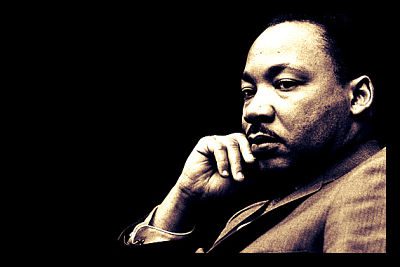
10 Facts about Martin Luther King, Jr.

MLK
Martin Luther King, Jr. was an American hero and civil rights activist.  His teachings are still an inspiration today and his influence is immortalized in a national holiday, Martin Luther King, Jr. Day. Below are some interesting facts about this great leader:

1. At 35 years old, Martin Luther King, Jr. was the youngest man to have ever received the Nobel peace prize. Currently Tawakkol Karman of Yemen is the youngest winner, at 32.

2. Dr. King worked for Economic Equality, not just civil rights. After the passage of the 1964 Civil Rights Act and the 1965 Voting Rights Act, Dr. King began the Chicago campaign. It targeted the economic reality of segregation and focused attention on the plight of the urban poor in the north.

3. Martin Luther King, Jr. improvised entire parts of the “I Have a Dream” speech, including the famous “dream” passage. It was edited right up to the moment Dr. King began speaking.

4. Dr. King is the only non-president to have national holiday dedicated in his honor and also the only non-president memorialized on Washington D.C.’s Great Mall.

5. In 1963, Dr. King was named Time Magazine’s Man of the Year. King garnered a lot of attention that year for leading the March on Washington and delivering his famous “I Have a Dream” speech.

6. While at Crozer Theological Seminary in Pennsylvania, Dr. King was elected president of his senior class, which was predominately white.

7. His Seminary Professor gave him a C+ in a Public speaking course! King was renowned for his great public oration, but even he didn’t master the skill over night.

8. Many Civil Rights Activists did not support the 1963 “March on Washington for Jobs and Freedom.” Some leaders, such as Malcolm X and Storm Thurmond, held different views on the civil rights movements and, at times, disagreed with Dr. King’s approach.

9. Martin Luther King made an impact even while in jail. After being detained for defying an injunction against protests in Birmingham, Dr. King wrote his “Letter from Birmingham Jail.” It detailed reasons for acting to change civil rights in Birmingham and around the country and became a monument of the Civil Rights Movement.

10. Mahatma Gandhi and the principle of non-violent action heavily influenced Dr. King. King was introduced to the ideology while at a lecture given in Philadelphia by the president of Howard University.

Martin Luther King, Jr. firmly believed that everyone, regardless of their background, should receive equal treatment under the law and have an opportunity to live, as well as receive education and work without being discriminated against.  This is a message we must remain committed to in our fight against the global inequality that characterizes poverty in the world today.

– Martin Levy

Photo: Richton Park Library
Sources:
Constitution Center: Five Facts about Martin Luther King, Jr, The King Center, BBC, NobelPrize.org

January 20, 2014
https://borgenproject.org/wp-content/uploads/borgen-project-logo.svg 0 0 Borgen Project https://borgenproject.org/wp-content/uploads/borgen-project-logo.svg Borgen Project2014-01-20 04:00:412024-05-26 23:16:1910 Facts about Martin Luther King, Jr.
Activism, Advocacy, Food & Hunger, Food Aid, Foreign Aid, Global Poverty, Migration, Nonprofit Organizations and NGOs, Philanthropy, Poverty Reduction, Refugees and Displaced Persons

Heavyweight Helps Syrian Refugees

evander
Evander Holyfield, former world heavyweight boxing champion, is taking on an even greater role in helping displaced communities of the Syrian refugee crisis.

On November 13, Holyfield announced that he would be working to aid the alleviation cause for an estimated of 6,500 refugees fleeing from the war-torn Syrian nation, those of whom have settled in Bulgaria. During the announcement, Holyfield noted, “Somebody helped me and that gives me the opportunity to help someone else.”

The refugee crisis that has taken shape out of the Syrian civil war has become staggering. It’s estimated that 9 million Syrians have been displaced out of a population of 23 million.  Syrians are settling in nearby countries such as Jordan and Turkey, most of where large camps have drawn the majority of foreign assistance — muting attention for the relatively small amount that has ended up in Bulgaria.

Holyfield and the Global Village Champions Foundation, the organization where he works as a Goodwill Ambassador, hope to raise awareness and deliver support for these refugees. To future add to the impact of celebrities bridging successful traction to raise awareness, the head of the Global Village Champions Foundation is musician, Yank Barry, from the 1960s band “The Kingsmen.”

The pairing might seem odd, but they are united in their hope to make the lives of the Syrian refugees at least somewhat easier.  In an interview with CNN, Holyfield stated, “at some point in time, when you leave this earth… they’ll say: What did you do for the least of them?”

Yank Barry may not be as well known in modern pop culture, but he has been actively philanthropic in recent years.  Barry founded the Global Village with Mohammed Ali in 1995, and they worked together until Holyfield took Ali’s place within the organization in 2012.  Since the founding of the organization, it has sent out 900 million meals to the needy around the globe and, according to Barry, including “5,000 tons of food to (Syrian) camps” since last year.
https://www.youtube.com/watch?v=VEInSPRIVDY

During the 1990s, Holyfield’s biggest worries were Mike Tyson’s left hook and how he would retake a heavyweight championship belt that he ended up winning five separate times.  Now, he has taken it upon himself to help the world community that he once entertained.  While recent reports have claimed that Holyfield has not retained the fortune he accumulated over the course of his boxing career, his reputable standing as a celebrity can still help causes for those that never had the opportunities he did.

While the help from private foundations like the Global Village is welcomed and inspiring for others to emulate, the global community still has plenty of work to do.  The UN says that the number of Syrian refugees registered in various EU countries ranks over 62,000 with more likely to come.  With so many of them looking for ways to get by, the hungry continue to appreciate the influencers like those in the U.S. for the help that such refugee communities could barely survive without.

– Eric Gustafsson

Sources: Fox News, CNN, Huffington Post
Photo: Vintage 3D

January 19, 2014
https://borgenproject.org/wp-content/uploads/borgen-project-logo.svg 0 0 Borgen Project https://borgenproject.org/wp-content/uploads/borgen-project-logo.svg Borgen Project2014-01-19 01:41:142024-05-26 23:01:29Heavyweight Helps Syrian Refugees
Activism, Global Poverty, Nonprofit Organizations and NGOs

How to Start a Foundation

How to start a foundation
Starting a business is arguably one of the great American dreams conjured in the minds of many. Combining the freedom to be your own boss and the ability to pursue a passion to the fullest lures many to become entrepreneurs. The same can be said for those who want to start a foundation, social enterprise or a nonprofit organization. There are many parallels between a for-profit venture and a nonprofit one, such as possessing working knowledge of laws and creating an organizational structure. Perhaps the largest difference comes in the core mission; nonprofits work with their communities in mind rather than their pocketbooks.

So how do you start a foundation? NOLO.com explains that incorporating, similar to starting a for-profit business, is an initial and crucial step. Next comes filing for nonprofit status with the federal government, specifically the Internal Revenue Service (IRS). A piece from Entrepreneur makes it clear that while filing for this special tax-exempt, 501(c) 3  status is made easier with help from an attorney, individuals can complete the process themselves.  Hurwit & Associates, a Newton, Mass. law firm that specializes in nonprofit law, provides the filing requirements for each state. Additionally, there are professional services like legalzoom.com that specialize in helping potential entrepreneurs start their firms and offer an easy three step process wherein they complete and send the nonprofit paperwork to you. The cost is highly agreeable versus hiring an attorney and starts at $99.

Obtaining 501(c) 3 status is contingent upon completing IRS Form 1023 and can be a difficult process. NOLO contends that the best time to file that form is “…within 27 months of the date you file your nonprofit articles of incorporation.  If you file within this time period, your nonprofit’s tax exemption takes effect on the date you filed your articles of incorporation…”  The 1023 Form itself is made up of 11 parts in which you disclose the full structure of your venture.

Entrepreneur, advises from Jeff Hurwit of Hurwit & Associates for the next step, “The foundation must be governed by a set of bylaws…provisions for the organization’s governance and board selection process, general decision-making, required meetings and conflict-of-interest policies.  GrantSpace.org provides a good collection of bylaws information and samples.” The following steps involve being very selective and discerning in who to award foundation money to and building a strong board of directors. The board might ideally be composed of individuals who are considered experts in their field and therefore would lend credibility to decision making and the overall donation and award process. Last, the organization must practice good money management to remain viable and sustainable.  This includes strong fundraising efforts.

Chris Guillebeau, entrepreneur and New York Times bestselling author of The $100 Startup: Reinvent the Way You Make a Living, Do What You Love, and Create a New Future, contends that following one’s passion can be done today with very little money. Speaking to Forbes, Guillebeau explains his experiences meeting fellow entrepreneurs who began with little planning and startup cash, advising young people to take a chance and follow their passion. Specifically, he advises specifying ideas, acting now, networking heavily and committing to growth.

Going into business for oneself or starting a foundation are nearly synonymous at their inception. Both involve paperwork, commitment and proper management in all phases. With a plan, a little cash and unwavering passion for a cause, getting a venture off the ground is definitely something doable for anyone.

– Dave Smith

Sources: NOLO, Entrepreneur, LegalZoom, Forbes
Photo: Giphy.com

January 15, 2014
https://borgenproject.org/wp-content/uploads/borgen-project-logo.svg 0 0 Borgen Project https://borgenproject.org/wp-content/uploads/borgen-project-logo.svg Borgen Project2014-01-15 20:13:012024-05-25 00:18:19How to Start a Foundation
Activism, Advocacy, Children, Developing Countries, Gender Equality, Global Poverty, Slums, Women & Children, Women and Female Empowerment

Katherine Boo’s Behind the Beautiful Forevers

christmas
Pulitzer Prize winner Katherine Boo spent years in Annawadi, a slum outside the bustling metropolis of Mumbai, India. With most people living without electricity or stable income in makeshift shelters, the slum stands in stark contrast to the bustling airport and luxury hotels a few miles away.  Over the course of her stay, Boo followed the lives of the people that call Annawadi home. She describes the stories she heard and the events she saw in her book, Behind the Beautiful Forevers.

Boo introduces us to many residents such as Asha, who uses the corrupt political climate to gain influence and prestige. Her daughter, Maniu, studies education and rejects many of the gender norms of her society.

Young children in the village compete for short-term jobs at the Mumbai hotels. These children are easily exploited and often work for next-to-nothing in stressful conditions before collecting garbage to sell as scraps and recyclables.

Corrupt police and vague laws govern the people of Annawadi. Mysterious deaths are not investigated, false accusations fly around without evidence and gangs run the streets. Religious tension is obvious as Muslim families are singled out in the predominately-Hindu village.

Though Boo paints a dark picture of poverty in India, there is still hope. International organizations are moving in to help the people in India, especially since the slums of the region are in dire need of schools, permanent housing and job opportunities. The children of the region believe that one day they will have permanent jobs in Mumbai, own a house and send their own children to school.  The young girls in the village also believe that the time has come to stand up for their rights and make a living for themselves.  Furthermore, children are becoming motivated to stay in school while families plan to move on to permanent housing projects.

– Stephanie Lamm

Sources: Behind the Beautiful Forevers, New York Times
Photo: Vintage 3D

January 15, 2014
https://borgenproject.org/wp-content/uploads/borgen-project-logo.svg 0 0 Borgen Project https://borgenproject.org/wp-content/uploads/borgen-project-logo.svg Borgen Project2014-01-15 17:19:032024-06-04 03:01:13Katherine Boo’s Behind the Beautiful Forevers
Activism, Advocacy, Children, Education, Global Poverty

Life Lessons from The Little Prince

princess
Published in 1943 amidst the chaos of the Second World War, Le Petit Prince by Antoine de Saint-Exupéry is classified as a children’s book. Being both the most sold and most translated French piece ever written, however, the novella about a peculiar young boy is much more than that. Told from the point of view of a pilot stranded after his plane crashes in the Sahara desert, it is an emotional, deeply meaningful and philosophically-loaded journey.

More than half a century after being written, The Little Prince still has a few things to teach anyone willing to listen. A tale of love, sacrifice, loneliness, greed and the importance of staying true to oneself, it is a profound study of human nature, told in the simplest of jargon and skillfully presented through the unlikely platform of fairy tales.

The Little Prince himself is a confused character: traveling in space away from his home planet, he is driven by heartbreak from caring for someone who was too vain and spoiled to love him back – a beautiful rose which mysteriously came to grow on his planet.

The Prince’s journey takes him to many planets; he encounters various characters who through their actions symbolize vanity, redundancy, close-mindedness and others alike. As shown through the eyes of, essentially, a child, these and other vices seem all the more pointless and illogical. For example, on one of the destinations our hero encounters a drunkard. He tells the prince that he drinks so that he may forget his shame. “Of what?” asks the Prince. “The shame of drinking!” the drunkard retorts. Commenting on the weirdness of adults, our boy leaves the man alone.

Eventually he reaches Earth, where he meets the narrator and later on, a lonesome fox. The Prince always brings up his rose, obviously angry and frustrated, but also increasingly worried about her. The fox comes to tell him a simple truth: “You become responsible forever for what you’ve tamed. You’re responsible for your rose.” The value of this quote can be translated as such: this world is our rose. To neglect any part of it is to betray the ties we’ve established – it’s selfish as it is unthinkable.

Another essential thing the fox tells us is that “the most beautiful things in the world cannot be seen or touched; they are felt with the heart.” That is, materialistic things can never bear the same importance as kindness, selflessness, friendship and affection. If more people could live by these words, issues such as global poverty would doubtfully be as prevalent.

Visiting a train station, the Little Prince gets to witness in awe, the locomotives go by, speeding away in the distance. People are in a hurry to get somewhere, but what important things are they pursuing – he wonders? “’They are pursuing nothing at all,’ said the switchman. ‘They are asleep in there, or if they are not asleep they are yawning. Only the children are flattening their noses against the windowpanes.’” Surely, these passengers have lost their ways. Consumed by greed, or perhaps laziness or conceit, they waste their lives away in an endless road leading to nowhere. Children are innocent, selfless; that’s why they are superior to the adults in this quote’s context.

Inspirational and pure, The Little Prince’s tale should be known to everyone in the world. Too often we are too blinded by materialist concepts to see the beauty of other human beings. Truth is, each and every one of us was once an innocent, hopeful, positive and loving child – channel that child more often and influence others to do the same.

– Natalia Isaeva

Sources: Good Reads, The Little Prince
Photo: Giphy.com

January 15, 2014
https://borgenproject.org/wp-content/uploads/borgen-project-logo.svg 0 0 Borgen Project https://borgenproject.org/wp-content/uploads/borgen-project-logo.svg Borgen Project2014-01-15 17:17:572017-11-30 10:50:49Life Lessons from The Little Prince
Activism, Advocacy, Developing Countries, Global Poverty, Inequality

South Africa After Mandela

Life_After_Mandela
Nelson Mandela’s legacy looms large over South Africa. Everyone agrees that his death will mean something significant to the country, but few agree on what that will be. Mandela’s death on December 5 left behind a country still rife with painful inequalities, an African National Congress no longer bolstered by their famed leader and a new generation of “born frees” who have never known the pain of apartheid though they live its aftermath every day.

South Africa’s Persistent Inequalities

Though it has made huge strides since the end of apartheid, South Africa continues to be plagued by massive racial inequalities.

Between 2001 and 2011, the annual income of black households nearly tripled while percentages of the adult black population who have completed high school have grown and are continuing to do so. There has even been an increasing, if only by a tiny amount, segment of the black population going to college. These numbers seem to represent real progress, until they are compared to the statistics for whites. In 2001, white households earned an average of $17,000 more than black households, a disparity that grew to $30,000 by 2011. And while a national increase in high school education for blacks certainly represents some positive change, this is a barrier most whites, who have also attended college at higher rates than blacks since apartheid ended, will never face. Unemployment among young black people is, furthermore, at an all time high. Such statistics make it clear that there is much more work to be done.

ANC at the Polls

With the loss of its most beloved leader, the ANC may be facing its most competitive election yet. The party, which came to power in 1994 with Mandela’s election, has lost its “biggest link to its glorious past,” says William Gumede, the author of numerous articles and a book concerning the ANC.

Despite his retirement from politics, many believed Mandela to still be involved in the decision-making of the party which allowed the ANC to enjoy the electoral bump that the legend provided for many years. Now, without him, the party is forced to confront the staggering economic and social inequalities that they have done little to eradicate. Not only are allegations of corruption abound, but the party has been unable to both alleviate unemployment and reduce crime rates.

Moreover, it is likely than many disillusioned ANC supporters will accept how far the party has fallen from its revolutionist ideals now that Mandela has died. Some predict that the weakened party will splinter and fall out of favor. As the ANC is proving, in many ways, to be an inadequate leader of South African democracy, perhaps a change is necessary.

Born Frees: The Next Generation of South Africans

The “born frees,” as the generation born at the end or after apartheid are called, make up about 40% of South Africa’s population according to census data. As one of the largest population segments, their views on the future of the country have the potential to change much of it.

Many born frees feel that the best way to honor Mandela is to focus on the future of South Africa instead of dwelling in the past. They often resent the frequent references to apartheid from their elders, wanting instead to address the problems currently facing the country. Such focus tends to cause tension with older generations, who often feel born frees are too distanced from the harsh realities of apartheid to fully understand the importance of political involvement.

“It’s not a matter of not understanding apartheid; it’s just a matter of us having different challenges,” Akhumzi Jezile, a 24-year-old producer, television personality and speaker, told the New York Times. Jezile cited youth-run efforts to reduce drug use, crime and HIV rates as evidence of changing priorities.

A 2012 Reconciliation Barometer report revealed changes in the born free generation that may hint at a changing social and political landscape for South Africa. The report found that born frees were more likely than older generations to be friends and socialize with people of a different race. The report also found that they were less likely to trust political leaders.

– Sarah Morrison

Sources: The Guardian, New York Times: A Test at the Polls, New York Times, New York Times,Real Truth

January 15, 2014
https://borgenproject.org/wp-content/uploads/borgen-project-logo.svg 0 0 Borgen Project https://borgenproject.org/wp-content/uploads/borgen-project-logo.svg Borgen Project2014-01-15 17:16:542024-05-26 23:00:43South Africa After Mandela
Activism, Advocacy, Charity, Developing Countries, Education, Foreign Aid, Foreign Policy, Global Poverty, Philanthropy, Politics and Political Attention, Poverty Reduction

What U.S. Foreign Aid Does for Education

u.s. foreign aid
The money the United States gives out in foreign aid is usually focused in areas of direct impact, such as food to famine-stricken countries or in disaster relief efforts. Some of the lesser-known impacts are in the field of education. In particular, scholarships in foreign aid have allowed students to attend universities throughout the United States which provide more opportunities than would schools in their home countries.

This form of foreign aid is, however, not unique in the Western world. In fact, just as the United States lags behind in the overall standings for foreign aid, it falls behind its Western allies in funding for foreign scholarships as well. France leads all nations in foreign scholarship aid with 18% ($1.36 billion) of its foreign aid going to education, with Germany ranking second, at 13% ($1.05 billion), according to University World News. The U.S., on the other hand, only gives about 3.5% ($805 million) of its own foreign aid to scholarships.

U.S. foreign aid is directed to a number of other areas, but the one area that outshines all others is foreign military assistance. As it stands, roughly 38% ($14 billion) of the U.S. foreign aid budget goes to foreign military assistance. Comparing this to the budget given to foreign scholarships shows where the aims of U.S. foreign policy lie, as they push their military agendas overseas.

The military agenda of the United States looks toward the promotion of friendly democracies in places that the United States does not currently have allies. This can be seen in the United States invasions of Afghanistan and Iraq, as well as support given to rebels in Syria and Libya.  In hopes of achieving these goals, the United States pumps dollars towards friendly foreign militaries in hopes that they will create functioning democracies, with informed and supportive citizens.

In a recent Seattle Times Article, columnist Thomas L. Friedman took aim at this disparity by comparing the figures of foreign military aid for Egypt ($1.3 billion) and foreign scholarships for Jordan ($13.5 million). Friedman wrote that, “merit-based college scholarship program promote(s) tolerance, gender and social equality and critical thinking.”

These qualities of ideal democratic citizens that the United States is hoping to instill in foreigners would be much better fostered through foreign education aid, according to the first-hand observer, Friedman. While Egypt remained in a state of flux during 2013, Jordan has dedicated itself to working towards a state of democracy.  The comparison put forward by Friedman is an informative one for a casual observer, as one can see the benefits that current education aid gives and the potential of what the United States could do.

– Eric Gustafsson

Sources: National Priorities Project, University World News, Seattle Times
Photo: Giphy.com

January 15, 2014
https://borgenproject.org/wp-content/uploads/borgen-project-logo.svg 0 0 Borgen Project https://borgenproject.org/wp-content/uploads/borgen-project-logo.svg Borgen Project2014-01-15 17:15:522017-02-15 10:33:53What U.S. Foreign Aid Does for Education
Activism, Advocacy, Developing Countries, Education, Foreign Aid, Foreign Policy, Global Poverty, Philanthropy

5 Initiatives Fighting Illiteracy

swiss
Technology has, over the years, come to run our lives.  We rely upon it for anything ranging from healthcare innovation to entertainment.  Even now, you are reading this article that was composed on a computer for you to read on the Internet.  No paper newsletter for you.

It is precisely because technology is so all-encompassing for us that the following statistic is so shocking: 1 billion adults worldwide are illiterate.  Equaling 26% of the world’s total adult population, there are 1 billion people who cannot partake in the reading of this article, which you may be taking for granted.

Technology may have made reading and writing even more accessible in our sphere but in lesser-developed areas, such advancements are not seen.  According to UNESCO, the entire continent of Africa has a literacy rate of less than 60%.  Compare that to the 99% literacy rate in the United States.

However, there is hope.

Numerous organizations are dedicated to eradicating illiteracy. Here are five of the top literacy initiatives worldwide.

1. ProLiteracy

The mission statement of ProLiteracy is a perfect articulation of why literacy should be on the forefront of global advocacy: “…when individuals the world over learn to read, write, do basic math and use computers, the more likely they are to lift themselves out of poverty.”  The organization makes literacy for women in developing nations as a top action addressed by their donations and programs.

2. UNESCO Institute for Lifelong Learning

UNESCO hosts a “LitBase” website, which chronicles programs worldwide that have been successful in combating illiteracy.  In doing so, UNESCO hopes to have a go-to source for advocates interested in starting or joining the cause.

3. World Literacy Foundation

The World Literacy Foundation was founded in 2003 to promote awareness of illiteracy by bringing together various government organizations and NGOs.  Some of the programs championed by the Foundation include the Write On English writing competition in Azerbaijan, founding the Centre of Hope computer center in Uganda and the USAID-supported Fantastic Phonics computer program.

4. Global Literacy Project

A key program of the Global Literacy Project is the shipment of books and basic educational supplies throughout Africa, Asia and the Caribbean.  The Walk-for-Literacy fundraiser housed at Rutgers University is run through the Global Literacy Project as well.

5. Literacy.org

Founded at the University of Pennsylvania through a partnership with UNESCO, literacy.org (formerly the Literacy Research Center) has been training teachers and advocates of literacy since 1983.  Literacy.org also hosted a summer intensive workshop in Philadelphia for mid-career professionals interested in promoting literacy in developing countries.

– Taylor Diamond

Sources: ProLiteracy, UNESCO LitBase, World Literacy Project, Global Literacy Project, Literacy.org
Photo: Vintage 3D

January 15, 2014
https://borgenproject.org/wp-content/uploads/borgen-project-logo.svg 0 0 Borgen Project https://borgenproject.org/wp-content/uploads/borgen-project-logo.svg Borgen Project2014-01-15 17:10:482024-05-26 23:03:025 Initiatives Fighting Illiteracy
Page 46 of 56«‹4445464748›»

Get Smarter

  • Global Poverty 101
  • Global Poverty… The Good News
  • Global Poverty & U.S. Jobs
  • Global Poverty and National Security
  • Innovative Solutions to Poverty
  • Global Poverty & Aid FAQ’s
Search Search

Take Action

  • Call Congress
  • Email Congress
  • Donate
  • 30 Ways to Help
  • Volunteer Ops
  • Internships
  • Courses & Certificates
  • The Podcast
Borgen Project

“The Borgen Project is an incredible nonprofit organization that is addressing poverty and hunger and working towards ending them.”

-The Huffington Post

Inside The Borgen Project

  • Contact
  • About
  • Financials
  • President
  • Board of Directors
  • Board of Advisors

International Links

  • UK Email Parliament
  • UK Donate
  • Canada Email Parliament

Get Smarter

  • Global Poverty 101
  • Global Poverty… The Good News
  • Global Poverty & U.S. Jobs
  • Global Poverty and National Security
  • Innovative Solutions to Poverty
  • Global Poverty & Aid FAQ’s

Ways to Help

  • Call Congress
  • Email Congress
  • Donate
  • 30 Ways to Help
  • Volunteer Ops
  • Internships
  • Courses & Certificates
  • The Podcast
Scroll to top Scroll to top Scroll to top