• Link to X
  • Link to Facebook
  • Link to Instagram
  • Link to TikTok
  • Link to Youtube
  • About
    • About Us
      • President
      • Board of Directors
      • Board of Advisors
      • Financials
      • Our Methodology
      • Success Tracker
      • Contact
  • Act Now
    • 30 Ways to Help
      • Email Congress
      • Call Congress
      • Volunteer
      • Courses & Certificates
      • Be a Donor
    • Internships
      • In-Office Internships
      • Remote Internships
    • Legislation
      • Politics 101
  • The Blog
  • The Podcast
  • Magazine
  • Donate
  • Click to open the search input field Click to open the search input field Search
  • Menu Menu

Archive for category: Activism

Information and stories on social activism.

Activism, Charity

Jackie Chan: From Super Star to Philanthropist

Jackie Chan
Born in Hong Kong, Jackie Chan is a famous international action movie star.  His kung fu leaps and humor in martial arts films have earned him huge successes in Hollywood and an enormous fortune, making him a successful actor with millions of fans worldwide.

However, while trying new genres of film, such as fantasy, drama and romance, Chan has been spending more and more time on his charity work. He spends almost all his spare time working for children, the elderly and those in need.

For many years, Chan has been actively participating in all kinds of charitable works and contributed money and effort. He regards charity as an important part of his life. “Even when I am sleeping, I think how I can help other people,” Chan said. “Every human being has to learn how to do charity.”

In 1988, Chan established the Jackie Chan Charitable Foundation, which provides scholarships and help for Hong Kong’s young people. Before long, the foundation expanded its activities to support disaster relief, medical care and art performance.

Chan founded the Dragon’s Heart Foundation in 2004 with the purpose of fulfilling the desperate needs of children and the elderly in remote areas of China. This foundation has built over 20 schools, provided books, fees and uniforms for students and raised millions of dollars to give poor children educational opportunities. In 2011, Chan created a European branch for the foundation and spread its charitable work.

Having pledged to give away all of his cash to charity when he dies, Chan said, “One day I hope we won’t have any poor people in China.”

Chan is always the one who stands out and offers help after disasters strike.

For example, in the first eight months in 2010, Chan provided $36 million for people across the globe. He donated $800,000 to help Haiti earthquake victims and $5.2 million to support the Singapore Thong Chai Medical Institution. Besides, he raised $29 million for drought relief in China and brought supplies to earthquake victims of Qinghai, China.

Currently, Chan serves as UNICEF and UNAIDS Goodwill Ambassador.

Chan believes that China, with 400 billionaires and the world’s largest economy after America, can do more. Living in poverty when he was a child, Chan deeply understands the significance of giving away. He insists that the wealthy have an obligation to help out the poor who have no way of helping themselves.

“I think in the future there will be more charity in China,” Chan said. “Charity in China brings harmony and love.”

Chan has been awarded Silver Bauhinia Star in recognition of his significant contribution to the charitable work in Hong Kong. Also, he has been recognized as one of the 10 most charitable celebrities by Forbes Magazine in 2006.

Chan revealed that he will donate all of his fortune to charity and that his only son, Jaycee Chan, will receive nothing.

“People’s support has got my father where he is today,” Jaycee Chan said. “It’s reasonable to give back by doing charity work.”

– Liying Qian

Sources: Jackie Chan, Look to the Stars
Photo: Giphy.com
January 13, 2014
https://borgenproject.org/wp-content/uploads/borgen-project-logo.svg 0 0 Borgen Project https://borgenproject.org/wp-content/uploads/borgen-project-logo.svg Borgen Project2014-01-13 22:07:542017-02-28 11:37:29Jackie Chan: From Super Star to Philanthropist
Activism, Advocacy, Aid Effectiveness & Reform, Global Poverty, Philanthropy

The Case Against Gift Aid

The Case Against Gift Aid
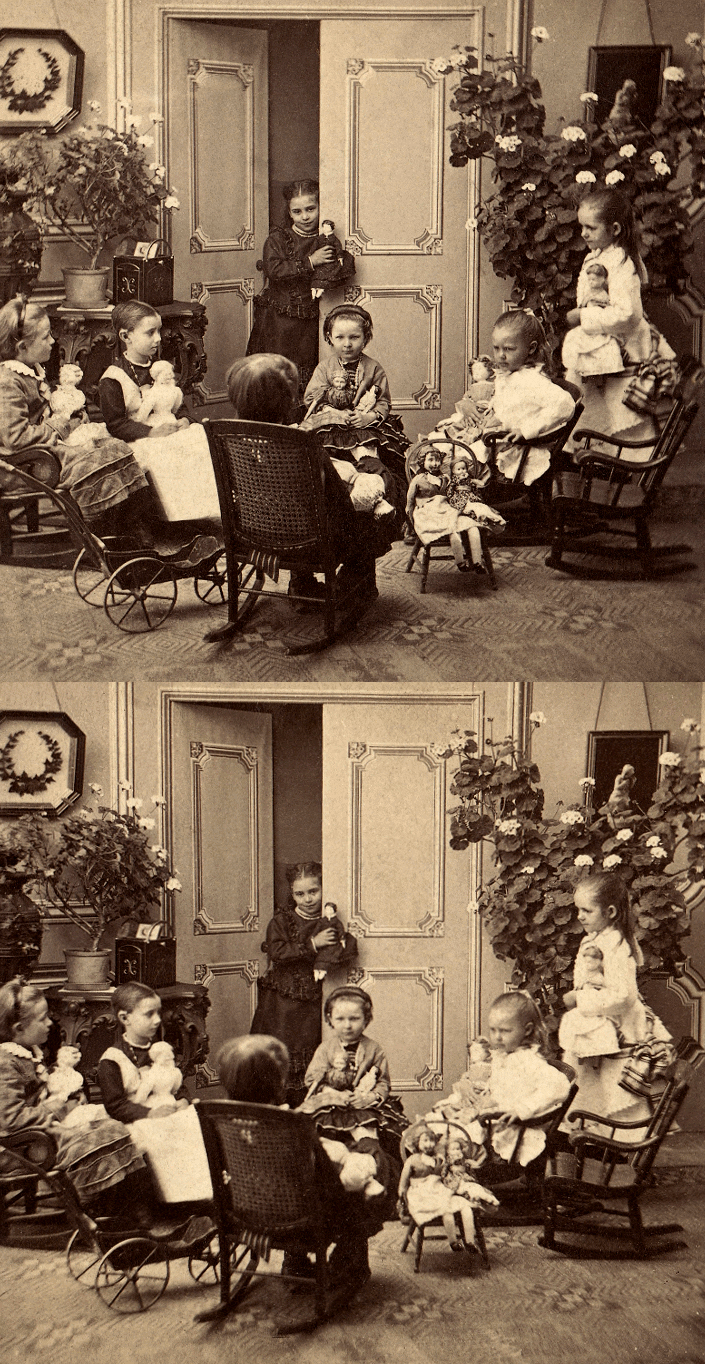
Initiated less than forty years ago, the UK Gift Aid incentive aggrandizes donations received through select charities by providing tax deductions to the donor.

By means of Gift Aid, charities are able to reclaim the basic tax rate (20%) of the donation at no cost to the donor. For example, if an individual donates £10 using Gift Aid, the charity itself receives £12.50. With non-monetary contributions, the original tax is added back in to the overall value of the item. Thus, if a table valued at £100 is supplied, the charity is able to retain the item at £125.

However, before one is eligible to provide a Gift Aid donation, a form documenting basic personal information such as name, home address and information about the designated charity is required. Furthermore, this form is rather versatile in that it can be applied to future donations as well. On the surface, Gift Aid appears ingenious and innovative, and in many ways, it is. Yet, like many other programs wrought by good intentions, this incentive should be wary of also being susceptible to corruption.

For one, Gift Aid is plagued by complexity and ambiguity in its guidelines and operations.

Revenue and Customs declare that the donated items are in fact the possessions of the donor and the charity in question acts as a mere representative. Therefore, it is the donor — not the organization — who has the authority to not only give all or a portion of the sale’s proceeds but also to retain all or a portion of the profits. Meaning, an individual may decide to utilize Gift Aid out of greed and a personal, profit agenda rather than benevolence and an honest desire to give back to others.

The mandatory Gift Aid forms are composed in such a manner that donors are not held accountable for whether proceeds are bequeathed to the charity or not. Thus, an individual could legally sell his or her belongings using the Gift Aid incentive and keep all of the proceeds — leaving the charity, which handles the actual selling of the item, bereft of any profit.

According to the Institute of Fundraising, “the goods are the property of the owner until they are sold, and after they are sold, [the owner] has the right to keep some or all of the proceeds.” Although individuals who are initially willing to sell their personal belongings under Gift Aid may not initially expect to monetarily gain from the transaction.  Because this gaping loophole still exists, the incentive may be vulnerable, or opens an opportunity with the advantage, to misuse.

– Phoebe Pradhan

Sources: HM Revenue and Customs, The Guardian
Photo: Vintage 3D

January 12, 2014
https://borgenproject.org/wp-content/uploads/borgen-project-logo.svg 0 0 Borgen Project https://borgenproject.org/wp-content/uploads/borgen-project-logo.svg Borgen Project2014-01-12 13:34:242020-08-29 00:12:14The Case Against Gift Aid
Activism

Nelson Mandela Quotes on Love and Life

nelson mandela quotes love
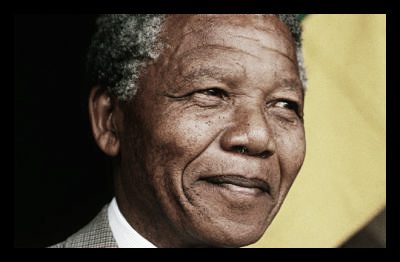
Nelson Mandela will forever have a place in the hearts of those who follow him. His words will guide his followers through life trials and tribulations and bountiful celebrations. Let us remember a month after his passing Nelson Mandela’s quotes on love and coming together as one.

1. “No one is born hating another person because of the color of his skin, or his background, or his religion. People must learn to hate, and if they can learn to hate, they can be taught to love, for love comes more naturally to the human heart than its opposite.”
2. “Let there be justice for all. Let there be peace for all. Let there be work, bread, water and salt for all. Let each know that for each body, the mind, and the soul have been freed to fulfill themselves.”
3. “You will achieve more in this world through acts of mercy than through acts of retribution.”
4. “A nation should not be judged by how it treats its highest citizens, but its lowest ones.”
5. “Overcoming poverty is not a task of charity; it is an act of justice. Like slavery and apartheid, poverty is not natural. It is man-made and it can be overcome and eradicated by the actions of human beings. Sometimes it falls on a generation to be great. You can be that great generation. Let your greatness blossom.”
6. “What counts in life is not the mere fact that we have lived. It is what difference we have made to the lives of others that will determine the significance of the life we lead.”
7. “A good head and a good heart are always a formidable combination.”
8. “I hate race discrimination most intensely and in all its manifestations. I have fought it all during my life; I fight it now and will do so until the end of my days.”
– Amy Robinson

Sources: Salon, BrainyQuote, UN Foundation, USA Today
Photo: Giphy.com

January 11, 2014
https://borgenproject.org/wp-content/uploads/borgen-project-logo.svg 0 0 Borgen Project https://borgenproject.org/wp-content/uploads/borgen-project-logo.svg Borgen Project2014-01-11 16:40:072024-05-26 23:03:56Nelson Mandela Quotes on Love and Life
Activism, Advocacy, Global Poverty, Health, Inequality, War and Violence

Ethnic Tension Within Inner Mongolia

mongolia
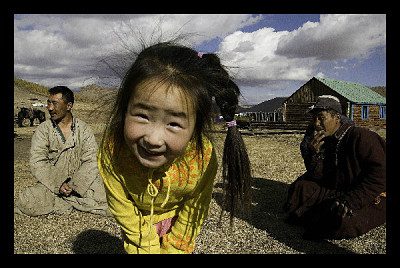
It is no secret that the concerns and rights of ethnic minorities in China fall to the wayside in favor of the Han, the ethnicity with the majority in the country. Inner Mongolia serves as an example of the cultural and economic strife caused by marginalizing one group over another. The result is what the Mongol minority believes is outright economic exclusion and the watering down of their culture.

One of the key issues within the region is the migration of the indigenous nomads from their native grasslands to the cities. The Chinese government waves off the migration as a move into modernity for the nomads. A removal from what Chinese authorities refer to as a “backward” culture, but as Nick Holdstock of the U.K. Independent points out, the natives have no say whatsoever when it comes to moving to the cities. This outflow of ethnic Mongolians to urban centers has raised fears among Mongolians that their culture, language and lifestyle are being threatened.

Another point of tension lies in the regional mining of rare-earth metals. Various mining companies have entered the region to take advantage of the lucrative prospects, especially since the value of these metals is demonstrated in their ubiquity among high-tech electronics. However, the mining has been accompanied by a degradation of the surrounding environment as well as the health of the nomads.

For example, the town of Baotou, a major mining hub, has seen its groundwater polluted to toxic levels, their crops ruined and much of their livestock destroyed. Moreover, the use of underground water sources, essential to the removal of impurities from the coal, has lessened the water available to crops and livestock. Many farmers, unable to deal with destruction of their livelihood, have moved away. The Guardian points out that the population within the surrounding villages of the Baotou plants has decreased dramatically. Those that have remained in the area are plagued by severe illness.

All of these factors have coalesced, creating serious economic problems for the ethnic minority. Environmental devastation of their grasslands has degraded some of the main forms of their economic livelihood; the mining industry in the region tends to hire workers from other provinces, excluding the nomads from many of the economic benefits the industry might bring.  Furthermore, those who have migrated to urban areas have discovered cultural barriers to finding gainful employment, namely an inability to speak passable Mandarin.

Tensions have, moreover, reached the point of violence in some instances. In 2011, a herder was killed by a passing coal truck when he attempted to prevent coal trucks from crossing into his land during his protest against the mining industry. Several days later another protester was killed by a forklift driver. Tensions finally boiled over and several thousand Mongolians went out to voice their opposition toward the mining activities.

Unfortunately, the case of Inner Mongolia is a harsh reminder among ethnic minorities in China of their second-class citizen status. Perhaps in time, the Chinese government will listen to the voices of protest among the disenfranchised minority groups that populate many rural areas throughout China. Until then, Mongolians and other ethnicities face major economic and cultural challenges.

– Zack Lindberg

Sources: The Independent, The Guardian
Fabio Ghioni

January 4, 2014
https://borgenproject.org/wp-content/uploads/borgen-project-logo.svg 0 0 Borgen Project https://borgenproject.org/wp-content/uploads/borgen-project-logo.svg Borgen Project2014-01-04 12:23:512016-02-06 08:44:53Ethnic Tension Within Inner Mongolia
Activism

5 Amazing Things About Nelson Mandela

Mandela
Last month, one of the greatest inspirational figures this world has ever seen died. Nelson Mandela, the first black president of South Africa, and long-time sufferer and activist to end South Africa’s apartheid, died on Thursday after a battle with lung infection. People across the world are mourning Mandela’s death and honoring his long life and incredible achievements. Below are five amazing things about the life of Nelson Mandela.

1. Nelson Mandela broke the rules in order to bring peace In 1943 Mandela became a member of the African National Congress. Five years later, when apartheid laws were instituted across Africa Mandela began an intense defiance campaign against the apartheid system. In 1956 Mandela and over a hundred other political activists were charged with treason. Four years later the African National Congress was banned, and Mandela formed an underground military group called The Spear of the Nation. After leading a guerilla movement, Mandela was arrested and sentenced to five years in prison, but went on the run.

2. Mandela was sentenced to life in prison, but remained politically active After Mandela was recaptured after fleeing from his five-year imprisonment sentence, he was tried for treason and sabotage and sentenced to life in prison. Mandela began his sentence at age 46, and spent the next 27 years in prison. During his imprisonment Mandela was often forced into labor, which consisted of breaking rocks into gravel. While in prison he was only allowed one visitor a year and could only write or receive a single letter every six months. Despite Mandela’s harsh imprisonment conditions he remained significant in leading the movement against apartheid. He was able to organize protests from his prison cell, and help rally activists to make gains in ending apartheid.

3. Mandela received the Nobel Peace Prize Mandela was released from prison in 1990. After the ban from the African National Congress was lifted, Mandela joined and became the president. In 1993 Mandela and Frederik Willem de Klerk received the Nobel Peace Prize.

4. Mandela was elected as South Africa’s first black president After huge political gains were made in the fight to end intense racial segregation, Mandela was elected as the first black President of South Africa. Mandela stressed peace and unity, encouraging Africans to forgive the white governments that had treated them so brutally.

5. Mandela extended peace to whites, including his prison guards On the 20th anniversary of his prison release Mandela partook in a huge celebration held in his name. Even Mandela’s former prison guard was included in the celebration. At the age of 91 Mandela took this day to celebrate and further emphasize his message of peace to both blacks and whites.

– Chante Owens

Sources: Nelson Mandelas, BBC, The Daily Beast, ABC News

January 1, 2014
https://borgenproject.org/wp-content/uploads/borgen-project-logo.svg 0 0 Borgen Project https://borgenproject.org/wp-content/uploads/borgen-project-logo.svg Borgen Project2014-01-01 18:12:082024-12-13 17:49:505 Amazing Things About Nelson Mandela
Activism, Aid Effectiveness & Reform, Charity, Food & Hunger, Food Aid, Food Security, Global Poverty, Health

Food Aid in Puntland, Somalia

puntland_cyclone
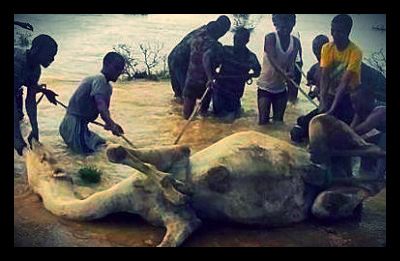
On November 10, a deadly cyclone raged through the region of Puntland, located in Somalia’s northeastern coast. Though the cyclone has reportedly killed up to 300 people, the death toll has not yet been verified. Many of these victims were children and elderly, both of which are more vulnerable to hypothermia and exposure. Moreover, the United Nations says as many as 30,000 people are in need of food aid.

Whole villages have been washed away by the storm, thus forcing local aid workers to struggle to reach the stranded victims due to the damaged infrastructure. Furthermore, large portions of roads have been damaged, driving aid workers to deliver food aid on foot. Many people are also missing, especially in coastal towns where fisherman and their boats have been lost at sea.

Pastoralists have been hit the hardest since their livestock and poorly built homes and barns have been washed away. The region does not normally experience rain so the area’s infrastructure has not been built to withstand this sort of storm. In fact, some of the worst hit villages have lost 90 percent of their livestock to icy rain and flooding.

Moreover, areas infamous for pirates such as the port of Ely are some of the worst affected. This is worrisome as the 2004 Tsunami was considered one of the major triggers of the pirate attacks off the coast of Somalia where 736 people and 32 ships were held hostage.

The World Food Programme (WFP) recently arrived in Puntland and transported 340 metric tons of food including cereal and vegetable seeds to the worst affected areas of Bossaso, Banderbayla, Dongoroyo and Eyl. In total 27, 000 people have been given a month’s worth of food rations. In addition Puntland’s government sent 32 trucks of emergency supplies throughout the needed areas.

Once emergency aid has been distributed and the region is no longer in a state of disaster the WFP will begin recovery work to rebuild the infrastructure of the area. The Food-for-Assets initiative is a recovery program run by the WFP that assists communities in rebuilding their infrastructure in a way that would better withstand a future natural disaster. Moreover, community workers are paid in food rations for assisting with the development.

Further south in Middle Shabelle, flooding has devastated the town of Jowhar and surrounding areas, pushing over 10,000 people to flee their homes. Their water supplies have, furthermore, been contaminated increasing the risk of waterborne diseases, while all standing crops and livestock in the area have been destroyed or lost. The International Committee of the Red Cross has provided 25,800 people with emergency essentials such as kitchen sets, clothes and sleeping mats.  They have also been able to stop flooding and repair riverbanks in five locations and distributed emergency food aid and water.

– Lisa Toole

Sources: AllAfrica: Food Aid, AllAfrica: Twin Natural Disasters, Yahoo, World Food Programme, Aljazeera

January 1, 2014
https://borgenproject.org/wp-content/uploads/borgen-project-logo.svg 0 0 Borgen Project https://borgenproject.org/wp-content/uploads/borgen-project-logo.svg Borgen Project2014-01-01 17:22:102024-05-25 00:37:18Food Aid in Puntland, Somalia
Activism, Advocacy, Human Rights

Madonna Champions Art for Freedom

Founded in September 2013, Art For Freedom is the result of a partnership between global superstar Madonna and VICE Media. The completely digital organization aims to increase awareness of human rights violations around the world through artwork.

Each month, artists are invited to submit their original creations in response to the question, “What does freedom mean to you?” The organization then chooses a winning entry, whose creator is offered a $10,000 donation to the charity of their choice.

In addition to naming monthly winners, Art For Freedom also posts daily winners on its website. The inspirational submissions are displayed on the organization’s home page and can be accessed at any time through its interactive calendar.

Recently, Madonna named illusionist David Blaine as a guest curator for the organization’s December contest. Blaine’s duties will consist of reviewing entries and choosing which pieces will be displayed on the organization’s website.


Past celebrity curators included notables such as Anthony Kiedis of the Red Hot Chili Peppers. For the month of November, Madonna herself hosted a live exhibit on Tumblr to showcase submissions.

Despite its recent start, the organization has quickly gained a following. Notable submissions for the December 2013 contest have included videos and photographs referencing numerous social problems including bullying, transgender issues, religious intolerance, racial intolerance, and other forms of prejudice.

The organization’s website currently features entries from around the world. The last two weeks have seen submissions from France, Bulgaria, Australia, Brazil, Dominican Republic, New Jersey, California, and New Hampshire.

Entries can be from a variety of mediums including film, music, photography, and poetry. Those interested in the organization’s monthly contest may upload original creations on the Art For Freedom website or by uploading the works to social media with the tag #artforfreedom.

– Jasmine D. Smith

Sources: Art for Freedom, Madonna.com
Photo: Blouin Art Info

December 31, 2013
https://borgenproject.org/wp-content/uploads/borgen-project-logo.svg 0 0 Borgen Project https://borgenproject.org/wp-content/uploads/borgen-project-logo.svg Borgen Project2013-12-31 04:00:542024-06-05 03:00:36Madonna Champions Art for Freedom
Activism, Volunteer

Top 5 Reasons to Volunteer

‘Tis the season of giving, and as the saying goes, “It is better to give than to receive.” Yet, what is the actual reasoning behind this? Is it truly better to give, and if so, what should be given?

Studies show that volunteering time is one of the most positive, influential acts that a single individual can do. Not only are there immediate benefits for the recipients, but those who volunteer also experience positive effects.

Below is a list of the top reasons to volunteer.

1. “Be The Change”

As Mahatma Ghandi once said, “Be the change you wish to see in the world.” What better way to do so than by personally volunteering your time towards a cause of your choice? Not only will you make a difference in the lives of those you are helping, but providing variety in your daily routine will also be beneficial. The difference made in your own community, personal life, or even the world is unknown until you tap into its potential.

2. Acquire Career Related Skills

Volunteering in a field of your interest has been proven to be an effective way to gain hands-on experience for a future job. Aside from expanding your network, volunteering in your community or on a grander scale is a great attribute to your personal resume. Whether you intend on being a teacher or an individual who fights global poverty, volunteering with individuals locally or worldwide will give you experience on working in that field and with people around you. Employers are always seeking outgoing employees that display strong leadership skills. What better way to portray this than through volunteering for others?

3. Sometimes It Is Who You Know

Generally, throughout the course of a day, you meet at least one new person. It is also said that majority of your lifelong friends will be acquired during your time spent in college. However, while volunteering, not only do you meet an abundance of new people, but many of them have the same common interests as you. Despite cultural differences, backgrounds or personalities, the Good Samaritan-like deeds will bring you all together. These individuals could also provide for vital connections in future business or volunteering endeavors.

4. Expand Your Horizons

Often times during our lives, we find ourselves in a mundane routine, allowing life to pass us by. Volunteering is a great way to spice up and re-energize your daily life. By volunteering, you may discover new hobbies or interests that you would not have considered prior. Volunteering with the Boys & Girls Club, Habitat for Humanity, or a senior home may open up other career pursuits.

5. Enhance Your Education

Valuable life lessons are often obtained from experience, rather than solely through a textbook. Education goes well beyond sitting inside of a classroom, retaining information taught by a standard curriculum. By volunteering, it shows employers that you went beyond what was required. Hands-on experience is a great way to optimize the amount of opportunities that could become available. Showing that you were able to maintain a good GPA as well as balancing volunteer time paints a better picture of who you are as an individual.

– Samaria Garrett

Sources: Help Guide, Huffington Post
Photo: Working Abroad

December 29, 2013
https://borgenproject.org/wp-content/uploads/borgen-project-logo.svg 0 0 Borgen Project https://borgenproject.org/wp-content/uploads/borgen-project-logo.svg Borgen Project2013-12-29 04:00:372024-05-26 23:00:48Top 5 Reasons to Volunteer
Activism, Advocacy

World Leaders Remember Nelson Mandela

World_Leaders_Remember_Nelson_Mandela
Nelson Mandela, former South African President, was highly regarded by leaders all over the globe. His legacy will live on in South Africa and in the hearts of past and present influential leaders.

Soon after the announcement of Mr. Mandela’s death, President Barack Obama praised the South African leader as an influential and inspiring leader who motivated people all across the globe, including the President himself. President Obama solemnly stated that he could not imagine his life without the example set by Mr. Mandela.

Previous U.S. Presidents, including Bill Clinton and George W. Bush, also commended Nelson Mandela for his role in the anti-apartheid movement and outspokenness.

F.W. de Klerk, South Africa’s last apartheid leader, also commended Nelson Mandela for his willingness to compromise and passion for the betterment of South Africa. De Klerk stated in 1990 that though his relationship with Mr. Mandela was “often stormy” “they were always able to come together at critical moments.”

The Dalai Lama, a fellow Nobel Peace laureate, recently said that he will “personally miss a dear friend” and that Mr. Mandela’s “spirit will go on” even though he has physically departed.

Though his controversial position in South Africa during the Apartheid, Nelson Mandela has become a world-renowned leader and activist. U.N. Secretary General Ban Ki-moon hopes that Mandela’s legacy will continue to motivate people across the globe to work for a better world. The White House flags are set to fly at half-staff through Monday.

– Lienna Feleke-Eshete 

Sources: All Africa, Yahoo
Photo: News Discovery

December 25, 2013
https://borgenproject.org/wp-content/uploads/borgen-project-logo.svg 0 0 Borgen Project https://borgenproject.org/wp-content/uploads/borgen-project-logo.svg Borgen Project2013-12-25 12:30:432024-06-05 01:53:43World Leaders Remember Nelson Mandela
Activism

Techo Enlists Students to Reduce Poverty

giving
“I believe poverty is not an inherent part of society, but can be overcome if everyone works to achieve it.”-Jessica Beck.

Jessica Beck is the founder of FIU TECHO, a branch of the Techo organization at Florida International University. Techo is an international non-profit organization provides humanitarian aid to the poor citizens of Latin America and the Caribbean.  The focus is to educate the residents on how to implement long lasting solutions to the issues of education, malnutrition, poverty, and corruption.

One Techo branch at Florida International University is participating in the Wynwood Miami Art Walk, a local artist event held the second Saturday every month. The Techo letters will be found along the walk and members can write down their hopes and goals towards ending global poverty and making the lives of others so much better. Notoriously broke, college students participating for Techo in the Art Walk are proving that anyone can make an impact – no matter how little people think they might have to give.

Sustainable development means formulating economic and environmental growth policies that don’t detract from environmental health, meaning they will be successful policies in the long run. Societies can’t function on infrastructures that are not environmentally sound because eventually the negative consequences of those policies will force the society to restructure yet again.

Founded in 1997, Techo is a Latin American non-profit organization focusing on providing aid to people living in slums through volunteers working with families struggling with extreme poverty. The organization uses an ‘implementation’ method that targets community development. The Non profit’s fundraising headquarters are in Miami, Florida and it is lead by young volunteers. Volunteers are present in 19 countries including Brazil, Guatemala, Nicaragua, Peru, Panama, Ecuador, and Venezuela.

Recruitment for volunteers takes place exclusively in college universities, and the organization actively seeks contribution from people less than or equal to 30 years of age. Students with a strong passion for humanitarian work are targeted in the hopes that their dedication will enhance their work. Experience with working in slums helps to qualify volunteers to pursue a professional career in global relief and poverty reduction. The way that Techo works is a mutual effort between volunteers and slum residents. Residents are reassigned houses based on severity of living conditions and are responsible for taking on 10% of the new home cost.

Funding comes from a variety of sources. The Boston Consulting Group and The Inter-American Development Bank are two of Techo’s main partners. Donators known as ‘techo friends’ are monthly financial contributors at a fixed rate. A donator giving 30 dollars a month can support a family that functions on one dollar per day. It is incredible the difference just one dollar can make and sheds light on the common misconception that global poverty is an impossible issue to solve. The condition is reminiscent of something Nelson Mandela once said – “It always seems impossible until it is done.”

– Kaitlin Sutherby

Sources: FIU, Facebook, Techo

December 23, 2013
https://borgenproject.org/wp-content/uploads/borgen-project-logo.svg 0 0 Borgen Project https://borgenproject.org/wp-content/uploads/borgen-project-logo.svg Borgen Project2013-12-23 17:50:152024-12-13 17:49:51Techo Enlists Students to Reduce Poverty
Page 48 of 56«‹4647484950›»

Get Smarter

  • Global Poverty 101
  • Global Poverty… The Good News
  • Global Poverty & U.S. Jobs
  • Global Poverty and National Security
  • Innovative Solutions to Poverty
  • Global Poverty & Aid FAQ’s
Search Search

Take Action

  • Call Congress
  • Email Congress
  • Donate
  • 30 Ways to Help
  • Volunteer Ops
  • Internships
  • Courses & Certificates
  • The Podcast
Borgen Project

“The Borgen Project is an incredible nonprofit organization that is addressing poverty and hunger and working towards ending them.”

-The Huffington Post

Inside The Borgen Project

  • Contact
  • About
  • Financials
  • President
  • Board of Directors
  • Board of Advisors

International Links

  • UK Email Parliament
  • UK Donate
  • Canada Email Parliament

Get Smarter

  • Global Poverty 101
  • Global Poverty… The Good News
  • Global Poverty & U.S. Jobs
  • Global Poverty and National Security
  • Innovative Solutions to Poverty
  • Global Poverty & Aid FAQ’s

Ways to Help

  • Call Congress
  • Email Congress
  • Donate
  • 30 Ways to Help
  • Volunteer Ops
  • Internships
  • Courses & Certificates
  • The Podcast
Scroll to top Scroll to top Scroll to top