• Link to X
  • Link to Facebook
  • Link to Instagram
  • Link to TikTok
  • Link to Youtube
  • About
    • About Us
      • President
      • Board of Directors
      • Board of Advisors
      • Financials
      • Our Methodology
      • Success Tracker
      • Contact
  • Act Now
    • 30 Ways to Help
      • Email Congress
      • Call Congress
      • Volunteer
      • Courses & Certificates
      • Be a Donor
    • Internships
      • In-Office Internships
      • Remote Internships
    • Legislation
      • Politics 101
  • The Blog
  • The Podcast
  • Magazine
  • Donate
  • Click to open the search input field Click to open the search input field Search
  • Menu Menu

Archive for category: Activism

Information and stories on social activism.

Activism, Charity

Geeks for Peace: The Comic-Con Fundraiser

Geeks-For-Peace-Comic-Con

While Comic-Con can be seen by some as only a weekend where nerdy, shut-in individuals gather in flocks for a week of waiting in lines and buying memorabilia from their favorite comic or TV show, it can now also be seen as something greater. More importantly, it can now be seen as an opportunity for charity.

Geeks for Peace is a fundraising event first created by Morgan Spurlock, best known for his work with the movie Super Size Me, after he was presented with the Peace Hero Award by Kids for Peace in 2013.

The event in question will be “a dynamic evening of music, dancing, live art, silent auction, and organic food and drink,” with all proceeds donated to Kids for Peace in order to expand their programs to undeserved youth in the United States, Pakistan, Iraq, Liberia and Kenya.

These programs include providing school supplies, uniforms, books and toiletries to children in need, purchasing beds for children in orphanages, and spreading awareness and educating the public about the issues that these children face.

With tickets selling at $250 each, unique artwork on sale, and several popular television personalities in attendance, the event is expected to raise quite a lot of money for Kids for Peace.

The event will take place on July 10th at the San Diego Comic-Con and will be attended by many popular individuals such as Giancarlo Esposito from Breaking Bad, Frances Fisher, Greg Grunberg from Heroes, Scott Grimes from American Dad and Justified, Efren Ramirez from Napoleon Dynamite, Eddie Matos from Finding Carter and Adrian Pasadar from Heroes and Agents of Shield.

It is admirable to see all of these individuals take time out of their busy schedules to come together for an evening that is for a good cause and will surely make a difference in a child’s life.

– Alysha Biemolt

Sources: Look To the Stars, Geeks For Peace, An Englishman In San Diego, Kids For Peace Global
Photo: Highlight Hollywood

July 8, 2015
https://borgenproject.org/wp-content/uploads/borgen-project-logo.svg 0 0 Borgen Project https://borgenproject.org/wp-content/uploads/borgen-project-logo.svg Borgen Project2015-07-08 16:36:432024-06-05 02:12:08Geeks for Peace: The Comic-Con Fundraiser
Activism, Development, Global Poverty

The EU’s Commitment to Poverty Eradication

poverty_eradication
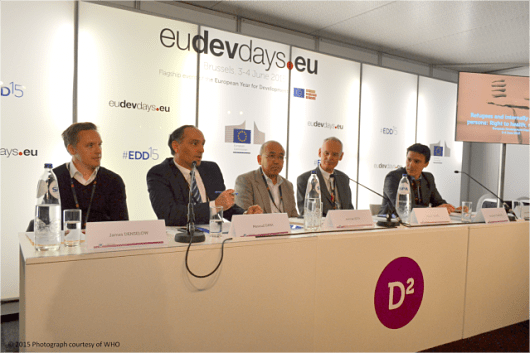
On June 3-4, 2015, the European Development Days forum took place in Brussels. The focus of this forum was global development and cooperation. Across the courtyard of the European Parliament, at the scene of the forum, was the European Year for Development slogan that read “Our world. Our dignity. Our future.”

During the opening address, President of Luxembourg Xavier Bettel encouraged political leaders and citizens alike to play their part in the development of nations. He made the astute observation that “development co-operation is not a luxury” and urged listeners to act fast.

Indeed, there is no time like the present. The European Commission’s President Jean-Claude Juncker said that the 2015 European Development Days were occurring at a critical time for the future of the world. He argued that for the international community, it is a “now or never” moment when action must be taken.

At the forum, over 500 speakers, experts, practitioners and activists debated over which areas of development deserve the most attention in the upcoming year. Participants from over 140 countries representing 1,200 organizations worked together to create unified goals in the global development arena.

International cooperation and collaboration is necessary now more than ever before. Looking ahead at the International Conference on Financing for Development in July, the U.N. conference on the Post-2015 Sustainable Development Goals in September and the Climate Change Conference in December, actors need to begin focusing on issue-alignment.

MEP Linda McAvan makes a crucial distinction. She reminds us all that development is more than just wealthy countries giving donations to those in need. We must achieve a worldwide commitment to collaboratively work to eradicate poverty, tackling the issue at its deepest roots.

As the world’s leading donor of development aid, the European Union (EU) must set the international standard. It is important to remember, however, that it is a two-way street. MEP Charles Goernes points out that developing nations must “take ownership” of their own development, with support from donor countries.

Goernes hopes that the chaos of the Mediterranean migrant crisis has created a sense of urgency for Europe to play a more active role in global development. The problem has become almost impossible to ignore. An ever-increasing number of lives have been lost because of international development disparity.

Goal 8 of the proposed Post-2015 Agenda accordingly targets the protection and safety of migrants. In order to best tackle the problem, the EU will need to closely examine the causes of the migrant crisis. At the core of this international crisis lies the overwhelming need for developmental aid in many non-European countries.

By more efficiently addressing the issue of developmental disparity across borders, the global fight against poverty will be greatly advanced. The year 2015 could very well be pivotal for global development and wealth disparity. Cooperation, focus and commitment from the world’s most capable could bring groundbreaking improvements for the world’s most deprived. For now, the beginnings of development in poorer nations signify a step in the right direction toward poverty eradication.

– Sarah Bernard

Sources: The Irish Times, The Jakarta Post
Photo: EUROPA

July 8, 2015
https://borgenproject.org/wp-content/uploads/borgen-project-logo.svg 0 0 Borgen Project https://borgenproject.org/wp-content/uploads/borgen-project-logo.svg Borgen Project2015-07-08 08:13:202020-07-10 20:05:03The EU’s Commitment to Poverty Eradication
Activism, Advocacy, Philanthropy

7 Traits of Philanthropic People Who See Success

traits_of_philanthropic_people

Philanthropic people strive to promote the welfare of others through the donation of money, property or services. They come from all sorts of socioeconomic backgrounds, but there are several common character traits of philanthropic people who have seen success in their pursuits:

1. They are altruistic.
Philanthropic people show selfless concern for the welfare of others and venture to alleviate the struggles of others without seeking anything for their own personal benefit. Truly philanthropic acts are done without expectation of compensation or recognition of one’s efforts.

2. They are empathetic.
Philanthropists tend to be empathetic toward the struggles of others. They feel an obligation to do what is in their power to combat these struggles because they view the problems and the hurt that comes with them as their own.

3. They have heightened social awareness.
Philanthropic people tend to have great awareness of their surroundings. Not only are they open to opposing views and new ideas, but they also seek to understand the motivations and obstacles of others in order to better understand their needs and how they can best best be satisfied.

4. They are far-sighted.
People who want to make positive change in the world tend to look far into the future. They want to make a lasting impact on society rather than temporarily fixing a problem, and recognize that they must direct their efforts accordingly. They realize that in order to make significant societal change, it is crucial to address underlying structural issues by investing in long-term solutions.

5. They are politically involved.
In order to make structural changes in society, it is also necessary for philanthropists to advocate for political change. That is why many successful philanthropists are known to be advocates. They tend to recognize that while it is important to invest in programs that are shown to produce tangible results, advocacy is also important because it allows progress on a broader scale.

6. They are issue-oriented.
Successful philanthropists seek specific causes to support rather than organizations. They first identify something they would like to see happen in the world and then they go out to look for organizations that can best make this vision a reality. They recognize that specific organizations may be able to tackle one aspect of the problem best and then look for other groups to work on other aspects of the issue. They maintain a holistic view of the issue and use many tools to catalyze these changes.

7. They are business-minded.
Many philanthropic people look at their contributions as investments in society and the economy. They want their money and resources to be used efficiently and in an organized-manner in order to promote self-sustaining change. Accordingly, successful philanthropists look at issues through a business-lens, treating their philanthropic work with the same work ethic as they would their business. Just as they would to promote a business goal, successful philanthropists also capitalize on their resources, drawn upon their networks and use their position in society to promote a cause. This broad view pushes them not to focus solely on contributing to nonprofit organizations, but also to expand their support to for-profit business and legislative initiatives that will propel the cause forward.

– Arin Kerstein

Sources: Academic Impressions, Forbes, Long Beach Business Journal, PC World
Photo: Smarter Finance Journal

July 7, 2015
https://borgenproject.org/wp-content/uploads/borgen-project-logo.svg 0 0 Borgen Project https://borgenproject.org/wp-content/uploads/borgen-project-logo.svg Borgen Project2015-07-07 10:03:562024-06-05 03:46:357 Traits of Philanthropic People Who See Success
Activism, Global Poverty

How YOU Can End Global Poverty From Your Couch

End Global Poverty
Have you ever dreamed about being a super hero? Did you once believe that you would grow up to end global poverty?

Well, today is your lucky day.

You may not have the time or money to fly to Africa, but you can still contribute to the fight against global poverty!

There are things that you can do without leaving your couch!

1)   Advocate: Post a link to an article about global poverty on Facebook or Twitter, or even bring global poverty up in a conversation. While this may not seem like a big deal, you will be reaching every single one of your friends or followers with the post. You may even inspire them to do something too! 

2)   Call or Email Congress: By contacting Congress you can support bills that will aid thousands and maybe even millions of people living in poverty abroad. Your call will be taken down on a sheet and the tallies will help your representatives decide to vote on a bill.

While this may sound like a daunting task, the Borgen Project makes it easy. Simply type in your zipcode into the Borgen Project website’s application and it will bring up your Congress people’s names, numbers, and emails. If you are intimidated by the thought of talking to someone, simply call after hours and leave a message.

https://borgenproject.org/action-center/

https://borgenproject.org/call-congress/

3)   Volunteer: The Borgen Project has many volunteer opportunities. You can volunteer with the Borgen Project, while spending most of your volunteer hours on your couch! Much of your volunteer time will be spent calling congress, writing, or fundraising. It is easy, but effective and worth while.

https://borgenproject.org/volunteer-opportunities/

4)   Fundraise: Create an online fundraiser for The Borgen Project or other global poverty organizations and post it on Facebook. Then text your friends about it.

https://www.crowdrise.com/borgenproject

5)   Donate: From the warm cushions of your couch, look at your budget. Can you spare one dollar a week? Maybe even three dollars? If so, then pick from The Borgen Project or other wonderful organizations and send in your donation. If you chose the one dollar option, then in 20 years you will have contributed over $1,000 towards ending global poverty!

https://borgenproject.org/donate/

If you have taken the first step and posted a link about ending global poverty (you can start with this one) then congratulations! Pat yourself on the back and sink back into your couch with the happy knowledge that you are now on the way to being a powerful advocate for those in poverty all across the world.

– Clare Holtzman

Sources: The Borgen Project 1, The Borgen Project 2, The Borgen Project 3, The Borgen Project 4, The Borgen Project 5, Crowdrise, The End of Poverty, wikiHow
Photo: Spark Productivity


July 7, 2015
https://borgenproject.org/wp-content/uploads/borgen-project-logo.svg 0 0 Borgen Project https://borgenproject.org/wp-content/uploads/borgen-project-logo.svg Borgen Project2015-07-07 09:32:172024-06-04 03:53:05How YOU Can End Global Poverty From Your Couch
Activism, Global Poverty, Poverty Reduction

How Can I Shop Ethically?

shop_ethically
Clothes, food, technology. These are things everybody needs but also have strong associations to ethical problems. Shopping ethically is a growing concern for many people, yet the idea that ethical purchases are not affordable is pervasive. In addition, the constant bad news surrounding the practices of companies makes it seem impossible to be an ethical shopper. All of this leaves many of us with one question:

How can I shop ethically?

It is a question being asked a lot these days. And even though it might not seem easy, a little extra attention can go a long way, and it is not as expensive as it may seem. Here’s a few easy ways to shop ethically.

Do Your Research

In the fight to shop ethically, research is everything.

The biggest companies can afford to market themselves as ethical to shoppers. This allows them to manipulate concerned consumers into purchasing their products.

Luckily, there are ways to know what you’re buying before you buy it. Ethicalconsumer.org, for instance, ranks products in a variety of categories based on different metrics. Much of this information is available for free on the site, though some more in-depth information requires a subscription.

Doing research on products is a good way to be sure that what you’re buying is an ethical choice. In addition to researching, remaining vigilant in reading labels to spot companies notorious for ethical violations, such as Coca Cola and Nestle, is a key element in shopping ethically.

Thrift Shop

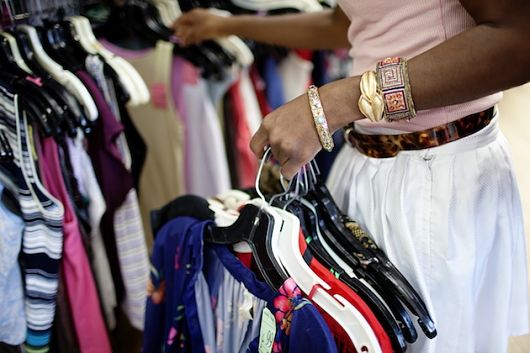
Goodwill currently operates over 2,500 stores in the United States. Savers operates over 270 stores. There are also countless independent thrift stores, providing good clothing for a low price. For consumers looking to ethically shop, thrift stores provide an affordable way to avoid incentivizing the abusive practices of the larger clothing industry.

Unethical labor practices is the biggest concern proponents of ethical consumerism have regarding the clothing industry. Though a variety of clothing sources exist that do not support this, many of these sources are not cost-effective. By purchasing clothing at a thrift shop, fashion-conscious activists can both avoid feeding into unethical labor chains and support their local communities.

Make it a Treat

Let’s get this out of the way: most ethical chocolates and coffees will be more expensive than their less ethical alternatives. Unfortunately, the exploitation of the developing world that is all too common within these industries is, more often than not, a cost-cutting measure. When cocoa farmers in the $16 billion-per-year chocolate industry receive between $30 and $100 per year, this is a measure by those in power to cut costs.

This does mean that, in general, most ethical chocolates and coffees will be a bit less friendly to your wallet. But by treating these items as occasional treats, you can save up for the ethical, and better, brands and indulge guilt free.

Shopping ethically is just as much about what we don’t buy as it is what we buy. When chocolate from Côte d’Ivoire, where CNN stated slavery within the chocolate industry is “normal,” is purchased, shoppers incentivize the highly unethical practice. Though more expensive and ethical options may not be purchased with the same regularity, purchasing them exclusively while buying chocolate less exclusively both supports ethical production of chocolates and rejects the lack of ethics within the chocolate industry.

Ethical consumerism is a increasing concern. This is good, but it is also easy to feel nihilistic when faced with a structure which, previously, hasn’t had to take things into account. But by being smart and patient, consumers can find easy and affordable ways to shop according to ethics.

– Andrew Michaels

Sources: Ethical Consumer, Time Green America, CNN Blogs
Photo: Natura Magazine

July 7, 2015
https://borgenproject.org/wp-content/uploads/borgen-project-logo.svg 0 0 Borgen Project https://borgenproject.org/wp-content/uploads/borgen-project-logo.svg Borgen Project2015-07-07 07:22:582024-06-04 01:17:39How Can I Shop Ethically?
Activism, Global Poverty

D’Banj Fights Poverty with Music

dbanj_fights_poverty
D’Banj is a singer and peace activist who is featured first on #Music4Dev initiated in 2014 where artists use World Bank to share their music. It’s here where artists talk about poverty and encourage their listeners to work together in ending the crisis. One crucial way to help those in need is to spread awareness about the issue, especially to the youth of the world.

Afrobeat music is believed to have been born out of challenges facing Africa in recent years. Other African genres originate from various nations. These styles include rhumba, makossa, kwaito and highlife. Nigeria’s Afrobeat (or Naija beats) was introduced in the late ’60s by Fela Anikulapo Kuti. With different styles originating from various parts of Africa, this genre escalated only recently with a few artists excelling in the industry.

BBC Radio 1Xtra, the Mobos, MTV Awards and numerous African gatherings have acknowledged the latest African music. Modern techniques have also enhanced the life of video and music quality. Artists and telecom companies are making a large profit while the entertainment industry becomes lucrative.

A common production method includes selling music via mobile phone where customers buy ringtones and dial tones. Much like the Western world, another method to promote the artist is to play popular songs constantly over the radio and on television through video. Artists also appear at concert halls to sell their work.

The youth of Africa are believed to represent the future as a digitally-connected generation. Music unites them for a cause. D’Banj uses music to create poverty awareness and rally Africa’s youth to take a stance against the issue.

He is known for his energetic performances and originality having made the UK’s top ten list as the first Afrobeats artist. He was born in Zaria, Nigeria. He taught himself to play his older brother’s harmonica and has been in love with music ever since.

He has succeeded in making himself heard with 1 million Twitter followers. Kanye West, Akon, Snoop Dogg, Big Sean and actor Idris Elba have acknowledged his likability and recorded with him.

Among this recognition, he has also received Best African Act at MTV Europe Music Awards in 2007 and Artist of the Year in 2009 at MTV Africa Music Awards and BET Awards. In 2013, he attended African Union Year of Agriculture and brought together three million people to form advocacy for the alleviation of poverty.

He implored his followers to address their governments and stressed that more needed to be done for agriculture and small farms. He received two million signatures for the Do Agric Global Africa Campaign.

In 2014, he started focusing on African Union Year of Women’s Empowerment. He wrote a song called ‘Extraoridinary” for the cause. As he says in World Bank’s Blog in an article written by Korina Lopez, “Most of the established small-scale farmers that we have are women… You have to look beyond the body to see the extraordinary potential she possesses.”

D’Banj is known for his humanitarian role as an ambassador for One.org. In addition, he is an ambassador for Nigerian Agricultural Entrepreneurs and has been appointed Nigeria’s first UN Youth Ambassador for Peace.

He has recently been nominated for the MTV African Music Awards (MAMA) Evolution award. D’Banj was nominated with several others including 2face, P-Square and Asa. This award is meant to recognize artists revolutionizing African music with an influence around the world. The announcement of the winner takes place on July 18, 2015. Fans will vote for their favorite, and D’Banj has an admirable status for this particular achievement.

– Katie Groe

Sources: World Bank Blog, World Bank Blog, TED 1 , TED 2 , Pulse, The Guardian
Photo: NET

July 6, 2015
https://borgenproject.org/wp-content/uploads/borgen-project-logo.svg 0 0 Borgen Project https://borgenproject.org/wp-content/uploads/borgen-project-logo.svg Borgen Project2015-07-06 08:59:592024-12-13 17:51:46D’Banj Fights Poverty with Music
Activism, Humanitarian Aid, Nonprofit Organizations and NGOs, Philanthropy

Who Are the Biggest Philanthropists in the World?

worlds_biggest_philanthropistsWe all know how great giving back feels. Donating, whether it’s time, money or other assets, puts a spring in our step and breeze through our hair. But who are the most philanthropic people in the world? Let’s take a look:
1. Warren Buffet: One of the world’s richest people says he views his money as “claim checks” on society that he can turn into consumption to improve the gross domestic product. In 2006, Buffet pledged stocks worth about $30 billion to the Bill and Melinda Gates Foundation, the largest charitable contribution of all time. He often auctions himself off for dinner on eBay, raising close to $1 million dollars per meal. He plans to donate his fortune once he dies because he believes great wealth should not pass from one generation to the next but instead should move out into the world to make a more lasting, widespread impact.

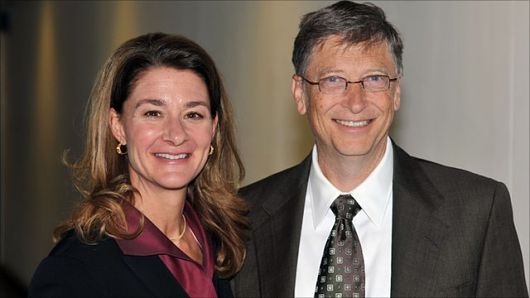
2. Bill and Melinda Gates: The founder of Microsoft and grandfather of the tech start-up world, Bill Gates is the co-founder of the Bill and Melinda Gates Foundation, the wealthiest charity in the world with assets estimated at $34.6 billion. Gates has cited David Rockefeller as a major influence on his philanthropic work and has extensively studied the Rockefeller Family’s charitable pursuits. Gates and his wife Melinda have donated over $28 billion to charity and plan on donating 95% of their fortune when they die.

3. Sir Ka-shing Li: Hong Kong business magnate Ka-Shing Li is the richest man in Asia, with his companies comprising 15% of the market cap on the Hong Kong Stock Exchange. However, Li is best known for leading a no-frills lifestyle and donating about $1.3 billion of his wealth to charity. Most of his donations go to universities around the world, such as Hong Kong Polytechnic University, the University of California, Berkley, Stanford University and the University of Alberta. He also founded Shantou University near his hometown of Chaozhou. Li’s charitable work has earned him the Grand Bauhinia Medal, the highest honor in Hong Kong, the Order of the British Empire and the Legion of Honor.

4. Chuck Feeney: Baseball executive and businessman, Feeney founded The Atlantic Philanthropies, one of the largest foundations in the world. Atlantic has donated more than $6.2 billion since 1982 to social projects in Australia, Bermuda, Northern Ireland, South Africa, the United States and Vietnam. The foundation is the largest funder of aging and immigration reform in the United States and has given numerous gifts to Feeney’s alma mater, Cornell University. Feeney’s philosophy is “Giving While Living.”

5. George Soros: Hungarian-born business magnate and investor, Soros gave away $8 billion between 1979 and 2011, mainly to peaceful political movements and educational institutions. In the 1970s, Soros funded black students in South Africa to attend university under apartheid and worked to promote democracy in post-Soviet states. His foundation, Open Society Foundations, helped assist the transition to capitalism in his native Hungary and gave large funds to Central European University in Budapest. Soros also donated $100 million toward increased Internet access in rural Russian universities and $50 million toward the Millennium Promise. Soros’s political activism has long spurred his charitable work.

These philanthropists have dedicated their lives and fortunes to humanitarian causes throughout the world and can serve as an inspiration to all of us to give back and fuel the causes and institutions in which we most steadfastly believe.

– Jenny Wheeler

Sources: GeorgeSoros.com, Forbes
Photo: BBC News

July 5, 2015
https://borgenproject.org/wp-content/uploads/borgen-project-logo.svg 0 0 Borgen Project https://borgenproject.org/wp-content/uploads/borgen-project-logo.svg Borgen Project2015-07-05 06:55:252020-07-13 12:00:03Who Are the Biggest Philanthropists in the World?
Activism, Developing Countries, Education

Michelle Obama Launches New Education Program for Girls

michelle_obama

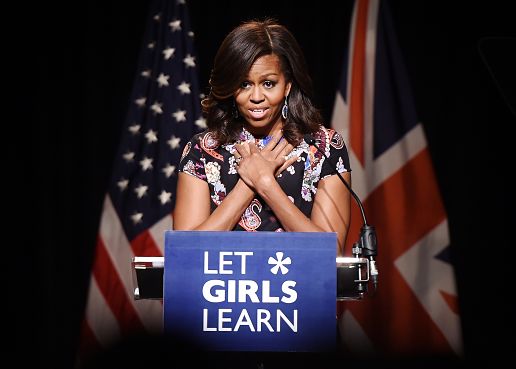
On a recent visit to London, Michelle Obama unveiled a new international plan to improve girls’ education. Obama’s Let Girls Learn Initiative aims to bring quality education to girls around the world. To kick off the initiative, Obama announced a new $200 million partnership between the United States and the United Kingdom.

The new partnership will be a joint effort by both countries to properly allocate funds to the countries with the greatest educational needs. The first projects will help 450,000 children in the Democratic Republic of Congo receive a primary school education, with benefits also going to Sierra Leone and Liberia.

In developing areas like these, girls often lack access to proper education. In total, there are approximately 62 million girls around the world today that are not in school. Even worse, half of this uneducated female population is made up of adolescents.

Looking ahead, the First Lady’s multi-million-dollar program is expected to benefit more than 755,000 girls between the ages of 10 and 18 over the next five years. Through bilateral collaboration, girls will be provided with access to education.

The plan includes enrolling students in accelerated primary school programs, reducing barriers to school access and mobilizing parental and community support. It will also focus on improving the quality of teaching materials and methods.

The partnership will also encourage other advocacy organizations to collaborate with one another in order to find the best solutions to improve girls’ education worldwide in terms of quality and access.

Shortly after the initiative was originally announced in March, the White House released a statement saying, “When a girl receives a quality education, she is more likely to earn a decent living, raise a healthy, educated family, and improve the quality of life for herself, her family, and her community.”

This press release highlights the connection between girls’ education and even larger, more deeply rooted worldwide problems. It is in the world’s poorest areas that girls’ education suffers the worst deficiencies. Improved education could bring improvements in other important areas as well.

Rocco Blume of the charity Plan International U.K. points out that improved education for girls could result in an influx of contributions to developing economies and impoverished communities. In fact, targeting issues like girls’ education is key in tackling other challenges like poverty and maternal health.

Countries with more girls in secondary school tend to have lower maternal mortality rates, lower infant mortality rates, lower rates of HIV/AIDS and better child nutrition. These facts stand at the foundation of the Let Girls Learn Initiative and the core of the U.S.-U.K. partnership.

Poverty is one small word for one incomprehensibly large problem. It must be tirelessly chipped away at, piece-by-piece. The worldwide effort to combat poverty is strengthened by zeroing in on particular issues like girls’ education. Hopefully, this new partnership will spark increasingly focused on international collaboration.

– Sarah Bernard

Sources: CNN, Essence, Voice of America, The White House
Photo: eNCA

July 4, 2015
https://borgenproject.org/wp-content/uploads/borgen-project-logo.svg 0 0 Borgen Project https://borgenproject.org/wp-content/uploads/borgen-project-logo.svg Borgen Project2015-07-04 06:45:462024-05-27 09:25:19Michelle Obama Launches New Education Program for Girls
Activism, Children, Global Poverty, Philanthropy

Victoria Beckham Participates in Save the Children Clothing Sale

save_the_childrenThrough fame, celebrities have the power to influence and gather others in support of a cause.
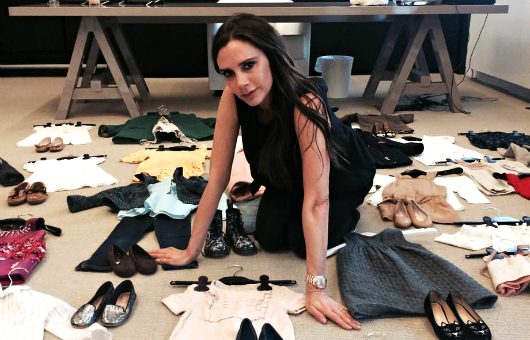
Victoria Beckham, singer and wife of soccer player, David Beckham, participated in the ‘Fashion Saves Lives’ Sale, which gave one-hundred percent of its profit to the program Save the Children.

In 1919, Eglantyne Jebb and Dorothy Buxton started a fund for Save the Children, which would assist children in areas of conflict. Today, the organization acts in 120 countries, providing basic care for children, such as education, health care, protection, food and water. The ultimate goal of the organization is to end child deaths from preventable diseases by 2030.

Recently, Victoria Beckham donated 25 of her daughter’s outfits to the cause. Three-year-old Harper’s donated clothes consisted of iconic brands such as Gucci, Ralph Lauren, Stella McCartney, Charlotte Olympia, Chloe, Roksanda Ilincic, and Marc Jacobs.

Hours before the sale began, bargain shoppers lined up outside of a London shop hoping to be the first to purchase one of the toddler’s outfits.

Only five minutes into the sale on June 18, one of the 25 outfits was purchased. The prices per outfit ranged from approximately 393 to 786 U.S. dollars.

One of Harper’s designer dresses was even placed on an online eBay auction, which ran from June 18-28.

At the auction, Victoria Beckham said, “As a mother, I passionately believe that all children, wherever they live, have the right to a happy, healthy life.”

Fifteen other celebrities, including fellow Spice Girl, Melanie C and actor, Stanley Tucci, donated clothing to the 10 day sale.

Victoria Beckham and the other celebrities who participated are advocates for Save the Children and they all campaign for world leaders to protect and save children worldwide.

Declaring that anyone can make a difference, Victoria Beckham says, “Everyone out there can do their part by purchasing or donating, ensuring children all around the world have the opportunity of a brighter future.”

– Kelsey Parrotte

Sources: Express, Save the Children 1, Save the Children 2
Photo: Mirror

July 2, 2015
https://borgenproject.org/wp-content/uploads/borgen-project-logo.svg 0 0 Borgen Project https://borgenproject.org/wp-content/uploads/borgen-project-logo.svg Borgen Project2015-07-02 14:07:382020-07-14 09:39:32Victoria Beckham Participates in Save the Children Clothing Sale
Activism, Foreign Aid, Politics and Political Attention

The Effect of Conservative Danish Politics on Foreign Aid

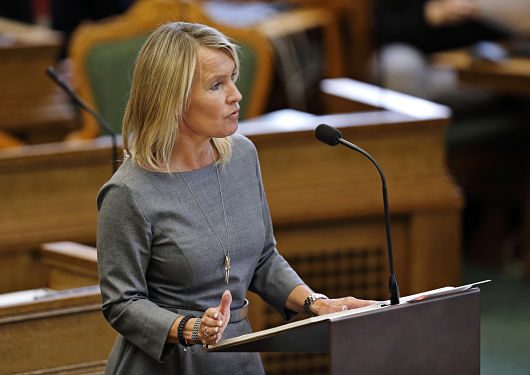
danish_politicsOn June 18, Denmark’s center-left government, the Social Democrats, were ousted out of the political limelight as the country moved dramatically to the far right in favor of the ring-wing, populist and anti-immigrant Danish People’s Party (D.P.P). The Danish People’s Party is often regarded with stigma both at home and abroad and is on the outskirts of Danish politics since its founding in 1996.

However, in the most recent elections, the D.P.P. came in second place with 21.1% of the votes, only 5.2% less than the number of votes received by the leading Social Democrats. According to preliminary results published by the DR.DK, Denmark’s national broadcaster, the center-right bloc that includes the D.P.P now holds a majority of 90 seats in Parliament, which, for the first time, has elevated the D.P.P. into the centerfold of Danish politics. The results of this election come on the heels of growing unrest within Denmark over issues related to immigration and the security of the Danish welfare state. Denmark, a socialist and uber-liberal country which was voted “happiest country in the world” last year, is one of the highest-functioning welfare state programs in the world. The thanks is owed to the Danish citizens paying the highest income taxes in the world, at 60.2%.

The Danish welfare state was created in 1933 following the Social Reform Act, which sought to redirect Denmark’s attention inwards following the loss of the last remnants of the former Danish Empire, which once included Southern Sweden, Northern Germany, Iceland and Norway (and continues to include Greenland and the Faroe Islands). A “Denmark for the people” mentality was adopted, which subsequently iterated outwards into a Scandinavian-socialist ethos which has traditionally regarded foreign aid as an obvious centerpiece of Danish foreign policy. Providing welfare services “from the cradle to the grave” for citizens at home, such as free childcare, education through university and healthcare, and providing international aid to citizens abroad was regarded as two sides of the Danish-socialist-mentality coin.

The recent elections reflect the ways in which some Danes have begun to adjust their thinking about the welfare state and its relationship to those outside the “Danish family.” Similar to the recent wave of anti-immigrant parties which have popped up throughout Europe, such as the Finns Party in Finland, the Progress Party in Norway, the Sweden Democrats in Sweden and UKIP in the United Kingdom, the D.P.P. frames itself as the voice of “Old Danes” who regard the growing influx of immigrants within Denmark as a threat to the Danish welfare state and the Danish way of life.

The presence of immigrants in Denmark, who make up around nine percent of the population country-wide, in conjunction with the recent surge of 14,000 mostly Muslim asylum seekers and the Copenhagen shootings of February 14 by the 22-year-old son of Palestinian immigrants, has produced a backlash of growing nationalist sentiment in Denmark. As a result, supporters of the D.P.P. have begun to implicitly redefine how “Denmark for the people” is understood. A motto that traditionally went unchallenged, given the historically monocultural and monoethnic nature of the Danish population, is now being reformulated by the D.P.P. to function more as “Denmark for the Danes;” as the D.P.P. has proposed slashing welfare entitlements for newly arrived immigrants and refugees into the country.

Increasing exclusivity regarding Danish welfare state benefits is being matched in Parliament by talk among the D.P.P and the Liberal Party that Denmark should cut back on foreign aid in order to channel more money into welfare entitlements for native Danish citizens, especially the elderly. In 1970, the world’s richest developed countries agreed to give point seven percent of their Gross National Income (GNI) annually to international development aid.

Historically, Denmark, along with Norway, Sweden, Luxembourg and the Netherlands, has been one of the few developed countries to actually commit to reaching this target. Proposals or talks of cutting foreign aid thus represent a dramatic break from Denmark’s historically extraordinary commitment to reaching the point seven percent goal. A survey conducted for the Ministry of Foreign Affairs has also found that right-wing political opinion about foreign aid is being matched in public opinion, as support among Danes for foreign aid has fallen by 15% in the last five years. The recent shift to the right in Denmark now leaves Sweden as the only country in Scandinavia in which the center-left continues to hold the majority of political power. The Swedish equivalent to the D.P.P. – the Swedish Democrats – also continue to be regarded as political pariahs in mainstream Swedish society.

Despite Denmark’s sudden swing to the conservative anti-immigrant right, the country currently continues not only to meet but to exceed the annual point seven percent foreign development aid target.

– Ana Powell

Sources: BBC, CNN Money DR, The Guardian New York Times 1, New York Times 2 OECD
Photo: Dagens

July 2, 2015
https://borgenproject.org/wp-content/uploads/borgen-project-logo.svg 0 0 Borgen Project https://borgenproject.org/wp-content/uploads/borgen-project-logo.svg Borgen Project2015-07-02 13:10:552024-12-13 17:53:59The Effect of Conservative Danish Politics on Foreign Aid
Page 26 of 56«‹2425262728›»

Get Smarter

  • Global Poverty 101
  • Global Poverty… The Good News
  • Global Poverty & U.S. Jobs
  • Global Poverty and National Security
  • Innovative Solutions to Poverty
  • Global Poverty & Aid FAQ’s
Search Search

Take Action

  • Call Congress
  • Email Congress
  • Donate
  • 30 Ways to Help
  • Volunteer Ops
  • Internships
  • Courses & Certificates
  • The Podcast
Borgen Project

“The Borgen Project is an incredible nonprofit organization that is addressing poverty and hunger and working towards ending them.”

-The Huffington Post

Inside The Borgen Project

  • Contact
  • About
  • Financials
  • President
  • Board of Directors
  • Board of Advisors

International Links

  • UK Email Parliament
  • UK Donate
  • Canada Email Parliament

Get Smarter

  • Global Poverty 101
  • Global Poverty… The Good News
  • Global Poverty & U.S. Jobs
  • Global Poverty and National Security
  • Innovative Solutions to Poverty
  • Global Poverty & Aid FAQ’s

Ways to Help

  • Call Congress
  • Email Congress
  • Donate
  • 30 Ways to Help
  • Volunteer Ops
  • Internships
  • Courses & Certificates
  • The Podcast
Scroll to top Scroll to top Scroll to top