• Link to X
  • Link to Facebook
  • Link to Instagram
  • Link to TikTok
  • Link to Youtube
  • About
    • About Us
      • President
      • Board of Directors
      • Board of Advisors
      • Financials
      • Our Methodology
      • Success Tracker
      • Contact
  • Act Now
    • 30 Ways to Help
      • Email Congress
      • Call Congress
      • Volunteer
      • Courses & Certificates
      • Be a Donor
    • Internships
      • In-Office Internships
      • Remote Internships
    • Legislation
      • Politics 101
  • The Blog
  • The Podcast
  • Magazine
  • Donate
  • Click to open the search input field Click to open the search input field Search
  • Menu Menu

Archive for category: Activism

Information and stories on social activism.

Activism, Global Poverty, USAID

Young Social Innovation Around the World

social_innovation
Countries are growing younger than ever. One quarter of the world’s population is made up of adolescents, and more than half of the world is under the age of 30.

Paired with technology and a global trend for social responsibility, the young majority is making headway in addressing youth crises and global issues.

While this demographic change poses potentially destabilizing risks, USAID is working to enable the youth bulge to make positive change in their communities through social innovation.

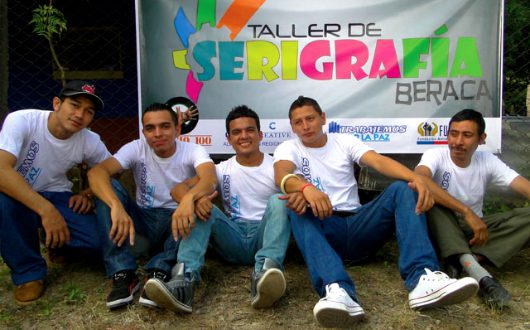
In Honduras, young people are mapping crime violence along its urban public bus systems. According to USAID, the United Nations and the Honduras National Police tracked 86 homicides per 100,000 people in 2011, the highest in the world. Due to gang violence and armed robbery, busses are ripe for extortion and murder. In June 2012, young Hondurans traveled through Tegucigalpa’s dangerous buses with a global positioning system (GPS) in order to develop blueprints for a public bus map for citizens to follow so they could avoid problematic hotspots. The GPS data was then entered into Google Earth.

This was a part of a USAID-led volunteer program. Members of the national anti-violence youth movement, Movimiento Jovenes contra la Violencia, took part in mapping fifteen of the busiest and most risky bus routes in their area, according to USAID.

The Kyrgyz Republic found USAID support when they experienced significant political and social conflict in 2010. Protests and violence, subsequently, gave way to a cynical youth population.

USAID partnered with Youth of Osh, a nongovernmental, secular organization from Osh, Kyrgyzstan. Youth of Osh leads community development projects in the city. In the October 2011 presidential election, USAID and Youth of Osh applied SMS technology to monitor the elections in more than 70 voting stations. They located approximately 1,300 violations via text. This was a groundbreaking accomplishment in political transparency in the Kyrgyz Republic’s election processes.

USAID continued to support the youth bulge in Haiti. Similarly to Honduras, USAID helped construct a mapping device for the urban St. Marc region. The maps pinpointed post-earthquake refugee spots. Thirty local Haitian youth roamed their streets to draw the blueprints.

USAID’s Frontlines also followed Sri Lanka’s diverse social communities. USAID funded a project that taught Sri Lankan youth how to create and broadcast documentaries about Sri Lanka’s people. Eighteen young reporters practiced in journalism, camera and audio equipment, and production and editing, according to USAID’s Frontlines: Youth & Mobile Technology–September/October 2012 issue. The team developed 45 stories that they called “Development Diaries.” USAID continued to support a second season covering minority voices and post-war issues.

Liberian students enrolled at the Kwame Nkruman University of Science and Technology in Ghana pursued master’s degrees thanks to a USAID program. The program follows a development plan sponsored by the U.S. Millennium Challenge Corporation Threshold Program, and looks to establish better management of land rights and access.

USAID’s LAUNCH energy forum on November 10-13, 2011, starred Gram Power, an energy tech company based in the United States but servicing India’s poor electricity market. The self-described “micro solution to India’s major energy woes” was co-founded by Yashraj Khaitan and Jacob Dickinson. The men both graduated from UC Berkeley in 2011 with Bachelors in Electrical Engineering and Computer Science.

The highly selective LAUNCH event led to Gram Power building its first micro-grid installation and electrification in the Khareda Lakshmipura village. They soon brought electricity to 200,000 homes in five years. Gram Power hopes to bring power to 1.4 million people by the end of 2016.

USAID also works in the Philippines, teaching young people at the University of Cebu the prospect of “technopreneurship.” USAID’s Innovative Development through Entrepreneurship Acceleration (IDEA) works with higher education engineering and science programs to engage students on the possibility of bringing their ideas to life.

IDEA offers the Global Entrepreneurship Symposium and Workshop, which teaches young students how to create products, research, understand the global market and work with venture capital, according to Frontlines.

By 2016, IDEA will have garnered more than $2 million, which more than matches the U.S. Government’s $1.5 million investment.

In addition to IDEA, USAID invested $34 million to help higher education in the Philippines. The programs offer study abroad opportunities in the United States and funds for many students to obtain master’s degrees in science and technology.

– Lin Sabones

Sources: USAID 1, USAID 2, USAID 3, USAID 4, USAID 5, United Nations Population Fund
Photo: Creative
July 18, 2015
https://borgenproject.org/wp-content/uploads/borgen-project-logo.svg 0 0 Borgen Project https://borgenproject.org/wp-content/uploads/borgen-project-logo.svg Borgen Project2015-07-18 10:43:052024-05-27 09:25:40Young Social Innovation Around the World
Activism, Global Poverty

A New Chapter Continues for Hydeia Broadbent

Hydeia Broadbent
Growing up in the ’90s, it is not easy to forget those who mustered up the courage to appear on nationally syndicated talk programs, where they detailed impactful incidents while addressing how they managed to not let it interfere with their lives. Hydeia Broadbent embodied that example, and years later she is still addressing an issue: smiling in the face of AIDS.

Since her birth on June 14, 1984, Broadbent, a Las Vegas native, has been HIV positive. Abandoned by her drug-abusing biological mother and raised by adoptive parents, the young Broadbent sought medical treatment throughout her early life, traveling from state to state in a desperate attempt to find an answer to the life-threatening disease.

The time would come when Broadbent, at five-years-old, was enrolled at the Maryland-based National Institutes of Health (NIH). There, Broadbent garnered attention from famous AIDS activist Elizabeth Glaser, who branded Broadbent her hero and willingly asked Broadbent’s mother, shortly before her death, if the young AIDS sufferer could speak publicly of her experience.

Her mother agreed, and what soon followed were iconic visuals featuring Broadbent advocating for increased awareness of the misconceptions concerning HIV/AIDS.

Among those pieces included the 1992 Nickelodeon televised special featuring famed basketball player Magic Johnson. The televised event presented a group of kids whose lives had been altered by the contraction of AIDS, and also featured a weeping Broadbent who cried and yearned for the comfort of former playmates that lost their lives to AIDS.

The awareness statement soon accumulated not only news coverage, but also assorted views from several activists and entertainers, including Broadbent’s favorite singer, Janet Jackson.

Just two years following the child-targeted special, Broadbent already possessed various experiences and accolades under her belt. The young activist toured with the likes of Billy Ray Cyrus at AIDS-benefit concerts, established the Hydeia L. Broadbent Foundation and soon attained her first honorific recognition from the Black Achievers Awards, as documented in the March 1994 issue of JET Magazine.

The philanthropic win would open the door to more opportunities for Broadbent to voice the adjustments she had to make as means to survive with an AIDS infection.

From guest college lectures to documentary segments, Hydeia Broadbent earned eligibility as a guest attendant on a 1996 episode of The Oprah Winfrey Show.

During her televised appearance, Broadbent disclosed the horrors of how AIDS altered her immunity and health. The tiny advocate shared that fungus was growing on her brain and that blood infections increased her chance of dying, but among the most difficult for Broadbent to fathom was the reality that AIDS-infected friends of her own had died.

Her emotional plea was not the only massive reception-generator of 1996; an esteemed hearing at a Californian Republican rally would position Broadbent for popular philanthropic stardom.

“I am the future, and I have AIDS” served as vital words that emphasized Broadbent’s command upon the political stage and would go on to captivate a nation, placing pressure on politicians to up the ante on awareness of and medical tactics towards combating the harrowing sexual disease.

With high achievements and laudable recognition channeling from coast to coast, Broadbent felt inner torment eating away at her as she struggled with the overwhelming responsibilities of being a humanitarian success, all while battling a deep depression. By the late ’90s, it became all too much for the young AIDS sufferer.

From 1998 to 2011, Broadbent kept a low profile to explore what she had left of her youthful years. But during her public absence, Broadbent’s name still managed to surface in scarce reports and rare public television appearances.

The Broadbent family’s book, “You Get Past the Tears,” published in 2002, and their 2004 feature on ABC’s “Extreme Makeover: Home Edition” were close enough to what the nation would get as far as Hydeia Broadbent’s health progress was concerned.

However, she would not be missing from the public eye for long. In May 2012, Broadbent’s name reemerged when she was tapped for commentary in a CNN article detailing her involvement with the ESPN documentary “The Announcement,” a visual featuring AIDS sufferer Magic Johnson, who had previously met Broadbent in his Nickelodeon-sponsored special decades prior.

Within the news report, Broadbent was deemed a “life changer” by Johnson for her courage in sharing her turbulent struggles of living with AIDS at such a young age.

Further media buzz skyrocketed when Broadbent was highly requested by audiences to be featured in a 2014 “Where Are They Now” special on The Oprah Winfrey Network (OWN), catching viewers up on how her personal life has progressed, specifically concerning romantic relationships and steady donative work.

Broadbent, now 31-years-old, is still vowing to remain a pivotal voice in the HIV/AIDS community to convey her message that AIDS is neither something to play around with nor something that should be viewed as an easy way of living.

Broadbent feels the burden day-in and day-out of taking a handful of medications each day to prevent potential AIDS-induced infections, citing the responsibility as a “life sentence” rather than a “death sentence,” especially when dealing with financial hardships relating to medical insurance.

Nevertheless, the series of frustrations stemming from medical visits has not interrupted her diligent work ethic as a key speaker for AIDS awareness programs.

As recently as February 2015, Broadbent has added another endorsement to her extensive list of accolades: she was chosen as a partner for “Ampro Pro Style” beauty line to raise awareness of the National Black HIV/AIDS Awareness Day. This was part of a campaign to increase efforts to educate black communities on the basics of how to prevent sexually transmitted diseases.

Yet it is not only endorsements that Broadbent continues to accumulate on her shelf of awards. Known for the lectures and speeches she gives yearly in college and academic settings, in early June 2015, she secured a keynote speaker role at Louisiana-based Southern University’s annual O.M.G. Youth Conference, to elaborate on the AIDS crisis with young women in a “girl talk-style outlet.”

With further academic orations and pending documentary plans still going strong, Broadbent works effortlessly to remind the unaware of the dangers that await them if protection is not fully recognized when engaging in sexual activity.

Broadbent, whose hometown of Las Vegas has commemorated a holiday in her honor, believes that with time and the right medical innovations, HIV/AIDS will eventually be fully eradicated. She concedes, however, that it is going to take time and full knowledge from the public to understand that this is not a disease to joke around with.

As the optimistic Broadbent proclaimed to CNN reporting staff: “[The current generation] thinks [they] can pop a pill and be OK, [but] they don’t know the seriousness of the disease, [let alone medicated] side effects and financial realities of the situation. They really don’t know that you can die.”

– Jefferson Varner IV

Sources: CNN, People, Las Vegas Sun, The Advocate, Huffington Post, PR Newswire, POZ
Photo: Wikimedia Commons

July 18, 2015
https://borgenproject.org/wp-content/uploads/borgen-project-logo.svg 0 0 Borgen Project https://borgenproject.org/wp-content/uploads/borgen-project-logo.svg Borgen Project2015-07-18 09:03:122024-06-04 05:25:33A New Chapter Continues for Hydeia Broadbent
Activism, Education, Global Poverty, Women and Female Empowerment

Michelle Obama Launches Global Education Campaign

Michelle-Obama-Global-Education-Campaign
At a luncheon on June 29, Michelle Obama announced the introduction of an international global education campaign called “Let Girls Learn,” focuses on educating adolescent girls worldwide.

To begin her speech, Obama said that about 31 million young girls around the world are not in school. Many of these girls lead difficult lives because of the lack of sufficient education in their area. Girls who are not educated are more susceptible to HIV/AIDS and other life-threatening diseases. They are less likely to build successful lives for themselves without proper education.

Bendu Fafana, a young girl from Bong Country, Liberia, said that attending school was challenging for her because her father was not present in her life and her mother had passed away.

“I dropped from school because I was not getting any support,” Fafana said.

In a video presented by the White House, President Barack Obama said that there are studies that prove that educated girls are much less likely to get married early. Not only will their future children be healthier, but the family will have a better chance at a job that creates sufficient income for the children. This creates a chain of healthy living, which can generate better-functioning societies that lead to greater opportunities for economic growth for both developing and developed countries.

Michelle Obama said that “Let Girls Learn” will provide volunteers from groups like the U.S. Peace Corps to work with local leaders to bring education to girls like Fafana. She also said that “Let Girls Learn” is not only a philanthropic aspiration, but is also vital for foreign policy and international development.

Not only will this endeavor help the U.S. economically, but this opportunity can also help produce worldwide equality. Obama said that economic obstacles are not the only things that inhibit girls from receiving schooling: much of the problem is about views and cultures.

“It’s about whether societies cling to laws and traditions that oppress women,” she said.

“Let Girls Learn” will fund a program in North Africa and the Middle East that will encourage the native girls to learn about social issues in their communities and societies. The campaign will also provide a space that will encourage girls to reflect upon human rights and democracy. In addition, the initiative will contribute to organizations against gender-based violence.

With help from USAID, the U.S. Department of State, the Millennium Challenge Corporation and the U.S. Peace Corps, “Let Girls Learn” will increase efforts to produce tactical partnerships and political goals that will help adolescent girls succeed.

Alexa Ofori, a Peace Corps Volunteer in Cambodia, gave her thoughts about one of the goals of “Let Girls Learn.”

“Girl empowerment is for a girl to be able to have the self-esteem and, really, the confidence to be able to feel like they can do anything they put their minds to,” she said.

This education plan includes these programs and at least 24 others that will provide information about proper health and nutrition, prevent child, early and forced marriage, ensure safety for young children and, of course, deliver education to areas without.

Learn more about Let Girls Learn.

– Fallon Lineberger

Sources: My San Antonio, White House 1, White House 2
Photo: Share America

July 15, 2015
https://borgenproject.org/wp-content/uploads/borgen-project-logo.svg 0 0 Borgen Project https://borgenproject.org/wp-content/uploads/borgen-project-logo.svg Borgen Project2015-07-15 10:54:232024-12-13 17:51:53Michelle Obama Launches Global Education Campaign
Activism, Advocacy, Education, Global Poverty

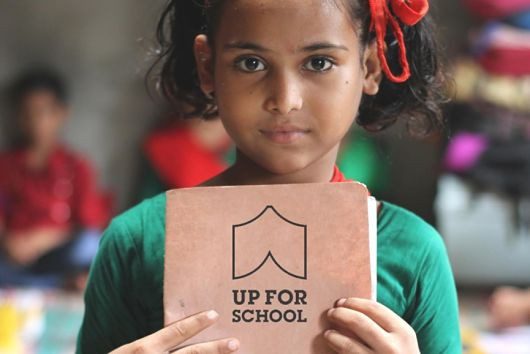
Should I Sign the Up for School Petition?

Up_for_School_Petition
At the time of this posting, eight million people and counting have signed the Up for School Petition. These people want to make sure that children all over the world get an education — a good one. One that will help end the cycle of poverty.

This includes children displaced due to natural disasters or wars. This includes children living in poverty so bad that their parents cannot afford to send them to school, and the children themselves are forced to work. This includes girls who are married off as children or who are unmarried but get pregnant while still of primary or secondary school age or who have their period but no appropriate way to take care of the blood.

Up for School, a petition sponsored by A World at School, demands government leaders to fulfill their promise made at the U.N. in 2000, which guarantees all out-of-school children will be in school before the end of 2015. As Hellen Griberg, A World at School Global Youth Ambassador, reminded world leaders of the Up for School Petition at the Oslo Summit for Education Development on July 7, 2015, “We know that nothing changes without pressure. Therefore, we have been building support in every corner of the world.”

In 2000, 102 million primary school children were out of school. By 2011, the number dropped to 57 million. Progress was being made in developing countries. Primary school enrollment reached 90 percent. Literacy rates were on the rise and gender gaps were narrowing. In 2012, however, the number started rising again to 58 million children out of school. The number is still rising and has now reached 59 million.

Along with this increase in numbers is a decrease in funding. International aid to basic education started falling in 2011 for the first time since 2002. In 2014, only one percent of overall humanitarian aid went to education. Now progress is stalling, placing the 2015 target at great risk.

Yet education is crucial to overcoming poverty. The United Nations Children’s Fund considers education to be critical in achieving all the Millennium Development Goals. Education provides future generations with the tools to fight poverty, disease and gender disparity — all issues that need work in order for the world to improve the environment, the economy and our security. From the midst of today’s primary school children, our future leaders will emerge — our educators, doctors, scientists, economists, heads of state and all the others who will be needed to support a developed world. We may not know them by name now, but one day they will be making decisions about our world.

“Sometimes we wait for others and think that a Martin Luther [sic] should raise [sic] among us, a Nelson Mandela should raise [sic] among us and speak up for us. But we never realize that there are normal humans like us, and if we step forward, we can also bring change just like them,” asserted the Nobel laureate, Malala Yousafzai, on the June 18, 2015 airing of The Daily Show. Yousafzai is the survivor of the Taliban’s assassination attempt in 2012 for openly supporting girls’ right to education.

Why should I sign the Up for School Petition? I cannot think of a reason why anyone should not — or cannot. Most of us may not have had a voice at the Oslo Summit for Education Development on July 6-7, 2015 or at the International Conference on Financing for Development in Ethiopia on July 13-16, 2015. We also will not have the opportunity to speak at the U.N. Summit to adopt the post-2015 development agenda on September 25-27, 2015. What we can do, though, is visit the Up For School Petition website to sign the petition now. I just did. It took three minutes.

– Janet Quinn

Sources: United Nations 1, United Nations 2 UNICEF, UpWorthy, A World at School 1, A World at School 2
Photo: A World at School

July 15, 2015
https://borgenproject.org/wp-content/uploads/borgen-project-logo.svg 0 0 Borgen Project https://borgenproject.org/wp-content/uploads/borgen-project-logo.svg Borgen Project2015-07-15 10:28:532024-06-04 03:53:06Should I Sign the Up for School Petition?
Activism, Global Poverty, Inequality

One Direction Launches Anti-Poverty Campaign

One-Direction-Anti-Poverty-CampaignOne Direction is coming to Seattle. The world-renowned teen heartthrob band One Direction has recently made an important addition to their laundry list of achievements. The band members have collectively launched an impressive anti-poverty campaign that also seeks to tackle inequality and slow down climate change.

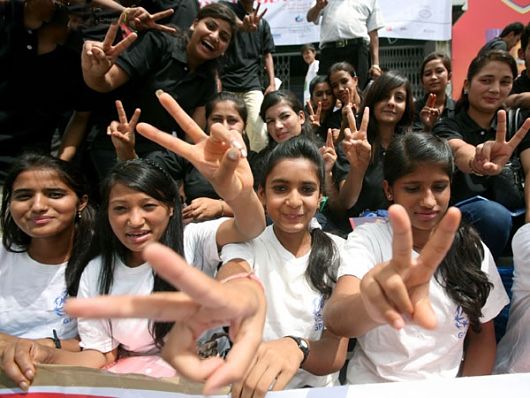
They have named the initiative the Action/1D manifesto, and have asked their millions and millions of fans across the globe to contribute. Fans are encouraged to share powerful, creative pieces that will help raise awareness of our world’s most pressing issues.

The band’s initiative is part of the wider action/2015 campaign. This larger campaign is a global citizens movement founded on the idea that 2015 can be the pivotal year when the world finally sets out to tackle persisting global issues like poverty.

The boys stress that their initiative—and the campaign as a whole—will not see success unless World Leaders are successfully swayed. Change can only happen if the harnessed power of everyday people compels leaders to make long-term commitments.

Although they are speaking out to a primarily younger fan base, they still wholeheartedly believe in the power of everyday citizens. The band released a statement explaining, “Young people really do have the power to help end poverty, tackle inequality and to stop the dangerous climate change.”

In fact, the band believes that now is the time for members of the younger generation to take action, and create a united voice that is loud enough to reach the ears of leaders worldwide.

The band has released a collaborative video asking fans to get involved by posting videos and pictures depicting how they would “celebrate” the campaign’s victory. Another option for fans is to answer the question, “What would your ideal future look like?”

The plan is for fan-sourced content to be delivered in a single video depicting one strong, unified, socially driven message. Each band member will also release his own individual video in the months to come. Louis will reportedly be the first to do this, with plans to release his personalized video on July 13.

One Direction is the most recent high-profile group to join many other famous personalities in supporting the 2015 campaign. Emeritus Archbishop Desmond Tutu, Malala Yousafzai, Sir Richard Branson, Shakira, Ben Affleck, Bill and Melinda Gates, and Bono have already issued their campaign support.

When people in the global limelight choose to utilize their power to harness support for important issues like poverty, significant changes can be made. According to Declan Fahy, an associate professor at American University’s School of Communication, celebrities have the ability to “personify ideas and social issues.”

By showing the world how important issues like poverty, inequality, and climate change are to them, One Direction is encouraging their fans to adopt similar perspectives. By putting a face on these complex issues, famous people can make their audience feel more connected to the problem, and even mobilize them to take action.

As one of the biggest bands in the world, One Direction has the power to bring the most important global issues to the forefront. Especially by encouraging a younger generation to care about these issues, the band could help make huge strides in the worldwide fight against poverty.

– Sarah Bernard

Sources: Daily Star (UK), Think Progress
Photo: Cambio

July 13, 2015
https://borgenproject.org/wp-content/uploads/borgen-project-logo.svg 0 0 Borgen Project https://borgenproject.org/wp-content/uploads/borgen-project-logo.svg Borgen Project2015-07-13 14:03:312024-12-13 17:51:55One Direction Launches Anti-Poverty Campaign
Activism, Global Poverty, Philanthropy

Rosie Perez Sets Her “View” on HIV/AIDS Activism

AIDS_activism

It is pretty hard to miss Rosie Perez these days, considering the fact that the outspoken actress currently serves as a regular on ABC talk program “The View.” Yet, prior to daytime work, when she was stealing eyes with impeccable dance moves with Spike Lee in the renowned classic “Do the Right Thing,” the Puerto Rican entertainer frequently made a cherishing landmark in HIV/AIDS activism.

Like so many in the late 1980s, Rosie Perez was unaware of the growing HIV/AIDS epidemic. Her knowledge of the crisis would soon be redefined after noting personal acquaintances contracting the disease and the “[once-undivided] sexual lives” within New York City “slowly but surely” separating.

As early as 1991, Perez ventured as an AIDS activist, when she first lectured in local inner-New York City high schools about alarming statistics concerning the treacherous sexual disease and educated youths on safe-sex protection.

It would not be until mid-April 1993, following her feature in the theatrical “Untamed Heart,” that Perez would move more into the philanthropic scene by taking part in events like a 5-hour fundraiser AIDS Dance-a-thon, where proceeds would benefit several AIDS foundations, especially AIDS Project Los Angeles. Perez would go on to become a recurring donor for the event years to come, including a high-profiled 2004 feature with fellow philanthropist Lil’ Kim.

By 1995, Ms. Perez used her star power to educate national audiences of the AIDS epidemic through various media outlets, from radio guest spots on Hot 97 to televised co-hosting slots on ABC’s “In a New Light: Sex Unplugged.” The latter would prove essential with praise boasting from “POZ” magazine, of which the publication cited Perez’s contribution as the “most effective sex-ed […] ever aired by [prime time] commercial grids.”

But what would soon be even more significant came in May 1996 when the Latina megastar delivered an outspoken speech during the charitable event Central AIDS Walk. Throughout her oration, Perez achingly recollected a close friend dying of AIDS and went on to urge New York politicians to increase attention of the crisis.

With Perez’s address attracting headlines like “The New York Daily News,” the annual AIDS Walk would accumulate a staggering $5 million for the nonprofit Gay Men’s Health Crisis (GMHC).

Three years following the success, Perez created even more buzz with her bold statement to “MTV,” in which the Nuyorican star denounced pop stars like Britney Spears for not using their “star power” as an advantage to voice greater awareness of the AIDS crisis, instead “wast[ing]” it upon meaningless nonsense.

As Rosie Perez’s philanthropic routines continued to grant her access within the multimedia stream, Perez’s estranged mother, Lydia, contacted “The New York Daily News” in July 2000, alleging that her daughter was not “returning her phone calls,” in the wake of her decreasing health caused by AIDS. The ignored phone call allegation was immediately shot down when Perez and her publicist confirmed that financial assistance offered to Lydia was accepted, yet strangely, assistance from Perez’s philanthropic allies was declined.

Despite her mother’s proposed claims, Rosie Perez attended the bedside of dying Lydia shortly before her passing.

From the aftermath of her mother’s death to a backfire of her April 2006 protest outside the United Nations building, the vibrant “In Loving Color” choreographer never steered away from her activism, instead, embarking further in enhancing her charitable causes.

A December 1, 2006 visual showcased such, where Rosie Perez served as a director and feature in the Spanish PSA “Join the Fight,” an advert aimed at the Latino community that disclosed a statistically increased rate of AIDS within men, specifically closeted gays who “hide” due to difficulty of acceptance. Six days following the televised release, Perez elaborated further on the growing matter during the annual Voices of Color Lecture at Hamilton College.

The tireless efforts yielded by Perez may have been at once “minimally news-covered,” but the AIDS activist would earn her dues beyond unpredictable measures.

Immense recognition occurred when President Barack Obama appointed Perez to the Presidential Advisory Council on HIV/AIDS (PACHA). On February 1, 2010, Perez was officially sworn into office, securing her title to transmit information and tips to the president, alongside providing input for the National HIV/AIDS strategy.

Since her astounding honorific title, the hard-working Perez has never stopped raising awareness of HIV/AIDS, regardless of recent-age medical treatment and a showering of accolades (among them an annual Cielo Latino Award named after her). Utilizing her power on “The View” as the perfect platform to remind audiences of the dangers triggered by AIDS, Rosie Perez is among the brave working to put an end to an epidemic that holds 33 million global lives infected and that adds a new victim every 9.5 minutes within American grounds.

– Jefferson Varner IV

Sources: NY Daily News 1, POZ, Kismet Films, White House, Hamilton College, blackfilm.com, MTV, ‘Latin American’ Rhythm Magazine Spokesman, PR NewsWire, Los Angeles Times, NY Daily News 2
Photo: Inquisitr

July 13, 2015
https://borgenproject.org/wp-content/uploads/borgen-project-logo.svg 0 0 Borgen Project https://borgenproject.org/wp-content/uploads/borgen-project-logo.svg Borgen Project2015-07-13 09:47:542024-05-27 09:25:36Rosie Perez Sets Her “View” on HIV/AIDS Activism
Activism, Global Poverty

A Call for Youth Activism in the Philippines

youth_activism

In June 2015, the Senate of the Philippines made its final amendments to the Philippines Disaster Risk Reduction Act, calling on young Filipinos to mobilize during calamities and disasters. The amendments make the younger generation a key part of disaster relief and Filipino activist culture.

The Philippines are extremely vulnerable to climate change. Every year, typhoons, earthquakes and storm surges hit the islands with vigor. According to Senator Aquino, “the youth are playing a vital role in our pursuit of overall disaster resilience. They have served as a beacon of hope and catalyst of action.”

What are the kids saying about it? They’re using what they know best to bring about change: social media.

The #MoveTawiTawi movement brought together 1,500 young activists to workshop solutions on how to improve Tawi-Tawi, an island providence of the Philippines.

The youth activists discussed everything from drug and violence issues to waste management and biodiversity. They analyzed the problems, found solutions and presented them to a panel of experts. By participating in this type of workshop, the young generation of future leaders learned about problem-solving by tackling real life issues.

Activism has proved to be a key tool for the Philippines throughout history, and there is hope of seeing more activism-related legislation in the future as a result of recent youth mobilization.

Harry Roque Jr., a Filipino attorney and activist that may be running for a seat in the Philippines Senate, affirmed in The Manila Standard News his hopes to advocate for legislation that will help fight poverty.

“I want to make activism not only as a tool for the parliament of the streets, but as a main weapon in crafting legislation to fight poverty. I want to bring activism to the chambers of the Philippines Senate,” Roque Jr. writes in his opinion piece. He continues promoting youth activism for human rights, the environment, women’s rights and freedom of speech.

With activists occupying Senate seats and a population of young, motivated individuals, the Philippines could see a great deal of positive change in its future.

– Hannah Resnick

Sources: The Standard, Prevention Web, Rappler
Photo: Anakbayan Toronto

July 13, 2015
https://borgenproject.org/wp-content/uploads/borgen-project-logo.svg 0 0 Borgen Project https://borgenproject.org/wp-content/uploads/borgen-project-logo.svg Borgen Project2015-07-13 08:25:582024-05-27 09:25:34A Call for Youth Activism in the Philippines
Activism, Global Poverty, United Nations

How You Can Celebrate International Youth Day 2015

International-Youth-Day

August 12, 2015 marks the fifteenth commemoration of the United Nations International Youth Day. The annual celebration draws together young people from around the world to work as agents of change.

Each year, the U.N. highlights a particular issue that affects the world’s young people. This year’s recently announced theme, “Youth Civic Engagement,” will draw international attention to the importance of youth involvement in political, economic and social affairs. The U.N. asserts that youth participation in public life is necessary to achieve global sustainable development.

This August 12, young people around the world will join the U.N.’s movement to get involved in civic activities. Here is how you can be a part of the International Youth Day 2015 celebrations:

Use Social media

The U.N.’s Inter-Agency Network on Youth Development wants to hear from you! Use social media platforms like Twitter, Facebook and Instagram to spread the word about the importance of civic engagement. Use the hashtag #YouthDay to connect with young people across the globe.

Advocate

While youth advocacy is always an important part of International Youth Day celebrations, this year’s theme emphasizes youth involvement in public life more strongly than ever. Civic engagement means taking action, so choose a cause that means something to you and get started!

You can raise awareness by creating info sheets or flyers and placing them at local schools, libraries and community centers. You can also contact local media outlets and ask them to run a feature on your issue. The more publicity your issue gets, the better.

Call or email your congressional leaders and ask them to support your cause. Gather a group of friends to lobby your local officials on or around August 12.

With all the work you put into your specific cause, do not forget to call attention to the limited opportunities for youth engagement in many areas of society. Talk with leaders in your school, faith community and local organizations, and ask them to strengthen programs that promote involving youth in civic activities.

Plan an event

Organizing a community event to promote International Youth Day is a great way to raise awareness and funds for a cause of your choice. You can host a concert and invite local musicians to play, or plan a festival or block party and invite a distinguished individual to speak. You can even organize an exhibit featuring art from young people in your community.

Share your engagement

If you decide to plan an event for International Youth Day 2015, do not forget to document it and share photos with youth@un.org. If you share your event with youth@un.org, the organization will post the information to its global map of International Youth Day activities. Your events could inspire others to advocate for youth civic engagement.

The most creative photo submissions will be displayed at the U.N. Headquarters, shared online via official U.N. social media and used in the World Youth Report 2015. Be sure to include this copyright release form so the U.N. can share your photo. The deadline for submissions is July 23.

– Caitlin Harrison

Sources: UN 1, Department of Economical and Social Affairs 1, Department of Economical and Social Affairs 2, UN 2
Photo: Nam News Network

July 12, 2015
https://borgenproject.org/wp-content/uploads/borgen-project-logo.svg 0 0 Borgen Project https://borgenproject.org/wp-content/uploads/borgen-project-logo.svg Borgen Project2015-07-12 11:19:202024-05-27 09:25:41How You Can Celebrate International Youth Day 2015
Activism, Global Poverty, Technology, USAID

Global Development Lab Brings Silicon Valley to Washington

Global Development Lab Brings Silicon Valley to Washington-TBP

USAID’s mission to fight global poverty has just received significant support with the recent addition of the Global Development Lab. USAID has long been the leading government agency seeking to alleviate poverty, yet their mission has primarily been that of implementation. The agency is now not only committed to the physical deployment of aid, but also the development of future relief systems.

Founded in April of 2014, the new subdivision seeks to change the ways in which aid is delivered and developed. According to the official website, “The U.S. Global Development Lab is a new entity within USAID that brings together a diverse set of partners to discover, test, and scale breakthrough solutions to achieve what human progress has only now made possible—the end of extreme poverty by 2030.”

The Global Development Lab is bringing the fight against extreme poverty into the 21st century information age. Its aim is to use strategies that top technology companies have used, such as crowd sourcing, big data collection, and constant research and development to find the best solutions in terms of ending extreme poverty.

USAID has appointed Ann Mei Chang as Executive Director for the Global Development Lab. Chang worked for twenty years in Silicon Valley, spending eight of them working for Google as lead engineer of its mobile division. With both experience in the technology and nonprofit sectors, Chang brings a fresh outlook on new ways to implement global development.

The lab is revolutionary in its mission to use resources and partners from both the public and private sectors. The Global Development Lab is partnered with technology companies that are synonymous with innovation. Microsoft, Intel and Nike are listed as cornerstone sponsors. Many of the nation’s top universities, including the University of California, Duke and the Massachusetts Institute of Technology, have also partnered with the lab. USAID hopes that these partnerships will “leverage the combined skills, assets, technologies, and resources of the public, private, and nonprofit sectors to deliver sustainable development impact.”

USAID and its new Global Development Lab are not only attempting to alleviate extreme poverty through donations and other tried methods, but the agency is now attempting to end the suffering of millions around the globe by seeking cutting edge solutions through science, innovation, and collaboration.

– Joe Kitaj

Sources: USAID, The White House
Photo: USAID Blog

July 11, 2015
https://borgenproject.org/wp-content/uploads/borgen-project-logo.svg 0 0 Borgen Project https://borgenproject.org/wp-content/uploads/borgen-project-logo.svg Borgen Project2015-07-11 11:58:462024-12-13 17:51:41Global Development Lab Brings Silicon Valley to Washington
Activism, Advocacy

The Movement to End Child Trafficking in India

Bachpan-Bachao-Andolan-End-Child-Trafficking

Bachpan Bachao Andolan, one of the largest organizations in India that fights child labor and trafficking, filed a complaint on June 24, claiming that there is child labor occurring in south Delhi.

The district task force and a team of police carried out a raid and rescue operation in various south Delhi restaurants, clothing stores and jewelry stores. 24 children were rescued; 16 were between the ages of 10-14, and the rest were no older than 18.

According to the BBA website, in the last month the organization has rescued 124 trafficked children “working as bonded labors across occupations and processes like Zari units, jeans and garment outlets, shoes and slipper units, eating joints and bindi-making units.” These children worked long hours, often between 12 to 14 hours, without any wages.

“Child laborers continue to work across the capital despite various laws and directions of the court,” said BBA chairperson R.S. Chaurasia. “Thousands of children are still working in the small eating joints and hotels. More painful is the fact that adults working in thousands of shops and factories are not getting the prescribed minimum wage, making them send the children to such places.”

Children are often trafficked from vulnerable countries when they face desperation, a lack of basic resources and the promise of a better future. A 15-year-old boy from Nepal was convinced by a distant relative (who ended up being a trafficker) to leave his hometown and come to Delhi for employment and money that could help the family back home in Nepal. “After the earthquake in Nepal, conditions in my hometown were very difficult,” said the boy. “Me and my family were left with no work, no money and food.”

This boy (whose name has been withheld for anonymity) worked at a small hotel in Delhi under very inhumane conditions. His hands were severely wounded after long hours of cutting vegetables and cleaning pots and pans in the kitchen, but his “employers” failed to provide him with medical services. His cuts were crudely and cheaply stitched together at a local place.

According to the BBA website, “Hundreds of millions of children throughout the world are engaged in work that deprives them of adequate education, health, leisure and basic freedoms, violating their rights. Of these children, more than half are exposed to the worst forms of child labor, such as work in hazardous environments, slavery or other forms of forced labor, illicit activities such as drug trafficking and prostitution, as well as involvement in armed conflict.” Child trafficking in India is a dire issue, especially today.

Bachpan Bachao Andolan is India’s largest grassroots movement to end the trafficking of children in India and to provide children with their basic human rights. Since October 2014, BBA has rescued over 83,500 trafficked children, enslaved children and children oppressed under child labor. BBA also helps these children assimilate into society after they are freed, helping them regain trust.

BBA was established by Kailash Satyarthi in 1980, when child labor was not recognized as a problem by the Indian government, media and public discourse. Since the organization’s beginnings, it has focused its efforts largely on the rescue operations of children in various dangerous environments such as brick kilns, stone quarries and carpet factories. It also runs rehabilitation centers for these rescued children.

BBA has demanded policy changes in government legislation to address child labor and anti-trafficking laws. The Supreme Court of India first addressed child labor and trafficking when an appeal was submitted in April 2011 by BBA. Since then, the Indian government has ratified the Palermo Protocol, and laws have been incorporated into the Criminal Law Amendment Ordinance.

– Margaret Anderson

Sources: BBA 1, BBA 2, IB Times
Photo: The National

July 8, 2015
https://borgenproject.org/wp-content/uploads/borgen-project-logo.svg 0 0 Borgen Project https://borgenproject.org/wp-content/uploads/borgen-project-logo.svg Borgen Project2015-07-08 17:45:232024-05-27 09:25:44The Movement to End Child Trafficking in India
Page 25 of 56«‹2324252627›»

Get Smarter

  • Global Poverty 101
  • Global Poverty… The Good News
  • Global Poverty & U.S. Jobs
  • Global Poverty and National Security
  • Innovative Solutions to Poverty
  • Global Poverty & Aid FAQ’s
Search Search

Take Action

  • Call Congress
  • Email Congress
  • Donate
  • 30 Ways to Help
  • Volunteer Ops
  • Internships
  • Courses & Certificates
  • The Podcast
Borgen Project

“The Borgen Project is an incredible nonprofit organization that is addressing poverty and hunger and working towards ending them.”

-The Huffington Post

Inside The Borgen Project

  • Contact
  • About
  • Financials
  • President
  • Board of Directors
  • Board of Advisors

International Links

  • UK Email Parliament
  • UK Donate
  • Canada Email Parliament

Get Smarter

  • Global Poverty 101
  • Global Poverty… The Good News
  • Global Poverty & U.S. Jobs
  • Global Poverty and National Security
  • Innovative Solutions to Poverty
  • Global Poverty & Aid FAQ’s

Ways to Help

  • Call Congress
  • Email Congress
  • Donate
  • 30 Ways to Help
  • Volunteer Ops
  • Internships
  • Courses & Certificates
  • The Podcast
Scroll to top Scroll to top Scroll to top