• Link to X
  • Link to Facebook
  • Link to Instagram
  • Link to TikTok
  • Link to Youtube
  • About
    • About Us
      • President
      • Board of Directors
      • Board of Advisors
      • Financials
      • Our Methodology
      • Success Tracker
      • Contact
  • Act Now
    • 30 Ways to Help
      • Email Congress
      • Call Congress
      • Volunteer
      • Courses & Certificates
      • Be a Donor
    • Internships
      • In-Office Internships
      • Remote Internships
    • Legislation
      • Politics 101
  • The Blog
  • The Podcast
  • Magazine
  • Donate
  • Click to open the search input field Click to open the search input field Search
  • Menu Menu

Archive for category: Refugees

Refugees

In Search of Stability: Ten Facts About Refugees in South Africa

Refugees in South Africa
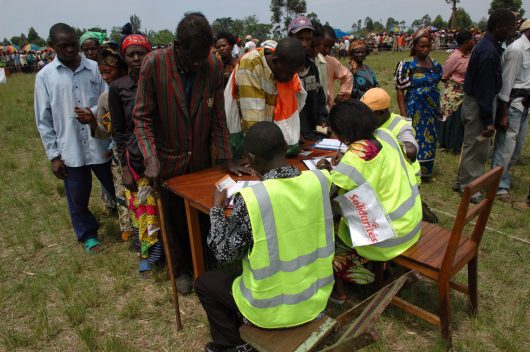
Refugees in South Africa face many hardships as they search for safety. A backlog of refugee applicants leads to difficulty finding jobs and poor access to government services. Meanwhile, many refugees experience prejudice and are blamed for escalating crime.

Ahead are 10 facts about refugees in South Africa.

  1. The majority of refugees in South Africa come from countries in Northern Africa.
    These countries include Angola, Somalia, Liberia, Rwanda, Ethiopia, Zimbabwe, Burundi and the Democratic Republic of the Congo (DRC). Many refugees see South Africa as a gateway to other continents such as Europe and North America. South Africa is the wealthiest and most developed part of Africa, making it an ideal place for migrants to seek refuge.
  2. Refugees flee their countries for many reasons.
    Most African refugees flee their home countries because of financial crises, cost of living, military crime or high rates of unemployment. Corrupt governments can create instability that drives people from their homes. For example, so many people died in the 1998 outbreak of fighting in the DRC that it was labeled the world’s deadliest conflict since World War II.
  3. Refugees often face violence or treacherous terrain while crossing the border.
    If migrants are fortunate enough to get past police patrols and wildlife, they may wind up in the hands of gangs known as the Guma Guma. The Guma Guma have terrorized migrants fleeing to South Africa for many years. They operate in disguise and behave ruthlessly.
  4. The South African government is required to protect all refugees.
    The United Nations High Commissioner for Refugees (UNHCR) “has liberal asylum legislation that incorporates all basic principles of refugee protection including freedom of movement, the right to work and access to basic social services.” This includes access to health facilities and school enrollment.
  5. South Africa does not have any refugee camps.
    Refugees live mostly without assistance in urban areas and must seek out government buildings if they require additional help. One of the UNHCR’s focuses in South Africa is building its capacity to serve refugees.
  6. Gaining refugee status requires lots of paperwork.
    Refugees must obtain a section 22 permit to be protected from deportation. According to the Department of Home Affairs, all migrants who enter the Republic of South Africa must claim to be asylum seekers before receiving asylum transit permits. Migrants then have 14 days to report to the nearest Refugee Reception Office at the Department of Home Affairs.
    At the Reception Office, migrants’ fingerprints are recorded and initial interviews are conducted. Permits are valid for six months and allow holders to freely work or study in South Africa until their permits expire.
  7. It costs nothing to apply for refugee status.
    There is no cost to apply for refugee status in South Africa. This contributes to the volume of people fleeing there.
  8. South Africa has more refugees than it can handle.
    Due to the high volume of migrants requesting refugee status in South Africa, the status determination process is overwhelmed with applications. Additionally, social service programs face challenges when asylum seekers are allowed to use various services before conclusive decisions are made about their status.
  9. Refugees have to fend off xenophobic attacks.
    Xenophobia is defined as the hatred or fear of foreigners. Xenophobic violence targeted at migrants began in 2008 and hasn’t let up. In May 2015, approximately 1,000 Burundian and Congolese refugees were forced to flee their South African homes.
  10. There are refugee supporters in South Africa.
    After the 2015 surge in xenophobia, the UNHCR put together a three-tiered refugee reintegration package for around 3,000 people. The package included rental subsidies for two months, two months’ worth of food vouchers and one-time provisions of basic nonfood items. The UNHCR is just one of many organizations using their resources and connections to help South African refugees.

While refugees in South Africa face many hardships both on the journey and at the destination, they have international allies. With the support of the UNHCR and others, refugees in South Africa can find the better lives they seek.

– Terry J. Halloran

Photo: Flickr

December 8, 2016
https://borgenproject.org/wp-content/uploads/borgen-project-logo.svg 0 0 Borgen Project https://borgenproject.org/wp-content/uploads/borgen-project-logo.svg Borgen Project2016-12-08 01:30:422024-12-13 17:55:50In Search of Stability: Ten Facts About Refugees in South Africa
Advocacy, Refugees

How ‘Extreme’ is the U.S. Refugee Screening Process?

How "Extreme" is the U.S. Refugee Screening Process?
As global concern about terrorism has grown in the past several years, so has demand for strict security measures regarding the resettlement of refugees. The U.S. refugee screening process was a common theme in the 2016 presidential debates. Both Donald Trump and Hillary Clinton spoke on the issue, and some constituents called for “extreme vetting” of refugees coming into the U.S. What many people don’t know is how extensive the existing process is.

The resettlement process begins with applicants identifying themselves to the U.N. Refugee Agency, the UNHCR. Applicants present the UNHCR with all identifying documents and, after an interview, the organization determines whether or not they qualify as refugees. Only applicants who are strong candidates for refugee status move forward in the process. This number equates to less than 1 percent of refugees worldwide.

The average time an applicant spends waiting to be resettled after being approved as a refugee by the UNHCR is anywhere between 18 months and two years. During this time, the applicant’s case is carefully reviewed and screened by a number of different resources.

After receiving official refugee status from the UNHCR, the applicant is referred for resettlement to the U.S. by the U.N., a national embassy or an NGO. The applicant goes through a series of security checks run by law enforcement and intelligence agencies. In the U.S., these bodies include the FBI, the National Counterterrorism Center, the State Department and the Department of Homeland Security (DHS).

The screenings look for any indication that the applicant could pose a threat to domestic security, such as connections to known terrorists or past criminal history. The screening process is repeated if new information comes to light during any point of the resettlement process.

Next, the applicant goes through an in-person interview with a U.S. Homeland Security officer who has been specially trained to interview refugees. Fingerprints are taken at the time of the interview and scanned against the DHS biometric database, which contains watch-list information and details regarding any previous immigration accounts overseas. The applicant then goes through a medical screening and may be treated for communicable diseases if necessary.

Applicants also go through intensive cultural classes and are matched with U.S. partner agencies that will assist them when they arrive at their new homes. Prior to departure, applicants undergo one more security screening to check for any new information. Upon arrival in their new cities, months’ worth of cultural orientation helps them adjust properly to living in the U.S.

Overall, the existing U.S. refugee screening process is methodical and rigorous.

– Peyton Jacobsen

Photo: Flickr

December 7, 2016
https://borgenproject.org/wp-content/uploads/borgen-project-logo.svg 0 0 Borgen Project https://borgenproject.org/wp-content/uploads/borgen-project-logo.svg Borgen Project2016-12-07 01:30:452024-12-13 17:56:05How ‘Extreme’ is the U.S. Refugee Screening Process?
Global Poverty, Refugees

President Obama Visits Greece: Talking Economy and Refugees

President Obama's Visit to Greece: Talking Economy and Refugees
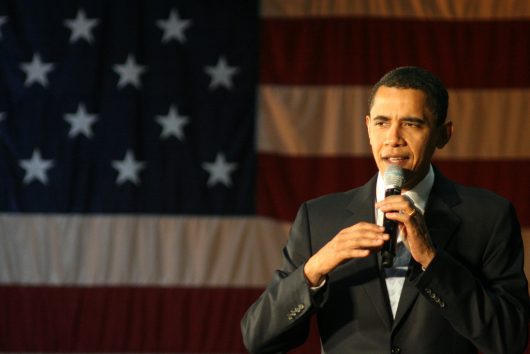
As the year comes to a close, President Obama embarks on one last official trip to Europe. One of the stops is Athens, Greece. In his two-day trip, he addresses the future of the country.

President Obama’s visit to Greece sparked a lot of debate about the country’s economic recovery and well as social issues. In the president’s opinion, Greece needs continued debt relief in order to fully stabilize the economy and ensure a prosperous future.

Greece has endured an economic crisis for the past eight years. The crisis began after years of understating the national debt caused the financial markets to deny loan money to the country. By 2010, Greece was moving towards bankruptcy. In order to salvage the economy, Greece received bailouts. As of today, it has been given 274 billion in bailout loans since May 2010. There have also been numerous economic reforms that have caused unrest among the Greek population.

President Obama spoke on the discontent of the Greek people. He argues that other than debt relief, “people need to see hope.” Drawing on the example of Brexit earlier this summer and the recent American election he says, “If people feel that they’re losing control of their future, they will push back.” The “push back” in Greece has been readily present since the beginning of the economic crisis.

The two bailouts given to Greece have come with austerity measures which have been met with anger. The first program included salary cuts of public-sector workers and increase sales tax. The second program increased taxes on certain goods and included pension reforms. As a response, citizens continue to have demonstrations and often clash with law enforcement which has ended in violence.

In anticipation of President Obama’s visit to Greece, a peaceful protest in Athens turned violent when supposed anarchist threw rocks and Molotov cocktails in support of anti-capitalism. “No Hope” was written on buildings.

Nonetheless, President Obama will actively continue to encourage creditors to provide debt relief so Greece can achieve a sustainable economy once again. He also praised Greece for opening up its border to refugees even in the midst of an economic crisis. President Obama said “The Greek people’s generosity towards refugees arriving on your shores has inspired the world. That doesn’t mean that you should be left on your own, and only a truly collective response by Europe and the world can ensure that these desperate people receive the support that they need.”

President Obama’s visit to Greece encouraged continued debt relief to rehabilitate the economy and bring hope to the Greek people.

– Karla Umanzor

Photo: Flickr

December 7, 2016
https://borgenproject.org/wp-content/uploads/borgen-project-logo.svg 0 0 Borgen Project https://borgenproject.org/wp-content/uploads/borgen-project-logo.svg Borgen Project2016-12-07 01:30:052024-12-13 17:56:19President Obama Visits Greece: Talking Economy and Refugees
Global Poverty, Refugees

Syrian Psychologists from Yale University Treat Refugees

Syrian Psychologists
Throughout the Syrian refugee crisis, physical care for refugees, such as the provision of medical attention, housing, and sustenance, has been a crucial concern. Mental health, however, is another facet that must be addressed. In response, two Syrian psychologists have made the mental health of Syrian refugees their concern.

In 2013, psychiatrists Andres Barkil-Oteo and Hussam Jefee-Bahloul met at Yale University, according to Huffington Post. They quickly discovered they had many of the same interests — one of which being the desire to find a way to utilize their mental health expertise to aid Syrians and Syrian refugees.

Although the two had left their homeland of Syria for psychiatry training in the U.S. before the major uprising in 2011, they still felt very connected to the crisis and wanted to find a way to help from abroad.

In 2014, the two friends worked together to create the Syrian Telemental Health Network, an online platform allowing experts and specialists around the world to train and assist mental health workers treating Syrians. The primary purpose of this platform is to address the rise of mental health problems among Syrians and the difficulties Syrian mental health workers are facing in treating them, both of which are repercussions of the Syrian war.

The remote network allows mental health workers in Syria to upload case information as well as video and audio recordings of patients to seek direction and help from specialists worldwide. Typically, this U.K.-based network sees about 10 to 15 cases each month. Because of the platform, knowledge from resources worldwide is brought to Syrian mental health workers, which is pertinent since mental health care has been in short supply within Syria.

According to the World Health Organization (WHO), even before the conflict broke out, there were a mere 70 psychiatrists in Syria serving 21 million people. Only two public psychiatric hospitals existed: one at Damascus that now operates at partial capacity because of security concerns and one in Aleppo that is now closed.

While the Syrian Telemental Health Network has aided many Syrian mental health workers and refugees, there are still many more Syrians facing mental health disorders in need of treatment despite limited resources.

In a recent article by CCTV America, it is reported that WHO estimates approximately 600,000 Syrians are currently suffering from severe mental health disorders while an additional 4 million are suffering from mild to moderate mental health disorders.

These two Syrian psychologists remain dedicated to their mission and are currently seeking out more funding to put more resources into the platform to increase the numbers of mental health workers and victims being helped.

Since leaving Yale University, Jefee-Bahloul became an assistant professor of psychiatry at the University of Massachusetts and Barkil-Oteo joined Doctors Without Borders to provide psychiatric care to refugees in Greece.

– Alex Fidler

Photo: Flickr

December 5, 2016
https://borgenproject.org/wp-content/uploads/borgen-project-logo.svg 0 0 Borgen Project https://borgenproject.org/wp-content/uploads/borgen-project-logo.svg Borgen Project2016-12-05 01:30:272024-12-13 17:55:59Syrian Psychologists from Yale University Treat Refugees
Migration, Refugees

Ten Facts About Kiribati Refugees

Kiribati Refugees
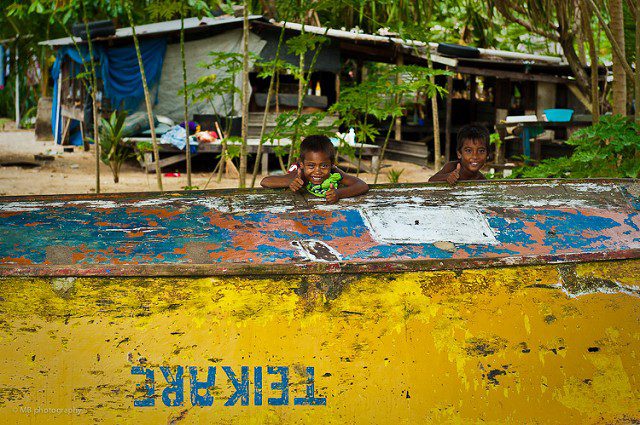
Climate change will drive migration on a massive scale in the coming years. Estimates of people fleeing natural disasters range from 25 million to 1 billion. The small island nation of Kiribati in the Pacific will be extinct by 2100. The government is trying to help the Kiribati refugees migrate with dignity, but their legal status is still in limbo.

    1. Most of the land of the Kiribati islands is less than two meters above sea level. It is therefore very vulnerable to rising sea levels due to climate change. Its residents may have to be the first climate change refugees.
    2. In 1999, two islands disappeared underwater. The nation is made up of 33 small islands, whose land is being swallowed by the ocean at a rate of almost 4 millimeters a year. According to the U.N., the entire nation will be submerged by 2100.
    3. Even before this drastic event occurs, changes in weather patterns are likely to produce Kiribati refugees. Droughts are becoming more severe, whilst rainfall is increasing, causing flooding. The oceans are acidifying, disturbing the delicate balance of coral reefs, whose marine ecosystems are the source of many people’s livelihoods.
    4. Freshwater supply is also problematic, as saltwater from high ocean tides is polluting wells and prolonged droughts are pushing water supplies to their limits. Many residents of South Tarawa, the island housing half of the country’s 100,000 people, are now completely reliant on rainwater.
  1. In 2003, the Kiribati government cooperated with the World Bank in the $17.7million Kiribati Adaptation Program. They built coastal sea walls, planted mangroves on the shores, developed water-management plans and invested in rainwater harvesting infrastructure, to postpone the effects of the rising ocean. The project has managed to protect one of 710 miles of Kiribati’s coastline.
  2. The former president, Anote Tong, started the “Migration with Dignity” program to ensure the Kiribati refugees will move to other states with dignity. The government has increased the level of qualifications available to citizens to those of Australia and New Zealand so that they are employable.
  3. The former president also bought 6,000 acres of land in Fiji, an island nation more than 1,000 miles away. This will act as a refuge for any Kiribati residents who will need to relocate.
  4. A Kiribati citizen applied for asylum in New Zealand in 2011. Four years later he was rejected and deported back to his sinking homeland.
  5. The 1951 Refugee Convention defines refugees as those “fleeing persecution at home.” As such, the Kiribati refugees are not protected by international law. “The truth is no one agency in the system because no one could have imagined this situation 60 years ago,” said José Riera, a senior advisor to the U.N. High Commission for Refugees.
  6. The Paris Agreement signed this past April does little to help climate change refugees. It didn’t resolve the issue of their legal status or mandate their protection.

It is hopeful that with the help of the government and international aid, each refugee, resident and the overall island will be preserved.

Eliza Gkritsi

Photo: Flickr

December 4, 2016
https://borgenproject.org/wp-content/uploads/borgen-project-logo.svg 0 0 Borgen Project https://borgenproject.org/wp-content/uploads/borgen-project-logo.svg Borgen Project2016-12-04 01:30:502024-12-13 17:56:13Ten Facts About Kiribati Refugees
Refugees

Elpida Home Gives Hope to Refugees in Thessaloniki

On June 14, 2016, The Radcliffe Foundation released a statement explaining its partnership with the Greek Ministry of Migration in an initiative aiming to house over 800 Syrian refugees in Thessaloniki in northern Greece. Frank Giustra, founder of The Radcliffe Foundation, worked alongside Amed Khan, an American philanthropist, to create a revolutionary alternative housing option for refugees in Thessaloniki.

Together, with the support of thousands of volunteers, they set out to “rehabilitate an abandoned clothing factory to provide housing for 800 refugees,” many of whom were women and children. According to project manager Mike Zuckerman, the project’s strategy was to “rehabilitate Greece’s abandoned infrastructure to aid in solving both the Economic Crisis and the Refugee Crisis at the same time.”

The facility, dubbed the Elpida Home, opened to families on July 24. Here are five ways the Radcliffe Foundation and the Elpida home are giving hope to refugees in Thessaloniki.

  1. Opening doors to relocated refugees: When the Greek government shut down Idomeni, a makeshift camp in northern Greece, 4,000 refugees were forced to relocate to old warehouses and abandoned factories. The living conditions were dangerously derelict and squalid.
  2. Creating opportunities for collaboration: According to the Radcliffe Foundation, the Elpida Project is a “public-private partnership [intended to] create humane living conditions and allow refugees to participate in the process, giving them a say in their own welfare.” The Radcliffe Foundation worked with NGOs and local volunteer groups to build the refuge.
  3. Inspiring humanity: According to Giustra, “The conditions that refugees face are heartbreaking…our goal in this project is not only to house these people…but equally as important, restore their dignity by treating them as human beings.” Furthermore, according to Khan, “This project will hopefully set the path for others, just like it, that put humanity above all else.”
  4. Meeting electrical, plumbing and dietary needs: The Elpida Home contains both individual housing units and common areas that are equipped with working electricity, running water and plumbing. According to the U.N. Refugee Agency, in other refugee camps around Thessaloniki, “air circulation is poor, and supplies of food, water, toilets, showers and electricity are insufficient.” The overcrowded camps compound “the already high level of distress of refugee families, fueling tensions within refugee populations.” Refugees at The Elpida Home, in contrast, have access to showers, toilets and a children’s play area.
  5. Partnering with medical nonprofits to provide health care: Medecins du Monde is a nonprofit that has sent volunteers to the Elpida Home three days a week to provide psychological care for refugees. The Elpida Home also has a volunteer dental team on staff.

Between the joint efforts of the Greek Ministry of Migration and The Radcliffe Foundation, Syrain refugees inThessaloniki will have a better chance at overcoming the obstacles displacement creates.

– Hailey Visscher


December 3, 2016
https://borgenproject.org/wp-content/uploads/borgen-project-logo.svg 0 0 Borgen Project https://borgenproject.org/wp-content/uploads/borgen-project-logo.svg Borgen Project2016-12-03 01:30:282024-12-13 17:56:13Elpida Home Gives Hope to Refugees in Thessaloniki
Global Poverty, Refugees, United Nations

Opening Doors: UN Secretary-General Advocates for Refugees

Advocates for Refugees
Last month, U.N. Secretary-General Ban Ki-moon appealed to world leaders to make a greater effort to become advocates for refugees. The secretary-general called helping refugees a “moral obligation.”

His comments came after the conclusion of the Sept. 19 U.N. Summit for Refugees and Migrants.

U.N. member states unanimously adopted the New York Declaration, which expresses the “political will” of world leaders to protect the rights and dignity of refugees, hence becoming advocates for refugees.

U.N. leaders urged world leaders to ensure all refugee children receive education within months of arrival in Europe. The declaration also called for an expansion of economic opportunities for refugees.

The declaration also petitioned leaders to support countries rescuing, receiving and hosting large numbers of refugees and migrants. Turkey, Greece, Germany and France have taken in large numbers of refugees, while other European nations and the U.S. have resisted relocation efforts.

Civil unrest and Islamic extremism in the Middle East drove 1.3 million from their homes, most of these people have found political asylum in Europe. However, asylum does not always entail adequate living conditions.

Around 60,000 Middle Eastern refugees are currently stranded in Greece awaiting processing and relocation in Europe. The refugees are held in a massive tent city under appalling inhumane conditions.

In France over 1,000 unaccompanied minors live in squatter camps in and around the coastal town of Calais. The camp, which is called “The Jungle” by locals, is home to thousands of refugees hoping for a better life in the United Kingdom.

The U.N. Summit for Refugees and Migrants addressed the question of refugee food security. Ki-moon urged leaders to make policy decisions which would empower immigrants to seek and hold employment. To become sustainable, migrants need to have access to land, banking services and freedom of movement.

World leaders at the U.N. summit did more than just craft a paper promise. Under the U.N. directive, more children will be able to attend school and get an education. More immigrants will be able to seek safe, sustainable employment. By making poverty alleviation a top priority, the U.N. has opened a door to opportunity for some of the world’s most vulnerable people.

– Peter Nilson

Photo: Flickr

November 28, 2016
https://borgenproject.org/wp-content/uploads/borgen-project-logo.svg 0 0 Borgen Project https://borgenproject.org/wp-content/uploads/borgen-project-logo.svg Borgen Project2016-11-28 01:30:002024-12-13 17:55:54Opening Doors: UN Secretary-General Advocates for Refugees
Refugees

Resisting the Closure of Dadaab Refugee Camp

Resisting the Closure of Dadaab Refugee Camp
On May 6, 2016, Kenya announced plans for the closure of Dadaab refugee camp by Nov. 30 this year. This closure of the largest refugee camp in the world could cause a number of problems for the refugees forced to leave.

The vast majority of the refugee population in Dadaab is Somalian. Forcing Somalians to return home in an atmosphere of continued unrest and insecurity is a recipe for disaster. The most visible problem is that as of now, parts of Somalia are still under the control of al-Shabaab, an armed group committing abuse and targeting civilians even in government-controlled areas. As a result, a large share of the country is extremely dangerous and could be fatal for refugees returning.

The closure of Dadaab refugee camp could cause less visible, but equally dangerous consequences on refugee health and education. A substantial number of Somali refugees in Dadaab today are there not because of the conflict but in order to escape the situation of drought and famine in the province of Jubbaland. Returning would, therefore, mean putting pressure on the resources of an already thinly stretched economy, as well as causing a negative impact on refugee health.

The Bhekisisa Center for Health Journalism predicts that the closure of Dadaab could lead to the next health crisis. A forced and involuntary return could escalate refugees’ vulnerability to malnutrition, weaken their immune systems and make them vulnerable to infectious diseases. Lack of health care resources including basic vaccinations in Somalia would make it hard for refugees to be treated for diseases brought back from the camp, as well as for chronic illnesses.

The good news is that as recently as August 2016, Interior Minister Joseph Nkaissery announced that the government of Kenya would hold back its decision to close the camp until peace in Somalia is restored. However, this decision is not without its own backlash. Two-thirds of all Kenyans support sending all refugees home. This backlash comes from a combination of fear of al-Shabaab attacks and a fear of the change in the ethnic composition of Kenya.

In order to address these understandable concerns of Kenyan citizens, the Kenyan government, working with UNHCR has been attempting to encourage voluntary returns among refugees. Under the tripartite agreement signed by the Somalian and Kenyan governments with UNHCR in November 2013, each party is responsible for developing and implementing a plan for the large-scale voluntary return of Somali refugees.

Any plan created for this purpose must involve building infrastructure, hospitals, clinics and improve security in Somalia as a solution to the refugee problem. Repatriation is not enough; post-conflict infrastructure must be a priority. This can only be done through continued support from the international community.

Creating a hospitable environment for refugees to return to Somalia is not a mere solution. For the time being, Dadaab refugee camp is the only resource a huge portion of the Somali population has. Keeping it open requires both financial support as well as greater empathy for the struggles of refugees. Many organizations are responding to both these needs.

– Mallika Khanna

Photo: Flickr

November 17, 2016
https://borgenproject.org/wp-content/uploads/borgen-project-logo.svg 0 0 Borgen Project https://borgenproject.org/wp-content/uploads/borgen-project-logo.svg Borgen Project2016-11-17 01:30:352024-12-13 17:56:05Resisting the Closure of Dadaab Refugee Camp
Refugees, Refugees and Displaced Persons

State of Refugees Worldwide

State of Refugees Worldwide
When it comes to the state of refugees and displaced people worldwide, the Office of the United Nations High Commissioner for Refugees (UNHCR) stands ready to protect the rights of those forced to leave their homes. Since the commission’s start in 1950, the UNHCR budget has grown from $300,000 in its first year to around $7 billion in 2015. This agency collects a lot of data regarding the whereabouts and status of refugees around the world in order to maintain a steady and productive presence.

With 65.3 million forcibly displaced people, 21.3 million refugees and 10 million stateless individuals, this type of organization and statistical bookkeeping is essential to progress. Currently, the world is peaking at its highest rate of displacement on record. About half of the global refugee population is under 18, and around 34,000 men, women and children are displaced every day, begging the questions: What countries are these refugees forced to leave? What countries have taken them in?

It is measured that 53 percent of all the world’s refugees are departing from just three countries: Somalia, Afghanistan and Syria — in that order. The civil war in Somalia is the single largest event adding to the refugee population, currently forcing refugees to flee into surrounding areas such as Kenya for the past 24 years.

While in Afghanistan, rampant insurgency from the Taliban and Daesh keep refugees from returning home. Most notable in the current media landscape is the third largest refugee contributor, Syria, which is experiencing genocide, civil war and an increasingly destabilized sociopolitical landscape.

With such a massive population exiting the places they call home, every part of the globe has had to accept displaced peoples. The regions harboring the most refugees are the Middle East and North Africa, collectively populated by 39 percent of all of the world’s displaced individuals. Surprisingly, the United States and Europe admit the least amount of people to seek refuge within their borders at 12 percent and six percent respectively.

As for the individual nations containing the highest refugee populations, Turkey, Pakistan and Lebanon top the list with Iran, Ethiopia and Jordan not far behind. Turkey currently contains 2.5 million displaced individuals from a multitude of areas, establishing the country as a refugee capitol of sorts. The next closest, Pakistan, contains 1.6 million displaced people. Most of this group comes from Afghanistan, as Pakistan is the closest geographic neighbor for much of the Afghan population.

The UNHCR is currently working in 128 different countries to alleviate the suffering that comes with the mass diaspora. Increased funding, as well as more nations willing to accept those without homes, is required if these problems are to end eventually. Many within the U.S. and abroad continue to work tirelessly to provide future for people with no say in how their lives progress. It will take global cooperation to see this crisis to a peaceful resolution and better the current state of refugees around the world.

– Aaron Walsh

Photo: Flickr

November 17, 2016
https://borgenproject.org/wp-content/uploads/borgen-project-logo.svg 0 0 Borgen Project https://borgenproject.org/wp-content/uploads/borgen-project-logo.svg Borgen Project2016-11-17 01:00:312024-12-13 17:56:07State of Refugees Worldwide
Foreign Aid, Humanitarian Aid, Refugees

Countries Pledge $2.1 Billion in Foreign Aid to Iraq

Foreign Aid to Iraq
On July 20, representatives from 24 countries pledged more than $2.1 billion in foreign aid to Iraq at a Washington, D.C. conference co-hosted by the U.S., Canada, Japan, Kuwait, Germany and the Netherlands. The U.S. had hoped to raise around $2 billion in foreign aid to Iraq. State Department Spokesperson John Kirby said that the results of the meeting exceeded expectations, with $2.1 billion in confirmed pledges and more pending approval.

Coverage of the pledging conference indicates that countries recognize the need to help Iraq achieve long-term stability in addition to carrying out military operations against the Islamic State. Public Finance International reported that the donor meeting aimed specifically to deal with the fallout of an expected assault on the northern Iraqi city of Mosul, which is likely to be the largest yet.

According to Radio Free Europe/Radio Liberty, the U.N. estimates the humanitarian assistance needed after the attack at $284 million and reconstruction costs at $1.8 billion. In total, the country needs $4.5 billion.

Canada was among the first to come forward with a pledge. Foreign Affairs Minister Stéphane Dion announced $158 million CAD, or $121 million, in foreign aid to Iraq at the meeting, with $150 million CAD going towards humanitarian needs and $8 million CAD reserved for de-mining and helping refugees.

The conflict has seen 3.3 million Iraqis displaced. In addition to addressing the country’s current crisis, Canada is also donating $200 million CAD to the World Bank, which will be available to the Iraq government as a loan to assist with economic reforms.

The United Kingdom’s Department for International Development pledged $66 million. The European Commission (EC), the European Union’s executive body, gave $215.5 million, and Kuwait also contributed $176 million. Neven Mimica, the European commissioner for International Cooperation and Development, told Public Finance International that the EU hopes to provide humanitarian assistance as well as improve public spending on infrastructure in the country.

Foreign Minister Frank-Walter Steinmeier of Germany, which pledged $1.3 million at the conference and is the largest donor of foreign aid to Iraq, emphasized the importance of continued assistance. “We cannot lose the momentum of our efforts to stabilize Iraq now,” he said.

The $2.1 billion raised at the July 20 conference went above and beyond the $861 million the U.N. had appealed for Iraq. It is encouraging to see that countries in the coalition against the Islamic State, including the U.S., start to focus their efforts on humanitarian aid and long-term development.

– Philip Katz

Photo: Flickr

November 12, 2016
https://borgenproject.org/wp-content/uploads/borgen-project-logo.svg 0 0 Borgen Project https://borgenproject.org/wp-content/uploads/borgen-project-logo.svg Borgen Project2016-11-12 01:30:352020-05-20 08:54:20Countries Pledge $2.1 Billion in Foreign Aid to Iraq
Page 48 of 53«‹4647484950›»

Get Smarter

  • Global Poverty 101
  • Global Poverty… The Good News
  • Global Poverty & U.S. Jobs
  • Global Poverty and National Security
  • Innovative Solutions to Poverty
  • Global Poverty & Aid FAQ’s
Search Search

Take Action

  • Call Congress
  • Email Congress
  • Donate
  • 30 Ways to Help
  • Volunteer Ops
  • Internships
  • Courses & Certificates
  • The Podcast
Borgen Project

“The Borgen Project is an incredible nonprofit organization that is addressing poverty and hunger and working towards ending them.”

-The Huffington Post

Inside The Borgen Project

  • Contact
  • About
  • Financials
  • President
  • Board of Directors
  • Board of Advisors

International Links

  • UK Email Parliament
  • UK Donate
  • Canada Email Parliament

Get Smarter

  • Global Poverty 101
  • Global Poverty… The Good News
  • Global Poverty & U.S. Jobs
  • Global Poverty and National Security
  • Innovative Solutions to Poverty
  • Global Poverty & Aid FAQ’s

Ways to Help

  • Call Congress
  • Email Congress
  • Donate
  • 30 Ways to Help
  • Volunteer Ops
  • Internships
  • Courses & Certificates
  • The Podcast
Scroll to top Scroll to top Scroll to top