• Link to X
  • Link to Facebook
  • Link to Instagram
  • Link to TikTok
  • Link to Youtube
  • About
    • About Us
      • President
      • Board of Directors
      • Board of Advisors
      • Financials
      • Our Methodology
      • Success Tracker
      • Contact
  • Act Now
    • 30 Ways to Help
      • Email Congress
      • Call Congress
      • Volunteer
      • Courses & Certificates
      • Be a Donor
    • Internships
      • In-Office Internships
      • Remote Internships
    • Legislation
      • Politics 101
  • The Blog
  • The Podcast
  • Magazine
  • Donate
  • Click to open the search input field Click to open the search input field Search
  • Menu Menu

Archive for category: Refugees

Global Poverty, Refugees

Art for Refugees

Art for Refugees
Throughout history, art has been a respite for many who lived through trauma. Refugees live their lives in an almost constant state of precarity. Refugee children typically have a higher rate of experiencing many mental health problems such as depression, anxiety and post-traumatic stress disorder.

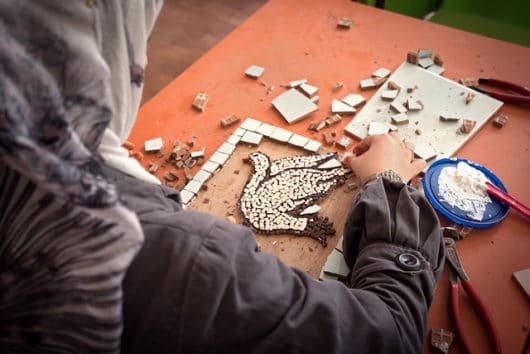
Art for refugees can help them express their feelings, grow in self-confidence, and develop problem-solving skills. There are a number of art initiatives which aim to help refugees cope with psychological stressors. Some are located in refugee camps, while others are located in resettlement cities, but they all have the same goal of providing an outlet for expression. Some such initiatives are listed below.

The Za’atari Project

The Za’atari Project is an art therapy program started by Joel Artista in the Za’atari refugee camp in Jordan. Za’atari is composed of Syrian refugees. This project serves as a bridge between the Jordanian and the Syrian communities and serves as a way to foster further understanding.

Adult artists and educators team up to create programs to enhance the lives of children living in refugee camps. These programs are both expressive and educational. They teach children about topics such as health and hygiene all while fostering healthy ways of articulating feelings. These projects include painting murals, wheelbarrows, tents and kites that allow the children to play.

The Exile Voices Project

Exile Voices is a project started by renowned photographer, Reza. This project offers a photography program to refugees in the age group of 11 to 15 in the Kawergosk camp in Iraqi Kurdistan. Exile Voices aims to tell refugee stories through the voices of refugees themselves.

Partnered with the UNHCR, Reza set out to empower these children on how to use the most powerful tool that they have–their own voice. Photographs from many children in the Kawergosk camp were lined along the Seine River in Paris, France in 2015 to show people the importance of art for refugees.

Art for Refugees in Lebanon

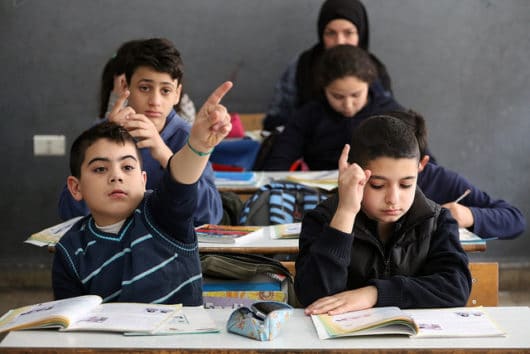
In 2017, 1 out of every 6 people in Lebanon was a Syrian refugee. This put significant pressure on schools to make the resources available for education. To tackle rising tensions in schools, the Skoun Association started an art therapy program within schools to help refugee and Lebanese students express themselves in healthy ways.

The art therapy program allows the students to overcome the trauma they experienced and helps to strengthen social bonds. It allows students to see themselves as children first. It also helps them forget the places of disconnect.

The Amsterdam Painting Project

In Amsterdam, refugees are housed in the Bijlmerbajes prison. The Amsterdam Painting Project aims to turn the prison space into something more welcoming, one that is full of renewed hope and life. This project aspires to serve as a bridge within the community and empower refugees to become more involved with one another.

The project was founded by Jeroen Koolhaas and Dre Urhahn. These two Dutch artists set out to promote community art by improving living conditions. The Project is funded by the Favela Painting Foundation, a group that has also completed projects in Rio de Janeiro, Brazil and Florence, Italy.

Clothes, food, shelter and other basic necessities will always be required in refugee camps or in resettlement cities. There is, however, also a need to ensure the mental wellbeing of refugees and create an outlet for them to share their experiences. Art is an excellent way to create this outlet. It allows refugees to tell their own stories and to express themselves productively. Most importantly, the idea of ‘art for refugees’ is one of the most effective ways to heal those minds that have been traumatized for a long period of time.

– Isabella Niemeyer
Photo: Flickr

January 31, 2019
https://borgenproject.org/wp-content/uploads/borgen-project-logo.svg 0 0 Kim Thelwell https://borgenproject.org/wp-content/uploads/borgen-project-logo.svg Kim Thelwell2019-01-31 07:30:502024-06-06 00:15:27Art for Refugees
Refugees

Remembering Refugees in Lebanon

Refugees in Lebanon

While the Syrian civil war and other conflicts in the Middle East continue to make international headlines, the refugee crisis caused by these conflicts has slowly faded from the public eye. Many countries around the world are now focused on more immediate internal problems. For Syria’s neighboring countries, though, the refugee crisis continues to be an impactful part of their society.

Lebanon is one of these countries. This country shares most of its land border with Syria, and this made it an obvious place for war refugees to flee. The government has allowed many to remain in the country. Estimates say that there are still more than 1.5 million Syrian refugees in Lebanon, and this is only part of the country’s refugee population.

Syrian Refugees in Lebanon

Life for Syrian refugees in Lebanon today is complicated, to say at least. While they are allowed to stay within the country, a combination of unfriendly government policies and heavily-strained infrastructure mean that few can maintain a high quality of life. Residency laws are difficult to navigate, leaving many fearful of arrest and open to exploitation.

Good work is hard to find, and 71 percent of Syrian refugees live below the country’s poverty line. This lack of financial resources helps explain why more than 200,000 refugee children were kept out of school in 2016. This education gap will only lead to more economic vulnerability in the long term.

Compounding these difficulties is the legitimate strain that 1.5 million refugees put on a Lebanese population that totals only six million. The Lebanese residents of some host communities are outnumbered by refugees. Since the start of the crisis, government spending and debt have risen while GDP has dropped and expenses have mounted. The economic troubles have heightened perception of refugees as a drain on Lebanese society and many want them to return to Syria. Of course, many Syrians would like to return home as well, especially given the conditions in Lebanon.

With the war continuing to progress, though, the United Nations does not recommend that refugees return. President of Syria, Bashar al-Assad, and his government continue to make returning difficult even for those that would like to take the chance. Beyond the obvious physical danger of the ongoing conflict, a strict military draft and the threat of property seizure for the many refugees who are left without formal documentation for their homes are harsh deterrents for many people.

Palestinian Refugees in Lebanon

It’s important to note that Syrians are not the only refugees in Lebanon. A population of around 270,000 Palestinians has settled in a few dozen U.N. camps around the country. Many of these people (or even parents of these people) have been in Lebanon since the Palestinian war in 1948. Today, these camps are essentially considered permanent settlements, and their longevity is part of what has inspired a more aggressive governmental push to ensure that Syrian refugees are only settled temporarily.

Palestinians in Lebanon have always been considered a separate legal class, with restricted access to certain public facilities, educational paths, careers and job opportunities. Many are forced to take low-paying, informal jobs.

The Syrian crisis has made life even more difficult for them, as both refugee groups must now compete for the same undesirable jobs. In 2015, 23 percent of the Palestinian population in Lebanon was unemployed. That number was only 8 percent before the crisis. Conditions are even worse for the 33,000 Palestinians who were living in Syria and have since become refugees in Lebanon as 93 percent of these people are reliant on U.N. aid as their primary source of livelihood.

International Aid for Refugees

While international news has largely moved on from the crisis, international aid continues to be involved in Lebanon and other similarly-strained countries. Thousands of families receive aid from U.N. groups, nonprofit organizations and other groups like the World Bank, to supplement governmental support and their own limited personal resources.

These sources of aid can be effective at reducing poverty, but many have been geared at short term solutions so far. As budgets and international aid dry up, support for the refugees in Lebanon will likely be most effective if it focuses on the long term effects. Groups like Habitat for Humanity are hoping to improve living conditions by building new homes and renovating old buildings as well as water and sanitation facilities. The UNHCR also has plans to shore up Lebanese infrastructure as part of the international effort.

However, with the instability in the region and the ongoing pressure to return to Syria and Palestine mounting, permanent solutions may not be a winning political idea in Lebanon. Time will tell, but in the meantime, it is vitally important not to forget the millions of people- Syrians, Palestinians, Lebanese and others- who are still impacted by the Syrian refugee crisis.

– Josh Henreckson

Photo: Flickr

January 21, 2019
https://borgenproject.org/wp-content/uploads/borgen-project-logo.svg 0 0 Kim Thelwell https://borgenproject.org/wp-content/uploads/borgen-project-logo.svg Kim Thelwell2019-01-21 13:30:512024-06-06 00:15:28Remembering Refugees in Lebanon
Global Poverty, Refugees, Refugees and Displaced Persons

What is Lampedusa?

Lampedusa, migrants
In 2016, more than 65 million people were displaced around the world. While a majority of these people were displaced within their own countries, millions still fleed to search for a new home. Many of them tried and successfully reached Europe by crossing the Mediterranean Sea. In popular media, the island Lampedusa began to appear in tandem with the migrant crisis. This article will answer the questions of what is Lampedusa and how it is involved in the refugee crisis.

What is Lampedusa?

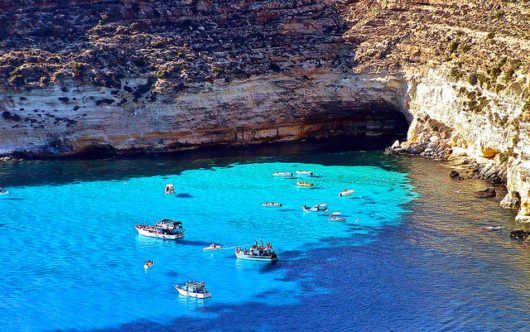
Lampedusa is an eight square mile island located in the Mediterranean Sea. It is located roughly 70 miles from Tunisia, which actually makes it closer to Africa than Europe. It is a part of Italy and is populated by approximately 6,000 people.

In recent years, thousands of migrant arrived in Lampedusa. In 2013, over 13,000 migrants came to this small island by boat. This is a sharp decrease from 60,000 people that passed through the island in 2011. However, this large influx of migrants continues and puts a large pressure on the island. What is Lampedusa doing to house migrants?

Lampedusa, being a tiny island with a very small population, does not have the resources or the housing to hold the sharp influx of migrants. The remnants of an old naval base are used to help house migrants while they wait to get sent to another part of Italy to have their case heard.

However, this base only has a capacity of 800 people. In some cases, it used to house thousands of migrants. Migrants are supposed to stay for only a few days on the island but reports have shown that most of them stay for two to three weeks before leaving. During the day, migrants wander the streets since the shelters are only meant to be used during the night.

Migrant’s Health Problems

Many migrants contract diseases in their journeys to Europe due to the fact that they are in overcrowded boats, vans, buses and rafts for long periods of time. The International Journal of Environmental Research and Public Health recently released a study examining migrants headed to Italy and Greece and nearly 40 percent of the participants reported that they contracted an illness in their route to Europe.

Migrants also suffer stress and trauma in their journeys since many are mistreated and abused by smugglers. Some also witness deaths of people traveling with them due to dehydration or suffocation in rafts. If migrants are arriving in bad conditions, what is Lampedusa doing to help them?

Although Lampedusa lacks resources, that does not stop locals from providing food, blankets and other forms of hospitality towards the groups of migrants arriving. The people of the island are helping those who arrive in every way possible, directly affecting poverty reduction of migrants. In 2011, 2014, and 2016, the island was nominated for a Noble Peace Prize for the locals’ generosity.

The Order of Malta

From the more administrative side, the Order of Malta helps Lampedusa with the rescuing and health treatment of migrants that arrive by sea. Since the Orders’ involvement with Lampedusa, it has rescued over 55,000 people. The ships also provide medical services to migrants. Between 2008 and 2013, the Order of Malta provided medical services to over 4,000 people.

As the migrant crisis continues the situation in Lampedusa remains critical. While the people of Lampedusa and the Order of Malta continue to help migrants that arrive, they lack adequate resources to meet all of the migrant’s needs.

However, it is important to acknowledge the work that is being done. It shows that even though Lampedusa is overstretched, its people and communities are still willing to help and harbor migrants in their search for a better life in Europe.

– Drew Garbe

Photo: Flickr

January 4, 2019
https://borgenproject.org/wp-content/uploads/borgen-project-logo.svg 0 0 Kim Thelwell https://borgenproject.org/wp-content/uploads/borgen-project-logo.svg Kim Thelwell2019-01-04 13:30:422024-05-29 22:57:39What is Lampedusa?
Global Poverty, Refugees, Refugees and Displaced Persons

Displacement in Syria

Displacement in Syria
Syria is a country located in the Middle East that has been in constant warfare since 2011, leaving millions of people displaced.

Today, there are several nonprofit organizations that are directly affecting the lives of people that are affected by war and, as a result, displacement in Syria.

United Nations Work on Displacement in Syria

The United Nations estimates that 6.6 million people are internally displaced in Syria. Refugees considered, there are approximately 12 million people in and bordering Syria that need humanitarian assistance.

The United Nations Refugee Agency (UNHCR) has teamed up with other United Nations humanitarian and development agencies to appeal for $8 billion in new funding to help millions of refugees.

The first aspect of the appeal is the Regional Refugee and Resilience Plan (3RP) for 2018-2019.

The plan will give $4.4 billion in support for over 5 million refugees in neighboring countries and close to 4 million people in the communities hosting these refugees.

The second aspect is known as the 2017 Syria Humanitarian Response Plan and seeks to provide $3.2 billion in humanitarian support and protection to over 13 million people in Syria.

The Case of Idlib

Idlib, a city in northwestern Syria, has been hit with bombings and airstrikes in the past few months. It is estimated that over 1 million people living in Idlib were previously displaced from elsewhere in the country and citizens still face uncertainty with constant violence.

Many citizens remain trapped in the city, with the main exits of the city closed. It is estimated that 30,000 people from the city have fled the country since the violence began. More than 2 million people were in need of humanitarian assistance even before the violence began.

Displacement in Syria and Water Issues

Overpopulated makeshift settlements in Syria are often reliant on unsafe drinking water.

It is estimated that 35 percent of the population relies on sources of drinking water that are not safe. Areas with the largest refugee populations have faced drastically low levels of water.

Many refugees rely on less than 22 liters of water a day, less than one-tenth of what the average citizen of the United States uses.

The World Health Organization has tested and treated 650 unsafe sources of drinking water in 2017 alone. The production of water storage tanks and groundwater wells has provided water to over 200,000 people.

The WHO has developed a disease reporting system that monitors the spread of infectious diseases. Around 1670 sentinel sites have been built across the country. This system allows professionals to rapidly detect and respond to typhoid fever, measles and polio in Syria and in neighboring countries.

The WHO is also supporting the integration of mental health services into health care and community centers in Syria. More than 400 health care facilities have been built and are proving mental health assistance.

The WHO also started the Mental Health Gap Action Programme in northwest Syria in 2017. The program has trained more than 250 Syrian health care workers and mental health professionals.

Displacement in Syria is the direct consequence of the constant violence present in the country since 2011. Due to the unsafe situation in the country, people are moving from their homes in search of a safer environment in the country or abroad. Organizations such as WHO and UNHCR are providing important humanitarian support to those in need.

– Casey Geier

Photo: Flickr

December 29, 2018
https://borgenproject.org/wp-content/uploads/borgen-project-logo.svg 0 0 Kim Thelwell https://borgenproject.org/wp-content/uploads/borgen-project-logo.svg Kim Thelwell2018-12-29 01:30:592021-06-17 09:21:08Displacement in Syria
Refugees

A Look at Living Conditions in Kutupalong Bulukhail

Living Conditions in Kutupalong Bulukhail
Myanmar is a nation of deep ethnic divide. In speeches, prominent military, civilian and religious leaders refer to it was “The Western Gate” — depicting Burmese society as a rhetorical last-line-of-defense, holding back “hordes” of Muslims from “invading” Buddhist Myanmar and Thailand. This “at war” mentality has fermented for generations, culminating in a climate of prejudice where any action is justified.

Background of the Current Crisis

The current crisis began when violence escalated in late 2016. Burmese security forces used hostilities against the ARSA — a Rohingya ethnic militia — as a pretext for military action in a counterinsurgency campaign.

Atrocities followed.

Over 350 villages were burned to the ground between August and November 2017 alone. And, since 2017, 688,000 Rohingya fled into Bangladesh, taking refuge in Bangladesh with the hundreds of thousands who had already fled in the years prior.

Kutupalong Bulukhail — known as the “mega camp” — is the largest of the refugee camps built in the hills of Cox’s Bazar, one of Bangladesh’s poorest districts. It serves as the home to 600,000 people. Swaths of forest needed to be cleared in order to make room for the bamboo and tarp shelters of refugees. While the camp is a source of safety, it was hastily constructed during the crisis and lacks modern infrastructure which means that facilities are far from perfect.

Containing the Spread of Disease

With masses of people living in close quarters without modern infrastructure, infection can easily spread. Focusing on preventing infectious diseases, is often more effective than treatment.

One high priority disease is Diphtheria, a potentially lethal bacterial infection that affects the airways and the heart. Children are in particular danger of contracting the disease. Since Oct. 2017 the WHO has vaccinated 898,000 children, living in and near the refugee camps as part of a targeted prevention program. By inoculating those with the weakest immune systems viruses it can be kept from spreading to adults.

To keep ahead of future problems, 153 independent health facilities serving the refugees have banded together in an electronic Early Warning and Response System created by the WHO. Everyday medical professionals verify and investigate alerts, helping to deliver fast treatment.

Addressing Hunger

Hunger is another concern. Living as stateless, often internally displaced, people many Rohingya have already endured a life of poverty. Their situation is worsened when they are forced to leave everything they cannot carry as they flee to Bangladesh.

Years of poverty and forced migration result in malnutrition. Children are especially vulnerable: 38 percent have stunted growth and 12 percent are severely malnourished.

Once they arrive, organizations like Action Against Hunger (AAH) work to feed refugees. Assisted by Rohingya volunteers, AAH operates community kitchens in the camps which serve 11,000 meals every day. Throughout 2017 the kitchens and other programs have helped 422,963 people.

Providing Access to Safe Water

Water has proven to be a more challenging problem than food or medicine. Providing drinking water and ensuring that it is drinkable is no small feat. AAH, UNICEF and Doctors Without Borders have all made efforts to improve water conditions by digging wells and constructing long-term latrines. AAH alone installed more than 230 drinking water access points in 2017.

Now as monsoon season is here, living conditions in Kutupalong Bulukhail are worse than ever. The heavy rains frequently destabilize the newly deforested terrain of the camp and the threat landslide become apparent. Fortunately, those in the most dangerous zones have been relocated to safer areas by the UNHCR.

The seasonal hardships make Myanmar’s offer of “safe and dignified” repatriation more enticing. However, the U.N. and dozens of aid organizations warn that it is likely a false promise. Refugees that return home would only put them in further danger. Kutupalong Balukhail will likely be their home for some time to come.

One refugee recalls a conversation with her brother:

“I have a brother back in Myanmar. They are still afraid to sleep at night… After coming here, through the blessings of Allah and the Bangladesh government, we can sleep at night.”

– John Glade
Photo: Flickr

December 18, 2018
https://borgenproject.org/wp-content/uploads/borgen-project-logo.svg 0 0 Kim Thelwell https://borgenproject.org/wp-content/uploads/borgen-project-logo.svg Kim Thelwell2018-12-18 01:30:432024-05-29 22:57:49A Look at Living Conditions in Kutupalong Bulukhail
Refugees

Child Refugees in Uganda: Solutions to a Crisis

Child Refugees in Uganda
With a mass exodus from South Sudan, Uganda has become the largest refugee-host nation in Africa. Both 2017 and 2018 saw a significant influx of refugees into the country. Experts believe the number of refugees is only going to increase in the upcoming period.

As more and more refugees enter Uganda, its basic services and resources are continuously put under increased stress. Child refugees in Uganda have become a very significant issue facing the Ugandan government and international organizations. However, government and different organizations teamed up to initiate a long-term plan to help refugee and native-born children alike.

The Problem in Numbers

As of early 2018, there were over one million refugees from South Sudan and 300,000 from Burundi, the Democratic Republic of the Congo and other closely neighboring countries in Uganda. Out of these 1.3. million, its estimated that 61 percent are children.

Due to a shortage of aid workers, funding and supplies refugee children face severe consequences such as virus and disease outbreaks. The Ugandan Ministry of Health alongside the U.N. International Children’s Emergency Funds (UNICEF) were able to successfully stop a Marburg virus outbreak in refugee camps. Despite this achievement, there are growing concerns about measles, malaria and cholera.

Many child refugees in Uganda face little access to education. Only 35 percent of 5-year-olds entering primary schooling were enrolled in any sort of educational programs provided by nonprofit organizations or by the Ugandan government.

Extremely high acute malnutrition rates ranged from 14.9 percent to 21.5 percent among new arrivals, with some areas experiencing a 2 percent growth in malnutrition rates in 2018.

There is a high number of unaccompanied children that are often the most vulnerable with little to no support from adult-aged persons. These children can be easily forced into armed groups or sex slavery.

The Northern Region of Uganda is responsible for most of the refugees and has also experienced challenges for the local children. For instance, 24 percent of females older than 15 are illiterate, 17 percent of school-aged children are out of school, 53 out of 1000 children die before their fifth birthday and 21 percent of Ugandans live in poverty.

Nongovernmental Organizations Efforts

While the refugee crisis has proven to be a great challenge for Uganda, the country has chosen to commit its resources in order to protect and provide for the vulnerable population living alongside the local population. Three international organizations have begun long-term projects in order for the Ugandan government to reform the country and better care for refugees and native populations alike.

Save the Children

Save the Children is the largest global charity for children started in the United States. The nonprofit has worked alongside the U.N. in implementing their programs throughout Northern Uganda. As of 2017, Save the Children oversaw six refugee sites, an emergency health unit teamed up the Ugandan Ministry of Health and 30 child-friendly spaces and educational facilities. Moreover, additional programs extended beyond refugee camps to encompass local communities with the goal of increasing child protection, education and food and economic security.

According to their 2017 report, 66,114 children were given shelter, 89,790 were cared for in crisis situations, 312,790 were provided with medical and sanitation supplies, 20,169 were raised from malnutrition and 3,154 parents were supported to meet the basic needs of their children.

UNHCR

The United Nations High Commissioner for Refugees (UNHCR) has primarily focused its attention on identifying refugee populations and supporting unaccompanied children. Working in close collaboration with the Ugandan government, the agency’s largest biometric data in history was launched in 2017. The point of recording refugees and providing identification for them is to better plan and situate resources and responses. If aid groups know exactly where vulnerable populations are and what are their circumstances, then professionals will respond more effectively and efficiently. To this date, over one million refugees have been identified.

As children spill across the border without adult supervision, extra resources are needed for their protection. The UNHCR has created and built settlements where older children are the heads of the household and they are provided with shelter, protection, education and basic services. However, staff shortages have proven difficult to monitoring these children at all times.

UNICEF

UNICEF has taken a lead role in helping child refugees in Uganda by directing programs between the Ugandan government and active nonprofits. Unfortunately, the agency only received 30 percent of requested funding in 2017. Despite these shortages, 61 percent of total targets were still met in nutrition (741,436 children aided), health (667,050), sanitation (463,480), protection (13,821), education (119,059) and HIV & AIDS (4,630).

With these results in mind, UNICEF has ambitious goals going forward. In 2018, the organization is expecting a final requested funding of more than $66 million. This funding will be focused on education, health, water and sanitation, nutrition, protection and HIV/AIDS.

Furthermore, the agency is beginning the planning of a long-term and collaborative program between nonprofits, the Ugandan government and international agencies. The basic provisions of the program include the dispersion of technological supplies and know-how, national educational and health strategies linked with refugees and the strengthening of emergency response teams. For example, m–Tac, a mobile app recently introduced to Uganda, allows agencies to send vital information to field teams during crises.

Humanitarian groups and the Ugandan government are launching some of the world’s largest refugee programs. The question of receiving refugees has long been about how to best protect them from harm and danger. The child refugees in Uganda certainly have a long path ahead of them, but they won’t have to walk on alone.

– Tanner Helem
Photo: Flickr

November 12, 2018
https://borgenproject.org/wp-content/uploads/borgen-project-logo.svg 0 0 Kim Thelwell https://borgenproject.org/wp-content/uploads/borgen-project-logo.svg Kim Thelwell2018-11-12 07:30:452024-05-29 22:57:36Child Refugees in Uganda: Solutions to a Crisis
Global Poverty, Malaria, Refugees

How Sea Changes Hurt the World’s Poorest

Florence
It’s no coincidence that there is a new natural disaster in the news every day around the world — the earthquake and tsunami that just hit Indonesia; Typhoon Mangkhut in East Asia; Hurricane Florence in the Carolinas; monsoon flooding in Bangladesh; and Hurricane Michael in the Florida Panhandle are just a few of the storms that saturate our daily media sources.

Scientists agree that rising sea levels and sea temperatures as a result of climate change are increasing the frequency and intensity of such disasters. Research shows that climate-change-related natural disasters will disproportionately affect the world’s poorest countries and citizens. These environmental events are just one example of the many ways that sea changes are hurting the world’s poor.

Rising Sea Levels Hurt Agriculture

According to a 2015 World Bank report, “agriculture is one of the most important economic sectors in many poor countries. Unfortunately, it is also one of the most sensitive to climate change, given its dependence on weather conditions: from temperature, sun and rain, through climate-dependent stressors (pests, epidemics, and sea level rise).” This effect is felt by farmers — usually the poorer citizens of poor countries — who find their livelihoods threatened by natural disasters and the heavy flooding that wipes out their crops.

When agriculture suffers, the price of food skyrockets. This change then leaves families who already struggle to acquire adequate nutrition in an even more dire situation. Statistics show that poor families already spend a huge percentage of their income on food, and the World Bank predicts there may be 73 million people pushed into extreme poverty by 2030 from the rising costs of food alone.

Rising Sea Temperatures Breed Disease

The World Bank report says a small rise in sea temperatures “could increase the number of people at risk for malaria by up to 5 percent, or more than 150 million more people affected. Diarrhea would be more prevalent, and increased water scarcity would have an effect on water quality and hygiene.”

People who don’t have access to clean water, generally people living in poverty, would be at the greatest risk of developing diseases and they often lack the resources to treat infectious or bug-borne diseases once a family member is infected. The report, which called for climate-informed development, concludes by saying that poverty reduction and climate change can’t be treated separately, as the two go hand-in-hand.

Refugees

There are over 1600 confirmed deaths in Indonesia after an earthquake and tsunami hit the island of Sulawesi on October 5th, 2018. In fact, the U.N. stated that over 190,000 people are in need of urgent help — aftershocks have caused the destruction of 2,000 homes due to mudslides and makeshift refugee camps are being set up. At the most basic level, these events are pushing already poor people into extreme poverty through the destruction of their homes, forcing them to resettle elsewhere.

A 2017 Cornell study found that rising seas could cause 2 billion refugees by the year 2100 (these are truly climate change refugees).  This means that around one-fifth of the world’s population will be made homeless by climate change. The effects will be felt most strongly by people living on coastlines, and those in the world’s poorest countries will suffer the most.

As the seas warm and rise, research shows that the frequency and intensity of these disasters will rise as well, forcing more and more people to abandon their homes.

Sea Changes and the Poor

Rising sea temperatures are a result of global warming’s effects on ocean habitats and the human communities that depend on them.

The authors of an article about how poor countries and fisheries are the most negatively impacted by warming seas found that, “despite having some of the world’s smallest carbon footprints, small island developing states and the world’s least-developed countries will be among the places most vulnerable to climate change’s impacts on marine life.”

Actions for the Future

Andrew King, a climate researcher at the University of Melbourne in Australia and the author of a study from the AGU on global warming, argues that: “The results are a stark example of the inequalities that come with global warming…the richest countries that produced the most emissions are the least affected by heat when average temperatures climb to just 2 degrees Celsius [3.6 degrees Fahrenheit] while poorer nations bear the brunt of changing local climates and the consequences that come with them.”

There are ideas for how to better protect these places in the future to be prepared for these sea changes. Long term, the solution will be tackling climate change head-on.

-Evann Orleck-Jetter

Photo: Flickr

November 7, 2018
https://borgenproject.org/wp-content/uploads/borgen-project-logo.svg 0 0 Kim Thelwell https://borgenproject.org/wp-content/uploads/borgen-project-logo.svg Kim Thelwell2018-11-07 01:30:352019-05-23 12:32:11How Sea Changes Hurt the World’s Poorest
Child Soldiers, Refugees

Top 10 Facts about Child Soldiers in Syria

Top 10 Facts about Child Soldiers in Syria
During the Syrian conflict, children, even younger than 10, have been recruited into armed groups. These children are inadequately protected by the government and many are recruited into government and terrorist organizations. The majority of them are untrained but are placed in combat situations. Years of violence and despair have plagued the lives of these children. In the text below, the top 10 facts about child soldiers in Syria are presented.

 Top 10 Facts about Child Soldiers in Syria

  1. In a survey conducted by Save the Children, 59 percent of adults interviewed in Syria claimed to know children or young adults in Syria that had been recruited into armed groups. As of 2017, 910 children have been killed and 361 have been maimed during the Syrian conflict. Child soldiers in Syria have been used as human shields, suicide bombers, front-line soldiers and as guards at checkpoints.
  2. Between 2015 and 2016, the number of armed children in the Syrian civil war verified by the U.N. was 851, more than double from the year before. The incentives used to encourage children into the army are salaries, ideologies and family or community influence. Even girls join these armed groups and seek to escape either abuse or arranged marriages.
  3. Child soldiers are encouraged to join armed groups due to poverty or being consistently targeted by specific groups. Some child soldiers in Syria have been reported to receive salaries of up to $400 a month. The families targeted by recruiters are typically poor and recruiters have been known to promise to pay and clothe children for their enlistment.
  4. In Syria, ISIS had kidnapped 463 children in 2015. ISIS usually targets ethnic minority groups and women and children in their abductions. In 2015, it was believed that this organization has 3,500 slaves that were made up mostly of women and children.
  5. The U.N. verified 29 child soldiers in Syria associated with government forces. Although the government is not supposed to conscript child soldiers, they do sit anyway. The children in Syria have little protection from the government against armed groups recruitment.
  6. The Syrian Democratic Forces (SDF) have recently issued an order that no one under the age of 18 is allowed to be enlisted into the army. This order requires commanders to verify the ages of soldiers and then take those under the age limit to authorities to end their enlistment. It also calls for punishments for commanders who refuse to comply with this order.
  7. Around 60 percent of the United Nation’s verified cases of child soldiers in Syria were associated with the Free Syrian Army. The Free Syrian Army is a rebel group formed by army deserters in Turkey. Several other armed groups across Syria have adopted their banner. A child interviewed by the Human Rights Watch stated that he joined the Free Syrian Army after he was previously tortured by the government forces.
  8. Children are actively being detained in Syria due to their perceived alliance with a specific group or organization. The U.N. verified that government forces had arrested 12 boys in 2016. Anti-government forces imprison children that are believed to support the government.
  9. There are 292,000 children trapped in besieged areas. The affected areas include Damascus, Idlib, Deir Az Zor and Homs. These areas have been besieged by both rebel and pro-government forces.
  10. Recently, the United Nations appealed to the U.S. for $8 billion of aid for Syria. The first part of the proposal aims to help refugees and the second part aims to provide humanitarian aid and protection for the 13.5 million people inside Syria.

These top 10 facts about child soldiers in Syria demonstrate the desperate crisis children in this country face every day. These are children who desperately need support in a fractured world, especially child soldiers that are affected most by the violence.

Investing in the future of this region and its children could have a large impact. Rehabilitation programs for child soldiers could help them reintegrate into society and into a normal life. These children could be placed into care centers or mandatory rehab programs to deal with the psychological and physical damage they have suffered.

Programs like these have worked in other conflicts and war situations and could help Syrian child soldiers find a way out of the violence they face every day and help them re-establish relationships with their families and communities as well.

– Olivia Halliburton

Photo: Flickr

November 6, 2018
https://borgenproject.org/wp-content/uploads/borgen-project-logo.svg 0 0 Kim Thelwell https://borgenproject.org/wp-content/uploads/borgen-project-logo.svg Kim Thelwell2018-11-06 01:30:432024-05-29 22:42:54Top 10 Facts about Child Soldiers in Syria
Refugees, Refugees and Displaced Persons

Movement in Progress: 10 Facts on Forced Migration

10 Facts on Forced Migration
Forced migration is ever-present in society due to various coercive factors. From cases in the United States to Syria and the Democratic Republic of Congo, the practice can be seen on almost every continent. The International Organization for Migration defines forced migration as the “movement of people caused by threats to their livelihoods.” This article will discuss 10 facts on forced migration that are the most critical in the world right now.

10 Facts on Forced Migration

  1. Columbia University gives categories to displaced persons: conflict-induced and disaster-induced. Those who are displaced by conflict are those who fled their homes due to violence — this circumstance accounts for about 12 million people. Disaster-induced displaced persons are those who undergo and escape natural disaster or human-made disasters such as floods, earthquakes, monsoons, deforestation or industrial accidents; this type of situation displaced about 19 million people in 2017.

  2. The most common distinctions between displaced persons are refugees, asylum seekers and Internally Displaced Peoples (IDPs).  As defined by the UNHCR, refugees are people who live outside of their home country due to the fear of persecution. Gaining refugee status is a legal process in which a person must be determined a refugee by international, national or local law. This process can be carried out by a country or by the UNHCR, and this process differs everywhere. Asylum seekers are those who have crossed borders to flee violence, but whose refugee status is undetermined.  In contrast, IDPs are those who have been forced to flee their homes due to conflict or disaster but have yet to cross an international border.

  3. Approximately 68.5 million people — mostly from Syria, Afghanistan, and South Sudan — have been forcibly displaced from their homes, which is the highest level of displacement in history. In 2017 alone, there were 30.6 million people displaced from their homes, approximately 11.8 million due to violent conflict or war, and 18.8 million due to natural disasters.

  4. Forced migration impacts the most vulnerable of people. According to the UNHCR, 52 percent of refugees were under the age of 18, and there were approximately 174,000 unaccompanied or separated children. Children may experience obstacles to education as forced migrants, and experience many social and cultural challenges in a place away from their home country. Unaccompanied children experience different challenges as they often lack the same protections and support as children with adult care, and many may suffer or be taken advantage of in a new environment.

  5. Sixty-eight percent of refugees came from Syria, Afghanistan, South Sudan, Myanmar and Somalia in 2017. In fact, 6.3 million refugees came from Syria, 2.6 million from Afghanistan, and 2.4 million from South Sudan. Out of the 25.4 million refugees reported in the world, these three countries, in particular, make up more than half of the refugee population. These refugees come from conflict and war-torn regions where choosing to stay could mean risking their lives.

  6. One reason for the current peak refugee crisis is that only about 103,000 refugees were resettled in 2017. Resettlement is the relocation and integration of people (forced migrants in this case) into another country. The UNHCR lists resettlement as one of the three durable solutions to the refugee crisis as it is a long-term solution for those who cannot go back to their home country. Approximately 44,400 people are being displaced a day, and unfortunately, this resettlement number does not make up the difference. Resettlement numbers are so low because many developed countries are not resettling as many people as they usually do. This decrease could be due to the highly dependent nature of resettlement on political climates as well as the current administrations in charge.

  7. The countries hosting the most refugees are Iran, Lebanon, Pakistan, Uganda and Turkey. Relative to the national population, Lebanon hosted the most refugees of these countries with 1 out of 6 inhabitants being refugees. Jordan is next with 1 out of 14, followed by 1 out 23 in Turkey. Eighty-five percent of refugees in the world are going to other developing countries, and large amounts of displaced peoples can have severe effects on the global economy. There may be serious problems for national economies that lack enough jobs for displaced peoples who seek work, pressure can be put on already fragile infrastructure.

  8. Refugees can benefit economies. In fact, many refugees in the United States pay more in taxes than they receive in benefits. In places that aided refugees in finding work, most were employed within 6 years of their settlement.

  9. Forcible displacement is an issue receiving more attention in the media and one that people are becoming increasingly passionate about. The UNHCR is dedicated to helping those who are displaced in 128 countries, including those in Syria. The UNCHR not only aids refugees that live in Syria but also Syrian Internally Displaced Peoples. The UNHCR provides economic and legal assistance, as well as shelters, health services and violence protection.

  10. Many local cities around the globe have resettlement agencies that aid refugees and other displaced peoples through their resettlement process. Many cities across the United States have an Ethiopian Community Development Council (ECDC), a non-profit responsible for resettling refugees into their communities. The ECDC’s work also involves community integration and education initiatives which shows their commitment to ensuring a happy and healthy future for their clients.

Work to Do

These 10 facts on forced migration help to show that there does not exist a simple solution to combat the forced migration crisis. Vulnerable people are still being forced from their homes and their livelihoods, and there is plenty of work that needs to be done. This work, however, has a dedicated workforce of people working hard for those who need it the most.

– Isabella Niemeyer

Photo: Flickr

November 3, 2018
https://borgenproject.org/wp-content/uploads/borgen-project-logo.svg 0 0 Kim Thelwell https://borgenproject.org/wp-content/uploads/borgen-project-logo.svg Kim Thelwell2018-11-03 01:30:342024-12-13 18:06:05Movement in Progress: 10 Facts on Forced Migration
Refugees

A Brief History of Border Walls

Border wallsBorder walls are hardly new concepts since the history of border walls stems back to the Great Wall of China and beyond. Yet, in recent years, the number of border walls has skyrocketed. Since the end of the Cold War and the fall of the Berlin Wall, over 60 border walls have either been completed or are under construction. The number has actually jumped from 15 to at least 77. That’s more than five times as many border walls today as there were 30 years ago. In understanding the border wall it is important to understand the historical context of these walls’ creations.

Berlin Wall

The ideology and causes of the Berlin Wall are fairly well known. The wall was meant to separate East from West Germany and thus became the symbol of two competing political and economic ideologies. The conflict between the Eastern Bloc countries and the USSR on one side, and capitalist Western Europe and the United States on the other became physically manifested in 155 kilometers of concrete. Yet, the Berlin Wall fell in 1989. The conflict between the USSR and the United States, as well as their political and economic ideologies, has thus subsided. Moreover, the notion of a post-Cold War, globalizing society should foster the idea that borders ought to hold less importance.

Yet, in the history of border walls, the opposite has occurred. With the Cold War over and globalization already the reality in many countries, the creation of border walls and border protection has, paradoxically, increased. This increase has been linked to new waves of migrants, particularly refugees. They are often constructed as a mean of a country’s security but ultimately serve as barriers for refugees, forcing them to travel through increasingly dangerous situations to gain access to a certain country.

The Wall Between Africa and Europe

The notion that, in the history of border walls, these barriers are meant to deter refugee migration becomes more explicit considering the location of many of these border walls.

Around the Spanish enclave of Ceuta, one of the only slivers of Europe on the continent of Africa, is a border fence between Spain and Morocco. As the last stop on the way to Europe from Africa, the border has become a major destination for refugees and asylum-seekers from war-torn and impoverished countries in Africa. The Moroccan people and government were initially unsupportive of the wall since they view the city of Ceuta and its land as rightfully Morocco’s. Yet, recently, Spain has cooperated with Morocco economically in exchange for Morocco’s police to monitor the border. This has led to numerous human rights abuses and violence, with the Moroccan police frequently raiding refugee camps and destroying the inhabitants’ belongings.

The fact that the barrier exists in Africa, on the southern border between Spain and Morocco, also serves to create the notion of a “Fortress Europe”. Europe can contradictorily want to build bridges yet creates the image of impenetrability with all of the ethnic, economic and racial factors there to unpack.

Thus, the history of border walls shows their existence often creates the veneer of security or inaccessibility but they ultimately do little to actually enhance a country’s safety or prevent illegal immigration. Moreover, while border walls serve as deterrents for refugees, migrants will continue to try and find other means of access to a country. In Ceuta, for example, refugees continue to try and climb over the fence or storm the barrier. And, in March 2014, 1,000 of those people were successful: Fortress Europe was breached.

The Wrong Message of Walls

The cost of building and maintaining border walls are very high but they are often unsuccessful in fulfilling their purpose and yield very little results.

The border wall does communicate the idea of unwelcomeness—refugees or migrants willing to risk their lives to cross into a country with a border will not feel at ease in their new home. With deportation likely being a risk for many of these people, these people tend to keep to themselves and their communities, which hampers refugee integration and creates social stratification.

Ultimately, this brief history of border walls shows that the trend of creating border walls is very ineffective mean of fostering security, mired by xenophobia and fear of refugees. Yet, the fact is that there is an ongoing refugee crisis. The solution, however, isn’t to create massive walls to tell these people that they are unwanted but to increase humanitarian aid abroad, in order to address the issues creating these refugees, while working to welcome the refugees at home.

The average cost of resettling a refugee is around $15,000. The average amount returned by refugees through taxes for a couple decades exceeds $20,000, not to mention the benefits to the market economy, the economic incentive, particularly compared to costly border walls. This suggests countries should take in, not turn away, more refugees.

– William Wilcox
Photo: Flickr

October 9, 2018
https://borgenproject.org/wp-content/uploads/borgen-project-logo.svg 0 0 Borgen Project https://borgenproject.org/wp-content/uploads/borgen-project-logo.svg Borgen Project2018-10-09 22:22:362024-05-29 22:53:22A Brief History of Border Walls
Page 26 of 53«‹2425262728›»

Get Smarter

  • Global Poverty 101
  • Global Poverty… The Good News
  • Global Poverty & U.S. Jobs
  • Global Poverty and National Security
  • Innovative Solutions to Poverty
  • Global Poverty & Aid FAQ’s
Search Search

Take Action

  • Call Congress
  • Email Congress
  • Donate
  • 30 Ways to Help
  • Volunteer Ops
  • Internships
  • Courses & Certificates
  • The Podcast
Borgen Project

“The Borgen Project is an incredible nonprofit organization that is addressing poverty and hunger and working towards ending them.”

-The Huffington Post

Inside The Borgen Project

  • Contact
  • About
  • Financials
  • President
  • Board of Directors
  • Board of Advisors

International Links

  • UK Email Parliament
  • UK Donate
  • Canada Email Parliament

Get Smarter

  • Global Poverty 101
  • Global Poverty… The Good News
  • Global Poverty & U.S. Jobs
  • Global Poverty and National Security
  • Innovative Solutions to Poverty
  • Global Poverty & Aid FAQ’s

Ways to Help

  • Call Congress
  • Email Congress
  • Donate
  • 30 Ways to Help
  • Volunteer Ops
  • Internships
  • Courses & Certificates
  • The Podcast
Scroll to top Scroll to top Scroll to top