• Link to X
  • Link to Facebook
  • Link to Instagram
  • Link to TikTok
  • Link to Youtube
  • About
    • About Us
      • President
      • Board of Directors
      • Board of Advisors
      • Financials
      • Our Methodology
      • Success Tracker
      • Contact
  • Act Now
    • 30 Ways to Help
      • Email Congress
      • Call Congress
      • Volunteer
      • Courses & Certificates
      • Be a Donor
    • Internships
      • In-Office Internships
      • Remote Internships
    • Legislation
      • Politics 101
  • The Blog
  • The Podcast
  • Magazine
  • Donate
  • Click to open the search input field Click to open the search input field Search
  • Menu Menu

Archive for category: Refugees and Displaced Persons

Information and news on Energy and Electricity

Education, Refugees and Displaced Persons

Education for Refugees is Essential for Development

Education for Refugees is Essential for Development
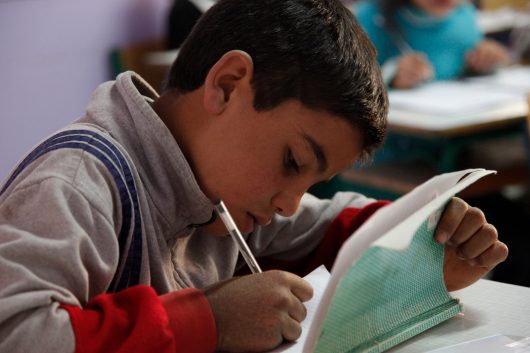
In Jordan, many Syrian refugees are struggling to settle in. The refugees went there to avoid a difficult war but it is challenging to start a new life away from home. Muzoon is a 16-year-old “champion on education” in her community. She is determined to stop the current situation from destroying the future for her people.

Muzoon believes in chances and creating opportunities. She wants to build enthusiasm toward education for refugees in her generation. She is also keen on promoting values and being independent in her thoughts and practices. Muzoon was referred to as the “Malala” of Syrian refugees.

Muzoon appreciates and acknowledges the value of education. As a refugee in a camp managed by the United Nation’s Refugee Agency, she understands that education for refugees is a key component for development. Furthermore, it is also a basic human right and the United Nations strives to provide it to all refugee children.

Currently, the United Nations High Commissioner for Refugees (UNHCR) takes care of 20 million refugees. Among these, 50% of the children are enrolled in primary education, 25% have access to secondary education and only 1% have access to tertiary education.

The UNHCR realizes that education is crucial for displaced communities. It serves the need for life skills and psychosocial needs. In addition to that, education promotes cohesion, provides access to valuable information and offers a safe environment.

Education for refugees is a great enabler. It provides capacity and opportunity for growth. With Syria’s war, there is a massive human crisis that requires a quick response. If refugees, especially the young generations are not educated, there is a chance of these children encountering future disadvantages such as poverty.

Just like any other major natural disaster, education deserves to be treated as of equal importance. However, providing education for refugees is a long-term cause and it will require long-term funding to achieve the development of the refugee community. An investment in education is even more important to girls. It reduces the chances of forced labor, early marriage and extremism. This investment will help young girls and refugees in general to avoid such risks and develop a purposeful life.

Furthermore, the British Council believes that the refugee community needs to be taught about hope. As an epic tragedy, the problem could have massive spillovers. Ensuring education for refugees is a key response to such a crisis.

The British Council works on integrating refugees into their new communities, especially the refugees moving to Europe, by providing language training to cope with the challenges in the new communities.

The British Council has a firm belief that humanitarian relief is very essential, but aid goes beyond simple relief. Since the scale of the crisis is huge, education will make a lasting difference.

– Noman Ahmed

Photo: Flickr

October 11, 2016
https://borgenproject.org/wp-content/uploads/borgen-project-logo.svg 0 0 Borgen Project https://borgenproject.org/wp-content/uploads/borgen-project-logo.svg Borgen Project2016-10-11 01:30:152024-12-13 17:55:49Education for Refugees is Essential for Development
Refugees and Displaced Persons

10 Facts about Cambodian Refugees

 Cambodian RefugeesCambodian refugees have been fleeing their country since the beginning of the violent regime of Khmer Rouge in the 1970s. The Communist Party of Khmer Rouge was in power from 1975-1979 and led by the Marxist leader Pol Pot, whose main goal was to make Cambodia an agrarian utopia, resulting in millions of deaths.

One could believe that things have since settled in what is viewed as one of the most corrupt nations on the planet. However, Cambodia and its people are still waiting for a stable future.

Obstacles continually arise for Cambodia and its people while they are only presented with small reliefs. Below are 10 facts about Cambodian Refugees and their current status:

  1. Australia and the United States provide a wealth of opportunities for new settlers and have been a safe-haven for many Cambodian refugees since the mid-to-late 1980s.
  2. In September of 2014, Australia and Cambodia signed an agreement without the parliament or civil society in either country knowing about it. The agreement stated all refugees currently residing in Nauru, under Australia’s watch, would be relocated to Cambodia.
  3. Cambodia is a signatory to the 1951 Refugee Convention. The Convention defines what a ‘refugee’ is and outlines the rights of the displaced, as well as the legal obligations of States to protect them.
  4. In the last six years, over 2,300 former stateless Cambodian refugees have received citizenship in Vietnam. The United Nations High Commissioner for Refugees (UNHCR) regional protection adviser Thomas Vargas stated “this [citizenship] sets an excellent example in the region for resolving statelessness and is a great way to start commemorating the 50th anniversary of the 1961 Convention on the Reduction of Statelessness.” Vargas has also encouraged other Asian countries to look to Vietnam when it comes to finding solutions for statelessness.
  5. Hun Sen, current Prime Minister of Cambodia and President of the Cambodian People’s Party, has been in power since 1985. “For three decades, Hun Sen has repeatedly used political violence, repression, and corruption to remain in power,” Brad Adams, the Asia director of Human Rights Watch, stated in his 2015 report.
  6. Many Cambodian refugees have faced major difficulties during their resettlement in the U.S. One such difficulty is how American society has received and treated Cambodians as a people. The second difficulty involves the horrific hardships Cambodian refugees have faced in comparison to other immigrant groups.
  7. Long Beach, California and Lowell, Massachusetts are dubbed as the “Cambodian Capitals of America.”
    The early 80s punk band “The Dead Kennedy’s” released the song “Holiday in Cambodia” which is critical of Pol Pot’s regime in Cambodia as well as the United States’ lack of aid.
  8. Refugees of Cambodia are reported as having the highest levels of psychological distress out of all the Southeast Asian refugee population in the U.S.
  9. Since 2002, there have been over 500 people deported from America to Cambodia due to the signing of a repatriation agreement.
  10. The settlement and deportation of Cambodian refugees and all Southeast Asian refugees alike is proving to be a history lesson on supporting future refugee populations for all nations.

Since it is apparent a more humanitarian approach to the Cambodian people will not begin within the country’s borders, the world will have to focus more humanitarian attention on Cambodia. In the meantime, countries should welcome and help resettle the large number of Cambodian refugees around the globe.

– Keaton McCalla

Photo: Flickr

October 4, 2016
https://borgenproject.org/wp-content/uploads/borgen-project-logo.svg 0 0 Borgen Project https://borgenproject.org/wp-content/uploads/borgen-project-logo.svg Borgen Project2016-10-04 01:30:512024-05-27 23:53:1810 Facts about Cambodian Refugees
Global Poverty, Human Rights, Refugees, Refugees and Displaced Persons

German Companies Give Refugees in Germany a Chance

Refugees in GermanyGerman chancellor Angela Merkel has made refugees in Germany a priority. As the Syrian refugee crisis unfolded, the chancellor decided on an open-door policy, which allowed over one million refugees to resettle in Germany. Recently, Merkel urged German corporations to integrate refugees into companies more quickly, arguing that refugee employment will support the German economy. And there is no shortage of refugees in Germany who are ready to work; the latest reports provided by the Federal Employment Agency state that 346,000 people with asylum status sought employment in the month of August alone.

Large German companies are hesitant to hire refugees for a myriad of reasons. Companies argue that they do not want to risk their productivity by employing refugees who don’t currently possess the necessary skills. Companies may also have qualms about the fact that many refugees have yet to become fluent in German, and that 80 percent of asylum seekers do not possess a primary- or secondary-level education.

Legal issues still remain, such as incomplete paperwork for asylum approval and a lack of proper identification for background checks. Merkel and some German companies, however, are working to make it easier for refugees to land jobs that not only provide income but also the skills necessary to be qualified contenders in the job market.

Despite the trepidation of some German companies towards refugee employment, many are using the influx of people to their advantage. Germany’s national rail carrier, Deutsche Bahn, announced that over the next two years it will create room for an additional 150 refugees in its qualification program, which includes German language courses. Deutsche Post currently employs more than 100 refugees, and national internet service provider Deutsche Telekom plans to hire 75 refugees through an apprenticeship program as well. Companies such as Mercedes, Siemens and Daimler have even created pre-training programs to prepare refugees for apprenticeships.

With the support of German companies, refugees in Germany can build better lives.

– Mariana Camacho

Photo: Flickr

October 4, 2016
https://borgenproject.org/wp-content/uploads/borgen-project-logo.svg 0 0 Borgen Project https://borgenproject.org/wp-content/uploads/borgen-project-logo.svg Borgen Project2016-10-04 01:30:352020-06-05 10:51:53German Companies Give Refugees in Germany a Chance
Refugees and Displaced Persons

Ten Facts about Refugees in China

Ten Facts about Refugees in China
Refugees are displaced individuals that are forced to flee their homes in order to look for greener pastures. Because of the crisis in Syria, China has been asked to take in thousands of refugees that are trying to escape. There are a plethora of misconceptions that arise when it comes to refugees. Here are ten facts about refugees in China that will shed some light on the matter:

1. Large Variety of Refugees

An increased number of foreigners are making their way to China from all around the globe which makes the country’s refugee pool very diverse. China is a world power and has been modernizing itself for some time now. Their economy, cost friendly living expenses and studious universities make it a promising place for refugees to escape the turmoil. According to an article written by Heidi Haugen, the vast majority of refugees are from “the Republic of Korea, the U.S., Japan, Burma and Vietnam.”

2. The Number of Refugees

China hosts approximately 300,000 refugees. This is not a very large number when one considers the total population of China, which is currently at 1.38 billion. That is almost 20 percent of the earth’s population. Of those 300,000 refugees, less than 30 are Syrian refugees. This explains why many countries are urging China to take in more Syrian Refugees.

3. The Acceptance

Although China is reluctant to let in Syrian refugees at this instance, statistics show their citizens are very accepting. A collaborative survey conducted by Amnesty International and consultancy GlobeScan found that “94 percent of the population said they would welcome them into the country while 46 percent said they would welcome them into their homes.” This revealing survey points out the conundrum the Chinese government is facing. It is clear that the public perception of Syrian refugees is not on par with the political policies in place.

4. Asylum Claims

The Exit-Entry law that was first enacted in 1985 did not include the right for refugees to apply for asylum. As a country that originated from numerous international asylum seekers, this seemed very unusual. In the year 2012, the Exit-Entry Law was amended so it would include “provisions for persons to apply for refugee status and remain in the country during the screening of their applications.”

5. Refugees Can Prosper

Refugees in China have been known to prosper. When the Vietnamese wanted to enter China at the height of the exodus, 100,000 people were allowed access into China. They came in through the border town called Dongxing in Guangxi. There was a massive effort to empty schools, homes and even government buildings in order to house them. The High Commissioner for Refugees at the U.N., António Guterres, called it “one of the most successful integration programs in the world”. Stories such as this give refugees hope that China will be just as generous upon their arrival.

6. Syrian Refugee Denial

Refugees from Syria are currently being denied. By the end of Aug. 2015, there were only nine refugees in China and 26 others seeking asylum. Even if China accepted 4.7 million refugees, that would equal 3.5 refugees for every 1,000 citizens.

7. Fault of Western Countries

China has the most space for refugees based on its population and land size, but continues to not take action. China blames the western countries for the refugee problem. They claim that the democratization of the U.S. and its allies are the cause of the current refugee problem. They even blamed the western countries for the drowning death of a Syrian boy whose body was found on the beach.

8. Population Control

It is well documented that China has placed regulations on childbirth. A fear of overpopulation has caused them to limit families to only one baby. Numerous abortions and sterilizations have been executed over the decades, because of this. Even though the current fear isn’t as high as it once was, this does play a factor in the government’s willingness to accept refugees.

9. Refugee Hardships

Many refugees who have obtained visas have found themselves trapped within the borders of China. In order to obtain an exit visa, one must have the support of housing registrations. This requires the refugee to have valid travel documents. This leads to the purchasing of false documents and can easily lead to refugees being arrested. Both of these methods will cost a great deal of money.

10. Unauthorized Refugees

Unauthorized refugees are often subjected to trafficking. Women are forced into forms of bondage, prostitution and stripped of their rights as free citizens. Although the trafficking in Persons Protocol was ratified by China in Dec. of 2009, “the 2012 Exit-Entry Law does not contain provisions for trafficking victims or conform to international standards in this area.”

It is important to fully understand the facts about refugees before assumptions are made. Refugees are people too and they are trying to make the most out of tragic situations.

– Terry J. Halloran

Photo: Flickr

October 1, 2016
https://borgenproject.org/wp-content/uploads/borgen-project-logo.svg 0 0 Borgen Project https://borgenproject.org/wp-content/uploads/borgen-project-logo.svg Borgen Project2016-10-01 01:30:262024-05-27 23:53:33Ten Facts about Refugees in China
Inequality, Refugees, Refugees and Displaced Persons

Australia’s Refugee System and the Nauru Detention Center

Australia’s RefugeeAustralia founded their offshore Nauru Detention Center for asylum-seekers on the Pacific island Nauru in 2001. It closed for a brief period in 2008 while the Australian government built detention centers on the mainland, but Nauru eventually reopened for refugee-processing in 2012.

Asylum seekers who arrive in Australia without a valid visa are transferred to either the Nauru or Manus Island Detention Center, where they spend an average of 445 days behind bars.

Australian law dictates that there is no limit on the length of time a refugee may be held in a detention center.

This militarized system of dealing with refugees is designed for the ease of processing on staff.  It is also easier to sell to other countries as “effective” rather than identifying and adapting the Australian refugee system to current changing global migration patterns.

Despite criticism that its refugee system is inhumane, the Australian government’s methods in their detention centers are often envied and copied by other countries, particularly because of the hostile mood toward refugees in recent years.

In contrast to Germany, which accepted over one million refugees in 2015, Australia placed only around 13,750 refugees in their Humanitarian Program in the 2015-2016 year.

Recently, the Nauru Detention Center, in particular, has come under scrutiny since the release of around 2,000 staff incident reports from the Center. These detail, among other things, sexual and physical abuse of refugees as well as self-harm among refugees.

In July 2015, there was an average of one incident of a refugee self-harming every two days. These “incidents” ranged from slashing wrists or overdosing on pills to self-immolation.

Immigration Minister Peter Dutton stated in a press release that refugees lied about the incidents of sexual abuse at Nauru Detention Center and deliberately self-harmed in order to garner sympathy and speed up their immigration process.

Though the Prime Minister Malcolm Turnbull has resisted holding a royal commission on the state of Nauru Detention Center, Human Rights Commissioner Gillian Triggs called for immediate action on the Australian Broadcasting Corporation, calling the Detention Center’s methods illegal and immoral.

Three non-governmental organizations have also petitioned the Royal Commission into Institutional Responses to Child Sex Abuse to investigate Nauru, based on the released reports of abuse.

Because the reports on the maltreatment of Nauru Detention Center prisoners were released so recently (first published by The Guardian on August 10th, 2016), there is no current information on whether the Australian government plans to close the detention center or allow it to remain open. There is also a dearth of information on what solutions the government will propose to fix the allegations of sexual and physical abuse to refugees.

Until the mistreatment of asylum seekers at Nauru Detention Center can be investigated thoroughly, proposed solutions are based on testimony alone. These solutions include improved living conditions, faster processing, and more visitations between refugees and any relatives/loved ones who live on the mainland.  An increase in healthcare, especially mental healthcare, for those living in the detention center is also a proposed solution.

– Bayley McComb

Photo: Flickr

September 25, 2016
https://borgenproject.org/wp-content/uploads/borgen-project-logo.svg 0 0 Borgen Project https://borgenproject.org/wp-content/uploads/borgen-project-logo.svg Borgen Project2016-09-25 01:30:292024-12-13 17:55:39Australia’s Refugee System and the Nauru Detention Center
Activism, Human Rights, Refugees, Refugees and Displaced Persons

Ten Facts About North Korean Refugees

d
The North Korean refugee situation is not one to be taken lightly. While the American media predominantly focuses on the recent refugee crises in Syria and other Middle Eastern countries, the totalitarian regime of North Korea impedes on the human rights of North Korean refugees everyday and such injustices cannot be ignored.

10 Facts about North Korean Refugees

  1. The people who live in North Korea are governed by Kim Jong-un under a completely totalitarian regime. Totalitarianism as a form of government theoretically prohibits individual freedom and expression; all aspects of an individual’s life are subject to the government’s authority. As such, media access and information about life outside of North Korea is extremely restricted.
  2. Most North Korean refugees defect to either China or South Korea. Refugees must usually travel through China to reach South Korea, as the border between North and South Korea is extremely regulated.
  3. South Korea’s media usually does not publicize individual defections, but large groups of North Koreans who defect all at once, such as the group of thirteen restaurant workers who left North Korea in April 2016, are more likely to be reported.
  4. The government of South Korea offers citizenship to all North Korean refugees who legitimately try to claim refugee status. The people seeking refuge are extensively interviewed to filter out any North Korean spies. As of May 2016, around 29,000 North Korean refugees live in South Korea.
  5. South Korea also offers reorientation classes for refugees from NK. These courses teach refugees basic life and job skills that don’t apply in North Korea, such as how to withdraw money from an ATM or shop in a Western-style supermarket.
  6. If any refugees from NK manage to escape to China, most face the fear of Chinese government discovery and the forcible repatriating that follows. Despite a signatory on the United Nations convention on refugees stating that China is not obligated to repatriate people seeking refuge, China still cooperates with the North Korean government and will even pay Chinese citizens to turn in undocumented refugees.
  7. Once they arrive back in North Korea, the refugees generally face torture, harsh physical labor and internment in political prisoner camps. It is therefore important to make sure people who want to leave North Korea can leave without fear of repatriation and punishment for leaving their country of birth.
  8. Organizations like Liberty for North Korea use donations to provide rescue and rehabilitation for North Korean refugees without any direct cost to the refugees themselves. It costs about $3,000 to fully rehabilitate one refugee. So far they have rehabilitated 505 refugees.
  9. As of May 2016, over 200,000 North Korean refugees live secretly in China. Most of them live in fear of repatriation and simply want to move on to South Korea or another country that will offer legal protection to refugees. However, tightly restricted travel between China and other countries’ borders often prevents such an opportunity.
  10. Many refugees from NK suffer from a host of mental health problems, including but not limited to depression and PTSD, even after they leave North Korea.

The cooperation of the Chinese with North Korea’s government makes the Chinese government complicit in the refugee injustices. North Korean refugees need help, and they’re looking to the rest of the world for aid.

– Bayley McComb

Photo: Liberty in North Korea

September 19, 2016
https://borgenproject.org/wp-content/uploads/borgen-project-logo.svg 0 0 Borgen Project https://borgenproject.org/wp-content/uploads/borgen-project-logo.svg Borgen Project2016-09-19 01:30:562020-06-25 23:20:04Ten Facts About North Korean Refugees
Refugees and Displaced Persons

Ten Facts about the Nigerian Refugee Crisis

Ten Facts about the Nigerian Refugee Crisis
Although most know of the atrocities committed by ISIS and the millions of displaced refugees throughout The Middle East and Europe, mainstream media has very much undercovered the Sub-Saharan terrorist group, Boko Haram. Consequently, very few are aware of an equally saddening Nigerian refugee crisis and the need for foreign aid.

Boko Haram is an Islamic extremist group based in northeastern Nigeria that has allied itself with ISIS. Although an extreme religious group, it has targeted Christians and Muslims alike, rebelling against the Nigerian government to form an Islamist state.

Since 2009, the group has killed more than 20,000 and displaced more than 2.3 million, of whom 1.3 million are children. In 2014 alone, the group killed more than 6,600 and abducted 276 schoolgirls from Chibok, Nigeria. In 2015, The Global Terrorism Index named Boko Haram the world’s deadliest terror group, ahead of ISIS. Just under 2 million have been displaced in Nigeria so far, according to the UNHCR.

Unlike Syrian refugees, who have escaped to countries with reasonable resources and social benefits, Nigerians are surrounded by countries with much less wealth. With so much less news coverage, western citizens are also less likely to contribute to this cause.

Here are 10 facts about Nigerian refugees:

  1. In a northeast Nigerian aid camp, more than 1,200 people have died of starvation and illness. One-fifth of the 800 children suffered from malnourishment and almost 500 had died.

  2. Maiduguri, Nigeria alone is estimated to host between 1.2 million to 2 million refugees.

  3. In August of 2016, the government began to investigate the theft of food from refugee camps by officials.

  4. In one feeding center, between 10 and 25 percent of children die.

  5. Without proper food or drinking water, refugees must also endure temperatures easily over 100 degrees Fahrenheit.

  6. The UNHCR has requested $30 million in funding but received only $12.5 million from the U.S. government.

  7. Beyond refugees, around 5.5 million people do not have enough to eat in Nigeria.

  8. Niger is facing its own food crisis, even as more than 87,000 Nigerian refugees enter the country.

  9. Just over 31,000 Nigerians have requested asylum in Italy, with more than half in Italy.

  10. Only five percent of Nigerian migrants are granted refugee status in Europe.

As the U.S. focuses on its own refugee crisis from South America and Europe focuses on a primary stream of refugees from the Syrian/Iraqi region, it will be difficult to find financially capable nations to help Nigerian refugee crisis. As for countering Boko Haram, mainly Niger, Nigeria, Chad, Benin and Cameroon are actively fighting the terror group.

If not militarily, perhaps the western world may consider helping refugees by welcoming them into its own societies or sending money to refugee camps. China, which has pledged $60 billion to invest in Africa, may also want to secure its investment and social standing by aiding refugees and the Nigerian government.

– Henry Gao

Photo: Flickr

September 12, 2016
https://borgenproject.org/wp-content/uploads/borgen-project-logo.svg 0 0 Borgen Project https://borgenproject.org/wp-content/uploads/borgen-project-logo.svg Borgen Project2016-09-12 01:30:452024-05-27 23:53:37Ten Facts about the Nigerian Refugee Crisis
Refugees and Displaced Persons

Amid Greek Refugee Crisis, American Veterans Serve Again

Refugees in Greece
As thousands of refugees in Greece continue to remain trapped in the country after an agreement closing the borders, American veterans are volunteering again to provide medical care. The agreement between the Turkey and the E.U. went into effect March 20th, leaving refugees already in the country unable to travel back to Turkey or continue on to Europe.

According to the U.N., there are 42,000 refugees located on the mainland of Greece, with another 8,000 spread across the Greek islands. Grouped in crowded camps by Greek officials, the asylum-seekers face overflowing toilets, lack of health care, poor food, violence and open harassment of women.

Many are housed in makeshift shelters in abandoned buildings. Though the country’s borders are officially closed to refugees, many still attempt to flee to Europe, with 3,000 having died or gone missing in attempted water-crossings from Turkey 2016 alone.

Team Rubicon

In response, many non-governmental organizations (NGOs) mobilized to help refugees stranded in Greece. One of them is Team Rubicon: a crisis-response organization founded by two marines in 2010 to provide aid to earthquake-stricken Haitians. Since its inception, the group evolved into an organization capable of deploying response teams around the world.

Now boasting leaders such as retired General Stanley McChrystal on its Board of Directors and retired General David Petraeus on its Board of Advisors, the veterans’ organization is active in all 50 states and around the world. Operating in small teams of current service members, veterans and civilian emergency workers, Team Rubicon deploys to disaster areas that may be difficult for larger organizations to reach.

The Borgen Project had the opportunity to interview Matt Pelak, the International Operations Chief for Team Rubicon who noted that since July, Team Rubicon has provided “primary and emergency medical care to a camp of about 200 at-risk refugees including pregnant women and unaccompanied children.”

The camp, established by the Radcliffe Foundation at a disused textile factory along Greece’s northern border, provides a reprieve from the crowded and dangerous conditions at many refugee sites.

Pelak asserted that Team Rubicon decided to deploy to Greece after assessing and concluding that the economic and emergency response capacity in the country was overwhelmed. The deluge of refugees are fleeing violence in Iraq, Syria, Afghanistan and elsewhere in the Middle East.

The Team Rubicon medical specialists have made efforts to send smaller mobile teams to surrounding camps as well, providing free medical care to the refugees they are able to see.

Though they are coordinating their efforts with a slew of other NGOs and the U.N., Pelak recognized that there are simply too many refugees in Greece for the current medical resources allocated. “The medical care [we provide] can be the first in months or years for many refugees,” he said.

The Struggles of Resettlement

Efforts to resettle the asylum seekers are underway, but so far only about 1,700 have been allowed to officially relocate to E.U. countries willing to take them in. Those that arrived after March 20th are supposed to be sent back to Turkey, but the Greek government has only deported 500 so far.

The refugees in Greece who arrived before the deadline will have to wait until the government can make a ruling on their applications for asylum. Considering the number of refugees and the variety of languages spoken among them, the process may take some time. Talking about the masses stranded in Greece, Pelak urged people around the world to “Support NGOs that provide aid on the ground and strongly consider taking in refugees by pressuring lawmakers.”

– Will Sweger

Photo: Flickr

September 10, 2016
https://borgenproject.org/wp-content/uploads/borgen-project-logo.svg 0 0 Borgen Project https://borgenproject.org/wp-content/uploads/borgen-project-logo.svg Borgen Project2016-09-10 01:30:392024-05-27 23:53:12Amid Greek Refugee Crisis, American Veterans Serve Again
Global Poverty, Refugees, Refugees and Displaced Persons

10 Facts About Pakistani Refugees and Asylum in Pakistan

Pakistan refugees
The media’s focus has centered on the Syrian refugee crisis but other people from other nations, including Pakistani refugees, are fleeing their homelands for a better future in America or Europe.

Because it shares its borders with both Iran and Afghanistan, Pakistan has been embroiled in the Iran and Afghanistan wars with the United States. Many refugees have fled to and from Pakistan due to the ongoing conflict.

Here are 10 facts about Pakistani refugees and asylum in Pakistan:

  1. Malala Yousafzai is a notable Pakistani refugee who garnered media coverage when she was shot point-blank in 2012. Yousafzai has gone on to advocate for equitable access to education for young women and won a Nobel Prize at fifteen years old in 2015.
  2. Pakistan was not a party to the 1951 Refugee Convention, which defined a refugee as “someone who owing to a well-founded fear of being persecuted for reasons of race, religion, nationality, membership of a particular social group or political opinion, is outside the country of his nationality.”
  3. Pakistan has not been able to establish any nationwide legislation regarding the protection of refugees or procedures to determine whether someone falls into refugee status.
  4. Pakistan’s lack of legislation regarding refugees means that the provisions of the 1993 Cooperation Agreement, between the government of Pakistan and the United Nations Refugee Agency (UNHCR), determine any refugee status.
  5. More than 1.2 million Pakistanis have been affected by military insurgencies in northwest Pakistan.
  6. Most refugees flee Pakistan by crossing the border on foot into Iran, taking a bus toward Turkey and crossing the Turkish border on foot to avoid border security. From there, it is a matter of finding someone willing to transport the refugees across the Mediterranean Ocean, for a reasonable sum, to land in Greece.
  7. Even if Pakistanis reach Greece and the relative safety of the European Union, they are not guaranteed decent living conditions, according to some refugees. Instead of being given asylum status, refugees run the risk of being contained in high-security detention facilities or even repatriated to Pakistan.
  8. Pakistan is not involved in an official war so it is possible that refugees from Pakistan are overlooked. The threat of gangs, mafia and poverty are not seen as “legitimate” causes for creating refugees when compared to an internationally recognized war.
  9. Pakistan’s government began cracking down on refugees living in their country. UNHCR set aside funds to repatriate 600,000 Afghan refugees as of June 2016. Some families do not want to leave their adopted country — they worry that they will be forcibly deported when their Pakistan Proof of Registration card expires.
  10. Around 1.6 million refugees live in Pakistan as of June 2016 according to UNHCR.

The refugee system in Pakistan is still in flux and requires more strict legislation be passed to help asylum seekers.

Advocates like Malala Yousafzai are doing great work to bring attention to the plight of Pakistanis fleeing Pakistan but there is still work to do.

You can help by contacting your Congress representatives and letting them know you support increasing the International Affairs Budget that goes to help the world’s poor, which often includes struggling Pakistani refugees.

– Bayley McComb

Photo: Flickr

September 8, 2016
https://borgenproject.org/wp-content/uploads/borgen-project-logo.svg 0 0 Borgen Project https://borgenproject.org/wp-content/uploads/borgen-project-logo.svg Borgen Project2016-09-08 01:30:502024-05-24 23:40:3010 Facts About Pakistani Refugees and Asylum in Pakistan
Global Poverty, Refugees, Refugees and Displaced Persons

Jeans for Refugees: Celebrities and Artists Join Forces

Jeans for RefugeesJeans for Refugees is a project that raises funds and awareness about the needs of refugees around the world. Artist Johny Dar wants refugees to know that the world can mobilize in different ways to help them and that they will not be forgotten.

“Ever seen the news and felt helpless, sad or angry about why things are the way they are? You are not alone!” says the Jeans for Refugees website. “And our mission is to make sure that neither are the millions of refugees who are homeless, hungry and suffering the effects of war and destruction.”

Jeans for Refugees uses art and celebrity culture as tools to raise awareness. Their website explains that the project, “galvanizes celebrity culture to focus a global audience on a global humanitarian cause.”

Actors, artists, models, singers and songwriters have donated jeans that Dar will paint and sell in an auction at the end of October. The proceeds will be donated to International Rescue Committee (IRC) projects that provide relief to millions affected by the global refugee crisis.

Alicia Vikander, Benicio del Toro, Bryan Adams, Daniel Radcliffe, Emma Watson and Ryan Gosling are some of the celebrities involved in the project. Dar paints each pair of jeans to reflect the personality of the celebrity who donated them. Dar told Vogue News that celebrities do not need convincing to donate a pair of their jeans.

“I believe they were convinced the same way that I was convinced myself, and how everyone else became convinced too — this is a humanitarian cause that is much grander than me and everyone involved in it,” said Dar.

Platoon Cultural Development claims Dar is a renaissance man, whose name is big in fashion, textiles, body art, painting and many other artistic fields.

Having Dar’s signature on the Jeans for Refugees movement places the humanitarian cause at the forefront of popular modern art and in the sights of the millions involved in the art community.

The enthusiastic response from celebrities shows how individuals with influence are eager to support a worthy cause. The hope is that others will follow these celebrities’ examples and react as quickly when given the opportunity to help those in need.

Dar’s art has the potential to be a major awareness-raising tool as it reminds people that every life deserves a chance.

– Christina Egerstrom

Photo: Zimbio

September 7, 2016
https://borgenproject.org/wp-content/uploads/borgen-project-logo.svg 0 0 Borgen Project https://borgenproject.org/wp-content/uploads/borgen-project-logo.svg Borgen Project2016-09-07 01:30:522024-06-05 04:10:53Jeans for Refugees: Celebrities and Artists Join Forces
Page 15 of 29«‹1314151617›»

Get Smarter

  • Global Poverty 101
  • Global Poverty… The Good News
  • Global Poverty & U.S. Jobs
  • Global Poverty and National Security
  • Innovative Solutions to Poverty
  • Global Poverty & Aid FAQ’s
Search Search

Take Action

  • Call Congress
  • Email Congress
  • Donate
  • 30 Ways to Help
  • Volunteer Ops
  • Internships
  • Courses & Certificates
  • The Podcast
Borgen Project

“The Borgen Project is an incredible nonprofit organization that is addressing poverty and hunger and working towards ending them.”

-The Huffington Post

Inside The Borgen Project

  • Contact
  • About
  • Financials
  • President
  • Board of Directors
  • Board of Advisors

International Links

  • UK Email Parliament
  • UK Donate
  • Canada Email Parliament

Get Smarter

  • Global Poverty 101
  • Global Poverty… The Good News
  • Global Poverty & U.S. Jobs
  • Global Poverty and National Security
  • Innovative Solutions to Poverty
  • Global Poverty & Aid FAQ’s

Ways to Help

  • Call Congress
  • Email Congress
  • Donate
  • 30 Ways to Help
  • Volunteer Ops
  • Internships
  • Courses & Certificates
  • The Podcast
Scroll to top Scroll to top Scroll to top