• Link to X
  • Link to Facebook
  • Link to Instagram
  • Link to TikTok
  • Link to Youtube
  • About
    • About Us
      • President
      • Board of Directors
      • Board of Advisors
      • Financials
      • Our Methodology
      • Success Tracker
      • Contact
  • Act Now
    • 30 Ways to Help
      • Email Congress
      • Call Congress
      • Volunteer
      • Courses & Certificates
      • Be a Donor
    • Internships
      • In-Office Internships
      • Remote Internships
    • Legislation
      • Politics 101
  • The Blog
  • The Podcast
  • Magazine
  • Donate
  • Click to open the search input field Click to open the search input field Search
  • Menu Menu

Archive for category: Poverty Reduction

Information and stories about poverty reduction.

Global Poverty, Poverty Reduction, War and Violence

How War Impacts the Poor

war impacts the poor
The introduction of the Sustainable Development Goals (SDGs) marked a deadline: the world has 15 years to eradicate global poverty. However, in order to achieve this goal, the causes of global poverty must be carefully analyzed. One such factor is how war impacts those who are living in poverty.

Afghanistan, Iran, Sub-Saharan Africa, Syria and others continue to be plagued with war and violence, and many individuals fall into what is known as a “poverty trap.” While peaceful countries are escaping poverty and violence, corrupt government leadership often leads to war which pushes societies into poverty.

Researchers from Stanford University studied the correlation between war and poverty and found four criteria that explain how war affects the poor.

Low GDP

Statistical research on poverty and conflict suggests that countries within the 50th percentile for income have a 7-11 percent risk of experiencing civil conflict. On the other hand, countries within the 10th percentile have a risk that rises to 15-18 percent.

For example, according to the World Bank, the Middle East has experienced a 30 percent decrease in GDP per capita since 1999. According to Stanford’s research, a 1 percent increase in GDP growth could reduce the risk of internal conflict by roughly 1 percent.

Large Youth Population

Almost 60 percent of the world’s poor are under the age of 25. With high youth populations, research shows that parents have more children in developing countries to cope with the lack of environmental resources in impoverished areas.

“[Long-term] demographic and economic data indicate that high fertility raises absolute levels of poverty by slowing economic growth, reducing the poverty reduction that growth would have helped deliver, and skewing the distribution of consumption against the poor,” The UN Population Fund reports.

Poor Education Systems

Compared to the national secondary school net enrollment of 92 percent between 2000 and 2004, developing countries had a mere 30 percent secondary school enrollment. By increasing schools’ enrollment by 10 percent, the average risk of conflict can drop 3 percent.

Dependence on Natural Resources

Natural resource dependence has been linked to both rebellion and a weak government. Previous research by Stanford University showed that only high-value, easily extracted resources including agriculture and diamonds further increase the likelihood of war.

Thus, from understanding these four criteria, it is clear that global leaders will have to collaborate and find solutions for people who are trapped in poverty due to war.

– Alexandra Korman

Sources: The Brookings Institution, The Economist
Photo: Rescue.Org

November 10, 2015
https://borgenproject.org/wp-content/uploads/borgen-project-logo.svg 0 0 Borgen Project https://borgenproject.org/wp-content/uploads/borgen-project-logo.svg Borgen Project2015-11-10 11:15:562020-06-24 19:31:05How War Impacts the Poor
Global Poverty, Inequality, Politics, Poverty Reduction

Bernie Sanders Praises Pope Francis on Poverty Reduction

poverty_reductionSanders praised the pope’s remarks on ending poverty and economic inequality long before the pope arrived in the U.S. this September. Prior to the pope’s congressional address, Sanders celebrated the possibility of the pope addressing Congress.
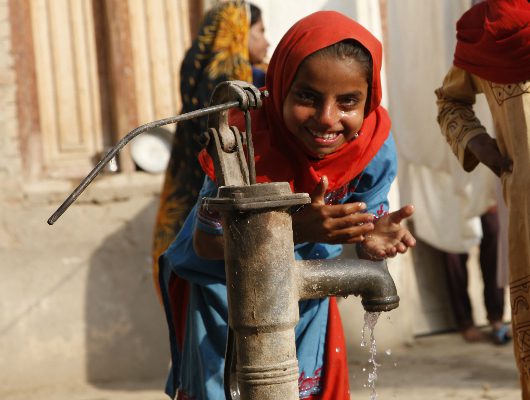
In February this year, Sanders addressed the Senate, stating that the pope “shows great courage in bringing up issues that we rarely hear discussed here in the Congress.”

In the address, Sanders praises Pope Francis on his leadership. On multiple occasions, he read quotes from the pope to the Senate, publicly acknowledging his admiration for the religious leader.

“Pope Francis is clearly one of the important religious and moral leaders not only in the world today but in modern history,” he said. “He forces us to address some of the major issues facing humanity: war, income and wealth inequality, poverty, unemployment, greed, the death penalty and other issues that too many prefer to ignore.”

Sanders read a quote from the pope: “‘Today everything comes under the laws of competition and the survival of the fittest, where the powerful feed upon the powerless. As a consequence masses of people find themselves excluded and marginalized without work, without possibilities, without any means of escape.'”

Sanders continued by commenting on the quote: “My interpretation of what he is saying is that money cannot be an end in itself. The function of an economic system is not just to let the marketplace reign, and end up in a situation where a small number of people have incredible wealth, while so many people have virtually nothing.”

Sanders especially notes the pope’s comments about exclusion and marginalization when it comes to government austerity. He strongly disagrees with right-wing Republicans on the federal budget committee about their continuous cuts on public benefits like Medicare and Social Security.

He says that right-wing Republican austerity measures are “the Robin Hood principle in reverse. This is taking from the poor and working people, and giving it to the millionaires and billionaires.” Sanders instead argues for tax hikes on the wealthiest Americans.

Sanders welcomed the pope when he arrived, calling him “a brilliant man.” He voiced optimism at the thought of members of Congress taking to heart the pope’s remarks about inequality and poverty reduction.

Sanders has noted that income inequality has reached a point where the wealthiest in America are becoming richer while the impoverished are becoming poorer. He insists that “the pope is right in saying all of us must address the grotesque income and wealth inequality we are seeing throughout the world.”

Sanders urged lawmakers to think about the pope’s speech when discussing balancing the 2016 federal budget. “Give us a budget which works for the most vulnerable people in this country, which works for tens of millions of working families, and does not simply work for large campaign donors.”

Senator Sanders is currently in the running for the Democratic Party presidential nomination.

“I know that people think that Bernie Sanders is a radical… read what the pope is writing about because he is not only talking about poverty,” Sanders said, “he is getting to the heart of hyper capitalism, and he is saying, ‘Why as a society are we worshiping money?'”

– Michael Hopek

Sources: Senate, C-SPAN, MSNBC
Photo: Flickr

November 3, 2015
https://borgenproject.org/wp-content/uploads/borgen-project-logo.svg 0 0 Borgen Project https://borgenproject.org/wp-content/uploads/borgen-project-logo.svg Borgen Project2015-11-03 11:30:132024-05-27 09:28:14Bernie Sanders Praises Pope Francis on Poverty Reduction
Development, Global Poverty, Poverty Reduction, Water

The World Bank Helps Increase Water Reliability in Lima

The World Bank Helped to Increase Water Reliability in LimaA sweaty man grabs a large plastic pipe on the back of a cab and starts to fill a series of plastic containers on the ground. Once he fills in one container, he holds out his hand to receive some coins from the owner and then goes away in his vehicle. This is a daily routine for tens of thousands of people who live around Lima.


Lima’s future water reliability is of great concern to the local government, the water utility company SEDAPAL and the people who live and work there. Recently, the World Bank helped the water utility company SEDAPAL plan for increased reliability in an uncertain future and saved the city more than $600 million.

The World Bank has completed SEDAPAL’s $2.7 billion master plan for water resources for 2040. The World Bank used state-of-the-art methods for Decision Making under Deep Uncertainty (DMU), investigating key questions such as could the proposed investments ensure reliability in the face of deep uncertainties? What if there are delays? What’s the best sequence so that investments ensure both “no regrets” and maximum future adaptability?

Through the study, the World Bank helped SEDAPAL revise its Master Plan of 14 large-scale investments by identifying projects that are adaptable as conditions evolve. After analyzing the 14 projects, the Bank found that 75 percent of the full $2.7 billion plan could meet water reliability targets, so the investment could be reduced to $2.0 billion. The study saved the city more than $600 million.

“We have to make decisions even when we don’t know the future,” said Laura Bonzanigo, World Bank economist specializing in DMU. “Through the DMU methodology, we can look at the range of possibilities and come up with minimum requirements to meet every possibility — robust decisions with no regrets.”

According to Bonzanigo, nowadays, utility companies are not only used for construction, such as pumping stations, dams, water treatment plans and tunnels through mountains but also are used to solve some valuable things, such as working with farmers and ranchers to make ecological investments in the upper watersheds.

In order to solve water utility problems, the utility company reaches out to nongovernmental organizations (NGOs) to protect watersheds and groundwater aquifers. It also works with consumers to use less water per household and explores ways to recycle water for parks. Engaging Peruvian NGOs is significant because they work closely with communities in the upper watershed management and environmental monitoring. Moreover, universities are important in helping SEDAPAL spread their methods through training.

SEDAPAL has requested further World Bank support. Decision-Making under Deep Uncertainty is an increasingly important tool for any sector’s long-term planning and investments. Based on the study in Lima, final workshop participants Argentina, Paraguay and Brazil have already approached the World Bank country offices to request support in the water sector.

In a new methodological book “Confronting Climate Uncertainty in Water Resource Planning and Project Design: The Decision Tree Framework,” the World Bank includes more information on the Lima water study to help program managers demonstrate the robustness of their projects.

Through state-of-the-art study, the World Bank helped SEDAPAL decide on its Master plan of increasing water utility in Lima and saved the city $600 million. It not only contributed to solving the problem of water utility in impoverished areas but also cut the unnecessary cost to the city.

– Shengyu Wang

Sources: World Bank, BBC
Photo: Wikimedia

October 15, 2015
https://borgenproject.org/wp-content/uploads/borgen-project-logo.svg 0 0 Borgen Project https://borgenproject.org/wp-content/uploads/borgen-project-logo.svg Borgen Project2015-10-15 15:56:302020-06-25 22:04:09The World Bank Helps Increase Water Reliability in Lima
Health, Poverty Reduction

Moringa: The Miracle Tree

Moringa
Moringa oleifera, the moringa tree, has been aptly nicknamed the miracle tree for its nutritional value and medical qualities. The moringa tree is native to South Asia and is known for how quickly it grows.

Many parts of the tree are edible, making it a valuable source of food in impoverished, rural areas especially in times of drought because the tree is very hardy.

Nearly every part of the moringa tree can be used. Although the wood from the tree is not very high quality, the fruit, leaves and pods are all edible.

The moringa tree leaves have a very high level of protein, calcium, iron, vitamin C as well as vitamin A. One cup of moringa leaves offers two grams of protein and more than 10 percent of the recommended daily allowance of vitamin C, vitamin B6, iron, and riboflavin. One cup of moringa pods offers 157 percent of the daily allowance for vitamin C.

The leaves have twice as much calcium and protein as whole milk when compared ounce for ounce. Considering approximately 670,000 children die from a vitamin A deficiency every year, the moringa’s nutrients are very valuable.

Moringa oil is extracted from the seed of the tree. This oil’s special quality is that it does not quickly go rancid. In impoverished areas where refrigeration is not an option, the oil can be a very good alternative to other vegetable oils.

One of the significant attributes of the moringa tree in light of global poverty is the purification quality of the seeds. There is a coagulant found in the crushed seed that can be used to reduce turbidity and alkalinity in water. There is also an antiseptic property withing the seed that helps purify it.

The nutrition within the tree makes the moringa a valuable asset in the alleviation of global hunger. The success of the moringa tree is evident as organizations have incorporated it into their programs for hunger alleviation. The Peace Corps in specific implements the use of the tree into the programs.

– Iona Brannon

Sources: Epoch Times, Fox News, International Journal of Development and Sustainability, Kuli Kuli, SABC
Photo: Flickr

October 7, 2015
https://borgenproject.org/wp-content/uploads/borgen-project-logo.svg 0 0 Borgen Project https://borgenproject.org/wp-content/uploads/borgen-project-logo.svg Borgen Project2015-10-07 13:19:482024-06-04 01:17:42Moringa: The Miracle Tree
Global Poverty, Poverty Reduction

More Millionaires in Africa But Poverty Remains the Same


Millionaires_in_Africa As the number of newly minted millionaires in Africa continues to rise, overwhelming poverty across the continent remains a pressing issue.
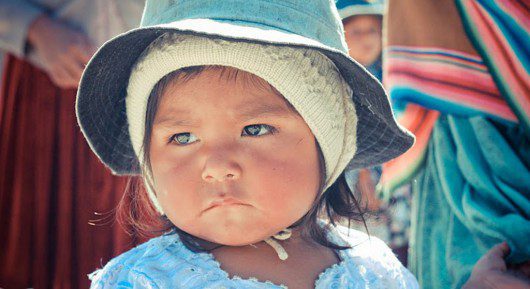
The most recent report from the research firm New World Wealth has released new statistics regarding the concentration of wealth across Africa.

According to the report, there are a total of 163,000 millionaires in Africa with a combined wealth of $670 billion. That’s higher than the GDP of Kenya and Nigeria, two of Africa’s largest economies, combined.

Most of Africa’s new millionaires are coming out of South African cities like Johannesburg and Capetown, which host 527 and 238 millionaires per 100,000 people, respectively.

One could assume that these new millionaires are a testament to Africa’s growth generating increased wealth, but the reality is much starker.

According to new World Bank data, GDP growth in Africa this year is forecasted to be 4.4% while per capita growth is expected to be only 1.7%.

“More people are likely living on less than $1.25 a day in Sub-Saharan Africa today than at the turn of the millennium—an estimated 413 million in 2010 compared with 376 million in 1999,” the World Bank report states. In addition, one out of every two Africans is currently living in poverty.

As far as who’s actually becoming a millionaire in Africa as poverty continues to be a crisis, it’s mostly those involved in politics, upper ranking government employees and those who were already well-off to begin with.

“It’s generally middle-class people becoming millionaires,” New World Wealth research head Andrew Amoils told Quartz.com. He stated that it’s “Difficult for poor people in Africa to become rich as schooling and healthcare are much better for wealthy people.”

– Alexander Jones

Sources: All Africa, BBC, Mohammed
Photo: African Business Review

October 7, 2015
https://borgenproject.org/wp-content/uploads/borgen-project-logo.svg 0 0 Borgen Project https://borgenproject.org/wp-content/uploads/borgen-project-logo.svg Borgen Project2015-10-07 01:12:562020-06-27 06:51:44More Millionaires in Africa But Poverty Remains the Same
Global Poverty, Poverty Reduction, Volunteer

Sustainable Bolivia Lends a Helpful Hand

bolvia poverty
There’s an estimated 10,500,000 people living in Bolivia. Fifty-three percent of them live in poverty. Bolivia has a lower gross national than its other South American counterparts due to issues with sustainability. Located in Cochabamba, Bolivia, Sustainable Bolivia works with 36 local organizations to improve environmental and economic sustainability.

Its primary goal is to secure human and financial capital for organizations in Bolivia to thrive and give back to the surrounding community.

Sustainable Bolivia also allows students and professionals to volunteer, intern and learn Spanish or Quechua, a commonly spoken indigenous language in the Americas. All proceeds earned from Sustainable Bolivia’s language schools go toward projects benefiting the community.

Sustainable Bolivia’s extensive volunteer and internship program allows people from around the world to travel to Bolivia and participate in community enhancement projects. Its mini-grant program provides funding to volunteers and interns — usually an average of $75 per month — to fund projects or purchase necessities for their chosen organizations.

Another major program started by Sustainable Bolivia is its scholarship program. Qualified Bolivians, who would otherwise not be able to earn an education, may receive the necessary funds to attend university based on financial need and academic achievements.

Some of the local organizations Sustainable Bolivia works with comprise of Alerta Verde, which works to increase environmental conservation, Bolivia Digna, an education-based organization using education to help children and youths in underserved communities and Mano a Mano, which builds schools and health clinics in marginalized communities.

In addition to these projects and partnerships, Sustainable Bolivia also features multiple residency programs, a film project and an organic garden. The aims of the residency programs are to improve the local art scene by celebrating culture in Bolivia and to provide dedicated artists with a studio to work in.

The film project documents the efforts created by Sustainable Bolivia and its partner organizations to promote fundraising and raise awareness for pressing issues in Cochabamba. Lastly, the organic garden serves the purpose of promoting environmental sustainability and cultivating and consuming food in a healthier way.

Sustainable Bolivia has improved the lives of many since its inception. In testimonials from Sustainable Bolivia volunteers and interns and Bolivians directly impacted by the project, Sustainable Bolivia has been described as a “wonderful volunteer community” and a “great resource” for the local Bolivian community of Cochabamba.

– Julia Hettiger

Sources: Sustainable Bolivia, Idealist,, Matador Network
Photo: World Vision

October 6, 2015
https://borgenproject.org/wp-content/uploads/borgen-project-logo.svg 0 0 Borgen Project https://borgenproject.org/wp-content/uploads/borgen-project-logo.svg Borgen Project2015-10-06 01:30:282020-06-27 06:56:59Sustainable Bolivia Lends a Helpful Hand
Global Poverty, Poverty Reduction

Textile Traditions: How the Handloom Can Fight Poverty in India

Handloom
In early August of this year, Indian Prime Minister Modi launched the first National Handloom Day in Chennai, championing traditional textiles as a tool to fight poverty in India.

Last year in October, Modi called upon the film industry to highlight textile products, asking them to include at least one product in their films. According to the government, textile sales rose nearly 60 percent as a result of the added exposure.

The Indian government has also recently announced that it is establishing a policy framework to additionally promote handloom products in the e-marketplace, aiming to popularize the “India Handloom” as a brand.

Handmade textiles are still commonly used for special occasions such as weddings, but Modi says popularizing the textiles as fashion pieces could be a real boost to the Indian economy.

“People wear handloom clothes on social occasions. We need to popularize this among youth. This will give much-needed boost to the handloom sector,” Modi said of the e-commerce avenue.

A number of famous handloom products were born in India, like the Kani shawl of Kashmir and the sarees of Tamil Nadu. According to the prime minister, if the use of handloom products was raised just 5%, turnover would increase by 33%.

In total, the textile industry accounts for 27% of the foreign exchange from exports and makes up three percent of India’s total GDP. The textile sector employs around 35 million people or about 21% of total employment in India. The promotion of high quality, handmade products represents a large, relatively untapped yet significant source of income for the country.

Grassroots efforts have also sprung up to “give handlooms some love.” The hashtag #ILoveHandlooms has been started by GoCoop, India’s first online marketplace for weavers and artisans. The group invites people to share their love for handloom products on social media by posting photos of their favorite items.

– Gina Lehner

Sources: The Hindu, India Times, Business-Standard
Photo: Your Story

October 5, 2015
https://borgenproject.org/wp-content/uploads/borgen-project-logo.svg 0 0 Borgen Project https://borgenproject.org/wp-content/uploads/borgen-project-logo.svg Borgen Project2015-10-05 01:30:402024-12-13 18:05:02Textile Traditions: How the Handloom Can Fight Poverty in India
Aid, Developing Countries, Global Poverty, Poverty Reduction

Bankers Without Borders: Global Integration

bankers-without-borders
The developing world is constantly in need of skilled professionals to not only provide immediate assistance but also to help train future workers so as to create a sustainable and self-sufficient community workforce.

For years, organizations like Doctors Without Borders, and Engineers Without Borders have been doing just that: on the one hand these organizations provide care and construct necessary structures respectively, but they also train and instruct local medical students and potential engineers.

However, as developing economies grow, there too needs to be financial assistance and instruction. Bankers Without Borders is attempting to propel developing countries into commercial modernity.

The mission of the organization is to enable citizens in developing countries to realize their full economic potential given the proper tools and training.

The organization was founded by a parent body called the Grameen Foundation. The Grameen Foundation was formed to help optimize other NGOs in terms of gross impact and overall efficiency.

In 2008, the group realized it could use its expertise to directly help those living in abject poverty.

Bankers Without Borders works as an independent organization and also teams up with local and global businesses to offer educational, financial, and consulting services across the developing world.

The organization utilizes nearly 19,700 business professionals, all of whom volunteer their time to help grassroots campaigns, small businesses, and individual investors and entrepreneurs.

As cliché as it is to say, knowledge is power, and anyone who posses it can reach a higher plane of potential. Those living in poverty certainly have the drive to become financially independent, and Bankers Without Borders is giving them the tools.

By encouraging modern, practical, and useful financial knowledge as well as helping to optimize new businesses, the organization is proving to be a huge relief to developing economies.

Bankers Without Borders hopes that one day those in developing countries can pass on the information learned to the next generation, thereby creating strong and self-sufficient modern economies.

– Joe Kitaj

Sources: Bankers Without Borders, Stand4, Doctors Without Borders, EWB-USA
Photo: Bankers Without Borders

September 30, 2015
https://borgenproject.org/wp-content/uploads/borgen-project-logo.svg 0 0 Borgen Project https://borgenproject.org/wp-content/uploads/borgen-project-logo.svg Borgen Project2015-09-30 14:05:082020-06-29 11:36:08Bankers Without Borders: Global Integration
Aid, Poverty Reduction

Success for the FAO in Mozambique

FAO in Mozambique
In Mozambique, 95 percent of the country’s agricultural production comes from farmers owning small pieces of land. Previously these farms were for subsistence, but the recent U.N.’s Food and Agricultural Organization initiative has helped to improve post-harvest practices enabling farmers to sell their crops for profits.

Because the vast majority of farms in Mozambique are small-scale subsistence farms, the communities relying on them are more vulnerable to the shocks of events such as conflict and climatic change. In addition, because yields are low, these farms barely cover subsistence needs, let alone enable families to save any income for the future.

One-third of the Mozambique population is chronically food-insecure. Half a million children are reported as being undernourished and 43 percent of children under five are considered malnourished.

Issues contributing to the lack of food security in Mozambique include a lack of diet diversity, poor agricultural yields and high rates of HIV infection impacting worker productivity, thus affecting agricultural efficiency and production.

It should be no surprise then, that with the high levels of food insecurity and HIV infection in Mozambique, poverty is widespread. The country ranks 178 out of 187 on the UNDP Human Development Index. Mozambique is receiving significant amounts of aid from the U.N.; the country is also a U.N.

“Delivering as One” country, meaning that the country is part of a pilot initiative to improve the partnership between the U.N. and the national government.

As part of Mozambique’s Poverty Reduction Strategy, the country along with the U.N. are working to help farmers absorb less of a loss with regards to climatic shocks and protracted natural disasters.

One way to help farmers is to increase the length of time crops are able to be kept, eaten, and sold. The U.N.’s Food and Agricultural Organization (FAO) is teaching farmers how to store crops for maximum post-harvest storage. With the present technology, farmers lose an average of 30 percent of their harvest.

Currently, farmers sell the bulk of their crops immediately after the harvest. This is because farms in Mozambique often lack storage facilities to keep crops for a later sale, during which they could have a later price. By being able to control when crops are sold, farmers have greater potential to earn an income.

The FAO in Mozambique is teaching farmers about various post-harvest techniques; specifically, the FAO is training artisans in the construction of Gorongosa silos, which are durable, prevent crops from pests, and utilize locally developed technology. The Gorongosa silo is made from clay and mud. With proper care, it can last for twenty years.

This silo is a more valuable option than the traditional silos used in Mozambique, which offer little to no protection from pests or the elements. The Gorongosa silo keeps crops viable for ten months post-harvest, which gives more control to the farmers over their sales and reduces the need for chemical treatments.

This FAO initiative began in 2013 and intends to be a five-year project. Since its inception, 260 artisans have been trained in Gorongosa silo making in fifteen districts throughout Mozambique. Ultimately, the project hopes to train 20,000 farmers in the usage of Gorongosa silos and build 10,000 silos.

This initiative, in conjunction with other strategies to reduce HIV/AIDS in the region and promote economic growth, offers much to improve the livelihoods of those in Mozambique. With greater crop volume post-harvest, farmers can earn more of an income and reduce food insecurity for their families.

– Priscilla McCelvey

Sources: FAO, U.N., World Food Programme

Photo: Flickr

September 30, 2015
https://borgenproject.org/wp-content/uploads/borgen-project-logo.svg 0 0 Borgen Project https://borgenproject.org/wp-content/uploads/borgen-project-logo.svg Borgen Project2015-09-30 02:41:152024-05-27 09:27:56Success for the FAO in Mozambique
Activism, Global Poverty, Poverty Reduction

United Way of Windsor Focuses on Education to Fight Poverty

United_Way_of_Windsor
There is an almost universal understanding that a lack of education is almost always a ticket to poverty. From rural India to modern Japan, when children miss out on quality education, it sets them on a difficult path to poverty.

But the United Way of Windsor-Essex in Ontario, Canada is putting their foot down, and starting up a program to make sure low-income students get started off on the right foot. Twenty kids from underprivileged backgrounds are being placed in an immersive program set to get them off through school and off the poverty track.

Each of the youths, who start high school this month, have signed five-year agreements that commit them to finishing high school and keeping their grades up.

In return for doing well in school, the students receive special mentoring, after-school tutoring and counseling options, and perhaps most uniquely – $1,000 will be set aside each year towards each student’s post-secondary education.

A recent report by United Way found that roughly a quarter of county residents under 17 lived in low-income families, and more than half of those in single-parent households are living in poverty.

The report further found that family income has a strong effect on the “child’s cognitive, behavioral, and physical outcomes, as well a lesser relationship on social development.” Children from lower-income families, according to the report, are at a significant disadvantage compared to their higher-income peers.

Poverty places many challenges on young adults, including increased mental strain, the risk of poor nutrition, and, of course, reduced educational opportunities. According to Lorraine Goddard, CEO of the local United Way, many of the students in the pilot program come from “working poor” families in which the head of household is often struggling with multiple jobs to make ends meet.

“You become discouraged, you can be ostracized — kids give up,” said Goddard. The personal and financial support, which comes from individual donors, “builds a sense of hope in these kids,” said Goddard.

Participation in the On Track to Success program offers participating students a reprieve from some of the stresses of living in a low-income home, giving them more time and energy to devote to their education.

Even just completing high school generally allows individuals to earn an average of $10,000 more than someone without a diploma. Completing college earns an average of nearly $17,000 more than just a high school diploma.

By helping these students succeed now in high school and starting them with the funds to attend college, the United Way is putting these students on the path out of poverty.

– Gina Lehner

Sources: Windsor Star, We are United
Photo: tucsoncitizen

September 28, 2015
https://borgenproject.org/wp-content/uploads/borgen-project-logo.svg 0 0 Borgen Project https://borgenproject.org/wp-content/uploads/borgen-project-logo.svg Borgen Project2015-09-28 01:51:072024-06-05 03:46:43United Way of Windsor Focuses on Education to Fight Poverty
Page 49 of 63«‹4748495051›»

Get Smarter

  • Global Poverty 101
  • Global Poverty… The Good News
  • Global Poverty & U.S. Jobs
  • Global Poverty and National Security
  • Innovative Solutions to Poverty
  • Global Poverty & Aid FAQ’s
Search Search

Take Action

  • Call Congress
  • Email Congress
  • Donate
  • 30 Ways to Help
  • Volunteer Ops
  • Internships
  • Courses & Certificates
  • The Podcast
Borgen Project

“The Borgen Project is an incredible nonprofit organization that is addressing poverty and hunger and working towards ending them.”

-The Huffington Post

Inside The Borgen Project

  • Contact
  • About
  • Financials
  • President
  • Board of Directors
  • Board of Advisors

International Links

  • UK Email Parliament
  • UK Donate
  • Canada Email Parliament

Get Smarter

  • Global Poverty 101
  • Global Poverty… The Good News
  • Global Poverty & U.S. Jobs
  • Global Poverty and National Security
  • Innovative Solutions to Poverty
  • Global Poverty & Aid FAQ’s

Ways to Help

  • Call Congress
  • Email Congress
  • Donate
  • 30 Ways to Help
  • Volunteer Ops
  • Internships
  • Courses & Certificates
  • The Podcast
Scroll to top Scroll to top Scroll to top