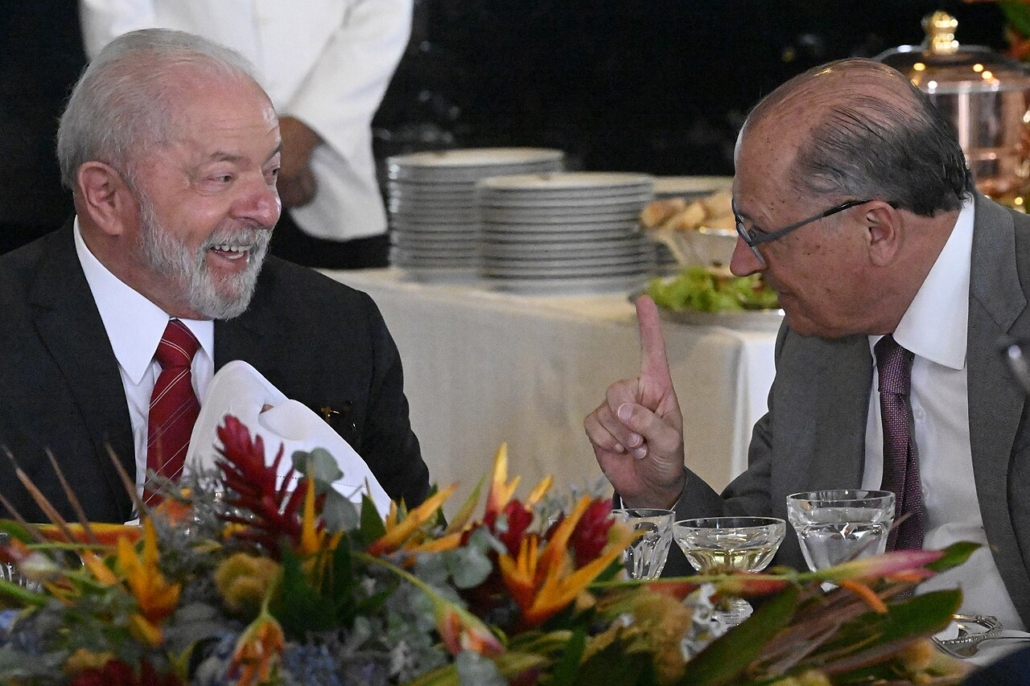
 Brazil’s president, Luiz Inácio Lula da Silva, also known as President Lula, has returned to lead the country after winning his third non-consecutive term in 2023. When he assumed office, Brazil’s poverty rate stood at 23.5%, based on the poverty line of $6.85 USD per day per capita. Within one year, President Lula managed to reduce poverty in Brazil to 1.7%. Although Lula’s leadership has driven significant progress in Brazil, he continues to face challenges.
Lula’s First Two Terms
On October 27, 2002, Luiz Inácio Lula da Silva secured election as Brazil’s president, becoming the first former laborer to achieve this role. During his first term, he tackled issues that burdened Brazil, such as income inequality, the minimum wage and economic record-keeping.
He launched social programs like Bolsa Família and enacted reforms to address these challenges. Despite these accomplishments, Luiz Inácio Lula da Silva faced criticism for neglecting education and crime as well as for a scandal involving his party’s illegal campaign funding.
In 2006, Lula triumphed in the presidential election again through two rounds of voting. His leadership fostered Brazil’s prosperity, symbolized by the selection of Brazil to host the 2016 Summer Olympics.
Under Lula’s guidance, Brazil thrived; however, constitutional limits prevented him from pursuing a third consecutive term. Consequently, Lula endorsed Dilma Rousseff to succeed him as Brazil’s leader.
Lula’s Absence From Office and Incarceration
Rousseff secured consecutive election victories, but during her second term in 2014, a corruption scandal implicated Lula, business owners and other Workers’ Party politicians. Over the next few years, dramatic events led to Lula’s incarceration and eventual release. Although Lula faced charges, the Supreme Court of Brazil annulled all accusations against him in 2021, clearing the way for his re-election bid.
Lula’s Reelection and Reconstruction of Brazil
In 2022, Lula campaigned against Jair Bolsonaro, a far-right politician who accelerated Amazon deforestation and mismanaged the COVID-19 pandemic, resulting in more than 600,000 deaths in Brazil. Lula emerged victorious in the election’s second round and began his third term.
Lula reinstated the policies he introduced during his first two terms. Since his return to office, 8.7 million Brazilians have moved above the poverty line. To illustrate this achievement, 10,875 individuals per day escaped poverty after Lula’s return.
Poverty reduction in Brazil is largely credited to Bolsa Família, the social program Lula initiated. Bolsa Família provides financial support to families in poverty on the condition that they ensure their children receive education and healthcare. Inspired by this program’s success, nearly 20 countries have adopted similar initiatives. Its broad reach is evident, as 42.7% of children aged 0-14 benefit from its provisions.
Unsolved Issues
Despite Brazil’s notable progress under Lula’s leadership, the country struggles with persistent racial inequality. Among Brazilians aged 15-29, 10.3 million remain unemployed and disconnected from education.
Of this group, 45.2% are black or brown women, and 23.4% are black or brown men. Altogether, 68.6% of this demographic identifies as black or brown.
What Lula and the Rest of the World Can Learn
Lula has undeniably advanced Brazil’s development during all three presidential terms. Brazil stands to benefit by maintaining Lula’s policies while expanding efforts to support disadvantaged populations, whilst reducing overall poverty in Brazil.
Brazil has already extended aid to previously underserved groups, as evidenced by Bolsa Família’s reach. Taking further steps to address the needs of marginalized communities could perfect the program’s impact.
For the world, Lula’s leadership and Bolsa Família serve as examples of effective governance. Nations facing similar challenges can adopt programs like Bolsa Família, which deliver substantial benefits with relatively simple implementation.
– Nicholas East
Nicholas is based in Ashby, MA, USA and focuses on Politics for The Borgen Project.
Photo: Wikimedia Commons
 Recently, the World Bank
 Despite facing both gender and ethnic oppression,
 On December 8, 2024,