• Link to X
  • Link to Facebook
  • Link to Instagram
  • Link to TikTok
  • Link to Youtube
  • About
    • About Us
      • President
      • Board of Directors
      • Board of Advisors
      • Financials
      • Our Methodology
      • Success Tracker
      • Contact
  • Act Now
    • 30 Ways to Help
      • Email Congress
      • Call Congress
      • Volunteer
      • Courses & Certificates
      • Be a Donor
    • Internships
      • In-Office Internships
      • Remote Internships
    • Legislation
      • Politics 101
  • The Blog
  • The Podcast
  • Magazine
  • Donate
  • Click to open the search input field Click to open the search input field Search
  • Menu Menu

Archive for category: Politics

Advocacy, Politics

How to Influence Congress

how to influence Congress
Lobbying the government for one’s self-interest is often seen as the dirty business of big corporations. According to the Center for Responsive Politics, $3.36 billion was spent on lobbying in 2017 by more than 11,500 lobbyists. While these figures may seem daunting to the novice voter, the power to bring change is still strongly held by constituents. The First Amendment to the U.S. Constitution reads, in part, “Congress shall make no law…prohibiting the free exercise…to petition the Government for the redress of grievances.”

With big corporations having many financial tools at their disposal, it may seem that they have the ear of those in Congress. However, most of the lobbying industry is funded by a variety of other organizations. Some of these include local banks, schools, hospitals and religious institutions, all of them lobbying for great causes such as ending breast cancer and diabetes and preventing AIDS. When learning how to influence Congress, persistence, organization and dedication are required, but anybody can make a change.

How to Influence Congress Effectively

  1. Learn the Best Way to Communicate
    Reach out to staffers or to a member of Congress to find out the best way to communicate with them. Different congressional offices weigh messages differently. (202) 224-3121 is the Capital switchboard and they can direct the call straight to your representative’s office.
  2. Send Effective Messages
    When reaching out to a member of Congress, make sure to identify yourself, state the issue you are advocating and explain how it relates to the community. The Graduate School of Political Management at George Washington University polled 3,000 congressional staffers about which activities have the biggest influence on members of Congress. They considered “providing consistently reliable information” and “presenting a concise argument” to be the two most effective actions when lobbying or advocating for an issue.
  3. Use Social Media
    The Congressional Management Foundation, an organization dedicated to figuring out the inner workings of Congress, says “social media is often the most effective way to reach members of Congress online.” Twitter was found to be the most used social media platform of congressional offices, but the usage of and the impact varies from member to member.
  4. Respect Congressional Staffers
    It is important to treat congressional staffers with respect. They hold a great amount of leverage and often act as gatekeepers to certain members of Congress. Staffers can be the greatest ally a constituent can have in Washington and can help mold certain inquiries.
  5. Show Up in Person
    Calling, messaging and tweeting are certainly impactful and convenient ways on how to influence Congress, but showing up in person at town halls and public events is the most powerful way to reach members of Congress. Make sure to bring talking points and questions. Bring friends if possible; large numbers have large voices. Get there early and connect with staffers, as most town halls are staffed by senior-level state staffers. Many constituents assume that only D.C. staffers can influence the policy-making decisions, but getting to know the state players is a key part of advocacy.

Influencing a member of Congress is not achievable only by those in the upper echelons of society. Anybody can reach out and tell their story. Members of Congress want to hear from their constituents. They want to make policy decisions that best adhere to the voices in their community, but they can only do those if those voices speak out.

– Aaron Stein

Photo: Google

March 24, 2018
https://borgenproject.org/wp-content/uploads/borgen-project-logo.svg 0 0 Borgen Project https://borgenproject.org/wp-content/uploads/borgen-project-logo.svg Borgen Project2018-03-24 07:30:562024-05-29 22:39:57How to Influence Congress
Government, Politics

8 Current Dictators as of 2018

current dictators
The definition of “dictator” can be subjective and interpreted differently in different contexts. Definitions can range from “a person with unlimited governmental power” to “a ruler who has complete power in a country obtained by force and uses it unfairly or cruelly.”

However, it is evident that dictator-led countries are generally associated with severe poverty, repression and human rights abuses among the general population. Countries suffering under the rule of a dictatorship often experience rising mental illness rates, decreased health and life expectancy, famine, poor education and other problems.

Although the number of dictatorships have been decreasing, there are several dictators still in power today. This list details eight of the world’s current dictators and the poverty rates associated with each country.

Current Dictators

  1. Kim Jong-un
    Kim Jong-un is North Korea’s current dictator and the third generation Kim to rule the country, following the death of his father Kim Jong-il in 2011. As Supreme Leader (many dictators do not call themselves dictators), he follows the political regimen of the Workers’ Party of Korea and has heavily focused on the country’s nuclear weapons program over the wellbeing of North Korean citizens. Forty percent of the nation, which is about 24 million people, lives below the poverty line.
  2. Pierre Nkurunziza
    One of the most violent dictatorships has occurred in Burundi under the rule of Pierre Nkurunziza, a former rebel turned president. Nkurunziza, who has been in power since 2005 and was re-elected for a third term in 2015, has changed the country’s constitution to allow unlimited presidential terms. In May 2018, Burundi is headed for a constitutional referendum, which would extend Nkurunziza’s rule to 2034.Throughout Nkurunziza’s dictatorial regime, he has been known for purging ethnic Tutsi army officers, suppressing opposition and media and ordering murderous brutality committed against protesters of his extended rule. Additionally, Burundi has some of the highest rates of malnutrition among children under five anywhere in the world, seven million reported malaria cases in 2017 and a 64.6 percent poverty rate overall.
  3. Nicolás Maduro
    Following Venezuelan president Hugo Chávez’s death, socialist Nicolás Maduro came to power in 2013. Maduro has continued “chavismo,” the corrupt ideology of Chávez, which has destroyed the economy of Venezuela, causing drastic inflation, food and medicine shortages, high unemployment and economic reliance on oil. Venezuela’s poverty rate has spiked to 82 percent.
  4. Bashar Al-Assad
    Syria’s dictator, Bashar al-Assad, has been in power since his father, President Hafez Assad, died in 2000. The Syrian people were hopeful that he would bring about the economic and political reforms that Syrians had been calling for, but it never happened and Syrian’s economy has plummeted due to a civil war that broke out in 2011.Bashar al-Assad is responsible for hundreds of thousands of civilian deaths since the Arab Spring, and more than 82 percent of Syrians are living below the poverty line.
  5. Idriss Déby
    Idriss Déby came to power in a military coup and has been ruling Chad since 1990. Déby has accelerated a bloody proxy war between Chad and Sudan throughout the 2000s and has been known to suppress opposition and the press. Chad has a 46.7 percent poverty rate, despite a surplus of oil, uranium and gold.
  6. Paul Kagame
    Since coming to power as president of Rwanda in 2000, Kagame has actually reduced poverty. He has introduced free basic education, boosted trade and lowered maternal and child mortality by more than 50 percent.However, Kagame’s rule still comes with great restrictions on freedoms and widespread oppression, particularly regarding the government-appointed media and their efforts to shut down independent newspapers and radio stations. Rwanda’s poverty rate is currently at 39.1 percent.
  7. Recep Tayyip Erdoğan
    Erdoğan was the prime minister of Turkey from 2003-2014 until he became president in 2014. Erdoğan has suppressed opposition by closing universities and firing civil servants, and has urged the citizens of Turkey to conceive more children, while child and adolescent malnutrition, extreme lack of healthcare and inflation due to monthly increases in food prices have been greater concerns. Turkey’s poverty rate is at 21.9 percent.
  8. Teodoro Obiang Nguema Mbasogo
    In Equatorial Guinea, President Teodoro Obiang Nguema Mbasogo has been ruling an authoritarian government since 1979. Freedom of association and assembly are harshly restricted under Mbasogo’s violent and oppressive rule, and essential healthcare and primary education improvements have been ignored. Mbasogo profits from billions of dollars of oil exports, but 76.8 percent of Equatorial Guinea’s population lives in poverty.

Although dictatorships are not as common now as they were in the past, the regimes of the world’s current dictators are still brutal, tyrannical, violent and repressive. The world’s most oppressed countries suffer under the autocratic rule of these current dictators, and there is still much progress to be made.

– Natalie Shaw

Photo: Flickr

March 21, 2018
https://borgenproject.org/wp-content/uploads/borgen-project-logo.svg 0 0 Borgen Project https://borgenproject.org/wp-content/uploads/borgen-project-logo.svg Borgen Project2018-03-21 01:30:542024-05-29 22:39:558 Current Dictators as of 2018
Politics, Refugees

From Albert Einstein to Freddie Mercury: 15 Famous Refugees

Famous Refugees
In the wake of recent attacks on refugees, many have spoken out against the blanket statements and incorrect generalizations made about those who flee their homelands due to violence or disaster. As a further reminder that refugees are a large and diverse population that is difficult to adequately describe, this list of 15 famous refugees details people you might not know were refugees.

Meet 15 Famous Refugees

  1. Aristotle Onassis
    The famous Greek shipping magnate fled Smyrna during the Greco-Turkish War in 1922 after several of his family members were killed during the Great Fire of Smyrna.
  2. K’Naan
    The author of the hit song “Wavin’ Flag”, which became popular in the wake of the 2010 earthquake in Haiti, was born in Somalia and resettled in Canada in 1991 after the outbreak of the Somali civil war.
  3. Freddie Mercury
    Freddie Mercury was born in the Sultanate of Zanzibar, which is now Tanzania. He fled with his family in 1964 during the Zanzibar Revolution and resettled in the United Kingdom.
  4. Georg Ludwig and Maria von Trapp
    The Sound of Music was based on the true story of these two famous refugees. The parents of the real-life von Trapp family, Georg and Maria, fled Austria after the Anschluss, or Nazi annexation of Austria. They eventually resettled in the United States, where they moved around before finally settling in Vermont.
  5. Madeleine Albright
    The first female American Secretary of State arrived in the U.S. as a child in 1948. Her family fled the modern-day Czech Republic (which was then Czechoslovakia) after a communist takeover.
  6. Henry Kissinger
    Another famous American Secretary of State, Henry Kissinger was born in Furth, Germany and fled Germany with his family in 1938 to escape persecution on the basis of their Jewish faith.
  7. Karl Marx
    As a result of his controversial political views, Karl Marx was exiled from multiple countries over the course of his lifetime. For the last 35 years of his life, he was a stateless person after being expelled from France and subsequently renouncing his Prussian citizenship.
  8. Sigmund Freud
    The famed psychoanalyst was a refugee for the last year of his life. He fled Austria as a Jewish refugee during the Anschluss in 1938, resettled in the United Kingdom, and died there in 1939.
  9. Jesus
    Jesus of Nazareth and his parents could technically be considered refugees on the basis of their having fled Israel and gone to Egypt to escape King Herod.
  10. Enrico Fermi
    The Nobel Prize-winning physicist and contributor to the Manhattan Project was a native of Italy and fled to the United States after the passage of anti-Semitic legislation by the Mussolini regime.
  11. Albert Einstein
    Perhaps one of the most famous physicists in history, Albert Einstein was a German-Jewish refugee who came to the United States in 1938 and became a professor at Princeton University.
  12. Jerry Springer
    While not technically a refugee himself, Jerry Springer was born to German refugees who had resettled in the United Kingdom.
  13. Victor Hugo
    The acclaimed French author was expelled from France multiple times and forced to flee as a result of his political views.
  14. Wyclef Jean
    The popular musician and member of The Fugees was born in Haiti and resettled in New York after fleeing the DuValier regime.
  15. Peter Carl Faberge
    Peter Carl Faberge was a renowned Russian jeweler who personally served the imperial court under Nicholas II and was known for the decorative eggs he created for the Russian imperial family and aristocracy. After the revolution in 1917, he was forced to flee to Switzerland. His surviving pieces have sold for tens of millions of dollars.

Amid all this talk of famous refugees, it is important to reiterate that refugees should not and do not have to possess any special talent or perform any extraordinary feat in order to be treated with basic human dignity. Rather, this list of famous refugees should serve as a reminder that someone’s refugee status does not define them and does not make their contributions to society any less valuable.

– Michaela Downey

Photo: Flickr

March 8, 2018
https://borgenproject.org/wp-content/uploads/borgen-project-logo.svg 0 0 Borgen Project https://borgenproject.org/wp-content/uploads/borgen-project-logo.svg Borgen Project2018-03-08 01:30:522024-05-29 22:39:43From Albert Einstein to Freddie Mercury: 15 Famous Refugees
Global Health, Global Poverty, Politics

The Intricacies of the Politics and Diplomacy of Global Health

The Politics and Diplomacy of Global Health
“Pure science is not pure anymore; if it ever was,” says former U.S. diplomat Judith Kaufmann. The Borgen Project recently had the opportunity to attend a lecture given by Kaufman where she discussed her views on the politics and diplomacy of global health. She spoke of global health issues and how they have evolved, and analyzed multiple examples of these issues in recent years. She had one overall message: “Every skill is needed, and everyone can make an impact.”


Political Background

Kaufmann graduated from Miami University in 1969 with a degree in Political Science. In her own words, she says she was “backed into public health.” She had no prior experience in these fields, but she had been a foreign service officer and knew how to interact within and between countries. When she was hired in the field of public health, she learned what was necessary about each health issue to craft proper policy.

She was told, “you can’t always teach doctors diplomacy.” She went on to work for the State Department, the Global Fund to Fight AIDS, Tuberculosis and Malaria, the World Health Organization; she now acts as an independent consultant for groups like the Bill and Melinda Gates Foundation.


Past Global Issues

Kaufmann gave several examples of how multiple disciplines and skill sets have been required to tackle issues involving global health. The first instance involves the Nigerian polio vaccine boycott. In 2003, states in Northern Nigeria boycotted the polio vaccine introduced to the area by the World Health Organization that resulted in a resurgence of the disease.

WHO did this due to a lack of trust in the organization caused by divisions within the Islamic community and between the North and South. According to Kaufmann, the WHO believed “Nigeria would be easy,” and waited until later in the campaign to target the country because it didn’t factor in the Nigerian history of conflict and division.

Kaufmann believes this could have been prevented if there had been someone involved in the vaccination campaign actually familiar with the culture of the region.

Another example she gave involving the politics and diplomacy of global health occurred within the United States. She describes how the second Bush administration used politics to gain funding for the emergency plan for HIV/AIDS relief.

The President continued his campaign strategy of “compassionate conservatism,” but what really gained support for the program, in Kaufmann’s opinion, was his choice to frame the issue as a matter of national security. According to Kaufmann, “he realized you have to appeal to emotion and rationale.”


The Path Forward

In Kaufman’s view, the politics and diplomacy of global health will only continue to grow in complexity. As an example, she cites China’s “New Silk Road” project and the health impacts on the multiple countries it passes through, and that these must be addressed by the World Health Organization in order for the project to move forward.

She also addressed the problem with U.S. apathy towards global health. In her words, “support for global health has flatlined in the United States.” Her hope is that the youth continue to care about and give their skills to addressing global health because “the problems have gotten too big and global health is too complex to be left only to doctors.”

– Megan Burtis

Photo: Flickr

February 20, 2018
https://borgenproject.org/wp-content/uploads/borgen-project-logo.svg 0 0 Borgen Project https://borgenproject.org/wp-content/uploads/borgen-project-logo.svg Borgen Project2018-02-20 07:30:262019-12-05 08:58:18The Intricacies of the Politics and Diplomacy of Global Health
Global Poverty, Government, Politics

Understanding the Basics: What is a Parliamentary System?

What is a Parliamentary System
Many in the United States may be aware that most Europe governments use a parliamentary system, but the question most are probably thinking is: what is a parliamentary system? More importantly, how is it different from the system used by the United States? Here are the answers to these questions and more.

Basics of a Parliamentary System

In terms of the U.S. system, a country’s parliament would serve as both its legislative and executive branches. The most important thing to know about parliamentary systems is that the political parties hold the power and not individuals. When citizens vote, their ballots list party names and when a party wins, seat allotment is assigned to party members based on seniority (in most cases).

When a party wins the majority of seats, it then selects a leader to serve as the executive called a Prime Minister or, in some cases, a Chancellor. This person will most likely already be the party leader and they then select their cabinet which sets the government’s agenda. If one party does not win the majority of seats in the parliament, then it must form a coalition with other parties to form a majority.

This process may take time, but it will eventually allow for the smoother passage of legislation.

One House or Two?

Many parliaments are bicameral, meaning it has two houses, while others may be unicameral, having only one house. In bicameral systems, there is a lower and an upper house, but most legislating actually takes place in the lower house.

The greatest difference between the two is the number of veto points or places where legislation can be halted within the legislative process. Unicameral systems have fewer veto points than bicameral systems making it easier and faster to pass legislation but also easier to overturn. Many parliamentary systems therefore adopt the bicameral system for stability.

Parliamentary vs. Presidential

In a parliamentary system, the executive is the Prime Minister while in a presidential system, the President is the executive. There are many differences between these two positions, but most notably, the Prime Minister and his/her cabinet arises from the legislature, while Presidents are directly elected by the people.

At first glance, many would then prefer a President because citizens choose him/her directly, yet many still prefer Prime Ministers.

First of all, they are beholden to their party, so their decisions are far more predictable than a President’s and voters know exactly what values they are voting for. This applies for all members of the legislature as well, not just the Prime Minister.

Parliamentary systems also entail the possibility for a vote of “no confidence” by the legislature which can remove a Prime Minister from power at any point if they lose the vote. Presidents, however, have fixed terms and cannot so easily be removed.

Success Rate

Citizens in the United States are very fond of the presidential system, yet in reality the success rate for parliamentary systems is far greater. The system has been a part of some European countries for centuries, but that doesn’t mean it’s perfect. When deciding which system to adopt, new countries must consider what is best for its country, and that may or may not be a parliamentary system.

– Megan Burtis

Photo: Flickr

February 18, 2018
https://borgenproject.org/wp-content/uploads/borgen-project-logo.svg 0 0 Borgen Project https://borgenproject.org/wp-content/uploads/borgen-project-logo.svg Borgen Project2018-02-18 01:30:162019-12-16 13:36:57Understanding the Basics: What is a Parliamentary System?
Global Poverty, Politics

How Old Do You Have to Be to Run for Congress?

How Old Do You Have to Be to Run for Congress?How old do you have to be to run for Congress? To hold a seat in the U.S. Senate, the youngest a person can be is 30 years old. However, one does not have to be 30 years old in order to run for Senate as long as they are 30 years old by the time that they are sworn in. For example, Joe Biden was 29 years old when he ran and was elected as a senator of Delaware.

Despite the fact that Biden was extremely young when he first took office in the Senate, he is only the fifth-youngest senator in U.S. history. The youngest senator in U.S. history is John Henry Eaton of Tennessee, who was 28 years old when he became a senator. Though Eaton was elected after the age requirement for the Senate was established in 1787, birth records were poorly kept during this time so it was much harder to guarantee that all candidates were of age.

The age requirement for the Senate was debated after establishing the age requirement for the House of Representatives, which was originally 21 years old, or the voting age at the time. The age was later increased to 25 years old after a move by George Mason of Virginia, who claimed that to hold a seat in the House, one should have time to get his or her own affairs in order before trying to manage a nation. This fact helps to answer the question “how old do you have to be to run for Congress?”

However, the age requirement for the House remained lower than many other positions because the founders wanted this legislative chamber to be closer to the people than any other chamber. Due to this desire, the founders were a lot less restrictive when establishing the requirements for the House. The restriction on age for the Senate is different because the founders felt that the greater responsibilities of Senators required those in office to have more knowledge and greater character stability than Representatives.

While Eaton was the youngest Senator in US history at 28 years old, William Charles Claiborne, also from Tennessee, was the youngest Representative ever. Claiborne, born in 1775, was 22 when he was elected as a Representative. Claiborne was later elected again, at age 24, while he still did not meet the age requirement.

Though the U.S. has elected quite a few Congressmen who are under the age requirement, this trend has not continued, as the average age of a U.S. Senator is 60 years old. However, some young people who have run for Congress recently are trying to encourage more young people to run for office and get more involved in politics.

“How old do you have to be to run for Congress?” was a question that went through the mind of Erin Schrode. Schrode, a woman from Marin County, California, began a campaign for Congress when she was only 24. Schrode did not win the 2016 election for House of Representatives, but if she had, she would have been the youngest ever Congresswoman. This title is currently held by Elise Stefanik, who was 30 years old when she was elected to be a Representative in 2014.

Schrode claims that she never intended to get involved in politics, but after seeing her mother’s dedication to her work towards combating skyrocketing cancer rates, Schrode developed a passion for politics. She believes that more young people should run for Congress because 35 percent of the U.S. population is under the age of 30, but people under 30 rarely hold Congressional seats.

– Haley Rogers

Photo: Flickr

January 25, 2018
https://borgenproject.org/wp-content/uploads/borgen-project-logo.svg 0 0 Borgen Project https://borgenproject.org/wp-content/uploads/borgen-project-logo.svg Borgen Project2018-01-25 07:30:302019-11-11 05:55:45How Old Do You Have to Be to Run for Congress?
Global Poverty, Politics

United States Praises Peaceful Transfer of Power in Liberia

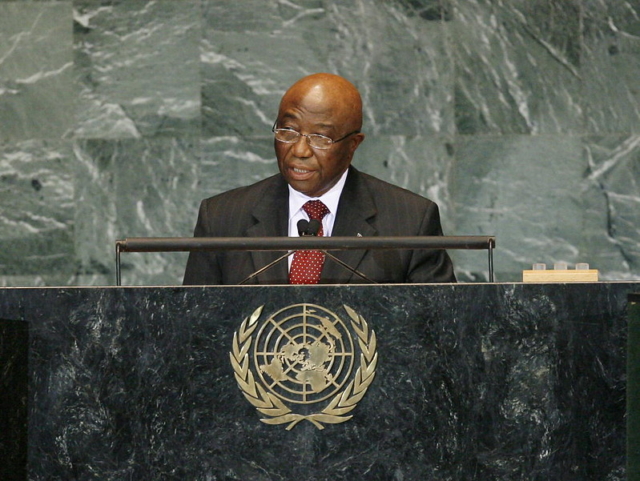
Retired international soccer star George Weah won the Liberian presidential election on December 26, 2017, succeeding Nobel Peace Prize Laureate Ellen Johnson Sirleaf. The election marked the first peaceful transfer of power in Liberia since 1944.

President-elect Weah defeated Vice President Joseph Boakai, 73. Weah, internationally known for earning the African, European and World Player of the Year in 1995, has served as a senator since 2015. Weah, 51, received the most votes in the first round of the presidential election in October 2017.

Liberty Party nominee Charles Brumskine, who received less than 10 percent of the vote, delayed the final round of voting by accusing election fraud in a case that went to the Liberian Supreme Court. Multiple bodies, including the National Election Commission, found the election was fair. The U.N. Security Council and the White House delivered public statements commending the peaceful transfer of power in Liberia and praising the Liberian people and government.

Liberia, a country founded by freed American slaves, has experienced decades of civil war, and the 2014 Ebola epidemic killed more people in Liberia than anywhere else in the world. The West African nation is currently facing extreme poverty and issues stemming from it.

Liberia has the seventh-highest maternal mortality rate, female genital cutting affects more than two-thirds of women and girls and less than 50 percent of the population older than 15 can read and write. Moreover, 60 percent of the population is under 25. Nevertheless, the U.N. reduced its troop presence in Liberia in July 2016, and the country has the highest annual reduction rate in infant and child mortality in Africa.

In his victory speech, Weah applauded the Liberian people and said, “[T]he best way to celebrate Liberians is to improve their lives…through public governance.” He encouraged investors to come to Liberia and stressed the importance of private investment in rebuilding the economy.

Weah also thanked his predecessor, Johnson Sirleaf, who became the first elected female African head of state in 2005. “We promise to follow your footsteps in protecting the rights of Liberians and providing even greater freedoms,” Weah said.

Weah’s Vice President Jewel Howard-Taylor sat next to him during his victory speech. Howard- Taylor’s ex-husband is serving a 50-year prison sentence for crimes against humanity. However, she proved to have vastly different policy ideas than her previous partner during her tenure as a senator.

While Weah certainly will face obstacles during his administration, the global community is hopeful that progress will continue in Liberia. Democratic leaders have a renewed sense of optimism for the country after this peaceful transfer of power in Liberia.

– Sean Newhouse

Photo: Flickr

January 21, 2018
https://borgenproject.org/wp-content/uploads/borgen-project-logo.svg 0 0 Borgen Project https://borgenproject.org/wp-content/uploads/borgen-project-logo.svg Borgen Project2018-01-21 01:30:312024-12-13 17:58:34United States Praises Peaceful Transfer of Power in Liberia
Global Poverty, Politics

What Are Congressmen and Congresswomen?

Congressmen and Congresswomen

In simple terms, Congressmen and Congresswomen are members of the U.S. Congress who are elected to represent the people in their districts. Congressmen and Congresswomen create and pass legislation and hold hearings. Congress also plays an essential role in passing laws, because all bills must be passed by Congress before they go to the president to be signed into law.

Congress is split into two bodies, the House of Representatives and the Senate. The House has 435 members, whereas the Senate has only 100 members. Each state has two senators, but the number of representatives a state has is based on its population. For example, California, a considerably large state, has 53 representatives, more than any other U.S. state.

In order to be a member of the House, a person has to be at least 25 years of age, a resident of his or her state at the time of the election, and have had U.S. citizenship for at least seven years. The Senate also requires members to be residents of his or her state at the time of election, though Senators must be at least 30 years of age and have been a U.S. citizen for at least nine years.

The requirements to hold office in Congress originate in British law. When creating the requirements, the founders made the age restriction for the House lower because it was designed to be the closest to the people and therefore less restrictive. The idea of having a higher age requirement for the Senate was because senators have duties that require more knowledge and character stability.

Aside from the differences in requirements to hold each position, the House and Senate also have different election cycles. Congressmen and Congresswomen in the House serve only two-year terms, whereas members of the Senate serve six-year terms. House elections happen every even year, but Senate elections are staggered during even years so that in any given election, only one-third of the Senate is up for reelection.

There are many differences between the House and the Senate, such as how long it takes each body to pass a bill. The House can pass a bill as quickly as in one day, whereas a bill can be debated on the Senate floor for two to three weeks.

The House operates based on committees and subcommittees, which are used to review bills and operate as an oversight for the executive branch of the U.S. government. This body’s main power is to pass federal legislation, though that legislation also has to go through the Senate and the president before becoming a law. The House also has the power to try federal officers for high crimes and misdemeanors, thought the Senate has the right to try the House’s impeachment.

Among the main powers of the Senate is the power to consent to treaties. The Senate’s consent to a treaty is required before a treaty can be ratified. The Senate also has the power to confirm the appointments of Cabinet secretaries and other federal officials and officers.

Each state has two senators to represent the state’s population, but a representative’s constituency is smaller, being only the population of their district. Congressmen and Congresswomen play an essential role in passing bills so that they can become laws after signed off on by the president. Though Congressmen and Congresswomen have many different tasks, their ultimate job is to represent their constituents in the U.S. government.

– Haley Rogers

Photo: Flickr

January 19, 2018
https://borgenproject.org/wp-content/uploads/borgen-project-logo.svg 0 0 Borgen Project https://borgenproject.org/wp-content/uploads/borgen-project-logo.svg Borgen Project2018-01-19 01:30:222019-12-26 17:08:59What Are Congressmen and Congresswomen?
Global Poverty, Politics, Politics and Political Attention

What Are the Qualifications for the Senate?

Qualifications for the SenateThe United States Senate has been meeting since 1789 to ensure the prosperity of the country through legislation. The people of this legislative body are some of the most important leaders in the country, and 16 of our presidents were once a part of this institution. But what does it take to gain one of the 100 respected positions in the U.S. Senate?

There are informal as well as formal qualifications for the Senate in the United States. The formal qualifications are clearly outlined in Article I of the U.S. Constitution. First, senators must be at least 30 years old. The youngest person to become a senator, John Henry Eaton, was actually only 28 years old when he was elected in 1818, but many believe his age was unknown when he was sworn in and therefore no one realized he was violating the Constitution.

The second qualification states that senators must have U.S. citizenship for at least nine years before being elected. This qualification is slightly more flexible in comparison to the qualification for president, which requires candidates to be natural-born citizens.

This qualification also allows for immigrant representation within the U.S. government. Many have been born in Europe or Canada and then immigrated to the United States and gained citizenship, allowing them to become senators.

The last of the specified qualifications for the Senate read that candidates must be a resident of the state which they represent at the time of the election. Former president and senator Barack Obama was born in Hawaii, yet represented Illinois in the Senate, as this was the state in which he resided at the time.

There are clear advantages to actually growing up and living in the state a potential senator wishes to represent, including making it easier to be elected. However, this qualification allows for politicians to move around more freely and live in a state where they are more likely to be elected than the one in which they grew up. Again, this benefits those born outside the United States, who can choose which state to reside in and represent.

Informal qualifications for the Senate have also emerged over the years. These are more like trends that have shown the type of people that citizens tend to deem qualified and choose to elect. Most senators have college educations, both private and public, and law school attendance is popular among these. Law also ranks as the number one declared profession by senators, followed by public service or politics. However, these qualifications are by no means necessary and many elected senators have not met them.

United States Senators are directly elected by the people they represent. This began when the 17th Amendment was adopted in 1913 to ensure Senate seats were not left open due to disagreements or corruption. The 17th Amendment stated that Senators serve six-year terms without term limits.

The Senate is crucial to the American political system. Its members are respected and work to pass laws that will advance the country. Because of the power they are given, their most important qualification is that the people have chosen them to serve and represent their interests to the best of their ability. When they are elected, they accept this responsibility and must value it above all else.

– Megan Burtis

Photo: Flickr

January 17, 2018
https://borgenproject.org/wp-content/uploads/borgen-project-logo.svg 0 0 Borgen Project https://borgenproject.org/wp-content/uploads/borgen-project-logo.svg Borgen Project2018-01-17 07:30:342019-11-11 22:19:31What Are the Qualifications for the Senate?
Global Poverty, Politics

Living Conditions in North Korea: A Story of Extremes

Living Conditions in North Korea
Refugees and journalists consistently cite dire living conditions in North Korea, one of the most repressive authoritarian nations in the world. Leaking information from the secretive police state, they report firsthand knowledge to outsiders. According to these sources, the North Korean government commits severe human rights abuses against its citizens, and the government can barely feed its own people.

A 2014 U.N. Commission of Inquiry report cited numerous human rights abuses in North Korea, including murder, enslavement, torture, imprisonment, forced abortions and sexual violence. The government extracts unquestioning obedience through public executions, arbitrary detention, forced labor, tight travel restrictions and religious persecution. Citizens have no basic freedoms such as the right to expression, assembly, political opposition or independent media. A sociopolitical stratification system divides North Koreans into three classes: “loyal,” “wavering” and “hostile.”

The specter of prison is one means of keeping the population in line. North Korea’s draconian three generations rule punishes the entire immediate family if one member is convicted of a serious crime. The next two generations born in the camp are then detained there for life. Existence in the camps is extreme. Clothing and food are so scarce that prisoners survive on rats and anything else they can catch. Inmates are frequently left stunted and deformed from long hours of hard labor. Twelve-hour days, seven days a week is the normal work schedule.

Life outside of the prison camps has its own grave challenges. Living conditions in North Korea are characterized by deprivation. The elite ruling class enjoys basic benefits of modern life such as indoor plumbing, cars, meat, coffee and a few luxury items. The middle class receives sufficient food and occasional new clothes. Most people, however, struggle to survive. Half of the nation’s 24 million people live in extreme poverty. North Korea’s annual GDP per capita is $1,800, making it 197th in the world and only 2 percent of South Korea’s.

One-third of North Korean children are stunted from malnutrition. For most people, meat is an unaffordable luxury. They subsist on fermented cabbage known as kimchi, rice, corn and porridge. Most homes are heated by open fireplaces, and many have no flush toilets. Electricity, for those fortunate enough to have it, is unreliable and sporadic. Power might be available for only a few hours each day. Frequently, cell phones are used as flashlights during outages.

Theoretically, education and healthcare are free in North Korea. However, school children must provide financially for desks, chairs, building materials and heat. Patients must provide their own medications, pay for heat and cook their own meals at home.

Still, living conditions in North Korea are showing some improvement, particularly for the elite who are privileged enough to reside in the capital of Pyongyang. According to the South Korea Central Bank, the North Korean economy grew by almost 4 percent in 2016. Despite spotty service and no internet, there are now 1.5 million mobile phone users. Even in smaller cities outside of Pyongyang, electric bikes from China and Japan can be seen mingling with the country’s ubiquitous bicycles.

In Pyongyang, people are buying smartphones, tablets, hi-fi speakers and HDTVs. With the exception of accessing the internet, North Korean smartphones have similar capacities to those in other nations. In place of the internet, citizens use a state-controlled intranet. There are North Korean versions of Google, Facebook, chat rooms and online dating. Food courts in Pyongyang malls offer American-style fast food restaurants serving milkshakes and French fries. Skating rinks opened in 2013, ushering in a rollerblading craze for those wealthy enough to afford skates.

Despite difficult living conditions in North Korea, its people make the best of their circumstances. In some ways, their lives are not so different from those in democratic countries. North Koreans play video games and beach volleyball. They enjoy picnics complete with food, beer and karaoke. And of course, their teenagers take lots of selfies. Hope remains that the situation can improve so that all of its people can enjoy the living conditions that its wealthiest citizens currently do.

– Anna Parker

Photo: Flickr

January 17, 2018
https://borgenproject.org/wp-content/uploads/borgen-project-logo.svg 0 0 Borgen Project https://borgenproject.org/wp-content/uploads/borgen-project-logo.svg Borgen Project2018-01-17 01:30:302020-01-04 05:56:35Living Conditions in North Korea: A Story of Extremes
Page 10 of 17«‹89101112›»

Get Smarter

  • Global Poverty 101
  • Global Poverty… The Good News
  • Global Poverty & U.S. Jobs
  • Global Poverty and National Security
  • Innovative Solutions to Poverty
  • Global Poverty & Aid FAQ’s
Search Search

Take Action

  • Call Congress
  • Email Congress
  • Donate
  • 30 Ways to Help
  • Volunteer Ops
  • Internships
  • Courses & Certificates
  • The Podcast
Borgen Project

“The Borgen Project is an incredible nonprofit organization that is addressing poverty and hunger and working towards ending them.”

-The Huffington Post

Inside The Borgen Project

  • Contact
  • About
  • Financials
  • President
  • Board of Directors
  • Board of Advisors

International Links

  • UK Email Parliament
  • UK Donate
  • Canada Email Parliament

Get Smarter

  • Global Poverty 101
  • Global Poverty… The Good News
  • Global Poverty & U.S. Jobs
  • Global Poverty and National Security
  • Innovative Solutions to Poverty
  • Global Poverty & Aid FAQ’s

Ways to Help

  • Call Congress
  • Email Congress
  • Donate
  • 30 Ways to Help
  • Volunteer Ops
  • Internships
  • Courses & Certificates
  • The Podcast
Scroll to top Scroll to top Scroll to top