• Link to X
  • Link to Facebook
  • Link to Instagram
  • Link to TikTok
  • Link to Youtube
  • About
    • About Us
      • President
      • Board of Directors
      • Board of Advisors
      • Financials
      • Our Methodology
      • Success Tracker
      • Contact
  • Act Now
    • 30 Ways to Help
      • Email Congress
      • Call Congress
      • Volunteer
      • Courses & Certificates
      • Be a Donor
    • Internships
      • In-Office Internships
      • Remote Internships
    • Legislation
      • Politics 101
  • The Blog
  • The Podcast
  • Magazine
  • Donate
  • Click to open the search input field Click to open the search input field Search
  • Menu Menu

Archive for category: Politics and Political Attention

Information and news about politics.

Politics and Political Attention

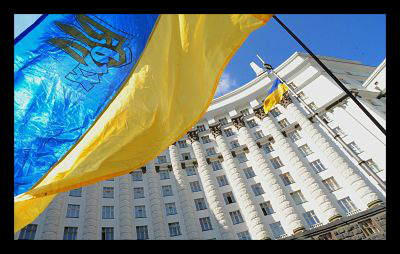
Ukraine Elections Shift Toward West

ukraine_elections
In a groundbreaking decision in the nation’s post-Soviet history, the Ukraine elections resulted in their first majority pro-European parliament. For the greater part of the last 300 years, Ukraine has operated under Russian or Soviet ruling; the results of the election tilt the country’s diplomatic affairs further away from Russia.

Many attribute the dramatic switch to Russian President Vladimir Putin’s elimination of Crimea and Donbas from elections. Those two regions historically have provided a solid pro-Russian vote. However, Crimea remains annexed and Donetsk insurgent controlled, stripping pro-Russian parties of their voting base.

Crimea’s annexation didn’t just remove pro-Russians from the voting process, it changed public opinion of eligible voters, as well. According to a poll by the International Republican Institute, in September 59 percent of Ukrainians favored membership in the EU and only 17 percent in the Customs union of Russia. Just a year ago, those figures were 42 percent and 37 percent, respectively.

Exit polls indicated that many voters cast their ballots out of concern that the current parliament was corrupt and incompetent.

This monumental shift creates an opportune climate for relations with the EU and the U.S., while presenting great challenges for the Ukraine.

According to Daniel Runde of Forbes Magazine, Ukraine will need new trading partners. Twenty-five percent of Ukraine’s energy comes from Russian oil. Russia is now demanding Ukraine pay back its $3.1 billion debts and prepay for future oil supplies. It appears the EU will administer two loans to the tune of $965 million to help cover these costs. This makes clear that Ukraine will need to start exploring alternative sources of energy.

Despite the fact that the country still remains very culturally woven to Russia, Ukrainian President Petro Poroshenko says he hopes to join the EU within six years. Many Europeans argue a ten-year timeline is more realistic.

Runde argues that more successful ties between western Europe and the Ukraine will require more than political efforts. Culturally mirroring the political shift toward western Europe requires Peace Corps involvement in the Ukraine, more student exchanges between the regions and more western teachers working in the country.

– Gabrielle Sennett

Sources: The Guardian, Forbes, Washington Post, WSJ
Photo: NBC News

November 1, 2014
https://borgenproject.org/wp-content/uploads/borgen-project-logo.svg 0 0 Borgen Project https://borgenproject.org/wp-content/uploads/borgen-project-logo.svg Borgen Project2014-11-01 04:00:132024-12-13 17:51:16Ukraine Elections Shift Toward West
Politics and Political Attention

The Worst Current Dictators

worst dictators current
The world’s most repressed countries live in a dictatorship. Citizens suffering under the rule of harsh dictatorships are often stripped of political rights and civil liberties. Those who express views differing from the state suffer consequences of physical and psychological abuse. Though the number of dictatorships has been on a decline, there is still much progress to be made. Listed below are some of the worst current dictators.

Worst Current Dictators

  1.  Kim Jong-un is arguably the most well-known current dictator in the world with the antics of his late father being publicized in world news all too often. As Supreme Leader of Korea, Kim Jong-un runs his government with a totalitarian rule ranging from his pursuit of nuclear weapons to unapologetic and even public execution of his citizens. Hope for more lenient domestic and foreign policies following his father’s death has since changed as Kim Jong-un continues the ruthless administration his father started years prior.
  2. Bashar al-Assad, leader of Syria came to power in 2000 and was seen by many as a potential reformer by domestic and foreign observers alike. There were high hopes that with Assad in power, the drastic changes that Syria needed would come about sooner rather than later. Instead, Assad has tightened his political reigns and enforced harsh consequences for political opponents and potential challengers which heavily contributed to the civil war that broke out in 2011. It is believed that Assad has tens of thousands of political prisoners being held and tortured in prison.
  3. Robert Mugabe, President of Zimbabwe since 1980, came to power following the end of a civil war which ended white minority rule. Mugabe gained much attention from pursuing land reform policies that focused on reclaiming property and land owned by non-black Zimbabweans. Though some deemed his actions as racist to say the least, Mugabe seemed to gain quite a bit of support from those who felt his actions were making amends to the people of Zimbabwe from the previous abuses by European colonists. However, Mugabe and his ZANU-PF party turned the heads of many in 2008 when presidential elections came about versus Morgan Tsvangirai, a pro-democracy supporter. Tsvangirai received much support resulting in Mugabe only receiving 43 percent of the vote in the first round of the election. However, after allegations of fraud, voter intimidation, beatings and rape conducted by Mugabe’s ZANU-PF party, Mugabe swept the election with 90 percent of the vote.
  4. Vladimir Putin of Russia is known most for the staggering amount of control he has over his country through his political actions regularly linked with corruption. After serving two terms from 2000-2008, Putin decided to create a loophole in the constitution by deeming himself Prime Minister when Dmitry Medvedev became the next president of Russia following the end of Putin’s final term. Medvedev consequently made an amendment to the constitution allowing presidents to serve six terms and giving Putin the opportunity to serve as president for a third term. To no one’s surprise, Putin won the presidential election in 2012.

– Janelle Mills

Sources: Forbes, Kizaz, Freedom House
Photo: Toon Pool 

October 26, 2014
https://borgenproject.org/wp-content/uploads/borgen-project-logo.svg 0 0 Borgen Project https://borgenproject.org/wp-content/uploads/borgen-project-logo.svg Borgen Project2014-10-26 04:00:372020-08-21 21:05:40The Worst Current Dictators
Development, Politics and Political Attention

7 Facts About the Assessing Progress in Haiti Act

Almost five years after the 2010 earthquake in Haiti, the United States Congress is using the Assessing Progress in Haiti Act of 2014 to evaluate how U.S. funds are being used in reconstruction efforts in Haiti.

1. The legislation noted that conditions have not improved enough.

Although more than 90 percent of displaced people have been able to leave camps, around 171,974 people still remain in camps. On top of that, corruption is widespread, the business climate is not ideal, unemployment is high and the government is weak.

2. Aid has been slow to materialize.

The United States Agency for International Development, or USAID, has distributed only 31 percent of its reconstruction funds pledged to Haiti. The vision of thousands of new homes has not happened, which has forced earthquake victims to return to existing housing through a rental subsidy program. The June 2013 report by the GAO saw that goals were not being met and projects were very far behind.

3. The act gives Congress the power of monitoring assistance to Haiti.

The act allows Congress to supervise the $3.6 billion that has gone to Haiti since the 2010 earthquake. The Assessing Progress in Haiti Act passed in the Senate 15 days earlier and it is awaiting President Obama’s signature to be signed into law.

4. The Assessing Progress in Haiti Act of 2014 entails the U.S. Secretary of State submitting an annual report to Congress.

The legislation requires the U.S. Secretary of State to submit an annual report on the condition of development projects and earthquake recovery in Haiti, no later than December 31 each year, through December 31, 2017.

5. The bill was sponsored by U.S. Senator Bill Nelson, D-Fla.

Nelson, like many others, has expressed fear about the transparency in United States foreign aid, and the slow distribution of aid in Haiti. The Assessing Progress in Haiti Act received bipartisan support and the House passed it with no objection.

6. The legislation was applauded by several groups.

The Assessing Progress in Haiti Act has received support from many groups such as the American Jewish World Service (AJWS), which provides financial aid to grassroots organizations and agencies in Haiti.

7. The act states that certain promises are to be met by Haiti’s government.

The Assessing Progress in Haiti Act specifically addresses “transparency, a market economy, rule of law, and democracy.” The bill emphasizes that the situation in Haiti does not depict improved conditions and that the country is far behind in reconstruction.

“In the wake of the devastating earthquake in Haiti, our government laudably committed a significant amount of aid to help Haiti rebuild, but a lack of transparency made it difficult to understand how U.S. government funds were being used and if recovery efforts were making progress and were being measured,” stated the president of American Jewish World Service, Ruth Messinger. She believes that the “legislation embodies a new commitment to transparency, accountability, and good governance.”

Read more facts about the Haiti Earthquake.

– Colleen Moore

Sources: The Sentinel, McClatchy DC News
Photo: Washington Memo

August 12, 2014
https://borgenproject.org/wp-content/uploads/borgen-project-logo.svg 0 0 Borgen Project https://borgenproject.org/wp-content/uploads/borgen-project-logo.svg Borgen Project2014-08-12 08:00:122024-05-27 09:20:517 Facts About the Assessing Progress in Haiti Act
Politics and Political Attention

4 To-Dos While Congress is in Recess

With the end of one of its most unproductive sessions in history, the United States Congress began its five-week recess on August 1. The break – mandated by a 1970 law – means that many representatives will be returning to their home states to campaign and meet with locals.

Here are a few ways to take advantage of the next five weeks:

1. Try to Meet Your Congressmen

Today, many congressmen have a portal on their websites where constituents can request a meeting – usually two weeks in advance. It helps to focus on a specific issue and to meet the congressmen on behalf of, or with,  an organized group. Of course, this will be much more difficult if the congressman is up for election.

To maximize their outreach while on recess, politicians are finding other methods of meeting with voters, like Congresswoman Jackie Speier of California who will hold a town hall on August 16, or Congressman Kevin Yoder of Kansas who has held a series of telephone town hall forums.

2. Send an Email 

Depending on the issue, certain activist groups and charities have pre-written emails that require no more than the sender to fill in his or her name and address and click send. Groups like Amnesty International, Bread for the World and  The Borgen Project use the address information to determine the sender’s representatives and automatically connects the user to his/her congressional leaders’ contact information.

Senders can even personalize the message. The entire process can take 30 seconds or less. Send an email with The Borgen Project here.

3. Make a Quick Call

Congressional offices keep track of how many people call in and for what they request of the congressman. A 30-second phone call to an office, explaining you are a constituent and you wish the congressman to support a certain issue, will likely be filed under a call report.

If a congressman receives a high number of calls regarding an issue, he or she is likely to consider this in making a decision. Activists can program the phone number for the office in his or her phone and call on a weekly basis. It helps to know exactly what you plan to say before making the call. Encouraging friends and family to make the same call can increase support for a cause.

4. Advocate on Social Media

Following back-to-back presidential wins for President Barack Obama, many political experts pointed to the emergence of the social media presence as a major factor in the success of his campaigns. While several other factors also help explain his wins, the fact remains that one month out from the 2012 election, Obama led Governor Romney on Twitter by some 19 million followers and Facebook by over 21 million likes.

Similarly, members of Congress are attempting to use social media to their benefit, which provides constituents another venue through which to contact their congressmen. Sharing articles relating to your issue of choice not only informs your friends and followers, but also reminds your leaders to take action.

Even if you are not quite ready to start a movement, a small effort can spur big change.

– Erica Lignell

Sources: Time, Facebook 1, Facebook 2, Amnesty USA, Bread for the World, Iowa Food Systems Council, NY Times
Photo: Wikimedia

August 11, 2014
https://borgenproject.org/wp-content/uploads/borgen-project-logo.svg 0 0 Borgen Project https://borgenproject.org/wp-content/uploads/borgen-project-logo.svg Borgen Project2014-08-11 11:37:462024-12-13 17:51:054 To-Dos While Congress is in Recess
Human Trafficking, Politics and Political Attention

Anti-Human Trafficking Bill Package

The issue of human trafficking has become a keynote subject over the past few decades. Terrorist organizations, like Boko Haram, frequent the news for the trafficking of children. In response, the U.S. House of Representatives passed a package of anti-human trafficking bills to combat the prominence of this tragedy.

A prior package of bills was also passed in May 2014 as a reaction to the Boko Haram incident. In April, the Islamic Jihadist group kidnapped 276 female students from a government-sponsored school in northeast Nigeria. As of July, the group still has over 200 of the girls, and has made a video which reveals the group’s intention is to sell them.

While human trafficking occurs on a smaller-scale as a domestic phenomenon, it most notably occurs in Africa, Asia and Central America. According to estimates, there are 27 million people living in modern-day slavery – whether it be through forced labor or sex trafficking. Children and women are most often targeted, with roughly two million children exploited by the global sex trade.

The bills passed in the House, however, will cover an array of different implementations that battle human trafficking both domestically and internationally. One part of the package, H.R. 4449, will require new standards of training for diplomatic officials – including ambassadors, embassy officers and mission chiefs. The aim of this program will be to have an increased awareness of the issue among leaders abroad.

More extensive training will also be provided to officials who are part of the Customs and Border Patrol (CBP) and the Transportation Security Authority (TSA). This training will include the best methods to identify and prevent human trafficking in situations where it may be unbeknownst to border officials.

Another bill, H.R. 5135, will require an official report to be published by an inter-agency task force designed to combat human trafficking. The report will detail and update the best strategies to prevent children from falling victim to trafficking.

By raising awareness of the issue, Congress aims to gradually have an impact and hopes to see human trafficking statistics dwindle over coming years.

As the issue of human trafficking is not a partisan one, politicians on both sides of the spectrum hope and expect to see these anti-human trafficking bills passed through Senate quickly.

– Conner Goldstein

Sources: CNN World, Human Trafficking Statistics, HS Today
Photo: Mizzouwire

July 29, 2014
https://borgenproject.org/wp-content/uploads/borgen-project-logo.svg 0 0 Borgen Project https://borgenproject.org/wp-content/uploads/borgen-project-logo.svg Borgen Project2014-07-29 16:01:272024-06-05 01:57:52Anti-Human Trafficking Bill Package
Politics and Political Attention

India Pushes for Stronger Influence in Nepal

India began to push for a stronger influence in Nepal when it urged the country to greatly increase its production of hydroelectric power. This recent development is motivated by the connections China has made in South Asia.

This is not the first time India has wrapped its hands around a smaller neighboring country. According to Nepalese political scientist Professor Rabindra Khanal, India “always prefers to keep countries like Bhutan and Nepal under its security umbrella,” acknowledging the close history shared within the region. India seems to reject the idea of a Nepal-China partnership and is making moves to quickly integrate itself to a more prevalent position in Nepal’s economy .

For the first time in 17 years, India’s Prime Minister Narendra Modi plans to travel to Nepal after recently visiting Bhutan after questioning the strength of India’s presence in both nations. However, his visit isn’t welcomed by all. Maoists, a Nepalese opposition party, see the threat that India poses to the country. “The draft impinges on the sovereign right of Nepal to allow investors other than India in the development of hydro-power and renewable energy,” said former Nepali water resources minister, Lakshman Ghimire.

The tentative thoughts shown in the members of government stems from the fear of the possibility that India is attempting to trap them in an agreement that hinders the economic growth of Nepal — a reasonable concern due to the abruptness of the visits and offers.

India offers insight into the benefits of the partnership, claiming that “Nepal is estimated to have the potential to generate 40,000 MW of power, but it has installed capacity of just 600 MW and suffers blackouts for up to 18 hours a day.” With the help of India, the country can surpass their neighbor Bhutan in energy production and become a top producer, which would serve as a huge improvement to the national economy.

Bhutan is only more successful because they have already harnessed hydroelectric power and are projected to have 10,000 megawatts of power by 2020. Nepal has the same option, should they seriously consider the interest expressed by India.

The future of Nepal is in their own hands, but if they partner with India, there is real fear that India will go too far. India could become even more involved with Nepal’s economy, taking away the country’s hard-earned independence.

– Elena Lopez

Sources: Reuters, India.com, TelegraphNepal
Photo: Business Insider

July 29, 2014
https://borgenproject.org/wp-content/uploads/borgen-project-logo.svg 0 0 Borgen Project https://borgenproject.org/wp-content/uploads/borgen-project-logo.svg Borgen Project2014-07-29 15:23:102024-05-27 09:19:06India Pushes for Stronger Influence in Nepal
Activism, Human Rights, Politics and Political Attention

Saudi Activist Faces Jail Time for Inciting Freedom

Walid abu al-Khair, a well-known human rights lawyer and Saudi activist, has received a jail sentence for 15 years for undermining the state of Saudi Arabia and insulting its political system.

The Saudi activist’s charge stems from the apparent violation of a recent anti-terrorism law which prohibits any civil act that, “disturbs public order, shakes the security of society, or subjects its national unity to danger, or obstructs the primary system of rule or harms the reputation of the state.”

This is not the first time al-Khair has faced the threat of jail time. On multiple occasions, the Saudi activist has been sentenced to varying amounts of time, though it has never reached a degree as intense as that of this most recent conviction. In his statement, al-Khair declares that he will not appeal the sentence because he does not see the legitimacy of the claim, and therefore believes it will fall apart when it comes time to book him.

The international reaction to the jailing of such a prominent voice has been negative thus far, with the Saudi researcher for Human Rights Watch saying, “Walid Abu al-Khair’s harsh sentence shows that Saudi Arabia has no tolerance for those who speak out about human rights and political reform and it will go to any length to silence them.” Saudi Arabia’s reaction simply shows the rest of the closely watching world that freedom of speech is less than valued.

By showing dissent from the Saudi king, al-Khair put himself in the crosshairs of the government. The Saudi activist has brought international attention to Saudi Arabia and this action has upset the government to the point that they believe he has represented them falsely and in a harsh light.

This incarceration demonstrates Saudi Arabia’s fear of the people, and the movement they could start if enough voices show disagreement. Countries that strive for a democratic state should allow the citizens to voice concerns; however, it appears this is not the case in Saudi Arabia. With reason, multiple countries, including the United States, have shown concern for the blatant disregard of human rights in this ongoing debacle with al-Khair, and begin to question the stability of the country.

– Elena Lopez

Sources:

Sources: CNN, Reuters, Aljazeera
Photo: Gulf Center for Human Rights

July 18, 2014
https://borgenproject.org/wp-content/uploads/borgen-project-logo.svg 0 0 Borgen Project https://borgenproject.org/wp-content/uploads/borgen-project-logo.svg Borgen Project2014-07-18 17:38:412024-05-27 09:18:38Saudi Activist Faces Jail Time for Inciting Freedom
Nonprofit Organizations and NGOs, Politics and Political Attention

All About the RAND Corporation

RAND corporation mission statement: “We exist to help policymakers make decisions that are based on the best available information.”

The RAND corporation was developed by Henry Arnold in 1946, and became an independent nonprofit organization in 1948 after WWII. He believed that there should be a group to keep America’s technology ahead of the rest of the world. The main idea behind the organization was to connect military planning with research and development decisions. It was initially formed to offer research and analysis to the United States Armed forces. In the 60’s, the organization became known as a think tank. At that time, a think tank was a research institute that came up with new ideas that could influence public policy.

RAND’s vision is “To be the world’s most trusted source for policy ideas and analysis.” Today, RAND does research on more than 1,000 topics a year.

They are reaching for their work to be understood by everyone, not just the experts. Because of this, they make all their research and findings available for download on their webpage.

They are proud that they have been able to remain independent of commercial and political pressures. It is stated on their “History and Mission” page that quality and objectivity are their two core values.

RAND Corporation is commissioned by government agencies, foundations and private firms.

The corporation is made up of 1,700 staff from around the world and is located in 47 different countries. Having this many people allows for RAND to have a diverse professional and educational background. There are 65 different languages spoken throughout RAND, and many of the staff are multilingual. Some of the popular languages are Arabic, Chinese, French, German, Japanese, Korean, Russian, and Spanish. Fifty-seven percent of the people working for RAND have one or more doctorate degrees, and another 29 percent have one or more master’s degrees. This shows that RAND’s staff is well rounded, extremely educated and knowledgeable on the topics they are researching.

– Priscilla Rodarte

Sources: RAND Corporation, Mental Floss
Photo: Hands off Mother Earth

July 11, 2014
https://borgenproject.org/wp-content/uploads/borgen-project-logo.svg 0 0 Borgen Project https://borgenproject.org/wp-content/uploads/borgen-project-logo.svg Borgen Project2014-07-11 09:36:592024-05-27 09:18:13All About the RAND Corporation
Activism, Development, Politics and Political Attention, Women and Female Empowerment

Ghana Drafts Affirmative Action Bill

Groups in Ghana are working to draft an affirmative action bill to put more women in government positions. The bill is aimed to help Ghana reach Millennium Development Goals by 2015. Although a draft has been submitted to the Attorney General, workshops are still being held to tweak the bill for Parliament.

A two-day validation workshop was being held in Koforidua, and 21 public servants and representatives of political parties worked, and continue to work, to improve the legislation. The bill is supported by the Ministry for Gender, Children and Social Protection.

Presently, only 10.9 percent of Parliament consists of female representatives. The affirmative action bill would call for quotas on women representatives. This is not the first time an African country has used this tactic to increase the amount of women in leadership positions.

Liberia recommended that political parties in the 2005 election choose 30 percent female nominees. While not law, the parties that did follow the recommendation had the largest numbers of women in the Legislature for that election. The Legislature consisted of 14 women out of 94 positions, but this number dropped to only nine when the quota was not enforced in 2011.

In Nigeria, the current administration has promised a 35 percent representation of women in government. This has yet to be reached, and at the national convention of the All Progressives Congress, only eight out of 46 positions on the national executive council fell to women. All of these positions involved the title of “women leader.”

Why do women leaders in these countries feel that affirmative action quotas are necessary to put more women in leadership roles?

Bernice Sam, a Ghanaian women’s activist, spoke at the national forum on gender equality and women’s rights, held by the Gender Studies and Human Rights Documentation Centre in Accra. She believes empowered women are necessary for growth, and that Ghana needs to work to empower women in these roles. She mentions the challenges faced by female politicians, despite legislation designed to allow them to run for office.

Women often do not have as much money as their male opponents, which is a major barrier. They also have higher levels of illiteracy, tied to less educational attainment and opportunity. Sam encourages all women to attain skills for civic leadership. These include public speaking, networking and the ability and confidence to motivate and mobilize others. To find this confidence, women also need more support from their spouses, along with faith in their own abilities.

They also just need knowledge. In Kenya, a large portion of women in rural areas do not know that the government requires 30 percent of all procurement in public service to be reserved for them. Rachel Ruto, the wife of the Deputy President of Kenya, called on women to pass along knowledge of their rights and powers to other women.

There is also an “old boys” network of political connections that impede women from entering the political sphere. Women tend to be ignored by incumbent male leadership.

Another issue is that women are required to balance their home and political lives. They are expected to take care of their families while also trying to run an underfunded, under-supported campaign.

Across Africa, there is a call for power structures to enable women to step into leadership positions. Simultaneously, there is a call for women to assert themselves into these positions. Despite these movements, parties are not encouraging women to run. Consequently, many women are taught that they are incompetent and unlikely to succeed in government.

Ghanaian leaders believe the affirmative action bill will provide a balance of allowing competent women to fill leadership positions, while  assuring others that  that they too can succeed. Minister of Gender, Children and Social Protection, Nana Oye Lithur, assures that the bill does not aim to make women compete with men, but to ensure they have equal opportunity to pursue positions.

To Lithur, the bill is designed to give women and other minorities in the country a voice. It works in tandem with legislation to ban early and forced marriage, witchcraft and genital mutilation to empower women in Ghana.

The bill aims to help women and therefore, the country.

-Monica Roth

Sources: Ghana Web 1, Ghana Web 2, Ghana Web 3, KBC, Leadership, All Africa
Photo: InformGhana

July 7, 2014
https://borgenproject.org/wp-content/uploads/borgen-project-logo.svg 0 0 Borgen Project https://borgenproject.org/wp-content/uploads/borgen-project-logo.svg Borgen Project2014-07-07 12:00:422024-06-04 01:17:37Ghana Drafts Affirmative Action Bill
Food & Hunger, Food Aid, Politics and Political Attention

Agriculture Appropriations Bill Bolsters US Food Aid

The House of Representatives recently passed an amendment to the Agriculture Appropriations Bill which will improve the United States’ international food aid. The amendment, authored by U.S. Representative and Chairman of the House Foreign Affairs Committee Ed Royce (R-CA), provides funds for the Local and Regional Purchase Program. This program allows the U.S. to buy food closer to afflicted areas and reduce transit time and costs as a result. Representative Royce’s amendment provides $10 million for the program and reduces fundraising for the Agricultural Marketing Services which utilizes taxpayer money to administer food advertising campaigns. In a statement about the amendment’s passage, Royce stated, “It is crucial that the United States has the tools to respond to humanitarian crises while stretching our food aid dollars further.”

It is estimated that 925 million people globally suffer from malnutrition and hunger. That number is roughly three times the size of the U.S. population and a strong indication that hunger is a global health risk. The World Bank estimates that 44 million people have been impoverished since mid-2010 due to recent increases in food prices. This estimation coincides with shrinking foreign aid budgets among developed countries — a result of both fiscal conservatism and slow recovery from the 2008 financial crisis.

Goal one of the eight United Nations Millennium Development Goals established in 2000 is the eradication of extreme poverty and hunger. This goal came after the Food Aid Convention of 1999 which served as a formal agreement among donor countries to contribute to world food security. It also established minimum annual commitments among member countries. The U.S., with an annual commitment of 2,500,000 metric tons, has the largest commitment.

In fiscal year 2009 alone the U.S. provided $2.9 billion in food assistance to developing countries, which included approximately 2.8 million metric tons of food which reached 70 million people.

The recently-passed amendment to the Agriculture Appropriations Bill is a strong indicator that many of the leading political figures in the U.S. are willing to maintain this level of international support. However, as the global economy continues its slow recovery, foreign aid will continue to be a source of contentious debate both at home and abroad.

– Taylor Dow

Sources: House Committee on Foreign Affairs, Food Aid, Bread.org, USAID
Photo: Newsela

July 1, 2014
https://borgenproject.org/wp-content/uploads/borgen-project-logo.svg 0 0 Borgen Project https://borgenproject.org/wp-content/uploads/borgen-project-logo.svg Borgen Project2014-07-01 16:00:392024-05-26 23:51:54Agriculture Appropriations Bill Bolsters US Food Aid
Page 4 of 10«‹23456›»

Get Smarter

  • Global Poverty 101
  • Global Poverty… The Good News
  • Global Poverty & U.S. Jobs
  • Global Poverty and National Security
  • Innovative Solutions to Poverty
  • Global Poverty & Aid FAQ’s
Search Search

Take Action

  • Call Congress
  • Email Congress
  • Donate
  • 30 Ways to Help
  • Volunteer Ops
  • Internships
  • Courses & Certificates
  • The Podcast
Borgen Project

“The Borgen Project is an incredible nonprofit organization that is addressing poverty and hunger and working towards ending them.”

-The Huffington Post

Inside The Borgen Project

  • Contact
  • About
  • Financials
  • President
  • Board of Directors
  • Board of Advisors

International Links

  • UK Email Parliament
  • UK Donate
  • Canada Email Parliament

Get Smarter

  • Global Poverty 101
  • Global Poverty… The Good News
  • Global Poverty & U.S. Jobs
  • Global Poverty and National Security
  • Innovative Solutions to Poverty
  • Global Poverty & Aid FAQ’s

Ways to Help

  • Call Congress
  • Email Congress
  • Donate
  • 30 Ways to Help
  • Volunteer Ops
  • Internships
  • Courses & Certificates
  • The Podcast
Scroll to top Scroll to top Scroll to top