• Link to X
  • Link to Facebook
  • Link to Instagram
  • Link to TikTok
  • Link to Youtube
  • About
    • About Us
      • President
      • Board of Directors
      • Board of Advisors
      • Financials
      • Our Methodology
      • Success Tracker
      • Contact
  • Act Now
    • 30 Ways to Help
      • Email Congress
      • Call Congress
      • Volunteer
      • Courses & Certificates
      • Be a Donor
    • Internships
      • In-Office Internships
      • Remote Internships
    • Legislation
      • Politics 101
  • The Blog
  • The Podcast
  • Magazine
  • Donate
  • Click to open the search input field Click to open the search input field Search
  • Menu Menu

Archive for category: Politics and Political Attention

Information and news about politics.

Global Health, Health, Politics and Political Attention, Women

What Hillary Clinton Means For Women’s Health Worldwide

Hillary-Clinton-Women's-Health

In April of this year, Hillary Clinton announced her candidacy for president. As a strong democratic nominee with a lot of political capital, she has the power to raise big money and advocate for issues on her platform.

According to her website and her voting record, she is an advocate for small business and defining America’s core values. Many see her as a strong candidate for the election next year.

However, unlike her last campaign, Clinton seems to be focusing more on women’s issues.

In 1995, Clinton gave a speech in Beijing entitled, “Women’s Rights Are Human Rights” to the U.N.’s Fourth World Conference on Women. At the time, Clinton was First Lady of the United States. In the speech, Clinton spoke of the continual rape of women during armed conflicts and the act of silencing women and girls around the world. She declared that women’s rights must now be seen as human rights and solved.

Since the 90’s, Clinton has seemed to not focus on women’s issues or place them at the focal point of her 2008 election.

However, this round, she seems to be doing the opposite. Before announcing her candidacy in a speech at Georgetown, Clinton told the audience that women’s rights are not only a responsibility for women, but also men.

At her first major campaign event in June of this year, Clinton seemed to emphasize her support for women’s issues. She supports a women’s right to choose and have easier access to contraceptives.

Clinton has proved herself to be an advocate for women domestically, but what about abroad?

Clinton does not seem to shy away from economic aid to developing countries. In 2012, Clinton visited Africa, promising U.S. assistance to revitalize African economies. Although many attacked her for attaching so many contingencies onto the package, she does want to help.

Combining her commitment to providing assistance to impoverished nations and her advocacy for women’s rights, she would be a tremendous help to women’s health abroad.

Under her watch, we could see a real attempt to repeal the Helms amendment and provide access to family planning tools. Because of her commitment to women domestically, she would support women’s access to education abroad.

Although the campaign trail is long, her commitment to women and impoverished nations would mean great things for women being affected by the lack of access to a proper education, birth control and water.

– Erin Logan

Sources: Hillary Clinton, American Rhetoric, The Guardian, Slate, LA Times, New York Magazine
Photo: Illinois Review

July 9, 2015
https://borgenproject.org/wp-content/uploads/borgen-project-logo.svg 0 0 Borgen Project https://borgenproject.org/wp-content/uploads/borgen-project-logo.svg Borgen Project2015-07-09 09:06:112024-12-13 17:51:47What Hillary Clinton Means For Women’s Health Worldwide
Global Poverty, Politics and Political Attention

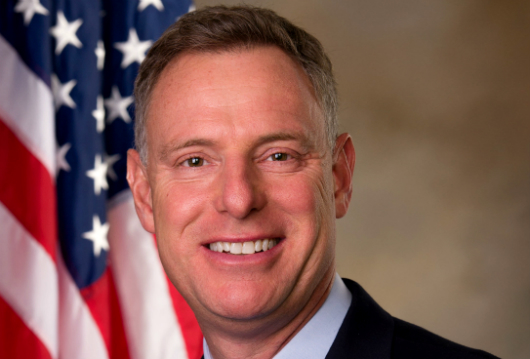
Who Is My Congressman? Scott Peters

Scott_Peters
I am embarrassed to admit that before interning for The Borgen Project, I did not have any idea who my Congressman was. I spend most of my time going to school out of state, so I am not too in touch with the politics of my hometown. However, no matter what state I am in, it matters who is representing my interests, so I have done a little research on my House hero.

I live in San Diego, which is in California’s 52nd Congressional district. The Representative for this district is none other than Democrat Scott Peters. Have not heard of him? Not to worry, here are some quick facts on this West Coast politician.

Peters was actually born in Ohio and raised in Michigan, but he has spent the entirety of his political career serving the people of San Diego. He received his Bachelor of Arts at Duke University, and went on to graduate from law school at New York University. Peters then moved to the Golden State, and after a 15 year career as an environmental lawyer, was elected to San Diego City Council. He later became the city’s first City Council President.

I am extremely proud of my beautiful city. Little did I know that I can attribute much of this to Peters, who helped lead the $2 billion redevelopment of downtown San Diego and the widespread cleanup of the beaches and bays.

After a storied City Council tenure, Peters was elected to the House of Representatives in 2012. He currently serves on the House Armed Services Committee and the House Judiciary Committee, and previously served on the House Committee on Science, Space and Technology. He is a member of the House Democratic Caucus, the New Democrat Coalition and the No Labels Caucus.

Peters is listed as the fourth most independent Democrat in Congress and is a known problem solver. He often brings people together in order to resolve complex issues. His office is very responsive to constituent recommendations and requests, and I have been pleased with the in-depth emails I have received.

As a resident of San Diego for 21 years, I finally figured out who my voice in Congress is, and I encourage all of you to find out for yourself what distinguished individual is making your case on the Hill.

– Katie Pickle

Sources: US House of Representatives, Scott Peters
Photo: Times of San Diego

July 7, 2015
https://borgenproject.org/wp-content/uploads/borgen-project-logo.svg 0 0 Borgen Project https://borgenproject.org/wp-content/uploads/borgen-project-logo.svg Borgen Project2015-07-07 07:58:122024-05-27 09:25:20Who Is My Congressman? Scott Peters
Foreign Policy, Politics and Political Attention

All You Need to Know About Soft Power

All You Need to Know About Soft PowerSoft power is a term that was coined in the late 1980s by Joseph S. Nye Jr., an American political scientist. As Foreign Affairs states, soft power refers to the ability of a country to influence and persuade others to do what it wants without the use of force or coercion. It’s the opposite of hard power, in which a country uses coercion and military strength in order to influence other countries. It relies on economic or cultural influences rather than military strength.

Soft power is an indirect way to exercise power and control. A country with a lot of it can convince other countries to adopt some of its morals, values and prominent institutions. Essentially, a country exerting a large amount of soft power can persuade other countries to want the same things it wants and therefore use their influence to advance its own political agenda. It is getting the outcome one wants through persuasion rather than coercion.

Origens of Soft Fower

Power is the ability to get others to do what you want, and soft power is an essential form of power. Nye states that it can come from three resources:

  1. A country’s culture (where it’s attractive to others)
  2. A country’s political values (where it lives up to them at home and abroad)
  3. A country’s foreign policies (where they are seen as legitimate and having moral authority)

Its Importance

Soft power is important because, according to Foreign Affairs, it can be used to gain supporters and partners. For example, United States companies, institutions, churches, foundations and other institutions of civil society all play a part in projecting it, and the cultures and values that the United States have are a form of soft power that allows the U.S. to gain allies. Even things that one may not view as important, like Hollywood movies and American pop culture, are forms of it that can help shape other countries attitudes’ and choices in the long-run.

BBC discusses how soft power can be exerted in one of their articles, in which they talk about a woman named Iryna Olova who grew up in Kiev in the Soviet Union. Olova talks about how fascinated she was with movies such as the Wizard of Oz as a child and states that movies made her feel that America was a happy and sunny place. She eventually left Ukraine and moved her family to America. Even though parts of American culture, like movies, may seem inconsequential to International Relations, according to Nye and the theory of soft power, they are anything but. Some political scientists even say that it helped the United States win the Cold War.

Limitations

According to Nye, the limitations of soft power are that it is not easily channeled toward a specific outcome and that it can have diffuse effects on the outside world.

Other Examples

In his book, “Soft Power: The Means to Success in World Politics,” Nye gives some examples of it, including the high number of foreign students enrolled at United States Universities and the prominent consumption of American media products worldwide.

– Ashrita Rau

Sources: Foreign Policy 1, Foreign Policy 2 BBC, Diplomacy Education Oxford Dictionary 1, Oxford Dictionary 2 Foreign Affairs
Photo: Flickr

July 3, 2015
https://borgenproject.org/wp-content/uploads/borgen-project-logo.svg 0 0 Borgen Project https://borgenproject.org/wp-content/uploads/borgen-project-logo.svg Borgen Project2015-07-03 07:30:092024-05-27 09:25:18All You Need to Know About Soft Power
Activism, Foreign Aid, Politics and Political Attention

The Effect of Conservative Danish Politics on Foreign Aid

danish_politicsOn June 18, Denmark’s center-left government, the Social Democrats, were ousted out of the political limelight as the country moved dramatically to the far right in favor of the ring-wing, populist and anti-immigrant Danish People’s Party (D.P.P). The Danish People’s Party is often regarded with stigma both at home and abroad and is on the outskirts of Danish politics since its founding in 1996.

However, in the most recent elections, the D.P.P. came in second place with 21.1% of the votes, only 5.2% less than the number of votes received by the leading Social Democrats. According to preliminary results published by the DR.DK, Denmark’s national broadcaster, the center-right bloc that includes the D.P.P now holds a majority of 90 seats in Parliament, which, for the first time, has elevated the D.P.P. into the centerfold of Danish politics. The results of this election come on the heels of growing unrest within Denmark over issues related to immigration and the security of the Danish welfare state. Denmark, a socialist and uber-liberal country which was voted “happiest country in the world” last year, is one of the highest-functioning welfare state programs in the world. The thanks is owed to the Danish citizens paying the highest income taxes in the world, at 60.2%.

The Danish welfare state was created in 1933 following the Social Reform Act, which sought to redirect Denmark’s attention inwards following the loss of the last remnants of the former Danish Empire, which once included Southern Sweden, Northern Germany, Iceland and Norway (and continues to include Greenland and the Faroe Islands). A “Denmark for the people” mentality was adopted, which subsequently iterated outwards into a Scandinavian-socialist ethos which has traditionally regarded foreign aid as an obvious centerpiece of Danish foreign policy. Providing welfare services “from the cradle to the grave” for citizens at home, such as free childcare, education through university and healthcare, and providing international aid to citizens abroad was regarded as two sides of the Danish-socialist-mentality coin.

The recent elections reflect the ways in which some Danes have begun to adjust their thinking about the welfare state and its relationship to those outside the “Danish family.” Similar to the recent wave of anti-immigrant parties which have popped up throughout Europe, such as the Finns Party in Finland, the Progress Party in Norway, the Sweden Democrats in Sweden and UKIP in the United Kingdom, the D.P.P. frames itself as the voice of “Old Danes” who regard the growing influx of immigrants within Denmark as a threat to the Danish welfare state and the Danish way of life.

The presence of immigrants in Denmark, who make up around nine percent of the population country-wide, in conjunction with the recent surge of 14,000 mostly Muslim asylum seekers and the Copenhagen shootings of February 14 by the 22-year-old son of Palestinian immigrants, has produced a backlash of growing nationalist sentiment in Denmark. As a result, supporters of the D.P.P. have begun to implicitly redefine how “Denmark for the people” is understood. A motto that traditionally went unchallenged, given the historically monocultural and monoethnic nature of the Danish population, is now being reformulated by the D.P.P. to function more as “Denmark for the Danes;” as the D.P.P. has proposed slashing welfare entitlements for newly arrived immigrants and refugees into the country.

Increasing exclusivity regarding Danish welfare state benefits is being matched in Parliament by talk among the D.P.P and the Liberal Party that Denmark should cut back on foreign aid in order to channel more money into welfare entitlements for native Danish citizens, especially the elderly. In 1970, the world’s richest developed countries agreed to give point seven percent of their Gross National Income (GNI) annually to international development aid.

Historically, Denmark, along with Norway, Sweden, Luxembourg and the Netherlands, has been one of the few developed countries to actually commit to reaching this target. Proposals or talks of cutting foreign aid thus represent a dramatic break from Denmark’s historically extraordinary commitment to reaching the point seven percent goal. A survey conducted for the Ministry of Foreign Affairs has also found that right-wing political opinion about foreign aid is being matched in public opinion, as support among Danes for foreign aid has fallen by 15% in the last five years. The recent shift to the right in Denmark now leaves Sweden as the only country in Scandinavia in which the center-left continues to hold the majority of political power. The Swedish equivalent to the D.P.P. – the Swedish Democrats – also continue to be regarded as political pariahs in mainstream Swedish society.

Despite Denmark’s sudden swing to the conservative anti-immigrant right, the country currently continues not only to meet but to exceed the annual point seven percent foreign development aid target.

– Ana Powell

Sources: BBC, CNN Money DR, The Guardian New York Times 1, New York Times 2 OECD
Photo: Dagens

July 2, 2015
https://borgenproject.org/wp-content/uploads/borgen-project-logo.svg 0 0 Borgen Project https://borgenproject.org/wp-content/uploads/borgen-project-logo.svg Borgen Project2015-07-02 13:10:552024-12-13 17:53:59The Effect of Conservative Danish Politics on Foreign Aid
Global Poverty, Politics and Political Attention, United Nations

US Congressman Calls for Cuts to United Nations Funding

United Nations Funding
Earlier this month, U.S. Representative Matt Salmon of Arizona introduced a bill to prohibit any government agency from contributing to the United Nations Population Fund (UNFPA) on the grounds that the organization isn’t in line with America’s policy agenda.

The bill, H.R. 2678, is the fourth bill introduced by Salmon as a part of his “Shrink Our Spending Initiative,” a budget plan to cut what Salmon has deemed “wasteful taxpayer-funded programs.” It is also the second bill of its kind to go before Congress in the last 5 years.

“Taxpayers shouldn’t be forced to fund activities that aren’t in line with our national priorities,” said Salmon, calling the UNFPA a “pro-abortion organization,” according to a SonoranNews.com report.

But according to the United Nations Population Fund FAQ page, the UNFPA does not promote abortion as a method of family planning. Rather, it works to promote family planning measures such as the use of condoms and female birth control. However, the organization does work to address the impact of abortions on women’s health, and to assure that in nations where abortions are legal, it is safe and accessible.


Learn why the military is requesting that Congress better fund efforts to combat extreme poverty.


The UNFPA operates as a subsidiary of the United Nations General Assembly to address population and development issues. Started in 1969, the United Nations Population Fund now operates in 150 countries, and has been instrumental in reducing the complications of pregnancy and childbirth in developing nations.

Sexual and reproductive health problems are the leading cause of death and disability for women in developing nations, and according to the UNFPA, some 225 million women lack access to family planning measures.

The goal of the United Nations Population Fund is to assure that all women have access to safe and effective family planning measures and safe deliveries and to make sure that every pregnancy is wanted.

In 2013, the United States was among the top 10 core donors to the United Nations Population Fund, contributing nearly three percent of the UNFPA’s total contributions for the year. If H.R. 2678 passes, it will eliminate all government contributions to that total.

The bill regarding United Nations funding was first introduced on June 4, 2015, and has been referred to the House Committee on Foreign affairs. According to a Huffington Post report, the Committee has already approved a $150 million cut to family planning and reproductive health programs. Such program cuts may jeopardize the health of an estimated 225 million women in developing countries who lack access to safe family planning, according to the Huffington Post.

– Gina Lecher

Sources: UNFPA, Congress.gov, Sonoran News, Huffington Post
Photo: Hill Heat

June 29, 2015
https://borgenproject.org/wp-content/uploads/borgen-project-logo.svg 0 0 Borgen Project https://borgenproject.org/wp-content/uploads/borgen-project-logo.svg Borgen Project2015-06-29 08:32:532020-07-14 18:27:40US Congressman Calls for Cuts to United Nations Funding
Activism, Advocacy, Government, Politics and Political Attention

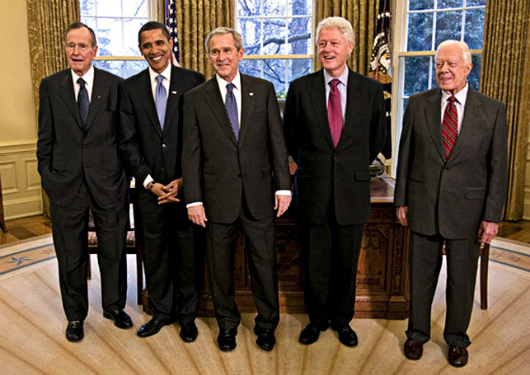
After the White House: How Past Presidents Continue to Make a Difference

presidents
Although President Obama has only 20 months left of his presidency, he can still do a lot of good once outside the Oval Office. Here are four ways former presidents made a difference for the world’s poor:

George Bush: The former Republican president is well known for his AIDs relief work in Africa. While in office, President Bush signed the President’s Emergency Plan for AIDS Relief. The program significantly increased access to antiretroviral drugs on the African continent, saving millions of lives. That effort set the stage for his post-presidential humanitarian work with First Lady Laura Bush through the George W. Bush Institute. Located at the Bush Center in Dallas, the organization promotes global health and human rights through a variety of programs. Through the Pink Ribbon Red Ribbon initiative, for instance, the president and first lady are working to reduce deaths associated with cervical and breast cancer in the developing world.

Bill Clinton: Following his presidency, Mr. Clinton sought to address humanitarian issues worldwide. The Bill, Hillary and Chelsea Clinton Foundation has quickly become a cornerstone in the fight for improved global health, economic development, gender equality and environmental protection. Founded in 2001, the Foundation includes a wide range of humanitarian endeavors. The Clinton Health Access Initiative, for example, works to improve healthcare infrastructure, while the Clinton Development Initiative stimulates economic growth by increasing access to financial services for entrepreneurs in the developing world. The Foundation also has a strong track record in promoting the well being of women and girls across the globe.

George H. W. Bush: At 90-years-old, George Bush Sr. is the oldest president on this list, besting fellow nonagenarian Jimmy Carter by a few months. The elder Bush shows no signs of slowing down though; he’s gone skydiving on his 80th, 85th and 90th birthdays, and leads an active life. The president has been just as active in promoting public service through his Points of Light organization, which encourages volunteerism worldwide. The network boasts 250,000 service projects every year across 30 countries. That adds up to 30 million hours of volunteer service each year.

Jimmy Carter: President Carter has had many roles in his life: peanut farmer, Governor of Georgia, President of the United States—but he has perhaps found his great success as an international humanitarian. He is one of four presidents to receive a Nobel Peace Prize, but the only one to do so after leaving office. Most of his efforts have involved The Carter Center, which was founded in 1982 and takes “Waging Peace, Eradicating Disease, Building Hope” as its motto. The Center has targeted a wide range of diseases, including guinea worm, river blindness, trachoma and lymphatic filariasis. Thanks to the president’s efforts, the prevalence of guinea worm disease has been reduced by 99.99 percent since 1986.

– Kevin McLaughlin

Sources: The Clinton Foundation, The George W. Bush Institute, Points of Light
Photo: Flickr

June 17, 2015
https://borgenproject.org/wp-content/uploads/borgen-project-logo.svg 0 0 Borgen Project https://borgenproject.org/wp-content/uploads/borgen-project-logo.svg Borgen Project2015-06-17 11:50:002024-06-07 04:52:04After the White House: How Past Presidents Continue to Make a Difference
Global Poverty, Hunger, Politics and Political Attention

The End of Hunger in Belo Horizonte, Brazil


Belo-Horizonte
Belo Horizonte, the third most populous metropolitan city in Brazil, is one of the most progressive actors in poverty reduction. Home to nearly 2.5 million, Belo Horizonte practices the Right to Food that perceives food as a human right rather than a commodity. Poverty rates have dropped dramatically in Belo Horizonte since policy makers enacted this act in 1993.

The Right to Food guarantees healthy and accessible food to all citizens in Belo Horizonte. Policy makers use systematic approach to effectively execute this law by implementing the following techniques:

  • Integrating logistics and supply chains of the food system
  • Tying local producers to consumers to reduce prices and increase food sovereignty
  • Utilizing government purchase to stimulate diversification of agricultural production and job creation
  • Implementing education about food security and good nutrition
  • Regulating markets on produce that guarantees the right to healthy, high-quality food

Certainly no policy goes without a financial cost—the Right to Food law calls for a 10 million dollar yearly budget. While seemingly large at first, this amounts to two percent of the overall budget of Belo Horizonte. Policy makers have established budgetary committees to foresee the maintenance of this budget in accordance with the economy. This novel distribution of funds has proven successful, largely due to the positive returns the Right to Food law has enabled in the job market.

The effects of the Right to Food law in Belo Horizonte are immeasurably positive for the future of poverty reduction. To ensure food distribution, Belo Horizonte implements affordable food stations that act as restaurants around the city. People of all walks of life, ranging from low-wage workers to businessmen, eat at these restaurants. This social integration eliminates the shame behind hunger and promotes a culture where everyone is deserving of food.

Poverty has reduced drastically in Belo Horizonte, Brazil since the Right to Food law passed in 1993. Benefits include:

  • Reduction of the child mortality rate by 60 percent
  • Reduction of child malnourishment under the age of 5 by 75 percent
  • Fruit and veg eatable intake increase by 25 percent

The Right to Food law is an award winning policy and serves as an inspirational example of how food redistribution saves lives. UNESCO named the Right to Food law, Best-Practice in 2003. The Right to Food law also received the Future Policy Award by the World Future Council in 2009.

Scholars regard Belo Horizonte as a progressive city in its utilization of existing resources. UN Special Rapporteur, Oliver de Schutter, reports: “I think we should use the example of Belo Horizonte as a lesson taught to us, food is not a commodity. It is a human right and it should be treated as such…”

Belo Horizonte did something the U.S. has yet to do, tackle poverty from a bottom-to-top approach. By recruiting the help of local farmers, Belo Horizonte helped the impoverished by teaching them ways to help themselves. Policy makers isolated the detrimental effects of competition in the market and eradicated them, thereby emphasizing the freedom in free markets.

The Right to Food serves as an example of the role democracy can play in helping the world’s poor.

– Tanya Kureishi

Sources: YES Magazine, FAO
Photo: Yes Magazine

June 15, 2015
https://borgenproject.org/wp-content/uploads/borgen-project-logo.svg 0 0 Borgen Project https://borgenproject.org/wp-content/uploads/borgen-project-logo.svg Borgen Project2015-06-15 14:21:472024-05-27 09:24:18The End of Hunger in Belo Horizonte, Brazil
Global Poverty, Health, Politics and Political Attention

5 Republican Views on World Poverty and Global Health

5_Republican_Views_on_World_Poverty_and_Global_Health
When voting for your congressional leaders, it is important to know where they stand on certain issues. By knowing their stance, voters are able to make informed decisions when they flock to the polls. Being aware of both Democratic and Republican views also provides a certain amount of accountability to the politicians.

Often times when politicians campaign, they include a lot on their platforms that will get them elected. However, if constituents continually call, email and write their politicians about issues that concern them, they ensure a certain amount of accountability to those who got them elected.

Here are five quotes from Republican political leaders that highlight their views on world poverty and global health.


“We face very real and immediate challenges with malaria, air pollution, and HIV/AIDS today. For me, the health effects of climate change are inextricably intertwined with poverty. What we do today to provide clean water, clean energy, and public health infrastructure in the developing world will reduce poverty, combat the health problems that many face today, and will lessen any potential future health effects that may come about because of climate change.”

-Michael B Enzi, Senator of Wyoming


“An important part of protecting Americans here at home involves strengthening our relationships around the globe. America has an interest in helping raise people out of poverty around the globe, so that developing nations can become trade partners with us and mutually realize the benefits of economic freedom and commerce.”

-Terri Lynn Land of Michigan


“Issues like global health and reducing poverty in developing nations have an impact on Americans right here at home. The most recent example is the spread of the Ebola virus. We should be providing humanitarian aid to assist with disease treatment and prevention strategies in nations suffering from the Ebola outbreak. By doing so, we can improve our ability to control and treat diseases in a way that helps stabilize populations there while also protecting our citizens here in the United States. Also, by helping to enable developing nations and communities in Africa to engage in global and regional trade, the United States gains potential new partners to explore mutual economic growth interests with, meaning more jobs for West Virginia families.”

Shelly Moore Capito, Senator of West Virginia


“America’s leadership around the world is rooted by the generosity of our people, the strength of our economy, and the power of our ideas. We have the greatest workforce in the world. We have the most stable institutions. We have the best innovators and free-market economy. We have a Constitution that ensures liberty and justice for all. These are the many reasons millions around the world look to the United States of America for a greater level of hope, freedom, and economic prosperity in their own countries. As the next Senator from Georgia, I will promote economic growth and free trade because the best way for a nation to lift itself out of poverty is to partner with the United States in the free enterprise system.”

-David Perdue, Senator of Georgia


“Extreme poverty and preventable disease are issues that transcend our nation’s borders and must be addressed. I believe the United States must work to reduce global poverty while providing the resources to create growth and opportunity. As Iowa’s next U.S. Senator, I will work to ensure that our great nation has the capacity to provide aid and assistance in international health issues and crises.”

-Joni Ernst, Senator of Iowa


— Erin Logan

Sources: One, U.S. Senate Committee on Health, Education, Labor & Pensions
Photo: Flickr

June 13, 2015
https://borgenproject.org/wp-content/uploads/borgen-project-logo.svg 0 0 Borgen Project https://borgenproject.org/wp-content/uploads/borgen-project-logo.svg Borgen Project2015-06-13 18:53:372020-07-17 00:43:415 Republican Views on World Poverty and Global Health
Politics and Political Attention

10 Facts About the House Committee on Foreign Affairs

house committee on foreign affairs
The House Committee on Foreign Affairs traces its origins back to November of 1775. The sole purpose of the it was to, “correspond with our friends of Great Britain, Ireland, and other parts of the world.” Here are some facts about it:

·      Benjamin Franklin, Benjamin Harrison, Thomas Johnson Jr., John Dickinson and John Jay all made up the very first committee.

·      It had many different names throughout its history, some include: originally the Committee of Correspondence, then Committee of Secret Correspondence, and even more recently, the Committee on International Relations.

·      There are six subcommittees currently set up within the full committee.

·      There are a total of 44 members; 25 Republicans and 19 Democrats.

·      Edward Royce (R) has been the chairman of the committee since 2013, and also the chairman of two subcommittees: Terrorism, Nonproliferation and Trade in Asia and the Pacific.

·      It has legislative influence over some very important organizations such as the Agency for International Development (USAID), the Peace Corps, the United Nations among others.

·      There have been two American Presidents that have been apart of the committee: James K. Polk and John Quincy Adams.

·      The most recent Oversight Plan of the Committee (January 2015) can be found on their website, it outlines most of the focuses of the committee for this year specifically; some of the focuses include ISIS, North Korea, Foreign Assistance and Human Rights.

·      You can watch/listen to any of their hearings on their website in order to understand what happens in their decision making processes (http://foreignaffairs.house.gov/).

– Erik Shane

Sources: Ed Royce, House Committee on Foreign Affairs 1, House Committee on Foreign Affairs 2, House Committee on Foreign Affairs 3, House Committee on Foreign Affairs 4
Photo: Flickr

May 23, 2015
https://borgenproject.org/wp-content/uploads/borgen-project-logo.svg 0 0 Borgen Project https://borgenproject.org/wp-content/uploads/borgen-project-logo.svg Borgen Project2015-05-23 04:00:292024-06-05 02:51:4310 Facts About the House Committee on Foreign Affairs
Global Poverty, Nonprofit Organizations and NGOs, Politics and Political Attention

Seven Helpful Sites for Policy Jobs

So, you’ve got your education, you finally finished that internship during your undergrad, you have participated in a thousand mock interviews, and your resume has been polished at least 100 times. Now you just have to find that job you’ve been working toward your entire career. Here are seven websites to help you find policy jobs:

1. USAJOBS

USAJobs.gov is a helpful resource when it comes to finding a policy or federal job. According to USAJOBS, “The Pathways Programs offer clear paths to Federal internships for students from high school through post-graduate school and to careers for recent graduates, and provide meaningful training and career development opportunities for individuals who are at the beginning of their Federal service.” Programs include the Pathways Internship Program, Recent Graduates Program and the Presidential Management Fellows Program.

The site also has additional helpful resources that allow users to search federal occupations by college major, look through a comprehensive A-Z list of federal agencies, find an internship, or recent graduate job by a keyword, salary, pay grade, category, location, department or agency.

2. Going Global

Going Global is committed to providing “grassroots intelligence” through their team of in country researchers. They monitor and update the career information and resources that are delivered to users. GoinGlobal.com allows the user to easily find international jobs and policy jobs. Their website provides country specific career and employment information for 30 countries and its database search allows users to search by country, profession or topic.

3. International Organization Careers

According to International Organization Careers, “International Organization Careers is brought to you by the U.S. Department of State’s Bureau of International Organization Affairs (IO). IO is the U.S. government’s primary interlocutor with the United Nations and a host of other international agencies and organizations.”

IO Careers allows users to register for job alerts online, search international organization jobs database and filter the search by organizations, grades, professional fields, and locations, subscribe to jobs, assists students and young professionals, lists federal agencies, provides other employment possibilities.

4. Partnership for Public Service

According to their website, “The Partnership is a nonprofit, nonpartisan organization that believes good government starts with good people. By strengthening the civil service, and the systems that are supposed to support them, we help government serve the needs of all Americans.”

The Partnership goes above and beyond by actually getting involved and challenging policymakers and our government to have quality employees. Their website provides users with ample amounts of resources for programs and services for Federal Management, Federal HR, Political Appointees, Higher Education, Private Sector and Congress.

5. House of Representatives

The U.S. House of Representatives can be a great resource for those seeking policy jobs online. This website allows users to see how to apply for various positions within the House as well as employment positions with members and committees and positions with other House organizations. The site also provides information for new employees and information for former employees.

6. United States Senate

Like the House, the U.S. Senate holds various resources and information about employment and policy positions. According to senate.org, “The Placement Office assists Senators and Senate Committees with filling entry-level through professional staff vacancies by providing resumes of qualified candidates. The Office is nonpartisan and administered by the United States Senate Office of the Sergeant at Arms. Read the Placement Brochure and complete the required Applicant Referral Form to begin registration in the Resume Bank.”

The Senate Employment Bulletin is published as a service to Senate offices that choose to advertise staff vacancies. The listing is posted online and revised throughout the week.

7. State and Local Government on the Net

State employment websites include agencies that conduct studies, publish labor market statistics, and often enforce occupational safety regulations. These agencies process unemployment claims, administer workmen’s compensation programs, handle workplace discrimination complaints, and sometimes sponsor job fairs.

This site states that it is “The Official State, County, & City Government Website Locator.” All 50 states are listed on this page with various websites of departments, divisions, industries and employment opportunities, allowing users to skim through a variety of helpful links that correspond with the state of their choice.

– Eastin Shipman

Sources: USAJOBS, Going Global, International Organization Careers 1, International Organization Careers 2, Partnership for Public Service 1, Partnership for Public Service 2, U.S. House of Representatives, U.S. Senate 1, U.S. Senate 2, State and Local Government
Photo: Business Marketing Blog

January 24, 2015
https://borgenproject.org/wp-content/uploads/borgen-project-logo.svg 0 0 Borgen Project https://borgenproject.org/wp-content/uploads/borgen-project-logo.svg Borgen Project2015-01-24 12:00:262024-05-27 09:23:14Seven Helpful Sites for Policy Jobs
Page 3 of 10‹12345›»

Get Smarter

  • Global Poverty 101
  • Global Poverty… The Good News
  • Global Poverty & U.S. Jobs
  • Global Poverty and National Security
  • Innovative Solutions to Poverty
  • Global Poverty & Aid FAQ’s
Search Search

Take Action

  • Call Congress
  • Email Congress
  • Donate
  • 30 Ways to Help
  • Volunteer Ops
  • Internships
  • Courses & Certificates
  • The Podcast
Borgen Project

“The Borgen Project is an incredible nonprofit organization that is addressing poverty and hunger and working towards ending them.”

-The Huffington Post

Inside The Borgen Project

  • Contact
  • About
  • Financials
  • President
  • Board of Directors
  • Board of Advisors

International Links

  • UK Email Parliament
  • UK Donate
  • Canada Email Parliament

Get Smarter

  • Global Poverty 101
  • Global Poverty… The Good News
  • Global Poverty & U.S. Jobs
  • Global Poverty and National Security
  • Innovative Solutions to Poverty
  • Global Poverty & Aid FAQ’s

Ways to Help

  • Call Congress
  • Email Congress
  • Donate
  • 30 Ways to Help
  • Volunteer Ops
  • Internships
  • Courses & Certificates
  • The Podcast
Scroll to top Scroll to top Scroll to top