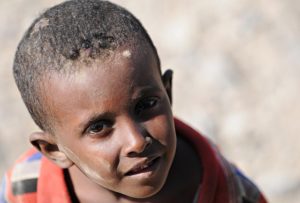
Genetically Engineered Bananas
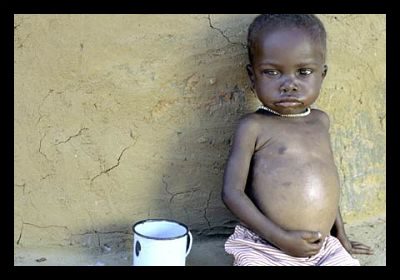
Deficiency in Vitamin A causes preventable blindness and an increased chance of disease and death for children across the globe in developing countries. Approximately 250 million preschool-aged children are deficient in Vitamin A. Between 250,000 and 500,000 children become blind every year due to Vitamin A deficiencies and around half of these children die within a year after becoming blind.

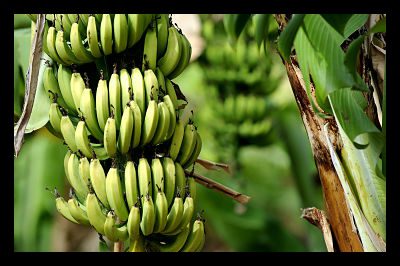
Recently, scientists at Queensland University of Technology have been working on genetically engineering a banana that will help prevent deficiencies in Vitamin A.

Genetically modified foods are foods that do not occur naturally but, instead, are created by scientists altering their genetic material. Genetically modified foods have been used to increase food production by making plants larger or making them more resistant to disease. Genetically modified foods could be used to increase the amount of nutrients in food — such as with Vitamin A-concentrated bananas — decreasing food allergies or making foods easier to grow.

While recognizing the advantages to global health that genetically modified organisms (GMOs) would offer, many are worried about the possible negative side effects. Critics have noted the lack of research about future health issues that may arise due to the consumption of genetically modified foods. More research over time would be necessary for scientists to weigh their advantages and disadvantages.

These genetically engineered bananas have an increased level of beta-carotene in them. Beta-carotene is then converted to Vitamin A by the body after being ingested.

In the past few years, similar research has been done to create “golden rice”— rice with increased levels of beta-carotene. Critics have also been skeptical about the risks involved with this project.

If the bananas are effective in increasing Vitamin A levels, the scientists will work to begin distributing these genetically engineered bananas in Uganda by 2020 to begin decreasing the rates of Vitamin A deficiency-related diseases, blindness and death.

– Lily Tyson

Sources: The Guardian, HealthLine, PHG Foundation, WHO
Photo: Carnarvon

In the ever-evolving global fight against hunger, the World Food Program USA, an ally of the United Nations World Food Programme (WFP,) is leading the charge against the humanitarian issue.

With its headquarters in Washington D.C., WFP USA is thought of as the American arm of WFP. While WFP is the largest humanitarian agency fighting hunger throughout the world, World Food Program USA “builds support for WFP through fundraising, advocacy and education in the United States.”

Through its work to connect American businesses, organizations and philanthropists, WFP USA seeks to “transform the lives of hungry people across the planet.” The organization views its relationship with American citizens as key to solving world hunger.  

WFP USA releases an annual report each year detailing the state of hunger throughout the world. Its most recent report noted how the effects of conflicts in certain countries, including Syria, the Philippines, the Central African Republic and South Sudan, destabilize the ability for each nation to combat hunger and food security.

WFP has recently collaborated with such organizations as Yum! Brands, India Charitable Foundation and a bracelet line called The Brave Connection. These collaborations are sought to strengthen ties with different organizations.

Moreover, WFP seeks to alleviate the hardships caused by natural disasters or other emergencies, including a lack of adequate school meals and inadequate food security. The organization also strives to make a difference for women throughout the world.

A non-governmental agency, WFP received over $20 million last year through a combination of grants and fundraising. Both WFP and WFP USA rely upon contributions made by everyday individuals in order to continue to fight against global hunger and its related issues.

Through its relationship with WFP, WFP USA is one of the foremost leaders in the fight against world hunger. By working with businesses large and small and Americans of all socioeconomic classes, WFP USA is able to make an impact worldwide.

— Ethan Safran

Sources: World Food Program 1, World Food Program 2, Franchising, Huff Post
Photo: WFP USA

Throughout history, food shortages have led to civil unrest. Most notably in recent history, the Global Food Crisis of 2008 spurred an outbreak of food riots around the world. Now, with food prices increasing at the highest rate since 2008, political leaders are concerned that a similar outbreak of food riots may be on its way.

In the beginning of 2014, international food prices rose 4 percent. In the time between January and April, food prices spiked to a level just short of their all-time high in August 2012. The rapid increase is similar to the surge in food prices in 2007 and 2008 that led to so many food riots.

If history repeats itself, the recent food price hikes give government officials adequate reason to worry.

The difficulty with monitoring food riots is that the term is loosely defined. In broad terms, a food riot is some sort of public disturbance raised in response to food’s availability. Interpretations of this definition, however, are as varied as the riots themselves, leading to a great deal of confusion surrounding the topic of food riots.

How severe must the disturbance be to earn the title of a riot? A food riot is generally a violent protest. Participants have been known to harm other citizens or police forces. In return, police forces respond with brutality to control the situation. Some news articles will only cite occasions that have resulted in casualties as food riots.

Other news sources believe that any public response to food-related issues falls in this category. They report even the most peaceful demonstrations as food riots.

Where is the proper balance? How can the media successfully educate the public on these world events without an accepted definition of a riot?

In the wake of recent food pricing inclines, The World Bank has developed a widely accepted definition to guide examinations of these conflicts. Their 2014 Food Price Watch defines a food riot as “a violent, collective unrest leading to a loss of control, bodily harm or damage to property.”

The definition has helped The World Bank determine which episodes in the recent past were actually food riots. A database of food riots between 2007 and 2014 has since been collected, revealing that 51 riots have taken place in 37 countries.

The cause of food riots also prompts confusion. Increasing food prices are not the only cause of riots. In Vietnam, decreasing prices of coffee have resulted in violent outbreaks in the past. A decline in value of major exports can have just as strong of an impact on a nation as unavailability of food and other resources.

The World Bank has also established guidelines for the causes of food riots, saying that they are “motivated by a lack of food availability, accessibility or affordability,” whether directed at the government or other groups.

There are two types of food riots. In a Type 1 incident, the riots are directed at the government. Distress takes its form in public protests outside of government buildings, often in response to rising food prices. It is the most common form of food riot reported in the media because their causes often have international implications.

In a Type 2 episode, rioters demonstrate near food suppliers because they are not politically driven. They attack supply trucks, stores or refugee camps. These riots are more locally focused and occur during times of drastic food shortages.

Defining food riots helps aid organizations determine how to best help areas experiencing food shortages to prevent violent outbreaks. Government officials know how to respond to rising food prices by studying food riots of the past. By alleviating causes of global hunger, aid organizations and government officials can increase peace in underprivileged nations.

– Emily Walthouse

Sources: Food Price Watch, Global Issues, Slate, The World Bank
Photo: NPR

Ranking 182nd on the Human Development Index (the 6th lowest ranking on the planet,) Mali is recognized as one of the most nutritionally unstable and under developed countries in the world. About four in 10 children under the age of 5 are underweight, and one in four people are as well. As a study from 2014 indicates, over 1.5 million people are not sustained by a regular supply of food.

This landlocked country is often afflicted by droughts and insect infestations, which deplete the crops upon which they often rely on for food. While malnutrition in Mali afflicts the entire population, it is the second largest killer of children under the age of 5.

In her intensive ethnographic study of Magnambougou, Mali, “Dancing Skeletons: Life and Death in West Africa,” however, Dr. Katherine Dettwyler suggests that rather than poverty, a lack of education surrounding nutrition is the main root of malnutrition in infants and young children. It is the mothers’ misunderstanding that it is not simply enough to give children food, but in the early stages of development, it is crucial to distribute the right kinds of food.

On one of her visits to Mali, Dettwyler examined a little girl with kwashiorkor, of which the primary symptom is swelling all over the body and particularly in the abdomen. The disease is a result of protein deficiency combined with a high caloric intake and often appears when the child cannot sustain the same level of protein intake after being weaned.

The mother who summoned Dettwyler called the disease “funu bana,” meaning “swelling sickness,” and believed her daughter caught it from another child. She begged Dettwyler for medicine to cure her daughter despite Dettwyler’s assurance that all her daughter needed was to have a higher quantity of protein slowly introduced to her diet.

Dettwyler also offers an anecdote regarding misconceptions about nutrition that occurred when she brought her young daughter Miranda to Mali. When the two were eating with some of the villagers and Dettwyler gave her piece of chicken to her daughter, she was immediately questioned. One man explained that good food should not be wasted on the young, because they have their whole lives to eat, while the old should be honored because they will soon die. Dettwyler, however, tried to explain that children should be the ones to receive the better food because they need the protein to fuel their growth.

Moreover, a large reason for the high child mortality rate due to malnutrition is because adults often have trouble identifying the signs of malnutrition. In her ethnography, Dettwyler notes that “people simply get used to the way children look. If the typical child is mildly to moderately malnourished, then that becomes the standard… normal is what you’re used to” In addition to providing emergency relief, Dettwyler, along with Action Against Hunger, argue that the key to combating malnutrition in Mali is education, and that teaching Malians how to identify malnourished children will be an enormous step in the process.

– Jordyn Horowitz

Sources: Action Against Hunger, Dancing Skeletons, WFP
Photo: Flickr

poverty in africa
A new report released by the United States Agency for International Development (USAID) claims the Feed the Future program has bettered the lives of millions of people who suffer from poverty and chronic hunger. In 2013, Feed the Future reached 7 million farmers, teaching them how to achieve a higher crop yield by using new technologies, and provided vital nutrition to 12.5 million malnourished children.

The program, which is the U.S. government’s global health and food security initiative, was established by the Obama Administration in 2010 and aims to reduce extreme poverty and starvation around the world. Feed the Future asserts hunger and poverty are inextricably linked and cyclical, and breaking this cycle will promote global prosperity and stability. Currently, the initiative focuses on 19 countries, which were selected based on level of need, opportunity for partnership, potential for agricultural growth, opportunity for regional synergy and resource availability. These countries are located in Africa, Asia, Latin America and the Caribbean.

Feed the Future is led by USAID, and works alongside other federal agencies, including such organizations as the Peace Corps, the Millennium Challenge Corporation and the U.S. African Development Foundation, to achieve its goal of reducing poverty and hunger by at least 20 percent in each area that the program is established.

In order to break the poverty cycle, the program establishes important relationships with impoverished countries to strengthen their agricultural growth, empower women, educate people on proper nutrition and eco-friendly farming and create partnerships between the private sector, civil society and research community. By working on the ground, Feed the Future has made real, tangible progress.

Countries where Feed the Future has achieved the most success are Senegal, Bangladesh and Honduras. In Senegal, dependence on food imports has fallen significantly, specifically in regard to rice. The country’s rice imports have fallen by more than 20 percent and the country has grown enough rice to feed 400,000 Senegalese for one year. In Bangladesh, rice crop yields increased by 20 percent, and in Honduras, horticulture sales increased by 125 percent, which enabled more than 4,300 families to move above the poverty line of $1.25 a day.

In addition to these advancements, Feed the Future has also brought in billions of dollars of fundraising. For agricultural progress in African countries alone, $7 billion in private sector funds were raised. The organization also holds events, such as symposiums and summit meetings, to educate audience members on different branches of the initiative, and meet with world leaders to discuss further advancements of Feed the Future.

According to USAID Administrator Rajiv Shah, Feed the Future is not only “pioneering a new model of development,” but “delivering results that are changing the face of poverty and hunger.” The full progress report released by USAID can be found here.

– Taylor Lovett

Sources: All Africa, Feed the Future, The New York Times

Hunger in Niger
Niger may not be the first country to spring to mind when you think about hunger in Africa, but the food security situation there is actually among the worst on the continent. Conditions there were especially dire in 2012, when the hunger crisis that stretched across West Africa’s Sahel region made news headlines across the world.

Although the situation has improved within the last several years, there are still approximately 2.5 million people in Niger that lack secure access to food. Here are five facts you should know about hunger in Niger:


1. A Problem of Geography

Niger is land-locked, and land-locked into the middle of the Sahara Desert at that. Over 80 percent of the country consists of arid land that is nearly impossible to farm. What arable land that exists is often plagued by extended periods of flooding during Niger’s short rainy season and drought throughout the rest of the year. Farmers are already facing an enormous challenge of climate in simply trying to grow food. However, with few outlets for access to seeds and tools, farmers in Niger fail to make enough food to support even a fraction of Niger’s population.

Fortunately, international organizations are stepping in to increase the resources available to these farmers. Though simply increasing agricultural output is not enough to solve the problem of hunger in Niger, it is certainly a step in the right direction.


2. Poverty, Fertility and Their Consequences

Niger is no stranger to poverty; according to the World Bank, “Niger’s per capita income and development indicators are among the worst in the world.” Whether hunger is a cause or an effect of poverty is a complicated question, but there is no doubt that the two are intimately related.

Niger is also home to the highest fertility rate in the world, with each woman on average giving birth to 7.6 children. With so many mouths to feed and limited money to do so, it’s no wonder that so many in Niger go hungry.


3. A Struggling Economy

About 80 percent of Niger’s economy is based on agriculture and livestock. How can an economy thrive when it depends on an industry that is suffering? With little capital to work with, hunger in Niger is a problem that is proving difficult to solve from the inside. Niger’s economy is also dependent on the world market for uranium, a natural resource it has in abundance. When uranium prices fall, so does the economy.


4. Taking Care of Refugees

The population of Niger is already high, at around 17 million people. Yet with refugees from countries like Mali and Nigeria, which have recently experienced conflict, flooding into the country for the past few years, the population of Niger continues to swell.

With the existing population already struggling to eat enough, how can refugees possibly afford food? Refugees receive a food voucher upon entering Niger, which allows them to purchase U.S. $14 worth of food. Though the voucher may not seem worth very much, refugees prefer it to a standard grain handout because it allows them to customize their diet and keep their families fed while they adjust to life in Niger. The cereal handout traditionally given to refugees in Niger failed to meet human nutritional requirements, so the voucher is a step toward making sure that refugees and their children are properly nourished.


5. Why There is Still Hope

The people of Niger have banded together with the help of aid from international organizations to lessen the effects of recent droughts. By removing dead vegetation from lakes, Nigeriens are creating jobs for themselves while at the same time preventing the lakes from flooding land that could be used for farming. The dedication of the people of Niger to preventing the next hunger crisis has captured international attention and drawn donations from around the world. Hunger in Niger is certainly no quick fix, but that has not stopped the Nigeriens from getting started.

– Elise Riley

Sources: WFP1, WFP2, The World Bank, Washington Post, The Guardian, Sahara Conservation, Action Against Hunger
Photo: OneWorld South Asia


30_hour_famine
Contrary to popular belief, congressional leaders are only part of the key influence in making poverty a focus of U.S. foreign policy. Even though the 535 members of Congress in Washington D.C. representing voters are directly responsible for supporting or rejecting an issue or bill based on the voters’ opinions, all citizens are just as important in this process. Not only can they make their opinions known to the three members of Congress who represent them, but everyone, regardless of age, can make a difference by raising awareness in their community of a specific issue in order to bring about change.

This is exactly what a group of seven teenagers proved when they fasted for 30 hours to raise money that would benefit the fight against world poverty. These members of the Allin Church Youth Group in Dedham, Mass. participated in the World Vision’s 30 Hour Famine from 12 p.m. on April 26 to 6 p.m. on April 27. It was during those 30 hours that these teenagers not only fasted, but also learned more about world hunger as they felt the hunger that millions experience every day.

Participating members of the Dedham community donated at least $1 to this youth group for every hour that they fasted, and all contributions were used to benefit the lives of children in the Philippines in association with World Vision. World Vision is a Christian organization working in nearly 100 countries to address the issues of poverty and injustice. According to 30 Hour Famine, hundreds of thousands of people participate in this event every year in the U.S. alone, and thousands more across the globe do the same to help feed poor children and their families in developing countries.

World Vision’s 30 Hour Famine provides people with the opportunity to understand the hunger that millions experience every day of their lives. According to World Vision, 870 million people are hungry worldwide, revealing that this injustice needs to be resolved. But the 30 Hour Famine is not the only thing World Vision does to address this issue. This organization also provides individuals the opportunity to sponsor a child to not only fight poverty, but to create a better world for that child.

This experience for the Allin Church Youth Group did not end after the 30 hours were up. These seven teenagers, along with the entire Allin Congregational Church, will have the opportunity to travel to the Philippines and personally assist the children there who benefited from their 30-hour fast. This inspirational group of teenagers proves that anyone, regardless of age or political standing, can join in the fight against poverty and hunger.

— Meghan Orner

Sources: 30 Hour Famine, World Vision, The Dedham Transcript
Photo: Delphi United Church

world_globe_borgen_africa
In the Democratic Republic of the Congo (DRC)—a country currently at the bottom of the Human Development Index—the sentencing of Germain Katanga at the International Criminal Court (ICC) this past week has brought mixed reactions.

The Court convicted the former commander of the Forces de Résistance for his role in the February 2003 attack on the village of Bogoro in North-Eastern DRC that resulted in the deaths of over 200 people.

Conflict has consumed this area of the DRC, and more specifically the Ituri region, for years. The power struggle stems from the drive to control the local natural resources, namely gold. Approximately 130,000-150,000 persons in Ituri alone mine gold, often working over 12 hours a day.

High gold taxes and exploitation of small-scale miners prevents many from achieving a decent standard of living. This, in partnership with low agricultural production, produces hunger throughout the population.

Of the two convictions the ICC has realized since its inception, both defendants committed their crimes in Ituri. Critics of the Court point to the prevalence of indicted African leaders as an example of political influence. The failure to enforce their indictments, as in the case of Sudanese President Omar al-Bashir, has weakened the Court’s credibility.

Signatory states to the ICC’s Rome Statute can also refer certain cases to the Office of the Prosecutor, which means governments may use the Court as a weapon against political opponents rather than a source of justice. Critics have also questioned the influence of the West on the Court, considering 60 percent of ICC funding comes from the European Union.

The ICC appears to be arriving at a crossroads between political showcase and legitimate enforcer of the law. Were the Court to gain its intended footing on the international stage, it would have the opportunity to affect change in the DRC. Deterrence aside, criminal trials allow victims to finally describe their experiences, which can help in the process of national reconciliation.

Implementing law promotes the stability that could do little to harm an economy destroyed by years of warfare. Each trial brings media coverage that can be harnessed to advocate for aid to the DRC. Regardless, the relationship between the ICC and the DRC will be interesting to watch in the coming years.

– Erica Lignell

Sources: Brookings, European Commission, International Policy Digest, IRIN, La Presse, World Bank

The book begins: “July 15, 1955. The birthday of my daughter Vera Eunice. I wanted to buy a pair of shoes for her, but the price of food keeps us from realizing our desires. Actually we are slaves to the cost of living.”

Carolina Maria de Jesus’s diaries were edited into a book called “Room of Garbage” (1960), which quickly became one of the most successful books in Brazilian publishing history. In Sao Paulo, 10,000 copies of the book sold out in the first three days and it has since been translated into 13 different languages, becoming an international bestseller. Despite her success, within a few years she would return to living in the favelas and would later die in poverty.

Carolina was born in 1914 to a single mother in Minas Gerais. After attending primary school for two years, she was forced to drop out. She wrote her diary entries while living in the favelas (slums) of Sao Paulo with her three illegitimate children.

After World War II, the number of favelas exploded in major cities such as Rio de Janeiro and Sao Paulo due to mass migrations. Favelas were located on the unwanted lands left behind by urban development, often in the hills surrounding the cities.

A self-confident woman, Carolina refused to conform to social standards. She never married, and she expressed herself aggressively with sometimes racist views. Her diary entries describe her struggle to rise above poverty, living as one of the “discarded” and marginalized.

She collected paper, bottles and cans for coins, held various odds and ends jobs and scavenged in garbage bins for food to feed her children. Her stories, poems and diary entries deal with themes of poverty, loneliness, hopelessness and death. She writes of the racial injustice and discrimination heaped onto the poor and the blacks in the favelas.

She writes about political events and politicians with their empty promises to the urban poor, arguing, “Brazil needs to be led by a person who has known hunger. Hunger is also a teacher. Who has gone hungry learns to think of the future and of the children.” Many readers and critics were surprised that an uneducated black woman from the slums could eloquently write about politics, racism and gender discrimination.

In 1958, Audalio Dantas, a reporter for Diario da Noite, heard Carolina yell at a group of men on a playground, “If you continue mistreating these children, I’m going to put all of your names in my book!” Dantas convinced her to show him her writings and took them to his editor.

Although her book would reach international acclaim, many Brazilians criticized and ostracized her for her refusal to conform to social norms. Today, most Brazilians do not acknowledge her impact, only recognizing her as that “slum dweller who cracked up.” Why is Carolina Maria de Jesus important if her country refuses to remember her?

Her stories humanize poverty and hunger, bringing attention to the human lives behind facts and figures. She describes the pain of hearing her children ask for more food because they are still hungry. She writes about watching restaurants spill acid in the trashcans to prevent looting by the poor. In the favela, she had the “impression she was a useless object destined to be forever in a garbage dump.”

A quick search on the Internet can show you numbers and statistics about the millions of people living below the poverty line in the world, but Carolina’s words showed people “the meaning and the feeling of hunger, degradation and want.” To overcome global poverty and move forward with understanding and empathy, Carolina’s stories and the countless stories of others must not be forgotten.

– Sarah Yan

Sources: Latin American Studies, The Life and Death of Carolina Maria de Jesus, Notable 20th Century Latin American Women
Photo: Omenelick 2 Ato

Child Labor
Child labor is work that steals a child’s childhood. Defined in International Labour Organization (ILO) Conventions, child labor is work that children should not be involved in given their age, or – if that child is old enough – work that is too dangerous and unsuitable.

Forcing children to take part in often dangerous and strenuous work and preventing them from attending school, child labor stands in the way of a child’s healthy physical and mental development in addition to his or her education.

In some cases children are enslaved laborers, engaged in the agricultural, mining and manufacturing sectors, or in domestic service, subsequently pushed into homelessness and living on the streets. However, others are trafficked and enslaved in prostitution, or forced into armed combat as child soldiers. These are all forms of child labor; the latter qualifying as some of the worst forms of child labor given that such bondage is especially harmful and in direct violation of a child’s human rights. Child labor is a continuing global phenomenon and following are some shocking, but important, facts regarding the practice.


Important Facts about Child Labor


  1. Currently, there are nearly 30 million people held in slavery and an estimated 26 percent are children.
  2. In 2012, 168 million children – from 5-years-old to 17 – were involved in child labor. Of this number, 85 million worked in hazardous conditions, enduring beatings to sexual violence.
  3. Around the world one in six children are forced to work, with children below the age of 18 representing between 40 to 50 percent of laborers.
  4. Children living in more rural areas can begin working as young as the age of five.
  5. According to the ILO, an estimated two thirds of all child labor is in the agricultural sector.
  6. The highest proportion of child laborers is in Sub-Saharan Africa where 49 million children are forced laborers.
  7. The highest numbers of child laborers are in Asia and the Pacific, where over 122 million children are forced into work.
  8. According to the U.N. Children’s Fund (UNICEF), there are over 300,000 child soldiers forced into armed combat.
  9. In most regions, girls are just as likely as boys to be involved in child labor; however, girls are more likely to be involved in domestic work.
  10. According to the ILO, only one in five child laborers is paid for their work, as the majority of child laborers are unpaid family workers.

So why are some children forced into labor?

Poverty is the most often cited reason why children work. Pressured to provide food and shelter, as well as to pay off debt owed by the parents, some children have no other choice but to become involved in labor in order to support their families. However, some children are sold against their will and forced into slavery. Other factors that influence whether children work or not include barriers to education and inadequate enforcement of legislation protecting children.

Child labor is a complex issue, as are the solutions, but the following steps must continue to be pushed for in order to see further progress. First and foremost, child labor laws must be enforced. Another strategy would be to reduce poverty in these areas so as to limit the need for children to be forced into these situations. Finally, providing access to quality education ensures that each child has a chance for a better future.

Rachel Cannon

Sources: UNICEF 1, International Justice Mission, UNICEF 2, International Programme on the Elimination of Child Labour, International Labour Organization, UN 1, UN 2
Photo: Flickr