• Link to X
  • Link to Facebook
  • Link to Instagram
  • Link to TikTok
  • Link to Youtube
  • About
    • About Us
      • President
      • Board of Directors
      • Board of Advisors
      • Financials
      • Our Methodology
      • Success Tracker
      • Contact
  • Act Now
    • 30 Ways to Help
      • Email Congress
      • Call Congress
      • Volunteer
      • Courses & Certificates
      • Be a Donor
    • Internships
      • In-Office Internships
      • Remote Internships
    • Legislation
      • Politics 101
  • The Blog
  • The Podcast
  • Magazine
  • Donate
  • Click to open the search input field Click to open the search input field Search
  • Menu Menu

Archive for category: Hunger

Global Poverty, Human Rights, Hunger, War and Violence

Hunger in Yemen: Slowly Moving Imports

Hunger in Yemen
Last October, photos of an emaciated 18-year-old girl, Saida Ahmad Baghili, circulated the internet. A quick glance at this shocking photograph explains why the U.N. World Food Programme (WFP) is pleading for $258 million, which would fund food assistance for the hunger in Yemen problem until January 2017.

The WFP warns that Yemen is on the brink of famine. The 19-month civil war aggravated the inherent poverty in Yemen and worsened malnutrition for thousands of individuals including Baghili. Before the war, Yemen already had the Arab world’s lowest GDP per capita and 45 percent of its population were malnourished.

Slowly Moving Imports

Additionally, before the war, Yemen imported 90 percent of its food. Now, ships carrying food find it difficult to enter the country’s ports.

Online newspaper The Intercept explains that the Saudi-led coalition has enforced air and sea blockades on rebel-held parts of Yemen since March. The coalition allows only U.N. supervised flights and aid shipments to enter the country.

With conflict escalating and a shortage of food in local markets, prices of basic foods have increased. At one point in time, the WFP’s market analysis stated that the national average price of wheat flour was 55 percent higher compared to the pre-crisis period, which affects the hunger in Yemen problem a great deal.

The blockades also threaten  fuel needs for water pumps and generators in hospitals. Doctors Without Borders states that the restrictions on imports severely hinders medical workers’ ability to treat patients. Many Yemeni like Baghili are dying from basic diseases that are easily treatable.

The Saudi coalition denies the accusations and says it was implementing U.N. resolutions that aim to prevent weapons and ammunitions. They explained that the coalition gives aid ships immediate and regular permits to reach Yemeni ports, pointing to the opposition’s black market as the cause of their “humanitarian catastrophe.”

The Office for the Coordination of Humanitarian Affairs (OCHA) reported that in August 2016 significant delays were experienced. The report attributed the delays to reduced operational capacity. In Seleef’s port, two vessels waited for berth an average of 45 days. Since December 2015, average delays in ships entering ports have increased. This could be why the WFP estimates it takes four months from the time they receive funds for the food to reach families who need it.

A Community’s Response 

Alex Potter, a photojournalist based in Yemen, shares how the Yemeni community pours out support for each other: neighbors invite displaced people into their homes, wealthier Yemenis donate trucks of water and friends visit to help with daily tasks. She said, “In Yemen if you see your neighbor needs something, you always share.”

Yet the WFP issued an urgent statement that resources are running out. While they reached millions of people with emergency assistance in March and July, they were still forced to split rations between more families to meet the growing need throughout this problem of the hunger in Yemen.

Baghili’s photograph further highlights a shocking reality where a teenager’s parents lack the financial means to help their severely malnourished daughter. Baghili only received treatment when charitable people pooled their funds together so she could receive proper medical attention.

Many countries and people have answered WFP’s call.  Perhaps we too can become like the charitable people whose donations save the lives of those like Baghili.

– Andy Jung

Photo: Flickr

December 1, 2016
https://borgenproject.org/wp-content/uploads/borgen-project-logo.svg 0 0 Borgen Project https://borgenproject.org/wp-content/uploads/borgen-project-logo.svg Borgen Project2016-12-01 08:32:492024-12-13 17:56:11Hunger in Yemen: Slowly Moving Imports
Activism, Global Poverty, Hunger

Three Organizations Fighting Malnutrition and Hunger in Nicaragua

Hunger in Nicaragua
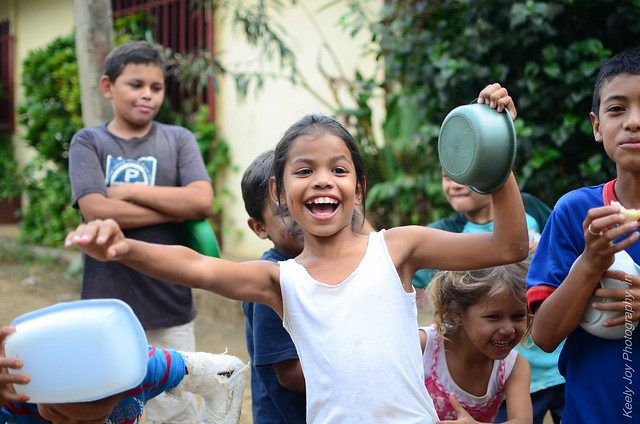
With about 29 percent of households living in poverty and 8.3 percent in extreme poverty on less than $1.25 a day, Nicaragua is considered one of the poorest countries in Latin America. Hunger in Nicaragua is just one of the major problems the country faces. Fortunately, organizations such as North Country Mission of Hope, World Food Program and Action Against Hunger have acted out of generosity, providing support and food assistance for areas suffering from chronic malnutrition.

  1. North Country Mission of Hope/Stop Hunger Now
    North Country Mission of Hope is a humanitarian organization specifically committed to aiding and building relationships with the people of Nicaragua, with 97 percent of profits going directly to services in the country. Likewise, Stop Hunger Now works to end world hunger by distributing meals through feeding programs operated by partner organizations in developing countries. Earlier this year, Stop Hunger Now teamed up with North Country Mission of Hope to ship 22,660 pounds of medical equipment, school supplies and food to Nicaragua.
  2. World Food Program (WFP)
    WFP has been fighting hunger in Nicaragua since 1971. The organization supports the government of Nicaragua’s Zero Hunger Program by working to prevent chronic malnutrition and improving the food security of smallholder farmers. Focusing on nutrition, WFP reaches out to vulnerable groups, including mothers and children, in communities like Madriz, which has a 30 percent rate of chronic malnutrition, and Nueva Segovia, which has a 28 percent rate. WFP’s school meals program also provides daily meals to needy children in preschools and primary schools.
  3. Action Against Hunger
    Action Against Hunger has been working in Nicaragua since 1996. In 2015, the organization provided nutritional support to 1,294 individuals, helped 6,181 gain access to safe water and assisted 21,193 in total. The organization emphasizes four main action steps that go into its aid process.

First, Action Against Hunger predicts where and when to expect malnutrition in order to target it effectively. Secondly, it recognizes that global hunger is preventable and encourages members to find ways to ensure that children stay healthy. Next, the organization utilizes available resources, particularly therapeutic ready-to-use foods. Finally, it maintains that anyone can get involved and make a difference. Just $45 can provide a child with life-saving treatment, adequate supplies and food for survival.

Though Nicaragua has encountered many struggles, the work of these global humanitarian groups is bringing hope to the country and its people.

– Mikaela Frigillana
Photo: Flickr

November 21, 2016
https://borgenproject.org/wp-content/uploads/borgen-project-logo.svg 0 0 Borgen Project https://borgenproject.org/wp-content/uploads/borgen-project-logo.svg Borgen Project2016-11-21 01:30:542020-05-18 10:02:30Three Organizations Fighting Malnutrition and Hunger in Nicaragua
Disease, Global Poverty, Hunger

Global Development: It’s Better Than You Think

Global Development: It’s Better Than You Think
Despite global victories in disease eradication, hunger and poverty reduction, the majority of Americans perceive the rest of the world to be in terrible shape. According to a recent study by the Barna group, 84 percent of Americans are unaware of the rising global development. In fact, 67 percent believe that global poverty has been rising since the 80’s. With regard to global health, 50 percent of Americans think child mortality is on the rise, and 35 percent believe that HIV/AIDS-related death has increased in the last five years.

It’s easy to make these assumptions when news headlines tend to focus on negative statistics. While it’s true the global community has a lot of work left to do, it’s also necessary to recognize the very tangible victories in humanitarian efforts over the last 50 years.

For instance, by 2010, the global community successfully lifted one billion people out of extreme poverty, reducing the world’s poorest population by half and achieving the U.N.’s first millennium development goal five years ahead of schedule. In developing regions, the population of undernourished people has decreased by nearly 50 percent since 1990.

Many economic and health-related improvements are directly tied to successful USAID programs. Every year, USAID saves more than 3 million lives through global vaccination efforts. More than 50 million couples worldwide use USAID sponsored family planning services. USAID has also played a major role in the global reduction of infant mortality by 10 percent through various child survival programs, as well as the U.N.’s Drinking Water Supply and Sanitation Decade, which gave 1.3 billion safe drinking water and 750 million people sanitation for the first time.

Still, there are widespread misconceptions about foreign aid and its effects on global development. The majority of Americans believe that 25 percent of the federal budget goes toward foreign aid and want that number reduced to ten percent. In reality, less than one percent of the federal budget is allocated for foreign aid. The gap between perception and reality isn’t just an American problem. A recent study by Dutch research firm Motivaction found that out of 26,000 people in 24 different countries, 87 percent of respondents said that extreme poverty had not improved over the last two decades. Just 1 percent were aware that extreme poverty has actually been cut in half.

But if global efforts are as successful as the data shows, does public perception even matter? Martijn Lampert, research director at Motivaction, explains: “If you don’t see it happen, you don’t believe it.” Motivaction’s research certainly supports the notion that seeing is believing, after the most optimistic survey responses, came out of emerging economies in India, China and Indonesia, where people witnessed tangible improvements. Even more telling, 50 percent of people in those regions correctly said that global poverty had been reduced by half, compared to 8 percent of Americans and Germans.

Perhaps if more Americans were aware of the real-life impact that foreign aid has made, there would be greater support for USAID programs. With that support, lawmakers and advocacy groups could face fewer challenges in passing legislation to immediately improve the living conditions of the world’s poor. Better understanding begins with the facts. Thanks to work done by the U.N., USAID, Motivaction and countless other groups, new data shows that global development is on the rise.

– Jessica Levitan

Photo: Flickr

November 13, 2016
https://borgenproject.org/wp-content/uploads/borgen-project-logo.svg 0 0 Borgen Project https://borgenproject.org/wp-content/uploads/borgen-project-logo.svg Borgen Project2016-11-13 01:30:422024-12-13 17:56:04Global Development: It’s Better Than You Think
Charity, Children, Hunger, Technology

Cristiano Ronaldo’s Selfie App to Help Save the Children

Cristiano Ronaldo's Selfie App
Cristiano Ronaldo, Real Madrid’s star forward and Global Artist Ambassador for Save the Children, recently released his latest initiative for the organization, the CR7Selfie: Fans with a Cause app.

According to Save the Children’s website, Cristiano Ronaldo’s selfie app costs $1.99 and will allow fans to “take a selfie with Ronaldo in one of several different outfits and poses.” A portion of all money raised from the app, which can be downloaded from the Apple App and Google Play stores, will go toward the non-profit organization.

Save the Children, which was founded in 1932, focuses on providing children in 120 countries around the world with proper education, food and health services, especially in the wake of natural disasters or war. In 2015, Save the Children delivered health care to 22.6 million children, and 11.6 million children participated in the organization’s nutrition programs.

Ronaldo has represented Save the Children as an ambassador since January 2013, directing his attention to the worldwide issue of child hunger. The athlete first realized that he wanted to join the fight against poverty when he learned that one in seven children go to bed hungry every night.

Over the past few years, it has become common for advocates to utilize social media. More than 230 million people follow Ronaldo on his various accounts, which allows Save the Children’s message to spread quickly. Cristiano Ronaldo’s selfie app — The CR7Selfie: Fans with a Cause app — puts this same strategy to use, allowing users to have fun sharing their selfies with the superstar while also supporting the organization’s mission.

Ronaldo is one of the most admired athletes on the planet, making him an expert when it comes to taking selfies. During the premiere of his documentary Ronaldo, he even tried to break the world record for most selfies taken in three minutes. Ultimately, Ronaldo failed in this endeavor, but his widespread popularity could make the new app a huge success.

– Liam Travers

Photo: Flickr

November 13, 2016
https://borgenproject.org/wp-content/uploads/borgen-project-logo.svg 0 0 Borgen Project https://borgenproject.org/wp-content/uploads/borgen-project-logo.svg Borgen Project2016-11-13 01:30:162024-12-13 17:55:56Cristiano Ronaldo’s Selfie App to Help Save the Children
Global Poverty, Hunger

Hunger in Nicaragua

Hunger in Nicaragua
Ranked 125th out of 188 nations on the 2015 U.N.’s Human Development Index, Nicaragua is a low-income, food deficit country, with a per capita National Gross Income (NGI) of $980. Hunger in Nicaragua is among reasons to count the country as the second poorest nation in Latin America and the Caribbean.

Hunger in Nicaragua has plagued the country resulting in its poverty rating. A study revealed by the World Food Program (WFP) shows that chronic undernutrition affects over 40 percent of children under five. The problem is most prominent in the departments of Madriz, Nueva Segovia and Jinotega; where between 28 percent and 29.5 percent of children aged under five are malnourished. Data also reveals that stunting among children aged under three in targeted areas is higher than global mean rates.

The World Food Program has been present in Nicaragua since 1971, supporting the Government of Nicaragua’s Zero Hunger Program and helping to build resilience in food-insecure households and strengthening food security nets.

The WFP provides nutritional support to vulnerable communities faced with hunger in Nicaragua. Families are given assistance through activities such as Food for Assets (FFA) and Food for Training (FFT). In addition, the National School Meals Program supports access to nutritional support with school gardens and a daily meal to pre- and primary school children in the most food insecure areas.

The WFP is collaborating with the Purchase for Progress initiative to grant the necessary resources to smallholder farmers. This impetus will create sustainable development by connecting them to and building networks with local markets. With agriculture being the primary economic activity in Nicaragua, the program is inclusive of 70 percent of the nation’s population and contributes to 20 percent of the country’s GDP.

Action Against Hunger has been involved since 1996. They have established programs focused on nutrition and food security to tackle hunger in Nicaragua and enhance social-net security throughout the country.

The Protracted Relief and Recovery Operation (PRRO) aims to assist some 132,000 people through Mother-and-Child care activities. Its goals include providing food assistance to vulnerable families affected by hunger and poverty.

The food-aid organization Kids Against Hunger works with and through local churches and organizations to provide meals to alleviate hunger in Nicaragua among vulnerable children. The Casper Packaging Event is a community effort with a goal of providing 200,000 meals annually.

The NICE Foundation is the partner organization with Kids Against Hunger that is responsible for the distribution of the packages. The organization exists to meet the long-term nutritional needs of Nicaraguans.

Strides are being made by organizations worldwide to battle the issue of hunger in Nicaragua. Although the economy has faced difficulty in the past in ensuring the stability of food security, there is hope that many faced with hardship and hunger will experience relief.

– Shanique Wright

Photo: Flickr

November 11, 2016
https://borgenproject.org/wp-content/uploads/borgen-project-logo.svg 0 0 Borgen Project https://borgenproject.org/wp-content/uploads/borgen-project-logo.svg Borgen Project2016-11-11 08:59:022024-05-27 23:54:03Hunger in Nicaragua
Hunger

How are Climate Change and Hunger in Tuvalu Related?

How are Climate Change and Hunger in Tuvalu Related?Once known as the Ellice Islands, the country of Tuvalu is a collection of nine islands located in the South Pacific Ocean. Though Tuvalu has a population of around 11,200, it is considered one of the least developed countries in the world. As a result, hunger in Tuvalu is a major concern for the people and their government.

The latest report on poverty headcount ratio conducted by the World Bank was in 2010, which stated that 26.3 percent of the population is estimated to live below the national poverty line. Additional reports conclude that 61.3 percent of Tuvalu citizens aged 15-years and up are employed. Thus, places where poverty is allowed to fester, increased rates of hunger are expected to rise.

Hunger in Tuvalu is considered to be a result of one of the biggest instigators in the country, climate change. Climate change is a constant concern for the people and the government of Tuvalu. Many political figures of Tuvalu are strong advocates for environmentalism and continuously campaign against climate change.

These politicians argue that climate change will not only contribute to increasing sea levels but will expedite the salination of soil that threatens agriculture.

According to U.N. reports, Tuvalu is expected to completely disappear beneath the ocean because of global warming. Moreover, salinization of the soil reduces agricultural output which detrimentally affects local farmers and the Tuvalu economy.

In Tuvalu, the largest export commodity within the country is the dried coconut kernels of coconut palm trees. Without enough land coverage or quality soil for agriculture, hunger in Tuvalu is expected to climb substantially within the following years.

The U.N. has even identified that hunger in Tuvalu is a result of climate change in the following released statement, “The diet of Tuvaluans is primarily based on the marine environment and a limited number of food crops. These will be seriously affected by climate change. There will be a number of impacts that will affect the food security of Tuvalu. These include coral bleaching, ocean acidification, saltwater contamination and sea level rise.”

In response, the U.N., as well as delegates of the Pacific Island States, have committed to reducing both hunger and climate change through the use of ratifying the Paris Agreement.

In 2016 during the annual debate at the U.N. General Assembly, Tuvalu’s Prime Minister Enele Sosene Sopoanga applauded and showed solidarity with the ratification of the Paris Agreement.

Prime Minister Sopoanga stated that “We must [now] ensure that the Paris Agreement enters into force [and that] it must be fully elaborated and operationalized as early as possible on real adaptation and mitigation.”

Prime Minister Sopoanga also brought to light the plight that climate change has had on the country of Tuvalu. The prime minister expressed that, “We pray that through these great halls of the U.N., our humble voice will be amplified by the conscience and goodwill of humanity for real urgent action.”

During the debate, Prime Minister Sopoanga expressed numerous times that the country of Tuvalu was fully prepared to meet the targets of the global development agenda in order to reduce climate change.

With continued efforts to ratify legislation as well as advocate against climate change, the country of Tuvalu should expect to see significant improvement in not only the integrity of their islands but also a reduction of hunger in Tuvalu.

– Shannon Warren

Photo: Flickr

November 10, 2016
https://borgenproject.org/wp-content/uploads/borgen-project-logo.svg 0 0 Borgen Project https://borgenproject.org/wp-content/uploads/borgen-project-logo.svg Borgen Project2016-11-10 09:19:242024-12-13 17:56:00How are Climate Change and Hunger in Tuvalu Related?
Global Poverty, Hunger

The WFP High Energy Biscuit that Saves Lives

High Energy Biscuit
The World Food Program (WFP) High Energy Biscuit is pre-packaged and full of high-protein cereals, micronutrients and vegetable fat and requires zero preparation to be consumed. This food product extends to all groups suffering from hunger — women, children, infants, the elderly, those struggling with disease and communities in rural, underdeveloped regions, such as the Philippines, Kenya, North Korea and Afghanistan.

The biscuits serve as a lifesaving snack to survivors of natural disasters, conflicts and contain a multitude of healthy ingredients to keep individuals, especially children, strong and focused in school.

In 2014, WFP distributed its “biscuit-factory-in-a-box,” which, along with the WFP High Energy Biscuit, contains a variety of foods that are delivered to the world’s hungry. This includes fortified blends, or “mixtures of partially precooked and milled cereals, soya and beans that have been infused with micronutrients for additional health benefits.”

The primarily blended food produced by WFP is corn soya blend, cooked with water to create a warm, nourishing porridge. The blends not only provide protein supplements but also prevent and address nutritional deficiencies. Ready-To-Use Foods are also transported, typically to treat malnutrition among children between the ages of six months and five years old.

These products are easily accessible for poor families who lack access to running water or electricity, as they do not require heat or water to cook. The oil-based, low moisture consistency prevents bacterial contamination and gives them a long shelf life.

The successful impact of the WFP High Energy Biscuit and how much this program has grown since it was initially created has been documented over the years. Individuals who have benefited from the foods include more than 200,000 flood victims from Kenya, as well as 850,000 primary school children in North Korea, where the attendance rate has increased as a result of the incredible amount of aid offered to schools in the local area.

Most recently noted, the WFP High Energy Biscuit made its way to the people affected by the 2013 Typhoon Haiyan in the city of Tacloban. In the early days of the emergency response, the biscuits made a big difference and served as a light, convenient form of food aid. WFP has extended its operating locations, with one particular factory in Kabul, Afghanistan as the newest supplier for the WFP High Energy Biscuit.

WFP shows workers in new locations how to make the biscuits using local ingredients. This provides food for more people living in impoverished locations while stimulating the economies of these regions.

– Mikaela Frigillana

Photo: Flickr

November 8, 2016
https://borgenproject.org/wp-content/uploads/borgen-project-logo.svg 0 0 Borgen Project https://borgenproject.org/wp-content/uploads/borgen-project-logo.svg Borgen Project2016-11-08 01:30:052024-12-13 17:56:04The WFP High Energy Biscuit that Saves Lives
Global Poverty, Hunger

Efforts to Address Poverty and Hunger in Egypt

Hunger in Egypt
Following the political turmoil of the last five years, the Egyptian economy is currently in a tenuous position. The World Food Program (WFP) explains that poor economic conditions such as increasing poverty and decreasing purchasing power among the poor are the primary drivers of food insecurity in Egypt.

The United Nations Development Project reports that the poverty rate is around 28 percent and overall unemployment now stands at 13 percent. Moreover, the Economist reports that Egyptian deficits are running very high and youth unemployment is currently a towering 40 percent.

A 2013 WFP report found that in 2011, 17 percent of Egyptians were food insecure. Additionally, according to a 2015 United Nations report, 45 percent of Egyptian children under the age of five suffer from anemia, which is a nutrient deficiency.

The news is not all bad, however, there are groups trying to make a difference. The WFP is one organization attempting to help the Egyptian people through these tough times. They currently provide a number of services designed to reduce hunger in Egypt.

One such program involves empowering low-income rural communities to adapt to global warming, diminishing agricultural losses by helping to create sustainable livelihoods. Another includes assisting the government to institute efforts aimed at preventing chronic malnutrition. Additionally, as part of the WFP’s Syrian Regional Refugee Response they are providing food assistance to Syrian refugees currently living in Egypt.

Along with these ongoing programs, the WFP partnered with the European Union in 2014 to initiate a $67 million project aimed at encouraging school participation among current or potential child laborers.

The project, entitled Enhancing Access of Children to Education and Fighting Child Labor, targets 100,000 children across Egypt by providing them and their families with food incentives to stay in school. Children who attend school receive an in-school snack that satisfies 25 percent of their daily nutritional needs, and their families receive a monthly food ration of 10 kg of rice and one liter of oil.

Egypt itself is also attempting to address some of these problems by launching its Sustainable Development Strategy (SDS), a data collection framework based on the United Nations Strategic Development Goals. Nihal El Megharbel of Egypt’s Ministry of Planning explains in the Egypt Strategy Support Program’s news bulletin that the country hopes to “reduce mortality by 20 percent and eradicate extreme poverty” by 2030 using the SDS.

The SDS will achieve this by substantially increasing Egypt’s capacity to collect meaningful data on food insecurity and poverty and using that data to develop data-driven solutions. Derek Headey of the International Food Policy Research Institute believes such a method has great potential explaining during a United Nations Development Program seminar that “some of the best national success stories have invested the most in measurement.”

Given that Egypt is the largest state in the Arab World, the country is central to the future of the Middle East. If it is to succeed where many other nations in the region are failing, it must take care of its people. The best way to accomplish this is by working to reduce poverty and hunger in Egypt.

– James Long
Photo: Flickr

November 7, 2016
https://borgenproject.org/wp-content/uploads/borgen-project-logo.svg 0 0 Borgen Project https://borgenproject.org/wp-content/uploads/borgen-project-logo.svg Borgen Project2016-11-07 01:30:272024-12-13 17:56:02Efforts to Address Poverty and Hunger in Egypt
Global Poverty, Hunger

Overcoming Hunger in Chile

Hunger in Chile
Chile is a coastal country in South America housing 17.65 million people, with an estimated 2.5 million living under the poverty line.

Those living below the poverty live and inevitably those experiencing hunger in Chile, have been the recipients of governmental and international aid. In 2014, Chile was recognized by the Food and Agriculture Organization of the United Nations (FAO), as having reached the first Millenium Development Goal to reduce the number of those facing hunger in Chile by half since 1990.

Statistics show undernourishment was reduced from 4.3 percent between 1990 and 2015. Currently, 2.5 percent of the population is undernourished.

These reductions are a result of the government-sponsored “Fondo Chile Contra el Hambre y la Pobreza,” or the Chile Fund against Hunger and Poverty. This organization, as well as the UNDP, has funded programs targeting the South-South Cooperation (SSC) and consequently Millennium Development Goals.

The SSC is defined as a developmental program among southern countries to promote, “multi-stakeholder approach, including non-governmental organizations, the private sector, civil society, academia and other actors…”

Through communication and integration, the SSC enables countries to enhance economic, social and scientific potentials.

As the Fund’s handbook stated, this organization encourages Chilean economic prosperity through, “multilateral perspective; which was acknowledged as one of the Millennium Goals, specifically reflected in Goal eight: developing a global partnership for development.”

Central to Chile, however, the issue of hunger has escalated to a triple issue involving undernutrition, obesity and income. Mark Hyman explains this phenomenon, “These foods [processed foods] crowd out more nutrient-dense foods because they are inexpensive and convenient.”

The price difference forces low-income, rural citizens to buy unhealthy foods. When only able to buy and consume unhealthy food, more people will sink into the undernourished population.

To combat this issue, FAO has implemented priority themes, all of which are part of the DRE, decent rural employment promotion. It focuses on “employment-centered responsible agro-investments, gender and age-disaggregated analysis, decent work conditions in agriculture,” and advocacy for natural disasters.

These priorities centralize on the Chilean Fund’s initiatives such as “Malnutrition, Food Security Fostering Employment and Decent Employment, Design of Social Programs…”

These organizations and their programs promote the job market for many men and women who in turn, will receive higher incomes and be able to provide themselves with healthier food.

The already visible success is a positive trend for those living in hunger in Chile. Such achievements will help reduce the number of those living below the poverty line and those who are undernourished.

– Kristen Guyler

Photo: Flickr

November 4, 2016
https://borgenproject.org/wp-content/uploads/borgen-project-logo.svg 0 0 Borgen Project https://borgenproject.org/wp-content/uploads/borgen-project-logo.svg Borgen Project2016-11-04 01:30:072024-05-27 23:53:48Overcoming Hunger in Chile
Global Poverty, Hunger

Ending Hunger in France Becomes a Top Priority

Hunger in France
France is known for having a high standard of living and a population with richly diverse roots. However, despite the many major developments that have improved the country, hunger in France is an ever-constant concern for the citizens and its political leaders.

According to a 2013 poll from the Pew Research Center, 20 percent of French citizens reported that they struggled to afford enough food — a troubling statistic given that the 2012 GDP per capita in France was estimated to be $35,548. Approximately 6.1 percent of the French population lives under the poverty line, with 15 percent of French citizens making less than $1,130 a month.

The most predominant areas of poverty in France are accounted in Seine-Saint-Denis within the Greater Paris region. Despite these numbers, governmental officials and citizens are making tremendous strides to reduce hunger in France.

In 2004, efforts from the Association Francaise pour la FAO (AFFAO) formed the French Alliance Against Hunger in order to pull resources from humanitarian institutions, trade unions, political organizations, local groups, private sectors and agricultural and environmental associations in order to combat hunger in France and in the rest of the world.

The French Alliance Against Hunger aims to educate, coordinate and exchange ideas in order to form one unified voice in the battle against effectively ending world hunger. Moreover, the French Alliance Against Hunger is a key player in the International Alliance Against Hunger that was formed in 2002 during the World Food Summit.

A further commitment to end hunger in France has been made by government leaders in partnership with the United Nations. In 2015, France was one of the countries that vigorously supported the 2030 Agenda for Sustainable Development to end extreme poverty, hunger and inequalities while protecting the overall integrity of the environment.

Effective cooperation between French leaders and French citizens has also been crucial in reducing hunger in France. French Municipal Councilor in Courbevoie, Arash Derambarsh and other officials have made incredible efforts to reduce hunger in France by limiting the amount of food wasted in the county which totals 8 million tons a year.

By rallying public support, Derambarsh was able to unanimously pass legislation that forced supermarkets to donate untampered, safe food to local charities.

This law went into effect as of July 2016 and so far has received positive acclaim from French citizens and the global community.

Supermarkets that are larger than 4,305 feet are now required by French law to sign formal documents with charities to ensure that they will donate any leftover food. Large supermarkets that do not sign these agreements face fines in excess of $83,000.

Furthermore, this legislation not only requires spoiled food to be used in composts of animal feed but also protects against food bleaching. Food bleaching is a practice by supermarkets to deter people from eating the food that they throw away in dumpsters.

As a result of French governmental action to reduce hunger in France, many individuals hope that these initiatives will inspire other nations to adopt similar policies.

– Shannon Warren

Photo: Flickr

November 3, 2016
https://borgenproject.org/wp-content/uploads/borgen-project-logo.svg 0 0 Borgen Project https://borgenproject.org/wp-content/uploads/borgen-project-logo.svg Borgen Project2016-11-03 01:30:532024-05-27 23:53:46Ending Hunger in France Becomes a Top Priority
Page 59 of 71«‹5758596061›»

Get Smarter

  • Global Poverty 101
  • Global Poverty… The Good News
  • Global Poverty & U.S. Jobs
  • Global Poverty and National Security
  • Innovative Solutions to Poverty
  • Global Poverty & Aid FAQ’s
Search Search

Take Action

  • Call Congress
  • Email Congress
  • Donate
  • 30 Ways to Help
  • Volunteer Ops
  • Internships
  • Courses & Certificates
  • The Podcast
Borgen Project

“The Borgen Project is an incredible nonprofit organization that is addressing poverty and hunger and working towards ending them.”

-The Huffington Post

Inside The Borgen Project

  • Contact
  • About
  • Financials
  • President
  • Board of Directors
  • Board of Advisors

International Links

  • UK Email Parliament
  • UK Donate
  • Canada Email Parliament

Get Smarter

  • Global Poverty 101
  • Global Poverty… The Good News
  • Global Poverty & U.S. Jobs
  • Global Poverty and National Security
  • Innovative Solutions to Poverty
  • Global Poverty & Aid FAQ’s

Ways to Help

  • Call Congress
  • Email Congress
  • Donate
  • 30 Ways to Help
  • Volunteer Ops
  • Internships
  • Courses & Certificates
  • The Podcast
Scroll to top Scroll to top Scroll to top