• Link to X
  • Link to Facebook
  • Link to Instagram
  • Link to TikTok
  • Link to Youtube
  • About
    • About Us
      • President
      • Board of Directors
      • Board of Advisors
      • Financials
      • Our Methodology
      • Success Tracker
      • Contact
  • Act Now
    • 30 Ways to Help
      • Email Congress
      • Call Congress
      • Volunteer
      • Courses & Certificates
      • Be a Donor
    • Internships
      • In-Office Internships
      • Remote Internships
    • Legislation
      • Politics 101
  • The Blog
  • The Podcast
  • Magazine
  • Donate
  • Click to open the search input field Click to open the search input field Search
  • Menu Menu

Archive for category: Hunger

Food & Hunger, Food Security, Global Poverty, Hunger

Averting Global Food Shortages with New Fertilizer

Food
A team of scientists from Sri Lanka and the United Kingdom recently collaborated to study nanotechnology-based fertilizer delivery to crops. What they discovered has the potential to revolutionize farming worldwide, reduce environmental impact and mitigate future global food shortages.

The study, which was published in the Jan. 25, 2017 edition of American Chemical Society Nano (ACSNano), acknowledges that fertilizer prices in developing countries are substantial, and the costs often negatively impact food supply. Scientists determined that developing technology to reduce fertilizer costs was necessary, and began testing a trial fertilizer on rice farms in Sri Lanka.

The results were nothing short of impressive. Initial trials showed a 20% increase in production using about half the amount of fertilizer. These findings are a boon for future generations. The United Nation’s Food and Agriculture Organization estimates that crop production needs to increase by approximately 60% by 2050 in order to supply the world’s population and avoid global food shortages.

The Science Behind the Results

The scientists in this study didn’t reinvent the wheel. They focused their attention on urea, a common fertilizer. Although urea has been used for decades, it has major weaknesses. When urea comes in contact with water, it breaks down prematurely and cannot be efficiently absorbed by crops. Farmers then have to use more fertilizer — if they can afford it. Calling this issue a “major challenge for global agriculture” that “threatens future food security,” the team settled on a nanotechnology-based principle for fertilizer delivery. This method has wide applications in pharmaceutical delivery, and the scientists thought it showed promise.

The team combined Hydroxyapatite nanoparticles with urea to create nanohybrids. Then, they applied the mixture to crops at test farms. It pleased them to discover that the nanohybrid fertilizer decomposed the urea at a slower rate than urea alone. The scientists reported that they reduced the amount of fertilizer application by 50% while increasing crop yield by more than nine percent.

Larger Harvests with a Smaller Footprint

Money isn’t the only thing saved when nanohybrids are in play. Less fertilizer applied to crops means that less washes away into bodies of water, avoiding unnecessary pollution. Gehan Amaratunga, one of the scientists on the team, says “this goes a long way to reducing the environmental footprint of agriculture…It is a Green Revolution.”

– Gisele Dunn

Photo: Flickr

February 25, 2017
https://borgenproject.org/wp-content/uploads/borgen-project-logo.svg 0 0 Borgen Project https://borgenproject.org/wp-content/uploads/borgen-project-logo.svg Borgen Project2017-02-25 01:30:372024-12-13 17:56:40Averting Global Food Shortages with New Fertilizer
Global Poverty, Hunger

Poverty in Djibouti

Poverty in Djibouti
The small nation of Djibouti, located in the Horn of Africa, is only about 9,000 square miles and has a small population of about 820,000 people. Currently, poverty in Djibouti persists as a major problem with more than 23% of those 820,000 living in conditions described as extreme poverty.

Consistent food deficits caused by Djibouti’s harsh climate make agriculture harder here than in other areas of the continent. This creates a dependence on imports to feed the population and leaves the country especially disadvantaged by drought, floods and other natural disasters. Droughts leave an exceptionally long-lasting impact in the form of crop destruction and loss of livestock. In 2011, the U.N. reported that Djibouti’s ranchers lost 70-80% of their livestock during a period in which food prices also rose 50%.

These increasing rates of malnourishment have led many to migrate away from rural areas to the capital in search of work. Today, around two-thirds of the population is condensed in Djibouti City, leaving a small percentage to farm. These factors culminate into mass poverty in Djibouti and need direct solutions as well as continued foreign support to combat. Many in Djibouti must concentrate what little income they earn towards food and basic survival at the expense of health and education. Those in the Garabtisan Village must walk 23 kilometers just to fetch water for the village, many surviving on 40 liters for up to three days at a time.

Despite its plethora of issues and dependence on foreign aid, Djibouti’s geographical position as a trade gateway to Ethiopia has spurred some economic opportunities. The International Monetary Fund estimates that real GDP increased during 2015-2016 by around 6.5%, but continued support is needed to continue this positive trend into the future. Efficient infrastructure development, political stability, and natural disaster relief remain crucial to Djibouti’s continued growth. Suffering has been alleviated by efforts such as the U.N. raising $17.4 million in response to the 2011 drought, the World Food Programme providing emergency food aid to 61,000 rural farmers and $1 million from UNICEF for Djibouti’s children.

Continued economic growth may provide more paths out of poverty and consistent foreign assistance from countries around the world can, one day, end poverty in Djibouti. Reaching out to U.S. members of Congress for continued USAID support can go a long way in giving millions the opportunities needed to become self-sufficient. Each and every person in the United States possesses the power to speak out for what matters, ending human suffering around the globe.

– Aaron Walsh

Photo: Flickr

February 24, 2017
https://borgenproject.org/wp-content/uploads/borgen-project-logo.svg 0 0 Borgen Project https://borgenproject.org/wp-content/uploads/borgen-project-logo.svg Borgen Project2017-02-24 01:30:382024-12-13 17:56:39Poverty in Djibouti
Global Poverty, Hunger

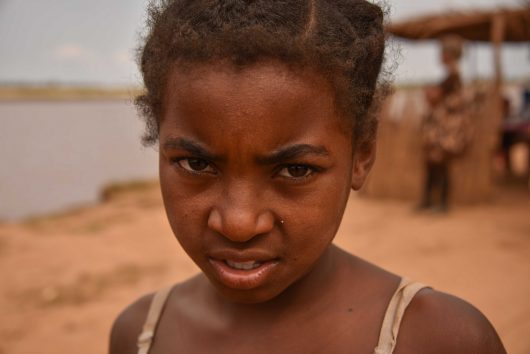
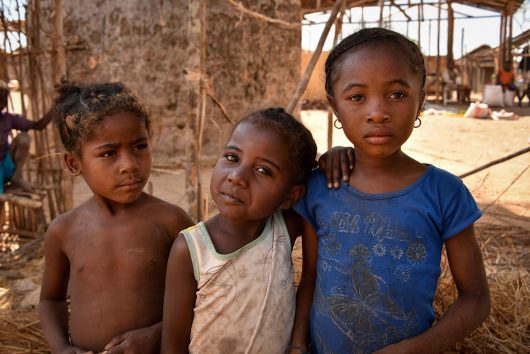
Hunger in Madagascar

Hunger in Madagascar
While Madagascar was made famous by the 2005 DreamWorks animated movie about talking zoo animals, it is also one of the world’s poorest nations, with four million people suffering from lack of food access.

Drought, cyclones, floods and locust infestation worsen the case of hunger in Madagascar. Natural disasters are likely to grow worse with the continuation of climate change. Madagascar is one of the 10 nations most vulnerable to natural disasters affecting food security and nutrition.

Those who live in southern Madagascar are most likely to suffer from hunger because the lean season takes up a much longer portion of the year. The lean season is the period of time in between the harvest and the first plant of the next season. During this time, poor farmers and their families have little food or income on which to survive.

In 2016, a drought worsened by El Niño, an irregular and complex series of climatic changes, left 1.4 million people in Madagascar desperately short on food. These people are expected to face food shortages through 2017.

Crop failure causes people to take desperate measures to survive, such as selling their livestock and farming tools and moving into the wild to forage. Over 90% of Malagasies live below the poverty line.

Chronic malnutrition affects nearly half of all the children in Madagascar under five. Hunger in Madagascar also results in stunted growth in children and high mortality rates. Anemia is one of the biggest health issues in Malagasies facing hunger, with one-third of children under five and women suffering from iron deficiency.

More than six percent of children die before they reach five years old, and 500 out of every 100,000 live births result in the mother’s death. High levels of anemia lead to this high maternal mortality rate.

Collaborative Efforts Against Madagascar’s Hunger

Despite the bleak outlook caused by hunger in Madagascar, not all hope is lost. The World Food Program (WFP) works in conjunction with 30 other organizations to relieve Madagascar’s most vulnerable regions, including the South and poor urban areas.

This is done through:

  • Providing meals, nutritional information and promoting hygiene for children in schools;
  • Empowering smallholder farmers, who own small plots of land and harvest only a few cash crops, through increasing access to markets and supporting farmers’ associations;
  • Providing relief and early recovery assistance to households affected by natural disasters;
  • Placing food in remote and disaster-prone areas before incidents are expected to occur to prevent malnutrition;
  • Distributing cash assistance and food during the 2016-2017 prolonged lean season;
  • Assessing Madagascar’s vulnerability to shocks, coordinating livelihood activities and implementing community planning exercises.

To help relieve hunger in Madagascar, you can make a donation to the WFP.

– Cassie Lipp

Photo: Flickr

February 17, 2017
https://borgenproject.org/wp-content/uploads/borgen-project-logo.svg 0 0 Borgen Project https://borgenproject.org/wp-content/uploads/borgen-project-logo.svg Borgen Project2017-02-17 01:30:552024-05-27 23:59:13Hunger in Madagascar
Global Poverty, Hunger

Boko Haram Causes Hunger Crisis in the Lake Chad Basin

Lake Chad_Hunger
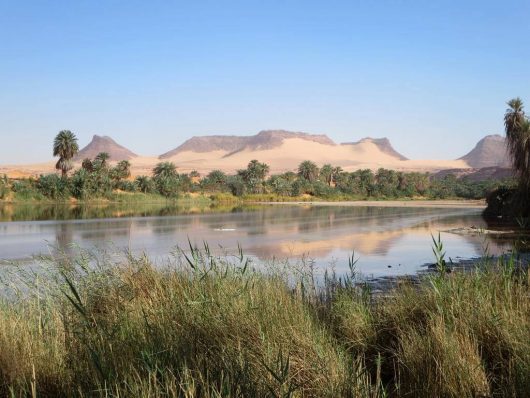
A hunger crisis in the Lake Chad basin has unfolded since Boko Haram has left much of Nigeria and surrounding nations in ruins.

The people in the region are facing famine-like conditions due to being forced to abandon their crops to flee Boko Haram. More than eight million people in the Lake Chad basin are currently struggling with hunger. The area is plunging further into food scarcity as more crops go unharvested. Some crops are even being burned as Boko Haram raids and loots villages.

Boko Haram is a militant Islamist group that has created unrest with bombings, abductions and assassinations. Its followers believe that the Nigerian government is run by non-believers, and Muslims should be forbidden from taking part in any activities associated with Western society, including voting in elections and participating in secular education.

While the group was founded in 2002, military operations began in 2009 in an attempt to create an Islamic state. The name Boko Haram means “Western education is forbidden,” when translated loosely from the Hausa language. The U.S. declared Boko Haram a terrorist group in 2013.

Boko Haram spread its military campaign into the neighboring countries of Niger, Chad and Cameroon. The U.N. estimates that 14 million people in the region are in need of humanitarian assistance.

An estimated 480,000 children across the four countries affected by Boko Haram are suffering from acute malnutrition. Basic supplies in refugee camps are scarce, and aid groups cannot reach those in villages occupied by Boko Haram as well as remote areas to offer humanitarian assistance. Of the children in critical need of assistance, U.N. officials estimate that 75,000 could die within a few months.

The hunger crisis in the Lake Chad basin is so severe that Doctors Without Borders physicians have added food to their bags of medical supplies. The U.N.’s World Food Programme delivered aid to more than one million people in December 2016, a sharp increase from the 160,000 people it assisted in October 2016. The World Food Programme is in desperate need of more funding to deliver life-saving assistance to all those in need in the region.

To help relieve the hunger crisis in the Lake Chad basin, you can make a donation to the World Food Programme.

– Cassie Lipp

Photo: Flickr

February 16, 2017
https://borgenproject.org/wp-content/uploads/borgen-project-logo.svg 0 0 Borgen Project https://borgenproject.org/wp-content/uploads/borgen-project-logo.svg Borgen Project2017-02-16 01:30:302024-05-27 09:24:15Boko Haram Causes Hunger Crisis in the Lake Chad Basin
Food Aid, Global Poverty, Hunger

Cutting Iraq WFP Aid

Cutting Iraq WFP Aid
The United Nation’s World Food Programme (WFP) began providing food aid and humanitarian assistance to Iraq in 1991. In October 2016, 1.2 million Iraqis received food assistance from the WFP. However, a staggering 4.4 million across the nation are still in need.

Due to cuts in funding from donor states, the WFP has reduced food rations in Iraq by 50%. The move will leave 1.4 million displaced Iraqis without assistance, although the agency is negotiating on how to regain full funding from donors such as the United States, Germany and Japan.

Occupation of the region by Islamic State facilitated the destruction of massive annual barley and wheat harvests, destroying an annual one-third of the nation’s crop yields. The Carnegie Endowment for International Peace also attributes increasing influxes of internally displaced persons and Syrian refugees, inefficient supply chains, lack of governing infrastructure and cash shortages to be at the root of Iraq’s food supply crisis.

Agencies active in providing assistance include Iraq’s Ministry of Displacement and Migration, United Nations organizations and the WFP. These actors constitute the foundation of social protections and safety nets for Iraqi citizens through food distribution, development and financial support.

According to an Iraq WFP aid study on social protections from the Centre for Social Protection at the Institute of Development Studies, Iraq’s Ministry of Displacement and Migration granted financial aid of 300,000 dinars (USD$255) to 9,373 families displaced among a dozen countries. This ministry also runs a “human stability” program.

Although cornucopias of vulnerable populations, an absence of adequate legal statutes and corruption are all hurdles to food assistance, there are steps that can be taken to improve Iraqi social protection systems. For example, the WFP recommends “building the capacity of social protection research, increasing the number of beneficiaries and demanding inclusion of the unemployed in social welfare systems.”

– Amber Bailey

Photo: Flickr

February 16, 2017
https://borgenproject.org/wp-content/uploads/borgen-project-logo.svg 0 0 Borgen Project https://borgenproject.org/wp-content/uploads/borgen-project-logo.svg Borgen Project2017-02-16 01:30:122020-06-01 12:47:12Cutting Iraq WFP Aid
Developing Countries, Global Poverty, Hunger

Rockefeller Foundation Initiative to Help Halve Food Loss by 2030

Food Loss by 2030Local and global stakeholders in the Nigerian tomato value chain met late last year for the first YieldWise partner planning session. This was part of a crucial Rockefeller Foundation initiative to help halve food loss worldwide by 2030, a key objective of the U.N. Sustainable Development Goals.

The product loss in Nigeria is staggering. While the country is the largest producer of tomatoes in Sub-Saharan Africa and the second largest in all of Africa, more than 40 percent of the product is lost between harvest and market each year. The post-harvest loss harms both consumers and smallholder farmers. On a worldwide basis, one-third of the food produced is lost to spoilage or is just thrown away. That’s food that could nourish the nearly 800 million people who go to bed hungry. For smallholder farmers, the post-harvest loss means loss of income and profits, leading to their own economic insecurity.

To demonstrate how post-harvest loss can be prevented, the Rockefeller Foundation launched the $130 million YieldWise initiative last year. The Foundation chose as its demonstration sites Nigeria, Kenya and Tanzania. Nearly half the fruits, vegetables and staple crops produced in these countries are lost before they can ever reach a table. In Nigeria, the focus of the Rockefeller Foundation initiative to help halve food loss is on reducing crop losses and, perhaps just as important, on building an efficient value chain from a producer, to a buyer, a processor, a retailer and ultimately to the consumer.

Creating a more efficient, integrated tomato value chain was a key purpose of the meeting late last year of 22 local and global stakeholders. The stakeholders included Nigerian and international NGOs, Nigerian government representatives, providers, processors, agro-technology manufacturers and large scale tomato buyers. By aligning the resources each brings to the table, the stakeholders could develop a single, unified strategy to overcome post-harvest loss in the tomato value chain. The strategy addresses farmer aggregation and training, market linkages, financing and loss mitigating technologies.

The strategy was made possible because the individual stakeholders set aside their usual competitive differences to engage in a collaboration that would benefit the entire value chain, as well as each individual part of the value chain. The stakeholders will continue their collaboration at quarterly working group meetings. This spirit of collaboration is characteristic of the other demonstration projects participating in the Rockefeller Foundation initiative to help halve food loss by 2030. Through collaboration that engages stakeholders from smallholder farmers to international giants like Coca-Cola, the Foundation hopes to show that the problem of post-harvest loss can be solved for good.

– Robert Cornet

Photo: Flickr

February 7, 2017
https://borgenproject.org/wp-content/uploads/borgen-project-logo.svg 0 0 Borgen Project https://borgenproject.org/wp-content/uploads/borgen-project-logo.svg Borgen Project2017-02-07 01:30:372024-12-13 17:56:37Rockefeller Foundation Initiative to Help Halve Food Loss by 2030
Global Poverty, Hunger

Achieving Zero Hunger Will Require Investments

Zero Hunge
On Dec. 6, 2016, the United Nations Food and Agriculture Organization (FAO) released the first post-Millennium Development Goals (MDGs) report, 2016 Asia and the Pacific Regional Overview of Food Insecurity — Investing in a Zero Hunger Generation. According to the report, although the Asia-Pacific Region met the MDG target of halving the proportion of people suffering from hunger, “the overall rate of progress is less than desired, and there are several countries and sub-regions where the prevalence rates are still very high.”

Sustainable Development Goal (SDGs)

In September of 2015, world leaders adopted the Agenda for Sustainable Development, which features 17 new Sustainable Development Goals (SDGs). The second goal (SDG2) of the agenda reads, “End hunger, achieve food security and improved nutrition and promote sustainable agriculture.” The report warns that progress towards achieving zero hunger has slowed, and must increase in order to reach SDG2’s target by 2030. In addition, the report says fully eliminating the prevalence of undernourishment, as well as reducing other forms of malnutrition across the Asia-Pacific region will be a challenge.

5th Global Forum

The U.N. FAO report was featured at the 5th Global Forum of Leaders for Agricultural Science and Technology (GLAST-2016), a three-day event in December that took place in Hainan, China. The theme of the forum was “Eliminating poverty and hunger through Science and Technology,” and discussions focused on solutions to the challenges facing agricultural development. One of the attendees was FAO Assistant Director-General and Regional Representative for Asia and the Pacific, Kundhavi Kadiresan, who said, “Most countries in this region are spending too little on agricultural research…we will, collectively, need to put our money where our mouths are to ensure we can meet these twin challenges [SDG2].”

Achieving Zero Hunger

According to the report, although economic growth is part of achieving SDG2, it is not nearly enough. Agriculture and food sustainability face resource scarcity and a changing, often unpredictable, climate, and growth in the agricultural sector is much more important. Investing in ways to improve agricultural production in order to enhance food availability is essential. Therefore, these should be the focus of government programs and policies that are intended to increase food and nutrition security.

– Kristin Westad

Photo: Flickr

January 27, 2017
https://borgenproject.org/wp-content/uploads/borgen-project-logo.svg 0 0 Borgen Project https://borgenproject.org/wp-content/uploads/borgen-project-logo.svg Borgen Project2017-01-27 01:30:192024-12-13 17:56:33Achieving Zero Hunger Will Require Investments
Global Poverty, Hunger

Food Crisis in Venezuela: Starvation, Corruption and Exodus

Food Crisis in Venezuela
As the food crisis in Venezuela continues to worsen, the country is suffering from issues ranging from starvation to corruption and mass migration to surrounding countries.

Venezuelans lack access to common goods ranging from food to medicine. The country has triple-digit inflation and the currency collapsed nearly 80 percent last year, leading to millions of citizens suffering from food insecurity. Food riots caused violence and even death in several Venezuelan cities last year, and Venezuelan President Nicolás Maduro has responded by attempting to control the increasingly black market distribution of food and goods within the country. The government hopes that by placing limits on how much individuals can buy at a time, it will be able to put an end to the black market operation of buying and reselling food for higher prices.

As children and families suffer from starvation in the country, many parents are attempting to give their children to families who will be able to provide food for them. Reuters reports that at a social services center in Carirubana more than a dozen parents seek help providing care for their children each day. This is a dramatic uptick from last year when the center averaged one parent per day.

A survey released by a children’s rights group reported that two-thirds of 1,099 households with children were not eating enough in the region of Caracas, Venezuela. The average wages in the country are the equivalent of $50 per month. This has created a desperate situation where parents fear that their children will be forced into prostitution or the drug trade in order to survive.

As the food crisis in Venezuela grows increasingly desperate, food trafficking has become one of the largest businesses in the country. The military controls the distribution of food, and documents and interviews reveal that corruption runs rampant at every level from generals to soldiers.

Tens of thousands of Venezuelans cross the borders into Brazil and Columbia each month, some to buy food and return home and others to find a permanent home in a country where food is more readily available. Along border towns, Venezuelans account for 60 percent of all hospital visits, and as more Venezuelan sex workers arrive, the rates of sexually transmitted diseases have skyrocketed in these regions.

As the food crisis in Venezuela continues, it is important that the international community condemns human rights violations and corruption in the country. It is important that global powers like the United States focus on helping partner countries in South America put pressure on the Venezuelan government to promote democracy and end corruption and food insecurity.

– Eva Kennedy

Photo: Flickr

January 22, 2017
https://borgenproject.org/wp-content/uploads/borgen-project-logo.svg 0 0 Borgen Project https://borgenproject.org/wp-content/uploads/borgen-project-logo.svg Borgen Project2017-01-22 01:30:492024-12-13 17:56:30Food Crisis in Venezuela: Starvation, Corruption and Exodus
Global Poverty, Hunger

Five Efforts to Fight Hunger in Spain

Hunger in Spain
Shaken up by the global economic crisis and with one of the highest unemployment rates in Europe, Spain has many vulnerable people struggling with poverty and hunger. Fortunately, numerous efforts in the towns of Galdakao, El Prat and toward the nation as a whole have helped significantly in the fight against hunger in Spain.

  1. In 2013, the regional government distributed breakfast and snacks to more than 50,000 children at risk of nutritional deficiencies in Andalusia.
  2. In the town of Galdakao, locals installed a community fridge in 2015 where citizens, restaurants and supermarkets can leave leftover food, and anyone who wants it can get it. Paid for by the city, the fridge has helped to feed the hungry and also cut down on waste.
  3. Working closely with the Food and Agriculture Organization of the United Nations (FAO), Spain supports the Zero Hunger objective under the Hunger-Free Latin America and the Caribbean 2025 Initiative. A number of projects have been applied to food security governance, deepening the country’s commitment to eradicating hunger within a generation.
  4. Spain is listed as one of the five headquarters that make up Action Against Hunger International, a world leader in the fight against hunger for more than three decades, combating hunger in emergencies, conflicts, natural disasters and vulnerable areas where there is chronic food insecurity.
  5. The adoption of a new “gleaning” movement, which involves the harvesting of farmers’ unwanted crops, has assisted the disadvantaged, sending recovered foods to food banks. The El Punti Solidari food bank in the town of El Prat partnered up with Red Cross, Caritas and opened to 500 local users this year, making a big difference in the lives of families in need.

Despite the recent financial struggles and the growing problem of hunger in Spain, the country has found various methods to improve conditions for health and nutrition for its citizens.

– Mikaela Frigillana

Photo: Flickr

January 22, 2017
https://borgenproject.org/wp-content/uploads/borgen-project-logo.svg 0 0 Borgen Project https://borgenproject.org/wp-content/uploads/borgen-project-logo.svg Borgen Project2017-01-22 01:30:042024-12-13 17:56:30Five Efforts to Fight Hunger in Spain
Global Poverty, Hunger

Ten Facts About Hunger in Chad

 Hunger in Chad

Hunger in Chad is a huge issue – so huge that in 2016, the country had the second-highest Global Hunger Index, after the Central African Republic. Relative to the strides the world has taken to lower GHI levels, the hunger in Chad is all too prevalent and must be addressed – here are some things you should know:

    1. Chad is an arid, low-income and landlocked country in Central Africa with a population of nearly 15 million. Of this predominantly rural population, 87% is surviving on US $1.25.
    2. One in three people in Chad are undernourished, and nearly 40% of children under 5 are therefore stunted in their growth.
    3. Hunger in Chad is largely due to various conflicts during its 40 years of independence, mainly consisting of tensions between ethnic groups in the north and south.
  1. Poverty and food insecurity prevent people from getting an education, leaving Chad with an average literacy rate of less than half of the population.
  2. In 2015, more than 2.4 million rural Chadians have become food insecure, of which 428,000 people are classified as severely food insecure.
  3. Both the country’s landlocked location and its desert climate contribute to chronic food deficits and inhibit economic development.
  4. The maternal mortality rate, while improving, remains high at 980 deaths per 100,000 live births.
  5. Nearly 500,000 refugees and internally displaced persons reside in Chad because of ongoing violence in the region, mainly from Sudan, Central African Republic and Nigeria.
  6. The Office of Food for Peace (FFP) partnered with the U.N. World Food Programme (WFP) and the U.N. Children’s Fund (UNICEF) to provide emergency food and nutrition assistance to vulnerable, food-insecure Chadians and refugees from CAR, Nigeria and Sudan, providing over US $56 million dollars in 2016 alone.
  7. UNICEF provides ready-to-use therapeutic food to treat children with severe acute malnutrition.

Hunger in Chad is one of the biggest problems today, especially in the effort of reaching the 2030 Sustainable Development Goal 2: to “end hunger, achieve food security and improved nutrition, and promote sustainable agriculture.” Though the malnutrition and poverty are dire, much is being done to help those in need and help lift the region out of its slump.

– Mayan Derhy

Photo: Flickr

January 18, 2017
https://borgenproject.org/wp-content/uploads/borgen-project-logo.svg 0 0 Borgen Project https://borgenproject.org/wp-content/uploads/borgen-project-logo.svg Borgen Project2017-01-18 01:30:262024-12-13 17:56:30Ten Facts About Hunger in Chad
Page 58 of 71«‹5657585960›»

Get Smarter

  • Global Poverty 101
  • Global Poverty… The Good News
  • Global Poverty & U.S. Jobs
  • Global Poverty and National Security
  • Innovative Solutions to Poverty
  • Global Poverty & Aid FAQ’s
Search Search

Take Action

  • Call Congress
  • Email Congress
  • Donate
  • 30 Ways to Help
  • Volunteer Ops
  • Internships
  • Courses & Certificates
  • The Podcast
Borgen Project

“The Borgen Project is an incredible nonprofit organization that is addressing poverty and hunger and working towards ending them.”

-The Huffington Post

Inside The Borgen Project

  • Contact
  • About
  • Financials
  • President
  • Board of Directors
  • Board of Advisors

International Links

  • UK Email Parliament
  • UK Donate
  • Canada Email Parliament

Get Smarter

  • Global Poverty 101
  • Global Poverty… The Good News
  • Global Poverty & U.S. Jobs
  • Global Poverty and National Security
  • Innovative Solutions to Poverty
  • Global Poverty & Aid FAQ’s

Ways to Help

  • Call Congress
  • Email Congress
  • Donate
  • 30 Ways to Help
  • Volunteer Ops
  • Internships
  • Courses & Certificates
  • The Podcast
Scroll to top Scroll to top Scroll to top