• Link to X
  • Link to Facebook
  • Link to Instagram
  • Link to TikTok
  • Link to Youtube
  • About
    • About Us
      • President
      • Board of Directors
      • Board of Advisors
      • Financials
      • Our Methodology
      • Success Tracker
      • Contact
  • Act Now
    • 30 Ways to Help
      • Email Congress
      • Call Congress
      • Volunteer
      • Courses & Certificates
      • Be a Donor
    • Internships
      • In-Office Internships
      • Remote Internships
    • Legislation
      • Politics 101
  • The Blog
  • The Podcast
  • Magazine
  • Donate
  • Click to open the search input field Click to open the search input field Search
  • Menu Menu

Archive for category: Hunger

Children, Global Poverty, Hunger

Five Facts About Hunger in Fiji


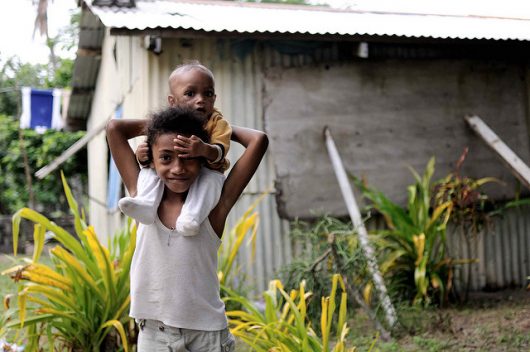
As of 2016, Fiji, a country in Oceania, consists of more than 300 islands and is home to more than 915,000 people. Hunger in Fiji is one of the nation’s leading problems, posing a threat to the large population. Here are five facts about hunger in Fiji.

Hunger in Fiji

  1. According to Half United, an organization committed to fighting hunger in many countries, more than 250,000 people live in poverty. This number equates to one in every four people struggling to put food on the table.
  2. More than 50 percent of the population has access to safe drinking water, and even fewer have access to adequate sanitation. Conditions have advanced, as more than 95 percent of the total population has reportedly experienced improved drinking water sources and more than 91 percent of the total population has seen improved sanitation facility access.
  3. The strongest tropical cyclone hit Fiji in February 2016, killing 43 people and causing a national emergency. The cyclone resulted in the washing away of crops and left thousands of residents homeless. With such detrimental effects, Cyclone Winston has contributed significantly to hunger in Fiji.
  4. According to a UNICEF report, under-five malnutrition exists as an “indicator of poverty and hunger.” The rate of undernourished children in Fiji has declined from 15 percent in 1980 to six percent in 2009. Reducing the prevalence of under-five malnutrition remains a priority of the government in order to eradicate poverty and hunger in Fiji.
  5. Young girls are nearly twice as likely to be stunted as boys as a consequence of long-term insufficient nutrient intake. Stunting is defined as low height for age and often results in delayed motor development, impaired cognitive function and poor school performance.

Poverty and hunger continue to affect the people of Fiji, but fortunately, organizations such as The World Food Programme (WFP) and Half United provide vulnerable families with the necessary assistance and resources to get back on their feet.

– Mikaela Frigillana

Photo: Flickr

April 15, 2017
https://borgenproject.org/wp-content/uploads/borgen-project-logo.svg 0 0 Borgen Project https://borgenproject.org/wp-content/uploads/borgen-project-logo.svg Borgen Project2017-04-15 01:30:252024-12-13 17:57:49Five Facts About Hunger in Fiji
Global Poverty, Hunger, United Nations

Incrementally Changing Hunger in Uruguay


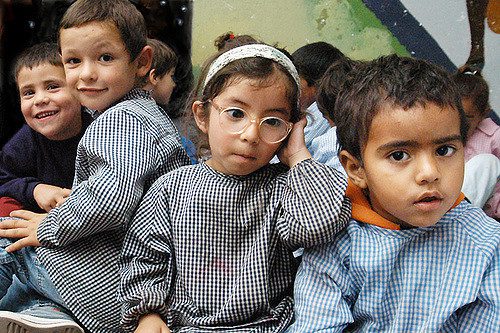
In recent decades, Uruguay has taken strides to eliminate poverty and the prevalence of hunger. Only 3.3 percent of the country’s population was considered undernourished in 2016. Only 1.3 percent of children under the age of five experienced wasting conditions. The elimination of hunger in Uruguay can be attributed to both broad changes in infrastructure and the contributions of nonprofit organizations.

How Uruguay is Successfully Addressing Hunger

Uruguay succeeded in meeting the first U.N. Millennium Development Goal, known as the “Zero Hunger Challenge” in 2013. The country achieved this goal two years ahead of schedule.

The government’s success in its social policies against poverty has received international attention. The U.N.’s Food and Agricultural Organization (FAO) especially praised the implementation of monthly income subsidies. Households classified as “vulnerable” receive a monthly income subsidy of 700 Uruguayan pesos. “Highly vulnerable” families receive twice that amount.

As an outcome, moderate poverty decreased from 32.5 percent in 2006 to 9.7 percent in 2015. Additionally, extreme poverty decreased from 2.5 percent to 0.3 percent in the same period.

Alongside broad government initiatives to eliminate poverty in general, a number of small-scale nonprofit organizations have arisen in recent years. Many share the goal of eliminating residual hunger in Uruguay.

Niños con Alas, or Children with Wings, works specifically to improve the infrastructure of Uruguayan schools. The organization provides schools with staple pantry products like flour, sugar, rice, cornmeal, tomato pulp, oil, noodles, milk powder and minced meat on a weekly basis. Through its contributions, Niños con Alas supplies three meals a day for more than 1,000 children.

Argentine national Santiago Abdala created Uruguay’s Banco de Alimentos, in 2012. Originally operating from Santiago’s home, the food bank now delivers food to more than 45 charities and helps feed more than 7,000 individuals. Banco de Alimentos is supported by the Global Food Banking Network and partnerships with international companies like Unilever.

Overall, the Uruguayan government and charitable nonprofit organizations have provided the people with options in terms of hunger. The defeat of hunger in Uruguay sets a good example for countries all over the world looking to meet the Millennium Development Goals.

– Casie Wilson

Photo: Flickr

April 15, 2017
https://borgenproject.org/wp-content/uploads/borgen-project-logo.svg 0 0 Borgen Project https://borgenproject.org/wp-content/uploads/borgen-project-logo.svg Borgen Project2017-04-15 01:30:202024-12-13 17:57:46Incrementally Changing Hunger in Uruguay
Global Poverty, Hunger

Drought and Famine in Somalia

Famine is looming in Somalia and intergovernmental organizations are preparing to respond. According to the World Food Programme of the United Nations (U.N.), about half of Somalia’s population is affected by the drought and a quarter of the population needs urgent assistance.

Somalia has faced a drought since August 2015. The U.N. announced a risk of near-future famine in Somalia in early February. The U.N. appealed for 864 million dollars to help more than three million people in Somalia, and the U.N. Food Programme has a 26 million dollar plan to respond to the drought. Currently, the World Food Programme offers rapid emergency response, nutritional meals and vocational training, among other crucial services to Somalia.

The U.N. is not the only major non-governmental organization concerned about the possibility of famine. The European Commission’s Joint Research Centre and the Famine Early Warning Systems Network created a report with the U.N. Food and Agriculture Organization and the U.N. Food Programme to express risk of famine.

This is not the first time that Somalia has faced famine. When the country had a famine from 2011 to mid-2012, more than 250,000 people died. This famine resulted from a drought that began in October 2010. Philippe Lazzarini, the U.N. Humanitarian Coordinator for Somalia, said that more could have been done sooner to prevent these deaths. By the time the U.N. declared a famine based on the Integrated Food Security Phase Classification, many people had already died.

In addition to the famine in Somalia, there are also looming famines in South Sudan, Nigeria and Yemen. There are more than 20 million people affected by food insecurity in all of these countries combined. The U.N. needs 4.4 billion dollars by March to address the problem and the World Food Program needs 1.2 billion dollars of those funds to aid these four countries for the next five months.

Early intervention is necessary to avert the famine in Somalia and in nearby countries.

– Jennifer Taggart

Photo: Flickr

April 10, 2017
https://borgenproject.org/wp-content/uploads/borgen-project-logo.svg 0 0 Borgen Project https://borgenproject.org/wp-content/uploads/borgen-project-logo.svg Borgen Project2017-04-10 01:30:262024-12-13 17:56:44Drought and Famine in Somalia
Global Poverty, Hunger

10 Facts About Hunger in Sierra Leone

Hunger in Sierra Leone
The West African country of Sierra Leone is home to some of the greatest diamond, gold, and titanium mines in the world. Despite this natural wealth, however, more than half of Sierra Leone’s people live below the poverty line. Here are 10 facts about hunger in Sierra Leone:

  1. There are more than 6.4 million people living in Sierra Leone, 52.9 percent of whom live below the national poverty line.
  2. Malnutrition is the greatest cause of child mortality in Sierra Leone, accounting for nearly half of all child deaths. Almost one-third of children under five are chronically malnourished.
  3. Roughly 60 percent of the population lives in rural areas, the majority of whom rely on subsistence agriculture for their livelihoods.
  4. Agriculture, however, has faced many challenges in recent years due to lack of equipment, poor quality seeds, deforestation and climate change. Rice production has declined so significantly that only four percent of farmers produce enough to meet their needs.
  5. Due to these agricultural struggles, the country now imports large amounts of food. Between $200 and $300 million is spent each year importing rice alone, harming local agriculture and increasing the country’s vulnerability to global price fluctuations.
  6. Economic development halted between 1991 and 2001 due to a civil war. This has had lasting impacts on the country’s economy, as approximately 1.5 million people were forced to leave their homes and livelihoods.
  7. The Ebola outbreak also worsened hunger in Sierra Leone. Approximately 280,000 people were made food-insecure due to the disease.
  8. In order to encourage young people to attend school, and to increase the education that is vital to rebuilding the country post-war, many primary schools offer feeding programs.
  9. In areas of the country where agriculture is still not providing enough food to feed the villages, food-for-work and food-for-training programs are in place to help support people as the country’s infrastructure is rebuilt.
  10. The World Food Programme runs a number of programs in order to combat hunger in Sierra Leone. Among them is a supplementary feeding program in order to treat malnutrition in lactating mothers and children under five.

While the country is still struggling to rebuild its economy after repeated crises, progress has been made. Numerous programs have been put in place that are making a significant impact in the fight against hunger in Sierra Leone.

– Alexi Worley

Photo: Flickr

April 9, 2017
https://borgenproject.org/wp-content/uploads/borgen-project-logo.svg 0 0 Borgen Project https://borgenproject.org/wp-content/uploads/borgen-project-logo.svg Borgen Project2017-04-09 01:30:522020-05-01 12:44:3710 Facts About Hunger in Sierra Leone
Global Poverty, Hunger

Understanding Hunger in Swaziland


Southern Africa is currently undergoing a severe drought, induced by a climate cycle in the Pacific Ocean commonly referred to as El Nino. In addition to Southern Africa, several other countries in the region are also experiencing increased food insecurity. In mid-2016, the World Food Programme (WFP) categorized the Southern Africa region as a Level Three Corporate Response – the highest level of emergency. Currently, about 16 million people in the region need emergency humanitarian assistance. Swaziland is one of the countries of concern in the region, especially since it already faces numerous challenges, including poverty, chronic food insecurity, HIV/AIDS and an erratic climate.

Poverty and Hunger in Swaziland

Swaziland is a small landlocked nation, bordered by South Africa and Mozambique, and has a population of 1.2 million. It is a predominantly rural society, with most of the population dependent on subsistence farming for their livelihoods. Maize is the main crop, grown by over 80 percent of farming households.

Poverty is prevalent in Swaziland, with 42 percent of the population living below the income poverty line of $1.90 a day. This is an especially troubling figure in times of food shortages because the poor cannot afford to buy food. Swaziland is a net importer of food and is vulnerable to food price increases in the rest of the region.

As a result, the poor have had to adopt coping strategies like limiting portions, reducing meals, borrowing food and limiting the types of food they eat. Chronic malnutrition is one of the greatest nutritional concerns and presents a major developmental challenge in Swaziland. One in every four children in Swaziland suffers from stunted growth as a result of malnutrition.

HIV/AIDS

Swaziland has a high prevalence of HIV/AIDS, with 26 percent of adults infected. The health of people living with HIV is particularly concerning. The disease disproportionately affects main income earners and caregivers. These households are more vulnerable to drops in food production or rising food prices because their income and productivity levels are already lower due to HIV.

Erratic Climate

Swaziland regularly experiences erratic rainfall, recurrent droughts and soil degradation, all of which adversely impact food security. Since 2014, the cropping seasons in Swaziland have been characterized by prolonged dry spells which result in widespread crop losses and reduced yields. The last few years have seen some of the worst maize production on record. The WFP estimates that nearly half the population will face some food insecurity in 2017, while 350,000 people will need urgent food assistance.

These interrelated challenges all contribute to high levels of hunger in Swaziland.

– Helena Kamper

Photo: Flickr

April 3, 2017
https://borgenproject.org/wp-content/uploads/borgen-project-logo.svg 0 0 Borgen Project https://borgenproject.org/wp-content/uploads/borgen-project-logo.svg Borgen Project2017-04-03 01:30:452024-12-13 17:56:46Understanding Hunger in Swaziland
Global Poverty, Hunger

Five Facts About Hunger in Rwanda


Rwanda is one of the smallest countries on the African continent. The country is known for many achievements such as being one of the only nations to have a majority of females in the national parliament and making solid progress in reducing political corruption. Despite these milestones, the country also faces rampant hunger. Most of the population of Rwanda lives in rural areas and depends on agriculture for food. Here are five facts about hunger in Rwanda:

Top Facts about Poverty in Rwanda

  1. Low crop yield is not the only factor contributing to hunger in Rwanda. Lack of access to safe drinking water also leads to malnutrition. To help remedy this problem, the Japanese government donated more than $147,000 to two Rwandan anti-hunger organizations to be used to improve water sources.
  2. Rwanda, along with countries such as Cambodia and Myanmar, has made the most progress in alleviating hunger between the years 2000 and 2016. The Global Hunger Index estimates that hunger in Rwanda dropped from 58% to 27% during those years.
  3. Although hunger in Rwanda has been steadily decreasing, there is still plenty of work to be done. In 2015, the World Food Programme estimated that up to 40% of Rwandan children still do not receive the proper nutritional care they need to become successful later in life.
  4. Violent political conflicts in eastern Congo drive many Congolese people to take refuge within the borders of Rwanda, but often these refugees also face hunger in their new homes. In 2016, Congolese refugees in Rwanda complained that U.N. rations made them sick and many starved with few other choices in terms of food.
  5. Another factor that contributed to the presence of hunger in Rwanda was the 1994 Rwandan genocide. The violent conflict between the Hutu and Tutsi people of Rwanda interrupted many farmers’ planting and harvesting routines, causing thousands of people to go hungry.

– Mary Grace Costa

Photo: Flickr

April 3, 2017
https://borgenproject.org/wp-content/uploads/borgen-project-logo.svg 0 0 Borgen Project https://borgenproject.org/wp-content/uploads/borgen-project-logo.svg Borgen Project2017-04-03 01:30:322024-12-13 17:57:42Five Facts About Hunger in Rwanda
Global Poverty, Hunger

WhatsApp Groups Address Food Crisis in Somalia


A food crisis in Somalia has its citizens on the brink of another famine. Waiting on international or government aid is a slow process, so Somalis are turning to each other for support. “Combining 21st-century social media with the age-old clan network, the bedrock of Somali society as well as its safety net,” as Ben Quinn from the Guardian puts it, communities of Somalis around the world are using WhatsApp to sponsor families affected by food insecurity.

Humanitarian organizations like the U.N. have warned that 6.2 million Somalis are on the verge of famine, but foreign aid has been slow coming. Saad Ali Shire, the foreign minister of the Republic of Somaliland, says that Somalia needs immediate aid in the form of life-saving supplies in the next two to three weeks to avoid a declared famine.

Aid organizations are trying to prevent a repeat of the famine that killed 260,000 Somalis between 2010 and 2012. Britain’s Department for International Development gave £100 million to Somalia, but the money only covers a small fraction of the need.

With the response to the food crisis in Somalia lagging, networks around the world are turning to social media to support people in need of life-saving aid. Users of WhatsApp are forming groups and pooling their resources to sponsor Somali families. The groups figure out how much aid they can provide based on the formula that says families can survive on $60 per month.

The group then deposits money into a Dahabshiil bank account. Dahabshiil is an African international funds transfer company that started in 1970. The company was initially set up so that migrants from countries in East Africa could send money back to their family and friends still living there. Dahabshiil now allows groups like the Somali clans to transfer funds during crises in addition to offering banking services to the World Bank, Oxfam, the U.N. and Save the Children.

After WhatsApp groups deposit money into a Dahabshiil account, they nominate a five-person committee to withdraw the money and buy supplies for families — usually powdered milk, rice and water.

The network is growing every day, and members are primarily of the Somali diaspora. Forty-five thousand people in Canada identify their ethnic origin as Somali, and tens of thousands of people in Minnesota are also a part of the Somali network addressing the food crisis in Somalia.

The WhatsApp network is a tremendous start, but some smaller Somali groups are struggling to provide aid of their own resources and are turning to aid agencies for financial support. While prominent humanitarian organizations are doing their best to give aid, the process is slow-moving in a time of urgent need.

How to donate: Ocha, World Vision, MSF, Concern, WFP.

– Rachel Cooper

Photo: Flickr

April 3, 2017
https://borgenproject.org/wp-content/uploads/borgen-project-logo.svg 0 0 Borgen Project https://borgenproject.org/wp-content/uploads/borgen-project-logo.svg Borgen Project2017-04-03 01:30:322024-06-04 01:08:19WhatsApp Groups Address Food Crisis in Somalia
Global Poverty, Hunger

What Is the Definition of Hunger?


For most, hunger is a nagging rumble in one’s stomach that signals lunch or dinnertime. However, for millions of people worldwide, the definition of hunger is a persistent state of physical and psychological harm caused by a lack of nutritional and economic resources.

Characteristics of Hunger

On a global scale, the simplest definition of hunger is a scarcity of food in a country. This occurs when the population of a country quite literally does not have enough to eat. In most developed countries, only a relatively small percentage of citizens suffer from hunger. However, in poorer developing countries this portion of the population can be as high as 73 percent. In fact, almost 98 percent of world hunger happens in underdeveloped countries.

On an individual scale, hunger occurs when a person consumes an insufficient amount of calories to sustain them, called malnourishment. When a person has an insufficient amount of the right kinds of foods to keep them healthy it is malnutrition. In most countries where hunger is a significant social and economic problem, both malnourishment and malnutrition are common. Poverty is the number one cause of hunger since it results in a lack of ability to buy food and pay for the expansion of agricultural programs.

Another definition of hunger involves the mental uncertainty of future access to food; in other words, not knowing where the next meal is coming from. The technical term for this phenomenon is food insecurity. Many organizations working to end hunger, such as Bread.org, seek to achieve the goal of global food security. The World Food Summit defined this as when “all people at all times have access to sufficient safe and nutritious food for an active and healthy life.”

The costs of hunger are far-reaching and have long-term negative impacts on populations. Those who suffer from hunger are more susceptible to illnesses. Children who face malnutrition during their first two years of life experience lifelong consequences. If nutritional needs are not met during this key window of roughly 1,000 days between conception and age two, stunted growth and learning impairments develop.

Hunger Prevention Efforts

Fortunately, great strides have been made to end world hunger. The Millennium Development Goals program was successful in cutting malnourishment in 72 out of 129 countries by half. The current Global Goals for Sustainable Development campaign, which launched in 2016 and is comprised of 193 different world leaders, seeks to provide food security for the remaining estimated 795 million people still suffering from hunger by 2030.

– Dan Krajewski

Photo: Flickr

April 2, 2017
https://borgenproject.org/wp-content/uploads/borgen-project-logo.svg 0 0 Borgen Project https://borgenproject.org/wp-content/uploads/borgen-project-logo.svg Borgen Project2017-04-02 01:30:122020-04-28 14:59:21What Is the Definition of Hunger?
Global Poverty, Hunger, United Nations

10 Facts About Starvation in Africa

Starvation in Africa
In March 2017, the United Nations (U.N.) warned that some 20 million people in South Sudan, Somalia, Nigeria and Yemen face starvation and famine if the international community did not act quickly. This warning refocused attention on the ongoing food insecurity faced throughout the African continent. While the issue is completely preventable, starvation in Africa still exists.

Facts about Starvation in Africa:

    1. According to the Food and Agricultural Organization of the U.N., some 153 million people (about 26 percent of the adult population) suffered from severe food insecurity in 2014/15 in sub-Saharan Africa.
    2. Food insecurity exists when people do not have adequate access to sufficient, safe and nutritious food which meets their needs for an active and healthy life. The issue is thus not the existence of enough food, but the access to food.
    3. There are various interrelated reasons why African states are vulnerable to food insecurity. Several countries in the region remain highly dependent on food imports to ensure adequate food supplies. Thus exposing them to unstable food markets and commodity prices. The African region also has the lowest per capita income in the world and the highest poverty levels. This means that large parts of the region’s populations are unable to cope with rising food prices.
    4. The majority of Africans are also directly dependent on subsistence farming on a continent that is prone to extreme natural disasters, including severe drought and floods. These natural disasters lead to failed crops, as well as insufficient pasture feed and water for livestock. The current El Nino drought has been one of the most intense and widespread in the past 100 years.
    5. The majority of African countries facing acute food insecurities are also experiencing internal conflict. This impedes both access to food and food production. The levels of political instability and corruption result in these states being unable to address food crises, whether caused by rising food prices or natural disasters.
    6. Food insecurity in South Sudan has reached extreme levels. Several parts of the country declared pockets of famine, and nearly 100,000 people face starvation. Limited humanitarian assistance has reached these regions because of recurrent fighting due to civil war.
    7. A famine can only be declared when certain measures of mortality, malnutrition and hunger are met. Namely, at least 20 percent of households in an area face extreme food shortages with a limited ability to cope, acute malnutrition exceeds 30 percent, and the death rate exceeds two per 10,000 people per day. The last famine in Africa was in Somalia in 2011, which killed an estimated 260,000 people.
    8. Apart from the three countries highlighted by the U.N., several other African countries are facing acute levels of food insecurity. The World Food Programme classified emergency situations in the Lake Chad Basin (Cameroon, Chad, Niger, including Nigeria) and Southern Africa (Lesotho, Madagascar, Malawi, Mozambique, Swaziland, Zambia and Zimbabwe).
    9. The Lake Chad Basin faces an acute humanitarian crisis caused by existing challenges of extreme poverty, underdevelopment and climate change. Boko Haram violence only aggravates these challenges. Some 7.1 million people need food assistance, and famine looms in the areas most affected by the crisis in northeast Nigeria. Malnutrition in the region is rising at alarming rates, and more than half a million children are suffering from severe acute malnutrition.
    10. While the situation in southern Africa has stabilized somewhat in recent months, food insecurity remains widespread following two years of consecutive drought. Some 16 million people in the countries worst-hit by drought will need emergency humanitarian assistance throughout early 2017.

The current levels of food insecurity and starvation in Africa are bleak. Humanitarian assistance is sorely needed to address the food crises in the hardest hit areas. While this would help to address the crisis in the short-term, more attention should also be given to long-term peace-building and food security efforts on the continent to prevent the recurrence of famine.

– Helena Kamper

Photo: Flickr

April 2, 2017
https://borgenproject.org/wp-content/uploads/borgen-project-logo.svg 0 0 Borgen Project https://borgenproject.org/wp-content/uploads/borgen-project-logo.svg Borgen Project2017-04-02 01:30:062024-12-13 17:57:4310 Facts About Starvation in Africa
Global Poverty, Hunger

Lack of Infrastructure Compounds Hunger in Djibouti


Djibouti is a small country on the Horn of Africa, in which more than 23 percent of the population lives in extreme poverty. The prevalence of extreme poverty in the Republic of Djibouti is more than seven times higher in rural areas than in the capital, despite rural inhabitants only comprising one-fourth of the total population. These disparities result in a large prevalence of hunger in Djibouti.

An Absence of Agriculture

While a majority of civil strife in Djibouti has been resolved since 2001, a large proportion of the population still experiences the effects of the former social instability. During the recovery period, the rural population often depended almost entirely on emergency food aid, with little emphasis on rebuilding infrastructure. Poor rural Djiboutians lack access to reliable financial services, which are needed for more lucrative business opportunities outside the agricultural field.

With less than 1,000 square kilometers suitable for farming,  Djibouti has a chronic food deficit. Agricultural production accounts for only three percent of Gross Domestic Product (GDP), so Djibouti imports 90 percent of its food commodities.

This reliance means it is highly sensitive to external economic disruptions and natural disasters such as floods and droughts. Any variation in the international prices has a considerable impact on the poorest segment of the population, who spend 77 percent of their household budget on imported food.

Lack of access to affordable food correlates with high rates of malnutrition in Djiboutian children, currently affecting 29.7 percent of children under five.

Collaborative Solutions

The World Bank’s 2014-2017 Country Partnership Strategy marks a collaboration between the International Development Association (IDA), International Finance Corporation (IFC) and the Multilateral Investment Guarantee Agency (MIGA). The strategy supports the government’s goal to reduce extreme poverty by 2035. The strategy will also build the infrastructure to benefit all members of the population through harnessing the country’s human and economic potential by reducing vulnerability and strengthening the business environment.

By improving long-term infrastructure and opening markets for poor rural communities, rural citizens may eventually escape poverty and subsequently hunger in Djibouti.

– Casie Wilson

Photo: Flickr

April 1, 2017
https://borgenproject.org/wp-content/uploads/borgen-project-logo.svg 0 0 Borgen Project https://borgenproject.org/wp-content/uploads/borgen-project-logo.svg Borgen Project2017-04-01 01:30:372020-04-28 14:19:16Lack of Infrastructure Compounds Hunger in Djibouti
Page 55 of 71«‹5354555657›»

Get Smarter

  • Global Poverty 101
  • Global Poverty… The Good News
  • Global Poverty & U.S. Jobs
  • Global Poverty and National Security
  • Innovative Solutions to Poverty
  • Global Poverty & Aid FAQ’s
Search Search

Take Action

  • Call Congress
  • Email Congress
  • Donate
  • 30 Ways to Help
  • Volunteer Ops
  • Internships
  • Courses & Certificates
  • The Podcast
Borgen Project

“The Borgen Project is an incredible nonprofit organization that is addressing poverty and hunger and working towards ending them.”

-The Huffington Post

Inside The Borgen Project

  • Contact
  • About
  • Financials
  • President
  • Board of Directors
  • Board of Advisors

International Links

  • UK Email Parliament
  • UK Donate
  • Canada Email Parliament

Get Smarter

  • Global Poverty 101
  • Global Poverty… The Good News
  • Global Poverty & U.S. Jobs
  • Global Poverty and National Security
  • Innovative Solutions to Poverty
  • Global Poverty & Aid FAQ’s

Ways to Help

  • Call Congress
  • Email Congress
  • Donate
  • 30 Ways to Help
  • Volunteer Ops
  • Internships
  • Courses & Certificates
  • The Podcast
Scroll to top Scroll to top Scroll to top