• Link to X
  • Link to Facebook
  • Link to Instagram
  • Link to TikTok
  • Link to Youtube
  • About
    • About Us
      • President
      • Board of Directors
      • Board of Advisors
      • Financials
      • Our Methodology
      • Success Tracker
      • Contact
  • Act Now
    • 30 Ways to Help
      • Email Congress
      • Call Congress
      • Volunteer
      • Courses & Certificates
      • Be a Donor
    • Internships
      • In-Office Internships
      • Remote Internships
    • Legislation
      • Politics 101
  • The Blog
  • The Podcast
  • Magazine
  • Donate
  • Click to open the search input field Click to open the search input field Search
  • Menu Menu

Archive for category: Hunger

Global Poverty, Hunger, War and Violence

Italy Helps Fight Hunger in Ukraine With Donation of €1 Million


Amidst facing a humanitarian crisis and lack of mine regulations, Ukraine received aid totaling one million euros from Italy through the World Food Programme (WFP) and UNICEF to help those impacted by the actions in Eastern Ukraine in 2017. The donation will help the WFP provide basic necessities and humanitarian assistance Ukrainians need to combat hunger, while also fighting against their own government and people.

Among a population of 45.2 million, more than 4.4 million Ukrainians have been impacted, and more than 3.8 million still need humanitarian assistance.

Who the Donation Will Help Most

“Our contribution to WFP and UNICEF operations will help ease people’s suffering, in particular for the most vulnerable, providing food assistance, increasing knowledge and building safe behaviour practices to deal with the risk of mines,” said Davide La Cecilia, the Italian Ambassador to Ukraine in a press release published by the WFP.

Thanks to Italy’s donation, UNICEF will help protect 500,000 children and their guardians from the dangers in mines by supporting the mine risk education program.

The WFP plans to help those who do not receive assistance from other humanitarian actors and further small-scale recovery activities, such as providing food, to aid local citizens. UNICEF will use the funding to promote children’s education programs and for families living in areas close to the contact line, which divides the government and non-government controlled areas and where the fighting is most intense.

Giancarlo Stopponi, WFP deputy country director in Ukraine, said, “WFP greatly appreciates Italy’s support at a time when communities across Ukraine continue to experience the negative consequences of the conflict.”

The WFP has been aiding those experiencing hunger in Ukraine since 2014 by providing emergency food services to internally displaced citizens in Eastern Ukraine, handing out monthly food packages and food assistance. To this day, about 850,000 of most Eastern Ukraine’s most vulnerable people have received food from WFP, despite attempts to bar humanitarian staff.

Ongoing Efforts to Battle Hunger

The program plans to continue its efforts, aiming to assist 220,000 citizens in Eastern Ukraine. These people both rely on and need WFP’s food assistance, along with their other operations, such as the Logistic Cluster Support to the Humanitarian Response in Ukraine.

In 2017, UNICEF has appealed to the U.S. for $31.3 million to be used towards combatting hunger in Ukraine. The money will be used for health and nutrition needs, education, water, hygiene and sanitation, and protection for those most vulnerable to the conflict, such as children and families.

– Mary Waller

Photo: Flickr

March 31, 2017
https://borgenproject.org/wp-content/uploads/borgen-project-logo.svg 0 0 Borgen Project https://borgenproject.org/wp-content/uploads/borgen-project-logo.svg Borgen Project2017-03-31 01:30:072024-12-13 17:57:38Italy Helps Fight Hunger in Ukraine With Donation of €1 Million
Global Poverty, Hunger, War and Violence

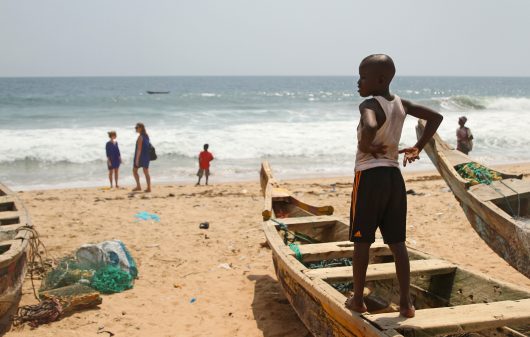
The Battle Against Hunger in Côte d’Ivoire

Hunger in Côte d’Ivoire
Côte d’Ivoire continues to experience aftershocks of the military coup in December 1999, which turned into an all-out civil war in 2002, leading to the creation of a North and South Côte d’Ivoire. This resolution was supposed to be disbanded in 2010, but there was a conflict over the results of the election for the new leader of the unified government, complicating the transition of power. This threw the country into another five months of the war. The political unrest in Côte d’Ivoire has created widespread economic instability and food security issues.

Following the conflicts in 2011, President Alassane Ouattara adopted the National Agricultural Investment Program (PNIA), and the National Development Plan (PND) in an effort to alleviate the widespread hunger in Côte d’Ivoire, as well as to repair social relations between the polarized country. The country is ushering into a new era of human rights, job creation, availability of social services, sustainable resource consumption and poverty reduction. This new phase, which will run until 2021, and is focused on decoupling agriculture from deforestation by using more sustainable farming methods, is projected to create 400,000 jobs. This shows that the aid given will cultivate lasting economic growth for the country.

Unfortunately, despite all the positive forward momentum in the government, Côte d’Ivoire still ranks in the bottom tenth percentile of the United Nations Development Programs Human Development Index. Twenty-three percent of the population lives below $1.25 per day. Primary school enrollment is at 50 percent. And there is still widespread hunger in Cote d’Ivoire, with 13.3 percent of the population experiencing undernourishment in 2016, and 30 percent of children under 5 years old experiencing growth stunting. The country received a global Hunger Index Score of 25.7 out of 100 in 2016.

So what’s being done about it? The World Food Program opened up a Protracted Relief and Recovery Operation to save lives and combat hunger in Côte d’Ivoire. The program has opened a school breakfast program that has fed 571,000 children. Action Against Hunger (ACF) has also started a program that has successfully provided food to 792,688 people and helped 848,698 people gain access to safe water and sanitation.

Difficulties for the future will depend on the influx of foreign aid to sustain these development projects. However, it is clear that Côte d’Ivoire is on the right track. It has reached a period of stability and has been able to focus inward on lowering hunger in Côte d’Ivoire and raising the quality of life. Things look bright for the country’s future.

– Joshua Ward

Photo: Flickr

March 31, 2017
https://borgenproject.org/wp-content/uploads/borgen-project-logo.svg 0 0 Borgen Project https://borgenproject.org/wp-content/uploads/borgen-project-logo.svg Borgen Project2017-03-31 01:30:062024-12-13 17:56:40The Battle Against Hunger in Côte d’Ivoire
Global Poverty, Hunger

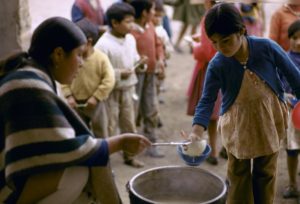
Hunger in Ecuador — Assistance is Still Needed

Hunger in EcuadorEcuador, a country in Latin America with a population of 18.4 million, is classified as an upper-middle-income country. However, one in three children in Ecuador is malnourished, the second-highest rate in the region.

Ecuador’s Hunger Crisis

  • Poverty– According to the latest statistics, Ecuador has made progress in reducing the poverty rate, which has decreased to 26% in recent years. However, it is still high in rural areas, with 40% of people living below the poverty line. The high levels of poverty in the country have led to a surge in crime and violence, as many young adults see crime as their only way out of poverty. 
  • Effects on Children– The alarming prevalence (14%) of malnourishment in the population has resulted in a concerning 23% of children under the age of 5 experiencing stunted growth. This condition has a detrimental impact on the learning and cognitive development of nearly one in five of these children, posing a significant threat to their overall well-being and future prospects. 
  • Worsening Food Insecurity– Food insecurity has increased in recent years, rising from around 20% before the pandemic to 33% in 2020. This is due to the global economic crisis, the influx of refugees from Venezuela and Colombia, natural disasters, food waste and the worsening security situation in the country. Around 900,000 tons of food is wasted or lost annually. The government passed a law recently to ensure safe-to-eat food is donated at designated places and incentives in the form of tax deductions, etc, are provided to the donors.  

Efforts Underway

The World Food Programme (WFP) provides food assistance to around 300,000 people. The organization is also working in collaboration with the government to end malnutrition by focusing on pregnant and breastfeeding women and children under 2 to help reduce malnutrition and stunting in the population. The WFP is actively engaged in strengthening the capabilities of governmental institutions, equipping them with advanced tools and expertise to combat the ongoing crisis effectively.

In addition to the WFP’s efforts, Tetra Pak and the Ministry of Education have launched a collaborative pilot program to provide schoolchildren in targeted regions with 200 ml of nutritious milk daily, five days a week. The program’s goal was to combat malnutrition and reduce school dropouts. Following its success, the program has been formalized into legislation and implemented nationwide.  

Looking Ahead

Despite all efforts, Ecuador still faces immense challenges in reducing hunger, food insecurity and malnutrition. The international focus and assistance on Ecuador have decreased recently because it is an upper-middle-income country, further exacerbating the problems. The need of the hour is to assist Ecuador in dealing with these issues by providing aid and assistance and helping it achieve Sustainable Development Goal 2 of zero hunger. 

– Dustin Jayroe
Photo: Flickr
Updated: October 1, 2024

March 29, 2017
https://borgenproject.org/wp-content/uploads/borgen-project-logo.svg 0 0 Borgen Project https://borgenproject.org/wp-content/uploads/borgen-project-logo.svg Borgen Project2017-03-29 01:30:132024-10-02 03:52:07Hunger in Ecuador — Assistance is Still Needed
Global Poverty, Hunger

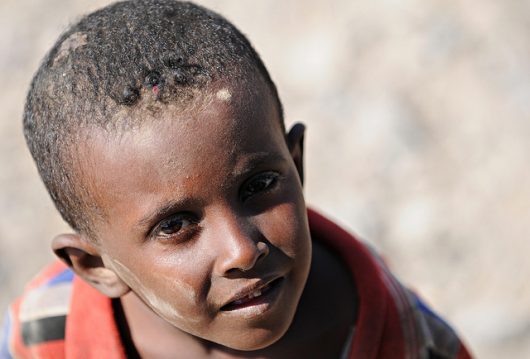
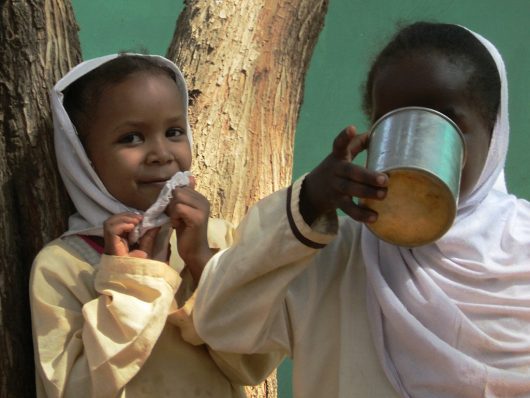
Hunger in Sudan


Famine has been officially declared as people are dying from hunger in Sudan. The United Nations has said the situation is “desperate” in the Southern state.

Nearly 100,000 people are facing famine so serious that they are at risk of dying in the Southern Unity State of the country. One million people are currently on the border of famine and almost five million are in need of some type of humanitarian aid.

On February 22, 2017, the United Nations spoke out about the rising crisis of hunger in Sudan is leading to rising deaths. Five million South Sudanese do not have an adequate amount of food and that number is expected to rise. Over one million of those are severely malnourished children who are at immediate risk of dying.

South Sudan is a country of around 12 million people in Northern Africa. Around 80 percent of the country’s population lives in rural areas, with more than 30 percent of the children under the age of five being undernourished. The average life expectancy is 55.7 years.

South Sudan became an independent nation from the Republic of Sudan in 2011 but has faced a civil war since 2013 that continues to this day. Many aid workers in the country have faced violence because of the ongoing war, with some even having been forced to leave the country.

The United Nations and its humanitarian partner organizations want to assist nearly six million people in 2017 in South Sudan, as well as other countries struggling with the same crises. The situation is expected to get worse in the coming months, due to the height of the lean season, if something is not done immediately. Emphasis has been placed on the fact that these types of issues are stemming from disputes, therefore they are preventable.

Some organizations working to provide aid for hunger in Sudan are UNICEF (The United Nations International Children’s Fund), FAO (The Food and Agriculture Organization of the United Nations), Action Against Hunger, and WFP (The World Food Programme). These organizations work to provide a variety of types of support to those who are affected. UNICEF, focusing specifically on children, is working to provide treatment for children facing extreme malnutrition. FAO is working to make food more secure and to increase incomes. Action Against Hunger is working to provide emergency care and treatment. WFP is working to provide nutritious school meals, general nutritional support and provides money transfers for displaced people in need of food.

– Shannon Elder

Photo: Flickr

March 29, 2017
https://borgenproject.org/wp-content/uploads/borgen-project-logo.svg 0 0 Borgen Project https://borgenproject.org/wp-content/uploads/borgen-project-logo.svg Borgen Project2017-03-29 01:30:032024-12-13 17:56:45Hunger in Sudan
Global Poverty, Hunger

Hunger In Laos

Hunger In Laos
Laos is a small country populated with mountains and more than 10,000 rural villages, situated on the Asian continent. It is not hard to understand why the people of Laos have a hard time with nourishment, as many of the rural villages lie in remote areas of the country that have trouble getting access to healthy food and clean water.

Hunger in Laos is a problem for the varied communities living in the country because of the threats it poses to health. While the country has worked on improving the state of malnourishment, the Global Hunger Index reports that the country has a high percentage of hungry people.

Facets of Hunger in Laos

The high level of hunger in Laos is attributed to factors like the lack of access to food sources and properly sanitized water. In fact, around one-fifth of the population of Laos consumes less than the minimum dietary requirements set by the United Nation’s Millennium Development Goals (MDG).

The U.N. reports that malnutrition in Laos illustrates the inequality in the country, especially when one takes into account the regions and groups who demonstrate the most need.

Rural communities are common in the mountainous regions, but the areas that lack road access are typically those hit hardest with hunger in Laos. Furthermore, many of these areas report children with stunted growth and insufficient weight gain, both common results from undernourished communities.

In conjunction with the U.N.’s MDGs, Laos has halved the proportion of hungry people living in the country. However, more than 11 percent of rural households still report a lack of food sources, resulting in poor consumption habits.

There is still hope. With help from the U.N., the government is steadily moving towards the goal of decreasing the percentage of people who experience hunger in Laos. In recent years, rapid economic growth and agricultural prosperity have had great effects on the population, contributing to the notable decrease in the proportion of undernourished people.

Success has been slow but is expected to increase. With help from the U.N. and programs like the National Zero Hunger Challenge, which works to end hunger, food insecurity and malnutrition, Laos can decrease the number of hungry people in the country and ensure the population is living a healthy lifestyle.

– Jacqueline Nicole Artz

Photo: Flickr

March 28, 2017
https://borgenproject.org/wp-content/uploads/borgen-project-logo.svg 0 0 Borgen Project https://borgenproject.org/wp-content/uploads/borgen-project-logo.svg Borgen Project2017-03-28 12:34:222024-12-13 17:57:43Hunger In Laos
Global Poverty, Hunger

Combating Hunger in Comoros


The issues of malnutrition and hunger in Comoros have posed problems for the population since the country gained independence in 1975. Since then, the country has faced political instability. According to BBC News, more than 20 attempted coups have occurred on the islands of Comoros, adding to the effect of hunger and poverty on the island. Today, the government is trying to help the population improve on these fronts.

In 2013, the Global Hunger Index reported that Comoros was one of nineteen countries that had alarming levels of hunger. In fact, close to half of the population of children living in Comoros suffers from severe malnutrition.

This is completely unacceptable – thankfully, the government of Comoros has taken strides to improve the state of hunger in Comoros.

Educational Efforts to Combat Hunger

UNICEF reports that, “Lack of knowledge is one of the most important reasons for malnutrition in Comoros,” meaning that it is necessary for the population to learn how they can prevent hunger by choosing the right foods and gaining access to a larger food source, if possible.

In fact, UNICEF’s program, titled Integrated Management of Childhood Illness (IMCI), serves to improve health systems and community practices in countries that need the most help in learning about how to combat hunger.

According to UNICEF, IMCI also works on improving the life expectancy of young children in Comoros by proving vaccination, a knowledge of better nutrition, and practices to protect from malaria. The program wants to help communities learn how to prevent hunger in Comoros (and other countries) so that the ratio of children who die from malnutrition can decrease.

As of now, one out of every four children suffers from malnutrition.

The soil is reportedly fertile, and a number of people are surviving and making a living off their land. Therefore, the presence of food doesn’t seem to be a problem, but the education about which foods and what amount of food are necessary for a child’s survival is pertinent to ending hunger in Comoros.

Alongside malnutrition, children often contract preventable diseases as a result of unsafe water and poor sanitation, such as diarrhea. This is another factor that must be addressed in order to improve the state of hunger in Comoros.

According to UNICEF, nearly 25 percent of children under five years of age are underweight as a result of hunger in Comoros. There is hope for a healthier future as the country and helpful organizations like UNICEF are seeking to improve the country’ state.

With increased education about how the population can improve on these fronts, Comoros will be able to report an increased survival rate and healthier children in the years to come.

– Jacqueline Nicole Artz

Photo: Flickr

March 23, 2017
https://borgenproject.org/wp-content/uploads/borgen-project-logo.svg 0 0 Borgen Project https://borgenproject.org/wp-content/uploads/borgen-project-logo.svg Borgen Project2017-03-23 11:44:212024-05-27 23:59:40Combating Hunger in Comoros
Global Poverty, Hunger

Obesity, Malnutrition and Hunger in Dominica

 Hunger in Dominica
With a GDP of nearly $5.2 million and a population of 72,680 people, the Commonwealth of Dominica is considered an upper-middle-income country, according to the World Bank.

While the average citizen does not regularly face hunger in Dominica, many still face malnutrition through the introduction of the Western diet. Approximately 55 percent of all foods consumed in Dominica are imported, which contributes to a calorically dense, yet nutritionally weak diet and increases in diet-related non-communicable diseases like obesity.

The World Health Organization (WHO) and local clinicians alike have identified obesity to be a persistent issue for the island country, with clinical data estimating 24.8 percent of adolescents to be overweight and 9.1 percent obese in 2016. The WHO has enlisted a series of nutritional initiatives and campaigns to reduce obesity through nutrition counseling and promotion of unprocessed foods.

Dominica is also especially susceptible to natural disasters due to its location in the Caribbean. Hurricanes and tropical storms can severely stunt the island nation’s food production, as seen in the aftermath of Tropical Storm Erika in 2015. The Agriculture Minister at the time, Johnson Drigo, reported over $200 million in damages to Dominica’s agricultural sector months after the tropical storm had passed.

The Food and Agriculture Organization (FAO) has contributed much to the literature surrounding nutrition security in Dominica, as well as measures to improve it. The FAO and the government of Dominica have agreed to collaborate over the 2016 to 2019 timeframe in three primary categories: food and nutrition security, agricultural health and food safety; risk management, building resilience to climate change; and sustainable rural agricultural development.

For instance, the FAO aids Dominica’s National School Feeding Program in connecting school lunch programs to local farms and improving nutrition education among students. The FAO also recognizes that domestic agriculture and fisheries production contributes significant food culture and nutrition value for the population.

When it comes to natural disaster relief, the FAO invests in the short-term, emergency recovery efforts of small farmers and supports long-term, emergency relief planning and agriculture disaster risk management.

While hunger in Dominica may not be the most pertinent issue in the country’s food security, the key to minimizing hunger, obesity and malnutrition alike may lie in improving sustainable nutrition development and in preserving and protecting local agriculture in light of natural disasters.

– Casie Wilson

Photo: Flickr

March 23, 2017
https://borgenproject.org/wp-content/uploads/borgen-project-logo.svg 0 0 Borgen Project https://borgenproject.org/wp-content/uploads/borgen-project-logo.svg Borgen Project2017-03-23 01:30:082024-12-13 17:57:40Obesity, Malnutrition and Hunger in Dominica
Developing Countries, Global Poverty, Hunger

20 Global Poverty Facts


Living in poverty is a reality that many across the world face every single day. Here are 20 global poverty facts to help better understand these realities.

  1. According to the U.N., there are around 836 million people living in extreme poverty worldwide.
  2. There are many people around the world living on the cusp of becoming impoverished.
  3. Millions of people live on just slightly over $1.25 each day.
  4. One in five people living throughout developing areas of the world lives on less than $1.25 a day. Those who are facing this reality mainly live in Southern Asia and sub-Saharan Africa.
  5. Poverty reduction has been focused on areas of Asia, with China having the most progress.
  6. Half of those who live in extreme poverty are in sub-Saharan Africa. This number is increasing.
  7. Out of all the undernourished people throughout the world, 98 percent are those living in developing countries.
  8. A majority of the poor around the globe live in rural areas. They are often employed in agriculture and have an inadequate education.
  9. Every day about 22,000 children die because of conditions due to poverty.
  10. Lack of resources, economic systems, hunger and conflict are some of the causes of poverty in different countries.
  11. Poverty is the leading cause of hunger.
  12. A growing world population makes it harder for every person to have access to an adequate standard of living.
  13. Climate change and natural disasters play a current and future role in poverty issues worldwide.
  14. Poverty increases the threat of violence and exploitation towards children.
  15. Poverty is not an issue that only affects developing nations. In the world’s richest countries, one out of four children is living in poverty.
  16. Social protection only reaches a third of the poorest people.
  17. Despite the work that still needs to be done, there has been progress in the reduction of world poverty. One billion fewer people are in extreme poverty compared to two decades ago.
  18. One of the goals the U.N. has set is to eradicate extreme poverty by 2030.
  19. Through all of the visions set by the U.N., they seek to “leave no one behind.”
  20. On a global scale, anyone who makes more than $34,000 annually is among the richest one percent in the world.

These 20 global poverty facts help to better understand the global situation facing us today. While there has been progress in global poverty reduction, many challenges still lie ahead.

– Shannon Elder

Photo: Flickr

March 20, 2017
https://borgenproject.org/wp-content/uploads/borgen-project-logo.svg 0 0 Borgen Project https://borgenproject.org/wp-content/uploads/borgen-project-logo.svg Borgen Project2017-03-20 01:30:092020-05-12 13:57:1820 Global Poverty Facts
Developing Countries, Global Poverty, Hunger

Is Hunger in San Marino a Problem?

Hunger in San MarinoThe Republic of San Marino is a high-income, landlocked microstate surrounded by Italy and claims to be the world’s oldest republic. At 23.6 square miles and with a population of 35,000, it is the smallest independent state in Europe. 

Economy and Economic Outlook

San Marino negotiated an association agreement with the European Union in December 2023 that awaits ratification. Once ratified, San Marino will experience free movement in the EU of goods, services, capital and people. 

San Marino’s economy is relatively diverse but experiences volatile performance due to its small size.

More than a third of its GDP is estimated to be attributed to manufacturing, unusual for a “micro-sovereign,” followed by the services and commerce sectors. Tourism is a strong sector that has increased since the pandemic, while a substantial decrease in demand from Italy slowed the economy in 2023. Ratification of the EU association agreement is expected to have an impact over the next two years, with broadened export opportunities that would facilitate increased diversity of the economy. 

San Marino and Poverty

There is no data on poverty in San Marino, but the country has been described as the eighth-richest nation in the world. It has been reported that its extensive social net provides assistance to those with incomes below that to provide a “basic standard of living.” 

San Marino and Hunger

In 2021, San Marino published a Voluntary National Review of its progress in implementing the United Nations 2030 Agenda for Sustainable Development. Its report on SDG 2, Zero Hunger, addressed crops and breeding, organic farming, multifunctional agriculture and management and monitoring of the country’s agricultural and forestry heritage. Ongoing initiatives are directed toward “sustainable eating behavior,” promoted by food education in schools. These initiatives include a Working Group on Health Education in Schools and a Mind Your Health annual survey of physical activity in schools, and dietary habits. The Working Group focuses on healthy lifestyles and healthy school meals, with particular attention to obesity. 

A consortium of owner farmers, agricultural producers and professional associations has developed a certification process to assure food quality in the local product supply chain in an “identity and cultural process.” Indeed, the branded products have brought recognition to, and enhancement of, typical local products, led to the “rediscovery of culinary traditions” and culminated in the establishment of the Museum of Rural Life.

San Marino has participated in the International Day of Awareness of Food Loss and Waste designated by the United Nations and co-convened by the U.N.’s Food and Agriculture Organization and its Environment Programme. 

San Marino and Nutrition

The 2022 Global Nutrition Report includes San Marino in its country’s nutrition profiles, although there were data available on only two of the study’s 13 indicators—low birth weight and anemia. Furthermore, San Marino was reported as “on course” for the low-birth-weight target, which has been declining over the last two decades. However, there was no progress regarding the reduction of anemia among women of reproductive age or the proportion of those women affected by anemia. The country has implemented national food and noncommunicable disease policies in four of 10 suggested areas and included national policy targets for five of eleven global nutrition targets. 

A Hunger Problem?

While there undoubtedly are hungry people in San Marino, thanks to its solid economy and attention to social issues, hunger would not be a significant problem for the country.

– Staff Reports

Photo: Flickr

March 18, 2017
https://borgenproject.org/wp-content/uploads/borgen-project-logo.svg 0 0 Borgen Project https://borgenproject.org/wp-content/uploads/borgen-project-logo.svg Borgen Project2017-03-18 07:30:042025-03-18 02:56:33Is Hunger in San Marino a Problem?
Global Poverty, Hunger

Hunger in Croatia: Progress Continues


On February 22, 2017, citizens gathered at Zagreb’s Croatian National Theater in celebration. That day marked the 100th year anniversary of Friar Didak Buntic’s efforts to save children in Croatia, Herzegovina and Bosnia from the famine plaguing the last two years of World War I. Through his efforts between 1917 and 1919, an estimated 29,000 famished children were moved to more affluent areas in the North. They were greeted by organized shelters led by Buntic and other prominent citizens. Prime Minister Andrej Plenkovic lauded the humanitarian’s work at the anniversary celebration.

Since then, and especially in the past few years, Croatia has made significant gains when it comes to hunger. The Global Hunger Index in 2015 cited that, along with 17 other countries, Croatia had reduced the number of people with lack of access to food supplies by 50 percent. This improvement came on the heels of the damaging 2008 recession, which caused the United Nations Children’s Fund (UNICEF) to report in 2014 that Croatia’s children were among the hardest hit — ranking 38th in the world as those years saw an 11.8 percent rise in impoverished children.

Regardless of recent improvement, UNICEF’s findings in 2014 caused political turmoil between Croatian Prime Minister Zoran Milanovic and Mladen Levak, a member of the Croatian parliament for the Labour party. Milanovic insisted that the findings were false and tinted with populist bias. Levak offers a rebuttal, “….Yes, there is food but not for all — for some opportunities pile up while for others poverty piles up.”

This sentiment reflects the fact that poverty and hunger in Croatia mimic that of other developed countries. How one is poor, and not just the fact that one is, does matter. Poverty can be felt in different ways, especially between the 21 different counties across Croatia — all of whom experience poverty slightly differently. The difference lies between poverty depth and poverty severity — how far away households are from the poverty line versus the income inequality between the poor classes.

The 2016 Global Hunger Index for Croatia is rated as a low score of less than five. There is still work to be done, as there is in every nation globally, but hunger in Croatia has improved markedly from the damaging 2008 recession. It seems hopeful that in another 100 years the people of Croatia will be able to celebrate Friar Didak Buntic’s work once again.

– Tammy Hineline


Photo: Flickr

March 18, 2017
https://borgenproject.org/wp-content/uploads/borgen-project-logo.svg 0 0 Borgen Project https://borgenproject.org/wp-content/uploads/borgen-project-logo.svg Borgen Project2017-03-18 01:30:262020-05-13 12:24:38Hunger in Croatia: Progress Continues
Page 56 of 71«‹5455565758›»

Get Smarter

  • Global Poverty 101
  • Global Poverty… The Good News
  • Global Poverty & U.S. Jobs
  • Global Poverty and National Security
  • Innovative Solutions to Poverty
  • Global Poverty & Aid FAQ’s
Search Search

Take Action

  • Call Congress
  • Email Congress
  • Donate
  • 30 Ways to Help
  • Volunteer Ops
  • Internships
  • Courses & Certificates
  • The Podcast
Borgen Project

“The Borgen Project is an incredible nonprofit organization that is addressing poverty and hunger and working towards ending them.”

-The Huffington Post

Inside The Borgen Project

  • Contact
  • About
  • Financials
  • President
  • Board of Directors
  • Board of Advisors

International Links

  • UK Email Parliament
  • UK Donate
  • Canada Email Parliament

Get Smarter

  • Global Poverty 101
  • Global Poverty… The Good News
  • Global Poverty & U.S. Jobs
  • Global Poverty and National Security
  • Innovative Solutions to Poverty
  • Global Poverty & Aid FAQ’s

Ways to Help

  • Call Congress
  • Email Congress
  • Donate
  • 30 Ways to Help
  • Volunteer Ops
  • Internships
  • Courses & Certificates
  • The Podcast
Scroll to top Scroll to top Scroll to top