• Link to X
  • Link to Facebook
  • Link to Instagram
  • Link to TikTok
  • Link to Youtube
  • About
    • About Us
      • President
      • Board of Directors
      • Board of Advisors
      • Financials
      • Our Methodology
      • Success Tracker
      • Contact
  • Act Now
    • 30 Ways to Help
      • Email Congress
      • Call Congress
      • Volunteer
      • Courses & Certificates
      • Be a Donor
    • Internships
      • In-Office Internships
      • Remote Internships
    • Legislation
      • Politics 101
  • The Blog
  • The Podcast
  • Magazine
  • Donate
  • Click to open the search input field Click to open the search input field Search
  • Menu Menu

Archive for category: Human Rights

Information and stories about human rights.

Activism, Human Rights, Politics and Political Attention

Saudi Activist Faces Jail Time for Inciting Freedom

Walid abu al-Khair, a well-known human rights lawyer and Saudi activist, has received a jail sentence for 15 years for undermining the state of Saudi Arabia and insulting its political system.

The Saudi activist’s charge stems from the apparent violation of a recent anti-terrorism law which prohibits any civil act that, “disturbs public order, shakes the security of society, or subjects its national unity to danger, or obstructs the primary system of rule or harms the reputation of the state.”

This is not the first time al-Khair has faced the threat of jail time. On multiple occasions, the Saudi activist has been sentenced to varying amounts of time, though it has never reached a degree as intense as that of this most recent conviction. In his statement, al-Khair declares that he will not appeal the sentence because he does not see the legitimacy of the claim, and therefore believes it will fall apart when it comes time to book him.

The international reaction to the jailing of such a prominent voice has been negative thus far, with the Saudi researcher for Human Rights Watch saying, “Walid Abu al-Khair’s harsh sentence shows that Saudi Arabia has no tolerance for those who speak out about human rights and political reform and it will go to any length to silence them.” Saudi Arabia’s reaction simply shows the rest of the closely watching world that freedom of speech is less than valued.

By showing dissent from the Saudi king, al-Khair put himself in the crosshairs of the government. The Saudi activist has brought international attention to Saudi Arabia and this action has upset the government to the point that they believe he has represented them falsely and in a harsh light.

This incarceration demonstrates Saudi Arabia’s fear of the people, and the movement they could start if enough voices show disagreement. Countries that strive for a democratic state should allow the citizens to voice concerns; however, it appears this is not the case in Saudi Arabia. With reason, multiple countries, including the United States, have shown concern for the blatant disregard of human rights in this ongoing debacle with al-Khair, and begin to question the stability of the country.

– Elena Lopez

Sources:

Sources: CNN, Reuters, Aljazeera
Photo: Gulf Center for Human Rights

July 18, 2014
https://borgenproject.org/wp-content/uploads/borgen-project-logo.svg 0 0 Borgen Project https://borgenproject.org/wp-content/uploads/borgen-project-logo.svg Borgen Project2014-07-18 17:38:412024-05-27 09:18:38Saudi Activist Faces Jail Time for Inciting Freedom
Developing Countries, Human Rights

Bahrain Expels Human Rights Official

bahrain
Bahrain’s government, which until now has maintained good relations with the United States despite being accused of widespread human rights violations over the past three years, has expelled U.S. Assistant Secretary of the State for Democracy, Human Rights and Labor Tom Malinowski from the nation. Bahrain’s expulsion came after Malinowski’s recent meeting with the opposition group, Al Wefaq. The group is fighting for more representation for the Shiite majority in Bahrain’s politics.

The ministry claimed that Malinowski “met with a particular party to the detriment of other interlocutors,” and deemed the meeting as interference with the nation’s internal affairs. Over the past few years, the Bahrain government has used extreme forces to inhibit protests against the Sunni royal family, including beating and jailing dissidents and calling in help from the Saudi Arabian army. Nevertheless, Malinowski attributes his expulsion to the government’s attempt at “undermining dialogue,” and urges opposition groups to continue toward reconciliation.

Scheduled to last for three days, Malinowski’s stay in Bahrain has been cut short thanks to his removal. While he is still on their grounds, he will not be meeting with government officials. Though Malinowski’s stance may seem surprising to some, his previous experience may shed further light.

Malinowski, who served as the director for Human Rights Watch’s Washington, D.C. branch, wrote a dispatch in 2012 titled “Bahrain: Prison Island,” in which he highlighted many of the crackdowns on Arab Spring protests. “Police torture and abuse have simply moved from police stations to the alleyways and back lots of Shiite villages,” he wrote. “Though their convictions were based on nothing more than the content of their speeches and participation in meetings and rallies challenging the monarchy.”

The visit, which was coordinated in advance and was meant to strengthen ties between the two countries, has “deeply concerned” the United States government. Noting these recent actions are “inconsistent” with their previous relationship, the United States insists the Bahraini government was “well aware” that the U.S. met with all officially-recognized political societies, including Al Wefaq. Nevertheless, their decision to expel the Assistant Secretary remains adamant, causing many to question the future of the two countries’ relationship.

– Nick Magnanti

Sources: Think Progress, Yahoo News, ABC News
Photo: El Venezolano

July 15, 2014
https://borgenproject.org/wp-content/uploads/borgen-project-logo.svg 0 0 Borgen Project https://borgenproject.org/wp-content/uploads/borgen-project-logo.svg Borgen Project2014-07-15 16:00:022024-06-05 01:57:44Bahrain Expels Human Rights Official
Activism, Human Rights, Women and Female Empowerment

Women in Syria

womin in syria
Human Rights Watch (HRW) has recently released a report titled “We are still here: Women on the front lines of Syria’s conflict,” which details the increasingly significant role women in Syria have been playing over the past three years during the vicious war as well as the additional obstacles that women must face.

Protests against the Syrian government began in 2011, and they quickly erupted into a deadly civil war, pitting antigovernment militias against government forces. According to the United Nations, the war has killed 150,000 people and displaced over nine million. As of June, half of the entire population of the country is currently in need of humanitarian aid.

The report released by HRW includes the stories of 17 different women who fled this destruction in Syria and are now refugees in the neighboring country of Turkey. “Their experiences reflect the various roles that women, particularly those opposed to the government or living in areas that came under government attack, have taken on as political activists, caregivers, humanitarians, and providers, as well as the particular ways in which conflict impacts women.”

Because many men have had to leave their homes due to “indiscriminate attacks, arbitrary detentions, enforced disappearances, or engagement in military operations,” women have become especially vulnerable, having less support in the case of an emergency, and having the additional responsibility of sole breadwinner.

Raids by armed forces and abductions, in which women are more highly targeted, become larger threats without this support. When women are abducted or arbitrarily detained, they are also disproportionately prone to receive abuse, including sexual assault and torture.

Some armed groups have explicitly targeted women in Syria, putting in place discriminatory policies that limit “women’s engagement in public life and ability to move freely” and “their access to education and employment.” In addition to fear of conflict, these types of overt restrictions severely limit women’s mobility.

However, many women are fighting back. Maha, a Syrian woman and founder of a peaceful activism organization, is continuing her organization’s civic work in Syria even though she fled the country after losing her husband to a government attack.

Maha is worried, however, that the work her organization and others like it are doing is being covered by the images of violence, saying, “On the news, you only see blood and destruction. You don’t see that behind it, there are civilian groups doing things peacefully.”

This HRW report has helped to shed light on the experiences Syrian women have had during this troubling conflict. They are at a disproportionately high risk to experience abuse and many have had to assume challenging and dangerous leadership roles.

“Recognizing women’s multiple and significant roles in the conflict,” the report noted, “and their experiences as both actors and victims, is critical to developing appropriate responses to women’s needs inside Syria and in refugee communities and to ensuring their ongoing and meaningful participation in determining Syria’s future.”

– Emily Jablonski

Sources: Al Jazeera America, Human Rights Watch
Photo: CTV News

July 8, 2014
https://borgenproject.org/wp-content/uploads/borgen-project-logo.svg 0 0 Borgen Project https://borgenproject.org/wp-content/uploads/borgen-project-logo.svg Borgen Project2014-07-08 19:04:432024-06-04 01:08:06Women in Syria
Children, Human Rights

Convention on the Rights of the Child

Convention on the Rights of the Child

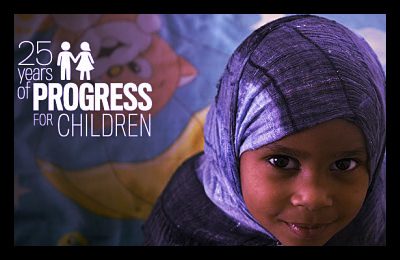
Although they are young, children have rights too. This year will be the 25th anniversary for the Convention on the Rights of the Child (CRC). Twenty-five years ago, certain countries of the United Nations made a promise through CRC that they would protect and promote children’s rights to thrive and survive, to make their voices heard and to allow them to reach to their full potential.

The Convention on the Rights of the Child is a treaty that recognizes the rights of children, including anyone below the age of 18. Since the year 2014, 194 countries have become State Parties to the Convention. It establishes a law that States Parties must ensure that children get health care and education and are able to develop their personalities, abilities and talents to their full potential. It also ensures that they grow up in a happy, loving and understanding environment.

Children should also be able to be informed about their basic human rights and how they should use them. The Convention was one of the first committees to recognize that children deserve human rights and that children are not objects or property of parents. CRC is often a reference that other organizations that work with children often look at to determine their framework.

There has been a lot accomplished through CRC, like declining infant mortality, rising school enrollment and more opportunities for girls. UNICEF has recognized this and has declared the year 2014 as the Year of Innovation for Equity. UNICEF wants to get the world’s attention to help develop solutions for children.

UNICEF promotes the principles and provisions of the Convention and the mainstreaming of children’s rights in a systematic manner, in its advocacy, programming, monitoring and evaluation activities.

– Priscilla Rodarte

Sources: UN Human Rights, UNICEF 1, UNICEF 2 Photo: UNICEF 3

July 8, 2014
https://borgenproject.org/wp-content/uploads/borgen-project-logo.svg 0 0 Borgen Project https://borgenproject.org/wp-content/uploads/borgen-project-logo.svg Borgen Project2014-07-08 04:00:592024-06-05 01:57:36Convention on the Rights of the Child
Human Rights

Victory for France’s Face Veil Ban

France's face veil ban
The European Court of Human Rights upheld France’s face veil ban on the wearing of face-covering veils in public settings. The ban, which went into effect three years ago, has caused widespread backlash from Muslim communities in France, which claim the ban imposes on their religious freedom and identity. Labeled as a means to help protect public safety and bridge social gaps, the imposition of the ban was strictly “due to the concealment of the face” and had no correlation with religious animosity, according to the Court.

A woman by the alias of S.A.S. testified against France’s face veil ban in court. A university-educated woman and French citizen, S.A.S. told the courts that she voluntarily wore the veils (the niqab, which leaves the eyes exposed, and the burqa, which covers the body from head-to-toe) and felt no pressure from her husband to wear the dress in public. S.A.S. wished to wear the veils during certain circumstances and felt the ban imposed on her religious obligation to do so.

At the time it was enacted, the Interior Ministry in Paris estimated only around 2,000 women in France still wore the niqab. This is a considerably low number for France’s Muslim community, which — at up to six million — is Europe’s largest. Only about hundreds of women have been fined for wearing the veil, which is usually at around 150 euros, or $215 US dollars.

The European Court, while aware the ban did affect certain members of the Muslim community specifically, upheld it on account of the veil’s restriction from those wearing it to show their face, which is considered a social right and safety concern. While the court denied the ban’s justification on improving public safety or women’s rights, they did agree that it improved social cohesion.

“Some people now feel entitled to attack women wearing the veil even though the infringement is no more severe than, say, a parking ticket,”  Ray said.

Nevertheless, the French government has remained satisfied with the ruling, claiming it a victory for “gender equality.”

– Nick Magnanti

Sources: The Wall Street Journal, Mail Online, The New York Times
Photo: Telegraph

July 7, 2014
https://borgenproject.org/wp-content/uploads/borgen-project-logo.svg 0 0 Borgen Project https://borgenproject.org/wp-content/uploads/borgen-project-logo.svg Borgen Project2014-07-07 16:57:482024-12-13 17:50:23Victory for France’s Face Veil Ban
Human Rights

New Restrictions for Chinese Journalists

Stethoscope and First Aid Kit isolated
The Chinese State Administration of Press, Publication, Radio, Film and Television sent out a circular to news outlets stating that it had passed new restrictions on journalists. It is now against the law for  journalists to write reports from outside their beats or regions. If they want to write a “critical report,” they have to get permission from their employer. Furthermore, journalists are forbidden to set up their own websites.

The authorities claim the new rules were a direct result of recent scandals involving a few journalists participating in extortion and bribery. However, the cases were only related to small local news outlets. Journalists are worried that the government is using these scandals to create more far-reaching restrictions than to simply protect against bribery.

For example, if a journalist writes a report that is outside their region and it involves exposing government corruption or simply makes the government look bad, the authorities can arrest said journalist based on the new rules.

The circular stated, “journalists who break the law must be handed over to judicial authorities and [they] will be stripped of their license to report.” The new rules make it easier to imprison journalists who speak out against the government because journalists often have to write reports using sources from outside their regions.

A Hong Kong-based journalist named Ji Shuoming said that “aggressive investigative journalists will find it hard to write articles without venturing outside their beats or regions.”

These new restrictions are yet another attack on freedom of the press in China. Since the country is already ranked 173 out of 179 countries by Reporters without Borders, this new development further exacerbates an already dire situation. There have been other restrictive rules enacted recently as well.

In 2013, Chinese journalists had to follow rules restricting reports on “rumors.” This means that it is illegal to post any false rumor that is read 5,000 times or shared on social media more than 500 times. Of course, a rumor could be anything the government decides it does not like. The most recent use of this rule occurred this past April, when a Chinese blogger was sentenced to three years for posting a story related to corruption in the government.

Some Chinese journalists remain optimistic though. Despite recent restrictions, many journalists have been able to report on scandalous stories. For example, the magazines Southern Weekend and Caixin have still been able to report on stories that follow the money trail of government officials. They break stories of corruption and other serious issues in Chinese society such as climate change and inequality.

The worry now is whether or not the most recent set of rules will hurt investigative reporting. The following months will show how far the government is willing to go in order to silence journalists and abuse these rules for their own agenda.

– Eleni Lentz-Marino

Sources: New York Times, Foreign Policy, LA Times, Reporters without Borders, Reuters
Photo: Worldcrunch

July 1, 2014
https://borgenproject.org/wp-content/uploads/borgen-project-logo.svg 0 0 Borgen Project https://borgenproject.org/wp-content/uploads/borgen-project-logo.svg Borgen Project2014-07-01 12:00:142024-05-26 23:51:13New Restrictions for Chinese Journalists
Global Poverty, Human Rights

South Sudan Named Most Fragile Nation

world_globe_borgen_africa
In 2011, South Sudan split from Sudan. Consequently, Vice President Riek Machar was accused by President Salva Kiir of planning a coup and fighting began. Residents were forced to leave their homes as the fighting between the two factions worsened.

As a result of the mass killings and violence coupled with the unstable leadership, the Fund For Peace named South Sudan the most fragile nation in the world (bumping Somalia down the list after it held the top position for six years.)

The U.N. is appealing for around $1 billion in emergency humanitarian aid for South Sudan and has expressed concern that the horrendous fighting will worsen the famine and leave little hope of progress for the young generation of children.

The U.N.’s report asserts that without the aid, 50,000 children could die from malnutrition, food insecurity will persist, cholera will not be contained and there will be no real determined effort to combat the human rights violations that pervade the daily lives of those living in South Sudan.

According to The Guardian, the deputy special representative of the U.N. secretary general in South Sudan, Toby Lanzer, reports that “with many communities unable to farm or tend properly to their cattle, the risk of famine looms large. In some particularly hard to reach areas of the country, people are already starving.”

He continues by saying that while the more immediate goals of the emergency aid would be used to repair damage caused by the famine, the money would also be used to prevent future damage and to save lives. Ideally, it would be used to strengthen the younger generation by ensuring children are vaccinated, by providing counseling to help children deal with the aftermath of the violence, and by keeping schools open so that children can continue receiving a formal education.

Organizations such as Oxfam and the Famine Early Warning Systems Network (Fewsnet) have expressed support for the concerns conveyed by the U.N. All three organizations are in agreement that as South Sudan reaches the six-month mark for all the devastation, communities need to take further action to remedy the terrible, persisting situation in South Sudan.

– Jordyn Horowitz

Sources: CNN World, UNICEF, The Fund for Peace, The Guardian

June 30, 2014
https://borgenproject.org/wp-content/uploads/borgen-project-logo.svg 0 0 Borgen Project https://borgenproject.org/wp-content/uploads/borgen-project-logo.svg Borgen Project2014-06-30 20:19:312024-05-26 23:36:51South Sudan Named Most Fragile Nation
Advocacy, Human Rights, United Nations

International Day for Victims of Torture

Rope isolated on white background
This week marked the anniversary of the International Day in Support of Victims of Torture.

According to the United Nations, torture as a practice seeks “to annihilate the victim’s personality and denies the inherent dignity of the human being.”

The U.N. General Assembly adopted resolution 52/149 in December 1997, a resolution that proclaimed June 26 as the U.N. International Day in Support of Torture Victims. Believing torture to be “one of the vilest acts perpetrated by human beings on their fellow human beings,” the resolution maintains the intention to completely eradicate all torture measures and practices.

Torture practices used today include the controversial waterboarding, sleep deprivation, force feeding, electric shock and cold cell, among others. Rape, beatings and public sexual humiliation are also considered to be forms of torture as they are measures used to inflict pain upon other individuals. Countries, including the United States, continue to use enhanced interrogation techniques to obtain information from suspected criminals or terrorists. Many believe these techniques qualify as acts of torture.

“As we honor the victims on this International day, let us pledge to strengthen our efforts to eradicate this heinous practice,” U.N. Secretary-General Ban Ki-moon said.

The U.N. Fund for Victims of Torture has assisted torture victims around the world. It provides direct assistance to torture victims — assistance that includes access to psychological and physical rehabilitation centers as well legal services.

While many countries do not make use of torture practices, 41 countries have not ratified the Convention Against Torture and thus allow and continue to use practices deemed to be inhuman by the U.N. In fact, Amnesty International’s 2013 Report stated that 112 of 159 countries practiced torture methods in 2012.

“Torture is an unequivocal crime,” U.N. High Commissioner for Human Rights, Navi Pillay, said. “Neither national security nor the fight against terrorism, the threat of war, or any public emergency can justify its use,” Pillay said. “All States are obliged to investigate and prosecute allegations of torture and cruel, inhuman or degrading treatment, and they must ensure by every means that such practices are prevented.”

– Ethan Safran

Sources: allAfrica, United Nations, International Business Times, Human Rights Web, United Nations Human Rights, Dignity – Danish Institute Against Torture
Photo: Time and Date

June 30, 2014
https://borgenproject.org/wp-content/uploads/borgen-project-logo.svg 0 0 Borgen Project https://borgenproject.org/wp-content/uploads/borgen-project-logo.svg Borgen Project2014-06-30 19:25:242017-03-20 14:13:00International Day for Victims of Torture
Human Rights

Secret Military Detentions in Thailand

As of late, Thailand has been struggling to produce a functional government. A coup in 2006 led to a military supported democratic government, which in the past six months, has suffered heavy street protests. This led to its fall and another coup on May 22 of this year. The new military junta has decided to call itself The National Council for Peace and Order led by Gen. Prayuth Chan-ocha. They have stated that they intend to install another democratic government, but the time frame for military power has been given as “indefinite.” A recent incident involving illegal military detentions do not bode well for a democratic Thailand.

This week Human Rights Watch called for the arbitrary military detentions by the Thai junta to stop. More specifically, it called for the release of a political activist named Kritsuda Khunasen, 27, who was arrested on May 28, and has not been seen or heard from since. The military government has declined to disclose any information on her whereabouts.

The reason Khunasen’s case raises some red flags is because most of the people arrested with her have been set free, and on June 17, the military junta put her name on a summons list for people who have to turn themselves in or face arrest. By putting her name on the list, it would appear that the military junta is trying to create the perception that she has not already been detained.

Rights organizations are worried they put her on the list because something has happened to her and they are trying to cover up her disappearance. However, there is video evidence of her being arrested on May 28 and her family has not seen her since the arrest.

Khunasen works with the United Front for Democracy against Dictatorship, which is a group that was opposed to the late and ineffective prime minister, Yingluck Shinawatra. They recently switched objectives and have begun to oppose the military coup. Within the group Khunasen “has been instrumental in a campaign to provide legal and humanitarian assistance to UDD members and supporters affected by political violence.” She is a well-known political activist so her detention is not surprising as many other prominent activists have been detained.

This detention is illegal. It violates the 1949 Martial Law Act which was adopted by the military junta after it took power on May 22 of this year. This law only allows for seven days of detention. Thailand is also a party of the International Covenant on Civil and Political Rights, which rules against arbitrary arrests and torture. Disappeared people historically suffer high levels of torture.

The detention of Khunasen and the possible cover-up of her disappearance is worrisome for Thailand, which has been in the midst of political crisis for years now. Since the junta took power a few short weeks ago, between 300-500 people have been detained. The junta has also enforced a curfew and has begun cracking down on immigrant labor. In fact, 188,000 Cambodians have fled the country in recent weeks.

Although the NCPO claims to be in the process of arranging democratic elections by August, an attempt to cover-up an illegal detention brings those claims into question. How can they claim to believe in democratic ideals when they detain people illegally? If the NCPO wants to move Thailand in the right direction, it would seem that Khunasen should be released, or at least given access to a doctor and legal counsel.

— Eleni Marino

Sources: Human Rights Watch, Time, NY Times
Photo: CNN

June 27, 2014
https://borgenproject.org/wp-content/uploads/borgen-project-logo.svg 0 0 Borgen Project https://borgenproject.org/wp-content/uploads/borgen-project-logo.svg Borgen Project2014-06-27 09:32:272024-05-26 23:50:25Secret Military Detentions in Thailand
Human Rights, United Nations

UN General Assembly Elects Prince Zeid

Prince Zeid Ra’ad Zeid al-Hussein of Jordan has unanimously been approved by consensus in the General Assembly as new High Commissioner for Human Rights. Zeid was nominated by Secretary-General Ban Ki-moon earlier this month to replace former Ms. Pillay, whose term ends in August. Prince Zeid is an experienced diplomat and an avid campaigner for international justice. Zeid is currently Jordan’s ambassador to the United Nations.

Zeid is highly qualified for the position from his experience serving as an officer in the Jordanian desert police and serving on the U.N. protection force in former Yugoslavia. He has been the ambassador to the United Nations twice as well as ambassador to the United States from 2007-2010.

The Office of the High Commissioner for Human Rights (OHCHR) is mandated to promote and protect the enjoyment and realization of rights for all people codified in international human rights law and treaties. It prevents human rights violations, promoting human rights and coordinating activities throughout the U.N. The Office leads an effort to integrate human rights in all U.N. agencies.

Zeid will be the first Human Rights Chief from the Asian continent and the first from the Muslim and Arab worlds. This is an enormous step forward for the international community.

“Needless to say this reflects the commitment of the international community towards this important dossier and its commitment to push it forward in this continent as well as in other regions of the world,” said Zeid.

Zeid stressed his commitment to the job and recognizes that it takes wisdom and high levels of coordination with different governments, civil society and all U.N. agencies. He has been a strong supporter of the International Criminal court and has spoken out against sexual violence.

— Catherine Ulrich

Sources: UN, ABC News
Photo: Alarab Alyawm

June 26, 2014
https://borgenproject.org/wp-content/uploads/borgen-project-logo.svg 0 0 Borgen Project https://borgenproject.org/wp-content/uploads/borgen-project-logo.svg Borgen Project2014-06-26 18:47:122024-06-05 01:57:35UN General Assembly Elects Prince Zeid
Page 33 of 45«‹3132333435›»

Get Smarter

  • Global Poverty 101
  • Global Poverty… The Good News
  • Global Poverty & U.S. Jobs
  • Global Poverty and National Security
  • Innovative Solutions to Poverty
  • Global Poverty & Aid FAQ’s
Search Search

Take Action

  • Call Congress
  • Email Congress
  • Donate
  • 30 Ways to Help
  • Volunteer Ops
  • Internships
  • Courses & Certificates
  • The Podcast
Borgen Project

“The Borgen Project is an incredible nonprofit organization that is addressing poverty and hunger and working towards ending them.”

-The Huffington Post

Inside The Borgen Project

  • Contact
  • About
  • Financials
  • President
  • Board of Directors
  • Board of Advisors

International Links

  • UK Email Parliament
  • UK Donate
  • Canada Email Parliament

Get Smarter

  • Global Poverty 101
  • Global Poverty… The Good News
  • Global Poverty & U.S. Jobs
  • Global Poverty and National Security
  • Innovative Solutions to Poverty
  • Global Poverty & Aid FAQ’s

Ways to Help

  • Call Congress
  • Email Congress
  • Donate
  • 30 Ways to Help
  • Volunteer Ops
  • Internships
  • Courses & Certificates
  • The Podcast
Scroll to top Scroll to top Scroll to top