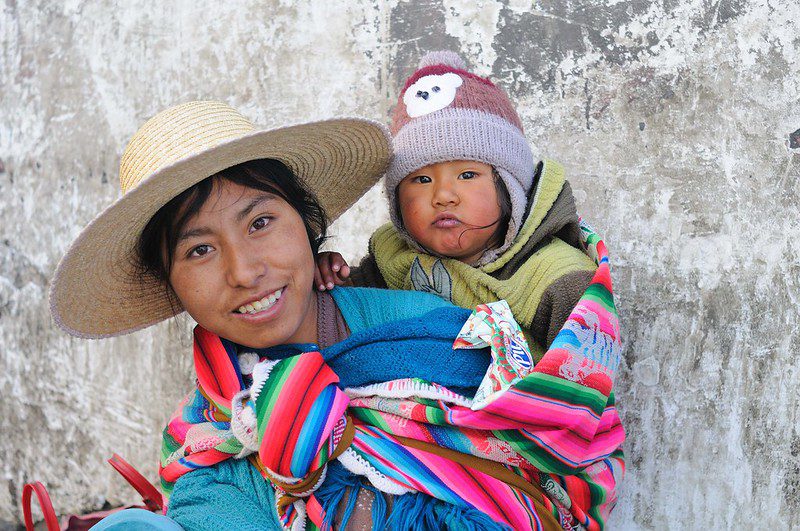
 Bolivia has seen a reduction in poverty. However, current statistics suggest that 11% of people live in extreme poverty and 36.3% live in moderate poverty. This may be due to the fact that Bolivia suffers from 160 major weather conditions, which result in food shortages and lower amounts of drinkable water. Yet, conditions are worse for people with disabilities in Bolivia. The Borgen Project spoke with Matthew Pepe, the founder and president of Bolivians Without Disabilities, about the life of amputees in Bolivia and explained the help the organization provides to these people.
The Bolivians Without Disabilities
“Our main focus is to work with nonprofit Bolivian prosthetic organizations that provide prostheses to low-income Bolivian amputees,” says Pepe. The Bolivians Without Disabilities accomplish this by collaborating with Bolivian companies that physically construct artificial limbs and provide these to amputees.
Bolivians Without Disabilities gives monetary support and teaching resources to associations that help people with disabilities in Bolivia. This greatly enhances those with disabilities in a physical and mental sense by:
- Having the opportunities to help their relatives and their local communities.
- Improving their self-confidence and job prospects.
Why Are They Important
Pepe describes the life of an amputee in Bolivia, stating, “Living with a disability in Bolivia is not easy, especially if you are poor. Streets and sidewalks are often crowded and very narrow with lots of dips and broken concrete, making walking, even with two good legs, very difficult.” If this is not bad enough, experiencing an amputation can cause despair and unhappiness due to the sense of loss of autonomy and self-perception.
Furthermore, when asked if the Bolivian government was doing enough to help amputees, Pepe answered, “Definitely not, but I am not sure that I can fault them very much since the issue is largely financial.” Indeed, Bolivia is one of the poorest countries in the world. Additionally, the Bolivian government has failed to pass adequate legislation that identifies discrimination based on disability.
Disability is a critical problem since people who have gone through an amputation suffer terrible financial issues and poverty as they encounter more hurdles to health care. This is unsurprising since Pepe explains that “Social stigma is also a serious concern. Disabled people suffer serious discrimination.” In comparison with the general population, amputees are more likely to experience inadequate access to health care.
Furthermore, people with an amputation are more likely to be unemployed. As stated by Our World in Data, in 2022 in Bolivia, the unemployment rate is 5.16% among amputees, in comparison with 3.81% among the general population. Pepe explained this by saying, “It is also very difficult to get a job if you are disabled. Many jobs are very physical and you need all your hands, feet and abilities to work at most jobs.”
The Impact on Poverty
According to Pepe, “The government also does very little to provide prosthetic limbs.” Pepe continues, “I think that I fairly believe that the little prosthetic clinic that I created provides far more prosthetic limbs than the practically non-existent government attempts to provide limbs.” With the Bolivians Without Disabilities intervening and providing low-income amputees a prosthetic limb, this will create a positive change and will improve their well-being while decreasing their chances of falling into the poverty cycle. This is because they will be encouraged to participate in education and employment activities.
The Bolivians Without Disabilities has shared many personal stories. Here are two examples:
- Pabio is a Bolivian man and while he was working, he accidentally inserted his left arm into a mechanical machine. As a result, his arm was amputated because it was severely crushed. After the incident, Pabio was unable to work and he felt depressed. After Bolivians Without Disabilities provided the financial means to construct an artificial arm and hand for Pabio, his job prospects improved.
- A woman named Mariana had a job accident while working at a sawmill. One day, she accidentally cut off her hand since there were no safety precautions. After this incident, Mariana was miserable and dependent on others on a day-to-day basis. After receiving an artificial arm from Bolivians Without Disabilities, Mariana’s self-confidence improved. She hoped to study petrochemistry and find a job.
Looking Ahead
The interview with Pepe provided a snapshot of the life of an amputee in Bolivia. Stigma and discrimination are felt more by disabled people and they find it harder to live in Bolivia due to the little help provided by the government. The work done by Bolivians Without Disabilities is vital to help people with disabilities so they can avoid the poverty cycle by improving their job prospects and self-confidence.
– James McAlinden
James is based in Rosehearty, Scotland and focuses on Good News for The Borgen Project.
Photo: Wikimedia Commons
 Youth unemployment in Nigeria is a critical issue that continues to impact the country’s economy and social stability. Nigeria is the most populous country in Africa. As of 2023,
 Sindh, the southeastern region of Pakistan, hosts up to 600,000 hectares of mangroves and tropical trees that primarily grow in saltwater. Over the past century, the country has lost up to
  Kazakhstan has taken several
 The United Arab Emirates (UAE) has experienced an increase in life expectancy which means the mortality rate has reduced. This is a positive development with the growth of the elderly population
  In efforts to fight poverty, local organizations are turning to a solidarity economy, which at its core, prioritizes social gain over profit. These organizations integrate concepts of human development, equal participation and sustainability. In some cases, such as with the Deccan Development Society in India, solidarity economic models have addressed structural deficiencies and inequalities by focusing on individual well-being and sustainable production. Fundamentally, a solidarity or social economy