Practical Action Addresses Youth Unemployment in Kenya
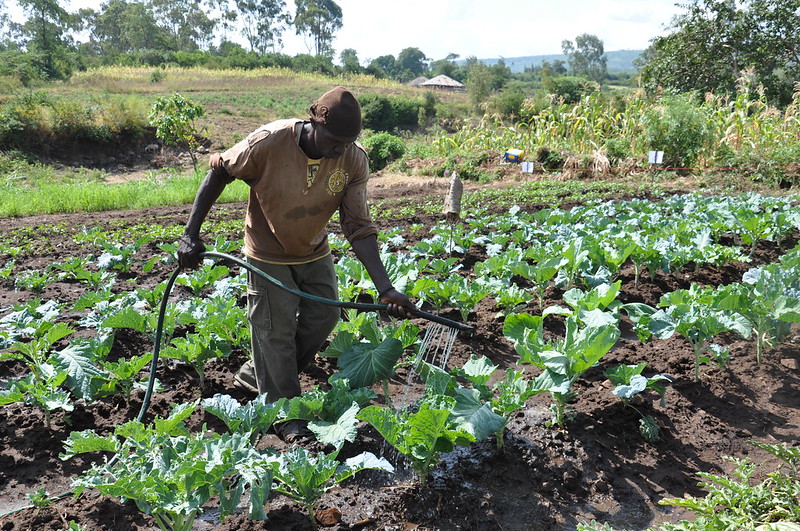 Practical Action, a development charity, works alongside communities to develop sustainable solutions to tackle youth poverty. It revolutionizes agricultural solutions, job opportunities and water management through teaching, training and supporting communities. Its volunteers work across Bangladesh, Kenya, Peru, Nepal, Sri Lanka, Sudan and Zimbabwe. The organization is tackling youth unemployment in Kenya through its ongoing project, Resilient Agriculture that Works for Young People (RAY). Launched in November 2022, the project aims to meet its key goals by October 2027.
RAY: A Beacon of Hope for Kenyan Youth
Centered in West Kenya, the RAY project seeks to provide young individuals with training in regenerative agriculture and business management, empowering them to pursue job opportunities. It aims to reduce the high rate of youth unemployment in Kenya. While the expansion of agricultural opportunities has great potential for creating dignified jobs and income, young people in the country face significant challenges due to limited access to land and the skills necessary for succeeding in agribusiness.
Practical Action reports that four out of 10 young Kenyans are unemployed. Of this, women comprise six out of every 10 unemployed youth. To fight this, Practical Action’s RAY project has partnered with the Mastercard Foundation to offer unemployed Kenyan youth employment opportunities. In addition, this partnership provides access to critical resources such as finance, land and markets, aiming to enhance job prospects and reduce poverty.
Collaborative Efforts
In its earlier project in Kenya, Transforming Rural Economies and Youth Livelihoods (TREYL) from 2019 to 2022, Practical Action helped 6,000 young people, 46% of whom were women, to enter agribusiness. Its main goal is to transform agriculture in Western Kenya into an appealing and sustainable source of employment for the youth. Practical Action seeks to offer unemployed Kenyan youth a new perspective on rural economics. It tackling the obstacles they encounter in accessing job opportunities. Beyond equipping young people with essential skills to boost their employment prospects, Practical Action is working to forge strong partnerships with county governments.
The ongoing collaborations aim to enhance opportunities and connections between employed youth and their suppliers. Furthermore, Practical Action’s partner, the Mastercard Foundation, offers vital networking opportunities for young people in Africa, to overcome socio-economic challenges. Since its launch in 2012, the Mastercard Foundation Scholars Program has helped more than 45,000 young Africans gain access to education.
Reducing Poverty Through Agribusiness
Practical Action employs several key strategies to achieve its goal. The strategies are as follows:
- Providing Mentorship to young entrepreneurs. A central aspect of the project is providing youth with transferable skills and knowledge. This is achieved through peer-to-peer learning to enhance their understanding of the agricultural business.
- Planet-Friendly Methods. Practical Action’s eco-friendly methods give Kenyan youth a forward-thinking understanding of environmentally friendly practices that enhance productivity. This new knowledge not only helps in restoring degraded land but also shapes the youth into valuable, conscientious employees.
- Youth Savings and Loans Associations (YSLA). The project aims to teach youth the importance of personal finance as a means to reduce youth unemployment in Kenya. It believes providing young people with access to affordable capital equips them with the essential knowledge to break the cycle of poverty.
- Gender Transformative Actions. A major initiative of the project is changing gender attitudes to empower female youth. It enables them to seize opportunities in agribusiness and achieve employment equality.
Focused and Positive Future
Practical Action’s 2023 Annual Report states that by 2025, the charity aims to positively impact 20 million people by reducing poverty through various employability projects. In Kenya, the project involves current farmers as mentors. These mentors work to guide young people toward finding career paths in the agricultural sector. The objective is for trained youths to become the next generation of mentors, contributing to the reduction of youth unemployment in Kenya.
– Kasia Flisiuk
Kasia is based in London, UK and focuses on Good News for The Borgen Project.
Photo: Flickr
