• Link to X
  • Link to Facebook
  • Link to Instagram
  • Link to TikTok
  • Link to Youtube
  • About
    • About Us
      • President
      • Board of Directors
      • Board of Advisors
      • Financials
      • Our Methodology
      • Success Tracker
      • Contact
  • Act Now
    • 30 Ways to Help
      • Email Congress
      • Call Congress
      • Volunteer
      • Courses & Certificates
      • Be a Donor
    • Internships
      • In-Office Internships
      • Remote Internships
    • Legislation
      • Politics 101
  • The Blog
  • The Podcast
  • Magazine
  • Donate
  • Click to open the search input field Click to open the search input field Search
  • Menu Menu

Archive for category: Global Poverty

Key articles and information on global poverty.

Disease, Education, Food & Hunger, Global Poverty

9 Facts About Poverty in the South Pacific

south_pacific_poverty_women
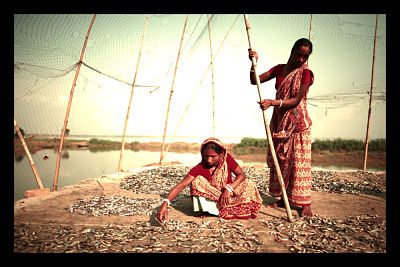
When economic crises, military conflict and general mayhem plague the continents, few people consider the impact such events may have on the communities located in the South Pacific. Over 10 million people populate the 3,500 islands scattered across the Pacific Ocean, an extremely large number of whom suffer from debilitating disease and poverty.

Save for the extreme natural catastrophes that seem to constantly plague the Philippines, the high rates of poverty, poor education and abysmal health of Pacific islanders fails to gander consistent international attention.

To illustrate the severity of the problem, here are nine facts to learn about poverty in the South Pacific.

1. 38 percent of Papua New Guineans live below the National Basic Needs Poverty Line, which means 2.7 million people are unable to buy sufficient food and meet basic requirements for housing, clothing, transport and school fees. Even more alarmingly, 61 percent of the populace does not have access to safe drinking water. Tweet this fact

2. Pacific islands are disproportionately affected by global disasters. A 2012 World Bank study revealed that of the 20 countries in the world with the highest average annual disaster losses scaled by gross domestic product, eight are Pacific island countries: Vanuatu, Niue, Tonga, the Federated States of Micronesia, the Solomon Islands, Fiji, Marshall Islands and the Cook Islands.

3. Literacy rates are a persistent concern, especially on the Solomon Islands, where only 65 percent of the adult population (330,000 people) can read.

4. Pacific Islanders may be notorious for their love of canned meats like spam and corned beef, but what is not widely discussed is the debilitating effects such imported goods have on their health. As of 2007, eight of the 10 heaviest countries were located in the South Pacific. Nauru, the world’s smallest republic with just over 9,000 inhabitants, earned the number one spot with over 90 percent of their adult population considered obese.

5. Human rights violations also remain high in the pacific. Amnesty International recently reprimanded Papua New Guinea for burning a woman alive amid allegations of sorcery. Although the 1971 Sorcery Law has been repealed, which criminalized sorcery and could be used as a defense in murder trials, the United Nations Special Rapporteur on Violence Against Women in 2012 found that sorcery allegations are often made to mask the abuse of women.

6. Domestic abuse and gendered violence is also a concern but inconsistent reporting makes it difficult to pinpoint exact levels of abuse. In the first National Study on Domestic Violence in Tonga, conducted in 2009, results found that 45 percent of Tongan woman reported having experienced physical, sexual or emotional abuse in their lifetime.

7. Pacific Islanders are at high risk for Neglected Tropical Diseases, which commonly affect the world’s poor, women and disabled. Hookworm, leprosy, scabies and Japanese encephalitis are among the most prevalent; these adversely affect worker productivity, pregnancy outcomes and child cognition and development.

8. In 2010, Oceania unemployment rates reached 14 percent, while the United States average in the same period came in at 9 percent.

9. Since the mid 20th century, approximately 9.2 million people in the Pacific region have been affected by extreme events, resulting in 9,811 deaths and $3.2 billion in damages.

Pacific island nations’ small size, limited natural resources and great distances to major markets makes them particularly vulnerable to external crises and thus results in extremely volatile economies. Greater commitment to development initiatives will enable Oceanic nations to handle stresses caused by external forces and eventually strengthen the autonomy of the respective nations.

– Emily Bajet

Sources: University of Hawaii, Asian American For Equality, Oxfam, The World Bank, The World Bank News, Poodwaddle, Australia Network News, Australia Network, The New York Times, PLOS, Samoaobserver, Matangitonga, Labour
Photo: IFAD


February 22, 2014
https://borgenproject.org/wp-content/uploads/borgen-project-logo.svg 0 0 Borgen Project https://borgenproject.org/wp-content/uploads/borgen-project-logo.svg Borgen Project2014-02-22 04:00:262024-06-04 03:01:159 Facts About Poverty in the South Pacific
Global Poverty, Water

Polar Vortex Impact on Low-Income Families

polar_vortex
January’s “Polar Vortex” broke records for the lowest temperatures in many cities that had lasted for 50 years to 100 years. Millions of people across the East coast and Midwest endured temperatures much below normal and all 50 states experienced freezing temperatures. Southern states, not used to freezing weather, were ill-prepared to handle it. Fox News reported that there were 21 deaths related to the cold. The homeless population was particularly vulnerable. America’s poor suffered the worst effects of the extreme cold weather; not only the homeless, but also families on social assistance and the working poor.

Cuts to Energy Assistance

Many low-income families across the country were not able to heat their homes this winter due to last year’s budget cuts. In 2013, Congress cut funding to the Low Income Home Energy Assistance Program by $155 million. Since 2010 funding for this program has dropped from $5.1 billion to $3.32. While many families cannot sufficiently heat their homes, approximately 300,000 families cannot afford to heat their homes at all.

Both the number of households receiving aid and the amount of aid households receive has been cut. Since 2010, the percentage of heat covered by the Low Home Income Energy Assistance Program has dropped from 52.5 percent to 41.5 percent. As this funding has been cut, the cost of fuel has gone up; the cost of electricity has risen by 7 percent since last year and the cost of natural gas has risen by 14 percent.

Low-Income Families Struggle to Heat Their Homes

Three children died in Hammond, Indiana in January 2013 in a house fire when their parents used propane space heaters to heat their home. Andre Young was renting a house for himself, his wife and their five children but had been unable to pay their utility bills. Their water, gas and electricity had been cut off for several months.  When a spark from the propane heater engulfed the house in flames, Andre ran inside to try and save his children, all under 7 years old. He was able to save two children before he collapsed in the snow outside of the house. A 4-year-old, a 3-year-old, and a seven month old baby died. Andre was sent to hospital in critical condition.

The average family in Indiana spends $530 on heat between November and March, but that cost would have been much higher this winter. The combination of the cuts to energy assistance and the abnormally cold winter has left many families unable to cover the cost of heating their homes.

Choosing Between Health and Food

In 2013, Congress cut spending on food stamps and 47 million Americans lost food stamp benefits. The high cost of heating during this year’s polar vortex has left many poor families having to choose between heating their homes and feeding their kids. There has been an increase in the use of food banks and soup kitchens this year. Feeding America recently reported that 46 percent of its clients have to choose between paying for food and paying heating and other utility bills.

– Elizabeth Brown

Sources: Huffington Post, Huffington Post, Think Progress, Salon
Photo: Midtown Blogger

February 22, 2014
https://borgenproject.org/wp-content/uploads/borgen-project-logo.svg 0 0 Borgen Project https://borgenproject.org/wp-content/uploads/borgen-project-logo.svg Borgen Project2014-02-22 04:00:182024-06-05 01:57:10Polar Vortex Impact on Low-Income Families
Activism, Advocacy, Global Poverty, Philanthropy, Poverty Reduction, Volunteer

Peace Corps Preparation

peace corps
Since it was established by J.F.K in 1961, the Peace Corps has been fighting first-hand the systematic effects of global poverty. Beginning as a small handful of good samaritans in only six participating countries, it has since then extended its humanitarian influence to 139 countries with the help of more than 210,000 volunteers. If you’ve ever been curious about joining the Peace Corps yourself, here is some information you must read.

How to Apply for the Peace Corps:

The process of becoming an advocate against global poverty is not as daunting as it might seem. The first step is the online application, which asks for basic information and some statements regarding one’s motivation to volunteer abroad. This is then followed by a personal interview with a local recruiter, to see if the Peace Corps seems like a good fit. If all goes well, this could lead to a formal invitation, complete with destination, departure date and project assignment information.

Then comes the fun part – preparing for departure. In the weeks prior to leaving, the Peace Corps will request the volunteer receive comprehensive dental and medical exams, as well as an array of immunizations, to make sure they are good to go. On the day of departure, volunteers head to training at an orientation site within the United States. The training continues in the volunteer’s assigned country, where they will train for three months while also living with a host family to establish skills for their cultural and linguistic adaption.

What the Peace Corps Looks for:

It is true that the demands of being a Peace Corps volunteer require a specific type of person, and thus the application process is very selective. Living and working in another region of the world, often in extremely dire situations, is a job for those with an abundance of determination, adaptability, independence, social sensitivity and emotional maturity. Those who already have some experience with volunteer work usually make the best candidates, as they have probably developed the previously mentioned qualities within themselves. The Peace Corps, furthermore, has many partner organizations such as City Year and the Special Olympics which interested volunteers can explore.

There are also some logistical pre-requisites, concerning the volunteer’s education, skills and ability to deliver aid to a community. While it is still possible to join without one, 90% of Peace Corps jobs require a minimum of a bachelor’s degree. Many jobs require pre-existing skills, such as special education, engineering and urban planning as well as agroforestry. Others can be developed on site, such as a teaching English, youth development and health education. The Peace Corps looks comprehensively at every applicant, however, and there are opportunities for non-degree volunteers who have experience working in construction, agriculture and with other non-profit organizations. By and large, the most promising candidates are those with some understanding of another language.

The Life of a Volunteer:

There is not one, quintessential Peace Corps experience, as the regions and types of work are all so diverse. The Peace Corps works in many countries and continents worldwide, in both rural and urban areas, and volunteers are expected to immerse themselves entirely so as to best serve their assigned communities. Although it is possible to have a preference for a location, flexibility helps during the application process. Regional availability also varies quickly based on need. For example, the Philippines are asking for significantly more volunteers than usual, due to the effects of typhoon Haiyan. Once there, a volunteer will be assigned to one of six main areas of specialized aid, which are: education, youth in development, health, agriculture, environment and community economic development. The commitment is 24 months, plus three months of training, thus totaling 27 months. Living accommodations are provided by the Peace Corps, and also vary greatly depending on the norm for that region.

Why Volunteer:

Helping a community build a more sustainable future for itself is an incredibly rewarding experience, as many veteran volunteers can attest to. All countries where the Peace Corps works have requested the presence of volunteers and aid programs, thus proving that the need is strong.

The benefits of joining the Peace Corps extends after service, as well. Upon return, volunteers receive $7,425 as an “adjustment” allowance, to help re-establish their lives in the United States after over two years abroad. Eligibility for student loan deferral is also provided, as well as a number of scholarships and financial aid packages to graduate degree programs. Over 70 graduate schools are partnered with the Peace Corps, and seek out returning volunteers who wish to incorporate their development experiences into their course work, such as the Paul D. Coverdell Fellow Program. For those wishing to enter directly into a career at home, the Peace Corps is invaluable for its professional connections in fields like federal employment and other non-profit organizations.

– Stefanie Doucette

Sources: Peace Corps, Time, National Archives
Photo: Salon

February 21, 2014
https://borgenproject.org/wp-content/uploads/borgen-project-logo.svg 0 0 Borgen Project https://borgenproject.org/wp-content/uploads/borgen-project-logo.svg Borgen Project2014-02-21 21:11:262014-02-23 23:29:39Peace Corps Preparation
Children, Global Poverty

Child Labor in America

child_labor
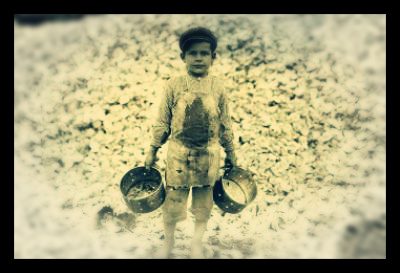
The Fair Labor Standards Act of 1938 had outlawed child labor in America; however, individuals have managed to find their way around the law, effectively enslaving children, the vast majority of whom are migrant workers, within these laborious jobs. While the 1938 Act outlawed child labor in settings such as an office or a restaurant, the law left the prospect of employing child laborers on farms completely legal. In the United States, many child laborers still toil away on farms, being left vulnerable to heat exhaustion, heavy machinery and dehydration.

According to NBC, thousands of children, some as young as 8 years old, are being exploited, forced to endure grueling hours and equally grueling conditions on farms. These children work for little to no cost in order for the produce industry to put food on America’s table.

Oftentimes, these children are told by their employers to lie about their age in order to circumvent any probing questions. NBC chronicles the exploitation of Ralph, a 15-year-old laborer who works on a Central Valley migrant labor camp with dozens of other children as young as or even younger than he. When asked what farm labor is like, Ralph states, “We get tired and like we get kind of tired and our arms hurt… It is too hard to be in the fields.” Indeed, these children are forced to work the fields even when temperatures skyrocket to 106 degrees.

Furthermore, the National Institute of Occupational Safety and Health (NIOSH) stated that up to 670 children had been killed while working during 1980 to 1989. Seventy percent of these deaths were initiated by violations of child safety laws. Additionally, a follow-up study by the NIOSH in 1992 reported that over 64,100 children were admitted to the emergency room due to injuries on the job.

As startling as these estimates may be, they under-report child labor-related death and injuries by 25 percent to 30 percent. It is difficult to pinpoint the precise rate of child labor in America since many exploitative employers do not report their mistreatment of children and many child laborers often fail to speak out due to fear.

Child labor remains an issue in America, a country that supposedly phased out the exploitation of children in the late 1930’s, largely as a result of a lack of effective legislation. According to Project Censored, the individuals who benefit the most from lack of legislation and awareness are the exploitative industries while young laborers remain perpetual victims.

– Phoebe Pradhan

Sources: The Nation, NBC, Project Censored
Photo: Bored Panda

February 21, 2014
https://borgenproject.org/wp-content/uploads/borgen-project-logo.svg 0 0 Borgen Project https://borgenproject.org/wp-content/uploads/borgen-project-logo.svg Borgen Project2014-02-21 14:26:172016-02-18 17:37:52Child Labor in America
Development, Global Poverty

Beyond Fair: Doi Chaang Coffee Beans and Development

Doi_Chang_Coffee_Harvest_Thailand
Do you like to drink coffee? If you are like me and happen to need a cup every morning in order to function properly, here is a chance to drink your single-origin morning nectar and help to alleviate poverty all at the same time.

Some readers may have heard of the Golden Triangle, or the border area of Laos, Myanmar and Thailand. It is one of the largest opium-producing regions in the world.

One of the reasons that people resort to growing and selling opium is the grinding poverty experienced by the ethnic minorities that live across the borders of the three countries. Many of the minority groups have very few rights and are often discriminated against.

In the case of Thailand, many hill tribes members do not possess Thai identification documents—rendering them unrecognized as Thai citizens.

This consequently impedes them from accessing many basic public services such as health care and education. This combination of decades of poverty and disenfranchisement has driven minority groups towards illicit drug trade.

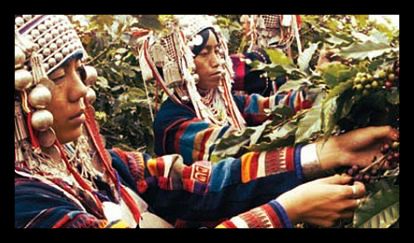
However, for the past few decades some tribes—among them the Akha of northern Thailand—have shifted to growing cash crops such as coffee. Nevertheless, the revenue they receive through trading with large companies was far from mutually beneficial. Enter Wicha Promyong—a successful Southern Thai entrepreneur—and his Canadian colleague, John Darch, who had spent many years in the banking sectors of Canada and England.

Together, they founded Doi Chaang Coffee with the goal of bringing development and sustainable prosperity to an Akha village on Doi Chaang Mountain.

What the Canadian-registered company does is unprecedented: 50% of the ownership of the company is given to the tribe, who also receives 50% of the profits as well as all of the money obtained from selling the green beans. Amazing!

What has this innovative and charitable form of a corporate-grower relationship achieved for the village so far? Well, they have done a good many wonderful things.

From an isolated village that was hitherto neglected by the authorities, left without paved roads, a hospital, schools, or even running water, the income from growing coffee allows the Akha tribe to become more self-sustainable. The village now has its own all those that it had erstwhile been lacking. It even has its own library and a coffee academy!

The business philosophy of Doi Chaang Coffee demonstrates that multinational commodity trades do not have to be exploitative in order to be profitable. It also suggests that perhaps the key component in establishing an equality and dignity based business model is simple and straightforward: the desire to be fair.

Readers in North America can purchase Doi Chaang Coffee both at their local Safeway and other supermarkets—if they are in Canada—as well as on their website if you happen to be in the U.S.

– Peewara Sapsuwan

Sources: Doi Chaang Coffee, Fair Trade , YouTube

February 21, 2014
https://borgenproject.org/wp-content/uploads/borgen-project-logo.svg 0 0 Borgen Project https://borgenproject.org/wp-content/uploads/borgen-project-logo.svg Borgen Project2014-02-21 11:31:152024-12-13 17:53:50Beyond Fair: Doi Chaang Coffee Beans and Development
Global Poverty

Film Synopsis: Whores’ Glory

Thailand_Prostitution_Film_Whores Glory
“Whores’ Glory” is Australian film-maker Michael Glawogger’s third documentary in a series including “Megacities” and “Workingman’s Death.” The film travels from Thailand to Bangladesh to Mexico into the lives of local prostitutes; three countries, three cultures, three religions – one profession.

At the Fish Bowl in Thailand, women sit behind a one-way glass fixing their hair and gossiping about their mothers until their number is called, signaling that their services have just been bought. On the other side of the glass a soon-to-be-client tells the camera how much he loves his wife and that he does this so he can respect her at home.

In the City of Joy, oral sex is forbidden since the mouth must remain pure for prayer. Contrary to their patriarchal religion, the madam’s word is law inside the ghetto, and women run every facet of life, from the adolescent girl flirting and laughing in the alley to the retired prostitute who now serves as a maid and cook. Indentured girls call up their ‘sweethearts’ to demand more visits and save their money to one day buy their own girls.

In the red-light district of Reynosa, Mexico, a prostitute and her john allow their entire interaction to be filmed, which proves to be, as one critic wrote, “as sexy as buying half a pound of roast beef at the deli counter.” Another woman describes how she no longer fears death because Lady Death is watching over her and promises smooth deliverance.

The film offers no judgment, neither on the prostitutes nor their customers. A young Bengali girl stares boldly into the camera asking if there is no other path for women to take; clients transform from misogynist cronies to shy romantics once doors are closed – suggesting that where women have the fewest options, it’s the men who are the most confused.

Glawogger believes that “the female/male relationship of any given culture can be depicted in prostitution,” but without interviewers or a concluding theme, the film is left largely open to interpretation.

The New York Times calls the documentary “a melancholy film that begins in an outer circle of hell and works its way to the depths,” while a writer of Salon thought it demonstrated “tremendous compassion, and more than a few moments of piercing clarity.”

The powerful documentary illustrated tenderness where none was asked for, powerless women who have held on to their faith and hope of a better future for women who had no reason to expect one.

– Lydia Caswell

Sources: Whores’ Glories, The New York Times, Salon
Photo: Mother Jones

February 21, 2014
https://borgenproject.org/wp-content/uploads/borgen-project-logo.svg 0 0 Borgen Project https://borgenproject.org/wp-content/uploads/borgen-project-logo.svg Borgen Project2014-02-21 11:01:452024-06-04 01:08:02Film Synopsis: Whores’ Glory
Global Poverty

Child Brides on the Rise Among Syrian Refugees

child_brides_syrian_refugees
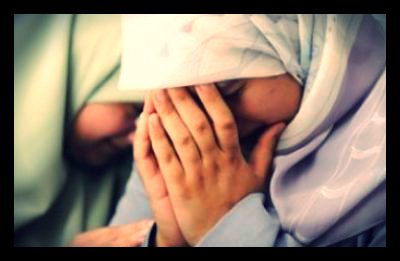
Early marriage has always been present in rural Syrian areas where the level of education is low and the rate of poverty is high, and refugees from these small communities have carried the practice with them into Jordan.

Marrying off an underage daughter is sometimes the best option for refugee families; when traveling cross-country or living in close quarters such as refugee camps, married girls are often safer with a husband than they would be with their parents. Impoverished families sometimes seek the mahr, or bride price that’s made to the bride’s family by the groom or his family. Some girls are married to mask sexual abuse or dishonorable pre-marital sex; while starvation grows among camps, many girls feed themselves through prostitution.

While the customs of a mahr are usually relaxed among Syrian refugees who can rarely afford a high price, foreign grooms from Jordan or Palestine are encouraged to seek child brides so that families may demand a higher price. This mix of culture is sometimes to the disadvantage of refugee families. Aisha al-Masri, a psychologist based in Jordan, said there have been several documented cases of foreign men abandoning their young wives after a few weeks never to be heard from again.

The legal age of marriage and consent is 18 in Syria, but a legal loophole allows the Sharia courts to approve a union so long as the girl is over 15. The number of marriages approved by the Sharia courts has grown considerably with the rising number of refugees, but some struggling families are unable to complete the necessary application to make the wedding legal.

An illegal underage marriage has lasting consequences: any children that couple has will be considered illegitimate, hugely damaging the child’s social status and complicating its application for nationality and documentation. For this reason, many underage and unregistered marriages are done in private and only filed years later once the couples are both adults.

Girls in poor families are nearly twice as likely to marry young; once they are married, the chances of their finishing school are very remote. For every year a girl stays in school, her future wage is raised from 15 percent to 25 percent. Therefore, when a girl drops out of school to marry, her potential to later provide for her family is greatly lowered, and while men typically invest 30 percent to 40 percent of their wage back into their family, women typically reinvest 90 percent.

So while it may be the answer to an immediate problem for some, early childhood marriage often warps a girl’s ability to educate her future daughters and encourages the cycle of poverty. Deprived of schools, refugees are at a colossal disadvantage, and for every child bride that escapes starvation there is an increased likelihood that the next generation will starve.

-Lydia Caswell

Sources: Daily Star, Girls Not Brides, The Nation
Photo: Foreign Policy Association

February 21, 2014
https://borgenproject.org/wp-content/uploads/borgen-project-logo.svg 0 0 Borgen Project https://borgenproject.org/wp-content/uploads/borgen-project-logo.svg Borgen Project2014-02-21 04:00:532024-05-26 23:14:32Child Brides on the Rise Among Syrian Refugees
Activism, Global Poverty

George Clooney Goes on a Date For Sudan

George_Clooney_Celebrity
George Clooney is going on a date that someone paid over one million dollars for. Think that someone is getting one million dollars worth of wine and steak? Think again.

The money paid for the date with the eternal Hollywood Bachelor is going to Sudan, and no, that is not where the date is taking place. The date was part of a raffle auction that was launched on the internet, and the winner is a single-mom with an 8 year old daughter.

The winner gets to attend the premiere of The Monuments Men movie with George Clooney on the red carpet in New York City, and the one-plus million dollars spent on raffle tickets for the date goes to the Satellite Sentinel Project.

The Satellite Sentinel Project is a reconnaissance operation that observes Sudan from a satellite and reveals crimes against humanity and other violent actions like the decades-old genocide in Darfur.

Clooney has been recorded saying the cost of the Satellite Project is around three million dollars, just to operate the image monitoring. Clooney has given his payments for international advertisements to help fund the Satellite monitoring process. The satellite captures images of Sudan from three hundred miles above the earth and watches war criminals and leaders of genocide in their home territory and beyond.

The star works closely with John Prendergast, co-founder of the Enough Project.

The Enough Project, like the Sentinel Satellite Project, is a movement to stop violence and acts of terror and or genocide in Sudan. Prendergast has worked under the Clinton Administration, two different members of Congress, UNICEF, the U.S. Institute of Peace and more according to the Enough Project’s records.

He seems more than qualified to take part in the Sentinel Satellite Project. Preventing innocent citizens from horrible acts of mass terror and killing is something Prendergast has been working on for years.

Clooney became friends with Prendergast when he began working on the board of Not On Our Watch, an organization started by Clooney, Matt Damon and Brad Pitt. The two thought up the Satellite project as a way to turn the tables on warlords in Sudan. Clooney would become the paparazzi to the leaders of oppression, spreading their business all over the internet. Holding these types of corrupt leaders responsible in the public eye is the first step to getting the rest of the world involved.

With high-profile celebrities like George Clooney calling out criminals for their actions, it will be even more difficult for evil-doers to hide from foreign interference and consequences.

– Kaitlin Sutherby

Sources: SF Gate, Satellite Sentinel Project, The Enough Project
Photo: Design Trend

February 21, 2014
https://borgenproject.org/wp-content/uploads/borgen-project-logo.svg 0 0 Borgen Project https://borgenproject.org/wp-content/uploads/borgen-project-logo.svg Borgen Project2014-02-21 04:00:372017-11-30 10:53:18George Clooney Goes on a Date For Sudan
Global Poverty, War and Violence

Temporary Ceasefire in Besieged Syrian City of Homs

Homs
A temporary pause in the fighting between the Syrian government and rebels allowed emergency personnel to evacuate 83 civilians from the embattled city of Homs on February 7, according to the United Nations.

The evacuation of the civilians  comes a day after the U.N. brokered a three day ceasefire,  under which women, children, the elderly and injured people will be allowed to leave Homs. That day, buses were allowed to enter Homs’ Old City, where as many as 2,500 people are believed to be trapped. The trapped residents have been unable to leave because they are caught in the fighting between the government and the insurgents battling Syrian President Bashar al-Assad’s regime.

The departing residents will be greeted at a U.N. welcome center and will then give the authorities the names of people who want to stay behind. The provision of the names of citizens who do not want to leave was a key demand of Syria’s government, which wants to learn the identities of the men who reside there, the Washington Post reported.

In addition to the evacuation of these noncombatants, aid will be allowed to enter Homs’ Old City, parts of which have besieged by government forces since June 2012.  Under the temporary ceasefire between the government and the rebels, medical aid and food should reach Homs on Saturday.

The three-day ceasefire covering Homs, which was one of the first cities to take up arms against Assad’s regime, comes nearly two weeks after United States and Russian-sponsored peace talks on ending Syria’s civil war opened in Switzerland. The talks, which began in the Swiss city of Montreux on January 22 before moving to Geneva on January 24, paused last Friday. The negotiations between Syria’s government and a western-backed opposition alliance known as National Coalition of Syrian Revolutionary and Opposition Forces are set to resume Monday in Geneva.

Assad’s government and the opposition had been expected to reach agreement early in the talks on localized ceasefires and on allowing humanitarian aid to be delivered to besieged areas, but the two sides were unable to even reach a deal on these issues.

The official agenda for the negotiations, known officially as Geneva II, is to reach agreement on the composition of a temporary government with full executive powers that would oversee Syria’s transition to democracy.  Syria’s government rejects the idea that goal of the talks is the establishment of a government that doesn’t include Assad, whose family has ruled Syria since 1971, while the opposition has insisted that any transitional government exclude the Syrian president and leading members of his regime.

Syria’s nearly three-year long civil war, which pits rebels largely drawn from Syria’s Sunni majority against a government controlled by the country’s minority Alawite sect and supported by Shia Iran, has stoked Sunni-Shia tensions across the Middle East, particularly in the sectarian tinder boxes of Iraq and Lebanon.

Shia Iran and its Lebanese proxy force Hezbollah have backed Assad, a longtime ally of both Tehran and Hezbollah, while Sunni gulf states and Turkey have supported the Sunni insurgents, buttressing the rebels through the provision of light weapons and cash.  Both sides seem to view the Syrian conflict as a proxy war between the Sunni and Shia branches of Islam.

– Eric Erdahl

Sources: BBC, BBC, Washington Post, New York Times
Sources: Elephant Journal

February 20, 2014
https://borgenproject.org/wp-content/uploads/borgen-project-logo.svg 0 0 Borgen Project https://borgenproject.org/wp-content/uploads/borgen-project-logo.svg Borgen Project2014-02-20 10:16:282024-12-13 17:50:03Temporary Ceasefire in Besieged Syrian City of Homs
Global Poverty

Deaton’s “Great Escape” Maps Origins of Inequality

 inequity
“Life is better now than at almost any time in history. More people are richer and fewer people live in dire poverty. Lives are longer and parents no longer routinely watch a quarter of their children die.”

So reads the first paragraph in “The Great Escape: Health, Wealth and the Origins of Inequity” by Angus Deaton, the Dwight D. Eisenhower Professor of Economics and International Affairs at Princeton University. Deaton’s “Great Escape” focuses on how sustained progress in the world opened up gaps, setting the stage for today’s inequality among people and nations.

Deaton accounts for both innovations and disasters in his book, examining the successes of antibiotics, pest control, vaccinations and clean water on one hand, and the disastrous famines and the HIV/AIDS epidemic on the other hand.

According to the World Bank, the number of people living in poverty fell by about 750 million between 1981 and 2008. But while many people make the “great escape” from poverty, others are left behind. Countries like China and India have proved to be success stories in the fight to end global poverty. On the other hand, countries in Sub-Saharan Africa have fallen behind.

Deaton notes that inequality is not always a bad thing, as long as it is not too acute. Inequality can inspire progress, such as when children realize the benefits of education and fight to attend school. It can also promote healthy competition.

Inequalities exist on a global scale and within countries. The wealth gap within countries can be seen in China, India and Brazil, where the rich are getting richer and the countrymen are falling behind.

“Bad things happen, and new escapes, like old ones, will bring new inequalities,” Deaton writes. “Yet I expect those setbacks to be overcome in the future, as they have in the past.”

– Haley Sklut

Sources: The New Yorker, Princeton University Press
Photo: Instablog

February 20, 2014
https://borgenproject.org/wp-content/uploads/borgen-project-logo.svg 0 0 Borgen Project https://borgenproject.org/wp-content/uploads/borgen-project-logo.svg Borgen Project2014-02-20 10:12:572016-12-15 14:47:12Deaton’s “Great Escape” Maps Origins of Inequality
Page 2058 of 2177«‹20562057205820592060›»

Get Smarter

  • Global Poverty 101
  • Global Poverty… The Good News
  • Global Poverty & U.S. Jobs
  • Global Poverty and National Security
  • Innovative Solutions to Poverty
  • Global Poverty & Aid FAQ’s
Search Search

Take Action

  • Call Congress
  • Email Congress
  • Donate
  • 30 Ways to Help
  • Volunteer Ops
  • Internships
  • Courses & Certificates
  • The Podcast
Borgen Project

“The Borgen Project is an incredible nonprofit organization that is addressing poverty and hunger and working towards ending them.”

-The Huffington Post

Inside The Borgen Project

  • Contact
  • About
  • Financials
  • President
  • Board of Directors
  • Board of Advisors

International Links

  • UK Email Parliament
  • UK Donate
  • Canada Email Parliament

Get Smarter

  • Global Poverty 101
  • Global Poverty… The Good News
  • Global Poverty & U.S. Jobs
  • Global Poverty and National Security
  • Innovative Solutions to Poverty
  • Global Poverty & Aid FAQ’s

Ways to Help

  • Call Congress
  • Email Congress
  • Donate
  • 30 Ways to Help
  • Volunteer Ops
  • Internships
  • Courses & Certificates
  • The Podcast
Scroll to top Scroll to top Scroll to top