• Link to X
  • Link to Facebook
  • Link to Instagram
  • Link to TikTok
  • Link to Youtube
  • About
    • About Us
      • President
      • Board of Directors
      • Board of Advisors
      • Financials
      • Our Methodology
      • Success Tracker
      • Contact
  • Act Now
    • 30 Ways to Help
      • Email Congress
      • Call Congress
      • Volunteer
      • Courses & Certificates
      • Be a Donor
    • Internships
      • In-Office Internships
      • Remote Internships
    • Legislation
      • Politics 101
  • The Blog
  • The Podcast
  • Magazine
  • Donate
  • Click to open the search input field Click to open the search input field Search
  • Menu Menu

Archive for category: Global Poverty

Key articles and information on global poverty.

Global Poverty

The Effects of Protracted Conflict on Poverty in Yemen

Poverty in Yemen

Ranked 160 out of 188 countries on the UNDP Human Development index, Yemen is one of the poorest countries in the Arab World. Ravaged by conflict for the past year and a half, poverty in Yemen has been increasing and will likely continue to do so as conflict is prolonged.

Since Houthi rebels seized the government in 2014, a Saudi-led coalition has been engaged in combat with them. Al-Qaeda in the Arab Peninsula and ISIS have also increased activity opposed to both groups and further serve to increase unrest.

So far, the conflict has resulted in over 6,400 deaths, over 30,500 people injured and 2.8 million people internally displaced. In a country of 25.6 million people, 82% of the population is in need of emergency humanitarian assistance and 19.3 million Yemenis are without safe drinking water or sanitation. At the beginning of the conflict, 14.4 million Yemenis faced chronic food insecurity, but that figure has increased by 35% since the conflict began.

The conflict has also had a significant toll on economic activity. Oil and gas exports, Yemen’s main source of income, have ceased. Imports have also contracted, aside from critical food and energy imports. Inflation reached as high as 30% in 2015, and is expected to increase further as the fiscal performance continues to weaken.

To alleviate the crisis, more than 70 humanitarian organizations have been attempting to provide assistance to those experiencing these conditions. However, limited access and budgets have hampered its ability to reach a majority of the population.

The UNDP initiative, Yemen Our Home, is one of the actors attempting to provide relief to the Yemeni people. Yemen Our Home is trying to garner support for and donors to restore and support community functions such as through a recent deal with Sabafon Telecommunication Company, which created a mobile clinic in the Sho’ub District of Yemen’s Capital City, Sana’a. Other projects that the initiative is attempting to fund and implement include solid waste management in cities, food production and energy.

Even before the most recent conflict, Yemen was one of the poorest countries in the Middle East. Thirty-seven percent of the population lives below the poverty line of $2 a day per person, the concentration of which live in rural areas. Statistics from 2012 indicate that almost 60% of children under the age of five have chronic malnutrition, 35% are underweight, and 13% have acute malnutrition, which are some of the highest rates in the world.

Poverty in Yemen persists in part due to lack of access to basic resources such as land and water and to services such as health care and education. With a majority of the population living in rural areas, their state of isolation makes it even more difficult for people living in poverty to gain access to resources and services.

Such conditions compounded with poor infrastructure prevent humanitarian assistance from accessing those Yemenis in need. Even with a cease-fire signed in March, difficult-to-reach areas are limited in the amount of assistance they can receive.

As long as conflict continues, poverty in Yemen will only increase in magnitude. Restoring peace and order is critical for beginning reconstruction and addressing the issue of poverty.

– Adam Gonzalez

Photo: flickr

August 3, 2016
https://borgenproject.org/wp-content/uploads/borgen-project-logo.svg 0 0 Borgen Project https://borgenproject.org/wp-content/uploads/borgen-project-logo.svg Borgen Project2016-08-03 01:30:562024-12-13 17:54:48The Effects of Protracted Conflict on Poverty in Yemen
Global Poverty

SoleRebels: An Ethiopian Shoe Company That Helps Struggling Artists

SoleRebels
A new company in Ethiopia is revolutionizing the way people make and sell shoes. SoleRebels, founded in 2004 by Bethlehem Tilahun Alemu, crafts traditional Ethiopian footwear.

The company also provides employment opportunities for impoverished people within the local community and abroad. Alemu’s goal in starting such an enterprise was to help kickstart Ethiopia’s economy by creating well-paid and sustainable work.

In addition, the company ensures that all of its employees have access to on-site medical checkups and transportation. Africa-Middle East projects that the company will earn over $10 million in revenue this year. SoleRebels will also sell their wares internationally. The shoes will sell in flagship stores and in partnered organizations such as Whole Foods and Urban Outfitters.

Alemu decided to start SoleRebels when she noticed the poor living conditions of artists in her local neighborhood. It all began with nothing more than half-dozen of those struggling artists crafting shoes in a small workshop. However, she quickly expanded her enterprise.

In an interview with Wharton, Alemu said, “We aimed from day one to create, grow and control a world-class footwear brand right from our community that would create ever more jobs and growing prosperity for the workers, and to do this by leveraging the artisan skills of the community and the natural resources of the nation.”

SoleRebels currently remains the only Fair Trade certified footwear company on the market today. This means that they have undergone a rigorous auditing process to determine that all of their products are made in accordance with sustainable working conditions and environmental practices.

In the future, Alemu hopes to expand upon SoleRebels’s mission by building a full scale production facility. However, she assured Wharton, this will not change the organization’s artisan-driven model, which she cites as key to the company’s success.

She explained, “This model will not simply forever end aid dependency, but it will allow Africa to compete in the global marketplace of ideas on our own terms, and at full value for those ideas. And once we do that, then the images associated with Africa will be forever changed in a way that is real and meaningful and tangible.”

– Sabrina Santos

Photo: SoleRebels

August 3, 2016
https://borgenproject.org/wp-content/uploads/borgen-project-logo.svg 0 0 Borgen Project https://borgenproject.org/wp-content/uploads/borgen-project-logo.svg Borgen Project2016-08-03 01:30:462024-12-13 17:54:38SoleRebels: An Ethiopian Shoe Company That Helps Struggling Artists
Global Poverty

Liberia Invests in Strengthened Midwifery Programs

midwifery
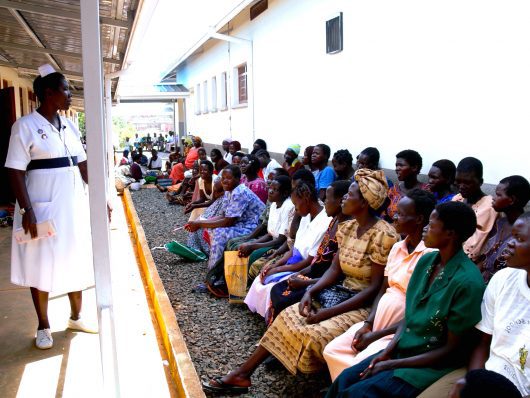
During the 14-year civil war in Liberia, the health system became increasingly fragile, and a lack of roads and transportation made it difficult for pregnant women to receive necessary emergency care. This issue has created a strong need for strengthened midwifery in Liberia.

As a result, Liberia had one of the highest maternal mortality rates in the world according to a 2015 USAID article, but the country is now trying to change that through investment in midwifery programs.

Currently, 44 percent of Liberian women give birth without a skilled attendant, and nearly one out of 138 mothers die from preventable causes during childbirth. Such issues could be avoided with basic or strengthened midwifery in Liberia, according to the World Health Organization.

Bentoe Tehounge, a trained midwife in Liberia, told WHO, “We need midwives who can ensure a safe pregnancy even before a woman is pregnant. People who can provide advice on family planning, nutrition, physical activity and preventing mother-to-child transmission of HIV.”

There are six midwifery schools in the Liberia, half of which are in rural areas, and less than 200 midwives for over four million people. Most of these midwives work in urban areas. Strengthening these schools, especially the rural ones, will improve access to quality care for women around the country.

Retaining these midwives is one step towards Liberia’s investment in the profession. According to WHO, many health professionals were driven out of the country due to the civil war and the Ebola crisis, and now midwives lack “safe accommodation and transport, are overworked and paid poorly and have limited opportunities for career advancement.”

A new B.S. program addresses a portion of these concerns by providing further professional development. The program graduates 50 to 75 registered midwives per class, which is expected to staff more than 700 health facilities in the country. To develop better teaching methods, Liberia is working with the Danish Midwives Association to pair Liberian and Danish midwives in order to learn more advanced skills, like preventing and treating hemorrhages. It is hoped that this new alliance will result in strengthened midwifery in Liberia.

In the United States, this final element is comparable to the apprenticeships or clinicals that midwives do to obtain a license. Mary Anne Brown, a midwife serving the Great Falls and Helena areas of Montana, said that degree programs require that their students find and work directly with a midwife to gain clinical experience.

Past midwife training in Liberia tried to work within a culture of home birth in Liberia (USAID reported that 63 percent of Liberian women gave birth outside of a health facility) and with the knowledge of traditional midwives.

The goal was to shift the focus to encouraging birth preparedness, recognizing and referring complications and providing appropriate emergency care through what USAID called “home-based life-saving skills.” By utilizing storytelling, case histories, discussion, role-play and demonstrations, midwives, expectant parents and community leaders were able to educate themselves at community meetings.

One of the greatest achievements of the previous midwife training in Liberia was its ability to connect traditional midwives to both health facilities and certified midwives. Certified midwives perform their own visits to discuss problems the traditional midwives are having, replenish supplies and reinforce the training.

The current programs are a part of WHO’s efforts to provide clear guidelines, tools and an evidence base to lead to strengthened midwifery in Liberia and around the world in order to improve care for pregnant women and reduce both maternal and neonatal mortality rates.

– Anastazia Vanisko

Photo: Public Domain Images

August 3, 2016
https://borgenproject.org/wp-content/uploads/borgen-project-logo.svg 0 0 Borgen Project https://borgenproject.org/wp-content/uploads/borgen-project-logo.svg Borgen Project2016-08-03 01:30:432024-12-13 17:54:29Liberia Invests in Strengthened Midwifery Programs
Global Poverty, Poverty Reduction

Seven Important Facts About Poverty in Switzerland

Poverty in Switzerland Swiss Poor Areas Poverty Rate

Poverty in Switzerland remains lower than many of its European neighbors. However, rates still affect a large part of the population. So, why are the Swiss poor? In the country, a lack of awareness about poverty combined with a high cost of living compounds the struggles felt by impoverished residents. Below are the leading facts about poverty in Switzerland.

Top Seven Facts about Poverty in Switzerland

1. One in 13 Swiss Residents Lives Below the Poverty Line.

Switzerland is one of the world’s wealthiest nations. However, data shows that one in 13 residents of Switzerland are still living in poverty. This rate may come as a surprise to many, as Switzerland is often associated with economic stability. By comparison, an estimated one in five residents of Britain lives in poverty, while the average resident of Zurich makes 21 times more per hour than the average resident of Kiev, Ukraine. Switzerland’s poverty rate is significantly lower than nearby European nations, however, 6.6 percent of the Swiss population still lives in poverty.

2. The High Cost of Living Amplifies the Issue.

Residents of Switzerland must account for a high cost of living; food prices and the cost of housing make daily financial needs quite high. Mandatory private health insurance adds further expense. Recent reports show Zurich and Geneva as two of the most expensive cities in the world in terms of cost of living, with certain reports placing the cities above New York City. However, higher incomes in the cities typically offset this cost, with high purchasing power reported. As a result, Zurich and Geneva rank second and third respectively in terms of purchasing power (surpassed only by Luxembourg.)

3. The Poverty Line is Set to Incorporate the Cost of Living.

In order to account for the high cost of living in Switzerland, the poverty rate has been set to incorporate the financial demands of living in the country. For a single person, the poverty line is set as making less than 2,200 francs per month (equal to slightly more than $2,200 in the U.S.) A couple living with two children is considered below the poverty line if earning less than 4,050 francs per month. Poverty in Switzerland is understood as the inability to afford the goods and social services necessary for a healthy and socially integrated life. The Swiss Conference for Social Statistics sets poverty line thresholds based upon meeting those needs.

4. Elderly, Immigrant and Single-Parent Populations are Especially Vulnerable.

Certain populations in Switzerland are especially vulnerable to poverty. These populations are much like the vulnerable populations in many countries, including families with only one parent, elderly residents, the unemployed, unskilled laborers and people living alone. Rates of poverty among these populations are significantly higher than other demographics. For example, those over the age of 60 are nearly three times more likely to live in poverty.

5. Trial and Error Approach to Solutions, Including Universal Basic Income.

As Switzerland seeks to address the levels of poverty that remain in the country, a referendum was voted on which would have paid each Swiss family a weekly guaranteed income. While the referendum failed in a vote this June, it represents an innovation in seeking solutions to poverty. Switzerland is the first country to consider a solution of this kind. Some consider the failure an important step, nonetheless, as it provides a platform for discussing the meaning of basic income.

6. Wages and Income Can Be Quite High in Relation to European Neighbors.

Incomes in Swiss cities are often quite high, with the average resident of Zurich earning $41 per hour or more. This level of earning is often what leads to the association of Switzerland with a lifestyle of security and contributes to offsetting high costs of living. However, for the 6.6% of Swiss residents who do live in poverty, keeping up with city living costs (dependent on similar wages) can lead to a daily struggle.

7. Poverty in Switzerland is Decreasing.

The good news for addressing poverty in Switzerland is a recent decrease in the number of those living in poverty. Since 2007, rates have decreased from 9.3% to 6.6%.

Assessing poverty in Switzerland demonstrates the importance of not allowing a minority impoverished population to go overlooked. The country’s innovative and consistent efforts to address poverty represent a democratic model for the discussion surrounding poverty in developed nations.

– Charlotte Bellomy

Photo: Flickr

August 3, 2016
https://borgenproject.org/wp-content/uploads/borgen-project-logo.svg 0 0 Borgen Project https://borgenproject.org/wp-content/uploads/borgen-project-logo.svg Borgen Project2016-08-03 01:30:172024-12-13 17:54:54Seven Important Facts About Poverty in Switzerland
Children, Global Poverty

Child Poverty in New Zealand

Child poverty in New Zealand

New Zealand is among the world’s most developed countries. The average life expectancy of its population is over 80 years of age, and the country’s education system is considered one of the best in the world. Unfortunately, poverty exists and is a challenge. In particular, child poverty in New Zealand is a real issue.

Approximately 305,000 children in New Zealand live in poverty. This means over a quarter of children living within the country are underprivileged. Additionally, 14 percent of these children cannot afford basic food, housing or clothing. According to UNICEF, “the economic cost of child poverty is in the range of NZ $6-8 billion per year.”

The organization states the failure to invest in poverty reduction efforts in the present will lead to major economic issues in the future.

Children that grow up in poverty–which is often in households with single-parents, large families or a disabled relative–are more likely to experience health problems, struggle to access education and become imprisoned in the future. Unfortunately, childhood poverty is cyclical and is not easily escaped from generation to generation.

In New Zealand, certain ethnic groups have higher rates of child poverty than others. Specifically, the Maori and Pacific populations face greater child poverty than the rest of the country.

Eliminating child poverty is not only a humanitarian responsibility but also an opportunity to help the country’s economy. According to UNICEF, eliminating child poverty can help improve New Zealand’s economy in the long run. Lowering child poverty rates would decrease the financial burden of healthcare and crime. Essentially, the entire community can benefit from aid programs.

Consequentially, many are calling upon the government to increase funding and programs available to the poor. There are multiple organizations dedicated to alleviating child poverty in New Zealand, including UNICEF, KidsCan and Child Poverty Action Group (CPAG).

KidsCan is an organization working to provide impoverished children with essential food, clothing and healthcare. Organizations such as these are crucial to solving the child poverty crisis within the country.

CPAG is another independent charity raising awareness and funding for child poverty in New Zealand. The organization believes that the government has not implemented any substantial efforts to reduce the problem.

It is crucial to address child poverty specifically as newer generations can break the cycle of poverty when given proper resources.

– Saroja Koneru

Photo: UNICEF

August 3, 2016
https://borgenproject.org/wp-content/uploads/borgen-project-logo.svg 0 0 Borgen Project https://borgenproject.org/wp-content/uploads/borgen-project-logo.svg Borgen Project2016-08-03 01:30:112024-05-27 09:34:46Child Poverty in New Zealand
Global Poverty

Global Poverty TEDx Talk Challenges Perceptions About Aid and Trade

 TEDx Talk Challenges Perceptions About Aid

In April, Anna Hagemann Rise gave a global poverty TEDx talk at the Stockholm School of Economics (TEDxSSE) entitled “Why we need a rethink in the fight against global poverty.” Her lecture focused on “trade versus aid” and the complexity of sustainably solving global poverty.

Rise begins her talk by posing a simple question about global poverty relief: “Who’s not in favor?” No hands go up. Of course no one is going to say they are against helping the impoverished. However, this speaker has a unique challenge for her audience.

Rise has a diverse academic background in international politics, communication and peace and conflict resolution. She has worked for the UN in various positions both in the U. S. and in Denmark, her home country. Her recent work has included communications, media, marketing and field work with the Swedish fruit smoothie company Froosh. She is currently its Group Communication & Public Affairs Director.

Rise admitted in her talk that her thinking about aid was initially “institutionalized” by her education. She perceived that trading with developing countries was exploitation, and that giving aid was always a helpful poverty solution.

As she traveled with Froosh and worked on the farms in developing countries where the company buys its produce, Rise saw the value in supporting farmers through trade. She realized that buying from developing countries was a sustainable way to fight poverty. In fact, she believes that this is the best way to fight global poverty.

In her global poverty TEDx talk, Rise passionately recounted how influential the fruit farms that she visits are in their own communities. For example, Guatemalan fruit farms invest in schools, local businesses and even housing in order to give back to their communities. Rise saw the value in the long-term investments that these farms were making to develop their communities.

Rise believes that the key to solving poverty is this type of long-term thinking that creates more sustainable solutions. According to her, the private and public sectors must work together to accomplish this. As she expressed in her talk and an interview, sustainable solutions require involvement and cooperation from both sectors.

Unfortunately, a vast number of trade barriers and bureaucratic procedures still exist that impair developing countries from trading with the rest of the world. The media can also negatively impact trade in developing countries since popular sentiments are not always open to some of these nations.

As Rise put it in her talk, “We need to be open and honest about how the conditions and how the reality is for these people.” For example, aid can sometimes harm developing nations despite good intentions. Leaders can misuse aid money and NGOs sometimes fail to provide long-term solutions for developing communities.

For this reason, Rise encouraged her audience to think critically about where aid money goes and how it works in developing communities. Educated consumerism is a “trendy” way to support good causes. But in her opinion, labels are simply advertising techniques for corporations to connect with conscious consumers.

So although buying from developing countries is good, it is important to keep questioning and challenging the system. “All aid is not bad. Of course. All trade is not good. No, of course not. All labels are not bad, either.”

Since global poverty is not a cut-and-dry issue, Rise’s advice to challenge the simple answers proves valuable for everyone concerned with helping to solve world poverty. “The world is not black and white. It’s actually very colorful.”

Rise’s global poverty TEDx talk encourages people to use the knowledge and inquisitiveness of this colorful world to improve conditions for all humans everywhere.

“Who’s not in favor?”

–Addie Pazzynski

Photo: Flickr

August 2, 2016
https://borgenproject.org/wp-content/uploads/borgen-project-logo.svg 0 0 Borgen Project https://borgenproject.org/wp-content/uploads/borgen-project-logo.svg Borgen Project2016-08-02 01:30:252024-12-13 17:55:30Global Poverty TEDx Talk Challenges Perceptions About Aid and Trade
Global Poverty, Water

Rainwater Harvesting Systems: Water Insecurity in Kenya

Rainwater Harvesting Systems
With a rapidly growing population and unpredictable climate, the citizens of Kenya find themselves in an increasingly dire situation of water insecurity. However, a few recent innovations using rainwater harvesting systems are taking key steps towards changing that and eliminating water insecurity in Kenya.

In a population of 46 million people, nearly 50% live below the poverty line. To make matters worse, an extreme weather climate means that the country at times enjoys plentiful rain and an abundant water supply, while at other times drought leaves much of the country with little water.

The resultant water insecurity in Kenya means that many — particularly women and children — spend as much as one-third of their day walking to get water. In times of extreme drought, citizens can be forced to walk more than nine miles in search of fresh water.

Several non-governmental organizations in Kenya and abroad are currently working hard to end this trend and create innovations to combat water insecurity in Kenya.

The Africa Sand Dam Foundation, along with several other organizations, have begun partnering with communities to build rock catchment systems that can be used as effective rainwater harvesting systems during Kenya’s wet seasons.

The system uses naturally occurring rock outcroppings to divert the rainwater into a large collection tank where it can be saved and stored for later use. Using the new system allows villages to collect upwards of 90% of the total rainwater in the area and because it uses no chemicals or fuels, the system has very little environmental impact.

Experts who’ve developed the infrastructure work closely with local villagers to teach them how to build and maintain the system. Each village also has the opportunity to form a committee to oversee the construction and maintenance of the system, ensuring that it will be used properly and continue to be efficient long after the experts have left.

This new method has the potential to dramatically change the situation of water insecurity in Kenya since a consistent, reliable water source will allow citizens to be more productive and focus their energy on other areas instead of spending much of their day searching for water. Many schools have already seen benefits and many no longer have to ration water during lengthy dry seasons.

Since the rainwater is run through a filter embedded within the system, the number of waterborne diseases has also been dramatically reduced and places that have begun to use the system have already seen improvements to overall health.

Water insecurity in Kenya isn’t the only thing being improved by these new innovations either. The village committees that oversee the systems are also able to sell some of the excess water that is collected that they can then use to invest in other projects.

One village, for example, earned $160 from selling water that they used to purchase ten goats for the community. The goats can then generate their own income that results in a multiplying effect within the community. The end result is a drastic improvement to the overall health and welfare of the community and an avenue through which these communities can lift themselves out of poverty.

Water insecurity in Kenya is a significant, ongoing problem that for years has hindered growth in the country and left Kenya’s citizens at the mercy of the weather with few resources to combat their situation.

New rainwater harvesting systems currently being developed have the potential to reverse this problem and provide the people of Kenya with the help they need to make the necessary push towards development. The hope is that in time the entire country will have consistent access to clean water and the ability to thrive without development assistance.

– Sara Christensen

Photo: Flickr

August 1, 2016
https://borgenproject.org/wp-content/uploads/borgen-project-logo.svg 0 0 Borgen Project https://borgenproject.org/wp-content/uploads/borgen-project-logo.svg Borgen Project2016-08-01 01:30:572024-12-13 17:54:55Rainwater Harvesting Systems: Water Insecurity in Kenya
Education, Global Poverty

7 Global Book Distribution Organizations Improve Literacy

Global Book Distribution Organizations
Global literacy rates have risen in recent years, with adult literacy at 84.1 percent and the youth rate at 89.5 percent. Roughly 896.7 million people cannot read or write. Two-thirds of these people are female, and a majority live in sub-Saharan Africa and southwest Asia. Reading and writing skills are valuable for continuing education and defeating poverty, thus making global book distribution organizations invaluable.

Room to Read’s website shares the chilling statistic: “A child born to a literate mother is twice as likely to survive past age five.” In order to improve global education and literacy, a plethora of organizations have emerged to provide books to disadvantaged areas. These global book distribution organizations are all working to raise literacy with unique approaches to best serve their target community.

1. Book Bus
The Book Bus was started by publisher Tom Mascher in 2008. The program began in Zambia but has since grown to Malawi and Ecuador. It emphasizes providing relevant books to both the age and reading level of its recipient. It delivers books and directly teaches children as well. Mobility is a huge asset to this program; because literacy rates are lowest in remote areas, the Book Bus can travel to disadvantaged communities and schools.

2. International Book Bank
This organization is more academic than many of the other global book distribution organizations. The International Book Bank supplies large quantities of new, single title books for classroom use to improve global education. Since its first shipment to Jamaica three decades ago, it has sent books for every age group all over the world. By allowing communities to choose the books they need, and providing enough copies for the entire class, the International Book Bank ensures that schools have the appropriate resources.

3. Book Aid International
Book Aid International has been around since Lady Ranfurly set up a library in the Bahamas in 1954. She continued the program in the U.K., where it grew to send books to more countries. Currently, Book Aid International provides books for education establishments, refugee camps, prisons and libraries in Palestinian territories and twelve African countries. For nomadic people, the organization has built mobile libraries. It has reading materials and spaces that can be transported via truck, camel or horseback.

4. Room to Read
In 2000, Room to Read began delivering donated books to rural Nepalese communities. Over the last 16 years, the program has expanded to building schools and libraries, training teachers, and supporting girls’ education. It works in eight countries and publishs books in local languages. In 2012 alone, Room to Read’s libraries supplied 9.7 million books.

5. International Book Project
The International Book Project is based in Lexington, KY and ships all over the world. It sends boxes of books any size between small shipments and sea containers that can supply an entire school district. In 2007, it launched a unique program called “Books as Bridges”  where schools in Kentucky are paired with schools overseas. Students exchange letters, packages and books to improve both writing skills and cultural awareness. The last school year had 50 participating classrooms from seven countries, with a total of 2,694 students.

6. African Library Project
The African Library Project ships American books to Africa. It matches communities on either end through a substantial network of organizations. U.S. institutions then gather books and funds to start a library. They emphasize sustainability by recycling used books and supporting the new libraries abroad. To accomplish this, libraries are built in places where the community has the manpower, space and enthusiasm to start a library and receives regular check-ups by African partners. This project has started 1,825 libraries in 12 countries.

7. World Literacy Foundation
The World Literacy Foundation has been focused on book distribution since their founding in 1996. Recently, it has increased digital learning as people have more access to technology. On the website, its noble vision is stated simply: “We envision a world in which every one of us can read and write, in which there is free access to education for all.”

While there is still much to be done, these seven global book distribution organizations are making massive impacts on global education.

– Jeanette I. Burke

Photo: Pixabay

August 1, 2016
https://borgenproject.org/wp-content/uploads/borgen-project-logo.svg 0 0 Borgen Project https://borgenproject.org/wp-content/uploads/borgen-project-logo.svg Borgen Project2016-08-01 01:30:522024-12-13 17:54:477 Global Book Distribution Organizations Improve Literacy
Education, Global Poverty

The Lord’s Resistance Army Legacy in Northern Uganda

Uganda

The Lord’s Resistance Army (LRA) took a stronghold in Northern Uganda in 1986. Its leader, Joseph Kony, commanded his troops to overthrow the Ugandan government by abducting thousands of children and forcing them to work for him.

The Lord’s Resistance Army only had access to Northern Uganda, leaving half of the country in disarray while the other side of the country focused on economic and social advancement.

During its malevolent attacks, the LRA was known to kill the weak and old with machetes, swords, or stones. To further elicit fear, Kony would maim victims, leaving his mark on villages.

Kony’s attacks have scarred and uprooted the lives of nearly all Acholi people, who make up the majority of persons living in Northern Uganda. Due to fear, many have taken refuge and fled their homes. Many continued to stay in hiding even after Kony’s attacks became less frequent beginning in 2006.

Due to Joseph Kony’s reign of terror, nearly the entire population of Northern Uganda was displaced. Little was done to ensure that children had access to education, leaving the region with two generations of uneducated youth.

As the Acholi people began to feel safe enough to return to their homes, they became aware of the destruction that happened in their villages. There were no real jobs available, there was no access to education and there was no infrastructure.

Unlike in the rest of Uganda, where children have a chance to receive an education, the dire lack of facilities in Northern Uganda reinforces the cycle of poverty.

Many international organizations are trying to give Acholi children access to education and to help break the dreadful cycle of poverty that is looming over them. For example, War Child is an organization that seeks to ensure that children’s lives are not ruined by war.

War Child is helping by sending 2,000 of the poorest Acholi children to school. This involves training and giving grants to parents, siblings and other family members. In some cases, the grants are given to children directly, so that they may set up their own income-generating enterprises.

The organization is also training teachers in Northern Uganda to teach at a higher standard and to run schools efficiently. War Child also has a Youth Entrepreneurship Operation which provides loans to young Acholi people money to start their own businesses. War Child provides not only funding, but also mentorship and verbal support.

Between getting children in school, hiring and educating teachers and providing entrepreneurship starting blocks, War Child is bringing hope back to a recovering region. The humanitarian community hopes that other organizations will soon be inspired to undertake similar initiatives, in order to help rebuild lives in Northern Uganda.

– Bella Chaffey

Photo: Flickr

August 1, 2016
https://borgenproject.org/wp-content/uploads/borgen-project-logo.svg 0 0 Borgen Project https://borgenproject.org/wp-content/uploads/borgen-project-logo.svg Borgen Project2016-08-01 01:30:382024-05-27 09:34:11The Lord’s Resistance Army Legacy in Northern Uganda
Economy, Global Poverty

6 Facts about Poverty in South Africa

Poverty in South Africa

South Africa is a nation with a very deep and turbulent history. Since the official end of apartheid in 1994, the country has been struggling to combat entrenched poverty and inequalities. In order to further understand the issues, here are six facts about poverty in South Africa:

  1. South Africa is a middle-income nation with some highly developed economic sectors. For instance, South Africa’s stock exchange, JSE, is the largest in Africa and top 20 worldwide. Since 2000, South Africa has shown decreasing poverty and a decreasing wealth gap.
  2. The country nonetheless still suffers from serious poverty and unemployment, with 25 to 30 percent of the workforce unemployed. According to the U.S. government, around 36 percent of the population is living in poverty.
  3. The Statistics South Africa defines poverty with three categories: the food poverty line, the lower bound poverty line and the upper bound poverty line. About 20 percent of the population lives below the food poverty line, meaning they cannot afford food that meets a minimum calorie intake.
  4. South Africa’s poverty is rooted in economic disparities. Much of the nation’s wealth, as it is a moderately wealthy nation, is concentrated in the hands of few, particularly those who controlled wealth in apartheid times. Between 60 and 65 percent of the wealth in South Africa is concentrated in the hands of the wealthiest 10 percent of the nation. Comparatively, 40 to 45 percent of wealth in the U.S is controlled by the highest 10 percent.
  5. Poverty in South Africa has actually been declining since the mid 2000s. As a result of doubled per capita health spending and the building of 1.5 million free homes, among other government initiatives, over 2 million South Africans have climbed out of extreme poverty since 2006.
  6. In addition to the increased government spending, the United Nations Development Program has been working with the South African agencies to redress South Africans who were forced off of their land during apartheid. This land restitution initiative will help decrease South Africa’s wealth gap.

While poverty in South Africa is still a large problem, the recent government and international initiatives have had a dramatic effect on poverty reduction and economic redistribution.

– John English

Photo: Flickr

August 1, 2016
https://borgenproject.org/wp-content/uploads/borgen-project-logo.svg 0 0 Borgen Project https://borgenproject.org/wp-content/uploads/borgen-project-logo.svg Borgen Project2016-08-01 01:30:152024-12-13 17:55:316 Facts about Poverty in South Africa
Page 1789 of 2179«‹17871788178917901791›»

Get Smarter

  • Global Poverty 101
  • Global Poverty… The Good News
  • Global Poverty & U.S. Jobs
  • Global Poverty and National Security
  • Innovative Solutions to Poverty
  • Global Poverty & Aid FAQ’s
Search Search

Take Action

  • Call Congress
  • Email Congress
  • Donate
  • 30 Ways to Help
  • Volunteer Ops
  • Internships
  • Courses & Certificates
  • The Podcast
Borgen Project

“The Borgen Project is an incredible nonprofit organization that is addressing poverty and hunger and working towards ending them.”

-The Huffington Post

Inside The Borgen Project

  • Contact
  • About
  • Financials
  • President
  • Board of Directors
  • Board of Advisors

International Links

  • UK Email Parliament
  • UK Donate
  • Canada Email Parliament

Get Smarter

  • Global Poverty 101
  • Global Poverty… The Good News
  • Global Poverty & U.S. Jobs
  • Global Poverty and National Security
  • Innovative Solutions to Poverty
  • Global Poverty & Aid FAQ’s

Ways to Help

  • Call Congress
  • Email Congress
  • Donate
  • 30 Ways to Help
  • Volunteer Ops
  • Internships
  • Courses & Certificates
  • The Podcast
Scroll to top Scroll to top Scroll to top