• Link to X
  • Link to Facebook
  • Link to Instagram
  • Link to TikTok
  • Link to Youtube
  • About
    • About Us
      • President
      • Board of Directors
      • Board of Advisors
      • Financials
      • Our Methodology
      • Success Tracker
      • Contact
  • Act Now
    • 30 Ways to Help
      • Email Congress
      • Call Congress
      • Volunteer
      • Courses & Certificates
      • Be a Donor
    • Internships
      • In-Office Internships
      • Remote Internships
    • Legislation
      • Politics 101
  • The Blog
  • The Podcast
  • Magazine
  • Donate
  • Click to open the search input field Click to open the search input field Search
  • Menu Menu

Archive for category: Global Poverty

Key articles and information on global poverty.

Food & Hunger, Global Poverty

CEO Fights to End Food Shortages in Venezuela

Food shortages in VenezuelaBeginning in 2014, oil prices around the world began to plummet. This sparked an extreme financial crisis in Venezuela, whose economy is based solely on its immense reserves of the fossil fuel. This evolving crisis has contributed to dire food shortages in Venezuela. The CEO of Empresas Polar, Lorenzo Mendoza, is working to aid fellow Venezuelans in need. Oil became a source of vast political influence in Venezuela once the industry became nationalized in 1975. The Washington Post reports that oil currently makes up about 95 percent of the region’s revenue from exports.

Oil Profits Plummet

In 2013, following the death of Hugo Chávez, former Vice President and current Head of the United Socialist Party of Venezuela Nicolas Maduro was elected president and promised to continue the policies of his predecessor. According to The Washington Post, Maduro is “discouraging private industry that could have diversified the nation’s economic base” and using revenues from PDVSA, the state oil company, to “pay for generous social welfare benefits that won votes.” This lack of diversification and unruly spending, combined with the harsh drop in oil prices, has left the economy and citizens of Venezuela in turmoil. The International Monetary Fund’s figures show that Venezuela “went from earning $80 billion from oil in 2013 to a projected $20-25 billion in 2016.” This discrepancy of billions of dollars has created food shortages in Venezuela, resulting in riots and violence. Numerous looters have been shot and killed, hundreds have been arrested and lines of hungry families continue to grow.

Uncooperative Government

Political and economic instability has allowed crime to prosper. According to the Los Angeles Times, “gangs on motorcycles have fought over the right to control and distribute food.” Instead of taking responsibility for the lack of revenue, mounting inflation and food shortages, President Maduro has shifted blame onto the U.S. government, as well as Mendoza. Mendoza’s business, a large-scale food processing and brewery corporation, is a unique entity within Venezuela’s socialist society. Empresas Polar is the largest privately owned enterprise in a country whose government controls a substantial portion of businesses.

President Maduro accused Mendoza of withholding goods and slowing production during the crisis. The Wall Street Journal reports that the government views Mendoza as “a traitor responsible for the scarcities.” Mendoza denies all accusations and believes that it is the government’s control of prices, lack of imports and halts in production forced by a lack of federal funds that is fueling the food shortages. In fact, Mendoza is actively fighting to end the overwhelming food shortages in Venezuela. The CEO is urging his government to cooperate with organizations that can offer aid.

Venezuela Refusing Help

In February, The Wall Street Journal reported that Mendoza contacted Harvard economics professor Ricardo Hausmann to speak of “Venezuela’s need for up to $60 billion of loans from the International Monetary Fund and World Bank to avoid economic meltdown.” This cry for help will most likely go unheard, as Venezuela’s government has denied foreign aid from most countries, especially the U.S., since the time of Hugo Chávez.

While President Obama and President Maduro did meet for a few moments at the Summit of the Americas in April, Maduro spent most of his time lambasting Obama for his sanctions, which are based on human rights violations by a handful of Venezuelan officials.

Moving Forward

In this time of crisis, Empresas Polar and its charismatic CEO Lorenzo Mendoza are bringing hope to Venezuela. Empresas Polar represents a bright future for Venezuelan business, as it is responsible for the employment of thousands, offers price-conscious products, a provides a profitable business plan and diversification of the Venezuelan market. Moreover, despite attacks on his character and livelihood made by the government, Mendoza will continue to fight for foreign aid to end the food shortages in Venezuela.

– Liam Travers

Photo: Business Insider

August 12, 2016
https://borgenproject.org/wp-content/uploads/borgen-project-logo.svg 0 0 Borgen Project https://borgenproject.org/wp-content/uploads/borgen-project-logo.svg Borgen Project2016-08-12 01:30:062024-05-27 09:34:07CEO Fights to End Food Shortages in Venezuela
Economy, Global Poverty

5 Things to Know About Poverty in Tajikistan

Poverty in Tajikistan

Poverty in Tajikistan remains a problem. Tajikistan is frequently cited as the poorest former Soviet republic, with one of the world’s lowest GDPs per capita (ranked 192). While it is a place that Americans do not hear about often, USAID has been busy in the country of just over eight million inhabitants for more than 20 years, almost as long as Tajikistan has been a sovereign nation.


Poverty in Tajikistan: Key Facts


1. Proportional to GDP, Tajikistan has one of the largest remittance economies in the world.

Due to a scarcity of secure employment opportunities, which contributes greatly to poverty in Tajikistan, more than one million Tajik citizens leave the country searching for work. The money that these Tajiks send home equals more than half of the entire country’s GDP. The vast majority of these migrants—90 percent—travel to Russia.

2. Poor infrastructure stagnates the Tajik economy.

Tajikistan is landlocked and sits in the northwestern Himalayas, one of the most mountainous regions on the planet, making transportation a challenge. Trade with other nations, which is important to the country’s economy, relies on a dilapidated railway system. The diminutive electricity market means energy infrastructure is also lacking. Power shortages and outages are rampant, especially during the winter.

The future for Tajikistan’s infrastructure may, however, be looking up due to foreign investment, which may alleviate some of the poverty in Tajikistan. Recently, Chinese investors funded new road construction in Dushanbe, the capital. Russia and Iran have also invested in hydroelectric plants, including a dam on the Vakhsh River that may become the world’s largest.

3. Tuberculosis is a growing public health problem.

Multi-drug resistant tuberculosis (MDR-TB) is disproportionately high in many central Asian countries, including Tajikistan. The country’s healthcare system is ill equipped to respond to this issue, lacking adequate information systems and human resources. Most funds for fighting TB come from international assistance.

MDR-TB is a complicated public health challenge, however, the World Health Organization (WHO) has partnered with the government and aid groups to improve and monitor Tajikistan’s ability to treat TB and stave off MDR-TB.

4. Most of the population does not have access to clean water.

Nearly 60 percent of Tajik citizens rely on unsanitary water supplies. Many depend on irrigation ditches for drinking water, meaning waterborne diseases are common. Diarrhea is the sixth leading cause of death in children under five.

While these statistics may seem bleak, water quality is a relatively straightforward issue to tackle. USAID has made notable strides in providing better access to clean water, one of its main focuses in Tajikistan. According to its website, USAID has “established 56 community-level water users’ associations,” helping the Tajik weather and water forecasting agency better manage the country’s vast supply of fresh water.

5. The civil war destroyed one out of five schools in the country.

Funding for education decreased drastically after Tajikistan became independent from the Soviet Union in 1992. The following five years of fighting destroyed or damaged a significant portion of the country’s schools. Naturally, such collateral destruction has contributed to the precarious state of the education system.

Since the fighting, the country has either struggled to or failed to revive school systems. According to the latest reports from UNICEF, schools are overcrowded, underfunded and understaffed, with many teachers working triple shifts. Furthermore, dropout rates are high, especially for girls.

The state of Tajikistan’s education system leaves much to be desired. However, organizations like USAID and UNICEF have partnered with the Tajik government. They are determined to nurture this fragile system to a point where it can sustain itself, mainly by focusing on preventing dropouts and improving equity and access.

In many ways, Tajikistan seems to lag behind its neighbors in the Central Asian region. With a strong memory of war and political upheaval, coupled with uncompromising geography, the country has struggled to develop.

But international aid organizations have shown great ambition and, partnered with the Tajik government, achieved tangible successes in reducing poverty in Tajikistan and its burdens. Likewise, international investment from the private sector suggests promise and hope for a society that has much to gain.

– Charlie Tomb

Photo: Pixabay

August 11, 2016
https://borgenproject.org/wp-content/uploads/borgen-project-logo.svg 0 0 Borgen Project https://borgenproject.org/wp-content/uploads/borgen-project-logo.svg Borgen Project2016-08-11 01:30:262024-12-13 17:54:555 Things to Know About Poverty in Tajikistan
Global Poverty, United Nations

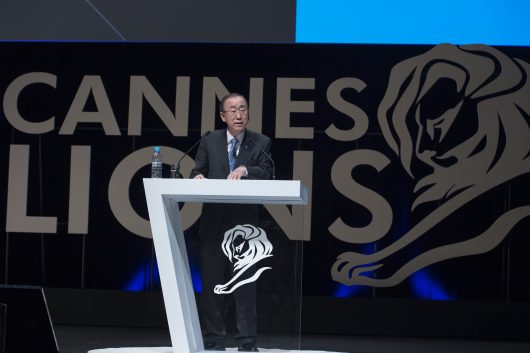
UN Unveils New Advertising Initiative: Common Ground

Common_Good_Initiative

The Common Ground Initiative was unveiled at the Cannes Lions advertising festival on Friday, June 24 to a crowd of some of the industry’s top leaders. U.N. Secretary General Ban Ki-Moon shared the stage with some of advertising’s most powerful CEOs to make the announcement.

The initiative is a plan to produce and distribute advertising about the Sustainable Development Goals (SDGs), the United Nation’s set of 17 goals for improving living conditions around the world. The ads will run in publications such as The Economist, The Wall Street Journal, the Daily Mail and Le Figaro, to name a few.

The collaborative effort between the rival companies is unprecedented, even more so when considering that both the ads and media time were gifted pro-bono for the cause.

However, considering the importance of the SDG’s, the necessity of raising awareness in participating countries cannot be understated. It is especially vital considering that there are no legal mandates pushing countries towards adopting the SDGs.

The Wall Street Journal interviewed Jan Eliasson, the deputy secretary-general of the U.N. In his interview, Eliasson argued that raising awareness of the goals would add pressure on governments to take a stand on some of the issues in question.

A 2013 survey by the European Commission found that only six percent of the European Union was aware of the U.N.’s previous initiative, the Millennium Development Goals, despite their success. The U.N. hopes that Common Ground will inspire more countries to reach the 2030 date for the current goals.

According to the Jamestown Sun, the first set of advertisements will focus on everyday people agreeing that the goals of the SDG’s are more important any rivalries between interested parties, implying that everybody should be a strong supporter of the U.N.’s goals.

In debuting the initiative, the advertising companies issued the following statement: “By working in partnership to support the Sustainable Development Goals, we want to demonstrate that even fierce competitors can set aside their differences in order to serve a wider common interest.”

– Sabrina Santos

Photo: U.N. Multimedia

August 11, 2016
https://borgenproject.org/wp-content/uploads/borgen-project-logo.svg 0 0 Borgen Project https://borgenproject.org/wp-content/uploads/borgen-project-logo.svg Borgen Project2016-08-11 01:30:182024-12-13 17:54:50UN Unveils New Advertising Initiative: Common Ground
Education, Global Poverty

Why Poverty Exists and What We Can Do About It

Why Poverty ExistsPoverty has causes deeply rooted in evolving human interests. In today’s society, the interpretations for why poverty exists have become intertwined in history, politics and the economy. The big question being asked—are people suffering needlessly?—deserves an answer.

A Lack of Resources

The World Health Organization reports that nearly 700 million people in the world lack access to safe water. According to The World Food Programme, nearly 800 million, or one in nine people, lack the food and nutrition necessary to live a healthy and active life.

Water and food are becoming an increasingly large concern as the world population is expected to reach between nine and 11 billion by the end of the century. However, the world already produces enough food to feed 10 billion people. Furthermore, with desalination and water recycling technology, supplying safe drinking water to even the driest areas of the world is possible with enough energy and money.

Despite the rising population, there are currently more than enough resources to nourish everyone, and there exists a significant incentive to disperse these resources. Every U.S. dollar spent on water and sanitation returns $4 to the global economy. Likewise, every dollar spent on proven nutrition interventions returns $16, as adequately nourished children go on to have higher IQs, increased education and better salaries.

On the right track, Congress recently passed the Global Food Security Act, which provides a platform and allocated funding to develop a global nutrition security strategy. Many developed nations have similar programs, but despite the economic incentive to provide water and food security, not enough funding is provided for these programs. There have been steps taken to end resource poverty but not at the necessary scale.

A Lack of Education

At the heart of many narratives, and perhaps a symptom of the larger issue, individual shortcomings are the reasons why poverty exists. Those who are unable to compete in the market do so because they lack skills relative to the population at large.

For many, disadvantage takes the form of fewer opportunities for education and economic growth. More than 72 million children of school age are not in school, and 759 million adults remain illiterate and unable to better their living conditions.

For others, disadvantage begins with conception. Prenatal malnutrition, drug use, environmental toxins and even stress can lead to poor brain development in the womb. Poor development begets poor performance as well as inadequate skills to compete economically. A lack of skills and education becomes the cause of one generation’s poverty, and a symptom of that of the next.

Many steps in the cycle of why poverty exists are easily preventable. Over 16,000 children under the age of five die of preventable causes, and 800 women die everyday related to childbirth and pregnancy. The Reach Every Mother and Child Act, which has been introduced to the House and Senate, aims to help save the lives of 600,000 women and 15 million children by 2020, and will help to ensure healthy development. Healthy, well-nourished children are much easier to educate.

Social v. Economic Reasons

Institutionalized inequalities create cycles of poverty exacerbated by lack of resources, education and opportunity.

Political systems that favor the wealthy may not have the interests of the working poor at heart. Corrupt governments prevent aid from reaching those in need. Social structures may prevent movement between classes. Historical exploitation of a country’s resources may have long-lasting effects, and oppression of a population leads to large income disparities. One does not have to search far to find documented examples of each of these depravities, and they even point to a larger problem than just a lack of resources or skills.

If we are in fact past our colonial era, then our involvement in developing countries should be in the interest of cultivating a global economy–one that works for all countries involved. Allocating funds to foreign aid and growth is a step in that direction. Domestic and foreign interests need not be mutually exclusive.

Successful poverty reduction exists but could be improved and expanded with more time and resources. The U.S allocates only 0.19 percent of its gross national income to foreign aid. Only six countries have ever met the target laid forth by the Organization for Economic Co-operation and Development, which sits at just 0.7 percent of GNI. Not only will aid help improve the global economy, but also many developed countries play a role in creating the political and social inequalities listed above. With economics and ethics on the side of the poverty reduction, is 0.19 percent cutting it?.

In a fair world, choice will be the only reason for why poverty exists, and at that point it can be deemed inevitable, but at present, the suffering of many stems from causes, if not within our control, then within our reach.

– Lia Ferguson

Photo: Pixabay

August 11, 2016
https://borgenproject.org/wp-content/uploads/borgen-project-logo.svg 0 0 Borgen Project https://borgenproject.org/wp-content/uploads/borgen-project-logo.svg Borgen Project2016-08-11 01:30:052024-12-13 17:55:30Why Poverty Exists and What We Can Do About It
Global Poverty, Refugees and Displaced Persons

Refugee Camps: Temporary Solutions to Long-Term Problems

Refugee camps

Refugee camps are supposed to be temporary living settlements for displaced people fleeing violence and persecution from their home countries. While the accommodations within refugee camps are built on short-term solutions, the idea of “temporary” for refugees grows obsolete as their living situations become more permanent.

A refugee spends an average of 12 years living in a camp according to the New York Times. These camps face their own significant problems. In the last 10 years, the number of displaced people in the world tripled. Over 60 million people are now displaced, said the United Nations High Commissioner for Refugees (UNHCR). Refugee camps are constantly subjected to insufficient funding and support from the international community, overcrowding, scarcity of food, shortage of clean water and poor sanitation.

Without adequate food, refugees are susceptible to chronic malnutrition, which increases their risk of disease or illness. While the UNHCR recommends a daily minimum of 20 liters per person per day, many refugee camps fail to meet these standards. A lack of clean water and poor sanitation systems result in more diseases, such as diarrhea and cholera.

Proactive health measures, however, are being taken. To combat malnutrition and nutrient deficiencies, some refugee camps have implemented community gardens. At the Meheba refugee camp in Zambia, for example, refugees can grow their own food and add fruits and vegetables to their diets. Calls for improvements in both the latrine and sufficient waste disposal systems have also been made, as these will not only improve sanitation but also prevent disease.

The Kilis Refugee Camp in Turkey resembles more of a permanent shelter. There are no tents, but sturdy containers instead. The camp has amenities that many others lack; electricity, maintenance, a clinic and grocery stores. Within the grounds, there are also schools and counselors.

However nice the camp is, the prolonged stay of many of the refugees makes it more difficult to maintain psychological well-being. The placement of refugee camps away from society and the increasing length of stay by their residents make it hard for the people to remain engaged. Without employment and integration, refugees cannot practice their skill sets or feel connected to the local community.

UNHCR Engineer and Physical Planning & Shelter Officer Anicet Adjahossou found that one solution to strengthen community building within refugee camps was to work with anthropologists and refugees to redesign the standard refugee camp grid format into a new housing layout.

In 2012, Adjahoosu worked with UNHCR at the Dollo Ado refugee camp in Ethiopia to organize the homes into sets of U-shaped enclosures. The innovative arrangement prompts more family interaction and allows for larger communal areas. Also included were locations for schools, water distribution points, markets and health centers.

In addition to improving the living conditions in refugee camps, more aid must be given to prevent and end conflicts, so that we do not continue to see an increase in people forced to flee their homes in search of safety. Luckily, it appears that advocates like Anicet Adjehossou are taking the lead.

– Erica Rawles

Photo: Flickr

August 10, 2016
https://borgenproject.org/wp-content/uploads/borgen-project-logo.svg 0 0 Borgen Project https://borgenproject.org/wp-content/uploads/borgen-project-logo.svg Borgen Project2016-08-10 01:30:282024-12-13 17:55:31Refugee Camps: Temporary Solutions to Long-Term Problems
Extreme Poverty, Global Poverty

10 Facts About Poverty In Malawi

Malawi is a landlocked country in southeastern Africa bordered by Tanzania, Mozambique and Zambia. The country also borders Lake Malawi, also known as Lake Nyasa. Lake Malawi accounts for more than one-fifth of the country’s total area, making it a significant geographical feature. Poverty in Malawi has been at critical levels for decades. Of the approximately 21.8 million people in the country, about 50.7% lived below the national poverty line in 2019.

Many Malawians work in agriculture and it is hard for them to produce enough crops to maintain an income above the international poverty line. With parental death, disease and crop failure, the obstacles that many Malawians face are abounding. Below are the leading facts that thoroughly explain and illuminate the pressing issue of poverty in Malawi.

  1. In Malawi, there are more than 900,000 adults living with HIV. The infection rate is twice as high among women as it is among men. Additionally, only 88.3% of adults living with HIV know that they are HIV-positive and about 98% of them are receiving antiretroviral treatment (ART).
  2. Only 67.3% of Malawi’s population can read and write by the age of 15. This is partially attributed to a lack of access to quality education, a high number of student to teacher ratio, teacher absenteeism and a low enrolment rate.
  3. Due to poverty, poor access to health care, disease and food shortage, the average life expectancy for a Malawian is 63 years, which is 25 years more than it was in 1960, according to the World Bank. Further, The median age for Malawians is 20.3 years old.
  4. There are only 0.05 doctors for every 1,000 individuals in Malawi. As a result, millions in Malawi do not have access to standard health care services.
  5. Malawi’s economy is mainly agricultural, with 80% of the population living in rural areas. Additionally, the sector contributes 30% of the country’s national gross domestic product (GDP).
  6. The International Fund for Agricultural Development (IFAD) is working in harmony with Malawi’s government to promote agricultural growth in rural areas. This is an effort to reduce poverty throughout Malawi.
  7. About 30% of Malawian children do not start primary school (which is free) and only 33% of those who enroll will go on to complete it. Secondary and higher education is mostly attended by those of households above the international poverty line, predominantly due to the enrollment fees.
  8. Malawi is one of the world’s most impoverished countries, ranking 172 out of 193 countries on the Human Development Index.
  9. As of 2015, more than one million Malawi children were orphaned due to HIV/AIDS.
  10. In addition to IFAD, Access Health Africa, an international nonprofit, is providing Malawians with access to quality health services, education and resources through community initiatives. The organization has provided 160 general surgeries and reached more than 1,000 people.

The people of Malawi face great hardships; however, with the help of nonprofits like IFAD and Access Health Africa, there is hope for an increased economy, health services and better school systems. This, in turn, will decrease disease, orphaned children and overall poverty in Malawi.

– Bella Chaffey

Photo: Flickr
Updated: June 01, 2024

August 10, 2016
https://borgenproject.org/wp-content/uploads/borgen-project-logo.svg 0 0 Borgen Project https://borgenproject.org/wp-content/uploads/borgen-project-logo.svg Borgen Project2016-08-10 01:30:012024-06-01 12:43:4010 Facts About Poverty In Malawi
Global Poverty

Addressing Poverty in Qatar: 60 Percent Live in “Labor Camps”

Poverty in Qatar

The Ministry of Development Planning and Statistics disclosed on June 6, 2016 that 1.4 million people, nearly 60% of Qatar’s population, live in what the Qatari government officially labels as “labor camps.”

Migrants from poorer countries have moved to Qatar in recent years to develop its infrastructure for tourism projects, including preparation for the 2022 World Cup.

However, migrant workers continue to live a life of poverty in Qatar, with many human rights groups like Amnesty International condemning Qatar for providing “squalid and cramped accommodation” for its very large migrant workforce.

According to Amnesty International, migrant workers are also not paid for several months at a time, which puts significant emotional and financial pressures on workers already burdened with heavy debts.

Recently, 13 people died in a fire that broke out in a labor camp for migrants working on a waterfront tourism project in southwest Qatar. The fire highlights how Qatar has treated migrant workers by providing poor living conditions for them.

The government responded to criticism by building new housing complexes for workers, including a city south of Doha. This new city, known as “Labour City,” will include cinemas, shops and a cricket stadium for migrant workers.

Outside of the government, various organizations have also assisted migrant workers to overcome their life of poverty in Qatar. One such organization is Reach Out to Asia (ROTA), a member of the Qatar Foundation for Education, Science and Community Development.

On June 8, ROTA launched its Ramadan Project 2016, bringing together over 100 local volunteers to pack and distribute bulk groceries to more than 200 families in need across Qatar.

ROTA volunteers packaged food parcels containing items such as flour, cooking oil, milk powder and lentils that were later distributed before the start of Ramadan. The program also provided beneficiary families with shopping vouchers to purchase other products.

ROTA volunteers, numbering 300, partook in several community service activities set to take place over the month, including the installation of computer labs for migrants working on construction projects.

Despite living a life of poverty in Qatar, migrant workers are slowly overcoming hardships through additional assistance by the government and various organizations.

– Alexis Pierce

Photo: Flickr

August 9, 2016
https://borgenproject.org/wp-content/uploads/borgen-project-logo.svg 0 0 Borgen Project https://borgenproject.org/wp-content/uploads/borgen-project-logo.svg Borgen Project2016-08-09 01:30:522024-12-13 17:54:39Addressing Poverty in Qatar: 60 Percent Live in “Labor Camps”
Global Poverty

Why Africa Matters to the United States

Africa Matters to the U.S.

The dichotomy between the “global north” and the “global south” continues to persist around the world, especially in the case of Africa. That is why it is essential for citizens of the most powerful country on earth to realize that Africa matters to the U.S.

While many Americans might envision a far-away land home to exotic animals and people plagued by famine, crime or sickness, the continent’s reality is much brighter.

Enrollment rates in secondary education increased by 48 percent from 2000 to 2008, life expectancy has increased roughly 10 percent and real income per person has increased by over 30 percent across the continent, according to the Economist.

The IMF also predicts that three of this year’s 10 fastest growing economies will be the Ivory Coast, Tanzania and Senegal.

The future of Africa could be brighter still with continued U.S. involvement. Not only can U.S. aid efforts help diminish poverty, they can simultaneously promote U.S. interests abroad. Through encouraging peace and security, expanding Africa’s energy sector, competing with China and opening up new markets for U.S. businesses, both the U.S. and Africa can flourish.

It is for these reasons that Africa matters to the U.S. and the U.S. matters to Africa.

Peace and Security are Global Needs

The United Nations cites “violence and fragility” as the biggest barriers to achieving the Millennium Development Goals (MDGs), the first aim of which is to cut the number of people living in extreme poverty in half. African countries face numerous security risks including transnational crime syndicates, corrupt governments and terrorist groups. These obstacles perpetuate the cycle of poverty and must be properly addressed if U.S. companies hope to find success in Africa.

According to Lesley Anne Warner, a top research fellow at the National Defense University, the U.S. can help mitigate these challenges by better resourcing agencies like the State Department and USAID instead of solely relying on the Department of Defense. This would make our country’s engagement with African countries more “proactive” instead of “reactive,” and help deescalate and prevent conflicts.

Congress took notice of why Africa matters to the U.S. in February when it passed the Electrify Africa Act to increase African energy access. However, more work can be done to lift people out of poverty while simultaneously advancing U.S. national security interests.

“Energy poverty undermines economic development, fueling political instability and the creation of failed states that can harbor our enemies and threaten our allies,” John P. Banks, a nonresident fellow at the Brookings Institution, writes in his paper, “Key Sub-Sarahan Energy Trends and their Importance for the U.S.”

A U.S. policy that supports further energy access initiatives in Africa would not only improve the living conditions of thousands, but also weaken the global threat of terrorism.

China Cannot Ethically Deliver Aid

With a record lacking transparency, democratic values and concern for the environment, the U.S. must be wary of China’s increased involvement in Africa.

Just last year, China offered the continent $60 billion in development assistance. Moreover, the Center for Global Development reports that there were almost 2,000 Chinese development projects in the region from the years 2000 to 2011 totaling up to $75 billion.

It is imperative that the U.S. partner with China to effectively and morally deliver aid, explains Yun Sun, a visiting fellow at the Brookings Institution. In addition, she suggests the U.S. work with African countries to explain the damaging impact the unilateral Chinese approach would have on their future success.

U.S. Markets Need Diversification

The U.S. would also benefit from expanding its markets and increasing foreign direct investment (FDI) in African countries. As previously stated, three of the world’s 10 fastest growing economies are located in Africa, and if U.S. companies fail to tap into these growing economies, they will lose out on major business opportunities.

Last year, Congress passed a measure lengthening the African Growth and Opportunity Act (AGOA) into the fiscal year of 2025 as a sign of hope for the future of U.S.-African business relations. Yet only one percent of U.S. FDI is spent in Africa, and the total number of U.S. exports to sub-Saharan Africa in 2013 decreased by 20 percent compared to 2012, according to the Office of the U.S. Trade Representative.

There is no doubt that the U.S. has a multifaceted role to play throughout the world. Africa matters to the U.S. because its development can reduce poverty, create a safer, more secure world, fill Chinese foreign assistance voids and diversify U.S. businesses.

-Kristina Evans

Photo: Pinterest

August 9, 2016
https://borgenproject.org/wp-content/uploads/borgen-project-logo.svg 0 0 Borgen Project https://borgenproject.org/wp-content/uploads/borgen-project-logo.svg Borgen Project2016-08-09 01:30:152024-12-13 17:54:39Why Africa Matters to the United States
Global Poverty, Water

Water Quality in China: The Danger Beneath the Surface

Water quality in china

From a poverty alleviation perspective, the rapid growth of the Chinese economy over the last several decades is an unprecedented success story. In 1984, the rate of extreme poverty in China was 84 percent, but by 2010 that number had fallen to 12 percent. At the same time, the rapid industrialization that has driven this growth has produced its own negative effects. Some of these effects are visible on an everyday basis, while others, like the poor water quality in China, are less obvious.

Under the Fog

Air quality is the face of China’s struggle with pollution. Images of China’s capital, Beijing, choked by smog have resonated with environmental movements around the world. While water quality in China may not have made as many headlines, it has come under severe strain as well. According to new statistics by the Chinese media, underground water pollution has become a full-on crisis, with 80 percent of the water samples taken from a wide range of wells across northern and central China being unsafe.

Across the North China Plain, which has been hit hard by deforestation and desertification over the last several decades, groundwater is a key water source for both rural and urban areas. Northern China is also the site of the vast majority of China’s coal reserves, a major problem as coal mining is highly damaging to groundwater, unless mitigating measures are taken.

However, cheap supplies of coal are so central to China’s model of economic growth that, thus far, these measures have not been taken, leading to a steady deterioration of water quality in China. According to official statistics, every metric ton of coal mined leads to 1 cubic meter to 2.5 cubic meters of groundwater being destroyed. That number is sobering, considering that in 2015, 3.65 billion metric tons of coal were mined in China.

Hope for Improvement

That same year, The State Council of the People’s Republic of China, the nation’s highest administrative body, issued the “Water Ten Plan.” This ambitious plan laid out a series of steps to improve water quality in China. It includes both broad goals and specific measures for improving groundwater quality. The plan calls for the percentage of groundwater of “very bad” quality to fall to 15 percent by 2020, a target that should be achievable, given that as of 2014, 16.1 percent of groundwater fell into this category.

The Chinese government’s response targets industries that are seen as being major contributors to groundwater pollution, in particular, the coal mining industry. The plan calls for the effective handling of water used during the coal mining process.

It also addresses groundwater depletion, stemming from industrial use of water by declaring a moratorium on further extraction of groundwater from threatened areas. The textile, paper and dyeing industries, significant sources of harmful run-off, are another major target of the plan’s strict controls.

Equal Access to Clean Water

One key aspect of water quality in China is the rural-urban divide that permeates so much of Chinese society. Cities in China benefit from access to deeper underground reservoirs, while those living in rural areas extract shallower water that is more likely to be polluted. Thus, just as industrialization led to the gap in incomes between rural and urban markets, it has also meant that access to safe water supplies has become more bifurcated. Alleviating this divide is vital in the years ahead.

– Jonathan Hall-Eastman

Photo: Pixabay

August 9, 2016
https://borgenproject.org/wp-content/uploads/borgen-project-logo.svg 0 0 Borgen Project https://borgenproject.org/wp-content/uploads/borgen-project-logo.svg Borgen Project2016-08-09 01:30:062024-12-13 17:54:53Water Quality in China: The Danger Beneath the Surface
Global Poverty, USAID

USAID Works to Improve Poor Water Quality in Indonesia

Poor water quality in Indonesia

Climate change, poor urban infrastructure and pollution resulting from rapid urban development and environmental destruction have led to poor water quality in Indonesia.

Although Indonesia enjoys 21 percent of the total freshwater available in the Asia-Pacific region, nearly one out of two Indonesians lack access to safe water, and more than 70 percent of the population rely on potentially contaminated sources.

Poor water quality in Indonesia is directly related to a life of poverty, as poor individuals are unable to afford clean drinking solutions.

To combat poverty and improve the lives of individuals, USAID has partnered with local governments and civil society organizations to weaken the agents of poor water quality in Indonesia by strengthening biodiversity and climate change resilience.

Climate Change

Climate change threatens to disrupt seasonal variations and thus water quality in Indonesia. The dry season may become more arid which would drive water demand, and the rainy season may condense higher precipitation levels into shorter periods, increasing the possibility of heavy flooding while decreasing the ability to capture and store water.

Increased flood conditions and rainfall facilitate the spread of disease in areas where the population lacks access to clean water and sanitation.

USAID works with the Indonesian government to help the most vulnerable areas of Indonesia become more resilient to climate change effects. The agency builds local government and civil society organizational capacity to understand the effects of climate change and to implement climate change solutions in agriculture, water and natural resources management.

More than 13,000 people have been trained in climate change adaptation strategies and disaster risk reduction. As a result, USAID has worked with more than 360 communities to develop action plans addressing the impacts of climate change, which in effect improves the poor water quality in Indonesia.

Environmental Destruction

Environmental destruction associated with unmanaged development and deforestation has left many parts of Indonesia extremely vulnerable to landslides, tsunamis and floods.

An environmental disaster furthers the cycle of poverty in Indonesia as individuals are left with even fewer resources than before. The country has lost around 72 percent of its forest cover over the last 50 years.

Large barren hillside areas and the underlying soils, both subject to heavy precipitation, greatly increase the likelihood and severity of floods. When flooding does occur, urban infrastructure is quickly overwhelmed which leads to sewage spillover and further contamination.

To combat environmental destruction and improve water quality in Indonesia, USAID works to conserve and strengthen biodiversity in Indonesia. The agency does so by building capacity in national and local government bodies and associated civil society actors, and by entering partnerships, to promote and strengthen sustainable land-use practices and management in four provinces.

Projects developed by USAID focus on conserving large swaths of lowland and peat forest with high concentrations of biodiversity.

Pollution

Indonesia has become a pollution hotspot due to its economic development and rapid urbanization. Waste from commercial and industrial processes is increasingly making its way into both groundwater and surface supplies affecting water quality in Indonesia. Moreover, Indonesia’s urban slums particularly lack wastewater treatment to combat the growing pollution.

The basic sanitation infrastructure necessary to prevent human excrement from contaminating water supplies is virtually nonexistent. Households simply dispose their domestic waste directly to a river body.

Since many Indonesians are poor and have no access to piped water, they use river water for drinking, bathing and washing. Around 53 percent of the population obtains water from sources contaminated by raw sewage, which greatly increases human susceptibility to water-related diseases.

To improve the poor water quality in Indonesia by combating the effects of pollution, USAID has facilitated access to clean water for more than 2 million people and basic sanitation to more than 200,000 people.

These actions have built one more step for individuals in Indonesia to walk out of poverty, as their low income does not inhibit them from enjoying clean drinking water.

– Alexis Pierce

Photo: Pixabay

August 8, 2016
https://borgenproject.org/wp-content/uploads/borgen-project-logo.svg 0 0 Borgen Project https://borgenproject.org/wp-content/uploads/borgen-project-logo.svg Borgen Project2016-08-08 01:30:212024-12-13 17:54:52USAID Works to Improve Poor Water Quality in Indonesia
Page 1787 of 2179«‹17851786178717881789›»

Get Smarter

  • Global Poverty 101
  • Global Poverty… The Good News
  • Global Poverty & U.S. Jobs
  • Global Poverty and National Security
  • Innovative Solutions to Poverty
  • Global Poverty & Aid FAQ’s
Search Search

Take Action

  • Call Congress
  • Email Congress
  • Donate
  • 30 Ways to Help
  • Volunteer Ops
  • Internships
  • Courses & Certificates
  • The Podcast
Borgen Project

“The Borgen Project is an incredible nonprofit organization that is addressing poverty and hunger and working towards ending them.”

-The Huffington Post

Inside The Borgen Project

  • Contact
  • About
  • Financials
  • President
  • Board of Directors
  • Board of Advisors

International Links

  • UK Email Parliament
  • UK Donate
  • Canada Email Parliament

Get Smarter

  • Global Poverty 101
  • Global Poverty… The Good News
  • Global Poverty & U.S. Jobs
  • Global Poverty and National Security
  • Innovative Solutions to Poverty
  • Global Poverty & Aid FAQ’s

Ways to Help

  • Call Congress
  • Email Congress
  • Donate
  • 30 Ways to Help
  • Volunteer Ops
  • Internships
  • Courses & Certificates
  • The Podcast
Scroll to top Scroll to top Scroll to top