• Link to X
  • Link to Facebook
  • Link to Instagram
  • Link to TikTok
  • Link to Youtube
  • About
    • About Us
      • President
      • Board of Directors
      • Board of Advisors
      • Financials
      • Our Methodology
      • Success Tracker
      • Contact
  • Act Now
    • 30 Ways to Help
      • Email Congress
      • Call Congress
      • Volunteer
      • Courses & Certificates
      • Be a Donor
    • Internships
      • In-Office Internships
      • Remote Internships
    • Legislation
      • Politics 101
  • The Blog
  • The Podcast
  • Magazine
  • Donate
  • Click to open the search input field Click to open the search input field Search
  • Menu Menu

Archive for category: Global Poverty

Key articles and information on global poverty.

Food & Hunger, Food Security, Global Poverty

How Quinoa Production Helps Alleviate Poverty in Peru

Popularity of Quinoa

Prior to quinoa’s surge in popularity, few Americans had heard of this South American grain. U.S. imports alone quadrupled between 2006 and 2010 as quinoa’s virtues of versatility and high protein content spread.

Negative Speculations

Unbeknownst to the public, quinoa production had a direct impact on the levels of poverty in Peru. So, soon after quinoa “took off,” a slew of inflammatory articles in 2013 reprimanded quinoa consumers for raising the demand and price of the nutritious food, which restricted access for poor Andean people.

Poverty in Peru and Bolivia affects over 50 percent of people in the Andean region. Many suffer from lack of education, food insecurity, poor health care and a life expectancy 20 years lower than people in Lima.

Due to conditions in this region, “foreign quinoa consumption is keeping locals from a staple grain” is a serious accusation. However, the popularity of this protein-rich food has provided many economic benefits for the area. A NPR study showed how living conditions drastically improved for people in the Andes during the boom in quinoa sales.

In 2013, the Guardian published an inflammatory article called, “Can Vegans Stomach the Unpalatable Truth About Quinoa?” claiming that fame has driven the prices so high that locals can no longer afford it. The argument seemed sound as poverty in Peru is a major issue. It seemed though, that the Guardian brought up a touchy subject–droves of articles then began cropping up both defending and debunking this argument.

Positive Effects

The good news is that quinoa prices are still within reach for Peruvians. A recent article from NPR explains two different studies focusing on the super grain: one found that the people in quinoa-growing regions, farmer or otherwise, experienced an economic flourishing that favored farmers and generally overcame any additional quinoa costs; the second study focused on quinoa consumption in the Puno region where 80 percent of Peruvian quinoa is grown.

The author of the second study, a Berkeley graduate student, discovered that people in the Puno region consumed a similar amount of the grain without cutting any valuable nutrients from their diets.

While quinoa is culturally important, it is not a staple crop like rice or maize. On average, only between 0.5 and 4 percent of an average Peruvian family’s budget is spent on quinoa–thus the extra cost is not debilitating. In fact, quite the opposite of debilitation occurred: domestic quinoa consumption tripled in 2013.

While the positive economic effects continue to boost the region, there are reasonable concerns about the sustainability or longevity of quinoa production. Demand has caused farmers to decrease the amount of quinoa varieties grown, as well as reduce llama farming which used to provide fertilizer.

Degradation of soil and biodiversity are also risks of extensive quinoa production. Unfortunately, quinoa’s popularity also attracts competitors, and as other countries began to grow the super grain and supply increases, Peruvian demand falls. Prices are sinking, which is great for frugal, health conscious shoppers but very concerning for Bolivian quinoa farmers.

Sustaining Success

While unclear how long benefits will last, quinoa’s popularity proves extremely beneficial towards alleviating rural poverty in Peru and Bolivia. In order to extend the grain’s benefits, some organizations are trying to encourage the sale of more varieties of quinoa to conserve biodiversity and renew interest in South American grown grains.

On the positive side, quinoa has provided some temporary relief for those facing poverty in Peru.

– Jeanette I. Burke

Photo: Pixabay

August 7, 2016
https://borgenproject.org/wp-content/uploads/borgen-project-logo.svg 0 0 Borgen Project https://borgenproject.org/wp-content/uploads/borgen-project-logo.svg Borgen Project2016-08-07 01:30:332024-12-13 17:54:49How Quinoa Production Helps Alleviate Poverty in Peru
Global Poverty

The Truth about Poverty in Tunisia

Poverty in Tunisia

In June 2016, the International Monetary Fund’s (IMF) online magazine announced that the organization has approved a four-year, $2.9 billion loan program to help alleviate poverty in Tunisia.

Continued Struggles Post-Revolution

This news may come as a shock to some people. The IMF gave financial assistance in the form of a Stand-By Arrangement following the 2010 Tunisian Revolution, and the North African country is considered to be one of the few successes that emerged from the Arab Spring.

While Tunisia has come a long way both politically and economically, the country is still plagued by high unemployment and a lagging private sector.

According to IMF Survey, 15 percent of Tunisia’s population and 35 percent of its youth, are unemployed, contributing greatly to poverty in Tunisia. Civil society representatives, speaking with World Bank Group President Jim Yong Kim during his visit in May, claimed that only 27 percent of the country has access to finance due to strict rules on foreign transactions.

Joblessness and lack of opportunities has produced lackluster economic growth and low government approval ratings. The World Bank reported that only twenty percent of young Tunisians in urban areas trust the government. The figure is ten percent for the countryside.

Regional disparities are also a problem; while the national unemployment rate is high, it is even higher in regions far from the coast. In southwest Tunisia, 26.1 percent of people were unemployed in 2015, according to Tunisia’s National Statistics Institute.

Where unemployment goes, poverty follows. A 2014 World Bank report revealed that the poverty rate in central Tunisia was four times higher than the national average; as high as 30 percent in certain areas.

All of these factors combine to produce a significant number of disgruntled youth that extremist groups seek to recruit.

IMF to Counter Terrorism

According to a Voice of America article published on June 6, 2016, over 7,000 people in the country have become fighters for the Islamic State and other jihadist groups. The reason, cited by many, is that the government has failed to integrate a youth population that is in a process of soul-searching, following the democratic uprising of 2010 that lasted into 2011.

In order curb this terrorist threat, which has major security implications for the region and the world at large, economic development and poverty reduction are key. The new IMF program aims to do exactly that.

In an interview with IMF Survey, IMF Mission Chief for Tunisia Amine Mati stated that by injecting more money, the $2.9 billion loan would help maintain the overall stability of the country’s economy.

As civil society representatives and young Tunisian entrepreneurs have made clear, labor market, private sector and structural reforms are also needed. According to Mati, the program will also assist government efforts in creating a more dynamic economy and ensuring growth is distributed across the country.

Tunisia has great potential. Its democratic government is committed to solving the country’s problems. Foreign aid will help accelerate the progress already made in reducing poverty in Tunisia.

– Philip Katz

Photo: Pixabay

August 7, 2016
https://borgenproject.org/wp-content/uploads/borgen-project-logo.svg 0 0 Borgen Project https://borgenproject.org/wp-content/uploads/borgen-project-logo.svg Borgen Project2016-08-07 01:30:332024-12-13 17:54:52The Truth about Poverty in Tunisia
Food & Hunger, Global Poverty

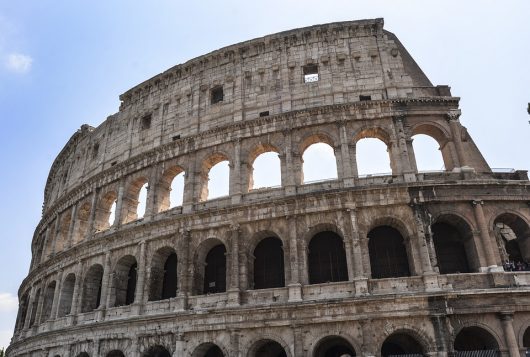
Top 10 Facts About Ending Hunger in Italy

Ending Hunger in Italy

In the past few years, remarkable progress has been made toward ending hunger in Italy and throughout Europe. However, there are still 836 million people living in poverty worldwide along with 795 million people struggling with chronic hunger.

By looking at Italy’s approach to addressing hunger and poverty–both domestically and internationally–the achievements and shortcomings of Italy’s social policy reveals the complexities of the fight to end global hunger by 2030.

10 Facts About Ending Hunger in Italy

  1. The rate of undernourishment in Italy is at 5 percent, according to the Global Food Security Index. This low figure is in part due to Italy’s food safety net programs, school lunch programs and high nutritional standards.
  2. Italy has one of the highest child poverty rates in Europe. Children are subsequently more at risk of living in a food insecure household. About 15.9 percent of Italian children live in relative poverty, according to UNICEF. Relative poverty is defined as living in a household where disposable income is less than 50 percent of the national median income when adjusted for family size and composition.
  3. Over one in four Italians are at risk of poverty or social exclusion, according to Italian news agency ANSA. In 2015, Italy’s poverty risk rate rested at 28.4 percent versus the European Union average of 24.5 percent after years of facing an economic crisis.
  4. According to UNICEF, an estimated 13.3 percent of children in Italy are deprived of some basic necessities even if they don’t live below the poverty line. UNICEF included 14 items on the deprivation index including whether or not children had access to three meals per day, fresh fruits and vegetables every day, and at least one meal with a rich protein source.
  5. If you’re homeless and hungry, it may not be a crime to steal food from a supermarket in Italy, according to an Italian court ruling this year. The Supreme Court of Cassation revoked the conviction of Roman Ostriakov, a homeless man from Ukraine, attempting to leave a supermarket with cheese and sausage in his pocket after only paying for some breadsticks. The circumstances under which Ostriakov stole was enough for the court to decide that he stole in a state of immediate and essential need which does not constitute crime, according to ANSA.
  6. Social welfare resources in Italy, such as the Social Card, are inadequate for alleviating poverty and ending hunger in Italy. According to a national report by Combatting Poverty in Europe (COPE), the Social Card is a debit card charged on a bimonthly basis – financed by public resources and private donations – and is used to purchase groceries and pay basic utilities. The Social Card has been subject to heated debate due to the strict and very limited eligibility of getting a card, and the inadequate financial assistance the card provides to low income families.
  7. In response to the apparent need for improving social welfare programs in Italy, organizations like the Costa Crociere Foundation formed to provide humanitarian assistance. The Costa Crociere Foundation addresses the main causes of poverty by “giving people the tools they need to lift themselves out of hunger” in the long term while working to ease the short-term effects of hunger and homelessness. They do this through food assistance programs and providing shelter for the homeless.
  8. In 2015, Expo Milano was hosted in Milan, Italy centered around the theme “Feeding the Planet: Energy for Life.” The exposition’s primary objective is to foster international dialogue on the challenges concerning food security, malnutrition and sustainable agricultural practices. Expo Milano was visited by an estimated 20 million people, according to the Brookings Institution.
  9. While the Italian government and local organizations continue to grapple with alleviating poverty and ending hunger in Italy, the country is also a top donor for international hunger relief programs. According to the International Fund for Agriculture Development (IFAD), Italy is as a generous donor and partner with IFAD in their shared mission to make food security a reality worldwide. The Food and Agriculture Organization of the United Nations also recognizes Italy’s contribution to 39 projects that have been implemented in 85 countries “with the aim of addressing poverty and improving food security by enhancing agricultural productivity.
  10. Ending hunger in Italy is not Italy’s only goal. The United Nations, including Italy, aims to end world hunger by 2030. The UN and partner organizations plan to end world hunger by primarily focusing on increasing investment in rural infrastructure and agricultural resources in developing countries and reforming food security policies worldwide.

– Daniela N. Sarabia

Photo: Pixabay

August 7, 2016
https://borgenproject.org/wp-content/uploads/borgen-project-logo.svg 0 0 Borgen Project https://borgenproject.org/wp-content/uploads/borgen-project-logo.svg Borgen Project2016-08-07 01:30:042024-05-27 09:34:35Top 10 Facts About Ending Hunger in Italy
Global Poverty

Poverty in Bolivia

poverty in bolivia
According to UNICEF, poverty in Bolivia is among the worst in South America. Economic growth and opportunities to make a living are most commonly found in urban areas because the more citizens in a setting, the more consumers there are. This makes it difficult however for indigenous farmers, inhabitants of more remote areas with fewer people, to market their products and provide for their families.

For the vast majority of citizens in Bolivia, this proves to be a major issue: 60% of Bolivians live below the poverty line. In rural areas, the numbers are even more dramatic. Three out of every four people living in these areas suffer from poverty. Because of this, Bolivia the poorest country in South America.

One reason for the extreme poverty lies in the geography of Bolivia. Undeveloped roads and infrastructure make up a vast portion of the country, with a majority of the land inhabited by indigenous citizens. This makes it difficult for farmers living in these areas to market their products and travel to sell them, which in turn impacts their families and the communities they live in.

For the farmers of Bolivia, the recent visit by the World Bank’s President to the country represented a unique opportunity. The fact that Jim Yong Kim recognized the need for economic growth and food security was important to the rural citizens of the poorest South American country. A World Bank agreement with the Government of Bolivia plans to promote the Andean marketable products that the indigenous people have to offer. This will get the people of Bolivia involved in national markets, boosting job growth and the economy.

Bolivians are finally being given opportunities to make a living through improved  economic stability and job growth.

– William Norris

Sources: Rural Poverty Portal, The World Bank
Photo: Bioversity International

August 6, 2016
https://borgenproject.org/wp-content/uploads/borgen-project-logo.svg 0 0 Borgen Project https://borgenproject.org/wp-content/uploads/borgen-project-logo.svg Borgen Project2016-08-06 04:25:162024-12-13 17:49:37Poverty in Bolivia
Economy, Food & Hunger, Global Poverty

8 Facts About Poverty in Jamaica

Poverty in Jamaica Poverty rate
Jamaica has struggled with poverty, unemployment and crime for the past half century, but the nation has recently seen ambitious government economic policies bear fruit. Discussed below are the leading facts about poverty in Jamaica and their implications.

8 Facts about Poverty in Jamaica

  1. Jamaica is not in extreme poverty and is regarded as a middle income country. For comparison, Jamaica has about 1/20th the GDP per capita of the United States, but a four-times-higher GDP per capita than the nearby country Haiti.
  2. Since the 1970s and 80s, Jamaica has experienced serious problems with poverty and unemployment. Through the 90s, unemployment remained around 15 percent, with poverty above 25 percent. The unemployment rate is currently 14 percent and poverty is 16 percent.
  3. A serious hindrance to Jamaica’s development has been slow rates of economic growth. In the past 30 years, Jamaica has had an average annual GDP growth rate of less than one percent. The slow growth rate is a major cause of persistent poverty in Jamaica.
  4. Relationships between Jamaican officials and crime groups cause widespread corruption, which results in many of Jamaica’s problems. The corruption not only hurts law abiding Jamaican citizens, but makes foreign investors far more hesitant to get involved in Jamaican industry.
  5. Public education in Jamaica is not entirely free. There is a registration fee and other school expenses that are not covered by the government. As a result, many of the nation’s most poor children are not able to attend school.
  6. Jamaica jumped 27 places in the 2015 Doing Business ranking, as the Jamaican government has improved its credit rating and decreased the national debt. It is hoped that the improved ranking will increase investment and alleviate poverty in Jamaica.
  7. The World Bank has a positive outlook for Jamaica’s economy, with forecasts of the country’s GDP growth rate climbing to over two percent in 2017.
  8. The Jamaican Government is currently working with the UNDP and the European Union to alleviate poverty on both a macro and micro level. Poverty alleviation and achievement of Millennium Development Goals remains a top priority for the Jamaican government.

Despite Jamaica’s history of poverty and some ongoing problems, economic forecasts for the country remain optimistic. It is possible that Jamaica will experience an economic resurgence and alleviate problems of unemployment and poverty in coming years.

– John English

Photo: Pixabay

August 6, 2016
https://borgenproject.org/wp-content/uploads/borgen-project-logo.svg 0 0 Borgen Project https://borgenproject.org/wp-content/uploads/borgen-project-logo.svg Borgen Project2016-08-06 01:30:342024-06-07 05:07:368 Facts About Poverty in Jamaica
Children, Global Poverty

Five Facts About Children Born in Poverty

Children born in poverty

Five Facts About Children Born in Poverty

  1. UNICEF estimates that 39 percent of children in low and middle-income countries are living in extreme poverty. These children born in poverty must survive on less than $1.25 a day. From education to food security, severe poverty impacts nearly every aspect of a child’s life. According to UNICEF, “Nearly half of all deaths in children under five are attributable to undernutrition.” It is estimated that over three million children die every year from hunger.
  2. In countries like Madagascar, the only meal many children receive in a day is school lunch. Malnutrition also causes children to be more susceptible to illnesses like malaria, pneumonia and measles. Several organizations like UNICEF, USAID and Save the Children have programs to provide adequate nutrition to children in developing countries.
  3. A 2015 report published by the World Health Organization (WHO) and the World Bank Group estimated 400 million people were without access to basic healthcare throughout the world. Approximately nine million children under the age of five die yearly. The WHO estimates 70 percent of these deaths are preventable with better access to medical care.
  4. The U.N. reports that children comprise half of the world’s refugee population. These children come from conflict-ridden countries like Syria, Sudan and Iraq and many are internally displaced. Access to adequate healthcare, education and shelter are all challenges refugee children must face. Many of these children lost their entire family to violence within their home countries.
  5. Children born in poverty are also more likely to be affected by mental health problems. Even in developed countries like the U.S., long-term financial stress is linked to poor mental health. Rates of anxiety and depression are higher among low-income individuals. The loss of close family members can also increase the likelihood of adverse mental health for children born in poverty.

Poverty is a cyclical condition and education is crucial to ending chronic poverty. Children born to low-income families are statistically likely to remain impoverished due to a lack of education and opportunities.

The U.N. reports that between the years of 1994 and 2009, “Rural households where the household head had completed primary education were 16 percent less likely to be chronically poor.”

These promising statistics are the driving force behind government-led programs and NGOs to increase access to education.

– Saroja Koneru

Photo: Pixabay

August 5, 2016
https://borgenproject.org/wp-content/uploads/borgen-project-logo.svg 0 0 Borgen Project https://borgenproject.org/wp-content/uploads/borgen-project-logo.svg Borgen Project2016-08-05 01:30:472024-12-13 17:54:39Five Facts About Children Born in Poverty
Gender Equality, Global Poverty, United Nations, Women & Children, Women and Female Empowerment

Plan International’s Goals for Gender Equality

Plan International

Plan International recently announced a multi-organizational partnership to help track the U.N.’s global goals for gender equality.

The goals for gender equality stem from the United Nation’s Sustainable Development Goals (SDGs). These goals, adopted in 2015, aim to vastly improve the living conditions around the world.

The central focus of this project is gender inequality. Plan International decided to collect relevant data and use it as a benchmark to determine the amount of progress.

Partner Organizations for Gender Equality

To do so, they partnered with several organizations. These include the International Women’s Health Coalition and KPGM. In addition, Plan International chose the ONE Campaign and Women Deliver.

Plan International chose these organizations because their previous work and values align with those of Plan. However, some organizations bring additional value to the table.

For instance, KPMG has a history of partnership building in the private sector. They also have a strong data tracking history with their Change Readiness Index. That index will be especially important in the project’s next few months.

The project’s first step is to sift through the data that already exists. They can then determine what is relevant to their goals for gender equality and what is not.

In an exclusive interview with Mary Bridger, the Engagement Manager for Plan’s SDG tracking initiative, she said, “We don’t feel that you can truly comprehend the realities for girls and women until you look beyond the quantitative data and find out what the lived realities for these individuals are (i.e. you can measure the geographic proximity of a school to girls, but until you ask them whether they feel safe on public transportation, you don’t know the true barriers).”

Prioritizing Gender Equality

For now, the project’s next goal is to work with their partners to push the scope of their research and develop the tools necessary to allow them to best capture those lived realities.

Bridger underscored the importance of this campaign when she said, “Plan International’s purpose is to work towards all children fulfilling their rights, focusing on excluded and vulnerable groups so that no-one is left behind. However, we have recognized the urgent need to prioritize girls as the most marginalized group whose rights are violated most.”

Plan International and their partner organizations all believe that meeting goals for gender equality will have a ripple effect within local communities and even worldwide.

– Sabrina Santos

Photo: Talent Culture

August 4, 2016
https://borgenproject.org/wp-content/uploads/borgen-project-logo.svg 0 0 Borgen Project https://borgenproject.org/wp-content/uploads/borgen-project-logo.svg Borgen Project2016-08-04 01:30:262024-12-13 17:54:41Plan International’s Goals for Gender Equality
Education, Global Poverty

Education in Ecuador: The Citizens’ Revolution

Education in Ecuador

In 2008, more than 65 percent of the Ecuadorian population voted to implement a new constitution. President Rafael Correa proclaimed Ecuador a new nation that day. He asserted that this constitution, with its potential for broad social reform, would help catalyze his efforts to transform the economy and alleviate poverty.

The president considered education reform to be an essential component of his initiative: The Citizens’ Revolution. Section Five of the constitution is dedicated to outlining the ways and means by which education in Ecuador should be viewed as a human right. This includes Article 27, which guarantees “Universal access, permanence, mobility and graduation without any discrimination.”

While access to higher education for all is a top government priority, quality has become the focus of many reform efforts. Standards are a relevant concern in discussing education in Ecuador largely because of the country’s past. Despite previous attempts to make education a primary concern, none of the conventions or programs ever gained any traction.

Well-implemented public education programs in the 1970s increased school life expectancy. Decreased illiteracy brought on a “Golden Era” for education in Ecuador. By 1980, education amounted to a third of total government outlays, yet expansion came with resource issues that forced the 90s to be a decade of regression. Free public education was abandoned, the Ministry of Education weakened, student enrollment came to a halt, as well as a plethora of other problems.

To avoid the trends of the past, President Correa established the Council for Evaluation, Accreditation and Quality Assurance in Higher Education (CEAACES) in 2010. This government organization is charged with the responsibility of improving the quality of higher education in Ecuador.

CEAACES evaluations are obligatory and use a multi-criteria methodology to make numerically subjective judgments when evaluating an institution. Each institution then receives a ranking, the worst of which are subject to suspension for lack of quality. Accreditation is required in order to provide any academic programs, thereby regulating the academic standards of education in Ecuador.

Yet, while the CEAACES ensures a quality system, it does nothing to maintain it.

In 2013, as a part of The Citizens’ Revolution, President Correa introduced Yachay, the City of Knowledge. “Yachay” translates to “knowledge” in the indigenous Quechua language. It is a pivotal step in Correa’s plan to transform Ecuador into a knowledge-based economy. When all is complete, the City of Knowledge will house Yachay University (known as Yachay Tech), 13 public research institutes, a technology park and industry.

Yachay Tech opened for its first semester in March 2014 as one of the only institutes for postgraduate education in Ecuador. Its staff currently consists of 32 teachers, all of whom have PhDs, most of whom are international. The objective of the institution in the short term is to provide its students with a research-intensive education rare to Ecuador. In the long term, it aims to produce “about 1,000 master’s and PhD students, who will eventually provide staff for other institutions.”

As hoped, the Citizens’ Revolution has been an effective agent in President Correa’s poverty relief initiatives. With the education reform set in place, along with the other social policies the new constitution has allowed Correa to implement, Ecuador has become a regional frontrunner in poverty reduction. According to the World Bank, the poverty headcount ratio at national poverty lines has decreased by 12.6 percent from 2008 to 2014.

Other countries can learn from this revolution, that investing in people is a winning strategy. Correa has managed to actuate a new form of economy, not reliant on resources that may one day be exhausted, but instead reliant on its own human capital. With the aid and skill provided by the government now, the people of the Citizens’ Revolution will be the catalyst of a diverse Ecuadorean economy. They will lift others out of poverty and create opportunities for all in a hub of innovation.

– Alexis Viera

Photo: Flickr

August 4, 2016
https://borgenproject.org/wp-content/uploads/borgen-project-logo.svg 0 0 Borgen Project https://borgenproject.org/wp-content/uploads/borgen-project-logo.svg Borgen Project2016-08-04 01:30:192024-12-13 17:55:33Education in Ecuador: The Citizens’ Revolution
Global Poverty

Federal Budget Aimed at Reducing Poverty in Pakistan

Poverty in Pakistan
On June 3, Minister for Finance Ishaq Dar presented budgetary proposals for the fiscal year of 2016-17. Dar plans to focus on reducing poverty in Pakistan by boosting the agriculture industry.

According to the budget report, agriculture makes up 44 percent of Pakistan’s labor force and 21 percent of its GDP according to the budget report. In short, the agriculture sector is vital to the economy.

The Pakistani government aims to increase the productivity and income of the rural population by instituting various changes. Such changes include lowering the cost of fertilizer, eliminating a tax on pesticides and extending credit to farmers. This will increase the credit budget from 600 to 700 billion rupees (approx. 5.7 billion to approx. 6.7 billion dollars).

Part of the proposed agricultural budget includes a measure for an off-peak tariff decrease on tube wells. Tube wells are made by driving a tube into a stratum in the ground that bears water.

This decrease would bring the price down from 8.85 rupees per unit (approx. 8 cents) to 5.35 rupees per unit (approx. 5 cents). The Pakistani government will bear a cost of 27 billion rupees (approx. $259 million) to provide more affordable means of reaching water sources for the depleted agriculture sector.

Dar hopes that helping shoulder the burden of cost brought on by decreased food prices and unfavorable weather will rejuvenate a critical piece of an economy that has seen a mere 4.7 percent overall growth in the past two years.

In assisting agriculture, Pakistan could also see improvement in the textile industry. In fact, 70 percent of the raw materials used by that sector are provided by the agriculture sector.

To further support the textile industry, imports of textile machinery will continue to be exempt from customs duty. Textiles and other export-oriented sectors of the economy will have a zero-rate tax regime.

The Pakistani government has also proposed a suspension of taxes on exports in the hopes of halting the current decline.

The education budget is largely unchanged from recent years. However, the budget includes an 11 percent increase in the funding of higher education. This allocation of 79.5 billion rupees (approx. $763 million) is the largest amount ever set aside for higher education.

Elements of this budget include faculty development programs for universities, as well as the establishment of sub-campuses.

Better-trained faculty and more university campuses could lead to a more educated population that would possess the tools necessary to generate income and start businesses. These new business owners would need to hire employees, so providing aid for higher education could reduce poverty in Pakistan and create more jobs.

Research by the Pakistani government with the help of World Bank shows that the government has been successful in its effort of reducing poverty. The poverty has dropped from 64.2 percent in 2001-02 to 29.5 percent in 2013. Conditions in Pakistan are getting better, but there is still room to improve.

Foreign aid is effective in helping to reduce poverty, but national governments face the task of instituting programs that will provide people with jobs to sustain life above the poverty line.

The 2016-17 Pakistani budget seeks to increase funding for critical sectors of the economy. Funding these important programs could help the economy in its continued growth by providing education and job opportunities to the nation’s young and rural populations, thus reducing poverty in Pakistan.

– Aaron Parr

Photo: Huffington Post

August 4, 2016
https://borgenproject.org/wp-content/uploads/borgen-project-logo.svg 0 0 Borgen Project https://borgenproject.org/wp-content/uploads/borgen-project-logo.svg Borgen Project2016-08-04 01:30:092020-06-18 12:57:06Federal Budget Aimed at Reducing Poverty in Pakistan
Children, Global Poverty, Poverty Reduction

Effects of Poverty on Society

Effects of Poverty on Society Violence
Issues like hunger, illness, and poor sanitation are all causes and effects of poverty. That is to say, that not having food means being poor, but being poor also means being unable to afford food or  clean water. The effects of poverty are often interrelated so that one problem rarely occurs alone. Bad sanitation makes one susceptible to diseases, and hunger and lack of clean water makes one even more vulnerable to diseases. Impoverished countries and communities often suffer from discrimination and end up caught in a cycle of poverty.


Effects of Poverty on Society


The vicious cycle of poverty means that lifelong barriers and troubles are passed on from one generation to the next. Unemployment and low incomes create an environment where children are unable to attend school. Children must often work to provide an income for their family. As for children who are able to go to school, many fail to see how hard work can improve their lives as they see their parents struggle at every day tasks. Other plagues accompanying poverty include:

  • Crippling accidents as a result of unsafe work environments—consider the recent building collapse in Bangladesh.
  • Poor housing—a long-lasting cause of diseases.
  • Water and food related diseases that occur simply because the poor cannot afford “safe” foods.

Ultimately, poverty is a major cause of social tensions and threatens to divide a nation because of income inequality. This occurs when the wealth of a country is poorly distributed among its citizens—when a tiny minority has a majority of the money. Wealthy or developed countries maintain stability because of the presence of a middle class. However, even Western countries are gradually losing their middle class. As a result there has been an increased number of riots and clashes. For society, poverty is a very dangerous factor that can destabilize an entire country. The Arab Spring is a great example of how revolts can start because of few job opportunities and high poverty levels.


Child Poverty


The number of children affected by poverty has been increasing since the 1960s. Children are those with the least amount choice and ability to change their circumstances. There is very little they can do to help their families, nor should they have to. Usually by the age of six they can be enrolled in child labor. Nearly all the potential effects of poverty impact the lives of children—poor infrastructure, unemployment, malnutrition, domestic violence, child labor, and disease. Simply analyzing the effects of child poverty on education in developed countries alone reveal some disturbing statistics:

  • Children from poor backgrounds lag behind at all stages of education.
  • By the age of three, poorer children are estimated to be nine months behind children from wealthier backgrounds.
  • By the end of primary school, students receiving free school meals are estimated to be about three terms behind their peers.
  • By 14, this gap increases to over five terms.
  • By 16, children receiving free school meals are about 1.7 grade points below their more affluent peers’ average GPA.


Effects of Poverty and Violence


The effect of poverty on terrorism is not as straightforward as the media often perceives it to be. Poverty fuels terrorism by creating a state of misery and frustration that pushes people to join terrorist organizations. But more research shows, it is more complicated.

Of course, some terrorists come from poor countries with high unemployment, and terrorist organizations often provide higher salaries than other jobs. But terrorism may not be a direct effect of poverty. So what is the source of frustration and anger?

Studies show that countries with weak governments, fragile institutions, and limited civil rights are a great environment to nurture the production of terrorist activity. Countries undergoing difficult transitions—i.e. from authoritarian to democratic regime—often encounter political instability with the blurring of certain rules and laws.

These periods of profound change come with a transformation of social order, values, and methods of governing that many people may find distressing and unsettling. Therefore, stabilizing and empowering political institutions is a crucial part of fighting against the dangerous consequences of poverty.

– Scarlet Shelton

Sources: Poverties.org, CPAG, UK Government

August 3, 2016
https://borgenproject.org/wp-content/uploads/borgen-project-logo.svg 0 0 Borgen Project https://borgenproject.org/wp-content/uploads/borgen-project-logo.svg Borgen Project2016-08-03 04:43:352024-05-25 00:13:41Effects of Poverty on Society
Page 1788 of 2179«‹17861787178817891790›»

Get Smarter

  • Global Poverty 101
  • Global Poverty… The Good News
  • Global Poverty & U.S. Jobs
  • Global Poverty and National Security
  • Innovative Solutions to Poverty
  • Global Poverty & Aid FAQ’s
Search Search

Take Action

  • Call Congress
  • Email Congress
  • Donate
  • 30 Ways to Help
  • Volunteer Ops
  • Internships
  • Courses & Certificates
  • The Podcast
Borgen Project

“The Borgen Project is an incredible nonprofit organization that is addressing poverty and hunger and working towards ending them.”

-The Huffington Post

Inside The Borgen Project

  • Contact
  • About
  • Financials
  • President
  • Board of Directors
  • Board of Advisors

International Links

  • UK Email Parliament
  • UK Donate
  • Canada Email Parliament

Get Smarter

  • Global Poverty 101
  • Global Poverty… The Good News
  • Global Poverty & U.S. Jobs
  • Global Poverty and National Security
  • Innovative Solutions to Poverty
  • Global Poverty & Aid FAQ’s

Ways to Help

  • Call Congress
  • Email Congress
  • Donate
  • 30 Ways to Help
  • Volunteer Ops
  • Internships
  • Courses & Certificates
  • The Podcast
Scroll to top Scroll to top Scroll to top