• Link to X
  • Link to Facebook
  • Link to Instagram
  • Link to TikTok
  • Link to Youtube
  • About
    • About Us
      • President
      • Board of Directors
      • Board of Advisors
      • Financials
      • Our Methodology
      • Success Tracker
      • Contact
  • Act Now
    • 30 Ways to Help
      • Email Congress
      • Call Congress
      • Volunteer
      • Courses & Certificates
      • Be a Donor
    • Internships
      • In-Office Internships
      • Remote Internships
    • Legislation
      • Politics 101
  • The Blog
  • The Podcast
  • Magazine
  • Donate
  • Click to open the search input field Click to open the search input field Search
  • Menu Menu

Archive for category: Global Poverty

Key articles and information on global poverty.

Activism, Global Poverty, Health

The Compassion Experience: Awareness for Global Poverty

The Compassion Experience
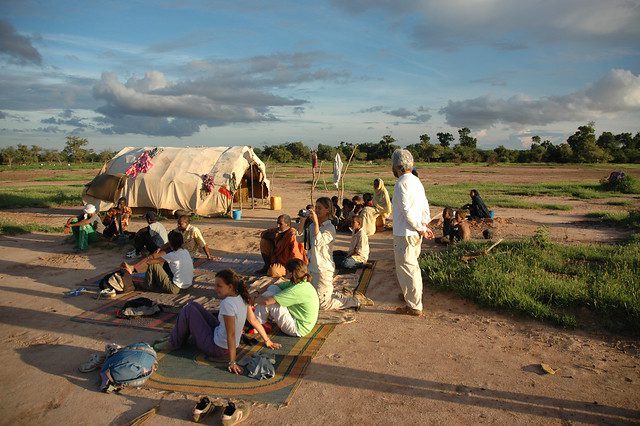
The Compassion Experience is a unique take on raising awareness for global poverty while simultaneously alleviating children out of poverty. Compassion International is providing a first-hand look at the daily lives of the global poor through their interactive Compassion Experience.

The Compassion Experience is an exhibit currently touring the country, hosted by Compassion International, a non-profit organization that provides opportunities for child sponsorship to help lift children out of poverty. Operating since 1952, Compassion has grown from aiding 35 children in South Korea to helping millions of children worldwide become healthy adults.

Compassion’s Accomplishments

The organization also accepts one-time donations to do things such as build a well, provide literacy classes, and cover the neonatal care of a pregnant woman. The Experience is meant to build upon these goals by allowing for a better understanding of the daily difficulties imposed by poverty.

To Lynnelle, an Ohio-based volunteer who has worked with the organization for over 20 years, the work Compassion is doing through their interactive experience is invaluable.

In an interview, she explained, “We talk about [global poverty] all the time, but we don’t have any idea what people in the rest of the world go through.” Raising awareness for global poverty needs to be more than just words, and Compassion knows how to do just that.

A Day in a Compassion Exhibit

The exhibit itself operates out of a large, climate-controlled tent and series of trailers. An audio tour chronicles the lives of three children whose lives have been changed by Compassion, highlighting the positive effects sponsorship has had for them. In the Compassion Experience’s Mentor, Ohio location, these children were Olive, from Uganda; Carlos, from Guatemala; and Kiwi, from the Philippines.

In Olive’s case, Compassion provided for treatment for her tuberculosis and then, once healthy, helped her return to school. She eventually received a volleyball scholarship in the United States, where she went on to earn a master’s degree in social work. She now works for the same organization that changed her life.

The Compassion Experience provides human faces and compelling narratives that demonstrate the daily realities of those living in poverty. Lynnelle described her visit to Rwanda, where she saw those living conditions first hand: a small, closet-sized room and no running water.

However, thanks to the efficacy of foreign aid and organizations such as Compassion International, things are changing. The Gates Foundation cites that the percentage of poor people around the world has dropped by more than half since 1980, with countries such as Brazil and India more than quadrupling their real income per person.

According to Bill Gates in his 2014 Annual Letter, children who have been lifted up out of poverty, “do more than merely survive. They go to school and eventually work, and over time they make their countries more self-sufficient.” Raising awareness for global poverty and increasing levels of activism is a necessity for all countries, not an option.

Lynnelle put it much more simply.

“This to me,” she said, “is changing the world.”

– Sabrina Santos

Photo: The Compassion Experience

September 10, 2016
https://borgenproject.org/wp-content/uploads/borgen-project-logo.svg 0 0 Borgen Project https://borgenproject.org/wp-content/uploads/borgen-project-logo.svg Borgen Project2016-09-10 01:30:262020-06-16 12:21:11The Compassion Experience: Awareness for Global Poverty
Global Poverty

Donations from Billionaires: The Key to Ending Global Poverty?

Donations from billionaires
According to the Brookings Institute, in some developing nations the help of the richest billionaire in the country would be enough to drastically reduce poverty. This model is based on the respective billionaire donating at least half of their fortune.

For example, the generosity of just one billionaire would probably be enough to boost the economy of the tiny African country of Swaziland. If this model were applied in Swaziland, Colombia and Georgia, poverty within these struggling countries would be nearly eradicated.

It is worth noting that this ideology would not work in the same way in every country. While the poverty rate will always fall with donations from billionaires, the amount would vary. Some countries in Africa may be harder to impact significantly due to “the depth of poverty” and high prices on the continent.

The Brookings Institute model not only looks at potential donations from the richest billionaire in a country, but in places with multiple billionaires they could collaborate and work together to reduce poverty. The more donations from billionaires that are received, the more people who will rise above the global poverty line.

Bill Gates’ Giving Pledge, which encourages billionaires to give away much of their earnings to charity, follows a similar model. Facebook creator Mark Zuckerberg also pledged to donate 99 percent of his income to poverty reducing efforts and other charitable campaigns.

In addition to donating, billionaires may also be wise to invest in poor nations, as a boost in the economy of the country would likely cause a major increase in the number of consumers of foreign goods and services. Stronger economies result in an increased number of markets.

If billionaires around the world chip in to boost their local economies, the global wealth gap will decrease as the amount of consumption.

– Carrie Robinson

Photo: Flickr

September 10, 2016
https://borgenproject.org/wp-content/uploads/borgen-project-logo.svg 0 0 Borgen Project https://borgenproject.org/wp-content/uploads/borgen-project-logo.svg Borgen Project2016-09-10 01:30:212020-06-06 07:22:50Donations from Billionaires: The Key to Ending Global Poverty?
Gender Equality, Global Poverty, Women and Female Empowerment

Advancing Peace Talks: Where are the Female Peacekeepers?

Female Peacekeepers
Nearly 16 years ago, in response to the disproportionate amount of violence against women in countries enduring post-war conflicts, the U.N. adopted resolution 1325. The resolution targets the issue that when countries that have achieved reform, the post-war conflicts frequently bring more violence, specifically more violence toward women.

The U.N. Security Council resolution 1325 calls for the inclusion of women in all efforts maintaining and promoting peace and security. Even though the likelihood of achieving peace increases when female peacekeepers are included in the discussion, women living in countries that are at war often remain ignored.

Research has confirmed that women are a significant influence in promoting peace. Also, humanitarian efforts are more effective with women’s participation. The inclusion of female peacekeepers yields stronger protection efforts for U.N. peacekeepers, contributes to the implementation of peace talks, and accelerates economic recovery.

Experience has shown the inclusion of women in U.N. peacekeeping missions elicits more trust in communities and result in peace operations that are more customarily fit to a communities’ protection needs. Peace negotiations recommended by women are more likely to be accepted and retained.

However, women in countries where terrorism and extremism are prevalent face disparity, and the fragile state contexts affect their rights. Women often are forced into marriage, forced to engage in sexually based crimes prohibited to get an education or get a job or even engage in public life.

Despite the strides made by the U.N. to integrate women into the peace-building agenda to combat these problems, there has not been much progress since the resolution was first adopted by countries in 2000. There have been reports of incidents wherein U.N. peacekeepers preserved sexual violence and stood by as women were raped. The inclusion of women in peacekeeping operations could diminish the chances of this occurring.

In order to better serve women, the individuals most affected by post-war conflicts, there must be women within the peacekeeping force. Having female peacekeepers who can understand the difficulties and threats women face will better enable the effort to ensure safety. Thus, enforcing a concrete number of women to be included in peace operations is a way to hold U.N. peacekeeping operations accountable.

Although war impacts all, women can address this issue and improve conditions for women more so than men, yet women continue to be excluded from peace talks. 55 countries have adopted national strategies to implement the resolution, and an additional 10 have pledged to do so.

It is still up in the air whether these countries’ political wills for the inclusion of women in peace talks be translated into political action. In order for U.N. peacekeepers to actually fulfill their political wills, it would be accommodating for them to provide a target number of female peacekeepers to include in their peacekeeping operations.

– Kayla Mehl

Photo: Flickr

September 10, 2016
https://borgenproject.org/wp-content/uploads/borgen-project-logo.svg 0 0 Borgen Project https://borgenproject.org/wp-content/uploads/borgen-project-logo.svg Borgen Project2016-09-10 01:30:082020-06-06 07:23:49Advancing Peace Talks: Where are the Female Peacekeepers?
Development, Economy, Global Poverty

10 Facts About Poverty in Uzbekistan

Poverty in Uzbekistan

Uzbekistan, formally known as the Republic of Uzbekistan, is a landlocked country in Central Asia. It is widely recognized for its beautiful mosques, stunning historical architecture and vibrant cultural heritage. The country has a rich history as a key stop along the ancient Silk Road, which has left a lasting legacy in its cities, such as Samarkand, Bukhara and Khiva.

Poverty in Uzbekistan is dropping. Though rarely making headlines, the country has seen sustained economic growth in the past several years. This progress is attributed to various reforms and investments aimed at modernizing the economy and improving living standards. If trends continue, Uzbekistan is expected to become a successful, developed country free from extreme poverty in the near future. Below are 10 facts about poverty in Uzbekistan and the progress made to alleviate it.

  1. In 2023, 11% of the population of approximately 36.5 million lived below the national poverty line, a drop from 14.1% in 2013.
  2. While Uzbekistan has experienced increased urbanization in recent years, 75% of those living in extreme poverty in Uzbekistan still live in rural areas. The International Fund for Agricultural Development (IFAD) has been working to reduce poverty in rural Uzbekistan. Its four projects in the country aim to increase rural prosperity sustainably and have impacted more than 98,000 households.
  3. Child health remains a hurdle to overcome, with 13 out of every 1,000 babies dying before their fifth birthday. In comparison, only six babies die in the first year of life on average in the United States (U.S.).
  4. Poverty in Uzbekistan is contradicted by the overall economic growth of about 5.9% in the last decade.
  5. In 2011, the World Bank reclassified Uzbekistan from a low-income country to a lower-middle-income country, which indicates that the country is making sustained progress toward development.
  6. Between 2001 and 2013, real wages doubled as job prospects improved.
  7. Literacy rate, often a prerequisite for growth and poverty reduction, has risen to 100% as of 2022.
  8. Foreign trade has quadrupled in the past 15 years, helping to improve household incomes across the country.
  9. Currently, Uzbekistan is the World Bank’s third-largest client in Europe and Central Asia. The World Bank has 27 projects in the country, all of which aim to improve Uzbekistan’s agricultural sector, energy, transport, health, education, water supply and sanitation. The projects also aim to improve both urban and rural infrastructure.
  10. To further reduce poverty and improve living conditions, Uzbekistan has set a goal of becoming an industrialized, upper-middle-income country by 2030. It aims to achieve this goal by modernizing its agricultural sector, reducing its ownership of state-owned assets and enterprises and addressing restraints in the financial markets.

With steady growth and economic improvements, Uzbekistan has positioned itself to become a successful, developed nation in the near future. As these improvements continue, poverty in Uzbekistan is anticipated to decline and living standards will significantly improve across the country.

– Sara Christensen

Photo: Flickr
Updated: June 06, 2024

September 10, 2016
https://borgenproject.org/wp-content/uploads/borgen-project-logo.svg 0 0 Borgen Project https://borgenproject.org/wp-content/uploads/borgen-project-logo.svg Borgen Project2016-09-10 01:30:012024-06-06 03:30:0410 Facts About Poverty in Uzbekistan
Global Poverty

Top 5 Facts About Poverty in Haiti

poverty in haiti poor
In 2010, Haiti was struck by what has been called the strongest earthquake since 1770. The 7.0 mW quake with aftershocks ranging from 4.2 to 5.9 affected at least three million people and increased poverty in Haiti. But in the last three years, the world at large has turned away from the struggle of the Haitian people to focus on newer problems. The fact remains, though, that aid is still needed. Below are leading facts you should know about poverty in Haiti.


Top 5 Facts About Poverty in Haiti


  1. Even before the earthquake hit, 1.9 million people were in need of food assistance. Around 60 percent of the population lives on less than $1.00 a day. As a result, malnutrition and anemia run rampant. Haiti is the third hungriest country in the world.
  2. Only 50 percent of the people have access to an improved water source, such as a hand pump or a well. This means that most of the population depends on lakes, streams and rivers for their water, regardless of the cleanliness. Even if some people can get to better water than others, a total of 80 percent do not have adequate sanitation available. So even if they run less risk of becoming ill from bad water, they are unable to clean themselves and are susceptible to disease and infection.
  3. Only fifty percent of children living in Haiti are able to go to school. Furthermore, only 30 percent of those progress to the fifth grade. As a result, half of Haitians are illiterate. Without a proper education, the people are unable to break free of the cycle of poverty.
  4. Haiti is the poorest country in the Americas, with 59 percent of the population living below the national poverty line. The World Bank estimates that the earthquake caused about $7.8 billion in damage.
  5. There is a large population of orphaned children in Haiti, many of whom are living on the streets. There were an estimated 380,000 prior to the earthquake and untold thousands added to that number after it. There are also about 250,000 restaveks, or children working as servants and often treated as slaves.

It is easy to put the continued suffering of Haiti out of one’s mind when other world disasters have since risen to the forefront, but that does not mean that Haiti stopped warranting the world’s attention. The earthquake may have happened almost four years ago, but the people there are still greatly in need of assistance and guidance.

– Chelsea Evans

Sources: Fox News, P81 Haiti Relief, Fox Business

Photo: Flickr

September 9, 2016
https://borgenproject.org/wp-content/uploads/borgen-project-logo.svg 0 0 Borgen Project https://borgenproject.org/wp-content/uploads/borgen-project-logo.svg Borgen Project2016-09-09 17:37:102020-06-06 07:26:55Top 5 Facts About Poverty in Haiti
Global Poverty, Hunger

Hunger in Turkey Remains Prevalent in Rural Areas

Hunger in TurkeyTurkey has a rich history of being a global leader in humanitarian efforts to reduce poverty. The nation is now one of the World Food Program’s (WFP) largest contributors despite needing aid about ten years ago. 

However, Turkey still has a long way to go to reduce poverty and hunger domestically — malnutrition is prevalent in its rural regions.

The rural poverty rate in Turkey is 35% compared to the urban poverty rate of 22%. The extreme poverty rate in rural households is at the root of growing hunger in Turkey.

Living in poverty impacts food security, secure employment, education and healthcare — all of which are easier to attain in urban regions of Turkey.

The recent influx of Syrian refugees also placed pressure on food security in Turkey. Turkish communities hosting Syrian refugees have expanded by up to 30%, which increased competition for employment and increased rent prices.

The International Fund for Agricultural Development (IFAD) implemented a plan in 2006 that focused on job-creation to bolster economic prosperity and improve living standards in rural areas to address hunger in Turkey.

The IFAD plan aims to increase participation in Turkey’s labor force by supporting small businesses and encouraging self-employment that generates incremental income.

This strategy also works to improve agricultural initiatives in remote areas of Turkey through the spread of farm mechanization and processing plants.

The United Nations Development Programme (UNDP) launched the Ardahan-Kars-Artvin Development Project (AKADP) to further reduce poverty in Turkey.

By working with local farmers from rural, eastern provinces of Turkey, the AKADP would introduce and encourage sustainable agricultural practices to reduce rural poverty and hunger in Turkey.

The AKADP claims to benefit those living in rural Turkey by increasing livestock and crop productivity, improving knowledge of farm management and strengthening both economic and social infrastructure.

Turkey is making remarkable advances toward reducing hunger because of the UNDP and IFAD projects. The WFP recently acknowledged Turkey for reducing its total undernourished population by half.

The IFAD also recognized Turkey as one of the 79 developing countries that achieved their hunger target of reducing malnutrition and the proportion of underweight children under five years old.

The Turkish government and humanitarian organizations have made it a priority to continue to uplift those in rural areas out of poverty. It is possible to reduce hunger in Turkey by investing in rural areas, which will help its inhabitants forge brighter futures.

– Mariana Camacho

Photo: Flickr

September 9, 2016
https://borgenproject.org/wp-content/uploads/borgen-project-logo.svg 0 0 Borgen Project https://borgenproject.org/wp-content/uploads/borgen-project-logo.svg Borgen Project2016-09-09 01:30:272024-05-27 23:53:11Hunger in Turkey Remains Prevalent in Rural Areas
Economy, Global Poverty

Five Ways Poverty Hinders Economic Growth

Poverty hinders economic growth
Efforts to reduce global poverty have been largely successful over the past few years. However one of the highest costs is that poverty hinders economic growth. It is a preventable burden that has solutions.

Here are five facts from around the world on how poverty hinders economic growth and what you can do to help reduce global poverty:

1. The effects of poverty cost U.K. citizens about 1,200 pounds per person every year.

According to the Guardian, 25 percent of health care spending is associated with treating conditions related to poverty; 20 percent of the U.K.’s education budget is spent on initiatives, like free school meals, to reduce the impact of poverty.

2. Child poverty reduces U.S. productivity and economic output by 1.3 percent of GDP each year, which costs the U.S. about $500 billion per year.

Economic hardship disproportionately affects children more than any other age group. The Center for American Progress believes impoverished children are more likely to have low earnings as adults and are somewhat more likely to engage in crime.

This “reduced productive activity” generates a direct loss of goods and services to the U.S. economy.

3. Children living in poverty have higher dropout rates and absenteeism, which limits their employability.

The Council of State Governments Knowledge Center found that nearly 30 percent of poor children do not complete high school, which limits future economic success.

A more educated individual is more likely to participate in the job market, to have a job, to work more hours, to be paid more and less likely to be unemployed according to an Economic Policy Institute report from August 2013.

Countries may see a rise in economic productivity by ensuring that children from low-income backgrounds have equitable access and are motivated to stay in school.

4. Poverty increases the risk of poor health; it is a $7.6 billion burden on the Canadian health care system.

The link between poor health and poverty is undeniable; the World Health Organization (WHO) declares poverty as the single largest determinant of health.

Poverty increases the likelihood of developing conditions that are expensive to treat such as diabetes and cardiovascular disease. Therefore, reducing poverty not only cultivates a healthy economy but it can also create a physically healthier society.

5. Billions of people — especially women — remain offline.

Developing countries are paying the cost of poverty while missing out on the economic benefits of increased internet access.

Women and the Web, a study sponsored by Intel, reveals that bringing an additional 600 million women online would contribute at least $13-18 billion to annual GDP across the developing world.

Increasing internet access in developing countries would also increase participation in e-commerce and increase access to educational resources and health services.

Want to help in the global fight to end poverty?

Mobilizing your congressional leaders to endorse poverty-reducing legislation has a widespread impact on reducing the high cost of poverty. For example, the Digital GAP Act aims to bring affordable, first-time internet access for at least 1.5 billion people in developing countries by 2020 and would help to bridge the digital divide. This will greatly facilitate change and decrease the way that poverty hinders economic growth.

Please visit The Borgen Project’s action center for more information on how you can contact your congressional leaders and voice your support for innovative, poverty-reducing legislation.

– Daniela Sarabia

Photo: Pixabay

September 9, 2016
https://borgenproject.org/wp-content/uploads/borgen-project-logo.svg 0 0 Borgen Project https://borgenproject.org/wp-content/uploads/borgen-project-logo.svg Borgen Project2016-09-09 01:30:222024-05-27 23:53:07Five Ways Poverty Hinders Economic Growth
Global Poverty, Refugees, Refugees and Displaced Persons

10 Facts About Pakistani Refugees and Asylum in Pakistan

Pakistan refugees
The media’s focus has centered on the Syrian refugee crisis but other people from other nations, including Pakistani refugees, are fleeing their homelands for a better future in America or Europe.

Because it shares its borders with both Iran and Afghanistan, Pakistan has been embroiled in the Iran and Afghanistan wars with the United States. Many refugees have fled to and from Pakistan due to the ongoing conflict.

Here are 10 facts about Pakistani refugees and asylum in Pakistan:

  1. Malala Yousafzai is a notable Pakistani refugee who garnered media coverage when she was shot point-blank in 2012. Yousafzai has gone on to advocate for equitable access to education for young women and won a Nobel Prize at fifteen years old in 2015.
  2. Pakistan was not a party to the 1951 Refugee Convention, which defined a refugee as “someone who owing to a well-founded fear of being persecuted for reasons of race, religion, nationality, membership of a particular social group or political opinion, is outside the country of his nationality.”
  3. Pakistan has not been able to establish any nationwide legislation regarding the protection of refugees or procedures to determine whether someone falls into refugee status.
  4. Pakistan’s lack of legislation regarding refugees means that the provisions of the 1993 Cooperation Agreement, between the government of Pakistan and the United Nations Refugee Agency (UNHCR), determine any refugee status.
  5. More than 1.2 million Pakistanis have been affected by military insurgencies in northwest Pakistan.
  6. Most refugees flee Pakistan by crossing the border on foot into Iran, taking a bus toward Turkey and crossing the Turkish border on foot to avoid border security. From there, it is a matter of finding someone willing to transport the refugees across the Mediterranean Ocean, for a reasonable sum, to land in Greece.
  7. Even if Pakistanis reach Greece and the relative safety of the European Union, they are not guaranteed decent living conditions, according to some refugees. Instead of being given asylum status, refugees run the risk of being contained in high-security detention facilities or even repatriated to Pakistan.
  8. Pakistan is not involved in an official war so it is possible that refugees from Pakistan are overlooked. The threat of gangs, mafia and poverty are not seen as “legitimate” causes for creating refugees when compared to an internationally recognized war.
  9. Pakistan’s government began cracking down on refugees living in their country. UNHCR set aside funds to repatriate 600,000 Afghan refugees as of June 2016. Some families do not want to leave their adopted country — they worry that they will be forcibly deported when their Pakistan Proof of Registration card expires.
  10. Around 1.6 million refugees live in Pakistan as of June 2016 according to UNHCR.

The refugee system in Pakistan is still in flux and requires more strict legislation be passed to help asylum seekers.

Advocates like Malala Yousafzai are doing great work to bring attention to the plight of Pakistanis fleeing Pakistan but there is still work to do.

You can help by contacting your Congress representatives and letting them know you support increasing the International Affairs Budget that goes to help the world’s poor, which often includes struggling Pakistani refugees.

– Bayley McComb

Photo: Flickr

September 8, 2016
https://borgenproject.org/wp-content/uploads/borgen-project-logo.svg 0 0 Borgen Project https://borgenproject.org/wp-content/uploads/borgen-project-logo.svg Borgen Project2016-09-08 01:30:502024-05-24 23:40:3010 Facts About Pakistani Refugees and Asylum in Pakistan
Global Poverty

Defeat of ISIS Could Mean Better Healthcare for Libyan Citizens

Libyan
The United States declared it carried out a series of airstrikes on the Libyan city of Sirte, an ISIS stronghold, at the request of the Libyan government in August 2016.

The strikes came after nearly two years of concentrated efforts by the U.S. and Libyan governments to remove ISIS from Sirte; a strategically important city located directly between two of Libya’s largest cities, Benghazi and Tripoli.

The erasure of ISIS’s presence from Sirte means the city’s residents will be able to enjoy a higher standard of living, increased access to food and fuel and control of their incomes. Reclaiming the city from ISIS also means that healthcare in Libya will be one step closer to returning to pre-2011 standards.

Regaining control of Sirte will allow the Libyan government and certain NGOs, such as Doctors Without Borders, to begin safely providing much-needed healthcare services to the city’s residents.

Healthcare providers in Libya will be able to distribute resources across the country more evenly as they are needed, especially between Benghazi and Tripoli.

On a more significant level, overcoming the ISIS presence in Libya will remove one of the larger issues that the country has had to contend with during its rebuilding process, which has been ongoing since the country experienced a wave of revolutionary action during the Arab Spring in 2011.

Currently, the country lacks a central government as numerous opposing factions emerged after the fall of the Gaddafi regime.

A U.N.-backed entity known as the Government of National Accord recently made the most significant strides in uniting the country. They will undoubtedly find the task easier with ISIS’s removal.

A successfully unified government would likely see the return of a functioning and well-equipped healthcare system; something that the country has been sorely lacking since 2011.

According to Doctors Without Borders, many hospitals have been forced to close in recent years due to lack of funds, lack of staff members and concerns about security.

A fully functioning government would be able to solve the coordination problems currently preventing the distribution of funds and supplies.

They would be also able to effectively provide secure environments for hospitals and healthcare providers to safely operate.

More funds, supplies and increased security would allow for the return of foreign-born healthcare workers, many of whom left in the wake of 2011 upheaval.

– Will Clifft

Photo: Flickr

September 8, 2016
https://borgenproject.org/wp-content/uploads/borgen-project-logo.svg 0 0 Borgen Project https://borgenproject.org/wp-content/uploads/borgen-project-logo.svg Borgen Project2016-09-08 01:30:402020-06-06 10:03:28Defeat of ISIS Could Mean Better Healthcare for Libyan Citizens
Global Poverty

Alleviating Elderly Hunger in South Korea

Hunger in South Korea
A quick economic recovery after the end of World War II and the signing of the Korean War Armistice in 1953 has mitigated growing rates of poverty and hunger in South Korea. Poverty, however, is a particular threat to the elderly population in South Korea, which has been aptly named the “forgotten” generation.

According to a 2011 report by the government-funded Korea Labor Institute, 48.6% of the country’s elderly — individuals aged 65 and over — struggled with relative poverty. Relative poverty, as opposed to absolute poverty, is defined as earning 50% or less of the median household income.

More recently, the Organization for Economic Co-operation and Development (OECD) found that approximately half of the country’s elderly were living in poverty in 2015. This poverty rate has been considered the highest among the 34 nations studied by the OECD.

Pastor Choi Seong-Won has been an organizer of a weekly mobile-kitchen for 18 years. He has helped to alleviate the economic hardships of the elderly homeless by providing lunches over the weekends. Seong-Won told CNN that the reason for this emergence of elderly poverty and hunger in South Korea “is the more than two years of serious economic crisis in Korea, along with the global economic downturn. Wealthy people will be fine no matter the situation, but people going through economic struggles say now is a really difficult time.”

Other local churches in Korea have fed 300 to 500 seniors as they lined up for food. However, charitable meals will not solve the problem of elderly poverty and hunger in South Korea alone.

Bernard Rowan, professor of political science at Chicago State University, also discussed the causes of poverty in the Korea Times. Rowan cites population growth among the elderly in Korea shifts in cultural traditions as causal factors. Traditionally, Korean culture has placed great emphasis on respecting seniors. The present-day lifestyle, however, has left many parents and grandparents to find work for themselves.

“That may include their emotional lives too,” Rowan explains. “A great many live incredibly alone.”

A Rise in Suicide Rates

Yet, these rates in poverty among the elderly have not only affected hunger in South Korea but have also contributed to higher rates of suicide. According to Statistics Korea, 50.3 out of every 100,000 Seoul citizens 60 years or older took their lives in 2014, the highest rate among all Korean age groups.

Seventy-year-old Seong Young-sook expressed her struggles to a CNN reporter saying, “I feel that my generation is being forgotten.” She continued, “I tried to kill myself next to my husband’s grave. Someone discovered me and I survived.”

Given that elderly poverty and hunger in South Korea are both affecting suicide rates, strategy and swift action are key to alleviating the problem.

Brainstorming and Enacting Solutions

In order to relieve elderly hunger in South Korea, the government recently updated its 1988 national pension system, now offering a “basic pension” retirement program. This expansion targets the poorest seniors and provides them with less than $200 a month.

The government plans to reach 90% of the population over the age of 64 by 2060.

Rowan also shared strategies to help reduce poverty among the elderly. The author suggests increasing the number of employment and volunteer opportunities for Korean elders in order to tap their knowledge and experience as well as continue to engage the demographic.

Kim Bok-soon, author of the Korea Labor Institute report, also offered a similar solution that goes beyond the pension program. He believes that the government’s labor market policy should be revised to accommodate elderly workers.

Public officials must continue to take action to alleviate elderly hunger in South Korea as well as high suicide rates.

– Priscilla Son

Photo: Flickr

September 8, 2016
https://borgenproject.org/wp-content/uploads/borgen-project-logo.svg 0 0 Borgen Project https://borgenproject.org/wp-content/uploads/borgen-project-logo.svg Borgen Project2016-09-08 01:30:222024-05-27 23:53:13Alleviating Elderly Hunger in South Korea
Page 1761 of 2163«‹17591760176117621763›»

Get Smarter

  • Global Poverty 101
  • Global Poverty… The Good News
  • Global Poverty & U.S. Jobs
  • Global Poverty and National Security
  • Innovative Solutions to Poverty
  • Global Poverty & Aid FAQ’s
Search Search

Take Action

  • Call Congress
  • Email Congress
  • Donate
  • 30 Ways to Help
  • Volunteer Ops
  • Internships
  • Courses & Certificates
  • The Podcast
Borgen Project

“The Borgen Project is an incredible nonprofit organization that is addressing poverty and hunger and working towards ending them.”

-The Huffington Post

Inside The Borgen Project

  • Contact
  • About
  • Financials
  • President
  • Board of Directors
  • Board of Advisors

International Links

  • UK Email Parliament
  • UK Donate
  • Canada Email Parliament

Get Smarter

  • Global Poverty 101
  • Global Poverty… The Good News
  • Global Poverty & U.S. Jobs
  • Global Poverty and National Security
  • Innovative Solutions to Poverty
  • Global Poverty & Aid FAQ’s

Ways to Help

  • Call Congress
  • Email Congress
  • Donate
  • 30 Ways to Help
  • Volunteer Ops
  • Internships
  • Courses & Certificates
  • The Podcast
Scroll to top Scroll to top Scroll to top