• Link to X
  • Link to Facebook
  • Link to Instagram
  • Link to TikTok
  • Link to Youtube
  • About
    • About Us
      • President
      • Board of Directors
      • Board of Advisors
      • Financials
      • Our Methodology
      • Success Tracker
      • Contact
  • Act Now
    • 30 Ways to Help
      • Email Congress
      • Call Congress
      • Volunteer
      • Courses & Certificates
      • Be a Donor
    • Internships
      • In-Office Internships
      • Remote Internships
    • Legislation
      • Politics 101
  • The Blog
  • The Podcast
  • Magazine
  • Donate
  • Click to open the search input field Click to open the search input field Search
  • Menu Menu

Archive for category: Gender Equality

Clean Water Access, Education, Food Security, Gender Equality, Global Poverty

6 Ways Access to Clean Water Changes Lives

Access to Clean Water
Around 844 million people in the world do not have access to clean water. The lack of access to clean water affects all aspects of life from drinking to agriculture and hygiene. Furthermore, the lack of clean water perpetuates gender inequality and traps communities in poverty. However, the world has made significant progress. Between 1990 and 2015, the percent of the world’s population with access to clean water rose from 76 percent to 91 percent. That means that millions of people have felt the benefits. Here are six ways that access to clean water changes lives.

6 Ways Clean Water Changes Lives

  1. Improved Sanitation: Around 2.4 billion people worldwide do not have access to toilets or basic sanitation. In Sub-Saharan Africa, just 24 percent of people in rural areas have access to a modern toilet. With no running water, villagers must go out into isolated fields in order to find privacy, leaving women and girls especially at risk of attack. A lack of bathrooms also means that girls often miss school while they are menstruating. When communities gain access to improved sanitation systems, quality of life improves, women and girls are safer and girls are more likely to go to school consistently.
  2. Improved Health: Currently, 80 percent of illnesses in developing nations are related to contaminated water and poor sanitation. This particularly affects children due to their weak immune systems. One-fifth of all deaths which occur under the age of 5 are from water-borne illnesses. When children are sick, they cannot go to school and often another family member has to miss work to take care of them. When people are healthy, children can go to school and adults can have steady employment, leading to continued economic development. The elimination of deaths from water-related illnesses alone would lead to an added $18.5 billion in economic gains for affected countries. Families also save money on health care costs with the elimination of water-borne illnesses.
  3. Increased Gender Equality: Eighty percent of the time, women and girls are responsible for collecting water when it is not available at home. Worldwide, women collectively spend 200 million hours daily collecting water, sometimes walking six kilometers a day. This means they have little time to work, go to school and take care of their families. The long walks also leave women vulnerable to assault and rape. Additionally, the long journey and heavy loads can be dangerous for pregnant women. Access to clean water at home increases the educational and economic opportunities available to women and girls. With increased water access, women could have time to work or even start small businesses. Additionally, girls could go to school, which would have a life-long impact. In fact, for every year a girl spends in school, she increases her anticipated income as an adult by 15 to 20 percent.
  4. Education: Walking to fetch water can take hours every day. Children, particularly girls, are often responsible for doing it. Access to clean water changes lives because when children no longer have to spend most of their day fetching water, they are free to go to school. Drinking dirty water can also cause students to fall behind in their studies as they deal with the symptoms of water-borne illnesses. Education generally becomes a low priority as people struggle to survive. With clean water at home, children can stay in school and build better futures for themselves.
  5. Food Security: Without clean water, it is difficult to grow crops and prepare food. While one might think of water mostly as something to drink, worldwide, people use 70 percent of water resources in agriculture. Eighty-four percent of people who are without modern water systems also live in rural areas, where many rely on subsistence agriculture. Improvements in water management lead to increased agricultural production and allow community members to start small gardens to grow food to eat or sell.
  6. Escaping Poverty: When people no longer have to spend a significant portion of their days fetching water, children have time to go to school and adults can work and learn trades. When people no longer get sick from water-borne illnesses, they can go to school and work uninterrupted. Clean water also allows people to grow more food and practice better sanitation. Access to clean water has a proven position impact on development. The World Health Organization estimates that every dollar that people invest in water and sanitation brings an economic return of between $3 and $34. The U.N. estimated that in sub-Saharan Africa alone, people spend 40 billion hours a year retrieving water. In fact, the world loses $260 billion of potential income each year due to a need to find water.

Many groups succeded in bringing clean water to communities and showing how access to clean water changes lives. For instance, Water.org helped more than 21 million people gain access to clean water through small loans. Millions worldwide spend more than 20 percent of their income on water, as a lack of clean water at home means they must go to a water merchant or pay exorbitant rates to have someone install plumbing. Giving people small loans allows them to quickly pay for plumbing, which eliminates costs in the future.

The Water Project addresses the water crisis by directly donating clean water sources. This organization builds and repairs wells, installs rain catchment tanks and constructs sand dams to improve irrigation. So far, the Water Project has helped close to 500,000 people gain access to clean water for drinking and agriculture.

The World Bank, UNICEF and the World Health Organization determined that providing basic water and sanitation infrastructure to those that need them would cost $28.4 billion a year for 15 years. Right now, the U.S. spends around $600 million on the military each year. A readjustment of federal priorities, taking into account the ripple effects which clean water has on communities, could make a drastic difference for the world’s poor.

– Clarissa Cooney
Photo: Flickr

September 3, 2019
https://borgenproject.org/wp-content/uploads/borgen-project-logo.svg 0 0 Kim Thelwell https://borgenproject.org/wp-content/uploads/borgen-project-logo.svg Kim Thelwell2019-09-03 11:26:432024-05-29 23:12:366 Ways Access to Clean Water Changes Lives
Gender Equality, Global Poverty, Women

The Key to Improving Gender Equality and Nutrition

Gender equality and nutritionWomen are disproportionately affected by malnutrition in developing countries, and as such it is now the focus on many global food programs to simultaneously improve gender equality and nutrition by providing better education and resources for female small farm holders.

Impact of Sociocultural Norms

Sociocultural norms have placed many women in secondary decision-making roles in their families. Women are less likely to receive any education on general health and nutrition, less empowered in financial decision-making within their families and less able to control what food they put on the table. Oftentimes, the main breadwinner in a family is male, while women are reduced to more supporting and complacent roles.

Additionally, many programs are male-centric, neglecting the specific nutritional needs of women. As a result, women in developing countries have more iron deficiencies and have higher rates of being an unhealthy weight (obese or underweight). When women suffer from more chronic illnesses, it further reduces their ability to contribute meaningfully, and they further relinquish control on financial decisions. Gender equality and nutrition both improve when women are the focus of food security initiatives.

Integrating Gender Equality and Nutrition

Antonelle D’Aprile, the country director for the World Food Programme in Nicaragua, is a leader in combining gender equality and nutrition into a cohesive program that truly empowers women farmers. The WFP Women Economic Empowerment Strategy was first implemented in 2016 and has helped 300 female farmers reach higher financial independence and economic development.

The strategy ensures that women are the decision-makers by providing them with proper agricultural training and access to agricultural equipment that optimizes their crop yields. There are courses for women to improve their financial education and business planning skills so that they can begin growing above the sustenance level and sell excess crops for income. This program to improve gender equality and nutrition also focuses on a man’s role in sharing domestic chores with women and supporting the economic development of their wives. It has been so successful, officials in El Salvador, Guatemala and Peru are replicating the program in their own countries.

The Role of the Private Sector in Gender Equality and Nutrition

While nongovernmental organizations (NGOs) are the backbone of nutrition-improvement programs, private sector companies are also necessary if female farmers are to reach their true potential. CARE has partnered with the PepsiCo Foundation to implement one of the largest gender equality and nutrition programs in the world called “She Feeds the World.”

With the help of the PepsiCo Foundation, CARE has initiated several projects throughout the world, such as one in Peru, which teaches women how to test soil quality to optimize crop yield. Other initiatives to improve gender equality and nutrition, focus on teaching women to more efficiently use natural resources like water, seeds and natural fertilizer. With this boosted production, these female farmers have enough extra income to send their children to school, feed their family nutritious meals, expand their business, employ others and make substantial savings.

Private sector companies are also very important in terms of collecting data and analyzing information to improve gender equality and nutrition. It is very difficult to measure an abstract concept like “decision-making power,” but private sector companies have the financing, personnel and expertise to collect adequate data so that resources are making the largest impact.

Empowered Female Farmers Feed Others

Empowering women is the key to improving nutrition for everyone. According to studies, the relationship between gender equality and nutrition is strong. Giving women equal access to basic resources and services could increase yields on female-owned farms by 20-30 percent. This would translate to an increased agricultural output of 2.5-4 percent in developing countries.

A 20-30 percent increase in agricultural output on female-owned farms would lift 150 million people out of poverty.

Women are the backbone of many developing countries. In Sierra Leone, an initiative has focused on empowering grandmothers to be the champions of improved nutrition practices in families. As very respected members of their families, they are teaching and cultivating healthy habits in infants and young children, an approach which has already seen success.

Female small farm holders are central to improving nutrition security in developing nations. World food initiatives are ensuring that women are not left behind – in fact, they are making sure that women lead the fight to improve gender equality and nutrition around the world.

– Julian Mok
Photo: Flickr

August 15, 2019
https://borgenproject.org/wp-content/uploads/borgen-project-logo.svg 0 0 Kim Thelwell https://borgenproject.org/wp-content/uploads/borgen-project-logo.svg Kim Thelwell2019-08-15 01:30:222019-09-29 06:55:53The Key to Improving Gender Equality and Nutrition
Food & Hunger, Gender Equality, Global Poverty, Human Rights

10 International Issues to Watch

10 International Issues to WatchWith the world always changing, there are some issues that remain constant. Some of these issues are directly related to poverty while other events increase the likelihood of creating impoverished communities. Here are 10 international issues to watch in relation to world poverty.
10 International Issues to Watch

  1. Poverty in sub-Saharan Africa
    The good news is that global poverty rates have been dropping since the turn of the century. Nevertheless, there is still work that needs to be done. Approximately 10 percent of people in developing areas live on less than $2 per day. Poverty rates have declined in Eastern and Southeastern Asia, but more than 40 percent of residents of sub-Saharan Africa still live below the poverty line.
  2. Lack of Access to Clean Water
    There are more than 2 billion people in the world who cannot access clean water in their own homes. Lack of access to clean water increases the likelihood of contracting illnesses. When people get sick, they have to spend money on medicine, which can cause families to fall into extreme poverty. In other cases, people have to travel extremely far to collect clean water. Altogether, women and girls spend approximately 200 million hours walking to get water daily. Access to clean water is one of the 10 international issues to watch in relation to world poverty.
  3. Food Security
    By 2050, the world will need to feed 9 billion people, but there will be a 60 percent greater food demand than there is today. Thus, the United Nations is taking steps to address the problem. The U.N. has set improving food security, improving sustainable agriculture and ending hunger as some of their primary focuses by the year 2030. The U.N. must address a wide range of issues to combat these problems. These issues include gender parity, global warming and aging populations.
  4. Improving Education
    Most impoverished communities around the world lack a solid education system. Some common barriers include families being unable to afford school, children having to work to support their family and the undervaluing of girls’ education. UNESCO estimates more than 170 million people could be lifted out of poverty if they had basic reading skills.
  5. Limited Access to Jobs
    In rural and developing communities around the world, there is often limited access to job opportunities. There is a multitude of factors that can lead to a lack of adequate work or even no opportunities at all. Two common roadblocks are a lack of access to land and a limit of resources due to overexploitation. It is obvious that no available means to make money ensures that a family cannot survive without outside help.
  6. Limiting Global Conflict
    When conflict occurs, it impacts the poor the hardest. Social welfare type programs are drained, rural infrastructure may be destroyed in conflict zones and security personnel moves into urban areas, leaving smaller communities behind. At the state level, impoverished communities have lower resilience to conflict because they may not have strong government institutions. Poverty and conflict correlate strongly with one another.
  7. Gender Equality
    From a financial standpoint, gender equality is vital to improving the world economy. The World Economic Forum states that it would take another 118 years to achieve a gender-neutral economy. In 2015, the average male made $10 thousand more a year than their female counterparts. However, there has been an increased amount of awareness on the issue that may lead to an improved economy for all.
  8. Defending Human Rights
    In 2018, the world saw a decline in global freedom. However, over the last 12 consecutive years, global freedom rights have decreased. More than 70 countries have experienced a decline in political and civil liberties. However, in 2019, steps are being taken to limit this problem. At the International Conference on Population and Development, there will be a focus on human rights. France will also align its G-7 efforts at limiting a variety of inequalities.
  9. Responding to Humanitarian Crises
    The 2019 Global Humanitarian Overview shows a large number of humanitarian crises around the world. Between Syria, Colombia and the Democratic Republic of the Congo, there are more than 19 million internally displaced people. In 2019, approximately 132 million people have needed humanitarian help, costing the world economy almost $22 billion.
  10. Climate Change
    From a scientific standpoint, the land temperature has increased by 1 degree C. in the last half decade, and greenhouse gas emissions have risen to their highest levels in more than 800,000 years. This has led to increased storms and droughts throughout the world. In the last 39 years, weather-related economic loss events have tripled.

Even though the world still has many issues to address, progress is being made in a variety of areas that may help limit global poverty. These are but 10 international issues to watch in relation to global poverty. The global awareness of poverty-related issues is something that continues to be extremely important for the advancement of our world.

– Nicholas Bartlett
Photo: Google Images

August 13, 2019
https://borgenproject.org/wp-content/uploads/borgen-project-logo.svg 0 0 Kim Thelwell https://borgenproject.org/wp-content/uploads/borgen-project-logo.svg Kim Thelwell2019-08-13 01:30:172024-06-06 00:15:3410 International Issues to Watch
Gender Equality, Global Poverty

Five Reasons to Care About Ending Energy Poverty

Ending Energy PovertyLarge portions of the developing world do not have access to electricity. Instead, they have to rely on energy sources that are inefficient, toxic and expensive. Financing universal energy access is urgent. Ending energy poverty is therefore in everyone’s best interest.

Here Are Five Reasons to Care About Ending Energy Poverty:

  1. Energy poverty is one of the developing world’s greatest struggles.
    Approximately one billion people around the world live in energy poverty. An additional one billion people have unreliable access to electricity. Of those living without electricity, 84 percent live in rural areas where resources are scarce. Nearly all individuals suffering from energy poverty, which is over 95 percent, live in sub-Saharan Africa or South Asia. In fact, only 14 percent of people living in rural sub-Saharan Africa have access to electricity.
  2. Energy poverty causes serious health problems.
    Much of the developing world lives in energy poverty. Billions of individuals each day are ingesting dangerous amounts of toxic chemicals from their cooking appliances. For instance, biomass-fueled stoves release pollutants in the air that can have serious health consequences. Women and children are the most exposed to these harmful pollutants. If the developed world provided energy access to all, they would be able to lower the premature death toll by 1.8 million people per year.
  3. The burden of energy poverty falls disproportionately on women.
    Currently, many women in the developing world rely on biomass-fueled stoves in order to cook their meals. As a result, these women spend, on average, 1.4 hours each day collecting firewood and then several more hours inefficiently cooking on their biomass stoves. Due to the amount of effort it takes to simply cook a meal, many women do not have the time to go to school or obtain a job to become financially independent. In that sense, energy poverty fosters gender inequality. If the developed world invested in universal energy access so that impoverished women could use efficient and cost-effective cooking appliances, women would have significantly more time and money to invest in their futures.
  4. Renewable energy can end energy poverty.
    The price of renewable energy continues to decrease, making renewable energy an optimal investment from both a financial and sustainable perspective. Currently, much of the developing world relies on kerosene and candles. This is because these energy sources do not require installation costs. However, kerosene and candles are not cost-effective, long-term. In fact, they are quite expensive. If the developed world invested in the installation costs for the developing world, more people have access to electricity. Furthermore, people would pay less on energy than they currently do. Thus, financing renewable energy projects is a worthwhile investment because renewable energy reduces costs in the long-term. As a result, it creates opportunities for economic growth in the future.
  5. Ending energy poverty can lead to job growth.
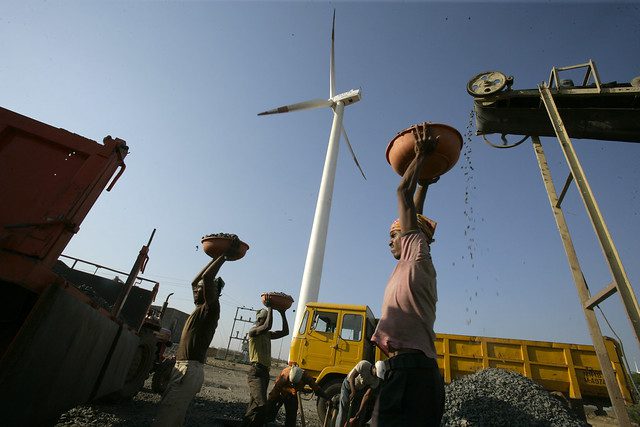
    Financing renewable energy development would provide a new market in the developing world that would provide many new jobs for workers with undeveloped skills. These jobs would provide not only steady incomes and safe working conditions but also skill-building opportunities. India, for example, is working toward creating 330,000 jobs in the renewable energy market by 2022. India is doing this to provide electricity and jobs to its poor, rural communities while simultaneously combating climate change. By promoting job growth through the renewable energy market, the world can achieve its goal of economic and environmental sustainability. Furthermore, the sustainable economic development of the developing world would promote the global economy, serving everyone.

Looking Ahead

Although the UN has pledged to provide universal energy access by 2030, the current initiatives the UN has in place to promote this goal is insufficient. In order to achieve its goal of ending energy poverty, the UN would have to invest a total of $52 billion per year. The UN has failed to match even half of this goal in a given year. The importance of financing this mission, however, is essential for the long-term benefits of renewable energy projects in the developing world. By investing in universal energy access through global renewable energy development, women’s rights, world health, clean energy and economic development can all be better promoted. All of this can create a more sustainable world.

– Ariana Howard
Photo: Flickr

August 7, 2019
https://borgenproject.org/wp-content/uploads/borgen-project-logo.svg 0 0 Kim Thelwell https://borgenproject.org/wp-content/uploads/borgen-project-logo.svg Kim Thelwell2019-08-07 01:30:092024-05-29 23:10:16Five Reasons to Care About Ending Energy Poverty
Gender Equality, Global Poverty, Women's Empowerment, Women's Rights

Female Empowerment in Zanzibar

Women in ZanzibarIn Zanzibar, a semi-autonomous region of Tanzania, many women struggle to overcome gender inequalities. Women are more likely to be illiterate, uneducated and unemployed in addition to being prevented from owning land and lacking opportunities to obtain leadership positions. Some women are fighting back against these barriers, however, by helping themselves and others increase their social and economic status. Furthermore, supporting female empowerment in Zanzibar has become a priority for a few local and national organizations.

The Situation for Women in Zanzibar

Women in Zanzibar are “twice as likely as men” to be uneducated. This has contributed to increasing employment inequalities since an education is becoming more essential to obtaining a job. Approximately 32 percent of female youths in Zanzibar are unemployed in comparison to only 10 percent of male youth. Women who do have jobs often earn less with 73 percent of women being paid at a lower rate than their husbands.

Additionally, only 16 percent of women in Zanzibar have bank accounts, and 91 percent do not own land, making it hard for women to become economically self-sufficient. When women do own land or other assets, these things are often controlled by their husband or male relatives. Female empowerment in Zanzibar involves women gaining financial and economic freedom as well as increasing their social status. The following are a few ways women’s lives in Zanzibar are improving.

Female Entrepreneurship

In response to high youth unemployment, many young women are turning to entrepreneurship as a way to make a living. At least 47 percent of women who are self-employed stated that their reason for doing so was the inability to find other employment. The majority of those who become interested in entrepreneurship are women with 82 percent of working women being self-employed. Self-employment and entrepreneurship offer women the opportunity to become financially independent, which is difficult in the low-paying formal sector.

Entrepreneurship is difficult, however, and many women who are self-employed still struggle economically. According to the Ministry of Labor, there are initiatives that support female entrepreneurs, but these do not reach all women. The most marginalized women do not have these opportunites. Moving forward, it is crucial that female entrepreneurs receive more support from the government and NGOs, otherwise, many will remain financially dependent on male relatives.

Seaweed Farming

For other women, seaweed farming has helped decrease economic inequalities and increase female empowerment in Zanzibar. In coastal villages, women have long been sequestered in their homes, only leaving for funerals, weddings or to care for sick relatives. Seaweed farming was taken up by women from these villages as a way to enter the public sphere and earn money for themselves.

According to marine biologist Flower Msuya, “At the beginning some husbands threatened divorce if their wives went out to farm seaweed… But, when they saw the money women were making, they slowly began to accept it.” Women’s social statuses in the villages have increased, and many have helped their families rise out of poverty. The work has also been crucial for women who were divorced from their husbands as they need to be able to support themselves.

Solar Training

Barefoot College, an organization that spread from India to East Africa, is offering a training program for women in Zanzibar, teaching grandmothers and single mothers in rural villages how to be solar engineers. The program focuses on this demographic of women because many are often illiterate and lack other opportunities. Solar training is also beneficial to the community as a whole since rural areas often lack adequate electricity.

Women are trained at Barefoot College for five months after which they return to their villages to set up solar lighting systems for family and neighbors. This is a cheaper option for most families, and the price they pay helps support the female engineers who help maintain the solar equipment in their village. Salama Husein Haja, a single mother, praised the program, stating, “When I go back I will have status. I will be knowledgeable and I will be proud.”

Reclaiming Public Spaces

A project in Zanzibar called Reclaim Women’s Space is working towards female empowerment in Zanzibar by helping women overcome cultural and religious constraints that require them to stay in the private sphere. There are few public places for women to gather socially in Zanzibar, so women generally go to work and then return home, in part because they are also responsible for domestic tasks.

Reclaim Women’s Space seeks to give women spaces in the public sphere where they can meet and work together to solve community problems. One of their projects was the creation of a community center, which has become a symbol of women’s economic, social and political power. Madina Haji, an engineer involved with the project stated that the goal is to “empower women to stand on their own” by improving their social status and giving them opportunities to come together.

It is crucial that initiatives such as these continue, and that women who are trying to obtain more autonomy are supported by local, national and international organizations and programs. Female empowerment in Zanzibar will take time to achieve, but persistent efforts to help these women become economically independent in a way that is also personally and socially empowering for them are an important part of making gender equality a reality.

– Sara Olk
Photo: Flickr

August 1, 2019
https://borgenproject.org/wp-content/uploads/borgen-project-logo.svg 0 0 Kim Thelwell https://borgenproject.org/wp-content/uploads/borgen-project-logo.svg Kim Thelwell2019-08-01 07:30:122024-05-29 23:10:20Female Empowerment in Zanzibar
Gender Equality, Global Poverty, Women's Empowerment

Education for Girls in Zambia

Education for Girls in Zambia
Due to extreme poverty in Zambia, many Zambian girls and women miss out on the opportunity to receive an education. With 64 percent of the population living on less than $1.25 a day, Zambia is one of the poorest countries in the world. Unfortunately, this leads to serious repercussions for the youth in the country. In fact, the Southern African Consortium for Measuring Education Quality found that Zambia comes in at number 13 out of the 15 countries in terms of literacy and numeracy. In rural areas, 27 percent of females have no education, primarily due to poverty, pregnancy and early marriages.

The Impact of Marriage

The United Nations Girls’ Education Initiative found that female literacy measures at 67 percent, while male literacy measures at 82 percent. This disparity holds females back in terms of economic advancement and independence from their male counterparts. The legal age for marriage in this country is 16. However, 46.3 percent of all girls marry before the age of 18. Further, evidence shows that early marriages play a big role in contributing to female dropout rates; therefore, initiatives encouraging women to delay marriage will likely decrease drop out rates.

Gender Equality in School

In Oct. 2018, Christine Kalamwina, the Zambia Deputy Permanent Representative to the United Nations, recognized that girls’ education was imperative in ensuring gender equality and economic female progress. In response to this, the government in Zambia enacted a new law. This law made it mandatory for schools to have an equal number of males and females enrolled. The reasoning behind these efforts was to assist in closing the education gender gap. Additionally, many girls drop out of school due to menstruation. The Zambian government is now distributing free sanitary towels in rural areas to allow women more opportunities.

CAMFED and GEWEL

Fortunately, there are many organizations working towards improving education for girls in Zambia. The Campaign for Female Education (CAMFED) is one of the organizations that works with the local government in order to promote gender equality and child protection. It has already provided secondary scholarships for 38,168 girls in Zambia alone.

The International Development Association (IDA) has also made a crucial impact. The IDA is the World Bank’s fund for the poorest countries. The Girls Education and Women’s Empowerment and Livelihood Project (GEWEL) is a program attempting to decrease the rate of child marriage. Its focus is on expanding access to secondary school for young girls, and more specifically, young girls from poor families through the Keep Girls in School bursary. Forced to drop out due to financial issues, the KGS assists by providing funds to continue girls’ education. There is also a program for working-age women, the Supporting Women’s Livelihood program, which offers training, startup funds, additional savings and mentor programs. Through the GEWEL project, 20,000 women received assistance in 2017, and in 2018, the project had a goal to help over 50,000 women.

– Jessica Haidet
Photo: Wikimedia Commons

July 29, 2019
https://borgenproject.org/wp-content/uploads/borgen-project-logo.svg 0 0 Kim Thelwell https://borgenproject.org/wp-content/uploads/borgen-project-logo.svg Kim Thelwell2019-07-29 08:52:532024-05-29 23:00:28Education for Girls in Zambia
Child Marriage, Gender Equality, Global Poverty

5 Activists Ending Child Marriages

Ending Child MarriagesEven in 2019, child marriage remains a global problem. Every year, 12 million girls from all around the world will get married before the age of 18. Child marriage is rooted in gender inequality and poverty because in many communities’ girls are still seen as a burden on the family. Marriage is often considered the best way to assure their future. However, there are many organizations and individuals tackling the problem of gender inequality and child marriage. Below are

Five activists whose work is ending child marriages

  1. Nada Al-Ahdal defends children’s rights.
    Nada Al-Ahdal is a Yemeni activist with a personal connection to escaping child marriage. In 2013, at the age of 11, Nada Al-Ahdal ran away from her family’s home in order to prevent a forced marriage to a 26-year-old man. During her escape, Nada Al-Ahdal made a video explaining how, if the marriage had gone through, she would have lost her chance at an education and ruined her life. Furthermore, she would have lost her childhood.
    In the first month of the video being posted, it received more than 8 million views. Nada Al-Ahdal has appeared on Lebanese and Yemeni television, spreading her message for ending child marriages. In 2018, at just 15 years old, Nada founded the Nada Foundation to protect and defend children’s rights. The foundation offers to safe havens. Additionally, it has a number of awareness programs focused on protecting children.
  2. Nice Nailantei Leng’ete speaks out against child marriage.
    At eight years old, Nice Nailantei Leng’ete ran away from her home village in Kenya. She did this in order to avoid undergoing female genital mutilation. As an adult, Nice Nailantei Leng’ete has become an activist that negotiates with village elders in Kenya to convince them to adopt alternative rites of passage for girls. She is an officer with Amref Health Africa. Additionally, it is estimated that her work has saved more than 15,000 girls in Kenya for genital mutilation and child marriage. Nice Nailantei Leng’ete now speaks out on a global stage against mutilation and child marriage in Africa. In 2018, she even was named one of the 100 most influential people in the world by Time Magazine.
  3. Fatoumata Sabaly enacts change as an activist.
    Fatoumata Sabaly is from Senegal, where child marriage and female genital mutilation is still fairly common. She is a respected member of her community as a grandmother and mother. She leverages this position as an activist through the Grandmother Project. The Grandmother Project is an NGO that uses the status of elders in communities to enact change and improve the well-being of women and children.
    Fatoumata Sabaly has explained the important work she does in the project: “Sometimes, girls come to tell me their parents are marrying them off, even though they want to stay in school. When this happens, I go to their parents. Out of respect for me, the parents listen to my advice and let their daughters stay in school.” Her activism and authority are helping girls stay in school and out of unwanted marriages.
  4. Arvind Ojha leads an organization fighting child marriage and violence against females.
    Arvind Ojha is the head of URMUL Trust, an organization active in the Indian state of Rajasthan for more than 25 years. Rajasthan has one of the worst child marriage rates in all of India. URMUL Trust works hard in ending child marriage, female genital mutilation and female foeticide. Arvind Ojha has said that “[URMUL Trust doesn’t] just focus on engaging women and children in programs but also older people and even religious leaders. Change is happening. The average age of marriage for girls is increasing.”
    In 2005, URMUL Trust launched a program in the districts of Sri Ganganagar, Hanumangarh and Jaisalmer called “Dignity of the Girl Child”. The program was aimed at ending child marriages, domestic violence and female infanticide. In 2011, URMUL Trust became partners with Girls Not Brides in order to strengthen their work to ending child marriage.
  5. Isatou Jeng defends women through advocacy.
    At 15 years old, Isatou Jeng found herself pregnant and with enormous pressure to get married. What she did next broke many societal norms in her home country of Gambia. She demonstrated her passion in ending child marriages by saying, “I stood my ground, refused to marry, and saw education as the best chance for a better life for me and my child.”
    Presently, she leads The Girls Agenda, a nonprofit she founded. The purpose of the organization is to fight for other girls facing gender-based violence and child marriage. Throughout her career as an activist, she has also worked as the advocacy and campaign officer for the Network against Gender-Based Violence. This is a group of organizations that works to defend women and girls in Gambia.
    In 2018, at a conference for women who transform the world, Isatou Jeng said about her involvement with The Girls Agenda, “I did not become a feminist, I was born a feminist.”

Every minute, 23 girls under the age of 18 are married around the world. Consequently, this is the reason that the work these activists and their organizations do is so important and urgent. Even in an era where child brides seem to be a relic of the past, ending child marriages is still a critical issue.

– Isabel Fernandez
Photo: Flickr

July 22, 2019
https://borgenproject.org/wp-content/uploads/borgen-project-logo.svg 0 0 Kim Thelwell https://borgenproject.org/wp-content/uploads/borgen-project-logo.svg Kim Thelwell2019-07-22 11:13:402024-05-29 23:00:195 Activists Ending Child Marriages
Education, Gender Equality, Global Poverty

Top 10 Facts About Living Conditions in Turkmenistan

Living Conditions in Turkmenistan
Central Asia displays memories of ancient ruins and powerful empires. Turkmenistan is no exception due to its most recent invasion by the Russian Empire (1881-1998) which is what shapes most of its modern history. Today, the world knows the country for its natural resources, dictatorial leader and marble cities. Here are the top 10 facts about living conditions in Turkmenistan.

Top 10 Facts About Living Conditions in Turkmenistan

  1. Authoritarian Media
    The close eye of Presiden Gurbanguly Berdimuhamedow administers daily life in Turkmenistan. The government oversees all media outlets to determine what can and cannot be published. Only 17.9 percent of the population uses the internet due to the high expense. People have access to little online information as authorities ban websites against the government. Since 2006, the government imprisoned two journalists (Sapardurdy Khadjiyev and Annakurban Amanklychev) for not complying with government media regulations.
  2. An Ongoing Economic Recession
    Turkmenistan was the poorest nation during the USSR. Today, the country’s GDP per capita is $6,587 and 10 percent of 5.8 million Turkmen live in extreme poverty. However, this is a massive stride for the nation. In 1990, more than a third of the country lived in extreme poverty (less than $1.90 per day) making 10 percent the lowest poverty rate the nation has ever seen.
  3. Developing Education
    Nearly 100 percent of Turkmenistan people are literate. The country has a 12-year educational system, however, the average student drops out of school after 10 or 11 years. The government has partnered with UNICEF to continue the development of its education through the Child Friendly Schools (CFS) model. This framework aims to help children not only in terms of education but also in terms of their well being.
  4. Gender Equality on the Rise
    Only 40 percent of women in Turkmenistan will attend tertiary school. Women often marry by the ages of 20 or 21 and will thus have few opportunities to obtain a higher education or career. Luckily, the United Nations has aided in the recent 2017 presidential decree of Turkmenistan’s first national action plan on gender equality. This plan includes improved legislation, equal access to health services and data collection to monitor progress.
  5. Poor Health
    The state does not widely fund health care. Turkmen are likely to spend more money on health care than the government. In 2017, the average citizen spent $2,052 on health care in comparison to the government which only spent $741. The lack of accessible public health care leads to an average life expectancy of just 67.8 years, with the highest cause of death being lower respiratory infections.
  6. Urban vs. Rural Life
    There are 5.8 million people living in Turkmenistan and 49.2 percent of that population living in urban areas. The sale of cotton, silk, Karakul sheep and homemade carpets and rugs are essential to rural development. Ashgabat remains the capital city and is the center point for business and government officials. Cars and railways connect the cities and towns within the country.
  7. Jail Brutality
    Prisoners within Turkmenistan and political prisoners especially are often abused. The exact number of political prisoners held by the government is not public knowledge, however, Prove They are Alive, an international organization fighting to reduce disappearances within Turkmenistan, states that 121 people remain forcibly disappeared. Ovadandepe is the most infamous jail and was the point of death for former government official Begmurad Otuzov. Mr. Otuzov’s body was returned to his family weighing just 99 pounds after having been missing for 15 years.
  8. Natural Resources and the Economy
    Turkmenistan’s economy is largely dependent upon hydrocarbon resources. The country leads as the world’s fourth-largest natural gas distributor and had 265 trillion cubic feet of natural gas reserves in 2016. Its largest customers include China, Russia and Iran. Petrofac is one of the largest energy producers in the country and employs 1,700 people across the nation.
  9. Environmental Resolutions
    Turkmenistan has no renewable energy sources and 13.9 percent of the population does not have access to clean water. However, UNICEF developed a strategy in 2017 to help the country promote sustainable practices. The project aims to raise awareness around environmental sustainability through education in schools.
  10. A Housing Crisis
    In 2015, the government evicted 50,000 people from their homes in the capital. The government forcibly removed people from their houses so they could build new buildings for the Asian Indoor and Martial Arts Games. Forced evictions are a common and recurring issue within Turkmenistan. Amnesty International is combating this housing crisis by publicizing homes that continue to be demolished.
  11. Low Unemployment Rate
    Last on the list of the top 10 facts about living conditions in Turkmenistan is employment. The country maintains a low GDP and a minimum wage of just 535 Turkmenistani ($152.55) per month. However, it also maintains a rather low unemployment rate. Only 3.8 percent of the country was unemployed in 2018, even lower than the United States’ unemployment rate of 4 percent.

Turkmenistan, like any country, has its challenges. As displayed in these top 10 facts about living conditions in Turkmenistan, the government’s high levels of surveillance and poor infrastructure can make life challenging at times. On the other hand, several NGOs such as the U.N. and Amnesty International are fighting to create a more equal society. Overall, the country has seen progress and today it maintains an improved education system as well as higher employment rates.

Photo: Flickr


July 16, 2019
https://borgenproject.org/wp-content/uploads/borgen-project-logo.svg 0 0 Kim Thelwell https://borgenproject.org/wp-content/uploads/borgen-project-logo.svg Kim Thelwell2019-07-16 09:27:412024-05-29 23:00:21Top 10 Facts About Living Conditions in Turkmenistan
Gender Equality, Global Poverty

Top 10 Facts About Girls’ Education in South Sudan

Top 10 Facts About Girls Education in South Sudan
South Sudan has experienced widespread political conflict and insecurity in recent years. Working towards a more peaceful and inclusive future, the South Sudanese government has set out to completely restructure its education sector. Despite some growth in this area, education remains inaccessible for women and girls due to the nation’s dedication to maintaining traditional gender roles. This has grossly affected girls’ livelihood, quality of life and educational opportunities. Below are the top 10 facts about girls’ education in South Sudan.

Closing the Gender and Socio-Economic Gap in Education

  1. South Sudanese women and girls are less likely to complete primary and secondary education than boys. According to the World Bank, it is estimated that seven girls per ten boys attend primary school. Meanwhile, only five girls per ten boys enroll in secondary education.
  2. Although some girls do manage to make it to secondary school, not many of them are able to
    finish. In 2013, only 500 girls in the entire country were in their graduating year of
    secondary school.
  3. Gender inequity in the South Sudanese education remains an issue. Females make up only 12 percent of the country’s teaching population.
  4. According to Fiona Mavhinga of Zimbabwe, “extreme poverty and gender inequity drive the injustice” preventing girls’ education in countries like South Sudan. Fiona was one of the first girls supported by Camfed, an international educational charity.
  5. Cultural notions that women are child-bearers and homemakers drive inequity. Meanwhile, men dominate the educational, business, and political sectors of society. In fact, South Sudanese women and girls are more likely to die during childbirth than complete primary education.
  6. South Sudan partnered with UNICEF in 2007 to help more children get to school. The initiative also created alternate forms of education for women and girls unable to travel to school every day.
  7. In the northern states, almost five percent of students travel more than one and a half miles to and from school each day. In southern states, educational sites average from one for every five communities to one for every 15 communities.
  8. The student to teacher ratio in South Sudanese schools is overwhelming. Urban classes often exceed 100 students under the direction of just one teacher.
  9. While education is technically free for South Sudanese students, there are many expenses that the system does not cover. Families are expected to pay additional fees if they want their children to have an education. This includes charges for textbooks, uniforms, school fees and more. Thus, socio-economic status plays a major factor in access to education.
  10. South Sudan is working with global partners such as UNICEF and Plan International to restructure the education system and expand girls’ access to education. Organizations based within South Sudan like Girls’ Education South Sudan (GESS), work to remove those barriers that block women and girls from study.

While organizations such as UNICEF, Plan International, and GESS are working to open access to education for girls, South Sudan is still struggling to close the gender gap in education. Regardless, the top 10 facts about girls’ education in South Sudan show that the movement to support girls’ education is more prosperous than ever.

– Morgan Everman
Photo: Flickr

June 2, 2019
https://borgenproject.org/wp-content/uploads/borgen-project-logo.svg 0 0 Kim Thelwell https://borgenproject.org/wp-content/uploads/borgen-project-logo.svg Kim Thelwell2019-06-02 01:30:412024-05-29 22:59:48Top 10 Facts About Girls’ Education in South Sudan
Education, Gender Equality, Global Poverty, Politics

Gender Equality in Rwanda

Gender Equality in RwandaThis year marks the 25th anniversary of the Rwandan Genocide. In 1994, from April 7 to July 24, approximately 800,000 Rwandans were massacred and up to 500,000 women were raped. However, 24 years later, Rwanda ranks sixth in the world for gender equality, the top non-European country besides Nicaragua.

Women and Politics

Representation of women in politics significantly helped improve gender equality in Rwanda. Since 2003, women have had a constitutionally protected place in the Rwandan government. The Rwandan constitution mandates 30 percent of representatives be female. As a result, the number of women in parliament increased from 18 percent in the 1990s to 64 percent as of 2013. In terms of a male-female ratio in parliament, Rwanda tops international rankings. Furthermore, President Paul Kagame’s current cabinet is the second in Africa to contain an equal ratio of men to women.

While better representation does not end all gender inequality, it improves women’s status in society. With female representation, society sees women as leaders. And more importantly, female representation helps create better legislation for women and encourages gender equality in Rwanda.

Women and Development

Rwanda is a largely rural country and depends on agriculture for economic growth. Rwanda’s Gross Domestic Product per capita ranks 206th in the world. However, Rwanda possesses a remarkable current GDP per capita given its recent history. Rwanda lost much of its traditional workforce to genocide, also resulting in 500,000 orphaned children. Since then, women have pioneered Rwanda’s development. The country possesses the highest rate of female labor force participation in the workforce compared to the rest of the African continent. Additionally, over 70 percent of women are engaged in a sector of the primary economy, and they make up 79 percent of the agricultural workforce, though not all are paid.

Consequently, women in development programs bolster gender equality in Rwanda, as they spearhead the country’s fast growth. Rwanda is currently hosting a wide range of development projects. These projects aim to both modernize the business of agriculture and ensure women are prepared for this modernization. Launched in 2015, the Capacity Development for Agricultural Innovation Systems program is being piloted in eight countries worldwide. This program aims to equip communities with the technological and soft skills necessary to navigate modern markets.

Mukamusoni Alexia, a cassava farmer, is one of 106 members in the newly formed ‘Ubumwe Mbuye’ Cooperative. According to Alexia, the cooperative facilitates a dialogue addressing local challenges and enabled her processing plant to acquire loans. Now, Alexia’s cooperative generates over 800 tons of cassava a month and provides 30 tons per week to a processing plant.

Many of these farming cooperatives are female-led or reserved for women, a long-term project to redefine gender roles and allow women to bring home family income.

Women and Education

Educating women is the key to gender equality. However, Rwanda’s education system struggles from a lack of resources. As a result, fewer students continue to secondary education. Moreover, Rwanda ranks low on the United Nations’ Development Programme’s Life Course Gender-Gap index.

Several of the most successful education projects focus on reducing gender-based violence. In doing so, empowered women can succeed at home and will, therefore, stay in school. A troubling statistic reflects 34.4 percent of Rwandan women experience violence from an intimate partner.

CARE International supports a program called Safe School For Girls. This program mentors girls as they transition from lower to upper secondary school. Plus, it provides sexual health education to more than 47,000 students across the Southern Province of Rwanda. Furthermore, this program hopes to engage boys in the dialogue through “round table talks.” These talks discuss the barriers women and girls face and how boys can help end gender-based violence. So far, Safe School For Girls has engaged over 19,000 boys in these talks. Improving the climate around education and identifying where women face barriers is critical for gender equality in Rwanda.

A Model for Gender Equality

While women still face a variety of obstacles, Rwanda acts as a model for gender equality worldwide. Rwanda’s Human Development Rank is still low. Subsequently, many argue gender equality in parliament is a smokescreen for President Kagame’s authoritarian regime, now entering its 19th successive year.

However, in spite of these developmental barriers, Rwanda has demonstrated gender equality is a realistic and attainable goal. The country’s real GDP growth stands at 8.6 percent, the second highest globally, showing full integration of women in society is critical for economic development. Rwandan women helped the country’s remarkable rebirth after a devastating genocide, and they are the main drivers behind its emerging prosperity today.

– Holly Barsham
Photo: Flickr

June 1, 2019
https://borgenproject.org/wp-content/uploads/borgen-project-logo.svg 0 0 Kim Thelwell https://borgenproject.org/wp-content/uploads/borgen-project-logo.svg Kim Thelwell2019-06-01 06:38:412024-05-29 23:00:28Gender Equality in Rwanda
Page 24 of 40«‹2223242526›»

Get Smarter

  • Global Poverty 101
  • Global Poverty… The Good News
  • Global Poverty & U.S. Jobs
  • Global Poverty and National Security
  • Innovative Solutions to Poverty
  • Global Poverty & Aid FAQ’s
Search Search

Take Action

  • Call Congress
  • Email Congress
  • Donate
  • 30 Ways to Help
  • Volunteer Ops
  • Internships
  • Courses & Certificates
  • The Podcast
Borgen Project

“The Borgen Project is an incredible nonprofit organization that is addressing poverty and hunger and working towards ending them.”

-The Huffington Post

Inside The Borgen Project

  • Contact
  • About
  • Financials
  • President
  • Board of Directors
  • Board of Advisors

International Links

  • UK Email Parliament
  • UK Donate
  • Canada Email Parliament

Get Smarter

  • Global Poverty 101
  • Global Poverty… The Good News
  • Global Poverty & U.S. Jobs
  • Global Poverty and National Security
  • Innovative Solutions to Poverty
  • Global Poverty & Aid FAQ’s

Ways to Help

  • Call Congress
  • Email Congress
  • Donate
  • 30 Ways to Help
  • Volunteer Ops
  • Internships
  • Courses & Certificates
  • The Podcast
Scroll to top Scroll to top Scroll to top