• Link to X
  • Link to Facebook
  • Link to Instagram
  • Link to TikTok
  • Link to Youtube
  • About
    • About Us
      • President
      • Board of Directors
      • Board of Advisors
      • Financials
      • Our Methodology
      • Success Tracker
      • Contact
  • Act Now
    • 30 Ways to Help
      • Email Congress
      • Call Congress
      • Volunteer
      • Courses & Certificates
      • Be a Donor
    • Internships
      • In-Office Internships
      • Remote Internships
    • Legislation
      • Politics 101
  • The Blog
  • The Podcast
  • Magazine
  • Donate
  • Click to open the search input field Click to open the search input field Search
  • Menu Menu

Archive for category: Extreme Poverty

Information and news about poverty

Extreme Poverty, Global Poverty, Health

Conference Focuses on Improving Newborn Health

Conference Focuses on Improving Newborn Health
In the first newborn health conference, international healthcare organizations are pleased with advancements to improve the health of newborns in developing countries. These organizations include the United Nations Children’s Fund (UNICEF), the US Agency for International Development and the Bill & Melinda Gates Foundation. Although newborn deaths, malnutrition, and stunted development are beginning to decrease, representatives of aid organizations say that more support is needed.

Attendees of the conference are planning to release a “global action plan” in the upcoming year to present a strategy for even further reducing these newborn deaths. With this new call to action, we can hope to see the current statistics for newborn deaths and illnesses continue to decrease.

Unfortunately, newborn deaths are all too common in the developing world. In 2011, approximately 20,000 newborn babies died and, in 2009, there were over 22,600 stillbirths in South Africa. The global statistics are even more shocking. 60.9 million children died in 2011 and, of these, 43 percent of deaths occurred during the first four weeks of life, three million died within a week, and two million babies died the day they were born.

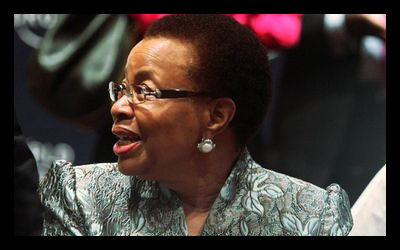
Graca Machel, the wife of Nelson Mandela, spoke urgently on the subject. She pronounced the issue of newborn health to be a top priority for UNICEF. “Too many of our newborn children here in Africa are dying too early. We are not reaching the targets we have set ourselves in the (UN) Millennium Development Goals. The issue of newborn health has long been a hidden challenge,” she said.

All organizations involved remain committed to working together to reduce newborn death rates through research and by working with the agriculture department to address malnutrition, the cause of stunted growth. The groups also plan to implement programs on training midwives and newborn healthcare education. Together, UNICEF, USAID, and the Bill & Melinda Gates Foundation hope to change the lives of millions of new babies.

– Mary Penn

Source: BDLive
April 24, 2013
https://borgenproject.org/wp-content/uploads/borgen-project-logo.svg 0 0 Borgen Project https://borgenproject.org/wp-content/uploads/borgen-project-logo.svg Borgen Project2013-04-24 08:57:242024-05-24 23:49:08Conference Focuses on Improving Newborn Health
Extreme Poverty

Strategies for Ending Global Poverty

Millennium Village Project
There are many ways to go about reducing and eventually ending world poverty. The Millennium Villages Project (MVP) has implemented several strategies that have proven to be effective at boosting economic independence in African villages. This is the “one village at a time” method. The pith of this method is agriculture reform.

The MVP works with African farmers to improve various aspects of agriculture techniques like what season to plant certain seeds and how to correctly use small scale irrigation, specifically a “gravity drip irrigation system” that is highly cost effective. Soil is also an important topic that farmers are educated about. They learn how to farm without stripping soil of vital nutrients, thus vastly increasing crop yields. Other aspects of soil health include organic farming, fertilizing, and soil conservation.

Education is a huge aspect of the Millennium Project. People working for the MVP train African farmers, and then these farmers can later educate other farmers about efficient agriculture methods. These farming organizations ensure that future generations will continue to produce higher crop yields. When farmers are successful, that means the entire village will flourish. The MVP encourages schools to provide locally grown, healthy foods for their students, especially young children.

Other key strategies being used around the world include: providing vaccines and building schools, shelters, wells, and medical clinics. These are some of the many approaches to help people lift themselves out of poverty. There is no one correct method; rather, it is often the combination of multiple techniques that proves to be the most effective. The Millennium Development Goals’ main objective is to end extreme global poverty by 2030 and with these many strategies will play a huge role in achieving this goal.

– Mary Penn

Source: Borgen Project
Photo: NY Times

April 9, 2013
https://borgenproject.org/wp-content/uploads/borgen-project-logo.svg 0 0 Borgen Project https://borgenproject.org/wp-content/uploads/borgen-project-logo.svg Borgen Project2013-04-09 10:00:222020-05-12 06:50:55Strategies for Ending Global Poverty
Extreme Poverty, Global Poverty, Health

Disabilities are Key in Tackling Global Poverty

Poverty_Disabled
The UN’s Millennium Development Goals (MDGs) laid out a number of goals in tackling global poverty by 2015 but left a glaring omission in the equation to aid the world’s poor: serving those who are disabled.

Nearly 70% of the world’s disabled population resides in developing countries, and the World Health Organization (WHO) estimates that 575 million of those disabled live below the poverty threshold. Preventable diseases, such as polio and measles, that are not treated properly in poor and developing countries leave a high number of the population with lifelong disabilities.

Other conditions, such as civil war, lack of health care, and malnutrition also contribute to the problem. In developing nations, a disability is “often seen as a curse, the result of bad luck or witchcraft.” Because of this, disabled individuals and even their families are often shunned from the social community and are left without means to support themselves, and lack access to education and healthcare. In the worst cases, disabled people are left to die.

Although the MDGs include many aid programs with worthy recipients, the disabled population is completely left out although they are some of those who suffer the most. This crucial omission means that this large demographic is left out of specific aid programs. For example, many school-aged children have benefited from MDG education initiatives – but what about the 61 million children who still lack access to education, a majority of whom are disabled?

The UN has somewhat recognized this with the United Nations Convention on the Rights of Persons with Disabilities in 2008. It will be most important for development leaders, when evaluating post-2015 development goals, to include disabled people throughout the developing world in their plans and programs.

– Christina Kindlon

Source: The Guardian

April 2, 2013
https://borgenproject.org/wp-content/uploads/borgen-project-logo.svg 0 0 Borgen Project https://borgenproject.org/wp-content/uploads/borgen-project-logo.svg Borgen Project2013-04-02 10:00:012020-05-04 07:43:21Disabilities are Key in Tackling Global Poverty
Aid Effectiveness & Reform, Extreme Poverty

Bono’s TED Talk

Bono’s TED Talk has compacted twenty-five years of anti-poverty campaigning into a ten minute presentation for a TED conference which was held this past February. The result is a passionate call for people to stay involved and stay informed about all the great work that is and has been happening in the fight against extreme poverty.

Much of the progress that has been made does not make the news but Bono sees how people, technology, and the sharing of information is turning inequality on its head; sighting the Arab Spring as a momentous shift in history. He emphasizes how facts change minds and hearts, bring new awareness and action, bring better action, and bring change in a phenomenon he names “factivism.”

Here are some facts. Since 2000:

  • Eight million AIDS patients have been receiving retroviral drugs
  • Malaria deaths have been cut in some countries by 75%
  • Child mortality rate of children under the age of 5 is down by 2.65 million deaths per year
  • 7,256 children’s lives are saved each day

The global rate of extreme poverty has declined from 43% in 1990 to 21% in 2010.

The population of people living on less than $1.25 per day has been cut in half in the last 20 years, and the facts show that this extreme poverty can be cut to virtually zero within a generation — worldwide. Bono encourages everyone to continue their efforts for lasting progress by:

  • Telling politicians not to cut foreign aid funding
  • Join campaigns that make sure all natural resources (and their profits) are shared with the people of that country
  • Continue citizen participation by demanding transparency of government spending (anti-corruption)
  • Become a “factivist” – share the facts with others about successes and hardships within global inequality

– Mary Purcell

Source: ONE.org

March 17, 2013
https://borgenproject.org/wp-content/uploads/borgen-project-logo.svg 0 0 Borgen Project https://borgenproject.org/wp-content/uploads/borgen-project-logo.svg Borgen Project2013-03-17 13:00:262016-05-11 11:02:07Bono’s TED Talk
Extreme Poverty, Poverty Reduction

UN Warns Environmental Threats Increase Poverty

UN Warns Environmental Threats Increase PovertyA report released by the UN warns that the number of people in extreme poverty could rise by 3 billion in 2050 unless immediate action is taken to combat environmental threats.

The 2013 Human Development Report had stated that more than 40 countries have shown significant improvement on health, wealth and education with rapid increases in Brazil, China, India as well as many other developing countries. The percentage of those living in extreme poverty, or living on $1.25 a day or less, had fallen from 43% to 22% from 1990 to 2008. This is attributed to significant successes in poverty reduction and economic growth in China and India. In response to this statistic, the World Bank has said that the Millennium Development Goal of decreasing extreme poverty by half by 2015 was ahead of schedule.

However, the UN had also reported that if environmental challenges such as climate change, deforestation, and air and water pollution were left unaddressed, human development progress in the poorest countries could come to a halt and possibly be reversed. Environmental threats and ecosystem losses are worsening the living situations and hindering the livelihood opportunities of many poor people. Building on the 2011 edition of the report arguing for sustainable development, the UN warns that unless coordinated global action is taken to combat environmental issues, the number of people in extreme poverty could rise.

“Environmental threats are among the gravest impediments to lifting human development,” the report says. “The longer action is delayed, the higher costs will be.”

– Rafael Panlilio

Source: Flickr

March 16, 2013
https://borgenproject.org/wp-content/uploads/borgen-project-logo.svg 0 0 Borgen Project https://borgenproject.org/wp-content/uploads/borgen-project-logo.svg Borgen Project2013-03-16 22:15:312020-05-24 23:36:05UN Warns Environmental Threats Increase Poverty
Extreme Poverty

Poverty and Poaching

Poaching Poverty
Ambassadors from nearly 180 countries convened at the Trade in Endangered Species of Wild Fauna and Flora Conference in Bangkok last week to discuss new ways to stop poaching and other illegal hunting practices. Water and Environmental Affairs Minister Edna Molewa believes that the international community should do more to fight poverty and that addressing poverty will help lessen the frequency of poaching.

The Minister Molewa and many of her colleagues believe that poverty is the main reason that people turn to poaching for their income. Many animal’s pelts or horns can bring in a hefty bit of change that can make all the difference to families living in extreme poverty. Hopefully, as the fight against poverty continues, there will be less poaching around the world. Southern Africa is the region that has been experiencing the greatest problem with illegal hunting and is currently moving forward in their efforts to fight the trafficking of illegal animals and animal products with many Asian countries such as China and Vietnam, where large markets exist for illegal animal products.

So, while fighting poaching by itself may only work to protect the endangered animals of the world, fighting severe poverty may one day remove the incentive for poaching, thus helping the impoverished communities and the animals as well.

– Kevin Sullivan

Source: Times Live
Photo: WHO ZOO

March 8, 2013
https://borgenproject.org/wp-content/uploads/borgen-project-logo.svg 0 0 Borgen Project https://borgenproject.org/wp-content/uploads/borgen-project-logo.svg Borgen Project2013-03-08 19:34:352020-04-20 08:53:39Poverty and Poaching
Developing Countries, Development, Extreme Poverty, United Nations

UNCTAD Says Developing Countries Show Real Growth

UNCTAD Says Developing Countries Show Real Growth
The United Nations Conference on Trade and Development (UNCTAD) said that developing countries are now contributing much more to the global economy than ever before.

UNCTAD released the information that developing countries’ share in global value-added trade is now at about 40 percent, whereas the same figure was about 20 percent in 1990. Economists give most of the credit to transnational markets and global value chains, the chain of different countries in which a single multinational company operates.

These global value chains allow a weaker developing country to create an economic partnership with more developed economies by supplying raw materials and basic manufacturing or design. The capacity from growth comes from climbing the “chain,” by building the local economy, training workers, and producing more complex goods. People always ask for results in the mission to fight poverty, this growth is definitely evidence that economies around the developing world are growing.

These statistics, along with the rapidly decreasing statistic of people living in extreme poverty, are proof that real progress is being made as developing countries show real growth.

– Kevin Sullivan

Source: Industry Week
Photo: The Graduate Institute

March 3, 2013
https://borgenproject.org/wp-content/uploads/borgen-project-logo.svg 0 0 Borgen Project https://borgenproject.org/wp-content/uploads/borgen-project-logo.svg Borgen Project2013-03-03 14:45:062020-05-17 21:41:59UNCTAD Says Developing Countries Show Real Growth
Developing Countries, Extreme Poverty

Indian Budget Promotes Greater Social Inclusion

Indian Budget Promotes Greater Social InclusionIn India, the effect of economic slowdown is not obvious. On the surface, economic activity is lively as businesses appear to be thriving and new ones are being created. This year, however, growth is predicted to be at around 5 percent.  Emphasizing a need to increase Indian growth to 8 percent, how it was prior to the global economic crisis, Indian Finance Minister Palaniappan Chidambaram presented the new Indian budget last Thursday. Chidambaram’s plan involved placing focus on greater social inclusion and a need to tax the super-rich of India.

Outlined in the presented Indian budget were plans to increase spending on education and vocational training, agriculture, and health by 17 percent, 22 percent and 24 percent respectively. An additional $1.8 billion was set aside for food subsidies as part of a plan to ensure food security and combat malnutrition, especially in remote rural areas. The Finance Minister’s recommendations also included improving the living situation of disenfranchised groups, including lower castes, minorities and women, for greater social inclusion and sustainable growth.

“There is a compelling moral case for equity but it is also necessary if there is to be sustained growth,” Chidambaram said.

Additional revenue to fund these programs would come in part from a 10 percent surcharge on 42,800 Indian taxpayers who reported a taxable income of more than 10 million rupees or $180,000 in the last year. Companies earning more than 5 million rupees would pay an additional 5 percent tax surcharge. This tax surcharge would be in effect for just one year. Chidambaram was optimistic that rich Indians would take well to this additional surcharge confident that they would pay “cheerfully.”

Since his appointment as Finance Minister in August, Chidambaram has worked to prevent a predicted fiscal deficit of 5.8 percent in GDP. Through forced expenditure cuts, he has managed to halt the fiscal deficit at 5.2 percent. Chidambaram pledges to lower the fiscal deficit for next year to 4.8 percent.

– Rafael Panlilio

Source: CNN
Photo: Reuters

March 3, 2013
https://borgenproject.org/wp-content/uploads/borgen-project-logo.svg 0 0 Borgen Project https://borgenproject.org/wp-content/uploads/borgen-project-logo.svg Borgen Project2013-03-03 11:35:332020-05-17 21:49:08Indian Budget Promotes Greater Social Inclusion
Extreme Poverty

A Voice for the Poor

A Voice for the Poor
There are billions of people in the world today who are currently living under the shaky circumstances of poverty. One in five people in the world survive on less than $2/day, while 1.5 billion struggle with less than $1/day. This shocking truth affects people everywhere and creates a lack of hope and opportunity.

Although there is aid money that is accessible, cash transfers have become comparably effective way to help the poor. In the effort to achieve the UN Millennium Development Goal of eradicating extreme poverty, cash transfers have played a significant role in reducing the high number of people living in extreme poverty. While the benefits of having access to cash transfers are well known, the people who are most in need of them believe that the value and improvement of the system can be better. For the poor, their voices remain unheard.

Cash transfer programs in developing countries have been viewed as an effective and fast way to provide aid.  Because of how money is distributed, the money is not being given to everybody due to eligibility concerns and a lack of people properly applying before deadlines. Some countries such as Kenya had trouble trying to figure out the application process for cash transfer programs. Like many people living in poverty stricken area, many are unaware of what to do and are more focused on surviving.

While there are always benefits to receiving money, there is also conflict in the process of collecting it. Elderly people in Uganda have had a difficult time trying to voice their issues whenever mistakes occurred. Whenever there is any kind of conflict, elders are faced with the problem of whether to address it or not. They don’t believe that a voice truly exists for them. Not being able to share their complaints has a lot to do with their fear of having their benefits taken away from them.

As the poor are struggling to reach out to share their voice, there is an ethical argument for them to have a say in society. Although they already face such vast conflicts in their life as the poorest in society, discrimination plays into their lives on the basis of gender, age, disability, ethnicity, sexuality and religion.

Being able to find a voice for the poor is not only going to better their lives, but it will properly open up a different perspective on how unjust the poor are treated. This issue is not that these programs are not already effective enough in combating poverty, but by having their own voice, the poor can address their issues with aid systems to the government and donors for improvement, efficiency, and fairness.

– Jada Chin

Source: The Guardian
Photo: Council on Foreign Relations

February 26, 2013
https://borgenproject.org/wp-content/uploads/borgen-project-logo.svg 0 0 Borgen Project https://borgenproject.org/wp-content/uploads/borgen-project-logo.svg Borgen Project2013-02-26 13:28:432020-04-13 09:17:07A Voice for the Poor
Children, Developing Countries, Development, Extreme Poverty, Foreign Aid, Poverty Reduction

Teenager Helps Residents of a Garbage Dump

Teenager Helps Residents of a Garbage DumpWhile most teenage girls her age are reluctant to take out the trash, Courtney Quigley is begging her parents to return to Guatemala City to help the poverty-stricken residents of a garbage dump there. In the past, Courtney has worked with Potter House, a nonprofit which helps the 11,000 people living in the garbage dump. Out of that population, 6,500 are children.

According to the Lake Zurich Patch, Courtney first fell in love with Guatemala when she was nine and her family took a trip to build playgrounds with Kids Around the World, an organization whose primary goal is to provide safe play equipment for children who find it difficult to be “just a kid.” Courtney describes the garbage dump as being 40 acres filled with trash and yet the children somehow manage to stay positive and in high spirits.

While her family has been on other mission trips, Courtney has fallen in love with Guatemala. She was able to return in 2011, meeting a family of seven who lived in a 9 x 10 shack. One of the children, a 15-year-old girl, was pregnant and Courtney decided that something needed to be done to help improve their living condition.

To help, Courtney and her friends are hosting a “Hope’s in Style” fashion show fundraiser on February 24 at the Garlands Center in Barrington, Illinois.

Although she is now living in the United States, the memory of the children in Guatemala still remains vivid in her mind.

“There is nothing here that is hopeful, but when you shake hands, hug, and talk to people, they are so full of hope, so full of faith,” Courtney said. Their determination to make the best of their situation is what inspires her to keep moving forward.

 – Pete Grapentien

Source: Lake Zurich Patch

February 24, 2013
https://borgenproject.org/wp-content/uploads/borgen-project-logo.svg 0 0 Borgen Project https://borgenproject.org/wp-content/uploads/borgen-project-logo.svg Borgen Project2013-02-24 12:47:412020-05-11 03:55:29Teenager Helps Residents of a Garbage Dump
Page 9 of 10«‹78910›

Get Smarter

  • Global Poverty 101
  • Global Poverty… The Good News
  • Global Poverty & U.S. Jobs
  • Global Poverty and National Security
  • Innovative Solutions to Poverty
  • Global Poverty & Aid FAQ’s
Search Search

Take Action

  • Call Congress
  • Email Congress
  • Donate
  • 30 Ways to Help
  • Volunteer Ops
  • Internships
  • Courses & Certificates
  • The Podcast
Borgen Project

“The Borgen Project is an incredible nonprofit organization that is addressing poverty and hunger and working towards ending them.”

-The Huffington Post

Inside The Borgen Project

  • Contact
  • About
  • Financials
  • President
  • Board of Directors
  • Board of Advisors

International Links

  • UK Email Parliament
  • UK Donate
  • Canada Email Parliament

Get Smarter

  • Global Poverty 101
  • Global Poverty… The Good News
  • Global Poverty & U.S. Jobs
  • Global Poverty and National Security
  • Innovative Solutions to Poverty
  • Global Poverty & Aid FAQ’s

Ways to Help

  • Call Congress
  • Email Congress
  • Donate
  • 30 Ways to Help
  • Volunteer Ops
  • Internships
  • Courses & Certificates
  • The Podcast
Scroll to top Scroll to top Scroll to top