• Link to X
  • Link to Facebook
  • Link to Instagram
  • Link to TikTok
  • Link to Youtube
  • About
    • About Us
      • President
      • Board of Directors
      • Board of Advisors
      • Financials
      • Our Methodology
      • Success Tracker
      • Contact
  • Act Now
    • 30 Ways to Help
      • Email Congress
      • Call Congress
      • Volunteer
      • Courses & Certificates
      • Be a Donor
    • Internships
      • In-Office Internships
      • Remote Internships
    • Legislation
      • Politics 101
  • The Blog
  • The Podcast
  • Magazine
  • Donate
  • Click to open the search input field Click to open the search input field Search
  • Menu Menu

Archive for category: Development

Information and stories on development news.

Development, United Nations

Private Sector Partners Further Development

The U.N.’s post-2015 development agenda — the framework for which is expected to be ratified in September of this year — will rely heavily on the private sector.

According to Martin Sajdik, president of the U.N.’s Economic and Social Council, including non-state actors in the development agenda is a crucial step in making the post-2015 development goals more feasible. “Our economic life, our social life is not only determined by state actors, so if we want to have a development agenda that is for all countries of the world — both developed and developing—we cannot ignore the fact there are many more actors,” said Sajdik.

The new Sustainable Development Goals, or SDGs, place particular emphasis on the importance of building multistakeholder partnerships across sectors. While the U.N. has involved private sector partners to a greater extent than it did when crafting the MDGs, some believe that the private sector’s role in setting the post-2015 agenda could be expanded further.

“Ultimately, we in the [Community Service Organization] community and World Vision understand this is a governmental process, that the ultimate decision will be taken by member states of the U.N. but our role is to influence those member states,” said World Vision external relations director Chris Derksen-Hiebert.

In recent years, cross-sector relationships have become increasingly common. One advantage of such relationships is that they harness the valuable expertise, resources and distribution channels of private enterprises.

One example of this movement is ColaLife. In 2012, the U.K. based charity began sending medicine kits to Zambia in cases of Coca-Cola. Rohit Ramchandani, ColaLife’s principal investigator, explained the organization’s philosophy: “Our model looks specifically at how we can partner with and leverage private sector distribution channels, these companies that are able to get their product out to that last mile in the most remote parts of the world.”

More recently, President Barack Obama’s Power Africa initiative received over $20 billion in private sector commitments, which will create millions of jobs, and fast-track the development of sub-Saharan Africa.

Andrew Herscowitz, USAID’s coordinator for both the Power Africa and Trade Africa initiatives, believes that governments will need to draw on the vast resources of the private domain in order to establish the expansive infrastructure needed to power the African continent. “Energy is one of the key constraints to economic growth in Africa, and only the private sector has the sufficient resources to build the necessary infrastructure,” he wrote.

Herscowitz also believes that the partnerships being forged within the Power Africa initiative are representative of a changing paradigm in the development world. “Our African partners are now looking less for the high-priced expert, who comes into a country to opine on what reforms a country may need to drive development,” he explained. “Rather, they want the deals themselves to drive the development.”

He went on to connect the role of private sector partners and government organizations: “The role that development institutions play in driving infrastructure development is being redefined, and the Power Africa partners are excited to be driving this new model for development.”

As policymakers continue to forge the post-2015 development agenda, it appears they will begin relying more heavily on the private sector’s diverse and valuable resources.

– Parker Carroll

Sources: The Brookings Institution, Businessweek, Devex 1, Devex 2
Photo: Wave Partnership

January 26, 2015
https://borgenproject.org/wp-content/uploads/borgen-project-logo.svg 0 0 Borgen Project https://borgenproject.org/wp-content/uploads/borgen-project-logo.svg Borgen Project2015-01-26 04:00:032024-06-05 01:58:22Private Sector Partners Further Development
Development, Food & Hunger, Gender Equality, Global Poverty, Hunger

What Causes Hunger in Africa

What causes hunger in Africa? To be certain, Africa is by no means a single entity. The second largest continent on Earth, Africa is an enormous landmass that is home to a wide variety of landscapes, cultures and people.

That said, the continent is also home to much of the world’s hunger, spread across several of the world’s poorest countries. Approximately 30 million people in Africa face the effects of severe food insecurity, including malnutrition, starvation and poverty.

Ending hunger not just in Africa but wherever it occurs is crucial to solving impoverishment and, accordingly, is a leading priority for many humanitarian organizations.


Causes of Hunger in Africa


1. Lack of Infrastructure

Many of the African countries in which there is widespread hunger are countries in which there is also plenty of food. Agriculture is the leading economic industry in several of the hungriest African nations including Niger, Ethiopia and Somalia.

The issue is not that there is a lack of food, the issue is that there are are often no reliable pathways for getting that food from the fields into that hands of the people who need it the most. Many hungry countries lack accessible rural roads on which food could be transported into the countryside.

Where it does not already exist, building the infrastructure necessary for distributing food is essential to ending hunger in Africa.

2. Poverty

Poverty is a cause of hunger in Africa as well as an effect. Nearly a third of individuals living in sub-Saharan Africa are “undernourished,” and 41 percent of people in that same area live on less than U.S. $1 daily. That’s no coincidence; high rates of poverty are correlated with high rates of hunger because acquiring adequate food provisions requires ample resources, not only financial but social as practical as well.

3. Gender Inequality

According to one of the most successful hunger-focused humanitarian organizations, The Hunger Project, gender inequality is a major driving force behind hunger because food tends to go further in the hands of women. When women have adequate food supplies, they as well as their families experience better health and social outcomes than when men have sole control of food rations.

However, in many African nations experiencing hunger crises, though women do the majority of agricultural work, they do not control their own access to food. Addressing gender inequality where it occurs in Africa will be central to eradicating hunger.

4. AIDS

AIDS is especially prevalent in southern Africa (Lesotho, Malawi, Mozambique, Namibia, South Africa, Zambia and Zimbabwe), where approximately six million people are estimated to live with the condition. Not only does AIDS render these individuals too sick to do any sort of agricultural work (which, if farming is their livelihood, can throw them into poverty), it can also render them to sick to leave their homes to acquire food for themselves and their families.

– Elise L. Riley

Sources: Save the Children, The Hunger Project, World Food Programme
Photo: Ceasefire Magazine

January 21, 2015
https://borgenproject.org/wp-content/uploads/borgen-project-logo.svg 0 0 Borgen Project https://borgenproject.org/wp-content/uploads/borgen-project-logo.svg Borgen Project2015-01-21 16:00:222024-12-13 17:51:08What Causes Hunger in Africa
Development, Education

Education in Myanmar

Read more
January 17, 2015
https://borgenproject.org/wp-content/uploads/borgen-project-logo.svg 0 0 Borgen Project https://borgenproject.org/wp-content/uploads/borgen-project-logo.svg Borgen Project2015-01-17 08:00:082026-04-09 11:53:52Education in Myanmar
Activism, Development

World AIDS Day 2014

world_aids_day
As World AIDS Day 2014 fast approaches, organizations strive to promote awareness and support for the cause. Led by groups such as the World Health Organization, World AIDS Day takes place on December 1 each year. This year’s campaign aims to promote social change and focuses on closing the access gap to important treatment.

Over 39 million people have lost their lives to HIV over the last few decades, and an estimated 35 million people were living with the disease in 2013. World AIDS Day is intended to pay homage to those who have died while advocating awareness and support for an HIV-free future.

The 2014 campaign asserts that closing the gap in HIV testing accessibility would help 19 million unknowingly affected people receive care and support. Additionally, the 35 million HIV-positive people across the world would gain access to vital medicine.

The campaign also aims to allow for children to receive better access to HIV treatment, as currently only 24 percent are able to receive care.

Organizations declare that by closing the access gap, the world could see an end to the AIDS pandemic by the year 2030.

The WHO plans to honor World AIDS Day by releasing new information and recommendations to assist countries in their progress toward HIV prevention and treatment. The new WHO guidelines will cover recommended use of antiretroviral drugs for those that have been exposed to HIV including healthcare professionals, sex workers and rape victims. The manual will also include information regarding the treatment of infections and diseases that can be detrimental to HIV patients.

For the last several years, the WHO has been a strong advocate of antiretroviral, or ARV drug treatment for HIV infections. The latest statement reported, “The ARV regimens now available, even in the poorest countries, are safer, simpler, more efficacious and more affordable than ever before.”

As World AIDS Day approaches, many are showing their support for the cause and the 2030 virus-free goal. Leader of the U.S. National Institute of Allergy and Infectious Diseases, Anthony Fauci, states, “With collective and resolute action now and a steadfast commitment for years to come, an AIDS-free generation is indeed within reach.”

However, WHO officials urge that there is still a great deal of work to be done in order for these treatments to become accessible to communities in need. Officials hope that the new HIV guidelines will help to close the gap in prevention and treatment for everyone affected.

In honor of World AIDS Day 2014, many companies are providing special offers that allow for proceeds to go toward the fight against AIDS. The (RED) campaign has partnered with businesses including the Apple Store, Starbucks, CocaCola, Bank of America and many more to raise awareness and gain support for the cause.

Getting involved this holiday season, either by participating in the campaign or helping as a consumer, can make an enormous difference in the future of our world.

– Megan Douches

Photo: World Aid Day UN AIDS, WHO
Photo: Flickr

November 28, 2014
https://borgenproject.org/wp-content/uploads/borgen-project-logo.svg 0 0 Borgen Project https://borgenproject.org/wp-content/uploads/borgen-project-logo.svg Borgen Project2014-11-28 12:00:072024-05-27 09:23:03World AIDS Day 2014
Development, Extreme Poverty

PAK-Energy Saves Lives

PAK-Energy
In Pakistan, 16 million families don’t have access to clean-burning fuels for cooking and heating. The result of this is increased health problems, especially for women and children. A solution has been developed by PAK-Energy to help reduce this issue. Ranked in the list of “10 Incredible Tech Innovations from 2014 that will Benefit Humanity” on the ONE website, PAK-Energy knows where the need lies and seems to be working towards a better alternative for people living in Pakistan.

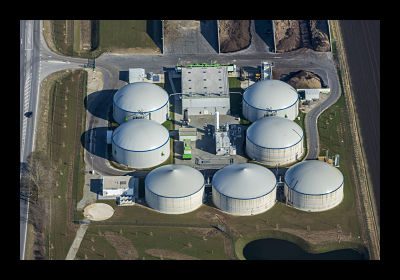
Ali Raza of PAK-Energy has created a small, sustainable domestic biogas unit that produces biogas good enough to take care of a family’s cooking and heating needs. This biogas unit will also help the family save money by reducing the cost of fuel. The other benefits of it include reducing waste production and producing nontoxic organic residues that can be sold later on for fertilizer.

PAK-Energy has a vision that is committed to becoming part of a green revolution for Pakistan. It does this by providing energy solutions that are more cost efficient and better for the community like the one mentioned above.

So what is biogas exactly? Organic waste like animal manure, kitchen waste, agricultural residue and even industrial waste can be turned into biogas. This biogas can be used for cooking, heating, lighting and electricity generation for families. There are also economic benefits to biogas such as employment generation, industrial growth, additional source of income with fertilizer, rural development, low cost product and create a sustainable economy.

PAK-Energy has received a lot of recognition for its progress in helping the poor for example in 2011, it received an invitation from the Prime Minister of Turkey to attend the Global Entrepreneurship Summit. Also within that same year, it one the first prize in the Young Entrepreneurs Business Challenge in Lahore, Pakistan.

So far, PAK-Energy has made a big impact by creating seven pilot projects in Lahore, Pakistan. This helps families save money and it helps the environment as well. As a plan moving forward, PAK-Energy has a goal of 25,000 units to be installed within the next five years.

– Brooke Smith

Sources: ONE, PAK Energy Solution
Photo: Flickr

November 15, 2014
https://borgenproject.org/wp-content/uploads/borgen-project-logo.svg 0 0 Borgen Project https://borgenproject.org/wp-content/uploads/borgen-project-logo.svg Borgen Project2014-11-15 04:00:092024-05-27 09:22:59PAK-Energy Saves Lives
Development, Global Poverty

Movement Made Toward Sustainable Communities

sustainable_communitites
Sustainable communities are achievable when a community is economically, environmentally and socially healthy and resilient. A sustainable community, just like any other, is faced with many challenges, but it takes more community-based approaches to tackle the issues and meet their goals. A sustainable community is defined by the Environmental Protection Agency as a community that “should establish goals and a vision by developing more efficient and effective ways in which to live and grow. It also will involve the participation of the entire community in creating a vision of the community’s future that balances economic, environmental and social needs.” The Institute for Sustainable Communities focuses on empowering communities so they can achieve the state of sustainability in their environment, social and economic sects of the community.

The Institute for Sustainable Communities was formed in 1999 by former Vermont Governor Madeleine M. Kunin. ISC focuses on communities uplifting and motivating themselves towards a built sustainable environment.

“A sustainable community seeks a better quality of life for the whole community without compromising the wellbeing of other communities, healthy ecosystems, effective governance supported by meaningful and broad-based citizen participation and economic security,” said Governor Kunin.

The ISC works in different countries across the world, focusing on the climate, citizen, industry and urban situations. The countries include the U.S., Serbia, China, Bangladesh and India. The ISC recognizes that each country, city and community is unique and has its own adversaries to face. These communities are used as a stepping stone for countries that already have working visions of becoming a fully-functional sustainable community. Countries that are most vulnerable to climate change, with the largest outputs of Greenhouse Gas Emissions, include the U.S., China and India. They are given ideas for successful urban systems and sustainable manufacturing.

Urban systems focus on creating alliances, academies, educational services, etc. that can be utilized in the different countries. For example, the Western Adaptation Alliance (WAA) focuses on connecting 13 different cities in Southwest USA, who all have similar climate adaptation plans to form a support group discussing future ideas, impacts, benefits and drawbacks of their current situation. The urban systems are specific to issues in an area, as climate change is very region specific. So the urban systems for each area could be entirely different, depends of the resiliency of the city, current infrastructure and typical weather patterns in the area.

On the other hand, sustainable manufacturing can be more universal. All areas need a sustainable system of manufacturing as a solid basis towards a sustainable built environment. Sustainable manufacturing through training centers, global partnerships and technologies try to reduce the amount of greenhouse gases in an area. For example, in China there are centers located in the two most industrious cities in China that trains factory managers to focus on reducing greenhouse gases in the industry, the environment, health safety, lowering hazards and overall improving the quality of life of worker’s.

Through outreach, training, agencies, alliances, conferences, workshops and education, the Institute for Sustainable Communities is achieving their goals towards a more sustainable built environment. They measure their successes in real-time based on the initiatives that the place in a community and the sustainability they achieve. Through their commitment to the climate, industry, citizens, and urban infrastructure, they are able to transform communities into fully-functioning sustainable places to live.

– Charisma Thapa

Sources: EPA, ISCVT
Photo: RE Sources

November 14, 2014
https://borgenproject.org/wp-content/uploads/borgen-project-logo.svg 0 0 Borgen Project https://borgenproject.org/wp-content/uploads/borgen-project-logo.svg Borgen Project2014-11-14 04:00:462024-06-04 03:52:58Movement Made Toward Sustainable Communities
Development

Tajikistan’s Innovative Buildings

Tajikistan
On January 2, 2010, a devastating earthquake hit the mountainous country of Tajikistan. Seven thousand people were affected by this natural disaster. The Office for the Coordination of Humanitarian Affairs (OCHA) reported that 20 villages in the Vanj district in the eastern Gorno-Badakhshan region were badly damaged. Estimates suggest that more than 140 houses were destroyed and 950 were left partially damaged.

Urgent Need for a Change

Nancy Snauwaert, a humanitarian coordination officer in the office of the U.N. Resident Coordinator in Vanj reported that, “There is an urgent need for the total reconstruction of houses. Technical guidance is crucial as over 1,000 houses have been damaged and are in need of becoming earthquake resistant.”

Currently, buildings are being constructed using concrete reinforced with steel rebar. Unfortunately, 50 percent of the country lives on less than $2 a day and rebar is financially out of the reach for many of the families residing in this earthquake-prone area.

Sustainable Housing Technology

Starting in 2008 Habitat for Humanity Tajikistan and the Tajik Institute of Seismology began to research alternate means of creating an inexpensive and sustainable house-reinforcing technology. The design created won them the FedEx Award for Innovations in Disaster Preparedness in 2013.

The design has been coined as “Sinj-technology.” Mulberry trees are cut down seasonally to harvest silk cocoons. The twigs of the tree have no other purpose and are free to use. Researchers tied mulberry branches into grids. These grids are then attached to a structural wood frame in mud walls. The grid is plastered with a mix of mud, straw and wool. This design effectively makes the walls able to resist lateral forces.

Preliminary Tests have proven that mulberry grids provide tensile strength equivalent to 80 percent of that of steel rebar. The first earthquake to test this new technology occurred in December of 2008 when the Rasht district was shaken by a 5.8 earthquake. Eighty homes in this region had been previously reinforced with Sinj-technology.

2009 Earthquake and its Effects

The next earthquake occurred in January 2009 when a 6.0 earthquake was felt in the Kumsangir district. Over one hundred homes were reinforced with Sinj-technology. A post-disaster survey found that none of the reinforced houses were damaged.

Another large advantage to this technology is that homes do not need to be rebuilt with the mulberry grids. The structures can be added to existing structures, saving homeowners as much as five times the expense of new construction. It is also 30 percent cheaper to use these materials than the standard techniques used in other seismically unstable regions.

Since receiving the FedEx Innovation Award, Habitat for Humanity Tajikistan has reinvested the money into proof of concept in an effort to create a new business strategy for Sinj-technology. Their intention is to pair this technology with local training of masons and construction workers. This would also effectively provide opportunities for affordable financing of home retrofits through microloans.

This comes as promising news for the 70% of people living in Tajikistan’s rural communities. The materials for earthquake disaster mitigation is easily accessible since it is produced by trees. The communities are now learning the trade in order to create a more sustainable future.

– Frederick Wood II

Sources: Interaction, Habitat 1, Irin News, Habitat 2
Photo: Habitat for Humanity

October 25, 2014
https://borgenproject.org/wp-content/uploads/borgen-project-logo.svg 0 0 Borgen Project https://borgenproject.org/wp-content/uploads/borgen-project-logo.svg Borgen Project2014-10-25 12:00:092024-05-27 09:22:56Tajikistan’s Innovative Buildings
Advocacy, Development, Global Poverty

Jeffrey Sachs: Sustainable Development after MDGs

jeffrey_sachs
In a presentation at the United Nations University earlier this month, Jeffrey Sachs gave updates on the Millennium Development Goals and projections for after 2015. Sachs, one of the developers of the Millennium Development Goals and Professor of Sustainable Development at Columbia University, discussed the post-2015 future of sustainable development. With the expiration of the MDGs set for 2015, attention is turning to the Millennium Villages Project and the Sustainable Development Solutions Network.

Despite the progress of many nations agreeing to the framework of the MDGs, there is still room for improvement. In the midst of the Ebola crisis, the interdependency of the MDGs, especially focusing on maternal health, epidemic diseases and education, has emphasized a need for equal attention to the goals.

With expectations for exponential increases in global GDP and population, the need for advanced poverty relief is greater than ever. Under the new SDSN framework, set to be instituted by the United Nations after 2015, new goals will be created to target financial responsibility and climate change. In 2015, three conversations will take place in both developed and developing nations to tackle the next phase after the MDGs.

Jeffrey Sachs is seen to be among the frontrunners of the next several decades of continued development. Though the concrete plans implementing change are still yet to be solidified in the post-2015 meetings, cooperation between developed and developing nations is still going to be in the center of the plans.

In an article written in Horizons, Sachs writes, “Ours is a world of fabulous wealth and extreme poverty: billions of people enjoy longevity and good health unimaginable in previous generations, yet at least one billion people live in such abject poverty that they struggle for mere survival every day. The poorest of the poor face the daily life-and-death challenges of insufficient nutrition, lack of healthcare, unsafe shelter, and the lack of safe drinking water and sanitation.” The gap between the OCED and developing nations is growing, and Sachs is acutely aware that the growing rate of the global economy will only aggravate the poverty gap. Achieving a basic standard of living will not eliminate the poverty gap, but will ease the daily struggles of the bottom quintile.

The sustainable development framework is working to achieve a universal standard of living. Though it was intended to reach this standard by 2015, realistically, additional work under a revised viewpoint will follow in the subsequent years.

– Kristin Ronzi

Sources: UN U, UN, UNSDN, Millennium Villages, CIRSD
Photo: Flickr

October 24, 2014
https://borgenproject.org/wp-content/uploads/borgen-project-logo.svg 0 0 Borgen Project https://borgenproject.org/wp-content/uploads/borgen-project-logo.svg Borgen Project2014-10-24 12:49:122024-06-05 01:58:16Jeffrey Sachs: Sustainable Development after MDGs
Development, Global Poverty

IBM’s Solar Sunflower Unveiled

IIBM's Solar Sunflower
IBM has worked with Swiss company Airlight Energy to create an advanced solar electricity generator called the High Concentration PhotoVoltaic Thermal (HCPVT) system. The prototype was officially unveiled in Zurich in September 2014.

The system looks like a solar sunflower, shooting 33 feet into the air and topped off with a massive dish consisting of 36 wafer-thin aluminum mirrors and a lattice of tubes carrying coolant throughout the device. What is especially notable about the system is that not only can it produce electricity, but it can also desalinate water for sanitation and drinking purposes.

Featuring an advanced sun tracking system that angles the dish to optimize its solar capacity and an effective hot-water cooling system, the device can convert up to 80 percent of the sun’s radiation into electricity. Each chip produces up to 57 watts and each generator about 12 kilowatts of electricity, up to 20 kilowatts on a sunny day; enough energy to supply numerous homes. In comparison, typical flat panel photovoltaic solar systems, also known as solar panels, have conversion efficiency ratings of only 15 to 20 percent.

Currently approximately 1.3 billion people lack access to electricity and while 2.5 billion people have no access to proper sanitation. What is even more alarming is that the number of people who lack access to proper sanitation is estimated to increase by nine percent each year.

IBM’s solar sunflower can combat both issues by making electricity while also providing clean, drinkable water. The cooling system is particularly useful for the desalination of water. The device utilizes hot water in combination with the desalinators to boil salt water and distill the liquid into potable water. As such, an installation featuring several generators is estimated to be able to provide enough desalinated water to supply an entire town.

Areas of interest for the device include southern Europe, Africa, the Middle East, the Southwestern part of North America, South America, Japan and Australia. In addition, the system could be used at remote hospitals and medical facilities, and even for commercial purposes such as for hotels, holiday resorts and shopping centers.

Designed to keeps costs low, manufacturing costs will be a third of the cost for similar current solar converters and, because many of the materials will be sourced locally, the device can provide work for local communities. The device is projected to be released by 2017. IBM has announced that it will install the first two devices for free in 2016 and has asked for towns around the globe to submit their names for consideration.

– William Ying

Sources: IBM, The Guardian, Forbes, Computerworld NewScientist
Photo: Flickr

October 9, 2014
https://borgenproject.org/wp-content/uploads/borgen-project-logo.svg 0 0 Borgen Project https://borgenproject.org/wp-content/uploads/borgen-project-logo.svg Borgen Project2014-10-09 11:00:102024-05-27 09:22:49IBM’s Solar Sunflower Unveiled
Development, Global Poverty

3BL Associates: Sustaining People, Places and Profits

3BL_associates
Generations of business have been driven by one bottom line: profit. Cash at any cost, be it man or nature. Based in Bahrain, 3BL, or Triple Bottom Line, Associates has deemed this to be an unsustainable business model. 3BL advises for many to consider another business model that takes into account three bottom lines: people, place and profit.

3BL Associates refer to itself as “Bahrain’s first social impact and sustainability consultancy and think-do-tank.” It works with innovative companies that seek to grow harmoniously with the people within the MENA region. The idea of a triple bottom line was coined by academic John Elkington, who proposed “that business goals are inextricably linked to the societies and environment in which they operate, and that business practices utilized to achieve short-term economic gain but fail to consider social and environmental impacts are ultimately unsustainable.”

Established in 2010, 3BL now teaches these business principles to businesses large and small looking to “do well, do good.” They offer services such as sustainability audit and needs analysis, benchmarking and research as well as smart partnering. 3BL advocates for Corporate Social Responsibility.

Maintaining good CSR is growing a company while keeping in mind the social equity: Is it good for the people of the area or are you abusing the locals? Good CSR takes into account environmental sustainability: Does this company deplete the natural resources of the area or does it replenish them after use? This capitalization of sustainability is “an opportunity to generate social, environmental and economic prosperity, in tandem.”

3BL Associates took its business agenda to the next level when it published its own findings on Bahrain sustainability in a report entitled Bahrain Responsible Business Survey. In the survey the respondents were asked a variety of questions, in efforts to determine their perceptions of healthy CSR and what the role the government should be in keeping companies accountable.

It was found that 87 percent of respondents understood CSR to be “community engagement.” It was found that CSR tactics such as community engagement, employee wellness, transparency, corporate governance, health, gender equality and diversity were practiced already, but only in about one-third of the respondent’s organizations. The study also found that only 55 percent of respondents cared whether their organizations were working environmentally responsibly. Only 26 percent of the organizations in Bahrain currently meet these standards.

3BL Associates co-founder and managing director Leena Al Olaimy said, “CSR and sustainability have far more value than just “doing good,” and have the potential to simultaneously contribute to national socio-economic development, and to raise Bahrain’s rankings on a number of indices such as the Global Competitiveness Index.”

The report, compiled by Al Olaimy and her associates, also revealed popular sentiments when it found that 80 percent thought the government should regulate CSR practices. In addition, 95 percent felt there should be government incentives for those organizations implementing CSR, while 83 percent felt there should be some kind of government subsidy for the programs.

3BL Associates has only been in business for four years, but has already gained the trust of its people. Khamis Al Muqla, honorary chairman of 3BL Associates, further noted, “The intersection of social and environmental issues in business has become an international topic of concern for corporations and countries alike.”

– Frederick Wood II

Sources: 3BL, AME Info, CSR Middle East
Photo: Flickr

October 9, 2014
https://borgenproject.org/wp-content/uploads/borgen-project-logo.svg 0 0 Borgen Project https://borgenproject.org/wp-content/uploads/borgen-project-logo.svg Borgen Project2014-10-09 04:00:102020-07-10 12:14:043BL Associates: Sustaining People, Places and Profits
Page 136 of 163«‹134135136137138›»

Get Smarter

  • Global Poverty 101
  • Global Poverty… The Good News
  • Global Poverty & U.S. Jobs
  • Global Poverty and National Security
  • Innovative Solutions to Poverty
  • Global Poverty & Aid FAQ’s
Search Search

Take Action

  • Call Congress
  • Email Congress
  • Donate
  • 30 Ways to Help
  • Volunteer Ops
  • Internships
  • Courses & Certificates
  • The Podcast
Borgen Project

“The Borgen Project is an incredible nonprofit organization that is addressing poverty and hunger and working towards ending them.”

-The Huffington Post

Inside The Borgen Project

  • Contact
  • About
  • Financials
  • President
  • Board of Directors
  • Board of Advisors

International Links

  • UK Email Parliament
  • UK Donate
  • Canada Email Parliament

Get Smarter

  • Global Poverty 101
  • Global Poverty… The Good News
  • Global Poverty & U.S. Jobs
  • Global Poverty and National Security
  • Innovative Solutions to Poverty
  • Global Poverty & Aid FAQ’s

Ways to Help

  • Call Congress
  • Email Congress
  • Donate
  • 30 Ways to Help
  • Volunteer Ops
  • Internships
  • Courses & Certificates
  • The Podcast
Scroll to top Scroll to top Scroll to top