• Link to X
  • Link to Facebook
  • Link to Instagram
  • Link to TikTok
  • Link to Youtube
  • About
    • About Us
      • President
      • Board of Directors
      • Board of Advisors
      • Financials
      • Our Methodology
      • Success Tracker
      • Contact
  • Act Now
    • 30 Ways to Help
      • Email Congress
      • Call Congress
      • Volunteer
      • Courses & Certificates
      • Be a Donor
    • Internships
      • In-Office Internships
      • Remote Internships
    • Legislation
      • Politics 101
  • The Blog
  • The Podcast
  • Magazine
  • Donate
  • Click to open the search input field Click to open the search input field Search
  • Menu Menu

Archive for category: Development

Information and stories on development news.

Advocacy, Development

ONE Uncovers “Trillion Dollar Scandal”

Extreme poverty around the world has been cut in half over the last 20 years and has a possibility of being completely eradicated by the year 2030. However, the ground that is being gained toward a better tomorrow is being threatened by what some are calling the “Trillion Dollar Scandal.”

A recent report released by the ONE campaign revealed that money is being stolen from developing countries. How? That is a great question. As the report details in depth, ONE has found that through a variety of unethical means, there have been “shady deals for natural resources, the use of anonymous shell companies, money laundering and illegal tax evasion.”

ONE’s studies show that $20 trillion is being held offshore, with $3.2 trillion being withheld from poor countries. Since a trillion sounds just like a big number to most of us, how much is it, really? A stack of one trillion one dollar bills would be 67,866 miles high or about one-third of the way to the moon. Multiply that by three. The amount money that is annually being taken from our poorest countries in the world is truly staggering.

While these estimates are jarring, they do not take into account international aid that is being given to these countries. The stolen money is coming out of their own economies, making fighting poverty ten times more difficult. ONE estimates that as many as 3.6 million deaths in the world’s poorest countries could be prevented each year if this scandal is put to an end by world leaders.

Illegal manipulation of cross-border trade is the biggest source of economic loss for poor countries. If the right steps are taken to end this Trillion Dollar Scandal, ONE suggests the money should go back and be invested in health systems and education. The money stolen from these countries could educate 10 million more children a year, provide around 165 million vaccines and help put an end to preventable child deaths.

Focused on a way to end this, ONE is hoping to get the word out before the upcoming G20 leaders meeting in November. The G20 is currently highlighting economic growth as its number one objective. Clearly though, without putting a stop to the money being stolen from poor countries, economic progress will be impossible.

ONE suggests a four step plan: first, shine light on anonymous companies. Second, publish what you pay. Third, crack down on tax evasion. Fourth, publish government data. To learn more or get involved with spreading the word to the G20, visit their website.

– Brooke Smith

Sources: ONE 1, ONE 2, The Guardian
Photo: OxFam

October 5, 2014
https://borgenproject.org/wp-content/uploads/borgen-project-logo.svg 0 0 Borgen Project https://borgenproject.org/wp-content/uploads/borgen-project-logo.svg Borgen Project2014-10-05 12:00:302024-05-27 09:21:47ONE Uncovers “Trillion Dollar Scandal”
Development, Education

Bezos Family Foundation Makes Impact

Bezos Family Foundation
The Bezos Family Foundation was established by Jackie and Mike Bezos while working alongside with children and spouses that serve as the directors, and gives a whole new meaning to family tradition. This private and independent foundation has a vision of all people being prepared to achieve their full potential in life.

There are three main areas on which the foundation focuses. They are are: early learning, K-12 education and youth leadership and global engagement. Through these three areas, the hope is that it will give strengths to people in education and in life skills to every age group.

The first main area the foundation focuses on, as mentioned above, is early learning and through this the members look at science approaches to old problems and gives a new approach to basic development brain research. This research is meant to broaden the understanding of how young children learn and develop.

Through the early learning program the foundation partners with many other organizations, one of which is Acelero Learning, first partnered in 2012. The mission of Acelero Learning is to inspire a positive family and child outcomes to help close the achievement gap and build a better future for children and families.

The next main area that the foundation focuses on is K-12 education. Through this program the foundation supports teaching, school and system leadership. As well as the early learning program there are also partners with organizations that bring thoughtful innovations in K-12—with emphasis on STEM education. The vision for students goes beyond high school and the foundation aims to teach the tools needed to excel in college.

One partner through this program is 50 EGGS, INC. A partner since 2013, 50 EGGS INC. is led by award-winning documentary filmmaker Mary Mazzio. The company is dedicated to creating films that leave a positive social impact.

The last area that the foundation focuses on is youth leadership and global engagement. Supporting young and motivated leaders is the goal through this program, which seeks to do so by providing opportunities to expand awareness of global issues.

A partner for this program since 2005 is the Aspen Institute. This organization fosters values-based leadership and provides a neutral and balanced venue for discussing and acting on critical issues. Aspen Institute is a Bezos Scholars Program founding partner and the partnership stimulates youth leadership development and global awareness.

– Brooke Smith

Sources: The Aspen Institute, Acelero Learning,  Bezos Family Foundation

September 30, 2014
https://borgenproject.org/wp-content/uploads/borgen-project-logo.svg 0 0 Borgen Project https://borgenproject.org/wp-content/uploads/borgen-project-logo.svg Borgen Project2014-09-30 08:00:482020-07-16 20:58:24Bezos Family Foundation Makes Impact
Development, Global Poverty

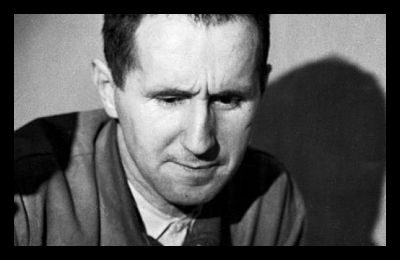
Bertolt Brecht and His Plays on Poverty

Bertolt brecht
“Poverty makes you sad as well as wise.” So spoke Bertolt Brecht, a playwright in the modern theater whose highly political plays are starting to make a resurgence on a global stage.

Born in Bavaria, Brecht grew to despise and write plays denouncing the middle-class in Germany following World War I. He became a Marxist at a young age and spent his life satirizing capitalism and its marginalization of certain individuals. This political position was partly responsible for the drop in popularity of Brecht’s works during the 80’s and 90’s.

However, the 2008 global financial crisis, which enlarged impoverished classes and exposed flaws in the capitalist model, has lead theaters all over the world to stage Brecht’s plays. Producers have found that audiences are particularly responsive to Brecht’s political themes in today’s economic context. Al Jazeera America reported that stagings of Brecht have not only proliferated in the United States but have also increased in the UK, Ireland, France, Canada and Iran.

According to some scholars, Brecht has lost his status as “sage and prophet of the downtrodden and exploited,” but even if this is true, his works still scrutinize the dehumanizing impact of social, political and economic forces on the individual. This impact is keenly felt by the world’s poor, who figure prominently in Brecht’s plays.

For instance, arguably Brecht’s most famous work, “The Threepenny Opera,” contains some of the playwright’s most penetrating remarks on poverty and capitalism.

One character in the work, Peachum, manufactures fake beggars. His employees meander through London, making people with money feel guilty enough to donate it. This money, essentially stolen from the real beggars, then goes to Peachum. It is a sharp critique of capitalism’s potential to abuse people in the quest for profit.

While most people find Peachum’s methods contemptible, the character’s assessment of the problems facing anyone trying to stoke sympathy in others—a charity, for example—is pellucid. Peachum remarks that a man spotting another man in need will give him tenpence the first time, fivepence the second time and turn him into the police the third.

Thus, the things that “stir [people’s] souls” and make them care about others in need lose their effect over time.

These sorts of commentaries, along with Brecht’s subjects of “inequality, squalor, exploitation and the malleability of human nature,” are still germane in discussions of the modern world. The topics may be even more important as globalization pits developed and developing countries against each other, bringing entrenched models of capitalism to poorer populations.

Make no mistake, capitalism can help to alleviate poverty, but as Brecht’s works remind audiences, it must not alienate the impoverished people who stand to benefit from it.

– Ryan Yanke

Sources: Al Jazeera America, Scribd, Book of Famous Quotes, Literature Criticism Online
Photo: SCE

September 30, 2014
https://borgenproject.org/wp-content/uploads/borgen-project-logo.svg 0 0 Borgen Project https://borgenproject.org/wp-content/uploads/borgen-project-logo.svg Borgen Project2014-09-30 04:00:162024-06-04 01:08:08Bertolt Brecht and His Plays on Poverty
Development, Education, Health

GEFI Makes Progress in India

GEFI
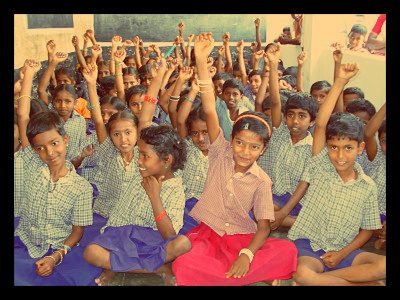
The five year Global Education First Initiative (GEFI) was launched in September of 2012. Its goal is to provide all people with an education. The GEFI has three main objectives: putting every child in school, improving the quality of learning and fostering global citizenship. The GEFI doesn’t do everything alone, it has a team of partners behind it to aid in the achievement of the three goals. UNDP, UNICEF, U.N. Women and World Bank are just a few of its partners.

The global community pledged to achieve universal primary education by 2015. The U.N. Country Team in India is supportive of the global initiative and this September has proven to be an important month for India.

India is focusing its joint advocacy and communications on the GEFI and has made some priorities of its own. Elementary school is a fundamental right in India and there has been a lot of focus on increasing school locations and ensuring that these schools have plenty of drinking water. The main priorities for India are universal access to education with equity, quality basic education and global citizenship education.

India plans on providing everyone access to education by focusing on equality, especially as it pertains to girls. The number of schools in India providing a separate toilet facility for girls has increased by 37 percent. This means that around 89 million girls have access to toilets; unfortunately,  seven million girls are still denied access.

The second priority for India is improving the quality of basic education. In this one priority there are four sub categories that are imperative to its achievement. Learning the basics, having a child friendly school and system, pupil to teacher ratio and teacher training are all things that are being worked on in India.

Lastly, global citizenship education is important because it will lead to a better environment for all. Currently, about 65 percent of India’s population are under the age of 35. Soon, India will become the youngest country in the world and India has deemed it important to educate its people on social responsibility. The purpose of global citizenship education is to equip each generation with values, knowledge and skills. These are all taught with a foundation meant to respect human rights, social justice, diversity, gender equality and environmental sustainability. These are all meant to empower those who are learning to be responsible and educated global citizens.

– Brooke Smith

Sources: United Nations in India, Global Education First Initiative UNESCO
Photo: Flickr

September 29, 2014
https://borgenproject.org/wp-content/uploads/borgen-project-logo.svg 0 0 Borgen Project https://borgenproject.org/wp-content/uploads/borgen-project-logo.svg Borgen Project2014-09-29 12:00:502024-06-04 03:52:56GEFI Makes Progress in India
Development, Food & Hunger, Global Poverty

Poverty Simulation Enriches Lives

It is a bold move towards unraveling many of the myths that surround the modern American family currently in poverty. Gayle Gifford of Cause and Effect summed it up as the views that many upper and middle class Americans have about those in poverty. “For many of my middle-class peers, the notion that lots of people in our community simply cannot earn enough to pay the minimum costs of food, shelter and health care, no matter how hard they work, just makes no sense in light of their own life experiences. To them, it seems the poor have chosen poverty.”

The Community Action Poverty Simulation, originally developed by the Missouri Association for Community Action, seeks to enlighten people on what it truly means to live in poverty and the process on how to get out. The poverty represented is not living on a dollar a day or less, but living in conjunction with government assistance, difficult circumstances and the daily stress one carries around while in poverty.

The simulation is divided into a series of 15 minute intervals each representing a week in a month. Members of the simulation are broken up into families and assigned roles. They are also given scenarios and background on their roles to better understand the conditions they are living in. When the buzzer sounds each member of the family carries out the duties of daily life while in poverty. Many tried to find work, but due to past histories ended up in the unemployment line with no money. These same people would also have to find alternate means of funding for unexpected bills, groceries and bus tokens while simultaneously trying to provide for their children.

Circumstances of the simulation would intervene and some participants would have their houses robbed or lose vital paperwork that was needed to prove something to a government official. Others found themselves stealing from other families in the simulation. All this stress just to make it through the day. And this is before any of the groups arrive at the part about getting out of poverty. The short time frames and mountains of work force the participants to make many of the stressful decisions that thousands of Americans have to make daily. The choice whether to feed one’s children or to pay rent is a very real decision and one many people had to make in the simulation.

This poverty simulation program was first used in 2006. It has continued to open eyes all across the country in places like ATSU in Arizona, Davenport University in West Michigan, Ozark Technical Community College in the Midwest, the court systems of New York and even the city employees of Chicago, and many more churches and communities across the nation.

The results have been what a lot of the community leaders were looking for. As an Ozark Technical Community College administrator realized, “There’s a point where it registers that it’s an everyday struggle for many people in this community.” The experience has prompted Ms. Casper, a participant in the Chicago simulation to say, “I felt really below the earth because everybody was so cold. This world has to change in some way.” Still another participant said, I was “waiting for it to be over, but in real life it doesn’t end.”

There are many who feel the program to be a success, but it has also fallen under fire by many of the organizers of volunteer programs and those that have risen up from the depths of poverty. Cheryl Jackson of the Minnie Food Pantry in Plano, TX says “allowing people to steal as part of a poverty simulation isn’t effective.” A former poverty dweller from Creating Bridges in Chicago echoed this sentiment after completing the simulation. “You don’t go to stealing in the first week or the first month. It takes longer than that. You try everything else first.”

— Frederick Wood II

Sources: MACA, Cause & Effect, News Leader, iConnect, Access of West Michigan, NY Courts, CoActive Connections, Chicago Reader, culturemap
Photo: Flickr

September 28, 2014
https://borgenproject.org/wp-content/uploads/borgen-project-logo.svg 0 0 Borgen Project https://borgenproject.org/wp-content/uploads/borgen-project-logo.svg Borgen Project2014-09-28 04:00:202024-12-13 17:51:12Poverty Simulation Enriches Lives
Activism, Development, Economy, Global Poverty, Nonprofit Organizations and NGOs, Poverty Reduction, Volunteer

Bankers Without Borders

Bankers without Borders started with 100 volunteers but, in the past five years, has grown to include 16,000 business professionals, academics and students coming from over 170 countries, working to increase the impact and sustainability of poverty reduction projects. So far, BwB has used its consulting and coaching to help more than 1,000 projects in 38 countries.

BwB was founded in 2008 by the Grameen Foundation, the original banking organization working through microfinance. Its motive for creating BwB was to expand its services to gain coverage in areas not originally reached by Grameen Bank.

The company reaches out by partnering with other organizations, including nonprofits, Fortune 500 companies or poverty-focused social enterprises. The experts work for free, and the Grameen Foundation likes to refer to them as “Skillanthropists;” rather than donating money, the workers are donating their skills, time and knowledge.

The volunteers’ involvement ranges from sparing a few hours a week at the comfort of their desks at work or home, to living and working in the field for weeks or months at a time. The wide range of skills and commitment BwB requires makes it possible for many people of different skill sets to make an impact through the company.

BwB’s volunteers are involved in a wide variety of fields. These include financial consultants, legal professionals, translators, researchers, a marketing staff and even a Human Resource Reserve Corps to address human capital related issues for nonprofit partners abroad.

From an economic standpoint, BwB continues to prove useful. For every dollar spent creating a BwB project, an average of $10 in skill and time has been donated by its pro bono staff, adding up to over $10 million worth of skilled work.

The volunteers work not to create temporary relief for recipients, but rather to implement a sustainable solution for clients to have successful, profit-making businesses.

BwB has formed many useful partnerships over its five years of operation, notably with J.P. Morgan, Mastercard, Google, Bloomberg, John Hopkins University and the Washington Center. As of August 5, BwB has added Wells Fargo to its arsenal of partnership companies, as well.

From the quickly-expanding volunteer base to the quantitative economic data to the qualitative success stories shared on BwB’s website, it is clear that the Grameen Foundation’s extended project has proven successful.

– Courtney Prentice

Sources: Triple Pundit, Bankers Without Borders, Grameen Foundation, Grameen-Jameel
Photo: HW Production

August 25, 2014
https://borgenproject.org/wp-content/uploads/borgen-project-logo.svg 0 0 Borgen Project https://borgenproject.org/wp-content/uploads/borgen-project-logo.svg Borgen Project2014-08-25 16:33:272024-05-27 09:21:20Bankers Without Borders
Developing Countries, Development, Food Security

Obesity and Food Insecurity

According to nutrition epidemiologist Barry Popkin, in roughly 15 years, obesity rates in Mexico among men and women went from a small proportion of each population to 65 and 71 percent, respectively. Mexico’s situation is part of a trend of increasing obesity on a global scale. Around 2.1 billion people in the world are now either obese or overweight.

Because more than half of all the world’s obese and overweight live in fewer than 20 countries—developed countries, mostly—the temptation exists to disregard obesity’s impact on many developing countries.

However, one study found that “obesity rates tripled in developing countries between 1980 and 2008,” whereas it only increased by about half that amount in developed ones.

Developing countries tend to struggle with high levels of food insecurity, though, which one might assume would lead to lower weights, not obesity. Researchers are perplexed as to how the two factors— obesity and food insecurity —can coexist and they have been searching for data that will establish correlation, causation or both.

The recently released Global Food Security Index, which just added a new obesity indicator to its model, studies the matter in detail. Its overall conclusion affirms that co-existence is possible. Despite the correlation, it remains that the relationship between obesity and food security/insecurity is still poorly understood on a global scale.

The index helps to explain the presence of obesity in highly food insecure countries by noting differences between classes. It is the wealthier classes in developing countries, which are more food secure, that have experienced the largest increases in obesity (often after switching to more Western lifestyles).

The study also points out that obesity is increasing among the poor, as well, and experts have proposed various explanations for this phenomenon.

Some maintain the poor have to rely on high-calorie, low-nutrient food, which leads to obesity. Others look to “feast-famine cycles” for answers: poor populations swing between binging and starving—a cycle that changes one’s metabolism. Still others say obesity among the poor is rising because obesity is a wealth-indicator for the poor.

Causality remains exceedingly difficult to prove, though, because many factors, such as diet, wealth and level of physical activity, can all help cause obesity. Moreover, even correlation has been hard to establish in every developing country. In fact, studies in Ghana, Trinidad and Tobago show food insecurity correlated with lower weights, but results from studies in Malaysia were more complex.

Thus, no conclusion can be drawn as to what single factor is causing obesity in developing countries. It may be that no such factor exists.

Nevertheless, researchers will continue to search for causes. Three million people die every year from health problems that obesity contributes to. Researchers know that if they can pin down the causes of obesity, it could help to save the lives of millions.

– Ryan Yanke

Sources: Global Food Security Index, Scientific American, Huffington Post, Reuters
Photo: Today Online

August 25, 2014
https://borgenproject.org/wp-content/uploads/borgen-project-logo.svg 0 0 Borgen Project https://borgenproject.org/wp-content/uploads/borgen-project-logo.svg Borgen Project2014-08-25 04:00:592024-05-27 09:21:28Obesity and Food Insecurity
Activism, Advocacy, Development

Remembering the Words of Simin Behbahani

“My poems and the wild mint
bear messages and perfumes.
Don’t let them create a riot with their wild singing.
My heart is greener than green,
flowers sprout from the mud and water of my being.
Don’t let me stand, if you are the enemies of Spring.”

These lines are from the poem “It’s Time to Mow the Flowers” written by the late Simin Behbahani, who was considered by many to be Iran’s most influential poet. Born on July 20, 1927, Behbahani lived and wrote through much of 20th century Iranian history.

She worked from within Iran for six decades and wrote over 600 poems.

Her words became a part of social resistance against a strict and oppressed Iranian culture. Behbahani wrote openly against the repression following the 1979 revolution, as well as about many other issues ranging from egalitarianism to women’s rights to sexism, prostitution, peace, violence and even poverty.

Her poems were well known as some even made their way into popular Iranian love songs. For this she was given the nickname, the “Lioness of Iran.”

Despite censorship and even restricted travel from a government that feared her, Behbahani continued to write and share her ideas with her fellow Iranians. She remained part of Iran’s Writers Association despite the murders of several of its members during the 1990s.

She addressed the social issue of poverty in her book “From the Street”, which is a series of poems she wrote between 1983 and 1985. The poems discuss concerns of homelessness and hunger. One covers the sadness of a hungry boy, while in another a pregnant woman gives birth while she waits for rationed food.

In 2009 she won the Simone de Beauvoir Prize for Women’s Freedom. This was for her tireless efforts in fighting for women’s rights, as many of her poems delve into women’s freedom.

For example, her poem “The Ballad Of The Brothel” talks about the issue of prostitution in Iran, an issue that continues to be prominently ignored by Iranian society.

Behbahani also spoke out against the controversial elections of 2009, in which Mahmoud Ahmadinejad returned to the presidency and protests occurred in Tehran. She wrote a poem titled “Stop Throwing My Country To The Wind.”

The poem points out Ahmadinejad’s dishonesty, pride and his recklessness. At the end she writes—“You may wish to have me burned, or decide to stone me. But in your hand match or stone will lose their power to harm me.”

It was Behbahani’s life’s work to spread the word of justice and freedom—to fight from within the country she loved to help promote social change. She believed that “We [writers] will be truly honored the day when no writer is in jail, no student is under arrest, when journalists are free and their pens are free.”

– Eleni Marino 

Sources: BBC News, NPR, The Guardian, Simin Behbahani Poems, PBS,
Photo: 1000 Kitap

August 25, 2014
https://borgenproject.org/wp-content/uploads/borgen-project-logo.svg 0 0 Borgen Project https://borgenproject.org/wp-content/uploads/borgen-project-logo.svg Borgen Project2014-08-25 03:00:262024-05-27 09:21:35Remembering the Words of Simin Behbahani
Development, Food & Hunger, Global Poverty, Hunger

Global Food Security Index 2014

Last May, the Economist Intelligence Unit (EIU) published its annual DuPont-commissioned Global Food Security Index (GFSI). The index aims to “provide a robust and consistent analytical framework for measuring and deepening the understanding of food insecurity around the globe.”

The index showed that food security in 70 percent of countries increased from 2012 to 2013. In that time span, the number of people suffering from chronic hunger decreased from 868 million to 842 million, with a 17 percent decline over the past 24 years.

However, the index also highlighted numerous obstacles inhibiting the growth of food security that both poor and rich countries have yet to surmount.

One hundred nine countries were ranked. The top five, in order, were the United States, Austria, the Netherlands, Norway (tied with the Netherlands) and Singapore. The bottom five were Burundi, Togo, Madagascar, Chad and the Democratic Republic of the Congo. Of all 109 countries, Uganda saw the biggest increase and Myanmar saw the biggest decrease in food security.

To determine these rankings, the GFSI incorporates three categories: Affordability, Availability and Quality & Safety.

The Affordability category incorporates measures like food consumption as a percentage of household expenditure, the proportion of a country’s population living under the $2 dollar per day global poverty line and import tariffs on agricultural goods. This category, a combination of six indicators, seeks to determine the degree to which people can purchase nutritional food without depleting their financial resources. In the top performing countries (U.S. and Singapore), people spent less than 15 percent of their budget on food.

This all matters little if food is affordable, but unavailable, so the GFSI assesses how easily people can access food as well. Acquiring the food one needs can be difficult in countries plagued by corruption, a lack of infrastructure and unpredictable agricultural outputs. Low-income countries in Sub-Saharan Africa scored the lowest in Availability, though the region experienced a notable increase in overall food security.

Lastly, the GFSI analyzes the quality and safety of diets in different countries. It looks at the availability of micronutrients like vitamin A and vegetal iron, protein quality and diet diversification, among other indicators.

According to the index, the majority of countries made gains in Affordability, but many countries lost points in Availability and Quality & Safety. In many countries grouped in the “Asia & Pacific” region, food indeed became more affordable, but only because diet diversification had been markedly reduced.

Two new indicators were added this year: food loss as part of the Availability category and obesity as part of the Quality & Safety category. Both have been controversial in recent years. In India, for example, a lack of food-chain infrastructure results in tremendous food loss—as much as 25 percent of produce every year.

Furthermore, obesity has become a growing concern even in countries with high food insecurity, though experts are still at a loss to explain this phenomenon.

The upshot of the index seems positive, with food security increasing in most countries. Despite this progress, areas for improvement have been pointed out. For one, women farmers across the globe still lack the same access to education, land and machinery that men have. Moreover, governments in developing countries are still struggling to make food more affordable without sacrificing dietary quality.

– Ryan Yanke

Sources: Economist, Blouin News, Dupont, Global Food Security Index
Photo: BlouInNews blog

August 24, 2014
https://borgenproject.org/wp-content/uploads/borgen-project-logo.svg 0 0 Borgen Project https://borgenproject.org/wp-content/uploads/borgen-project-logo.svg Borgen Project2014-08-24 08:00:142024-05-27 09:21:21Global Food Security Index 2014
Activism, Development, Human Trafficking

Human Trafficking in Bangkok

Human Trafficking in Bangkok
According to the U.N. Office on Drugs and Crime, Thailand is a “top destination for victims of human trafficking.” The majority of Thailand’s trafficking victims are voluntary economic migrants from countries like Myanmar, Laos, Cambodia and China. They come only for the promise of a good job.

Without documentation, knowledge of Thailand or understanding of its language, they are vulnerable to traffickers. For the same reasons, it is nearly impossible for them to escape. Many are trapped in Thailand’s bustling capital of Bangkok, famous for its rich history, stunning architecture and thriving sex tourism industry.

Operation Graceland began with a tip-off by an Uzbek woman trafficked into prostitution at Bangkok’s Grace Hotel and desperate to return home. What followed was a police raid, the holding of 19 women and an investigation of all involved. In the end, only two of the detainees admitted to being trafficked. They identified their abusive ‘manager’ amongst the group, but after receiving word that their families had been threatened, they spoke favorably of her in court. She was released.

In 2002, there were an estimated 200,000 sex workers in Bangkok and the trade has grown. It is a lucrative job: women and men from poor families earn money to support their relatives, finance future aspirations or live a life of previously unknown affluence.

Though many are forced by circumstance, involvement in the sex industry is considered voluntary. Because there are so many willing sex workers in Bangkok, it is difficult to identify victims of trafficking. Officers are being trained to recognize trafficked workers. Do they work excessive hours? Do they have documentation? Are they of age?

But even if they manage a rescue, it is difficult to convict the perpetrators. Gangs threaten those rescued and their families, warning them against speaking out. Some victims hope that, by cooperating with their captors, they will be released with a small share of their earnings, all of which typically go to their slavers. Still others are undocumented migrants, who fear legal retribution for involving themselves in any legal affair.

In any case, testifying is risky, since many prosecutors base their arguments entirely on hearsay and the victim’s statements. Slavers are often released and the case against them deemed unsubstantial.

The prevalence of trafficking in Thailand and the legal support for victims have not improved enough for international recognition. In June, the United States dropped Thailand from tier two to tier three on the 2014
Trafficking in Persons report.

But the Thai government is making headway. In 2013, the number of trafficking cases investigated was double that of 2012. Nearly 750 victims received some form of assistance from the Thai government: most were referred to one of nine shelters run by the Ministry of Social Development and Human Security. Thousands of public officers were trained on new anti-trafficking laws; ideally, they will offer victims the legal support they need and give them hope of a life once again in freedom.

-Olivia Kostreva

Sources: Bangkok Post, Time, UNIAP
Photo: Laura Leigh Parker

August 22, 2014
https://borgenproject.org/wp-content/uploads/borgen-project-logo.svg 0 0 Borgen Project https://borgenproject.org/wp-content/uploads/borgen-project-logo.svg Borgen Project2014-08-22 12:01:472024-06-05 01:58:06Human Trafficking in Bangkok
Page 137 of 163«‹135136137138139›»

Get Smarter

  • Global Poverty 101
  • Global Poverty… The Good News
  • Global Poverty & U.S. Jobs
  • Global Poverty and National Security
  • Innovative Solutions to Poverty
  • Global Poverty & Aid FAQ’s
Search Search

Take Action

  • Call Congress
  • Email Congress
  • Donate
  • 30 Ways to Help
  • Volunteer Ops
  • Internships
  • Courses & Certificates
  • The Podcast
Borgen Project

“The Borgen Project is an incredible nonprofit organization that is addressing poverty and hunger and working towards ending them.”

-The Huffington Post

Inside The Borgen Project

  • Contact
  • About
  • Financials
  • President
  • Board of Directors
  • Board of Advisors

International Links

  • UK Email Parliament
  • UK Donate
  • Canada Email Parliament

Get Smarter

  • Global Poverty 101
  • Global Poverty… The Good News
  • Global Poverty & U.S. Jobs
  • Global Poverty and National Security
  • Innovative Solutions to Poverty
  • Global Poverty & Aid FAQ’s

Ways to Help

  • Call Congress
  • Email Congress
  • Donate
  • 30 Ways to Help
  • Volunteer Ops
  • Internships
  • Courses & Certificates
  • The Podcast
Scroll to top Scroll to top Scroll to top