• Link to X
  • Link to Facebook
  • Link to Instagram
  • Link to TikTok
  • Link to Youtube
  • About
    • About Us
      • President
      • Board of Directors
      • Board of Advisors
      • Financials
      • Our Methodology
      • Success Tracker
      • Contact
  • Act Now
    • 30 Ways to Help
      • Email Congress
      • Call Congress
      • Volunteer
      • Courses & Certificates
      • Be a Donor
    • Internships
      • In-Office Internships
      • Remote Internships
    • Legislation
      • Politics 101
  • The Blog
  • The Podcast
  • Magazine
  • Donate
  • Click to open the search input field Click to open the search input field Search
  • Menu Menu

Archive for category: Developing Countries

Information and stories about developing countries.

Advocacy, Developing Countries, Global Poverty, Health

8 Facts About Turkey’s Kurds

Eight Facts about Turkey’s Kurds

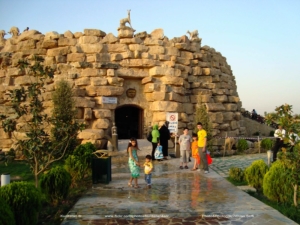
The Kurds are a Muslim-majority ethnic group located mainly in Turkey, Syria, Iraq and Iran. With a total global population of around 30 million, they are the largest ethnic group without a state. Since the rise of the Islamic State, the Kurds have been crucial in the fight against ISIS and have been a reliable US military ally. The Turkish government has had a contentious relationship with the Kurds for decades, as it views the Kurds as a threat to the Turkish state and the Kurdistan Workers’ Party or PKK as a terrorist organization. To better understand Turkey’s relations with its Kurdish minority, here are eight facts about Turkey’s Kurds.

8 Facts about Turkey’s Kurds

  1. There are between 15-20 million Kurdish people in Turkey, most of whom are located in the Kurdish districts of Sivas and Marash and in Eastern and South-Eastern Anatolia, or what the Kurds call Northern Kurdistan. Large Kurdish communities also exist in Turkish cities, such as Ankara, Istanbul, Izmir, Adana and Mersin. Turkey’s Kurds comprise somewhere between 19-25 percent of its total population.
  2. After the breakup of the Ottoman Empire, the Kurds’ homeland, Kurdistan, was divided so that it was controlled by the mostly newly-formed states of Turkey, Syria, Iraq and Iran. Many Kurdish people in Turkey are dissatisfied with this arrangement and want their own state. Indeed, since the 1930s the Kurds have resisted rule by the Turkish government, such as the government’s insistence on one national language.
  3. Since 1984, the PKK, often aided by Iran and Syria, has waged an armed insurgency against the Turkish regime. In the 1990s, the PKK executed several suicide bombings. The Turkish army has suppressed these Kurdish uprisings, and targeted Kurds suspected of supporting the PKK. In the 1990s, the regime depopulated rural Kurdish areas by evacuating or burning 4,000 Kurdish villages to the ground. This destruction displaced millions of Kurds, who received no social assistance or compensation. Furthermore, it is responsible for high unemployment among Turkey’s Kurds and economic inequality between the Kurdish and Turkish populations.
  4. When the AKP (Justice and Development Party) rose to power in Turkey in 2002, the government adopted a “zero problems with neighbors” foreign policy. In accordance with this shift, Turkey sought to cooperate with Syria, Iran and Iraq on the Kurdish issue. However, since the onset of the Arab Spring in 2011, Turkey’s relations with Syria and Iran have deteriorated significantly. Additionally, the Arab Spring reenergized Kurdish hopes of statehood, and the PKK escalated its terrorist attacks.
  5. Still, the AKP government has increased its efforts to engage with moderate Kurdish groups. For instance, in 2011, then-Prime Minister Erdogan recognized the Dersim massacre that occurred in the late 1930s. Some Kurds participate in Turkey’s political process; the Kurdish separatist party BDP (Peace and Democracy Party) gained three dozen seats in Turkey’s parliament.
  6. In an effort to quell political unrest among its Kurdish population, the Turkish government has employed a carrot-and-stick approach. In conjunction with the repression of the Kurdish resistance through the army and police, the Turkish regime has taken up a strategy of ‘‘development as counterinsurgency.” According to this plan, the Kurdish rebellion against the Turkish regime is attributable to the chronic poverty and lack of economic development in Southeastern Turkey and, therefore, can be resolved through economic development programs and welfare redistribution. Turkey’s most significant effort to provide economic development to its Kurdish population is the Southeast Anatolia Project (GAP), a program implemented which has provided more than 30 billion dollars in regional development assistance since the government implemented it in the 1970s. Notably, however, this program has not proven to benefit the Kurds. Between 1996-2003, the socioeconomic status of all but one province supposedly aided by GAP regressed. The construction of dams on the Euphrates and Tigris through the program proved to be disastrous environmentally and demographically.
  7. The Turkish government has successfully implemented social assistance programs, such as means-tested free health care, for individual impoverished Kurds. Other social assistance programs include the provision of conditional cash transfers, food stamps, housing, education, and disability aid for the poor. These programs have expanded in the 2000s, and from 2003-2009, Turkey’s spending on social expenditures increased 85 percent.
  8. These government welfare programs disproportionately benefit the Kurds; for instance, poor Kurds are twice as likely to receive a free health care card than non-Kurds in Turkey.

Conclusion

Due to this unequal distribution and Turkey’s historical relationship with the Kurds, critiques of the Turkish government conclude that it is aiding the Kurds not based on their needs, but according to their ethnicity. According to this argument, the Turkish regime provides social assistance to its Kurdish population solely in the hopes of containing the political unrest and weakening the ethnic identity of the Kurds.

The Kurds are one of the largest ethnic groups in the Middle East, and Turkey’s Kurds make up a substantial minority of its population. Thus, Turkey’s conflict with the Kurds has huge implications for the entire Middle East. As these eight facts about Turkey’s Kurds show, this fraught relationship spans decades and will not be easy to resolve, as it concerns the sovereignty of the Turkish state and the rights of the Kurdish people.

– Sarah Frazer
Photo: Flickr
November 21, 2019
https://borgenproject.org/wp-content/uploads/borgen-project-logo.svg 0 0 Jennifer Philipp https://borgenproject.org/wp-content/uploads/borgen-project-logo.svg Jennifer Philipp2019-11-21 07:30:022019-12-03 10:16:078 Facts About Turkey’s Kurds
Developing Countries, Development, Global Poverty, Health, Water Quality

The Environment Affects Impoverished Communities

environmental factors affecting impoverished communities
The environment can have profound effects on impoverished communities by being a huge force in either aiding or hindering developing countries. Those facing extremely impoverished conditions often rely almost solely on the health of their environment in order to sustain a clean, resourceful and plentiful living environment. An abundance of varying environmental factors like temperature, average rainfall, wildlife, water sources, soil nutrients and pollution levels can contribute to the general well-being of citizens in impoverished communities. Meanwhile, a lack of resources that could improve significant environmental factors in comparison to the more advantaged higher-class community can put impoverished communities at an automatic disadvantage. The quality of water, the availability of natural resources and the vulnerability to natural disasters are all aspects of how the environment affects impoverished communities.

Quality of Water

Water sources available to a community can come in many forms and are critical to the everyday life of communities in poverty; the quality of local water sources and the resources available to maintain good quality water are examples of how the environment can have an effect on poor communities. Citizens of impoverished communities often cook, clean, drink, fish, irrigate their crops and bathe in shared water sources. This shows just how critical the quality of this water can be to an entire community.

Low-infrastructure regarding water filtration and purification can cause an increase in health problems. One of these health problems can be cholera, a potentially life-threatening disease common in impoverished communities due to water contamination. The accumulation of trash, dumping of hazardous materials and daily reliance on a source of water can cause contamination.

Availability of Natural Resources

Natural resources also assist in a community’s prosperity and serve as an example of how the environment affects impoverished communities. A rural community often relies on natural resources like agriculture and soil quality, livestock and genetic diversity and forests and fisheries for multiple reasons. A study by the Food and Agriculture Organization of the United Nations (FAO) revealed the positive effects of maintaining natural resources in impoverished communities. The study successfully expanded access to land in South Africa, increased access and management of forests in Bolivia, supported the sustainable management of watersheds in India, improved access and management of fisheries in Samoa and enabled the poor to be a part of the carbon market in Mexico. The FAO study also exhibits that an increase in natural resources can increase job opportunities for local citizens. More consideration and funding for natural resources, as well as education, can increase the well-being of an impoverished community.

Vulnerability to Natural Disasters

An impoverished community often faces increased vulnerability due to the devastating effects of natural disasters. Some natural disasters are hurricanes, tornados or tsunamis. The World Bank study reports that the effects of natural disasters cost the global economy $520 billion a year. This estimate is 60 percent higher than any previous estimate once it properly considered impoverished communities. Impoverished communities are especially vulnerable because there are few prevention and action emergency plans due to improper resources. Stronger government support and improved technology to better prepare for upcoming disasters could decrease the risk of detrimental effects.

A significant disadvantage low-class communities face compared to higher-class communities occurs because of an extreme lack of infrastructure, funding towards protecting natural resources and governmental prevention and action plans in the event of a natural disaster. Studies by the FAO and The World Bank demonstrate the importance of even one factor of the environment that affects impoverished communities. Once impoverished communities can put more focus into taking care of the environment, they can start building themselves from the ground up.

– Kat Fries
Photo Credits: Google
November 21, 2019
https://borgenproject.org/wp-content/uploads/borgen-project-logo.svg 0 0 Lynsey Alexander https://borgenproject.org/wp-content/uploads/borgen-project-logo.svg Lynsey Alexander2019-11-21 07:30:002024-06-04 01:08:37The Environment Affects Impoverished Communities
Children, Developing Countries, Development, Global Poverty

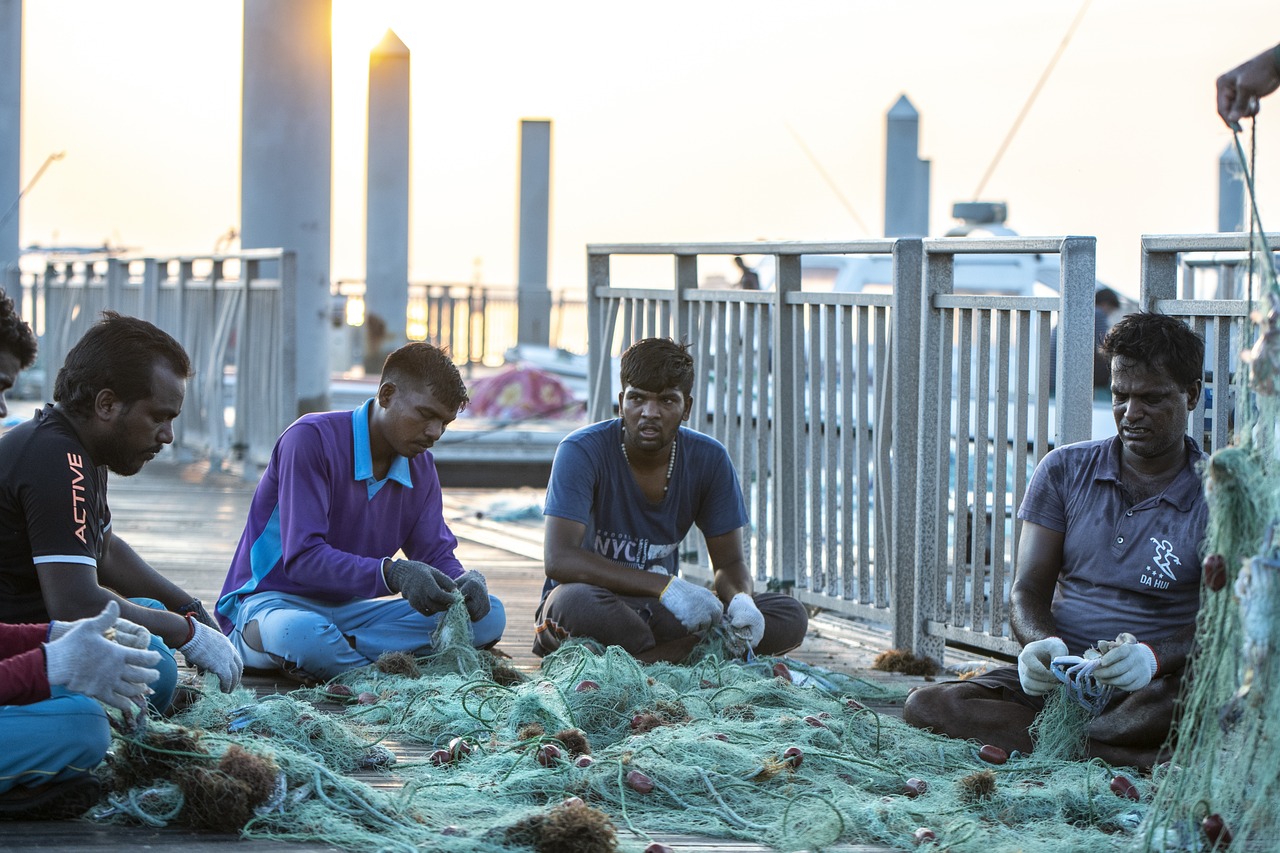
Labor Reforms in Qatar Are Improving Human Rights

Labor reforms in Qatar
In the prelude to the 2022 FIFA World Cup, Qatar received relentless criticism on migrants’ working conditions from the international community and mass media, causing the government to transform its labor system and uphold the rights of migrant workers through sweeping reforms.

Kafala System

Qatar’s kafala system ties migrant workers’ visas to their employers by requiring them to obtain their permission (a no-objection certificate) in order to change jobs. This, in turn, gives the employer entire control over the exit visa of his employees. This sponsorship and visa system not only leads to abuses and exploitation of labor practices, including the confiscation of migrant workers’ passports, but it also prevents a local domestic labor market from operating. Thus, radical labor reforms in Qatar are necessary in order for the country to develop itself according to international standards and to modernize its economy.

Recent Reforms

One of the significant steps Qatar made in 2017 was concluding a cooperation accord with the International Labor Organization (ILO). It stated that it would set a minimum wage and promised to repeal the kafala system. Later in 2017, Qatar introduced a temporary minimum wage of 750 Qatari Rial (approximately $200) and plans on introducing a non-discriminatory minimum wage by the end of 2019, making it the first country in the Gulf region to do so. These labor reforms in Qatar will improve migrant workers’ rights significantly, which will not only increase their working conditions but also their motivation to work, resulting in a more efficient and productive economy. In addition, Law No. 13 entered into force in October 2018, stating that migrant workers would no longer need their employers’ permission to enter and exit the country. These laws contribute to transforming Qatar’s current system into a modern industrial relations system.

Ending the Kafala System

However, Qatar still has not abolished the kafala system which caused hundreds of workers to go on strike and protest in August 2019. This is barring the fact that Qatari law strictly bans joining unions and participating in strikes. Protesting workers have reported that they have not received pay for months and are not receiving their renewed working permits from their employers, making it illegal for them to stay in the country. Consequently, Qatar’s Minister of Administrative Development, Labour and Social Affairs announced that the reform ending the Kafala system will enter into force in January 2020, facilitating the efficacy of the other recently introduced reforms as a whole.

Issue of Irregular Migration

Although positive, these reforms and Labor Laws do not cover migrant domestic workers with a local Qatari contract, meaning that the Labor Law does not protect them and they cannot seek assistance from the Ministry of Labor and Social Affairs. By excluding migrant domestic workers, Qatar is not tackling the issue of irregular migrants and the illegality of employment, which is a major concern for the local authorities. The Sponsorship Law binds domestic migrant workers to their employers, and so, if they suffer abuse, they are likely to abscond and either seek illegal work in the country or attempt to return to their home country. An underground informal labor market developed in Qatar due to the high number of irregular workers looking for work, which is a predominant issue for the government. Indeed, one of the key objectives included in the Qatar National Vision 2030 is to develop a knowledge-based economy consisting of highly skilled people and reduce Qatar’s dependency on low-skilled foreign nationals. Therefore, the inclusion of domestic migrant workers and resolving the issue of irregular/illegal workers is essential for Qatar’s plan to become a modern economy with highly-skilled people.

The current labor reforms in Qatar are a major step towards improving the human rights of the millions of migrant workers living in the country, in addition to contributing to the development of Qatar’s fast-growing economy. Despite the implementation of these laws seeming interminable, Qatar focuses on long-lasting and profound changes in its labor market with the help and recognition of international organizations such as the ILO and the United Nations.

– Andrea Duleux
Photo: Pixabay

November 21, 2019
https://borgenproject.org/wp-content/uploads/borgen-project-logo.svg 0 0 Jennifer Philipp https://borgenproject.org/wp-content/uploads/borgen-project-logo.svg Jennifer Philipp2019-11-21 05:30:022024-06-08 03:30:19Labor Reforms in Qatar Are Improving Human Rights
Developing Countries, Development, Global Poverty, Human Rights

Examples of Human Rights Violations

examples of human rights violations
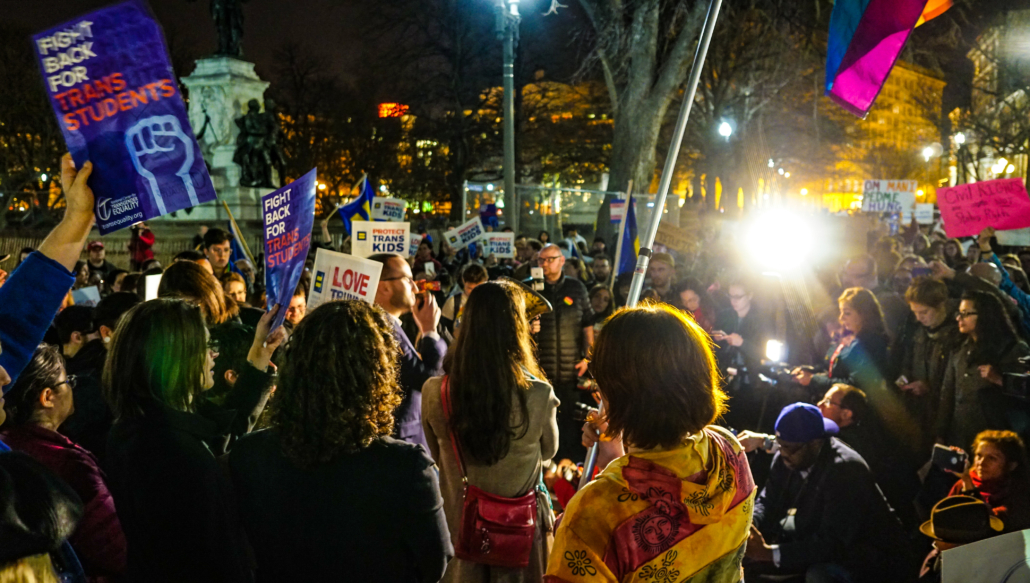
A human rights violation is the disallowance of the freedom of thought and movement to which all humans legally have a right. While individuals can violate these rights, the leadership or government of civilization most often belittles marginalized persons. This, in turn, places these people in the cycle of poverty and oppression. Individuals who approach life with the attitude that not all human lives are of equal value then perpetuate this cycle. This article will explore examples of human rights violations, and what people can do about this phenomenon.

A Brief History

The Universal Declaration of Human Rights emerged in 1948. Of the 56 members of the United Nations at that time, eight of them did not vote in favor of equal human rights. Since then, international human rights have made monumental progress. This does not mean, however, that some do not violate these rights every single day.

The development of human rights advocacy is not a linear process; the last two decades have shown that human rights advancements have remained stagnant or declined in some parts of the world. Socially disadvantaged groups of society are especially susceptible to discrimination. This includes women, children, ethnic minorities, persons with disabilities, refugees, indigenous peoples and people living in poverty.

Discrimination

The ramifications of human rights violations disproportionately affect those living in developing nations due to compounding factors and difficulties. The marginalization of groups based on gender identity and sexual orientation has become a prevalent issue of the 21st century. Although there are exceptionally progressive parts of the world that have made advances toward the inclusion of the LGBTQIAPK (lesbian, gay, bisexual, transexual, queer, intersex, asexual, pansexual/polyamorous, kink) community, stigmatization remains a dilemma that lacks a clear resolution. Other stigmatized cases include persons living with HIV/AIDS and victims of rape or other forms of gender-based violence.

Abuse of the Death Penalty

There are countless examples of human rights violations. One example that is especially heartbreaking is the Islamic Republic’s execution of children. The United Nations special investigator of human rights in Iran, Javaid Rehmen, stated in his report to the U.N. General Assembly in October 2019 that the use of the death penalty continues to be at the top of global charts. This is despite significant progress in the two years prior.

Iran has a long way to go. This is considering that religious and ethnic minorities still face high levels of discrimination. Rehmen described the recent maltreatment of human rights activists: “[they] have been intimidated, harassed, arrested and detained.” Rehmen goes on to inform the assembly that between the months of September 2018 and July 2019, eight well-respected human rights defense attorneys were arrested and sentenced to an extended time in prison.

New Wave of Human Rights Violations

Those living in the least developed nations experience some of the worst human rights violations. The U.N. General Assembly adopted the Declaration on the Right to Development in 1986 to address this issue specifically. The declaration is radical in the sense that it acknowledges development as a right for all humans. This is something that people clearly do not enforce, although it is a legal right. This provides an understanding that development is a crucial component in reaching equality and protecting human rights.

Prisoners of war and torture victims are also examples of human rights violations. The War on Terror sparked a new influx of human rights abuse acts that has continued over the last two decades and supported the destabilization of international human rights. In order to recover this lost sense of humanity, a common understanding of the rights of human beings is essential.

The western mindset, which takes these rights and freedoms for granted, contributes to this issue as a whole. The question is how can leaders with limited resources enforce the protection of the people’s rights?

The Solutions

Achieving a sustainable, practical and effective method of protecting human rights around the globe that also allows local values and culture to remain intact is a difficult ambition. Humans must recognize the beauty of individual differences and attempt to understand each other before a change can happen. Starting with the smaller steps, like understanding victims of rape, violence and discrimination instead of perpetuating a victim-blaming culture, might be more influential than viewing the situation through such an expansive lens. Only then will these examples of human rights violations turn into examples of human kindness.

– Helen Schwie
Photo: Flickr

November 21, 2019
https://borgenproject.org/wp-content/uploads/borgen-project-logo.svg 0 0 Lynsey Alexander https://borgenproject.org/wp-content/uploads/borgen-project-logo.svg Lynsey Alexander2019-11-21 01:30:012024-06-04 01:17:54Examples of Human Rights Violations
Developing Countries, Development, Global Poverty, Health, Water

Top 10 Countries That Lack Access to Clean Water

lack access to clean water
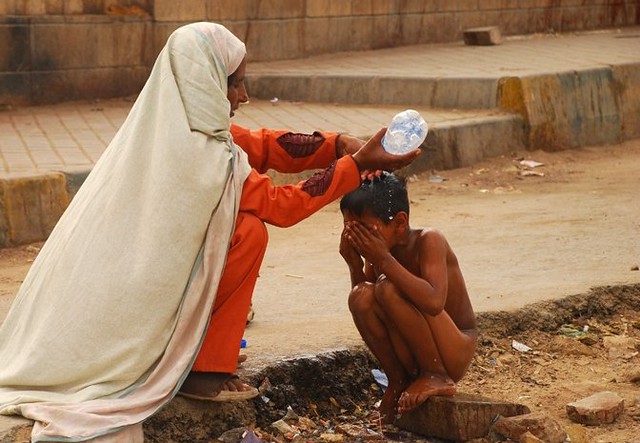
About 2.1 billion people around the world do not have access to clean running water and sanitation facilities. Another 2.3 billion people do not have the luxury of accessing toilets. Clean water is important because it is directly linked to “better health, reductions in parasitic infections, increased child growth and lower morbidity and mortality.” Here are 10 countries that lack access to clean water.

10 Countries That Lack Access to Clean Water

  1. Afghanistan: With only 22 percent of its population having access to clean water, Afghanistan has one of the lowest rates of clean water access in the world. About 87 percent of the nation’s water is contaminated.
  2. Cambodia: Since the majority of the population is dependent on catching and storing rainwater, it leaves an estimated 84 percent of the population with no access to water. This leaves 5 percent of the population dependent on water deliveries.
  3. Congo: 75 percent of the country’s 51 million people do not have access to clean water. About 21 percent of people in rural areas can not reach pure water, which is double the level it was five years prior.
  4. Pakistan: Pakistan is known for having the biggest gap between the rich and poor when it comes to basic hygiene. This leaves 22 million people, or 64 percent of the nation, with no access to clean water.
  5. Uganda: About 40 percent of the population has to travel more than 30 minutes to reach drinkable water. A little over 61.1 percent of the 42.3 million population has access to safe drinking water.
  6. Ethiopia: The high mortality rate in Ethiopia is linked to the quality of water in the country. Due to poor water management and water-intensive farming, 60.9 percent of people have no access to water.
  7. Somalia: Water delivery systems have been destroyed due to post-war problems. This has left 60 percent of the population with no basic access to water and 11.7 percent of people consuming untreated surface water.
  8. Nigeria: Even though Nigeria is one of the fastest-improving countries in regards to water sanitation, 15 percent of its residents have no access to this vital resource.
  9. Chad: Chad has a square mileage of 800,000, which is three times the size of California. But only 15,000 square miles of the country has water. This leaves 33 percent of the nation’s population with the struggle of accessing clean running water.
  10. Syria: The Syrian conflict is hindering humanitarian aid agencies from delivering water and supplies. As of right now, only 10 percent of people lack access to water.

NGOs Helping On The Ground

While these populations of people are suffering due to their lack of access to safe, clean, drinkable water, there are many foundations and NGOs helping to fight this issue.

Water.org is an NGO focused on helping people find a way to be able to attain safe clean drinking water. The organization offers small and affordable loans called WaterCredit to help families obtain sanitized water. Water.org has helped more than 223,000 Ethiopians with improved water, sanitation and hygiene services. WaterCredit has also reached 40,000 people, providing them with clean water for five years.

UNICEF along with the Ministries of Rural Rehabilitation and Development, Public Health and Education, as well as local and global partners have come together to resolve the water crisis in Afghanistan. The plan is to end open defecation by 2025 by using their Community-Led Total Sanitation approach. This approach is a combination of “shock, shame, disgust and pride” to motivate people to build their own toilets. In 2017, the partnership has helped 300,000 Afghans reach clean and safe water. This initiative has also helped girls stay in school by installing washrooms so that they can manage their periods and feminine hygiene needs in school instead of staying home.

– Isabella Gonzalez
Photo: Flickr
November 18, 2019
https://borgenproject.org/wp-content/uploads/borgen-project-logo.svg 0 0 Jennifer Philipp https://borgenproject.org/wp-content/uploads/borgen-project-logo.svg Jennifer Philipp2019-11-18 08:14:092024-06-07 05:08:00Top 10 Countries That Lack Access to Clean Water
Advocacy, Developing Countries, Global Poverty

9 Facts About Lynching in India

Lynching in India
Lynching means to illegally kill a person suspected of an offense without a trial, often by a public mob. In the past few years, incidents of mob lynching rose in India. Religious polarization and fake social media news are the two main drivers of increased lynching in India. This article explores nine facts about lynching in India and provides measures to prevent it.

9 Facts About Lynching in India

  1. Data on Lynching in India: The National Crime Records Bureau (NCRB) collects and publishes data on the crime incidents happening in India within a year. The NCRB does not collect or publish any data on lynching incidents although there is a distinct category in the report for the same. The NCRB reports these incidents as murder. Media sources claim that incidents of lynching are on a sharp rise under the current right-wing government of India. Journalists reported 20 incidents between May and June 2018 alone.
  2. Causes of Lynching in India: Most of the lynching in India occurred in response to the Indian government’s cow protection and beef ban. The cow is a sacred animal for Hindus who venerate it. The Muslim population carries the beef trade in India and is generally the victim of this mob fury. Although beef comes from buffalo and not cows in India, the mobs attack and beat the drivers carrying dead animals (to death in many cases) or others involved in the trade. The recent mob lynching in India is an example of religious intolerance. The spread of fake news through social media about child abduction is another important cause of mob violence against any suspicious people.
  3. Lynching and Economy: An important fact about lynching in India is its effect on the economy of the country. The greatest number of attacks have been on drivers carrying dead animals, traders of beef and owners of slaughterhouses; as a result, they will tend to abandon these jobs due to fear of suffering lynching. This is sure to affect the trade and economy, especially since India is one of the largest exporters of beef in the world. The lynching will also lead to job loss and increase the rate of unemployment in India where unemployment is already at its highest.
  4. Lynching and Health: Lynching incidents are an issue of public health. In the short-term, lynching leads to death and injury for the victims whereas in the long-term it can lead to psychological and physiological effects on present and future generations. Studies show that higher rates of lynching in an area lead to increased rates of mortality for those communities.
  5. Enactment and Enforcement of Strict Anti-lynching Laws: In India, there are currently no laws dictating punishment for lynching. Therefore, the first and foremost step is for the government to introduce and pass an anti-lynching law and strictly enforce it. Given the distinct nature of the crime, it is important to make separate laws for this and not merge these incidents with other kinds of murder. The United States passed its first anti-lynching law in 2018 and India should follow the lead.
  6. Collection and Maintenance of Data Independent of the Government: To put control over such incidents, NCRB should make lynching a distinct category and record the number of incidents. This will give visibility to the lynching episodes and create an urgency to act. When there is no separate category for lynching, people see these incidents as unimportant and rare.
  7. Improve Economic Conditions and Employment Rates: Research says that there is a link between hate crimes such as mob lynching and economy. Socioeconomic status and education determine participation in such criminal acts. People living in poverty and with low educational status are more prone to both participating in lynching and becoming a victim of such incidents. Therefore, creating more jobs for the unemployed young of the country, skill development and improving their financial circumstances will divert their attention away from such heinous acts and protect them from being a victim or a perpetrator of it.
  8. Campaigns and Awareness: The success of Ida B. Wells (who started the anti-lynching crusade in the United States in the 1890s) and The National Association for the Advancement of Colored People (NAACP) movement against lynching of African-Americans in 1909 are examples to learn from and the people of India can start similar awareness campaigns against current increase in lynching incidents. Such campaigns can end religious polarization and create cultural sensitization towards mob violence.
  9. Control the Spread of Fake News Through Social Media: Apart from the cow protection groups, the second most important cause of lynching in India is the spread of fake news over social media regarding child abduction. People in rural areas and with low education easily believe the news they read on social media platforms and act in anger and frustration. Therefore, the Indian government needs to restrain the spread of such fake news by collaborating with social media companies and run awareness campaigns about the pros and cons of social media.
The Supreme Court of India has given orders to the Government of India to enact laws specifically to control lynching in India. The court has framed a three-level strategy that involves prevention, remedy and accountability on the behalf of the officials to control lynching in India. Three states, Mizoram, Rajasthan and West Bengal have introduced anti-lynching bills so far. With the people and government paying attention to mob violence, there is hope that the government of India will soon pass appropriate laws to curb lynching in India and her people will feel safer again.

– Navjot Buttar
Photo: Wikipedia

November 18, 2019
https://borgenproject.org/wp-content/uploads/borgen-project-logo.svg 0 0 Lynsey Alexander https://borgenproject.org/wp-content/uploads/borgen-project-logo.svg Lynsey Alexander2019-11-18 01:30:022024-05-29 23:13:399 Facts About Lynching in India
Activism, Advocacy, Developing Countries, Global Poverty

Maxima Acuña: In Defense of the Land

Maxima Acuña

News about native peoples fighting for the rights to their land is, sadly, nothing new. For many years, the indigenous populations of many nations around the world have struggled to keep their rights to their land. They are often ignored by their own country’s governments as well as international entities. However, that didn’t stop Maxima Acuña from fighting against the powerful Newmont and Yanacocha Mining Companies in defense of her land.

The Case

Maxima Acuña’s battle started one day when the Peruvian Mining Company Yanacocha, through the Newmont Mining Company, claimed rightful ownership of her property. Acuña’s land, as well as four lagoons near it, were the new grounds for the Conga mining project. While Conga was projected to be one of the most ambitious gold extraction projects, it didn’t sit well with the farmers that live around the land.

For the successful extraction of the materials, four critical lagoons would have to be “sacrificed” as they would be turned into waste pits or be completely dried out. Since 2011, the Newmont Mining company has been trying to claim the rights to her land. Maxima and her family were told to move as they were on official mining grounds. But, there was no way Maxima Acuaña would go out without a fight.

The Brutality of the Authorities

Because of her refusal, Yanacocha and the Newmont committed several acts of brutality and abuse of power against Maxima Acuña and her family. On more the one occasion, armed men destroyed her home and crops. They sent death threats and even “beat her and one of her daughters unconscious.” Despite all of this, Maxima refused to leave her land. The local authorities accused her of invasion of private land and sentenced her to three years in prison with a $2,000 fine. Luckily, through the help of an environmental NGO called GRUFIDES, Maxima Acuña was released from her sentence and granted legitimate property rights.

With the majority of the local population opposing the Yanacocha and the Conga project and the unconditional support of Grufindes, Maxima Acuña had the means to fight the mining companies. GRUFIDES fights for the environmental rights that were ignored by the Conga Project. With their help, Maxima Acuña was able to overturn the court’s decision. This huge win was not only for her but also for the farmers protesting the Conga project and protecting the lakes. Maxima Acuña now had the support of the local and even the international community.

The Lesson of Hope

In 2016, she became the winner of The Goldman Environmental Prize, making her case known in America. In March 2019, Maxima Acuña and her family won a vital appeal against the Newmont Mining Company against the company’s abuse. The motion guaranteed a fair trial for both parties, something big for Peruvian Farmers.

For many years, the abuse against indigenous farmers has been a topic that many choose to ignore. However, Maxima Acuña’s case is not the first and won’t be last. Her case shows that the fight is not over yet. Even with all the stakes against the environment, even the big companies can overthrow a fighting spirit.

– Adriana Ruiz
Photo: Flickr

November 15, 2019
https://borgenproject.org/wp-content/uploads/borgen-project-logo.svg 0 0 Kim Thelwell https://borgenproject.org/wp-content/uploads/borgen-project-logo.svg Kim Thelwell2019-11-15 08:06:342020-01-18 13:34:18Maxima Acuña: In Defense of the Land
Developing Countries, Development, Global Poverty, Health, Water, Water Quality, Water Sanitation

10 Facts About Sanitation in Africa

Sanitation in Africa

According to rehydrate.org, “One flush of your toilet uses as much water as the average person in the developing world uses for a whole day’s washing, cleaning, cooking and drinking.” This is the case in the second largest continent on Earth: Africa. It is home to bountiful wildlife, hot sun, and cultural life; but unfortunately, clean water and sanitation are not as boundless of a commodity. Here are 10 facts about sanitation in Africa to explain the depth of the issue.

10 Facts About Sanitation in Africa

  1. One of the starkest of the 10 facts about sanitation in Africa is just how widespread the problem is. Of the 54 countries in Africa, 16 have less than 25 percent sanitation coverage. While statistics vary depending on the country, the bottom line is that it isn’t an isolated issue. Nearly 45 percent of all people in Africa will face unclean sanitation conditions in their life.
  2. Not only is this an uncomfortable way of life, poor sanitation is a key cause in many of the prevalent diseases in Africa. Diarrhea, cholera, dysentery and typhoid are all transmitted by unclean water and account for a large majority of infant deaths. More than 315,000 children in Africa die annually from diarrheal diseases that result from a lack of sanitation. Providing clean water and proper sanitation could reduce diarrhea by 15 to 20 percent.
  3. A lack of clean drinking water causes more than disease. Multiple problems like swelling of the brain, seizures, kidney failure, and comas are extreme results of continuous dehydration. Additionally, daily life becomes much harder to live when basic needs like hydration are not first fulfilled. It’s hard to think and perform at your best when you are constantly thirsty.
  4. When water is available in most rural African villages, it is often in far away locations. This leaves children and women forced to walk many miles a day in order to access water. The United Nations estimates that Africa loses nearly 40 billion hours per year due to collecting water- roughly equivalent to a whole year of labor from France’s entire workforce. This is time that could be dedicated to education or pursuing careers if enough clean water was easily accessible for all.
  5. Most of Africa has yet to see a strong private sector develop for water and sanitation. Having a sturdy and ethical private sector would lead to a growth in affordable sanitation services for many people.
  6. Many issues with poor sanitation lie in the age-old cultural practices common in rural regions of Africa. Open defecation is one of the biggest of these. Though this is largely because of a lack of toilets and waste management systems, even when these systems are put into place, people’s beliefs must change with the infrastructure. Proper education and awareness is necessary to overcome sanitation habits ingrained in many people’s daily routine.
  7. Ultimately, governments of each individual African country must prioritize providing clean water and sanitation to their population for largescale progress to be made. It is encouraging to note that South Africa has made this a high priority goal and has already seen an improvement of 62 percent to 82 percent of households gaining access to improved sanitation.
  8. Having a lack of clean water makes life physically unbearable. Finding clean water takes precious time of out people’s lives. Drinking unclean water causes diseases and more physical discomfort. As a result, poverty in areas of poor sanitation remains stubborn. People cannot escape the vicious cycle of poverty without first having their basic needs met. Only when clean water becomes freely available can people in these places of Africa have enough time, energy and health to pursue a poverty-free future.
  9. One of the greatest bright spots in 10 facts about sanitation in Africa is the Reinvent the Toilet Challenge. Created by Bill and Melinda Gates, the Reinvent the Toilet Challenge asks innovators to create affordable solutions to poor sanitation in developing countries. As a result, 20 different engineering companies created low-cost and sanitary toilets. These projects still need work being implemented on a large scale, but nevertheless they offer hugely promising results for our future world.
  10. Along with this hopeful initiative, other improvements to sanitation in Africa have been made. Open defecation has dropped from 32 percent in 1990 to 25 percent in 2006. Additionally, between the years of 1990 and 2006, 146 million people in Africa gained access to sanitation. Finally, in 2006, 354 million of the 1.2 billion people in Africa used an improved sanitation facility.

– Hannah Stewart
Photo: Wikimedia

November 12, 2019
https://borgenproject.org/wp-content/uploads/borgen-project-logo.svg 0 0 Kim Thelwell https://borgenproject.org/wp-content/uploads/borgen-project-logo.svg Kim Thelwell2019-11-12 08:01:582024-05-29 23:13:0910 Facts About Sanitation in Africa
Activism, Developing Countries, Development, Global Poverty, Health, Water, Water Quality

8 Companies Working to End the Global Water Crisis

Global Water CrisisWater is a fundamental resource for the sustainment of human life. The accessibility of clean water throughout many underdeveloped countries is rapidly becoming a detrimental humanitarian problem, a direct result of exponential population growth. And with such swift consumption, usable water sources are quickly drying up and diminishing. Over the past couple of years, daily conservation of water has become a global plea to help preserve water sources for future generations. This may seem like a bleak issue, but there is hope. Many corporations and nonprofit organizations around the world are invested in ending to the global water crisis. Here are eight companies working to end the global water crisis.

8 Companies Invested in Putting an End to the Global Water Crisis

  1. charity: water – Founded in 2006, this nonprofit organization is working to end the global water crisis by providing clean drinking water to citizens in 24 developing countries. charity: water focuses on three methodologies for providing clean water to communities in need: hand-dug wells, drilled wells and rainwater catch equipment that collects the water and sanitizes it. In addition, by collaborating with a number of local partners, the organization has funded more than 24,000 successful water projects as of 2018. Instead of just accepting donations, charity: water inspires people to start their own campaigns to raise money for clean water. Overall, the organization’s efforts have benefitted approximately 8.2 million people and counting.
  2. Global Water Challenge – The Global Water Challenge, also known as the GWC, is part of a leading team of organizations heavily invested in bringing clean water, for both consumption and hygiene purposes (WASH Sustainability Program), to each corner of the globe. While the GWC’s programs benefit entire communities, women’s empowerment is an important area of focus. After all, women are typically responsible for spending a huge portion of their days gathering water to sustain their families. Thanks to its public-private partnerships, the organization has reached more than 1 million individuals to date.
  3. water.org – The organization’s WaterCredit Initiative works with local businesses to provide loans to people who lack adequate water and sanitation resources. The organization mainly works with people through financing safe access to water in efforts to diminish the global water crisis, more sustainable methods and have effectively enabled more than 25 million people to obtain access to clean water and sanitation services.
  4. Drop in the Bucket – Similar to the previous organization, Drop in the Bucket also operates on a community loan basis to fund wells.  The organization has built 300 wells in schools in East Africa since its founding in 2006, recognizing this area as one in need when seeking to address the global water crisis.
  5. PepsiCo – Through partnerships with NGOs such as WaterAid and 2030 Water Resources Group of the World Bank, Pepsi has made it a priority to invest in ending the global water crisis. The company is focused on helping developing communities in the United States, Latin America, India and China by offering strategic grants that teach various methods for effectively conserving water. As of the middle of 2018, the company has donated $40 million to these organizations.
  6. The Nature Conservancy – One of the biggest charitable environmental organizations in North America, the Nature Conservancy concentrates its efforts on the preservation of land and water sources. The organization works in three continents — specifically focusing on Europe, as well as in Latin America and India. With more than one million members actively working to conserve natural landscapes through science and technological means, this group instills hope for future generations.
  7. UN Water – An arm of the United Nations, this agency works in more than 30 countries to provide clean water and sanitary techniques to assist the underprivileged. UN Water uses a data-driven approach to effect change in the countries where it operates.
  8. World Resources Institute – The World Resources Institute (WRI) is focused on the “mapping, measuring and mitigating global water challenges.” One of the organization’s current projects utilizes aqueduct systems as a method for preserving and sustaining water sources. The group is also working to rehabilitate ecosystems, to lessen the burden on diminishing water sources. The WRI is active in more than 50 countries and has global offices in Brazil, China, Europe, India, Indonesia, Mexico and the United States.

– Joanna Buoniconti
Photo: Flickr

November 11, 2019
https://borgenproject.org/wp-content/uploads/borgen-project-logo.svg 0 0 Kim Thelwell https://borgenproject.org/wp-content/uploads/borgen-project-logo.svg Kim Thelwell2019-11-11 12:39:192024-05-29 23:13:108 Companies Working to End the Global Water Crisis
Developing Countries, Global Poverty, Technology

The Hub of Technology in Kenya

Technology in Kenya

In recent years, a focus on technology crept through cables and bloomed within the country of Kenya. Mobile phones, an item sought after in developed countries, conveys a deeper significance for Kenyan citizens, establishing digital communities and managing the majority of payments. Other programs have been created in Kenya, focusing on artificial intelligence and information technology and communication.

AI Kenya & Artificial Intelligence

Devoted to the learning of artificial intelligence, AI Kenya acts as a growing community of data science practitioners, government officials and enthusiasts. The organization provides “tracks” regarding coding and machines, claiming whether “you’ve just learned to code or you’re a seasoned machine learning practitioner,” information will be provided, free to learn.

AI Kenya’s tracks are lessons, introductions and resources that aid the visitor on the path to digital learning. For the introduction to artificial intelligence, Microsoft’s AI Business School and a self-directed online course from Babson College are presented. For an intermediate track, a group of videos reviewing Statistical Machine Learning is listed, provided by Carnegie Melon University.

Across Africa and in various international countries, AI Kenya shares upcoming expos and conferences regarding artificial intelligence and digital technology. Podcasts join the organization’s information as well, spotlighting businesses and research or documenting Code Maktaba, a training event series improving community members on concepts.

VMWare & Information Technology

Besides artificial intelligence, other skills involving learning through technology prove valuable in careers. VMWare, a software company, leads an information technology (IT) academy with a program dubbed “Virtualize Africa.” The company commits to supply students with the technical skills and techniques needed to pursue jobs created by the digital age. They explain that to combat the rapidly changing and advancing technology in Kenya and other countries, skill sets must also be honed.

Strathmore University, located in Nairobi, Kenya, incorporates courses developed by VMWare which cover cloud computing, the Internet of Things (IOT), virtualization and other subjects. Students access online resources as well as in-person lab experiments. In partnership with VMWare, students may earn certifications by the company and chances to work as part of it.

Mobile Transactions

Kenya currently endures a hefty transition from cash to submitting payments with money-transfer systems on mobile phones. 70 percent of the country now use their phones to give money to each other, which is more than any other country. The interest inspires entrepreneurs to take advantage of cell phones and invent creative programs interweaving their technology.

Blogs have arisen, documenting technology in Kenya and how it is attracting others to the country. An environment fostering technological revolution supports the emergence of VMWare and AI Kenya, along with communities such as iHub, a center for creative professionals and influencers, hosting sessions for ideas and competitions.

While leading in mobile rankings, Kenya still wishes to rise up to developed countries with other aspects of technology. Currently, artificial intelligence and IT boast an abundance of programs and organizations. An increasing focus on technology in Kenya and schools also prepares students for the digital age and allows a head-start in the pool of technological revolution. Finally, the technological hub offers untapped sources of economic advantages, allowing companies to spread their programs outwards to the rest of the globe; the research on artificial intelligence allows for a web of further ideas, creating drones and services to aid the economy further.

– Daniel Bertetti
Photo: Flickr

November 11, 2019
https://borgenproject.org/wp-content/uploads/borgen-project-logo.svg 0 0 Kim Thelwell https://borgenproject.org/wp-content/uploads/borgen-project-logo.svg Kim Thelwell2019-11-11 09:29:362020-01-18 13:51:51The Hub of Technology in Kenya
Page 91 of 158«‹8990919293›»

Get Smarter

  • Global Poverty 101
  • Global Poverty… The Good News
  • Global Poverty & U.S. Jobs
  • Global Poverty and National Security
  • Innovative Solutions to Poverty
  • Global Poverty & Aid FAQ’s
Search Search

Take Action

  • Call Congress
  • Email Congress
  • Donate
  • 30 Ways to Help
  • Volunteer Ops
  • Internships
  • Courses & Certificates
  • The Podcast
Borgen Project

“The Borgen Project is an incredible nonprofit organization that is addressing poverty and hunger and working towards ending them.”

-The Huffington Post

Inside The Borgen Project

  • Contact
  • About
  • Financials
  • President
  • Board of Directors
  • Board of Advisors

International Links

  • UK Email Parliament
  • UK Donate
  • Canada Email Parliament

Get Smarter

  • Global Poverty 101
  • Global Poverty… The Good News
  • Global Poverty & U.S. Jobs
  • Global Poverty and National Security
  • Innovative Solutions to Poverty
  • Global Poverty & Aid FAQ’s

Ways to Help

  • Call Congress
  • Email Congress
  • Donate
  • 30 Ways to Help
  • Volunteer Ops
  • Internships
  • Courses & Certificates
  • The Podcast
Scroll to top Scroll to top Scroll to top