• Link to X
  • Link to Facebook
  • Link to Instagram
  • Link to TikTok
  • Link to Youtube
  • About
    • About Us
      • President
      • Board of Directors
      • Board of Advisors
      • Financials
      • Our Methodology
      • Success Tracker
      • Contact
  • Act Now
    • 30 Ways to Help
      • Email Congress
      • Call Congress
      • Volunteer
      • Courses & Certificates
      • Be a Donor
    • Internships
      • In-Office Internships
      • Remote Internships
    • Legislation
      • Politics 101
  • The Blog
  • The Podcast
  • Magazine
  • Donate
  • Click to open the search input field Click to open the search input field Search
  • Menu Menu

Archive for category: Developing Countries

Information and stories about developing countries.

Developing Countries, Development, Global Poverty

Improving Roads in Tajikistan

Improving Roads in TajikistanAlthough officially established in 1924, Tajikistan is host to one of the richest and most diverse cultures in the world given its unique geographic location and history. Trade and travel were historically central to Tajikistan’s culture and development, but many roads have been neglected.

Located in Central Asia, the country is neighbored by China to the east, Afghanistan to the south, Uzbekistan to the west and Kyrgyzstan to the north. Tajikistan has evolved immensely from ancient times when nomadic tribes roamed the country, becoming a major center of commerce and trade in the Central Asian region.

The Silk Road was an abstract trade route traveled frequently by merchants from Europe, Northern Africa, the Middle East, India and the Far East throughout the Middle Ages and the European Renaissance. It passed directly through many Central Asian countries. Tajikistan was no exception. One of the Silk Road’s most northern routes passed through the Pamir Mountains in what is now modern-day Tajikistan, offering travelers the safest possible route through the “Roof of the World.”

Neglect, Gangs and Corruption

But decades of neglect have led to dilapidated and very dangerous roads in Tajikistan, while governmental abuses and gangs add additional strain on these important transportation routes. In rural areas, hazardous dirt or gravel roads stretch on for many miles before connecting with the nearest paved highways. Rural mountain passes – of which there are many due to the country’s rugged terrain – are also closed for roughly six months during the winter and early spring due to a number of dangerous conditions, including frequent avalanches, mudslides and large rocks falling on the road. Gangs are also known to lie in wait to prey on travelers while corrupt traffic police also inhibit efficient and unimpeded travel along highways and rural roads. The so-called traffic police regularly allow government vehicles by yet pull over others arbitrarily under the pretense of inspecting registration. They often wrongfully deem these cars unfit to drive or claim they are unregistered, forcing travelers to pay a bribe in order to continue on their route.

The Pamir Highway

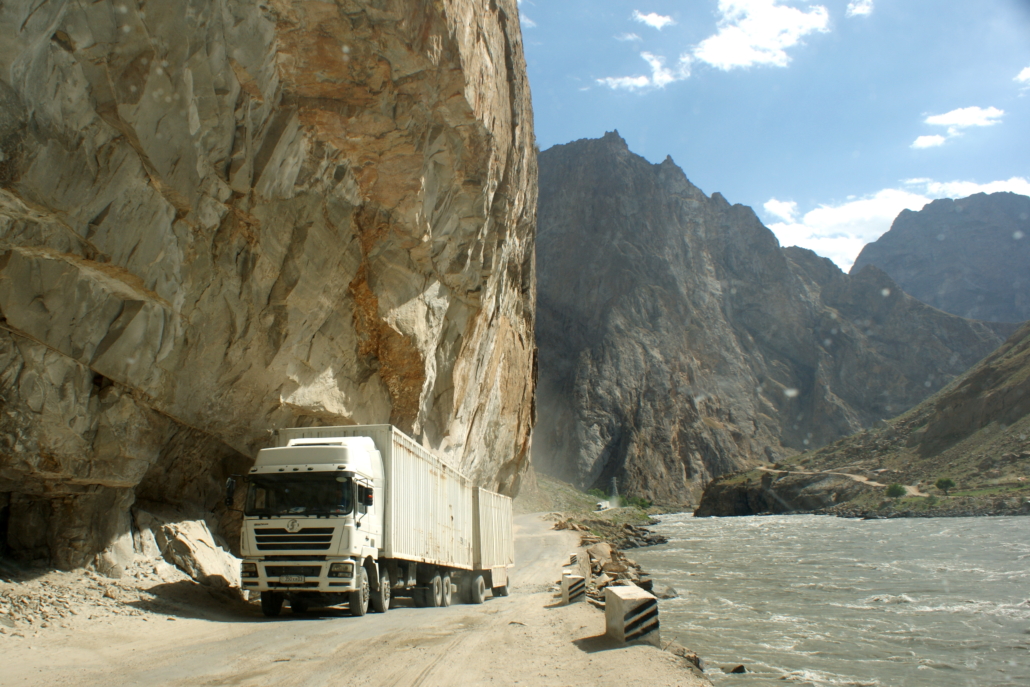
The Pamir Highway is one example of a Tajikistan highway that has been consistently neglected. While much of the road is paved, most of the mountainous passes it stretches through are unpaved and untended. The passes are closed in the winter months because of the avalanches and other prohibitive driving conditions, and the minimal oversight allows the gangs to inhabit these areas.

The highway becomes especially dangerous as it approaches the Afghanistan-Tajikistan border, where the road elevates to as much as 2,800 feet above sea level. Due to a lack of oxygen at these altitudes, many travelers report altitude sickness and lightheadedness, a particularly precarious situation given that there are no guardrails along cliff-drops. Road maintenance teams are also slow to respond to any widespread damages, which are often left in disrepair for indefinite periods of time.

Effects on Rural Populations

As of 2016, 73 percent of Tajikistan’s population lived in rural areas. These people depend on the dilapidated rural roads to access education, health care, food and other tools/supplies, meaning that their lives are put at risk on a regular basis. More broadly, this stifles Tajikistan’s economic development and discourages investment in the country. Economic issues hurt the poorest people most of all, and Tajikistan’s continued infrastructure underdevelopment makes it extremely difficult for rural populations to earn a living and access the necessities of life – as is the case in many developing countries.

Efforts to Improve Roads and Infrastructure

However, outside influencers are trying to improve the poor condition of roads in Tajikistan. Neighboring China has begun investing in updating the country’s poor infrastructure to improve trade inter-connectivity across Central Asia. Within the past decade, the China Road and Bridge Corporation (CRBC) financed and constructed the Dushanbe-Chanak Highway.

The highway spans the length of the country from north-to-south and has given many rural areas the means to access other parts of the country in a safe manner. The road is entirely paved and stretches from Dushanbe, Tajikistan’s capital, to Uzbekistan’s southern border. It has provided the country with stable bridges that span previously dangerous crossings and cuts through mountains, meaning that travelers no longer need to risk their lives driving around them on dangerous dirt roads.

The project is part of China’s Belt and Road Initiative to better connect Asia and spur further development and growth of Central Asia. As of June 2017, China has invested $2 billion into Tajikistan, according to the China Global Television Network.

The Future

Foreign investment initiatives such as China’s are part of the solution to improve infrastructure and roads in Tajikistan, which will spur additional economic development and provide more opportunities for rural populations. Newly paved highways that now connect the outer reaches of the country to urban centers will increase commerce both within the country and with neighboring nations. Safer infrastructure will also spur foreign investment from multinational corporations that can bring jobs and technological advances. With further improvement to infrastructure and roads in Tajikistan, the country may well see itself become a center of commerce once again.

– Graham Gordon
Photo: Wikimedia
January 18, 2020
https://borgenproject.org/wp-content/uploads/borgen-project-logo.svg 0 0 Kim Thelwell https://borgenproject.org/wp-content/uploads/borgen-project-logo.svg Kim Thelwell2020-01-18 01:52:172020-01-18 12:05:37Improving Roads in Tajikistan
Aid, Aid Effectiveness & Reform, Developing Countries, Global Poverty

3 Ways Technology Helps Disaster Response in the Philippines

Disaster Response in the PhilippinesAnnually, about 10 tropical storms develop in the Philippines, with averages of eight to nine reaching land. These numbers do not include other disasters the country faces such as typhoons, earthquakes, monsoons and so on. Despite being one of the most disaster-prone countries in the world, efficient communication with technology in the Philippines allows social media, Google Person Finder and satellites, to provide the best relief efforts. Keep reading to learn more about the top three ways technology helps disaster response in the Philippines.

3 Ways Technology Helps Disaster Response in the Philippines 

  1. Social Media: Social media is indeed a connecting source and finds its strength in aiding the response to disasters with quickly spreading information that is, in turn, easily accessed. Popular media sites such as Facebook, WhatsApp and Twitter updated by disaster area residents offer real-time updates about the current on-ground situation.

    Thanks to organizations such as the Standby Task Force, established in 2012 by Andrej Verity, these social media updates become pillars for relief and rescue. For example, in its use for supertyphoon Haiyan in 2013. These updates transform traditional on-ground humanitarian efforts into digital humanitarian efforts with online volunteers.

    Through a streamlined process, volunteers tagged Haiyan-related social media posts. Then, sifting through them for relevancy, otherwise known as digital micro-tasking. Finally, submitting them to the U.N.’s Office for the Coordination of Humanitarian Affairs to compile a crisis map. With the widespread information thanks to social media, digital humanitarians take a hands-on approach to affecting the on the ground situation. Given that the combined concentration of thousands of volunteers provide time efficiency, a necessity when it comes to saving lives quicker.

  2. Communication Technology: Other communication technology such as Google Person Finder assists in finding missing persons in the Philippines. For instance, in 2012, monsoon floods from Typhoon Saola caused increased landslides and flash floods; flooding at least 50 percent of the country and creating severe rescue conditions with strong currents. There were at least 900,000 affected families and 11 individuals missing.

    For those looking for the missing or stranded, Google’s free Person Finder tool comes in extremely handy as all one needs to do is input the individual’s name. At the same time, Google cross-references entries from other websites with information about missing persons to ping and locate leads.

  3. Satellite Technology: After Haiyan, most of the traditional methods of mobile communication infrastructure diminished, thus requiring the need for something more reliable, such as satellites. Learning from the Haiyan damage, the nation’s most high-risk disaster areas now have mobile satellite equipment for easy deployment. This new tech brought forth by Inmarsat and the United Kingdom Space Agency, provides a reliable and sustainable communication method for the worst disaster days expected.

    Another example is the Tacloban Health Cluster which utilizes satellites to canvas and coordinates public health response in the worst disaster-stricken areas, allowing better tracking of diseases and medical conditions throughout disaster times in hospitals and clinics. This data collection does not only help respond in real-time. Additionally, it is beneficial for understanding health trends after a storm to allow for a more proactive approach following the next impending storm the islands are known to face.

– Elizabeth Yusuff
Photo: Flickr

January 16, 2020
https://borgenproject.org/wp-content/uploads/borgen-project-logo.svg 0 0 Lynsey Alexander https://borgenproject.org/wp-content/uploads/borgen-project-logo.svg Lynsey Alexander2020-01-16 08:04:322024-05-29 23:14:293 Ways Technology Helps Disaster Response in the Philippines
Developing Countries, Global Poverty, Health

A Look at Health Initiatives in Haiti

Haiti’s health care infrastructure has suffered drastically since the last massive earthquake in 2010. The earthquake further destroyed access to the delivery of health care and destroyed the country’s health care system as a whole. As a result, Haiti’s medical facilities now lack basic but critical services such as water and sanitation systems, state-of-the-art hospitals and clinics, modern medical resources and a sufficient number of trained medical professionals. There have since been health initiatives to aid Haiti in rectifying its health care and health care system.

Health Initiatives in Haiti

  1. Community Health Initiative: Emergency medical physicians Chris Buresh and Joshua White, who combined have more than 14 years of experience in Haiti, founded the Community Health Initiative (CHI) in Haiti in January 2012. CHI was founded to address the health needs of the Haitian community that would otherwise lack access to care by providing continuous primary health care. The program works with long-standing partnerships and local talent in the central region of Haiti to combat malnutrition, provide clean water and deliver health care to Haitians by returning to the same villages every three months. Because Haitians lack affordable primary health care in the area, most patients walk eight hours or more to arrive at CHI’s clinics for treatment. The Community Health Initiative provides clinics in the rural areas of Haiti. Since its founding in 2012, CHI has delivered 1,100 water treatment systems in which have reduced the diarrhea rate among users to 1.8 percent. Community Health Workers have trained 81 women in their Helping Babies Breathe program which has allowed a 71 percent reduction in neonatal mortality.
  2. Partners In Health: Partners in Health (PIH) is Haiti’s largest health care provider. PIH has been providing medical services to Haitians for more than 20 years. PIH helps deliver high-quality health care to some of Haiti’s poorest regions, serving an estimated 4.5 million people with the help of the national Ministry of Health. PIH’s community health workers have helped 15,000 HIV-positive patients begin and remain on treatment and have allowed 1,500 TB patients to start treatment on the path to a cure each year since initiation. Since PIH’s founding, the mortality rate for children under the age of 5 has been reduced to 71 per 1,000 where Haiti had the highest rates of infant and child mortality; the rate of incidents surrounding TB has also been reduced to 181 per 100,000, and the adult prevalence of HIV is now 1.9 percent.
  3. Hope For Haiti: Haiti reports some of the world’s worst health indicators that continue to inhibit Haiti’s development. Hope for Haiti is a health initiative that operates an infirmary in southern Haiti and partners with 24 rural communities to improve the health care system and its individual health indicators. Hope for Haiti provides primary care services, public health education and nutrition education, and it organizes mobile clinics. Since Hope for Haiti was founded, 6,727 lab tests were performed for a record of 3,090 patients. Around 2,700 Sawyer Water Filtration Systems were distributed in Haiti, impacting over 13,500 people, 2,800 students were provided with public health education and 100 diabetes club meetings were held for the Haitian community.

Haiti is in need of a permanent and modern health care infrastructure so that it can respond promptly and effectively to the medical needs of its community. With health initiatives such as Partners in Health, Hope for Haiti and the Community Health Initiative, Haiti will be well on its way to better health care and an improved health care system.

– Na’Keevia Brown
Photo: Flickr

January 11, 2020
https://borgenproject.org/wp-content/uploads/borgen-project-logo.svg 0 0 Lynsey Alexander https://borgenproject.org/wp-content/uploads/borgen-project-logo.svg Lynsey Alexander2020-01-11 13:38:592024-05-29 23:14:29A Look at Health Initiatives in Haiti
Developing Countries, Global Poverty

What is a Developing Country?

What is a Developing Country
When addressing global poverty, a term that people often reference is “developing country.” But what is a developing country? In general, developing countries are typically battling poverty, but there is a lot more to these countries. A broad definition for this referred term would be a country seeking to advance its economic performance amongst other global economies. A more specific description for developing countries is complex to derive since various factors and indicators apply when examining world economies. Plus, the world does not have universal interpretations of these aspects.

What the Numbers Say

A useful indicator to help identify what is a developing country would be the gross domestic product (GDP) of purchasing power parity (PPP) per capita. This numerical value entails all the goods and services produced in a country within one year, standardized to U.S. prices, then divided out amongst its population. In other words, GDP PPP per capita describes the average economic wealth of each individual in a state. Thus, this establishes thresholds to determine a developing country. According to Investopedia, “As a rule of thumb, countries with developed economies have GDP per capita of at least $12,000(USD), although some economists believe that $25,000 (USD) is a more realistic measurement threshold.”

GDP PPP per capita can give a quick snapshot of the modern world economy by classifying developing countries as a value of less than 25,000 USD. It is a more relevant index than other economic comparing tools, such as nominal/real GDP, which does not account for consumer price variants among regions or the population of a country. Without considering the population, skewed data emerges within the actuality of global economies. For example, this article will compare China and Switzerland.

China has a GDP PPP of $23.21 trillion USD and Switzerland only $523.1 billion USD. Looking at these two numbers alone, it seems as though China is leaps and bounds more wealthy than Switzerland, but China’s population is more than 16 times Switzerland’s. Observing GDP PPP per capita, China values at $16,700 USD and Switzerland $62,100 USD. These numbers show that the average person in Switzerland is $45,400 USD more wealthy than those in China. In conclusion, the developing country is China, while the developed one is Switzerland. GDP PPP per capita is an economic calculation that can help answer the question, what is a developing country?

Human Development Index

There is more to consider than financial measurements when classifying what is a developing country. Just because a country exceeds the $25,000 USD threshold does not necessarily define it as developed. Another helpful indicator is the Human Development Index (HDI), a metric that the United Nations (UN) developed. The UN defines the index as “a summary measure of average achievement in key dimensions of human development: a long and healthy life, being knowledgeable and have a decent standard of living.”

A scale from zero to one defines the numerical values of the three components, then the geometric mean of those numbers is composited. “The health dimension is assessed by life expectancy at birth, the education dimension is measured by means of years of schooling for adults aged 25 years and more and expected years of schooling for children of school entering age. The standard of living dimension is measured by gross national income per capita.” If the result of the calculations equal to 0.8 or higher then HDI standards considers the state developed.

Using the previous example countries, China and Switzerland, the HDI is 0.758 and 0.946, respectively. This ratio supports an identical conclusion in regard to categorizing states. China again falls into the developing spectrum.

Critics

GDP PPP per capita and HDI have limitations in determining what is a developing country. While GDP PPP per capita measures wealth and HDI quantifies basic achievement levels in human development, neither account for other quality of life factors such as empowerment movements or security. Also, some economists believe HDI has too high of a correlation with GDP PPP per capita that it is not necessary due to redundant results.

BRICS

The top five developing countries today are Brazil, Russia, India, China and South Africa (BRICs). Why are these five important countries to note? Predictions show they will be future dominant suppliers of manufactured goods, services and raw materials. Accreditation for the growth within these regions goes to low labor and production costs. The BRICS countries currently fall into GDP PPP per capita and HDI developing country thresholds and are seeking to advance their economic performance among the global economies.

– Ariana Kiessling
Photo: Flickr

January 9, 2020
https://borgenproject.org/wp-content/uploads/borgen-project-logo.svg 0 0 Kim Thelwell https://borgenproject.org/wp-content/uploads/borgen-project-logo.svg Kim Thelwell2020-01-09 12:30:422024-05-29 23:00:00What is a Developing Country?
Developing Countries, Global Poverty, Technology

Breaking Down the Barriers to Innovation Capabilities

Innovation Capabilities
Innovation is essential for countries to develop, but there are countless barriers to innovation capabilities. Innovation capabilities are the parts of a production process that people cannot buy but are critical to supporting and driving innovation. Companies must learn and develop these elements. These elements include basic organizational skills, human resource management, planning routines and logistical abilities.

The Importance of Innovation

Without innovation, companies cannot evolve and be sustainable. This, in turn, impacts the progress of whole countries. A lack of innovation leads to people being unable to leverage their resources.

According to the World Bank, many developing countries suffer from low innovation. Low innovation includes the following:

  1. Weaker managerial and technological capabilities and the lack of ability to cultivate them.
  2. Weaker government capabilities.
  3. A general lack of physical, human and knowledge capital.
As a result, developing countries often have a difficult time progressing through innovation. In 1900, many now developed countries were in a similar state to developing countries today. These developed countries were able to capitalize on their innovation capabilities and successfully manage new technologies. This is what developing countries must now do to progress.

Innovative Examples

There are several examples of how developed countries have capitalized on innovation, compared to those still developing:

  1. Brazil was able to upgrade technologically after a slump in its iron industry.
  2. Japan took its textile technologies and modified them for the needs of different locales. It also diversified into machinery, chemicals, cables, metals and banking. This enabled Japan to establish its first leading manufacturing industry.
  3. The United States leveraged its copper resources. It pushed the frontiers of metallurgy and chemistry through a combination of high-level human capital and a network of universities and laboratories.

Developing countries, however, have had trouble reaching the same goals. While Norway was able to leverage its oil and gas deposits with its high-tech sector, Nigeria was not. Spain and Chile were unable to successfully identify and adopt new advances in mining and metallurgy for their copper industries. This eventually leads to these country’s selling out to foreign interests who could.

Production Capabilities: Management and Government

Two subsets of capabilities directly impact innovation including production and technology. Production includes management and government, while technology includes incentives and the environment.

Management focuses on the organization and maintenance of a company. Developing countries tend to have weaker managerial capabilities than developed countries. In these developing countries, managers tend to not have as much education. This greatly impacts their capabilities to properly identify and understand high-return on potential projects, take responsibility for long-term planning and implement new talent.

Limited competition can prop up inefficient companies. A lack of government support, however, makes it difficult for more efficient companies to effectively incentivize their workforce and upgrade their technologies.

A country’s productivity can illustrate an example of the effects of different management practices. There is a 25 percent difference in productivity between developing countries and those in the United States.

Governments organize and support how effectively companies run. In developing countries, governments generally do not have enough human resources or they are unable to efficiently organize policies. The organization, design and implementation of these policies help to rectify market or systemic failures and promote innovation.

These capabilities are the rationale and designing of a policy, efficacy of implementation, comprehensibility for the National Innovation System (NIS) and consistency. Most developing countries, however, are unable to meet these requirements.

Technology and Innovation: Organization and Environment

Governments and management often work to organize companies. It is the organization of the company itself, however, that allows it to implement and expand new technologies. Companies must incentivize workers so they can receive the tasks that make them the most productive. This also empowers workers to brainstorm new ideas and improvements for products or systems.

This type of organization creates an innovation-friendly environment for the company. These incentives show positive influences on creativity and innovation in workers and the company as a whole.

An example of innovation at work is the Aquafresh company in Ghana. It dealt with fierce competition from Asia, eventually discovering that the best way to confront this competition was not to address it at all. Aquafresh started as a clothing company but later reinvented itself, turning to soft drinks. This was possible due to its innovation-friendly environment and organization. This environment eased the transition and sustained them through the change.

Solutions for the Barriers to Innovation Capabilities

Adopting better managerial and organizational practices can push companies to innovate in products, processes and quality. This can also inspire companies to create innovative projects, which can lead to new products and technologies.

Access to human, knowledge and technological capabilities increases a developing country’s innovation potential. This renders foreign aid less important as the countries learn to become self-sustainable.

Companies in developing countries need help with overcoming the barriers to innovation capabilities. If the National Innovation System could focus on supporting companies with better capabilities, investing in higher-level human capital and management and the development of capable governments, a larger innovation system could come into fruition for developing countries. This, in turn, would benefit the entire world.

– Nyssa Jordan
Photo: Flickr

December 23, 2019
https://borgenproject.org/wp-content/uploads/borgen-project-logo.svg 0 0 Lynsey Alexander https://borgenproject.org/wp-content/uploads/borgen-project-logo.svg Lynsey Alexander2019-12-23 09:30:182020-07-16 21:23:21Breaking Down the Barriers to Innovation Capabilities
Developing Countries, Global Poverty

5 Facts About The 2003 Ethiopian Genocide

Five Facts about the Ethiopian Genocide
Genocide is the deliberate killing of a large group of people, and in a particular, an ethnic group. It is a barbaric tactic people sometimes use in an attempt to solve problems of unrest in a region. Unfortunately, human society has still committed this deplorable act in the 21st century. Here are five facts about the Ethiopian Genocide.

5 Facts About the 2003 Ethiopian Genocide

  1. The Persecuted: The Anuak people are a minority ethnic group that occupies south-west Ethiopia and parts of South Sudan. The majority of the Ethiopian Anuak live in the Gambella forest region where they have hunted and cultivated agriculture for centuries. Contemporary Anuaks are evangelical Christians that still practice some tribal traditions within their tight-knit villages.

  2. When the Genocide Happened: The Ethiopian Genocide happened on December 13, 2003. It is important to notice that this was not an isolated incident but a continuation of decades of racial discrimination. In 1979, the government seized Anuak land in order to have access to fertile grounds for farming in the name of economic expansion. The Ethiopian government then relocated peasants into the land over the next decade. Many Anuak fled the country throughout the 1990s in order to avoid further civil unrest. Over 2,000 of the Anuak settled in the United States and most settled in Minnesota through a refugee program. The 2003 Genocide was neither the beginning nor the end of their suffering. Raids that destroyed many villages drove 10,000 Anuak people out of their homes throughout the following year.

  3. What Happened During the Genocide: Ethiopian soldiers carried out the massacre in conjunction with members from other local tribes. Ethiopian government absolved the military of any blame for the genocide, but eyewitnesses say that it was a coordinated attack. Eyewitness accounts said that soldiers raided Anuak homes, dragged out their residents and shot them. Meanwhile, members of other tribes were attacking the Anuak with machetes. The soldiers then burned down the houses. A survivor reported that they had collected 403 bodies by the end of the genocide. Anuak refugees in the United States received phone calls from their relatives reporting such events. The Ethiopian Federal Minister of the Gambella region tried to suppress the accusations, calling them fabrications. However, the World Organization Against Torture and Genocide Watch (WOATGW) has corroborated the reports in order to keep others from pushing them into obscurity.

  4. The Reasons for the Genocide: There are no justifications for ethnic cleansing, but a vicious cycle of retribution killings can trigger catastrophic events. Tensions in the Gambella region were high. The Second Sudanese Civil War (1983-2005) displaced over 100,000 refugees onto Anuak land. Outbreaks of violence began to occur between the Anuak and these refugees, many of which were members of a rival tribe, the Nuer. The genocide commenced as a counter-attack against the Anuak people after Anuak gunmen allegedly ambushed a car containing eight government administrators.

  5. The Anuak People Now: Ethiopia is making progress in the right direction to ensure that large scale violence and genocide will not be in its future. Ethiopian Prime Minister Dr. Abiy Ahmed, elected in April 2018, has since recognized that there have been abuses of power by Ethiopian security forces. In December 2018, the Anuaks of Ethiopia could publicly recognize the anniversary of the genocide for the first time.

Genocide is not an experience that many modern Americans can relate to. It appears as a relic of nearly a century ago. These five facts about the Ethiopian Genocide recognize and keep the memory of past violence alive in order to keep the violence from repeating again.

– Nicholas Pirhalla
Photo: Flickr
December 18, 2019
https://borgenproject.org/wp-content/uploads/borgen-project-logo.svg 0 0 Lynsey Alexander https://borgenproject.org/wp-content/uploads/borgen-project-logo.svg Lynsey Alexander2019-12-18 01:30:552024-05-29 23:13:455 Facts About The 2003 Ethiopian Genocide
Children, Developing Countries, Global Poverty, Health

The Future of Typhoid Fever in Asia

Typhoid Fever in Asia
Typhoid fever is a menace to developing nations, especially those that lack access to proper sanitation facilities. Nowhere is this more problematic than in Asia, where most typhoid fever fatalities occur. However, plenty of groups are doing their part to end the scourge of typhoid fever in Asia through the spread of clean water and proper sanitation.

What is Typhoid Fever?

Food and water contaminated with excrement that contains the bacteria Salmonella enterica causes the transmission of typhoid fever. Due to this, typhoid fever was once incredibly prevalent in urban areas throughout Europe and the United States during the 19th century as these countries frequently lacked sound sewage systems to deal with human waste. In the modern era, people only commonly see typhoid fever in the developing world, specifically in areas with poor sanitary conditions.

Common symptoms of typhoid fever are a sustained fever that can peak at around 103-104˚F, fatigue, bowel issues, wheezing and stomach pains. Typhoid fever risk factors in endemic areas include contaminated water, housing with subpar hygiene facilities and contact with a recently infected individual. Those affected can become chronic infectors, people who have on and off symptoms for extended periods and can transmit the disease to others regardless of if they are having an episode or not.

Typhoid fever has been treatable with vaccines since 1948, and mass immunization has proven successful in the past. However, typhoid that is resistant to the most common type of treatment (chloramphenicol) is now emerging. With approximately 16 million cases of typhoid fever reported each year, a treatment-resistant strain is a horrifying prospect. Thankfully, full resistance to treatment is exceedingly rare.

Why Asia and Who is Helping?

Most typhoid fever deaths happen in Asia, where 90 percent of all typhoid related deaths occur. Countries, where typhoid fever in Asia is endemic, include India, China, Vietnam, Pakistan and Indonesia. A significant factor contributing towards the spread of typhoid fever is a lack of sanitary water facilities, and thankfully, NGOs like Charity: Water have made it their mission to bring clean water to all developing nations.

Charity: Water does this by promoting and financing projects aimed at the creation and distribution of sanitary water facilities like latrines, hand-dug and drilled wells and piped water systems.  One of the countries that Charity: Water has had a significant impact on is India. The organization has been working there since 2008 and has funded 4,479 projects with a total of $10,738,062 spread across all these projects.

The Future of Typhoid Fever

Typhoid fever was once a prominent issue in the United States and Europe, but with proper water and waste management systems, they have thoroughly eradicated it. Typhoid fever in Asia is a problem that countries can handle through the creation of clean water facilities. With the help of NGOs like Charity: Water, the world can finally eliminate typhoid fever once and for all, not just from the United States and Europe, but all across the globe.

– Ryan Holman
Photo: Flickr

December 16, 2019
https://borgenproject.org/wp-content/uploads/borgen-project-logo.svg 0 0 Lynsey Alexander https://borgenproject.org/wp-content/uploads/borgen-project-logo.svg Lynsey Alexander2019-12-16 07:30:372024-05-29 23:13:24The Future of Typhoid Fever in Asia
Children, Developing Countries, Development, Global Poverty

The Agriculture Sector for the Poor in Myanmar

poor in Myanmar
Agriculture is Myanmar’s most important sector and provides jobs for more than 60 percent of the population. Myanmar, formerly known as Burma, decreased its poverty rate from 48.2 percent in 2005 to 24.8 percent in 2017. One of the reasons for this huge reduction in poverty is its transition from a military-led government through economic reforms and development in sectors such as agriculture, finance, transportation and energy. The poor in Myanmar reside mainly in rural areas, and have poor education and employment in the agriculture field. By developing the agriculture industry, the government intends to continue to reduce its poverty.

Developing the Agriculture Sector

A 2018 report launched by the Central Statistical Organization, with technical support from the UNDP and the World Bank, provided data on poverty in Myanmar and what the country needs to do to continually reduce poverty. The report acknowledged the success of reducing the poverty rate in half, yet brought up challenges in alleviating poverty in rural areas such as the Chin State. The Chin State is a state in western Myanmar with about a 60 percent poverty rate. Approximately 500,000 live in the Chin State. Since the poor in Myanmar have employment in the agriculture sector, the key findings show that the country can achieve poverty reduction by focusing its efforts on improving agricultural productivity.

Myanmar is the second-largest exporter of beans and pulses and the ninth-largest exporter of rice. In 2016 and 2017, Myanmar exported agricultural products worth more than $3 billion, yet productivity was less than neighbors such as Vietnam, Thailand and Cambodia. Low productivity has stalled poverty reduction in areas such as Chin State due to relying on crops that are expensive to maintain and less profitable than most other crops that endure the same climate.

How Exactly Can Myanmar Reduce Poverty?

Findings from a separate report delved into even greater detail about what Myanmar needs to do to improve agricultural productivity, and therefore, increase income for the poor in Myanmar. The report, Myanmar: Analysis of Farm Production Economics, stated that a single day’s harvest during the 2013/2014 monsoon season produced 23 kg per paddy. In comparison, Cambodia produced 62 kg, Vietnam 429 kg and Thailand 547 kg per day. Reasons for lower production of paddy than Myanmar’s competitors include poor seed quality, insignificant use of fertilizers and a lack of infrastructure.

The conclusion to the report mentioned the need for broad-based agricultural development, as most farmers in the country produce paddy and not much else. Paddy is more expensive to produce and less profitable than other crops in the region. A lack of infrastructure further impedes progress and causes farmers to seek employment in distant urban areas for higher wages. The poor in Myanmar could benefit from diversifying into low-cost crops, especially ones that can handle the typical monsoon weather that the country experiences.

Investors Taking Action

The government and private investors are currently investing in Myanmar’s agriculture sector, particularly the growing fertilizer sector. Myanmar Awba Group received a $10 million loan from the International Finance Corporation to construct a chemical plant that will produce fertilizer. The Hmawbi Agricultural Input Complex opened in August 2018 and is expected to meet 50 percent of the demand for fertilizer in Myanmar. The demand for fertilizer has increased in the country, attracting investors from across the world. The Japanese conglomerate Marubeni Corporation invested $18.5 million in a fertilizer facility in the Thilawa SEZ.

Myanmar is also dealing with infrastructure, low productivity and poor seed quality this year, 2019. In January 2019, CITIC Corporation collaborated with Myanmar Agribusiness Public Corporation (MAPCO) to invest $500 million into constructing high-end rice mills and agribusiness service centers across Myanmar. Ye Min Aung, the Managing Director of MAPCO, said, “The establishment of the high-end rice mills will boost both the local and export market.” Thanks to foreign investors and government initiatives, Myanmar is seeing action in poverty reduction by focusing efforts on improving the agriculture industry.

– Lucas Schmidt
Photo: Flickr

December 15, 2019
https://borgenproject.org/wp-content/uploads/borgen-project-logo.svg 0 0 Lynsey Alexander https://borgenproject.org/wp-content/uploads/borgen-project-logo.svg Lynsey Alexander2019-12-15 07:30:372019-12-18 11:23:47The Agriculture Sector for the Poor in Myanmar
Activism, Developing Countries, Education, Global Poverty

Preserving China’s Indigenous Minority Languages

Indigenous Minority Languages 

Approximately half of the world’s 7,000 distinct spoken languages are at risk of extinction within this century as a result of market globalization. Generational language loss emerges from the prioritization of dominant languages over minority languages. Yet, online communications technology expands outlets for the promotion and preservation of endangered indigenous minority languages. 

The People’s Republic of China (PRC) recognizes 56 ethnic minority groups, of which 55 have indigenous languages, numbering approximately 130. Indigenous peoples consisting of 1,000 or fewer people speak at least 20 of those languages. Out of 11 million ethnic Manchus, fewer than 100 have conversational fluency, a symptom of Standard Mandarin supplanting the Manchu language. The Hezhen, Tatar and She languages face circumstances like Manchu, while the Jinuo, Nu, Pumi and Yilao languages risk losing their conversational status.  

Historic Policies for Preserving China’s Indigenous Minority Languages

The PRC Ministry of Education has implemented policies for the preservation of indigenous minority languages. These policies rest on the premise of the legal equality of all ethnicities and autonomous governments in the nation. Hence, minority ethnicities have considerable self-government in the form of five autonomous regions, 30 autonomous prefectures, 120 autonomous counties and 1,256 autonomous communities. Autonomous ethnic minority areas comprise 64 percent of China‘s total landmass, governing 75 percent of the ethnic minority population.

The law guarantees the provision of language interpreters for ethnic minority representatives in the PRC’s parliamentary assemblies. Likewise, official bodies translate all laws, regulations and major political documents into indigenous minority languages. Autonomous governments conduct their affairs in these languages. Standard Mandarin and minority languages coexist on autonomous government seals, identity cards and in the commercial sector.  

Plaintiffs may file lawsuits in indigenous minority languages, and defendants without fluency in Standard Mandarin may request translators. Courts may conduct trials in native languages for the sake of convenience and efficiency, while the translation of court documents into many languages occurs in multilingual regions.  

Autonomous regions receive latitude in structuring education in many languages. But such schools must also ensure skill in Standard Mandarin. As of 2012, bilingual education existed in 21 autonomous regions and 13 provinces, encompassing approximately 10,000 schools.

Policies incentivize minority authors and translators to write and publish in their native tongues. No cap exists on the quantity of minority language writings permitted, while the free provision of stripe codes further facilitates publication. State proposals to fund minority language magazines and journals raise questions of integrity and autonomous development.  

Kazakh, Korean, Mongolian, Tibetan, Uyghur, Zhuang and Yi are among the sixteen indigenous minority languages in which CCTV has broadcast since May 22, 1950. The national radio has broadcast in more than 20 minority languages, compared with local radio broadcasting encompassing 30-plus languages.

The Increased Role of Digital Technology in Present-Day Language Preservation Measures

As a supplement to these earlier measures, authorities now explore the opportunities afforded by technology for moving language preservation into a globalized digital world. In 2010, the PRC began developing a vocal database of the nation’s officially-recognized languages and dialects. Xinjiang-based ethnic Kazakh university professor Akbar Majit notes that as of 2010, online communication had already made inroads in minority communities. In 2010, the PRC began developing a vocal database of the nation’s officially-recognized languages and dialects. Majit notes that as of 2010, online communication had already made inroads in minority communities.

An event held in September 2018 in Hunan province showcased technological options, such as the comprehensive recording of endangered languages. Among the advanced technologies discussed as language preservation tools were AI speech recognition and synthesis.

Conclusion

Tibetan monk and software developer Lobsang Monlam notes that even small inroads of digital technology on Tibet make a considerable impact. Internet, word processing and other adaptations of the Tibetan language currently exist. From grammar, character and spell-check programs to optical character recognition, speech-to-text and translation software, digital technology may substantially assist minority language preservation and promotion throughout China. Building upon the policies of the past with the technology of the present and future, justification exists for optimism about the future of China’s minority languages. 

– Philip Daniel Glass
Photo: Everystockphoto

December 7, 2019
https://borgenproject.org/wp-content/uploads/borgen-project-logo.svg 0 0 Lynsey Alexander https://borgenproject.org/wp-content/uploads/borgen-project-logo.svg Lynsey Alexander2019-12-07 07:30:372024-05-29 23:13:17Preserving China’s Indigenous Minority Languages
Developing Countries, Development, Global Poverty, Health

5 Organizations Improving Health Care in Bangladesh

Health Care in Bangladesh
Bangladesh is a country in South Asia that borders Myanmar, India, Nepal and Bhutan. In 2019, the country’s estimated population was about 163 million people. Additionally, the country’s economy has shown an increase in exports and remittances in 2019. According to the World Bank, the country’s extreme poverty rate has reduced by half but people still consider it a developing nation. The country’s under-five mortality rate has declined in recent years as well as its maternal mortality rate. There has been an increase in malnourished children and lung diseases, however. There has also been an increase in health and safety in workplaces. Organizations both in the country and worldwide are helping to increase health care in Bangladesh.

5 Organizations Improving Health Care in Bangladesh

  1. World Health Organization (WHO): Based in Switzerland, WHO is a United Nations agency that focuses on international public health. In Bangladesh, the company provides medical aid such as vaccinations, medical research and alerts on medical outbreaks and emergencies. It also helps develop health policies, as well as monitor illness and disease trends in an attempt to prevent outbreaks. By offering these resources, the World Health Organization is improving Bangladesh’s health faster than before, which the organization’s research shows. The organization’s research shows that in 2018, 94 percent of new or relapse Tuberculosis cases received treatment, compared to around 60 percent in 2008. By introducing advanced medical techniques to the country, vaccinations and monitoring, WHO has been able to decrease the number of individuals who die from the illness.

  2. Bangladesh Department of Inspection for Factories and Establishments (DIFE): Bangladesh’s Ministry of Labor and Employment runs this organization and is responsible for the safety of factories, workplaces and their employees. Its job is to ensure the welfare, safety and health of all workers in Bangladesh. It ensures this by enforcing the country’s labor laws, as well as constantly updating policies to ensure employee safety. The organization has three departments including the Labor Department, the Department of Inspection for Factories and Establishments and the Department of Trade Union Registration. By breaking the organization into smaller departments, workplace health and safety has improved, as well as the number of businesses in the country. This increases jobs as well as job security because there is less fear of injury or illness from the workplace.

  1. Public Health Foundation of Bangladesh: The World Health Organization has established the Public Health Foundation of Bangladesh, which is a volunteer-based organization. HR experts, researchers, scientists, clinicians, nurses, sociologists and other health science experts lead this group. The goal of the group is to conduct research and provide education that will develop the Bangladesh health in both society and health care systems. The organization aims to improve health care access to Bangladesh citizens by making health care more affordable and easily accessible for individuals below the poverty line.

  1. World Lung Foundation: Established in 2004, the World Lung Foundation aims to increase global response to lung disease, an illness that kills around 10 million individuals annually. In 2017, lung disease made up 8.69 percent of the country’s deaths, which equals up to 68,462 people. The organization is decreasing the number by providing programs in Bangladesh, as well as emphasizing tobacco control, the negative effects of air pollution and how lung disease leads to illnesses such as Tuberculosis and acute respiratory infections. By educating Bangladesh citizens, Tuberculosis, maternal and infant mortality rates have dropped.

  1. USAID: A U.S. based agency, USAID has set up programs to help improve health and nutrition in Bangladesh. Because of this, the organization has helped decrease the under-five mortality rates, as well as maternal mortality rates. USAID has also expanded the use of family planning, improved and integrated health systems into Bangladesh, as well as strengthen the health care system and government. This leads to overall better access to health care, healthcare policies and better health practices.

Bangladesh’s extreme poverty rate has reduced by half, but the country’s population has been rising. With an undesirable health care system, organizations such as WHO and USAID have helped the country’s overall health improve, and has also decreased mortality rates. The DIFE and Public Health Foundation of Bangladesh have ensured the safety and health of individuals in the workplace and in society. Also, organizations such as The World Lung Foundation bring awareness to some of the leading mortality rates.

– Destinee Smethers
Photo: Flickr

December 4, 2019
https://borgenproject.org/wp-content/uploads/borgen-project-logo.svg 0 0 Lynsey Alexander https://borgenproject.org/wp-content/uploads/borgen-project-logo.svg Lynsey Alexander2019-12-04 07:30:022024-05-29 23:13:425 Organizations Improving Health Care in Bangladesh
Page 89 of 158«‹8788899091›»

Get Smarter

  • Global Poverty 101
  • Global Poverty… The Good News
  • Global Poverty & U.S. Jobs
  • Global Poverty and National Security
  • Innovative Solutions to Poverty
  • Global Poverty & Aid FAQ’s
Search Search

Take Action

  • Call Congress
  • Email Congress
  • Donate
  • 30 Ways to Help
  • Volunteer Ops
  • Internships
  • Courses & Certificates
  • The Podcast
Borgen Project

“The Borgen Project is an incredible nonprofit organization that is addressing poverty and hunger and working towards ending them.”

-The Huffington Post

Inside The Borgen Project

  • Contact
  • About
  • Financials
  • President
  • Board of Directors
  • Board of Advisors

International Links

  • UK Email Parliament
  • UK Donate
  • Canada Email Parliament

Get Smarter

  • Global Poverty 101
  • Global Poverty… The Good News
  • Global Poverty & U.S. Jobs
  • Global Poverty and National Security
  • Innovative Solutions to Poverty
  • Global Poverty & Aid FAQ’s

Ways to Help

  • Call Congress
  • Email Congress
  • Donate
  • 30 Ways to Help
  • Volunteer Ops
  • Internships
  • Courses & Certificates
  • The Podcast
Scroll to top Scroll to top Scroll to top