• Link to X
  • Link to Facebook
  • Link to Instagram
  • Link to TikTok
  • Link to Youtube
  • About
    • About Us
      • President
      • Board of Directors
      • Board of Advisors
      • Financials
      • Our Methodology
      • Success Tracker
      • Contact
  • Act Now
    • 30 Ways to Help
      • Email Congress
      • Call Congress
      • Volunteer
      • Courses & Certificates
      • Be a Donor
    • Internships
      • In-Office Internships
      • Remote Internships
    • Legislation
      • Politics 101
  • The Blog
  • The Podcast
  • Magazine
  • Donate
  • Click to open the search input field Click to open the search input field Search
  • Menu Menu

Archive for category: Developing Countries

Information and stories about developing countries.

Developing Countries, Global Poverty

Tackling Iron Deficiency in Developing Countries

Tackling Iron Deficiency in Developing CountriesIron deficiency — which often leads to iron deficiency anemia — is estimated to affect around 2 billion people around the world. Iron deficiency is most prevalent among children and women of childbearing age, especially those living in developing countries. In light of growing iron deficiency cases in many African countries, policymakers are focusing on iron interventions such as the creation of fortified flours and supplements for menstruating women and expectant mothers.

Challenges

There continues to be skepticism and disbelief about iron-deficiency in some low-income countries. In fact, many government officials and individuals do not recognize the correlation between fatigue or low-productivity and low iron intake. And, as such iron deficiency is regarded as a hidden disease. This further impacts the availability of accurate, reliable and comparable data on iron deficiency in some of the most at-risk parts of the world.

Causes of Iron Deficiency in Developing Countries

The factors that cause iron deficiency include disease, food insecurity and blood loss. In developing countries, iron deficiency is compounded by infectious diseases like malaria, HIV and hookworm. These diseases must be treated alongside iron deficiency in order to avoid long-lasting consequences. Moreover, malnutrition is one of the leading causes of iron deficiency in developing countries. The lack of proper food security and iron-fortified foods creates a widespread issue of iron deficiency.

Tackling Iron Deficiency in Developing Countries

The fortification of foods, such as flour with iron, provides a way to easily add iron to the diet of the average person. Organizations such as the World Health Organization (WHO) and the Food and Agriculture Organization (FAO) help to implement food fortification programs in developing countries. These programs either provide the nutrients needed for food fortification or identify local resources that contain the necessary nutrients to fortify food, known as food-to-food fortification. An example of food-to-food fortification is fortifying ogi, a cereal-based dough made in Nigeria, with iron-rich baobab fruit powder.

Using natural iron substitutes to add to foods at home is another way to mitigate the issue. Lucky Iron Fish Enterprises created an iron shaped fish that reduces iron deficiency in low-income communities. When boiled in soup or water, the Lucky Iron Fish gives the individual around 40 percent of the daily amount of iron recommended per day. The company served about 54,000 people around the world in 2018 with its various programs. One notable service available is the “Buy-one-Give-one” project. Customers can buy a Lucky Iron Fish for themselves, and the company will match the purchase by giving a Lucky Iron Fish to an individual in a vulnerable partner community.

In an attempt to help combat iron deficiency in babies, researchers recommend delayed umbilical cord clamping by about 5 minutes to increase the number of red blood cells going into the baby. In a 2017 Nepal study, researchers analyzed the results of 540 babies who were randomly selected to have either delayed cord clamping or clamping within a minute of delivery. Infants with delayed clamping were 11 percent less likely to have anemia and 42 percent less likely to experience iron deficiency than babies whose cords were cut within a minute of delivery.


Overall, the best way to tackle iron deficiency is to create awareness about the issue. Additionally, helping people make healthy diet choices that provide the necessary amount of nutrients, such as fortified flour, will help with the issue.

– Ashleigh Litcofsky
Photo: Flickr

March 21, 2020
https://borgenproject.org/wp-content/uploads/borgen-project-logo.svg 0 0 Lynsey Alexander https://borgenproject.org/wp-content/uploads/borgen-project-logo.svg Lynsey Alexander2020-03-21 07:02:312024-06-06 00:32:53Tackling Iron Deficiency in Developing Countries
Developing Countries, Global Poverty

Top 5 Fastest Developing Countries

Top 5 Fastest Developing CountriesThe world economy is changing every day due to trade investments, inflation and rising economies making a greater impact than ever before. Improvements in these economies have been due to significant government reforms within these countries as well as the administration of international aid through financial and infrastructural efforts. These are the top five fastest developing countries in no particular order.
Top Five Fastest Developing Countries

  1. Argentina. Contrary to popular belief, Argentina is actually considered a developing country. Argentina’s economy was strong enough to ensure its citizens a good quality of life during the first part of the 20th century. However, in the 1990s, political upheaval caused substantial problems in its economy, resulting in an inflation rate that reached 2,000 percent. Fortunately, Argentina is gradually regaining its economic strength. Its GDP per capita just exceeds the $12,000 figure that most economists consider the minimum for developed countries. This makes Argentina one of the strongest countries in South America.
  2. Guyana. Experts have said that Guyana has one of the fastest-growing economies in the world. It had a GDP of $3.63 billion and a growth rate of 4.1 percent in 2018. If all goes according to plan, Guyana’s economy has the potential to grow up to 33.5 percent and 22.9 percent in 2020 and 2021. Its abundance in natural resources such as gold, sugar and rice are among the top leading exports worldwide. Experts also project that Guyana will become one of the world’s largest per-capita oil producers by 2025.
  3. India. As the second most populated country in the world, India has run into many problems involving poverty, overcrowding and a lack of access to appropriate medical care. Despite this, India has a large well-skilled workforce that has contributed to its fast-growing and largely diverse economy. India has a GDP rate of $2.7 trillion and a $7,859 GDP per capita rate.
  4. Brazil. Brazil is currently working its way out of one of the worst economic recessions in its history. As a result, its GDP growth has increased by 1 percent and its inflation rate has decreased to 2.9 percent. As Latin America’s largest economy, these GDP improvements have had a significant impact on pulling Latin America out of its economic difficulties. Additionally, investors have also become increasingly interested in investing in exchange-traded funds and large successful companies such as Petrobras, a large oil company in Brazil.
  5. China. Since China began reforming its economy in 1978, its GDP has had an average growth of almost 10 percent a year. Despite the fact that it is the world’s second-largest economy, China’s per capita income is relatively low compared to other high-income countries. About 373 million Chinese still live below the upper-middle-income poverty line. Overall, China is a growing influence on the world due to its successes in trade, investment and innovative business ventures.

This list of the five fastest developing countries sheds some light on the accomplishments of these nations as they build. As time progresses, many of these countries may change in status.

– Lucia Elmi
Photo: Wikimedia

March 19, 2020
https://borgenproject.org/wp-content/uploads/borgen-project-logo.svg 0 0 Kim Thelwell https://borgenproject.org/wp-content/uploads/borgen-project-logo.svg Kim Thelwell2020-03-19 07:30:182020-03-14 20:48:10Top 5 Fastest Developing Countries
Developing Countries, Gender Equality, Global Poverty, Health, Women and Children

7 Facts About Women’s Health in Ethiopia

Facts About Women’s Health in EthiopiaWhile gender equality has been a significant issue in the sub-Saharan African country, recent steps have been taken to ensure the health and safety of Ethiopian women and girls. Below are seven facts about women’s health in Ethiopia.

7 Facts About Women’s Health in Ethiopia

  1. The maternal mortality rate has been cut in half between 1990 and 2010. One reason for this is the implementation of the Health Extension Program (HEP) in 2005, which aims to provide all families with clean and safe spaces to deliver their babies both at home and in medical facilities.
  2. In 2015, the Center for International Reproductive Health Training (CIRHT) was founded in order to increase the number of medical professionals that could provide reproductive care to rural areas of Ethiopia. Students are completing the program in three years, compared to 12 years of similar advanced programs in other African countries. The program also works to destigmatize reproductive health and merge it into mainstream health care. Partly as a result of this program, the number of Ethiopian women making four or more doctors’ visits during their pregnancies has tripled between 2000 and 2014.
  3. Ethiopia has a long history of gender-based discrimination which impacts the wellbeing of women and girls in the country. In February of 2019, the Ethiopian government held a meeting with civil society organizations (CSOs) as a part of African Health Week to prioritize gender-sensitive policymaking objectives in the health care sector.
  4. The use of contraceptives has increased by almost six times from 2000 to 2016. The introduction to modern contraceptive methods had helped prevent unwanted pregnancies and disease among married women in Ethiopia.
  5. Twice as many women in Ethiopia have HIV than men, but in 2016, 49 percent of women had knowledge of HIV prevention methods, compared to 32 percent in 2000. This has contributed to a 45 percent decrease in AIDS-related deaths in the country between 2010 and 2018, as well as a decrease of 6,000 new cases in the same timeframe.
  6. In both rural and urban communities, the percentage of female genital mutilation has decreased by at least 10 percent. Though progress still needs to be made, both settings have seen a significant decrease in the act between 2000 and 2016.
  7. In 2018, the first two urogynecology fellows in Ethiopia graduated from Mekelle University. Oregon Health and Science University partnered with Mekelle to launch the first urogynecology fellowship program in the country. Urogynecologists treat pelvic floor disorders in women, many who suffer in silence in Ethiopia, as this group of disorders is not well known.

While Ethiopia has severely struggled with gender inequality throughout its history, it is encouraging to see that the Ethiopian government is making concrete changes. Between the creations of programs and institutions, as well as improved education, women’s health in Ethiopia will continue to make great strides.

– Alyson Kaufman
Photo: Pixabay

March 17, 2020
https://borgenproject.org/wp-content/uploads/borgen-project-logo.svg 0 0 Lynsey Alexander https://borgenproject.org/wp-content/uploads/borgen-project-logo.svg Lynsey Alexander2020-03-17 18:08:012024-05-29 23:15:337 Facts About Women’s Health in Ethiopia
Developing Countries, Development, Global Poverty

Disaster Risk Reduction in Pakistan

Disaster Risk Reduction in Pakistan
Locust swarms struck Pakistan in early 2020, causing challenges to Pakistan’s agriculture. Agriculture factors into a large portion of Pakistan’s economy, similar to other developing countries around the world. Agriculture alone is 24.4 percent of Pakistan’s GDP and employs 42.3 percent of the total labor force. Pakistan’s exports rely on agro-based industries, such as cotton processing and textile industries. As the fourth-leading cotton producer in the world, cotton related products in Pakistan provided $11.7 billion out of $24.7 billion total export value in 2019. Therefore, a pivotal part of disaster risk reduction in Pakistan is for it to increase its preparedness in dealing with emergencies like locust swarms and other natural disasters.

Disaster Risk Reduction in Less Developed Countries

Less developed countries (LDCs) are particularly vulnerable to disasters. A study suggested that the “effort to reduce poverty and disaster risks are complementary.” The loss from natural disasters makes the life of 26 million people return below the extreme poverty line of $1.90 per day. Hence, poor people or countries are more often in close proximity to natural disasters and gain less protection than the non-poor.

Another report from the U.N. Office of the High Representative for the Least Developed Countries, Landlocked Developing Countries and Small Island Developing States (UN-OHRLLS) summarized the measures of disaster risk reduction in LDCs should aim at “reducing vulnerabilities and strengthening resilience in LDCs.” It entails three aspects: recovering from disasters, preventing future disasters and withstanding possible future disasters. Laying down the institutional arrangement is the initial step that most LDCs take.

Disaster Risk Reduction in Pakistan

Before the recent locust swarms, natural disasters, including floods, earthquakes, landslides, droughts and monsoons, were already an outstanding problem in Pakistan’s development. Monsoon season in 2018 caused 134 deaths and damage to 1,663 houses alone. Meanwhile, earthquakes in 2005 caused over 80,000 deaths in Pakistan. The country’s low capability to provide rescue after the earthquakes might have been one major reason for such a high death toll. Therefore, Pakistan established a national disaster emergency system in 2007 called the National Disaster Management Authority (NDMA). It works to identify natural disaster risks and action plans to provide warnings about them.

Five years after NDMA emerged, its investment in disaster assessment reached $1.4 billion. The ambitious amount of funds is creating room for higher performance of disaster risk reduction in Pakistan. It is also allowing for the building of a monitoring and forecast system across the nation to collect and consolidate hazard data for the assessment of disasters.

International Participation in Disaster Risk Reduction

Several international institutions are developing projects aimed at disaster risk reduction in Pakistan based on the Sendai Framework of Disaster Risk Reduction. The framework sets four priorities to embrace more countries and institutions in disaster response including a better understanding of disaster risks, more professional governance in risk management, improved ability in ex-post disaster recovery and more investment in resilience development.

Based on the principles and priorities, the projects for disaster risk reduction in Pakistan cover varied issues. The World Bank offered $4 million of funding to the ERRA DRM program to ensure that Pakistan will be able to establish an early forecast system in order to efficiently respond to disasters. DFID from the U.K. offered $1.5 million U.K. pounds to fund projects to promote the local culture of safety and resilience through education and innovation. The U.N. provided $46 million to ensure that disaster preparedness and other DRR measures are the priority in all-level policy implementation. So far, disaster risk reduction in Pakistan covered most of the disasters. Despite the locust strike being a shock to numbers of farmers, Pakistan NDMA has responded by building up a system to plan against locusts and other natural disasters.

– Dingnan Zhang
Photo: Flickr

March 13, 2020
https://borgenproject.org/wp-content/uploads/borgen-project-logo.svg 0 0 Lynsey Alexander https://borgenproject.org/wp-content/uploads/borgen-project-logo.svg Lynsey Alexander2020-03-13 13:37:452024-05-27 09:28:14Disaster Risk Reduction in Pakistan
Developing Countries, Education, Global Poverty

The Evolution of Brain Drain in Developing Countries  

The Evolution of Brain Drain in Developing Countries  The impact of establishing systems of education on the economies of developing countries and the well-being of its citizens are without question; education allows for higher-paying, skilled jobs to enter the market, it promotes gender equality among children and it has positive effects on the health of those children who go to school. A phenomenon that has stemmed from an increasingly globalized world is brain drain, which is the migration of educated and qualified people to countries with job opportunities better suited to their skill level, higher standards of living and higher rates of technological progress. Here is some information about brain drain in developing countries.

Brain Drain in Developing Countries

Brain drain in developing countries is a proven difficult hurdle for governments to overcome, and the effects of globalization have redefined what brain drain entails for countries such as India and Pakistan. The issue with this movement of intellect and skills lies in the fact that oftentimes, foreign-born workers and students in developed countries rarely return to their countries of origin, and they do not put the knowledge they obtain back into developing economies and development programs.

Why Does Brain Drain Happen?

One of the major causes of the phenomenon is the greater rates of technological advancement in developed countries compared to those in the developing world. Many developing countries have established education programs and continue to do so, but funding for research opportunities and investments in the scientific sector is lacking. For example, in 2000 there were 836,780 immigrants from India to the United States, with 668,055 of them having received tertiary education. These people tend to stay and work in the countries they migrated to. Brain drain does not only affect jobs in technical fields. Ten percent of teachers and people in academia are foreign-born, with 6 percent of them from developing countries.

Brain drain in developing countries produces more immigrants to countries such as the United States, and the theory suggests that the knowledge they obtain in a foreign country remains there and fails to make its way back to their country of origin.

As economies and education become more dependent on technological advancement, the circulation of foreign-born workers becomes increasingly important to globalization. An inverse effect of globalization as the world becomes increasingly aware of other countries’ international influence is the expansion of technological and scientific programs at a much faster rate in developed countries. One can see this in those nations with existing programs, funding and infrastructure to support technological advancements as opposed to those that do not.

The Future of Brain Drain

At the heart of the discussion of brain drain lies a necessity for a better understanding of how globalization affects perceptions of brain drain and its implications for education and employment in developing countries. Despite the negative effects of brain drain in developing countries, good things come from it too. An increase in attention from governments to education, incentives for developing countries to invest in the development of skilled jobs and globalization brings greater mobility and intellectual circulation that enhances the knowledge of the general population. The circulation of knowledge allows for an exchange of intellect between countries, improving relations and promoting understanding of different cultures. Brain linkage creates an opportunity for increased technological advancement when foreign-born workers interact with their home countries, furthering transnational connections. The understanding of brain drain in developing countries has shifted to allow for more positive mindsets surrounding brain circulation to allow for poor countries to experience the benefits of globalization.

– Jessica Ball
Photo: Wikimedia Commons

March 12, 2020
https://borgenproject.org/wp-content/uploads/borgen-project-logo.svg 0 0 Lynsey Alexander https://borgenproject.org/wp-content/uploads/borgen-project-logo.svg Lynsey Alexander2020-03-12 05:30:322020-03-12 11:00:29The Evolution of Brain Drain in Developing Countries  
Developing Countries, Food Insecurity, Food Security, Global Poverty

How Desert Locusts Impact Global Poverty

How Desert Locusts Impact Global Poverty
With the rainy season falling upon Africa, a number of countries are rushing to take action against a catastrophic swarm of desert locusts currently in several regions. This swarm might be the most destructive of its kind in 25 years for Ethiopia and Somalia and the worst that has hit Kenya in over 70 years. People can predominantly find the insects in regions across Africa, Asia and the Middle East. They have the ability to eat their own weight in food, which poses a challenge to crop production in arid climates. Rain and planting seasons begin in March, meaning that efforts to contain infestation must happen quickly before the situation becomes too drastic and the locusts impact global poverty too severely.

Read more below for information on what desert locusts are, their impact on global poverty and the preventative measures that affected countries must take in order to address the destruction that will cut across these regions in 2020.

Desert Locusts

Desert locusts are the oldest and most dangerous migratory pests. They are short-horned insects that are part of the grasshopper species, but they differ in that they have the ability to alter their behavior in order to migrate across large distances. These migrations can easily become highly concentrated and mobile.

These locusts usually travel in swarms, containing up to 40 million insects that can consume enough food for 34 million people in a short period of time. They are able to stay in the air for a long time, meaning that they can regularly cross the Red Sea at a distance of 300 kilometers.

These swarms have already crossed into areas like Uganda, Tanzania and South Sudan. They typically form under heavy rain conditions, where they travel in search of food. Desert locusts are among the most destructive migratory pests because they not only threaten food security but economic and environmental development as well.

People can spray them with pesticides as a control measure, but it is not always preventative. Both humans and birds regularly eat them, but not enough to reduce swarms of a large size. Current environmental conditions that cause frequent droughts, cyclones in the Indian Ocean and floods have created the perfect atmosphere for locusts to breed.

Locusts’ Contribution to Global Poverty

Desert locusts primarily reside in the arid deserts of Africa and near east and southwest Asia and the Middle East. This poses a severe challenge to herders and may potentially cause communal conflict as herders move in search of pastures and other grazing lands.

Desert locusts consume as much food as 20 camels, six elephants or 350,000 people in a day. It is in this way that locusts impact global poverty because with large invasions in east Africa, where 2.5 million people are already facing severe hunger, there is a clear challenge in regards to the global poverty epidemic. The food crisis will deepen and grazing lands will no longer be able to sustain sufficient crop production, which will lead to an even more economic downturn for several African countries.

Solutions

The quickest vehicle for prevention is spraying pesticides or biopesticides in the air. Natural predators exist, but desert locusts can escape pretty quickly due to their mobility.

The United Nations (U.N.) has publicly called for international aid in alleviating the destruction that will inevitably arise from these swarms. Desert locusts will compromise food security all over Africa, which will, in turn, lead to higher poverty rates as people scramble for food. Its office for the Coordination of Humanitarian Affairs has allocated about $10 million from its Central Emergency Relief Fund. This will help fund aerial operations that can enforce infestation control better.

The Food and Agriculture Organizations of the United Nations (FAO) is currently calling to raise about $76 million from donors and other organizations in order to limit how desert locusts impact global poverty. So far, it has raised approximately $20 million, which is largely from the U.N.’s emergency fund. The numbers should increase as the locusts travel larger distances and spread to more areas.

Desert locust swarms are growing at an exponential rate. Projections determine that they will increase by 500 times in East Africa by June 2020, which invokes even more of a humanitarian crisis as food shortage will impact millions of people.

– Brittany Adames
Photo: Flickr

March 11, 2020
https://borgenproject.org/wp-content/uploads/borgen-project-logo.svg 0 0 Lynsey Alexander https://borgenproject.org/wp-content/uploads/borgen-project-logo.svg Lynsey Alexander2020-03-11 11:50:462020-03-19 14:35:29How Desert Locusts Impact Global Poverty
Developing Countries, Global Poverty

Empowering Coffee Farmers in Ethiopia

Coffee Farmers in Ethiopia
Coffee production in Ethiopia accounts for about 3 percent of the global market with around 20 million people relying on it for livelihood in the region. These 20 million workers only see about 15 percent of the profits from the purchase of a bag of beans. Bext360, as well as several other companies, are using blockchain and AI technology to empower farmers through fair and immediate pay, awareness of the market value and direct communication with buyers. By simplifying the coffee production industry and creating transparency through a traceable digital footprint, coffee farmers in Ethiopia can reap the benefits of their harvest in a more efficient and innovative way.

Bext360

Daniel Jones launched Bext360 in Denver in 2017. Bext360 is a Software-as-a-Service platform that allows consumers to trace products from the point of origin, providing a measurable means of accountability.

This provides transparency and efficiency, ensuring fairness to all sides. Through the use of blockchain and AI, Bext360 is revolutionizing traceability in the coffee industry, doing away with the middle-man that takes most of the gains that rightly belong to the farmers.

The Solution

Stellar is a financial tech startup that can handle a high volume of micropayments across borders that allows Bext360—in partnership with Moyee Coffee Company (that sources and roasts its beans in Ethiopia)—to produce crypto tokens that immediately and directly transfers to farmers. Moyee also adds a 20 percent premium payment to all small-holder farmers.

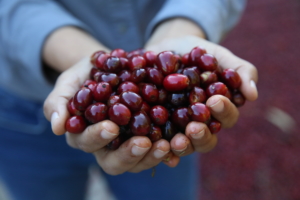
Coffee berry harvesters take the cherries they pick and load them into a special bin (the bextmachine) that appraises the haul while simultaneously sifting and sorting the crop. Farmers have the power to accept or deny the offer for their coffee crop through the use of mobile devices, allowing them to have more freedom and bargaining power.

Bext360 has also created a platform where photos of the coffee bean farmers are available online. This profile also shows how much they are receiving for pay and what the current market value price is. Consumers can view this online profile by scanning a QR code that pulls up the exact location of the farm, and traces the journey and price of the bean to their cup.

How Does this Help Farmers?

The machine that Bext360 created allows farmers to know the value of their crop, and avoid exploitation from coffee companies. It also gives them the knowledge and incentive to take control of the market and harvest at the right time, maximizing return profit.

Coffee farmers in Ethiopia can also have a more direct relationship with buyers. Estimates determine that farmers can have about a 40 percent increase in revenue by using the bextmachine as opposed to other typical washing stations.

Going Forward — Other Companies Involved

Other companies such as IOHK are going beyond supply chain transparency. It is pursuing development in a blockchain training course for local developers who, once graduated, will go on to create their own projects in cryptocurrency in Africa using Cardano technology. This should create even more potential for improvements in all economic sectors, not just the coffee industry.

Through the innovation and scope that blockchain allows, Moyee Coffee Company is able to leave over 300 percent more value in Ethiopia compared to other coffee companies. In May 2018, Moyee also hosted a One Million Cups Campaign in Ireland that sent over $63,448 to Ethiopia. In the future, Moyee hopes to be able to use its blockchain tech to crowd-fund upgrading equipment or building new infrastructure to ultimately improve yields and sever Ethiopia’s reliance on foreign aid in the region.

The benefits of more transparency are twofold: creating greater awareness and participation in consumers, as well as improving living conditions. Living conditions may improve through more equal pay for farmers and ultimately allowing the hard-working growers to reap the benefits of their work and be able to support themselves. It gives coffee farmers in Ethiopia more empowerment over their craft, all the way to the cup of coffee that one buys at the store.

– Laurel Sonneby
Photo: Flickr

March 10, 2020
https://borgenproject.org/wp-content/uploads/borgen-project-logo.svg 0 0 Lynsey Alexander https://borgenproject.org/wp-content/uploads/borgen-project-logo.svg Lynsey Alexander2020-03-10 08:52:072020-03-30 12:30:13Empowering Coffee Farmers in Ethiopia
Developing Countries, Development, Global Poverty, Health, Water, Water Sanitation

The Future of Water’s Role in Development

Water's Role in Development
To deny the necessity of clean and accessible water would be to deny the very thing that allows human civilization to exist, plants to grow and nourish people’s bodies and countries to foster globalization and connectivity across nations. According to the U.N., 785 million people lacked a safe and basic water source by 2015, and about a third of all countries reported being under some degree of water stress including low supply and hindered access to water. Water’s role in development has become the focus of ending poverty around the globe, and the efficient allocation and treatment of water still stand as major problems in developing countries.

Health Care and Sanitation

A lack of access to clean water often results in the spread of ailments such as malaria and diarrhea. Additionally, approximately 60 percent of people worldwide do not have access to adequate handwashing facilities. The effect of clean water on public health is staggering; the World Health Organization (WHO) estimates that access to water for safe drinking and sanitation could prevent 500,000 annual deaths from malaria. An organization called The Water Project aims to make handwashing and sanitation a fundamental part of mortality reduction and works to change behaviors imbedded in communities to stress the importance of water’s role in development and disease prevention.

Women’s Health and Childhood Development

The most vulnerable groups regarding limited clean water access are women and children; women spend almost 40 billion hours a year on transporting and accessing water in Sub-Saharan Africa alone, and about half of all girls in school drop out due to improper sanitation methods that prevent them from maintaining their personal hygiene needs during puberty. Women are therefore more prone to infection and violence, perpetuating a cycle of gender inequality in developing nations. Additionally, WHO projects that safe water and sanitation could prevent 1.4 million child deaths from diarrhea and dehydration a year; most of the diseases inflicting children are preventable and further emphasizes the crucial nature of clean water’s role in development.

Economic Success

For every $1 that someone invests in clean water resources, $8 goes back into economies to help with economic development. When people are no longer fighting waterborne diseases and are spending valuable time fetching water for themselves and their families instead, they are becoming educated and skilled. The manufacturing and agricultural industries suffer most greatly from this; a lack of a water sanitation system in a factory means that employees must leave work to use the restroom or find drinking water, and rural areas that often have a lot of farms depend on safe water for growing crops. The farmers provide the raw materials to the manufacturing sectors, but without clean water, both enter a cycle that mirrors the endless trap of poverty in which their workers often find themselves.

Societal Implications

Education of the public is a fundamentally indisputable part of ensuring that societies have what they need to function politically and economically. When resources, especially vital ones like water, are in short supply, citizens are more likely to fall into cycles of desperation that result in extractive institutions that take advantage of their vulnerability. Water’s role in development goes beyond health and the productivity of citizens; access to clean water results in communities that are free of the burden to prioritize their survival, and empowerment of these communities can lead to civil organization in which citizens have a say in their system of government and those who control it.

With growing recognition of the importance of water’s role in development, some have taken new stances on multisectoral impacts of the distribution and treatment of water. Simple solutions are proving to make the most effective impact on the lives of impoverished people with low access to clean water. Handwashing initiatives and environmental policies that eliminate the probability of unsafe standing water could lead to a decline in the number of deaths from preventable diseases. Also, in an increasingly globalized and changing world, countries must take into consideration changing weather patterns that alter the face of water-related policies. Water’s role in development stretches far beyond the goal of providing suitable water conditions for those in poverty; it sets the stage for more inclusive policies that ensure the protection of those that limited clean water made vulnerable.

– Jessica Ball
Photo: Creative Commons

March 7, 2020
https://borgenproject.org/wp-content/uploads/borgen-project-logo.svg 0 0 Lynsey Alexander https://borgenproject.org/wp-content/uploads/borgen-project-logo.svg Lynsey Alexander2020-03-07 13:37:412024-06-12 07:49:36The Future of Water’s Role in Development
Developing Countries, Global Poverty, Malaria, Technology

5 Mobile Technology Solutions

Mobile Technology Solutions for Developing Countries
Mobile line subscriptions in developing countries are at 98.7 percent. In fact, nations with lower economies have more access to mobile devices than to water or electricity. Here are five mobile technology solutions for developing countries.

5 Mobile Technology Solutions for Developing Countries

  1. iCow: A Kenyan farmer named Su Kahumbu Stephanou created an application called iCow. One can easily download the app to a mobile device and run it off of SMS, which can make it accessible to the vast majority of people. The app helps farmers and shepherds track the gestation periods of their cows. It can also connect farmers to each other so they can offer advice on taking care of their animals. The app provides the user with helpful locations such as insemination centers and veterinarians. Moreover, the system has a menu so the users can select what they need wherever they are. This improvement makes it much easier for users to monitor the health of their cows. The regions using iCow the most are Kenya, Ethiopia and Tanzania. App usage has resulted in both income and productivity. In addition, it serves to improve milk, poultry, eggs, crops, soil fertility, mortality rates and overall health.
  2. RapidSMS: RapidSMS is an open-source platform that UNICEF and Pivot Access developed in 2007. It originally emerged to collect data and create activities for children. However, it adapted to its user bases’ needs over time. Now, RapidSMS lets users make data collection and SMS services in its communities. This makes information available over the internet to all users. The app is also able to register births, monitor nutrition and remotely diagnose patients. The regions using RapidSMS the most are Uganda, Kenya, Nigeria and Ethiopia.
  3. M-PESA or Mobile Pesa: This application works with money. It is a mobile system that helps users transfer, deposit and withdraw money. M-PESA is for people who cannot access these services because of their location. The application works through SMS by loading money onto a SIM card and sending it to its desired phone. The minimum amount of money is KSHS 101 and the maximum is KSHS 70,000. In addition, it converts the amount into cash at any legitimate establishment. Then, the recipient receives said funds in their country’s currency. Villages in Kenya mostly used M-PESA, but it has expanded to countries in Eastern Europe, Africa and Asia. If one wishes to send money to someone in South Africa, they must first enter a secret word. Additionally, the recipient must know this word in order to receive the money. App usage resulted in an increase in income and a decrease in petty crime related to money.
  4. WorldReader: WorldReader is an NGO, with the support of USAID and other institutions, that distributed upwards of 30,000 e-readers in 16 African countries. Its application translates books into 52 languages. Also, the application makes education and reading much more prevalent in developing countries. So far, it has 35,000 titles for its user base of more than 10 million.
  5. Malaria-Diagnosing App: An upcoming application has the design to detect malaria in patients. More people will be able to use the application because it will be automated and mobile. The system uses Giemsa-stained peripheral blood samples, light microscopy, AI and image processing techniques to find Plasmodium falciparum species, a parasite that carries malaria. Concepts from the integral image and haar-like features inspire the algorithm. Thus far, its accuracy is 91 percent. Once released, it plans should be easily accessible through health centers and mobile devices. In addition, its automation makes it much easier for medical professionals to diagnose malaria without expensive equipment or much knowledge of malaria itself.

These five mobile technology solutions each allow a unique benefit to challenges that developing countries face. Through technology like iCow, M-PESA and WorldReader, farmers can maximize their crops, those with limited access to financial institutions can still deposit and transfer money, while people can access multitudes of books in their chosen language.

– Nyssa Jordan
Photo: Flickr

March 6, 2020
https://borgenproject.org/wp-content/uploads/borgen-project-logo.svg 0 0 Lynsey Alexander https://borgenproject.org/wp-content/uploads/borgen-project-logo.svg Lynsey Alexander2020-03-06 16:53:142020-03-30 15:14:515 Mobile Technology Solutions
Developing Countries, Development, Education, Global Poverty

Nobel Laureates Use Randomized Control Testing

Randomized Control Testing
“It can often seem like the problems of global poverty are intractable, but over the course of my lifetime and career, the fraction of the world’s people living in poverty has dropped dramatically.” – Dr. Michael Kremer

In October 2019, Michael Kremer of Harvard and Esther Duflo and Abhijit Banerjee of MIT won the Nobel Prize in Economics for their extensive, randomized control testing-based research in tackling global poverty. At 46 years old, Duflo is the youngest economics laureate ever and only the second woman to receive the prize over its 50-year history.

Incorporating Scientific Studies

The trio set out to establish a more scientific approach to studying the effects of investment projects in the developing world. One of the ways they discovered that they could accomplish this is through randomized control testing. Commonly used in the medical field and made legitimate in the social sciences by the trio, this type of testing involves randomly selecting communities as beneficiaries of experimental projects. Randomly selecting the beneficiaries removes selection bias, providing more accurate and legitimate results.

Randomized Control Testing in India and Kenya

Duflo and Banerjee used randomized control testing experiments in schools in India in an effort to improve the quality of education. The authors discovered that simply getting students to school was not sufficient in improving test scores. Previous research also noted that additional resources, even additional teachers, had minimal impact on students’ performance.

The laureates discovered instead that providing support for an interventionist to work with students behind on their educational skills and making computer-assisted learning available so that all students could have additional math practice improved their scores. In the first year, the average test scores increased by 0.14 standard deviations and in the second year, they increased by 0.28 standard deviations. In the second year, the children initially in the bottom third improved by over 0.4 standard deviations. Those sent for remedial education with the interventionist saw 0.6 standard deviations increase and the computer-assisted learning improved math scores by 0.35 standard deviations in the first year and 0.47 in the second year for all students equally. These results provide clear and definite numbers on the success of the program and show that those who experienced the most benefits were the students in the greatest need of assistance.

Kremer completed a similar study in Kenya. Again, the research found that additional resources did little to improve the learning abilities of the weaker students and that much of the school policies and practices were helpful to the advancement of the already high achieving students. Another of Kremer’s studies in Kenya further showed the impact small interventions can have on student retention. His research found that by bringing deworming medication directly into the classroom, school absenteeism rates decreased by 25 percent, leading to higher secondary school attendance, higher wages and a higher standard of living.

Impact vs. Performance Evaluations

The key to Kremer, Duflo and Banerjee’s success was not the result of pumping out positive statistics. Their success, and reason for winning the Nobel Prize, came from the rigorous scientific approach they took with their studies by using randomized control testing that led to not only positive results but also to meaningful impact where they were working and beyond. For instance, after the success in Kenya with the deworming, the U.S. Agency for International Development (USAID) agreed to finance Kenyan scientists to travel to India to help expand the program. Soon, 150 million children were receiving treatments of deworming medication each year.

This example shows the lasting impact of the work of the laureates. When the fields of economics and politics use more rigorous and randomized studies, it becomes clearer what programs work and which do not, creating greater efficiency and enabling successful projects to expand. The work of the three professors has already led to the leaders of USAID to question the utility of performance evaluations over impact evaluations. In other words, the agency has started to see a shift from success defined as the generated output of the programs to success as the net gain or impact as a direct result of the programs.

Altogether, the work of Kremer, Duflo and Banerjee has raised the bar for economic and social research in the future. Their work has set new expectations that will force researchers to create more detailed and accurate studies that will continue to guide policy.

– Scott Boyce
Photo: Flickr

March 5, 2020
https://borgenproject.org/wp-content/uploads/borgen-project-logo.svg 0 0 Lynsey Alexander https://borgenproject.org/wp-content/uploads/borgen-project-logo.svg Lynsey Alexander2020-03-05 16:49:132024-05-29 23:15:18Nobel Laureates Use Randomized Control Testing
Page 87 of 157«‹8586878889›»

Get Smarter

  • Global Poverty 101
  • Global Poverty… The Good News
  • Global Poverty & U.S. Jobs
  • Global Poverty and National Security
  • Innovative Solutions to Poverty
  • Global Poverty & Aid FAQ’s
Search Search

Take Action

  • Call Congress
  • Email Congress
  • Donate
  • 30 Ways to Help
  • Volunteer Ops
  • Internships
  • Courses & Certificates
  • The Podcast
Borgen Project

“The Borgen Project is an incredible nonprofit organization that is addressing poverty and hunger and working towards ending them.”

-The Huffington Post

Inside The Borgen Project

  • Contact
  • About
  • Financials
  • President
  • Board of Directors
  • Board of Advisors

International Links

  • UK Email Parliament
  • UK Donate
  • Canada Email Parliament

Get Smarter

  • Global Poverty 101
  • Global Poverty… The Good News
  • Global Poverty & U.S. Jobs
  • Global Poverty and National Security
  • Innovative Solutions to Poverty
  • Global Poverty & Aid FAQ’s

Ways to Help

  • Call Congress
  • Email Congress
  • Donate
  • 30 Ways to Help
  • Volunteer Ops
  • Internships
  • Courses & Certificates
  • The Podcast
Scroll to top Scroll to top Scroll to top