• Link to X
  • Link to Facebook
  • Link to Instagram
  • Link to TikTok
  • Link to Youtube
  • About
    • About Us
      • President
      • Board of Directors
      • Board of Advisors
      • Financials
      • Our Methodology
      • Success Tracker
      • Contact
  • Act Now
    • 30 Ways to Help
      • Email Congress
      • Call Congress
      • Volunteer
      • Courses & Certificates
      • Be a Donor
    • Internships
      • In-Office Internships
      • Remote Internships
    • Legislation
      • Politics 101
  • The Blog
  • The Podcast
  • Magazine
  • Donate
  • Click to open the search input field Click to open the search input field Search
  • Menu Menu

Archive for category: Children

Information and stories addressing children.

Children, Development, Education, Global Poverty

Global Education Conference Redefines Education

global education
As the world becomes more tightly connected, the opportunity and demand for education increase.

The sixth annual Global Education Conference explores the concept of redefining education. Over a period of four days, from Nov. 16 to 19, the conference promoted both classroom and “real world” education to provide participants with a well-rounded and highly informative experience.

The annual online event connects classrooms, raises awareness of cultural diversity and supports educational access for all. Anyone with internet access can learn more about upcoming changes in education, as well as promote their own ideas.

Though the Global Education Conference isn’t a conventional method of online learning, it offers many of the same benefits. Participants learn from speakers and instructors of many different countries and backgrounds and receive a much broader perspective on the topics.

Technology allows questions to be answered immediately and for multiple discussions to take place at once. The nonstop sessions make sure everyone, no matter how busy, can attend at least one seminar a day and choose the topic that best meets their interests.

The conference presented two topics in particular that could prove beneficial to the war on global poverty: learning more about refugees and understanding the relationship between poverty and education.

Because half of the Syrian refugees are children and many are in refugee camps instead of schools, the Global Education Conference dedicated a session to The Refugee Story Circle, a student-run project founded by Qatar Foundation International.

Resettled refugees had the opportunity to tell their personal experiences in a respected and dignified environment. The audience was then able to connect first-hand with the refugees through online discussions and letters of encouragement.

Richard Close, CEO of Chrysalis Campaign, Inc., explained the viewpoint of poverty and education. “Students who are given resources and encouragement realize over time that they have a bright future. Children who live in poverty learn early on to think, ‘What future?’ Consequently, they don’t develop the skills and self-motivation needed to succeed.”

Mary Brownell, a member of iEARN-USA, explained the nonprofit network’s partnership with Kids Can Make a Difference to encourage teachers to discuss hunger, inequality and poverty with their students.

“The goal is to imprint upon students what the effects really are on our world,” Brownell said.

Furthermore, impoverished students will feel like their needs are being addressed. Those who can’t attend schools will, hopefully, receive more attention and assistance.

– Sarah Prellwitz

Sources: Elluminate, EdSurge, Franklin University, Global Education Conference 1, Global Education Conference 2, iEARN
Photo: Europa Education

December 19, 2015
https://borgenproject.org/wp-content/uploads/borgen-project-logo.svg 0 0 Borgen Project https://borgenproject.org/wp-content/uploads/borgen-project-logo.svg Borgen Project2015-12-19 01:30:002024-06-05 23:35:37Global Education Conference Redefines Education
Children, Global Poverty

UNICEF Fights for Central African Republic Children

Central_African_Republic_Children
UNICEF is halfway to its goal for assisting the children of the Central African Republic who continue to suffer due to sectarian violence and political instability.

UNICEF requested $70.9 million for malnourished children in the Central African Republic at the beginning of this year. The plan called for food and basic health services to be made available to the children. As of December, the organization has raised just over half that amount.

By the end of this year, UNICEF had planned for:

  • 1.2 million people to have access to basic health services and medicine
  • 4,000 children to be released from armed forces and groups and have access to alternative education opportunities
  • 40,000 highly vulnerable households in remote areas to be assisted with water, sanitation and hygiene and non-food items interventions

The Central African Republic has been in a state of conflict that escalated two months ago with the “worst violence” the capital, Bangui, has ever seen.

Clashes among religious groups have created a violent atmosphere especially for Central African Republic children, who have been caught in the middle of these tensions.

Exactly half of the total affected population or 2.4 million Central African Republic children need assistance. UNICEF hopes to reach two million people by the end of the year, including 1.4 million children.

From July to December, the organization has focused on treating vaccine-preventable and water-borne diseases, as well as other infectious diseases. Providing access to clean facilities has also been high on the agenda.

The UNICEF’s Rapid Response Mechanism (RRM) provides safe drinking water and sanitation facilities to about 200,000 people in remote areas. “The RRM will continue to advocate for a multi-sectoral response in the hard-to-reach areas,” UNICEF said.

– Ashley Tressel

Sources: Reuters, UNICEF 1, UNICEF 2
Photo: Flickr

December 14, 2015
https://borgenproject.org/wp-content/uploads/borgen-project-logo.svg 0 0 Borgen Project https://borgenproject.org/wp-content/uploads/borgen-project-logo.svg Borgen Project2015-12-14 01:30:382024-05-27 09:28:32UNICEF Fights for Central African Republic Children
Activism, Children, Global Poverty

Charitable Christmas Gift Giving Guide 2015

charitable_christmas_gift
Compassion International is a Christian organization dedicated to helping children who are living in poverty. Below are some charitable Christmas gift options from the organization’s “Gift Catalog” that allows people to give to families living in poverty.

1. HIV/AIDS Care. A $25 donation can go a long way to providing much needed medical care to those suffering from HIV/AIDs. According to the World Health Organization (WHO), HIV/AIDS was responsible for an estimated 1.1 million deaths in 2013 and children are the most susceptible.

Compassion International estimates that 1,000 children are infected with HIV every day. Medical breakthroughs have helped curb the global killer, but the disease continues to rage on. This charitable Christmas gift donation would help…

  • Educate families on prevention techniques
  • Treat children and families infected through antiretroviral means
  • Provide care for those indirectly affected

2. Water Wells. According to Water.org, 663 million people do not have access to potable water, one in every ten people. A $34 donation can help provide clean and safe access to water for those that need it by allowing them to have:

  • A borehole well construction
  • The ability to install a water store unit, including a pump and other hardware
  • Reduced cases of waterborne diseases and illnesses

3. Goats or Other Animals. What many people may think of as pets, people in developing countries think of as a life source. Having a goat, cow or chicken can mean milk, eggs, wool or food for people living in developing countries. A $100 donation for livestock would help those living in poverty to:

  • Generate a source of income by selling eggs, wool, or milk from the animal
  • Become self-sufficient and less reliant on others
  • Establish a business by rendering services

charitable_Christmas_gift

4. Mosquito Nets. According to WHO, 438,000 deaths were linked to malaria in 2015. Most of those were deaths of children under the age of five. However, nearly half of the world’s population, 3.2 million people, are at risk for the disease. An $18 charitable Christmas gift donation for a malaria net would help in the following ways:

  • A bed net treated with insecticide to eliminate malaria transmission
  • Training on how to use the net
  • Education on ways to prevent mosquito breeding areas

5. Food for a Baby and a Mother. Malnutrition is something that is all too real for families living in developing countries. According to The Hunger Project, 98 percent of the world’s undernourished people inhabit developing nations.

It is also estimated that 795 million people in the world do not have enough to eat. Of those 795 million, 214 million live in Africa and 525.6 million live in Asia according to The Hunger Project. A $15 monthly donation can help mothers and children receive the nutrition they need to retain their strength. It can also:

  • Ensure health for mothers and children by eating recommended food
  • Put on and keep weight for better health and development
  • Help mothers and children eat appropriately by providing “fortified nutritional supplements”

The suggestions provided are only a handful of options. There are, of course, many other charitable options that can help people in need. For other charitable Christmas gift giving ideas, visit Compassion International.

– Alyson Atondo

Sources: WHO 1, Water.org, THP, WHO 2, WHO 3, Compassion 1, Compassion 2
Photo: Flickr, Pixabay

December 11, 2015
https://borgenproject.org/wp-content/uploads/borgen-project-logo.svg 0 0 Borgen Project https://borgenproject.org/wp-content/uploads/borgen-project-logo.svg Borgen Project2015-12-11 01:30:172024-12-13 18:05:31Charitable Christmas Gift Giving Guide 2015
Children, Development, Education, Global Poverty

UNDP Broadens Youth Career Opportunities

undp
In Guatemala, young people are more likely to join a gang than to graduate upper secondary school. According to UNICEF, only 54.2 percent of youth ages 10-19 are enrolled in upper secondary schools.

On the other hand, a World Bank report states there are an estimated 14,000 young gang members. The report goes on to explain that “youth unemployment is associated with a higher probability of youth engaging in risky behavior, including crime and violence. Youth inactivity rates are often much higher than youth unemployment rates.”

To counteract this trend of violence, several organizations are working with youth to help them stay focused on educational opportunities. In fact, USAID found that “Long-term, sustainable development and improved equity in Guatemala will only be possible if [the] education of children and youth continues to improve.”

One of the most successful programs to date has been the United Nations Developing Programme’s (UNDP) Munijoven project. The Municipality of Guatemala City, with the support and funding of the UNDP and the Italian Government, leads the project.

In total, it is estimated that by April 10, 323 youth had taken part in the project’s training opportunities. “The Munijoven project aims to create academic opportunities for those underprivileged youth and to help them into employment,” UNDP said.

With programs focused on English, IT, tourism, gardening, arts, cooking and customer service training, the project hopes to provide job opportunities that these youth would not have under normal circumstances.

“With UNDP’s support, an employment strategy is currently being developed within the city’s youth policy, to create better economic, training, health and recreational opportunities through public-private partnerships,” UNDP said.

Businesses like Pizza Hut, local banks, furniture retailers and bakeries have joined the initiative. These businesses are vital to the project’s goals.

In fact, Ana Gabriela De León, UNDP’s Programme Officer for Poverty Reduction and Social Investment, stated, “Business participation is a key part of this process, since the main goal at the end of the training is to integrate young people into the labor market [as soon as] they have successfully completed the Munijoven programme.”

An estimated 60 percent of the participants, or 6,000 young people, were able to sign employment contracts at the end of the project.

– Katherine Martin

Sources: UNICEF, World Bank, USAID, IZA, UNDP
Photo: Flickr

December 9, 2015
https://borgenproject.org/wp-content/uploads/borgen-project-logo.svg 0 0 Borgen Project https://borgenproject.org/wp-content/uploads/borgen-project-logo.svg Borgen Project2015-12-09 09:13:392024-05-27 09:28:26UNDP Broadens Youth Career Opportunities
Children, Development, Education, Global Poverty, Health

Girl Up Campaign Volunteers: Addressing Global Poverty

girl_up
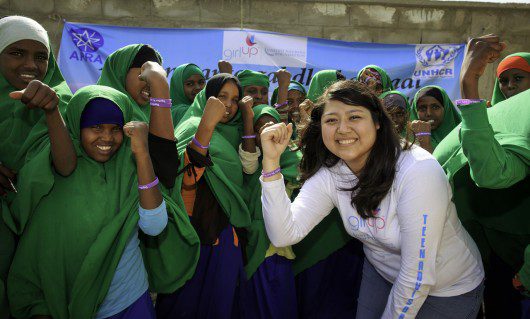
Sydney Faler and Molly Foulkes of Dundee-Crown High School in Illinois started the Girl Up Dundee student club at their school with the hope of helping girls in need across the globe.

The club is a member of the U.N.’s Girl Up campaign which aims to help girls have access to education, health care, safe living conditions as well as social and economic opportunities. The U.N.’s program helps girls in Guatemala, India, Malawi, Liberia and Ethiopia, which are among the toughest places for girls to live.

In the beginning, Faler and Foulkes wanted to do something positive, but they were not sure how to make a difference. Inspired by Emma Watson’s U.N. speech on gender equality, they decided to start the club as a way to collect support and resources for girls.

Foulkes said, “It’s a way for me as a high school student, where I don’t really have that voice, to be able to impact something globally.”

Their sentiment proved to be a common one, as the club started with 35 members and has more people joining every week. In the digital age, students seem more aware of problems in the world and they wish to have a positive impact.

Foulkes said that “we’re becoming a more globalized nation and world. It’s important to realize there are so many more people out there than just our community.” With the planet becoming smaller due to everyone connecting through the internet and social media, issues that were previously unknown are now being brought to the forefront.

People everywhere are coming together to help each other, as evidenced by the growing popularity of the Girl Up student club, which is just one of 1,000 registered Girl Up clubs in the United States. The U.N.’s Girl Up club is also represented in 51 countries around the world.

So far this year, the Dundee-Crown chapter of the Girl Up student club has raised over $300 for girls in Guatemala. The funds will provide bicycles for girls in Guatemala, so they can get to school safely. With access to education, the girls will likely be healthier, more financially responsible and better qualified for good jobs.

Most Guatemalan girls in the Girl Up-supported regions only receive about three years of schooling. This lack of education means that most girls never learn to read and write. In addition, without access to education, girls are more at risk for early marriage and childbearing, thus continuing the cycle of poverty.

In order to help break the cycle, Faler and Foulkes also plan to host a gala event with local community members so they can spread their message. Foulkes said that “a lot of people don’t really understand what we’re doing.”

They believe that once they inform others, they will reach their goal of raising $500 to help more girls in need. These two high school students’ actions are having positive impacts for girls who desperately need it.

– Andrew Wildes

Sources: Daily Herald, Girl Up
Photo: Cloud Front

December 8, 2015
https://borgenproject.org/wp-content/uploads/borgen-project-logo.svg 0 0 Borgen Project https://borgenproject.org/wp-content/uploads/borgen-project-logo.svg Borgen Project2015-12-08 01:30:412020-06-24 20:36:39Girl Up Campaign Volunteers: Addressing Global Poverty
Children, Education, Global Poverty, Technology

Solar Backpacks for the Students of the Future

AAA
Today more than 700 people are impoverished because of a lack of meeting basic needs and human rights. Innovative solutions provide different routes to solving the issue of global poverty.

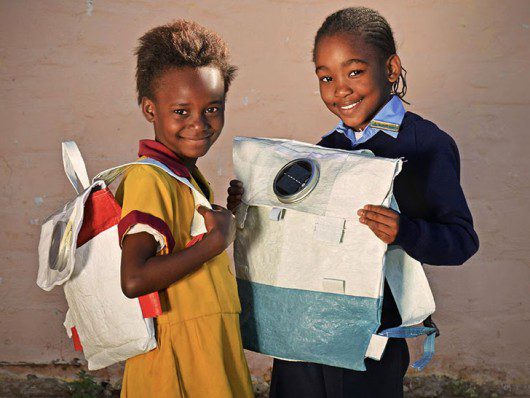
Canadian student, Salima Visram, set out to revolutionize the way of life for those who live in deteriorated conditions with an ingenious solution that literally sheds light on the lives of students. Her invention: new solar backpacks equipped with a source of light that will charge all day and can be activated at night in order for students to study.

Instead of using toxic kerosene lamps, alternative technology allows for clean energy to be used. Not only is this a green solution, but also an economic one, as households can grab a backpack as their energy source instead of constantly replenishing their kerosene supply.

These solar backpacks have the potential to positively impact states that struggle with poverty, especially Kenya, where 92 percent of households utilize kerosene lamps.

The first to receive Visram’s backpacks were the residents of Kikambala village, where she raised enough money to produce 2,000 solar backpacks. Each backpack consists of a solar panel, battery pack and light.

This occurred in January after she raised money via crowdfunding site, Indiegogo. Since then, Visram has said she wishes to “expand the project to a hundred schools in the county within the next year and a half.”

Sticking to her own agenda, in September, Visram delivered 500 backpacks to the students of Kikambala Primary School, marking her business’ first official order. This is not the only milestone Visram wishes to achieve, however, as her goals go hand in hand with Masomo Bora—Kenya’s mission to provide education to all children.

Visram’s dream began as a public funding project on Indiegogo, but continues today in hopes of bringing as many students “into the light” as possible.

Fortunately, the costs of production are cheap, and in two months alone an additional $50,000 has been raised—more than doubling the initial capital of $40,000 required to manufacture the first 2,000 solar backpacks.

The backpacks are able to provide between seven and eight hours of light using only three to four hours of sunlight. As more and more solar backpacks become available, the hope is that the 4,000 deaths that occur daily due to kerosene-induced illness will be significantly reduced.

– Emilio Rivera

Sources: Indiegogo, IT News Africa, Compassion International
Photo: Conscious Living TV

December 1, 2015
https://borgenproject.org/wp-content/uploads/borgen-project-logo.svg 0 0 Kim Thelwell https://borgenproject.org/wp-content/uploads/borgen-project-logo.svg Kim Thelwell2015-12-01 01:30:402020-06-24 20:26:24Solar Backpacks for the Students of the Future
Children, Education, Gender Equality, Global Poverty

Room to Read: 10 Keys to Improving Global Education

Room to Read 10 Findings to Improve Global Education
Room to Read set out to change the lives of children around the world by focusing on literacy and gender equality. Fifteen years later, the non-profit has educated almost 10 million children.

Their other accomplishments include publishing more than 1,000 books in local languages, building more than 1,900 schools, establishing more than 17,000 libraries and providing more than 31,000 girls with education and life skills.

Room to Read facilitates education programs in Bangladesh, Cambodia, India, Laos, Nepal, South Africa, Sri Lanka, Tanzania, Vietnam and Zambia. Through monitoring and evaluating their programs, Room to Read has revealed 10 keys to their success:

  1. Children read faster and with greater comprehension when they benefit from systematic reading instruction that focuses on phonics.
  2. Children are more likely to read when their teachers have been trained in how to conduct reading activities, such as reading aloud and shared reading.
  3. Children prefer illustrated fiction books, such as folklore and fantasy.
  4. Libraries are well-run and effective when they are monitored and evaluated consistently.
  5. Access to libraries makes students want to read more at school and at home.
  6. Transparency leads to greater community involvement and participation.
  7. Advocacy and partnerships with local governments are crucial to improving instructional methods and professional development for educators.
  8. Parent and guardian engagement in their daughters’ education is essential.
  9. Life skills education is directly associated with lower dropout rates and higher advancement rates among girls.
  10. Identifying risk factors and implementing early warning systems can prevent girls from dropping out of school and provide them with needed support.

“Achieving our milestone of 10 million children impacted through Room to Read’s programs is a time to celebrate and further our mission,” said Erin Ganju, Room to Read’s CEO and co-founder. “By sharing our findings on what works in global education, we hope to deliver a quality education to every child in every corner of the globe.”

– Marie Helene Ngom

Sources: Roomtoread, PRNewswire, AnnualReport
Photo: Flickr

December 1, 2015
https://borgenproject.org/wp-content/uploads/borgen-project-logo.svg 0 0 Borgen Project https://borgenproject.org/wp-content/uploads/borgen-project-logo.svg Borgen Project2015-12-01 01:30:142024-05-27 09:28:26Room to Read: 10 Keys to Improving Global Education
Children, Development, Education, Global Poverty

Cambodia Children for Change

children_for_changeThe Khmer Rouge genocide is a historic atrocity that devastated the people of Cambodia from 1975-1979. The country is still struggling to rehabilitate its debilitated economy and depleted resources.

After the genocide, families’ structures were left fragmented and splintered. The disruption of the family unit left little hope or vision of the future. Many families in Cambodia chose to have their children earn income to help sustain the family as opposed to attending school.

These children are at high risk of exploitation. The Children for Change in Cambodia organization is dedicated to helping children who have been exploited, are being exploited or who are at a high risk for being exploited. It has created programs, as well as classes and services designed to encourage success for this demographic.

The Children for Change is a nonprofit organization in Phnom Penh that serves to heal historical wounds through the use of education and exposure to opportunities.

The school sits on the outskirts of Phnom Penh in one of the red light districts. It is a small and community-based organization that strives to help children in the most vulnerable areas.

The school offers various programs unique to the area. Program Design, Academic Bridge to Success, Vocational training and Program Assessment are examples of programs specially designed to enhance the academic experience for students.

The Children for Change in Cambodia also conducts social action projects. These assist students in giving back to their communities. The purpose is to emphasize the importance of community, to instill pride in their communities and to learn from community leaders and other role models.

In Cambodia, primary schools have the most students, followed by the lower secondary and upper secondary schools. Private and traditional schools segregate by age. This serves as a further deterrent for older kids to start school when they are not considered the proper age.

The Children for Change, Cambodia welcomes students of all ages and all levels. All of the classes have multiple ages. The ages of the students range from five to 16 years of age. Classes are based upon the level of education of the students.

In addition, the organization has emergency services for their students in need. For example, they give temporary housing to students when it is no longer safe to go home or to those who are experiencing homelessness.

Those that need emergency housing are not uprooted from school or familiar surroundings. This is important because many of the students have had transient lifestyles. The organization is sensitive to the unique needs of the population it serves.

The Children for Change, Cambodia provides educational services and social support to young students that are at high risk of trafficking. Quality education and skill-building techniques increase the likelihood of excelling in society.

– Erika Wright

Sources: Cultural Quest, The Children for Change, Cambodia, Time
Photo: Flickr

November 22, 2015
https://borgenproject.org/wp-content/uploads/borgen-project-logo.svg 0 0 Borgen Project https://borgenproject.org/wp-content/uploads/borgen-project-logo.svg Borgen Project2015-11-22 01:30:082020-06-24 20:03:52Cambodia Children for Change
Children, Development, Education, Global Poverty

Dollar a Week Private Schools in Developing Countries

Private_Schools_in_Developing_CountriesPrivate schools costing as little as $1 per week are beginning to take off in the developing world.

According to the World Bank, one-fifth of primary-school students are enrolled in private schools across developing countries. This is twice as many as there were 20 years ago. Many private schools in developing countries are also unregistered, so this number is thought to be even higher.

Private schools are a great alternative to overcrowded public schools. For example, in Mathare, a slum located in Kenya, there are only four public schools available for nearly half a million people. Private schools are necessary in these communities in order to accommodate such a large amount of students.

The fastest growing private schools are low-cost and accommodate people living on less than $2 a day. They are usually run by entrepreneurs or charities within these poor communities.

James Tooley, a professor at University of Newcastle, said, “These private schools, my research has shown, outperform the government schools, at a fraction of the cost.”

Ken-Ade Private School was founded in April of 1990 and has grown into a successful private school in Makoko, Nigeria. It is one of the 32 unregistered private schools located in Makoko. In December 2008, there were 185 students enrolled and 13 staff members.

The school offers many different subjects including Handwriting, Computer Studies and Agricultural Science. It offers extracurricular activities as well, such as a reading club, a drum band and an all girls choir.

Ken-Ade charges around $4 a month, which is practical for a family who only earns $1 per day. Not all children have to pay fees, though. According to Mr. Bawo Sabo Elieu Ayeseminikan, owner of Ken-Ade, there are orphaned students that are allowed to attend school for free.

According to Tooley, 75 percent of all school children in communities similar to Makoko are attending private schools. This is considerably higher than those who attend public schools.

Tooley also found in his research that private schools in these regions, whether registered or not, outperformed public schools in all subjects. Overall, private schools achieved higher success than public schools with only a quarter of teacher salary costs.

The private schools described above provide a grass-roots solution to achieving universal basic education. They give children in developing countries an opportunity to have an education where they are the priority. Private schools are a successful alternative to public schools and continue to grow in poor communities across the globe.

– Jordan Connell

Sources: CATO Institute, The Economist 1, The Economist 2, Ken-Ade Private School Website
Photo: Wikimedia

November 21, 2015
https://borgenproject.org/wp-content/uploads/borgen-project-logo.svg 0 0 Borgen Project https://borgenproject.org/wp-content/uploads/borgen-project-logo.svg Borgen Project2015-11-21 11:50:532020-06-24 20:05:00Dollar a Week Private Schools in Developing Countries
Children, Developing Countries, Education, Global Poverty, Women and Female Empowerment

Education for Girls in Developing Countries

supporting education for girls in developing countriesMichelle Obama recently spoke on the importance of education for girls in developing countries at the 2015 World Innovation Summit for Education in Qatar.

According to EFA Global Monitoring Report, there are 66 million girls out of school globally. There are 33 million fewer girls than boys in primary school.

Michelle Obama is traveling through the Middle East discussing the importance of education for girls in developing countries in order to promote “Let Girls Learn,” her girls’ education initiative. She encouraged men in developing countries to support the cause of educating girls in order to improve their societies.


Health Benefits of Supporting Education for Girls in Developing Countries


Education is one of the most significant ways that women can empower themselves, and educating women provides many benefits to developing countries.

Girls with eight years of education are four times less likely to be married as children. Women who are educated marry later and, therefore, have fewer children. Multiple studies show that an extra year of schooling for girls reduces fertility rate by five to 10 percent.

The children of an educated woman are more likely to survive. In addition, a child born to a literate mother is 50 percent more likely to survive past the age of five.

Educated women are better at understanding and managing health issues, which reduces infant and maternal mortality.


Economic Benefits of Supporting Education for Girls in Developing Countries


Educating women also benefits the economy. According to chief Japan strategist and co-head of Asia Economics, “educated women contribute to the quality, size and productivity of the workforce. They can get better paying jobs, allowing them to provide daily necessities, health care and education to support their families.”

A girl with an extra year of education can earn 20 percent more as an adult.

Bloomberg Business estimates a “growth premium” that would raise gross domestic product growth by 0.2 percent per year for countries such as Vietnam, Nigeria and Pakistan that put greater investments in female education. Narrowing the gender gap could raise income per capita 20 percent higher than what is projected by 2030.

According to The World Bank, if India enrolled one percent more girls in secondary school, its gross domestic product would rise by $5.5 billion.

Educating girls provides many significant benefits to developing countries and can help lift areas out of poverty. Education for girls will continue to improve conditions in developing countries across the globe.

– Jordan Connell

Sources: Bloomberg Business, CNN, Girl Rising, UNICEF
Photo: Flickr

November 21, 2015
https://borgenproject.org/wp-content/uploads/borgen-project-logo.svg 0 0 Borgen Project https://borgenproject.org/wp-content/uploads/borgen-project-logo.svg Borgen Project2015-11-21 11:30:592024-05-27 09:28:22Education for Girls in Developing Countries
Page 106 of 137«‹104105106107108›»

Get Smarter

  • Global Poverty 101
  • Global Poverty… The Good News
  • Global Poverty & U.S. Jobs
  • Global Poverty and National Security
  • Innovative Solutions to Poverty
  • Global Poverty & Aid FAQ’s
Search Search

Take Action

  • Call Congress
  • Email Congress
  • Donate
  • 30 Ways to Help
  • Volunteer Ops
  • Internships
  • Courses & Certificates
  • The Podcast
Borgen Project

“The Borgen Project is an incredible nonprofit organization that is addressing poverty and hunger and working towards ending them.”

-The Huffington Post

Inside The Borgen Project

  • Contact
  • About
  • Financials
  • President
  • Board of Directors
  • Board of Advisors

International Links

  • UK Email Parliament
  • UK Donate
  • Canada Email Parliament

Get Smarter

  • Global Poverty 101
  • Global Poverty… The Good News
  • Global Poverty & U.S. Jobs
  • Global Poverty and National Security
  • Innovative Solutions to Poverty
  • Global Poverty & Aid FAQ’s

Ways to Help

  • Call Congress
  • Email Congress
  • Donate
  • 30 Ways to Help
  • Volunteer Ops
  • Internships
  • Courses & Certificates
  • The Podcast
Scroll to top Scroll to top Scroll to top