• Link to X
  • Link to Facebook
  • Link to Instagram
  • Link to TikTok
  • Link to Youtube
  • About
    • About Us
      • President
      • Board of Directors
      • Board of Advisors
      • Financials
      • Our Methodology
      • Success Tracker
      • Contact
  • Act Now
    • 30 Ways to Help
      • Email Congress
      • Call Congress
      • Volunteer
      • Courses & Certificates
      • Be a Donor
    • Internships
      • In-Office Internships
      • Remote Internships
    • Legislation
      • Politics 101
  • The Blog
  • The Podcast
  • Magazine
  • Donate
  • Click to open the search input field Click to open the search input field Search
  • Menu Menu

Archive for category: Aid Effectiveness & Reform

Information and stories about aid effectiveness and reform

Aid Effectiveness & Reform

Myanmar: Spending Aid Effectively

myanmar-USAID-aid-effectiveness

A Brookings Institution article by Lex Rieffel and James Fox (Former Chief, Economic Growth Evaluation at USAID/Policy & Program) analyses aid effectiveness in Myanmar. “The transition in Myanmar that began two years ago — from a military to a quasi-civilian government — is the largest and most encouraging turnaround in the developing world in years.”

They give significant credit to President Thein Sein and social activist Aung San Suu Kyi for collaborating to lift the country out of turmoil. Their three main obstacles or agendas were: ending the civil war, providing an institutional framework to increase the general standard of living, and sharing the wealth of the country’s natural resources with the whole population.

When other countries saw the progress being made, then the World Bank, USAID, and more than 100 other aid agencies and international non-governmental organizations (NGOs) started to offer rapid assistance to Myanmar. This time, the aid agencies and government officials are intent on making sure aid is delivered effectively. All donors have committed to adhere to the 2005 Paris Declaration on Aid Effectiveness, and all subsequent additions to it. And the Myanmar government held an all-donor meeting in January 2013, to get an agreement on ground rules for spending aid effectively.

However, here are five common ways aid can be ineffective:

• Senior government officials of Myanmar end up spending hours every day meeting with delegations from international NGO’s and donor countries – not just their aid agencies but also their government representatives, corporations, media, and more. The endless meetings divert the attention of the local officials, not allowing them to formulate and implement actual progress.

• Each aid organization has its own pressure to “make a difference,” to show results.  For instance, USAID has allocated millions of dollars for their own agriculture sector projects, but only committed $600,000 to the multi-donor LIFT Fund – which is a more effective way of delivering aid.

• Local staff from financial institutions are overwhelmed by the donor organizations’ need to “move the money.” Pressure to distribute project funds is ever-present.

• Donors are often non-transparent as each competes to gain the most favorable position within a region.

• Host countries engage in “donor shopping” to get the most money for the least change.

So, for Myanmar, here are the three ways to make aid more effective:

• Slow down and do more collaborative operations. This act does not overwhelm local officials. Donors should help control the pace, and commit at least 30 percent of their funding to joint operations.

• Provide “scholarships for foreign study.” It will take years for Myanmar to raise its standard of education to the level required for meeting its development objectives. The solution is education abroad, so the students can return home with knowledge to invest in the country. This form of aid also has the least potential for mis-use.

• “Be more innovative” – for instance “cash on delivery aid.” This reinforces good management within the local government, minimizes the administrative burden of the rapid aid influx, and ensures that every dollar of aid goes to support successful projects.

– Mary Purcell

Source: Brookings
Photo: USA Myanmar


March 22, 2013
https://borgenproject.org/wp-content/uploads/borgen-project-logo.svg 0 0 Borgen Project https://borgenproject.org/wp-content/uploads/borgen-project-logo.svg Borgen Project2013-03-22 10:44:182020-04-27 05:48:26Myanmar: Spending Aid Effectively
Aid Effectiveness & Reform, Extreme Poverty

Bono’s TED Talk

Bono’s TED Talk has compacted twenty-five years of anti-poverty campaigning into a ten minute presentation for a TED conference which was held this past February. The result is a passionate call for people to stay involved and stay informed about all the great work that is and has been happening in the fight against extreme poverty.

Much of the progress that has been made does not make the news but Bono sees how people, technology, and the sharing of information is turning inequality on its head; sighting the Arab Spring as a momentous shift in history. He emphasizes how facts change minds and hearts, bring new awareness and action, bring better action, and bring change in a phenomenon he names “factivism.”

Here are some facts. Since 2000:

  • Eight million AIDS patients have been receiving retroviral drugs
  • Malaria deaths have been cut in some countries by 75%
  • Child mortality rate of children under the age of 5 is down by 2.65 million deaths per year
  • 7,256 children’s lives are saved each day

The global rate of extreme poverty has declined from 43% in 1990 to 21% in 2010.

The population of people living on less than $1.25 per day has been cut in half in the last 20 years, and the facts show that this extreme poverty can be cut to virtually zero within a generation — worldwide. Bono encourages everyone to continue their efforts for lasting progress by:

  • Telling politicians not to cut foreign aid funding
  • Join campaigns that make sure all natural resources (and their profits) are shared with the people of that country
  • Continue citizen participation by demanding transparency of government spending (anti-corruption)
  • Become a “factivist” – share the facts with others about successes and hardships within global inequality

– Mary Purcell

Source: ONE.org

March 17, 2013
https://borgenproject.org/wp-content/uploads/borgen-project-logo.svg 0 0 Borgen Project https://borgenproject.org/wp-content/uploads/borgen-project-logo.svg Borgen Project2013-03-17 13:00:262016-05-11 11:02:07Bono’s TED Talk
Aid Effectiveness & Reform

Development Money Creates Jobs

ethical-fashion-development-africa
Aid money is not just about hand-outs, it is more and more about igniting and fostering long term, self-sustaining development projects. A key tactic in this is providing training and support for small-business ventures that lead to self-employment and job growth.

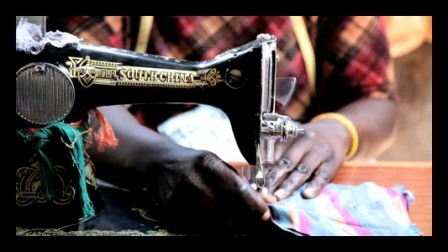
One such project funded by the World Trade Organization (WTO), International Trade Center (ITC) and the UN, called Ethical Fashion, makes handbags, accessories and clothing for world famous designers. This project was conceived by Simone Cipriani, an Italian shoemaker, who saw no reason why Italy’s model of fashion production could not be recreated in Kenya, and places like it. Mr. Cipriani sought out unemployed and underemployed women with experience in basic beadwork and tailoring, and with training he turned the small idea into a profitable company. Ethical Fashion had sales of $900,000 in 2012, and employs 1,200 women full time. Their wages have gone from about $2 a day to nearly $8, and this income then circulates back into the community and further expands economic growth.

This project is indicative of social-entrepreneur projects and international aid programs that are spreading all around Africa and the developing world. Desmond Tutu started his own fellowship program in South Africa, to promote this entrepreneurial solution to poverty and hardship. With funding from the UN, international foreign aid, and private companies, Tutu’s fellowship now spearheads organizations and businesses across Africa, making marked improvements in the communities they serve.

Gbenga Sesan, a Tutu Fellow, started his own company Ajegungle.org in Nigeria, where 90 percent of graduates are unable to find full-time jobs. His company targets these unemployed but highly skilled individuals. Many of them come from disadvantaged communities, and could easily get pulled into petty crime and theft in order to provide for themselves. But Mr. Sesan, working in one of the poorest slums in the country, provides them with IT training and entrepreneurial skills, connects them with internships and local employers, and helps them start their own small businesses. Since he started his work in 2007, and has since helped to improve the lives of over 13,000 young Nigerians.

Stories like these are endless, and the focus on job creation is ever expanding as precedent shows real progress in third-world development. To learn how this type of foreign aid helps the US economy and US jobs, click here.

– Mary Purcell

Source: The Economist, The Guardian
Photo: Huffington Post


March 17, 2013
https://borgenproject.org/wp-content/uploads/borgen-project-logo.svg 0 0 Borgen Project https://borgenproject.org/wp-content/uploads/borgen-project-logo.svg Borgen Project2013-03-17 09:14:442024-12-13 17:49:14Development Money Creates Jobs
Aid Effectiveness & Reform, USAID

Death of Hugo Chavez Impacts US Aid

Death of Hugo Chavez Impacts US AidLike it or not, foreign aid usually follows the paths that are set by political relationships. U.S.-Venezuelan relations have been stressed ever since Hugo Chavez came to power, and even before then. How could the death of Hugo Chavez affect the aid relationship between the U.S. and Venezuela?

The first time that Chavez met President Obama, he gave him a copy Eduardo Galeano’s book “Las Venas Abiertas de America Latina”, a history of colonial rule over the Americas that focuses on how the United States became the colonizing power of modern age in Latin America, especially in Central America where American corporations and military interventions created the infamously titled “banana republics.” That first meeting is the perfect anecdote to represent the relationship between the two countries over the last five years. Chavez had always been extraordinarily outspoken against the United States and, because of that tense relationship, the U.S. has given very little to Venezuela with the exception of small amounts of disaster relief assistance. It is important to note that Venezuela, the founding member of OPEC, is one of the wealthiest countries in the Americas, yet nearly 32% of the country’s population lives below the poverty line.

In order to begin building a more amicable relationship, the U.S. may begin giving more to causes that aren’t related to politics and focus more on job creation and training. Providing this type of aid would not only benefit Venezuela, but it may also help build a much less tense relationship with a resource-rich country that has significant pull in international oil markets and price control. A well-executed increase in aid could end up being very beneficial for both parties as Venezuela changes leadership.

– Kevin Sullivan

Sources: The New York Times, CIA World Factbook
Photo: Biography

March 6, 2013
https://borgenproject.org/wp-content/uploads/borgen-project-logo.svg 0 0 Borgen Project https://borgenproject.org/wp-content/uploads/borgen-project-logo.svg Borgen Project2013-03-06 11:02:122024-05-24 23:43:14Death of Hugo Chavez Impacts US Aid
Aid Effectiveness & Reform

Aid to Haiti: What Lessons Can We Learn?

Aid to Haiti: What Lessons Can We Learn?A controversy with foreign aid does not always relate to misuse but the reality of the numbers and figures after the aid is delivered. A popular example of this has been the $9 billion in donations made to the Haitian government since the 2010 earthquake.

Last week, National Public Radio (npr) interviewed Jonathan Katz, the author of The Big Truck That Went By: How the World Came to Save Haiti and Left Behind a Disaster. This new book focuses on the damages to both the Haitian government and its people due to communication issues, lack of coordination, and the general failure of donor countries to follow-through on their promises.

After reading the interview, it is important to keep in mind that foreign aid is not a waste. There have been thousands and thousands of completely successful large-scale and small-scale transactions and projects throughout the centuries. Governments, however, need to really sit down and review their policies. In this review, one would hope they would seriously consider making more use of direct aid. As Katz briefly touches on in his interview, there is the uncommon but possible option of paying victims of the earthquake (or any crisis) and removing the middleman. Perhaps not handing them a band of cash exactly, but focusing the energy and time spent on drafting contracts, debt relief plans, and the such to send volunteers and individuals who are willing and passionate about making small but immediate and tangible changes, such as Syrian-American Omar Chamma has been doing in Syria.

The transcript of the interview follows:

Aid pledged to Haiti — $9.3 billion worth from 2010 to 2012 — is about a third of all global health aid donated in 2012. What happened to the money that was supposed to go to Haiti?

Katz: Money did what money tends to do in most foreign aid situations. That is, rather than being a model in which a rich country gives a poor country a big bag of cash and says, “Here spend this on fixing things up from whatever the latest crisis was,” what actually happens is that very little of the money actually leaves the donor countries. First of all, you’ve got billions of dollars that are promised but just never delivered. You’ve got billions of dollars more that were sort of creative accounting. Donor nations say they’re providing debt relief, yet those debts were never realistically going to be paid back. So some of the money is sort of fictive.

So how much actually made it into Haiti?

Even among the real money, if you look at what was labeled as humanitarian relief, in the months right after the quake, that amounts to about $2.5 billion.
Ninety-three percent of that money either went to United Nations agencies or international nongovernmental organizations, or it never left the donor government.
So you had the Pentagon writing bills to the State Department to get reimbursed for having sent troops down to respond to the disaster.
If we’re talking about reconstruction, it’s really a misnomer to think that relief aid was necessarily going to have the effect of rebuilding a country in any shape or form.

So what was that money spent on?

Band-Aids. Literally bandages. Short-term relief. Tarps to put over your head. Food to fill emergency gaps in supply.
But food gets eaten. Tarps wear out. Band-Aids get pulled off. And ultimately, all that money is spent, but people aren’t left with anything durable.When you hear about all these billions of dollars [in aid donations], the imagination is that they’re going to go and rebuild the country after the earthquake. They were never intended to do so and, lo and behold, they didn’t.

There are often complaints after big disasters about waste and inefficiencies. Was the Haiti earthquake different from any other international disaster or is this typical?

What is interesting about Haiti is the extremes.
There are lots of places that have weak governments, but Haiti’s government is weak in a special way. It’s the product of so many years of aid going around the government and international efforts to undermine the government. Presidents being overthrown and flown out on U.S. Air Force planes and then reinstalled and then overthrown again. That left the Haitian government in such a weakened state.
Then the disaster itself was also so much more extreme. It was so concentrated. It hit the capital city. Whether your estimates for a death toll is in the 80,000 range or closer to the government’s estimate of 316,000 — in a city of 2.5 million people — it’s just an extraordinary number.
It was an incredibly horrific disaster. It hit the country right at its heart and destroyed a government that was already weakened.
But beyond that, the attitude that so many foreign aid groups have regarding Haiti is that you can basically come in and do whatever you want. So there was no accountability, no coordination.
People were just running around doing what they thought was best or what they thought was best for them. And it really created a mess.

– Deena Dulgerian

Source: npr

March 4, 2013
https://borgenproject.org/wp-content/uploads/borgen-project-logo.svg 0 0 Borgen Project https://borgenproject.org/wp-content/uploads/borgen-project-logo.svg Borgen Project2013-03-04 14:04:072024-05-24 23:43:02Aid to Haiti: What Lessons Can We Learn?
Aid Effectiveness & Reform, Water

Drought in India Brings Villagers Together

Drought in India Brings Villagers TogetherThe villages around Dungarpur in India’s northwestern state of Rajasthan have a natural beauty that is characteristic of many rural hillside towns. There are rolling wheat fields, eucalyptus trees and luscious neem trees that contrast the colors of the red-tiled houses. However, this area is not without its natural problems as well. The region suffers from a chronic lack of water and faces the common problem of drought in India. Between rainy seasons, the men of the village often have to leave their farms to pick up work in surrounding cities.


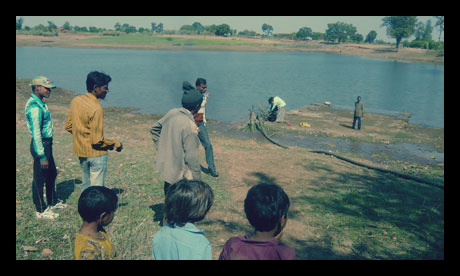
This year, half the men are staying closer to home. The village is structured around a pond that provides water to surrounding farms. Normally, the pond dries up by this time of the year, but thanks to the Evangelical Fellowship of India Commission on Relief (EFICOR), the lake has enough water to last until the next rains come months from now. The pond has suddenly turned into a lake after tractors deepened it by 15 feet last May to drastically increase the size of the reservoir. Now, the lake is not only filled in a time of year when it used to be dried up, but there is enough water to irrigate fields that are farther away, allowing the villagers to plant second crops. This drought in India is benefiting the villagers.

EFICOR’s work in the region has not come easily. The organization has been in this area of India since 2008 trying to gain the trust of the locals and figure out how best to serve them. The villagers in the area are marginalized Bhil people that are distrustful of and unconnected to state government. EFICOR worked with them to make use of the government aid programs that they are eligible for. One of the most important breakthroughs for the villagers was forming community committees. The formerly disconnected families came together under these new committees to decide which ponds to deepen and which families needed the most urgent attention. The committees even tested the power of the village chief that formerly based these types of decisions on favoritism.

In addition to their community committees, EFICOR has set up savings groups for women in the villages. One group saved enough money to consider buying a small grinding mill. The goal of the project is to build confidence among the marginalized communities and show them that they are entitled to just as many government services as any other citizens. The plan seems to be working, but it will be a long time before we can tell if the newfound solidarity among the villagers will last.

 – Sean Morales

Source: The Guardian

March 3, 2013
https://borgenproject.org/wp-content/uploads/borgen-project-logo.svg 0 0 Borgen Project https://borgenproject.org/wp-content/uploads/borgen-project-logo.svg Borgen Project2013-03-03 14:30:072020-05-17 21:44:28Drought in India Brings Villagers Together
Aid Effectiveness & Reform

Female Entrepreneurs: A Case Study

Female-Entrepreneurs

Since the start of 2013, a huge focus in the humanitarian world has been on the benefits of small entrepreneurial endeavors in developing countries. Due to global financial crises and budget cuts, especially here in the United States, investors are becoming more picky with where and to whom they are sending their money to. In many cases, they have opted for private organizations that directly put the money in the hands of local men and women who are making immediate and visible changes in their communities.

Ana Cecila Acuña is such woman. Despite her meager circumstances, having grown up in a small village in Nicaragua, her parents instilled in her a confidence that would help her dictate her own life and propel her towards success. A big obstacle that Acuña and many other women in her position have been able to overcome is making a name for themselves in a patriarchal society where not only does man dictate home life but also all outside business and negotiations.

Ana established a small home business selling oil and rice with the help of microloans from the nonprofit Opportunity International, managing to expand her business as well as to incorporate 20 other women and their ideas into the project. This venture led her to gain a seat on the board of the La Laguna Community Cooperative. A local political organization run exclusively by men, the Community Cooperative was in charge of handling the village’s affairs. When Ana recognized a fault with the way things were going, she decided to make the change herself.

Opportunity International, which started in the 1970s, is a microfinance nonprofit that has been providing loans, saving opportunities, insurance, and finance training to entrepreneurs in over 20 countries. After working with Ana and her small business, they funded the Cooperative with a $10,000 loan. The money was used to build a well in the village, providing close access to water for over 200 families, a luxury that the Cooperative was not able to figure out on their own. Instead of walking four miles by foot each day, the water is sent directly to the village homes through a piping system that was also installed.

Acuña’s achievements are remarkable for two specific reasons: the first is because of her socioeconomic standing prior to forming her business and joining her village government and the second, because she is a woman. Women in developing countries are being looked at to lead the escape out of poverty for their families and communities. Gayle Tzemick Lemon of the Huffington Post recently reported on the increase of female entrepreneurs and that “when women have income coming in research shows that the entire family benefits in the form of better nutrition and health”.

It is important to keep in mind the potential that every single human being possess. Whether they live in Angola or Arkansas, the entrepreneurial spirit is embedded in all of us; it simply needs encouragement, a bit of hope, and of course a little bit of money.

– Deena Dulgerian

Source: Huffington Post

February 28, 2013
https://borgenproject.org/wp-content/uploads/borgen-project-logo.svg 0 0 Borgen Project https://borgenproject.org/wp-content/uploads/borgen-project-logo.svg Borgen Project2013-02-28 16:58:592020-04-17 14:35:26Female Entrepreneurs: A Case Study
Aid Effectiveness & Reform, Health

5 Critical Factors In Rwanda’s Healthcare Success

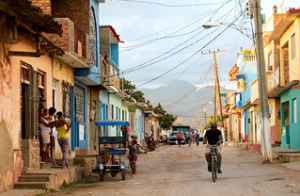
5 Critical Factors In Rwanda’s Healthcare SuccessJust in the last ten years in Rwanda, deaths from HIV, TB, and malaria have dropped by 80 percent, annual child deaths have fallen by 63 percent, maternal mortality has dropped by 60 percent, and life expectancy has doubled. All at an average annual healthcare cost of $55 per person.
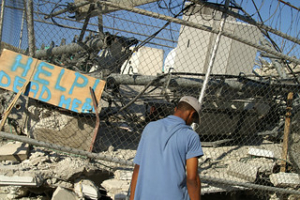
Normally, after horrific national traumas, like Rwanda’s genocide of almost a million people in 1994, countries fall into a cycle of poverty and economic stagnation. Poor health and disease cripple workers and then the national economy, leaving the country ineffective to break out of depression.

A recent article in BMJ, led by Dr. Paul Farmer, Chair of the Department of Global Health and Social Medicine at Harvard Medical School, examined data from the World Health Organization (WHO) and attempted to identify why Rwanda was able to make such dramatic progress when so many other nations have failed before them.

They identified 5 critical factors In Rwanda’s healthcare success:

1. The government formed a centralized plan for economic development, with one of the pillars being health care; knowing that, without improving health, poverty would persist. There were heavy research and reliance on facts and data to formulate their health metrics.

2. Aid allocation was controlled and monitored; the government insisted that all aid agencies meet transparency and accountability standards consistent with the national development plan.

3. A treatment plan addressing all the associated issues around AIDS was implemented:  tuberculosis, malnutrition, need for in-home care, community health workers, “psychosocial” support, primary and prenatal care.

4. Financial incentive was given to coordinate care; a performance-based financing system was set up to pay hospitals, clinics and community health workers to follow-up on patients and improve primary care.

5. Universal health insurance for all citizens, with particular attention to providing for the most vulnerable populations. The average, annual out-of-pocket health spending was cut in half, and households experiencing health care bills that force them into poverty were significantly reduced. (Half the funding came from international donors and a half from annual premiums of less than $2 per person.)

Access to healthcare for ALL citizens is a prerequisite for controlling diseases and thus allowing for economic growth to lift people, and nations, out of poverty. The medical advances in Rwanda have pushed their economic growth, the GDP per person has tripled, and millions have been lifted from poverty over the last decade. Rwanda offers a replicable model for the delivery of high-quality healthcare and effective oversight, and even with limited resources.

– Mary Purcell

Source: The Atlantic

February 26, 2013
https://borgenproject.org/wp-content/uploads/borgen-project-logo.svg 0 0 Borgen Project https://borgenproject.org/wp-content/uploads/borgen-project-logo.svg Borgen Project2013-02-26 14:10:572020-05-11 04:08:295 Critical Factors In Rwanda’s Healthcare Success
Aid Effectiveness & Reform, Development, Foreign Aid, Global Poverty

Listen to the Poor

Listen to the Poor

In 2010, Armando Barrientos had a plan: just give direct money and resources to the poor, no need for the expensive aid industry. The argument made calls for community involvement, by directly transferring money to the poor. In this way, the recipients have a chance to decide what to do with that money. According to Barrientos’ argument in the Guardian, this model is being implemented in several countries including Mexico, Brazil, South Africa, and India. These countries provide “regular transfers of money to households in poverty with the aim of improving their nutrition, making sure children go to school and ensuring expectant mothers have regular check-ups.” Nevertheless, these same social transfer programs are difficult to set up without the help of the international community.

This year, the aim is a little higher; The Guardian posted an article discussing these social transfer programs in a broader light. The goal is to know how the poor and affected communities feel about these programs, if the programs actually help or detract the communities, and how the recipients can make better use of these money transfers. Recently, governments and aid donors have been more interested in involving the recipient communities in the decision-making, monitoring, and evaluating of “social protection programs.” Although the very concept of money transfers has generated positive results and is appreciated in several countries including Palestine, Mozambique, Yemen, and Uganda, monetary transactions are not sufficient enough in order to meet people’s basic needs.

Additionally, the access to cash transfers is confusing and alienating as the extremely poor either: do not know how to become eligible for funds, how to apply to receive funds, or are stuck on waiting lists for too long. Cash transfer recipients are reluctant to complain about such conditions regarding long waiting and the insufficiency of cash because the recipients are afraid to be regarded as “troublemakers,” which may cost them their access to funds altogether.

It is more efficient and effective to include the recipients in the decision-making process since the money directly affects them and their communities. It is also ethical, “people have a right to a say over what affects them.” The poor need a voice that will be listened to in order to improve social protection and cash transfer programs, making aid more effective, fair, and beneficial to the global community.

– Leen Abdallah
Source: Guardian

February 26, 2013
https://borgenproject.org/wp-content/uploads/borgen-project-logo.svg 0 0 Borgen Project https://borgenproject.org/wp-content/uploads/borgen-project-logo.svg Borgen Project2013-02-26 09:56:202020-05-11 04:09:57Listen to the Poor
Aid Effectiveness & Reform, Poverty Reduction

3 Important Factors For Haiti Earthquake Recovery

3 Important Factors For Haiti Earthquake Recovery
Despite global outreach following the massive earthquake on January 12, 2010, Haiti has been stalled in effectively alleviating the widespread poverty historic to the island, which has increased dramatically after the disaster. President Michel Martelly, elected twenty months ago, has recently proposed a five-point plan of employment, rule of law, education, environment, and energy to help lift his country out of turmoil. But this plan will not affect stagnation unless Haiti addresses its dysfunctional political system, public frustration, and donor fatigue.

1. Political System
The political system in Haiti is one factor that is working against the Haiti earthquake recovery. The system is conducive to winner-takes-all politics, which makes compromise, an essential aspect of a stable political system, difficult to attain. It is also unhelpful that President Martelly faces an opposition-dominated parliament that only exacerbates the inability to compromise. Haiti does not currently have any strong political parties that represent the majority of its poor citizens. This has lead to a system that relies mainly on cronyism rather than public support in order to get things done.

2. Public Frustration
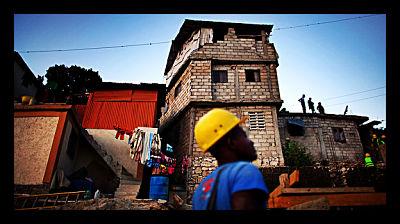
The unfair political climate has led to frustration among the Haitian public. A staggering 350,000 citizens that lost their homes during the earthquake over two years ago are still living in camp settlements across the capital. These people are waiting to see tangible improvements to their daily lives. Their plight has not been made any easier by the drought, two tropical storms and rising food prices. The president faced 128 public protests across Haiti between the months of August and October alone, according to the International Crisis Group.

3. Donor Fatigue
Not only the general public, but also foreign aid donors are feeling frustration over Haiti’s political gridlock. The lack of transparency with foreign aid funds and lack of progress in reconstruction is causing Canada, one of the biggest supporters of Haitian renewal, to reconsider tens of millions of dollars that was meant for the country. According to figures published by the United Nations, only half of the $6.04 billion pledged to Haiti since the earthquake has been disbursed to the country thus far, and only ten percent of that figure was distributed directly to the government. Until Haiti finds a solution for its political woes, the financial aid that Haiti’s earthquake recovery needs could be in a gridlock of its own.

While these issues are important to consider for the Haiti earthquake recovery, it is also important to keep in mind that the international community is still deeply interested in seeing a Haitian recovery. Identifying the key obstacles to any issue is the first step to solving them. Hopefully, steps two to infinity will present themselves sooner rather than later.

– Sean Morales

Source: AlertNet
Photo: Christian Science Monitor

February 25, 2013
https://borgenproject.org/wp-content/uploads/borgen-project-logo.svg 0 0 Borgen Project https://borgenproject.org/wp-content/uploads/borgen-project-logo.svg Borgen Project2013-02-25 10:32:592020-05-11 04:15:053 Important Factors For Haiti Earthquake Recovery
Page 15 of 16«‹13141516›

Get Smarter

  • Global Poverty 101
  • Global Poverty… The Good News
  • Global Poverty & U.S. Jobs
  • Global Poverty and National Security
  • Innovative Solutions to Poverty
  • Global Poverty & Aid FAQ’s
Search Search

Take Action

  • Call Congress
  • Email Congress
  • Donate
  • 30 Ways to Help
  • Volunteer Ops
  • Internships
  • Courses & Certificates
  • The Podcast
Borgen Project

“The Borgen Project is an incredible nonprofit organization that is addressing poverty and hunger and working towards ending them.”

-The Huffington Post

Inside The Borgen Project

  • Contact
  • About
  • Financials
  • President
  • Board of Directors
  • Board of Advisors

International Links

  • UK Email Parliament
  • UK Donate
  • Canada Email Parliament

Get Smarter

  • Global Poverty 101
  • Global Poverty… The Good News
  • Global Poverty & U.S. Jobs
  • Global Poverty and National Security
  • Innovative Solutions to Poverty
  • Global Poverty & Aid FAQ’s

Ways to Help

  • Call Congress
  • Email Congress
  • Donate
  • 30 Ways to Help
  • Volunteer Ops
  • Internships
  • Courses & Certificates
  • The Podcast
Scroll to top Scroll to top Scroll to top