• Link to X
  • Link to Facebook
  • Link to Instagram
  • Link to TikTok
  • Link to Youtube
  • About
    • About Us
      • President
      • Board of Directors
      • Board of Advisors
      • Financials
      • Our Methodology
      • Success Tracker
      • Contact
  • Act Now
    • 30 Ways to Help
      • Email Congress
      • Call Congress
      • Volunteer
      • Courses & Certificates
      • Be a Donor
    • Internships
      • In-Office Internships
      • Remote Internships
    • Legislation
      • Politics 101
  • The Blog
  • The Podcast
  • Magazine
  • Donate
  • Click to open the search input field Click to open the search input field Search
  • Menu Menu

Archive for category: Advocacy

Information and news on advocacy.

Advocacy, USAID

Foreign Aid and the Proposed Budget

foreignaid
President Obama revealed his proposed budget for 2014 and much to the surprise of many, there was a slight increase in foreign aid in the proposal. Requested funds for foreign aid equaled somewhere around $52 billion which is a slight bump over this year’s budget.  Increased funds for global health and development assistance were included as well as a decrease in military aid to foreign countries.  The proposed budget also called for a major overhaul of the US food-aid programme to save money and invest more wisely in food production and improvement rather than on shipping costs.

The International Affairs budget funds USAID and the State Department as well as the United States’ donations to the United Nations and other similar institutions.  It also provides funds for natural disaster emergencies and embassy support. The proposed budget will now be passed to the House and Senate where they will debate the proposed funds.  If an agreement cannot be reached again this year, major across-the-board spending cuts will go into effect again. One thing that did not change in the proposed budget was the proportion of the budget that goes towards foreign aid, which still amounts to only slightly more than 1% of overall spending. Compared to the defense budget, which is around $527 billion, there is still a large gap in appropriated government funds.

Advocates of foreign aid spending have long complained of the disconnect between aid and diplomacy, citing that without increased development, unstable countries will struggle to become stable. Leaders are working with Congress to call for the necessary funds to promote global development, innovation, and provide resources to those in poverty. The proposed budget caused non-profit and non-government leaders to breathe a slight sigh of relief as their funds were not initially proposed to be cut. While budget cuts must be made, foreign aid is an area where the funds are causing global change, reducing poverty, and increasing the safety of both US citizens and citizens of other countries.

The proposed budget is also the perfect time for advocacy.  As Senators and Representatives must make decisions about the final budget, calls advocating for foreign aid and funds focused towards reducing global poverty can make a real impact.

Find your senators and representative here and make a 30 second call to keep foreign aid fully funded.

– Amanda Kloeppel

Source: The International News Magazine
Photo: Council on Foreign Relations

April 14, 2013
https://borgenproject.org/wp-content/uploads/borgen-project-logo.svg 0 0 Borgen Project https://borgenproject.org/wp-content/uploads/borgen-project-logo.svg Borgen Project2013-04-14 13:37:402024-05-24 23:40:28Foreign Aid and the Proposed Budget
Activism, Advocacy, Water

Matt Damon Toilet Strike

Matt Damon Toilet Strike

Dear Toilet,

It’s not you. It’s us.

Sincerely,

Matt Damon

Matt Damon broke up with his toilet…well at least until everyone has access to clean water and sanitation. The Oscar-winning actor and co-founder of Water.org announced his toilet strike in a comedic video.

The video is a staged press conference with prominent comedians. It highlights society’s ignorance of the world water crisis and the underappreciation of toilets. 780 million people lack access to clean water.

Damon mentions how the toilet has saved more lives than any other invention, yet 2.5 billion people lack access to toilets or basic sanitation.  More people own cell phones than toilets. The “Matt Damon Toilet Strike” is designed to be less about him and more about people who lack the luxury of clean sanitation.

U.N. Deputy Secretary-General Jan Eliasson released a statement that the world water crisis is something people “don’t like to talk about.” The United Nations aims to double the number of people with toilets by 2015.

The organization’s long-term plan is to “eliminate the practice of open defecation” by 2025.  This practice makes unsanitary water the number one killer of people worldwide.  In fact, children under the age of five are most likely to die from diarrhea-related diseases.

Water.org traded the traditional public service announcement model in hopes of creating a viral frenzy.

“If Sarah Silverman and I can generate millions of views on YouTube for something ridiculous, then we should be able to do better for one of the most important and solvable issues of our time,” Damon said.

The nonprofit has “been toying with [the idea of comedic videos] for a couple of years.”  Damon and the rest of Water.org believe viral videos can “generate new levels of awareness and participation in the cause.”

The announcement video is the first of 12 videos. The strike campaign’s other videos include: Damon breaking up with his toilet, other celebrities joining the strike, and John Elerick fighting to outdo Damon.  The video was filmed for free at YouTube’s L.A. studios as YouTube works to educate nonprofits about best practices for video campaigns.

Jessica Mason, YouTube spokeswoman, understands that views should not be the main concern for non-profits. “We want to help nonprofits raise awareness and turn that awareness into action.”

Water.org will continue using social media to further awarness.  The website features extensive social media integration.  It asks visitors to “lend” their social media accounts and allow Water.org to publish automatically until World Toilet Day on November 9, 2013.

For more information, visit strikewithme.org or tweet questions with #strikewithme.

– Whitney M. Wyszynski

Source: Strike With Me

April 10, 2013
https://borgenproject.org/wp-content/uploads/borgen-project-logo.svg 0 0 Borgen Project https://borgenproject.org/wp-content/uploads/borgen-project-logo.svg Borgen Project2013-04-10 11:12:502024-12-13 17:53:43Matt Damon Toilet Strike
Advocacy, Children, Human Rights, Nonprofit Organizations and NGOs

Child Marriage: A Promise of Poverty

Child Marriage: A Promise of Poverty

The average teenager worries about hanging out with friends, getting good grades, and fitting in with a group of people—not marrying a stranger and creating a home.

However, child marriage is a reality in the world’s 51 least-developed countries.  Half of all girls living in these countries are married before the age of 18, according to the United Nations. Parents arrange the marriage, and the groom can be more than twice the bride’s age.  Girls are ripped from their communities and forced into social isolation. These abrupt marriages sever a girl from her support network—a group of people necessary for helping the girl face the physical and emotional challenges of marriage.

Many cultures view girls as economic burdens, subservient individuals, or family mistakes. Marrying girls off as soon as possible alleviates the household expenses and restores the family’s reputation.

The UN Convention on the Rights of the Child (UNCRC) established that the minimum age of marriage is 18 years old. This is considered the upper limit of childhood, and the individual is fit to decide whether to be married.  Many countries continue to practice child marriage despite proven physical and psychological effects.

World Vision reported that child marriages are increasing due to the increase in global poverty crises. 14 million girls under the age of 18 are married each year.  Child marriages are most prevalent in rural, poor areas and are associated with areas of low education and healthcare.  Polygamy is common, and these marriages are bargaining chips between two parties.

South Asia (46%) and Central Africa (41%) are the top areas for child marriages.  These regions do not monitor the age of spouses carefully.  Girls who live in countries with humanitarian crises are most likely to be subjected to child marriages. Fear of rape, unwanted pre-marital pregnancies, family shame, and hunger are the main motivators for child marriage. Poverty, weak legislation, gender discrimination, and lack of alternative opportunities reinforce these motivations.

Anti-poverty organizations, such as CARE, are working in various countries to combat child marriage.  According to CARE, “As levels of education and economic opportunities increase, so does the average age of marriage.”  CARE mobilizes community organizers, parents, and tribal and religious leaders to lobby against the child marriage law in Ethiopia. Leaders are constructing savings and loans groups to empower families financially. Though child marriage still exists, this will eliminate one major cause of child marriage. Community forums now focus on the elimination of bride price, bride abduction, and child marriage.

– Whitney M. Wyszynski

Source: NBC News

April 10, 2013
https://borgenproject.org/wp-content/uploads/borgen-project-logo.svg 0 0 Borgen Project https://borgenproject.org/wp-content/uploads/borgen-project-logo.svg Borgen Project2013-04-10 10:00:092024-12-13 17:49:16Child Marriage: A Promise of Poverty
Advocacy

8 Ways to Use Social Media for Social Change

Social-Media
In this day and age, nonprofit organizations are multiplying by the second. In a sea of social awareness, it can become hard to make your organization stand out and grab the audience’s attention. Whether you’re a member, a donor, or on the Board of Directors, here are 8 simple ways to use social media to bring about social change.

  • Gather Advocates: Look at your network. See where certain individuals or groups have their strengths. By identifying key donors and volunteers, you can take advantage of their skills and contacts. For example, if you recognize a member who has a strong presence on Twitter in their own right, approach them with specific requests to advocate for your group and help spread the word. Or if there is someone who writes well or is able to easily communicate your organization’s message, ask if they would be willing to blog or create a Twitter account and put their skills to use!

  • Let Ideas Sit and Develop: A lot of good ideas and suggestions will come not just from active members but one-time visitors to your social media pages. This requires letting ideas and conversations to sit and simmer. Even if a topic produces controversial comments, don’t jump the gun and remove it. Sometimes, controversy can be a good thing and lead to an unintended brainstorming session. Topics may be left untouched for a while as well but you never know when it will gain popularity randomly and create a big social media buzz.

  • Authenticate Your Voice: Many organizations these days have multiple social media accounts. Whether its Pinterest, Twitter, Google+, Facebook, etc., its always important to keep your ‘voice’ consistent. By voice, it means the style of the content. Does your organization use highly intellectual vocabulary? Is it more relaxed and casual to appeal to a younger audience? Or maybe it simply posts news updates. Either way, make sure each site adheres to the same voice. This will clearly illustrate your intent and goals to anyone reading up on the organization no matter what medium they’re using.

  • Sustained Conversations: Many organizations host live chats as part of their outreach. What is important with these however is to keep it going! Choose a time and place to host it. Whether its once a month or once a week, make sure its all consistent. This way, once the event is known, people will know where they can always find it. Reddit’s AMA (Ask Me Anything) series is an amazing way to create an open dialogue and get some serious exposure to new and curious members.

  • Its a 2 Way Street: Certain groups will stick to easy advocacy meaning they simply put out information and leave it up to people to do what they please with it. If you really want to make moves and create social change, the actual social aspect has to be there! If someone tweets about your organization or you see an applicable hashtag, retweet! Show people and followers that you know they exist. On org websites, think about incorporating a chat room or allowing people to post comments. It is of course important to manage what is being said but social change won’t happen if everyone is just thinking silently in their own heads!

  • ID the Demographic: No, they don’t need to be 21, but find out where your supporters are! Where do most of the donors come from? Are they the same people who blog about your organization or talk about it on Twitter? Make sure you have a presence on any and all social media sites that you think will attract the best type of advocates for your cause

  • Don’t Dumb it Down: While sites such as Twitter may have character limits, don’t let that limit the conversation. People are finding more ways to get the message across and make something meaningful come out of it everyday. Legitimate advocacy and change can come in the form of photography or short videos, even through games.

  • Creativity: Check out Twitter’s new video app Vine. It allows users to share looping videos up to 6 seconds long. Think that doesn’t raise awareness? Think again! Leaving viewers on mini cliff hangers will keep the engaged and interested in what you have to say.

– Deena Dulgerian
Source: Bill & Melinda Gates Foundation

April 4, 2013
https://borgenproject.org/wp-content/uploads/borgen-project-logo.svg 0 0 Borgen Project https://borgenproject.org/wp-content/uploads/borgen-project-logo.svg Borgen Project2013-04-04 10:00:062024-12-13 17:49:168 Ways to Use Social Media for Social Change
Advocacy, Water

US Water Partnership Fights Water Challenges

US Water Partnership Fights Water Challenges

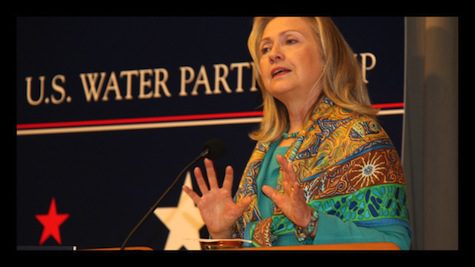
It’s been one year since former Secretary of State Hillary Clinton announced the start of the U.S. Water Partnership. The partnership consists of public and private sectors and “unites and mobilizes U.S. expertise, resources, and ingenuity to address water challenges around the globe.”

According to the fact sheet, “The USWP is an alliance of 18 U.S. government agencies and 29 U.S. private sector and civil society organizations.” However, the USWP has increased from 47 to 61 partnerships in the last year. They work together to improve water resources worldwide and focus primarily on developing countries.

The partners pledged $610 million dollars on June 20, 2012. Funded projects included: control or elimination of Neglected Tropical Diseases, increased solar power pump stations, and improved desalination projects.

The success of the USWP depends on collaboration and flexibility. Partners are able to work in groups or individually. For example, the Overseas Private Investment Corporation revitalized water purification systems throughout Ghana by providing funds for the Ghana National Water Infrastructure Modernization Project.  World Vision helped boost rural and semi-urban schools in India through the “Support My School” campaign, whereas multiple organizations joined forces to provide WASH technologies. These technologies decrease infection and increase public health.

Hattie Babbitt, Chair of the USWP Steering Committee, led the USWP first anniversary event at the National Academy of Sciences on Mar. 21, 2013.  She discussed the numerous projects that could not have occurred without the help of the partnership and congratulated the ten new partners. The USWP continues to grow and progress and strives to bring each person safe drinking water.

– Whitney M. Wyszynski

Source: U.S. Water Partnerships
Photo: US Water Alliance

April 3, 2013
https://borgenproject.org/wp-content/uploads/borgen-project-logo.svg 0 0 Borgen Project https://borgenproject.org/wp-content/uploads/borgen-project-logo.svg Borgen Project2013-04-03 11:23:242020-06-01 05:56:54US Water Partnership Fights Water Challenges
Advocacy

Oil Industry in the Amazon


The recent news that Ecuador will be auctioning off more than three million hectares of land in the Amazon jungle to Chinese oil firms has started many conversations about land management in the world’s largest tropical rain forest. Along with the damaging results that oil wells and oil leaks have on the environment in the Amazon jungle, there are also serious consequences for the local inhabitants.

Much of the Amazonian oil rights are owned by Canadian and Argentine oil companies and there is a long history of evicting local indigenous communities in order to drill for oil. With the coming sale of the Ecuadorian jungle property, an NGO named Amazon Watch claims that seven indigenous groups in the region have protested the sale. The groups risk being displaced from their homes as well as having the local environment be destroyed, which would drastically affect their way of life. Neighboring Peru has sold much of its’ Amazonian land rights to oil companies and their indigenous communities have suffered similar injustices.

Today, groups like the Environmental Monitoring Programme, part of the larger Federation of Native Communities of the Corrientes River, investigate reports of oil spills and fractured oil wells in order to record the environmental damage. This data is used to strengthen the claims and protests of local leaders against the oil practices that are so harmful to the delicate ecosystem. The Environmental Monitoring Program to date has discovered 120 oil leaks and, since 2006, more than 9,000 abandoned wells have been recorded. Many of these unused wells contribute to the harmful pollution of the Corrientes and Amazon rivers.

So, as this sale goes through in the near future it is important that the world request stricter oil industry standards in the Amazon in order to protect the environment and the lives of the peoples who live there.

– Kevin Sullivan

Sources: IPS News, The Guardian

March 31, 2013
https://borgenproject.org/wp-content/uploads/borgen-project-logo.svg 0 0 Borgen Project https://borgenproject.org/wp-content/uploads/borgen-project-logo.svg Borgen Project2013-03-31 09:32:572020-05-04 07:39:49Oil Industry in the Amazon
Advocacy, Foreign Aid

How To Shock A Celebrity

How To Shock A CelebrityAs Richard Hatzfeld writes on Impatient Optimists, breaking through the clutter of global health propaganda is “like asking someone to pick out the sound of a pin drop in a room full of tambourine-clanging kindergartners.”

The pin dropping in this scenario is End7, a nonprofit organization on a mission to end seven Neglected Tropical Diseases (NTD’s) by 2020. Earlier this year, End7 released a new video that begins with international celebrities reacting to the visual horror of NTD’s.

Let’s talk about what NTD’s are first. NTD’s, which affect 1 in 6 people worldwide, prevent children from going to school. They prevent parents from going to work and supporting their families. These diseases push impoverished communities deeper into poverty.

NTD’s comprise of diseases such as:

– Schistosomiasis, also known as Snail Fever, the 2nd leading parasitic killer after malaria

– Lymphatic Philariasis (elephantiasis), the massive swelling of limbs and genitals

– Trachoma, an infectious leading cause of blindness, characterized by white lumps in the upper eyelid and eyelashes curling inward

Not to mention river blindness, roundworm, hookworm, and whipworm – End7 promises that all 100% of donations will be given to treatment programs for these diseases.

This isn’t a mainstream health issue. The U.S. hardly even recognizes this as a health issue due to lack of public awareness and thus, its absence from top health policy discussions.  Upon recognizing this, the Global Network for Neglected Tropical Diseases launched the End7 campaign and promptly took its first step to mass public awareness – by showing the video to international celebrities, like Emily Blunt, Priyanka Chopra, & Tom Felton. Reflecting its inherent effect, the video’s name became “How to Shock a Celebrity.”

End7’s video campaign bluntly highlights the underrated power of sight. Look, it tells us. These diseases are real. They’re terror inducing, and they exist halfway around the world from your neighborhood. What you’re feeling is clearly a normal reaction. Do something about it.

Do what? Watch the video. Share it. Become part of the conversation on Facebook and Twitter.

Show it to your friends, your family, your co-worker who also eats lunch at her desk.

Maybe even show it to a celebrity.

– Shraddha Anandpara

Source: Impatient Optimists


March 29, 2013
https://borgenproject.org/wp-content/uploads/borgen-project-logo.svg 0 0 Borgen Project https://borgenproject.org/wp-content/uploads/borgen-project-logo.svg Borgen Project2013-03-29 09:30:292024-12-13 17:49:15How To Shock A Celebrity
Advocacy, Malaria

Top 10 African Celebrities to Follow

patriciaamira_opt

Africa produces some of the most brilliant artists, athletes, and activists worldwide.  From the media industry to the political stage, these African celebrities are working to improve lives.  The Borgen Project presents the top 10 African celebrities to follow.

1. Patricia Amira, Nigerian, TV Personality

Patricia Amira is a self-proclaimed “optimistic realist” and “closet artist.”  She is the “Oprah” of Africa and hosts one of the continent’s most popular talk shows.  The Patricia Show transcends national boundaries and identities.  The show focuses on achievements across Africa and aims to create social and cultural transformation. The Pan-African talk show is broadcasted in over 45 African countries and averages over 10 million viewers.  She currently serves as the Director of the Festival of African Fashion and Arts.  The festival encourages collaboration among designers and emphasizes the importance of artists.  Amira is also a spokesperson against human trafficking.

2. Nneka, Nigerian, Musician

Nneka is a soul musician of Nigerian-German descent.  Investigative journalism and philosophy inform her music, and she often writes about poverty, war, and and social justice issues.  Nneka emphasizes the importance of understanding balance and harmony.  “It’s important that you recognize yourself as part of the system, too, and that the only way we can make things work is by realizing we are part of the same entity,” Nneka said.

3. Didier Drogba, Ivorian, Soccer Player

Didier Drogba was a leading striker for England’s Chelsea football club and head captain of the Cote D’Ivoire national team.  His performance on the field is impressive, but he made headlines at the 2006 FIFA World Cup for something much greater.  Drogba begged on live television for a cease-fire on the Ivory Coast.  The warring factions subsided within one week.  The Telegraph reporter Alex Hayes noted that Drogba is “the face of his country; the symbol of a new, post-civil war Ivory Coast.”  He also created the Didier Drogba Foundation, a foundation “to provide financial and material support in both health and education to the African people.”  The foundation recently partnered with United Against Malaria (UAM) to help fight malaria.

4. Wole Soyinka, Nigerian, Playwright

Wole Soyinka is a playwright, author, and political activist from Nigeria.  Soyinka entered the political stage after lobbying for a cease-fire during Nigeria’s civil war.  “The greatest threat to freedom is the absence of criticism,” Soyinka said.  This led to his imprisonment for 22 months.  He was released in 1969, and he began publishing again.  Soyinka became the first African to win the Nobel Prize in Literature in 1986.  His novel The Interpreters analyzes the experiences of six different African intellectuals.

5. Neill Blomkamp, South African, Movie Director

Neill Blomkamp is a movie director known for his documentary, handheld cinema style.  He blends natural and computer-generated elements effortlessly.  Blomkamp co-wrote and directed District 9.  The film focused on extraterrestrial refugees in a South African slum.  The title derived from real events during the apartheid era at District Six, Cape Town. The film received international fame, and box office sales totaled $200 million.  Time magazine named Blomkamp one of the “100 Most Influential People of 2009.” 

6. Binyavanga Wainaina, Kenyan, Author

Binyavanga Wainaina founded the first literary magazine in East Africa, entitled Kwani?.  The magazine is known as “the most renown literary journal in sub-Saharan Africa.”  Wainaina created the magazine after winning the 2002 Caine Prize for African Writing.  The Caine Prize is an annual literary award for the best original short story by an African writer.  He is known for authoring “How to Write About Africa.”  The short story is known as one of the most satirical pieces ever written about Africa.

 7. Genevieve Nnaji, Nigerian, Actress

Genevieve Nnaji skyrocketed from a middle class upbringing to Nollywood stardom.  She is one of the most popular African celebrities.  Nnaji grew up in Lagos, Nigeria as one of eight children.  Nnaji began her acting career at eight years old on Ripples, a Nigerian soap opera.  She is now one of Africa’s most popular actresses.  At only 32 years old, she has starred in over 80 feature films.  She is one of the best paid actresses in Nollywood—Nigeria’s feature film industry.   “I have always maintained that when they [Hollywood directors and actors] are ready for a young African woman to take part in a project that they will come looking for us,” Nnaji said.

8. Chimamanda Ngozi Adichie, Nigerian, Writer

Chimamanda Ngozi Adichie is one of Africa’s leading contemporary authors.  She is the author of the novels Purple Hibiscus and Half of a Yellow Sun.  Adichie delivered a popular TED Talk after publishing The Thing around Your Neck, a collection of short stories.  She warns against judging a person or country based on limited information.  “The single story creates stereotypes, and the problem with stereotypes is not that they are untrue, but that they are incomplete. They make one story become the only story,” Adichie said.  Nigerian history and tragedies inspire her literature.  She is one of the most notable authors of disaporan literature.

9. Rokia Traoré, Malian, Musician

Rokia Traoré became famous in 1997 with the release of her first album Mouneissa.  Malian singer Ali Farka Touré helped Traoré develop her sound, and she later earned “Best African Discovery” from the Radio France Internationale.  Traoré’s father was a Malian Diplomat, and she traveled extensively as a child.  Her travels in Algeria, Saudi Arabia, France, and Belgium influenced her music.  Traoré joined the 30 Songs/30 Days campaign in September 2012.  The campaign supported the Half the Sky movement, based on the book by the same name.  The movement focuses on sex trafficking, sexual violence, and female education.

10. Alek Wek, Sudanese, Supermodel

Alex Wek is a supermodel, fashion designer, and political activist.  Wek fled Sudan at the age of 14 to escape the civil war. She moved to London, England with her parents and eight siblings and was later discovered at an outdoor market.  Ford Models, one of the world’s top modeling agencies, signed her in 1996.  By 1997, she was the first African model to appear on the cover of Elle magazine.  Wek continues to model but is also a member of the U.S. Committee for Refugees’ Advisory Council.  Wek works with World Vision to combat AIDS.  She is also an ambassador for Doctors Without Borders in Sudan.  She belongs to the Dinka ethnic group

– Whitney M. Wyszynski

Source: Forbes
March 25, 2013
https://borgenproject.org/wp-content/uploads/borgen-project-logo.svg 0 0 Borgen Project https://borgenproject.org/wp-content/uploads/borgen-project-logo.svg Borgen Project2013-03-25 10:58:122024-05-24 23:45:32Top 10 African Celebrities to Follow
Advocacy, Nonprofit Organizations and NGOs

Mama Hope Says, ‘Partnership, Not Pity, for Africa’


A campaign called “Stop the Pity,” launched at the SXSW conference in Austin, Texas, is sending the message to stop stereotyping Africa as being poor, helpless, and ravaged by famine and poverty. The campaign was founded by a nonprofit called Mama Hope with the mission of re-humanizing Africa, celebrating positive change rather than focusing on inequality.

A series of videos have been released by Mama Hope tearing away the stereotype that depicts Africans as “one-dimensional victims” and in its place, highlights the traits that makes us all human. One video shows African women playing netball, a cross between basketball and ultimate Frisbee. Another shows men joking about how Hollywood tends to portray Africans as the typical villain, firing guns, loving violence and making scary faces. In yet another, a child tells the story of an Arnold Schwarzenegger movie.

Mama Hope works in four countries, managing 32 projects and starting up orphanages, improving sanitation, and reducing poverty. Founder and “chief visionary” of Mama Hope Nyla Rodgers emphasizes the need to empower rather than victimize Africans, using inspiration rather than guilt to get people to help. Reframing the way the rest of the world thinks of Africa, Rodgers hopes people will “stop the pity” and “unlock the potential.”

“We have to have partnership instead of pity,” said Rodgers. “Partnership doesn’t include pity. It includes seeing people as equals and being able to work with them on an equal partnership.”

– Rafael Panlilio

Sources: CNN, Mama Hope, Stop The Pity

March 15, 2013
https://borgenproject.org/wp-content/uploads/borgen-project-logo.svg 0 0 Borgen Project https://borgenproject.org/wp-content/uploads/borgen-project-logo.svg Borgen Project2013-03-15 19:37:412020-05-24 23:46:31Mama Hope Says, ‘Partnership, Not Pity, for Africa’
Advocacy

Mickey Mouse Has Saved the Rain Forests

Mickey Mouse Has Saved the Rain ForestsFor years, Greenpeace has worked to protect the environment and wildlife, and just recently, it seems that they have made a major breakthrough: with the help of Disney and others, the historic Mickey Mouse has saved the rain forest.

As a strategy for creating consumer awareness about the perils of big-business and their detrimental impact on the environment, Greenpeace will show how big brands are supporting destructive practices through their affiliates and suppliers. For a long time, they were trying to stop Asia Pulp and Paper Company (APP) from destroying the habitats of the orangutans and Sumatran tigers but were getting nowhere. In a change of plan, they hired actors to dress up as Minnie and Mickey Mouse and lock themselves to Walt Disney’s headquarters, flying a banner that read “Disney is destroying Indonesia’s rain forests.”

After immense pressure from its customer base, the combined forces of Mattel and McDonald’s, and eighteen months of negotiations, Disney issued new standards requiring that all paper they, its suppliers, and its licensees use, would now be sustainably sourced. Dozens of major paper-consuming companies followed and APP found itself unable to do business with much of the European and U.S. markets. So, APP then announced in February that it would also “go green.” They promised to no longer use any wood coming from natural forests.

After their announcement, nine of the top 10 US publishers, including Harper Collins, have adopted similar standards. “I think this will stand as one of the biggest market-based campaign successes that we’ve seen in a long time,” says Laurel Sutherlin of the Rainforest Action Network. “We’re still a little bit stunned.”

– Mary Purcell

Source: Christian Science Monitor
Photo: Max Papeschi

March 15, 2013
https://borgenproject.org/wp-content/uploads/borgen-project-logo.svg 0 0 Borgen Project https://borgenproject.org/wp-content/uploads/borgen-project-logo.svg Borgen Project2013-03-15 19:17:052020-05-24 23:49:21Mickey Mouse Has Saved the Rain Forests
Page 76 of 77«‹74757677›

Get Smarter

  • Global Poverty 101
  • Global Poverty… The Good News
  • Global Poverty & U.S. Jobs
  • Global Poverty and National Security
  • Innovative Solutions to Poverty
  • Global Poverty & Aid FAQ’s
Search Search

Take Action

  • Call Congress
  • Email Congress
  • Donate
  • 30 Ways to Help
  • Volunteer Ops
  • Internships
  • Courses & Certificates
  • The Podcast
Borgen Project

“The Borgen Project is an incredible nonprofit organization that is addressing poverty and hunger and working towards ending them.”

-The Huffington Post

Inside The Borgen Project

  • Contact
  • About
  • Financials
  • President
  • Board of Directors
  • Board of Advisors

International Links

  • UK Email Parliament
  • UK Donate
  • Canada Email Parliament

Get Smarter

  • Global Poverty 101
  • Global Poverty… The Good News
  • Global Poverty & U.S. Jobs
  • Global Poverty and National Security
  • Innovative Solutions to Poverty
  • Global Poverty & Aid FAQ’s

Ways to Help

  • Call Congress
  • Email Congress
  • Donate
  • 30 Ways to Help
  • Volunteer Ops
  • Internships
  • Courses & Certificates
  • The Podcast
Scroll to top Scroll to top Scroll to top