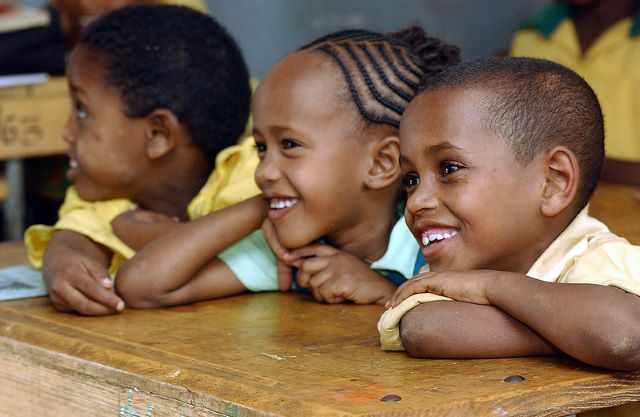
 There are 781 million adults in the world who are considered illiterate. This statistic reflects more than just the ability of people to read, it inherently ties to the poverty rate. In fact, 43% of adults with low literacy rates live in poverty. There are multiple issues that contribute to this, however, the most influential factor is education. Several programs address literacy in Ethiopia.
The Relationship Between Literacy and Poverty
In the fight against global poverty, education is a sought-after resource. With increased education comes increased opportunities for those within the community to contribute to the economy and increase their prospects. In order to bolster educational efforts, children must be able to read. Literacy is the foundation of learning and is directly responsible for the success of children in education as a whole.
Without this vital skill, children are unlikely to move on to higher education or secure high-paying jobs. This stagnant economic standing is perpetuated through families because parents with low literacy rates are 72% likely to pass that low literacy rate down. The resulting generational illiteracy is a detriment to the growth of communities because it cements them into a lower economic standing.
The World Bank underscores the importance of literacy in the fight against poverty. It has coined the term “Learning Poverty,” which refers to the inability of a child to read and comprehend by age 10. The severity of learning poverty aids in the prediction of future literacy and economic success. Additionally, the World Bank believes that this statistic is a useful indicator of whether or not countries are meeting global educational goals.
In relation to poverty, these goals are paramount to the rate of sustainable development in impoverished countries. Moreover, poverty would reduce by 12% if all students in low-income countries could read. As nations meet educational goals and literacy rates increase, impoverished communities have the opportunity to create sustainable change in terms of their economic standing and overall quality of life.
Illiteracy and Poverty in Ethiopia
Ethiopia has the second largest population in Africa, with 109.2 million people. Unfortunately, the country also suffers from rampant poverty — in 2016, 24% of Ethiopia’s population endured conditions of poverty. Poverty is a multifaceted and complicated issue, however, one can generally find a low literacy rate in countries with corresponding high poverty rates. In Ethiopia, this holds true because slightly less than half of the population is illiterate. Given the extreme disadvantage that low literacy rates puts on communities, there have been multiple efforts to improve the Ethiopian education system and increase literacy in Ethiopia.
The READ II Project
READ II is a project that focuses on the education of children considered at risk of school failure or drop out due to the cognitive, emotional and physical effects of hunger, violence and displacement. READ II spans 3,000 schools across 50 districts, ultimately wishing to expand the basic model to reach 15 million learners. Specifically, within the Addis Adaba, Tigray and Amhara regions, the project is working to improve the preparedness of teachers, increase support for women’s education and push for the widespread education of English.
The Unlock Literacy Project
Unlock Literacy is a project founded by World Vision in 2012 that has reached a total of 1.7 million children in the endeavor to increase the literacy rate in impoverished countries. Unlock Literacy commits to the implementation of teacher training programs, better educational resources and appropriate reading materials. The program acknowledges the fact that oftentimes rural areas are unable to attain reading material applicable to the children receiving an education. As a result, Unlock Literacy has aided in the creation of more than 1 million new books in the common languages of the students. Unlock Literacy has also seen success as children who could read with comprehension rose from 3% to 25% after the program.
READ TA
READ TA was founded in 2012 by USAID in partnership with the Ethiopian Ministry of Education in order to advance writing and reading among 15 million early education students. With READ TA’s methods, more than $17 million goes toward training 113,385 teachers in safe and practical learning initiatives. In recognition of low literacy’s association with poverty, the program also seeks to improve the student’s overall understanding of class materials. READ TA has accomplished this by giving schools the necessary educational resources designed to appeal to the student reading it. Additionally, READ TA has adapted 320 educational materials to address the local context of communities living outside of administrative regions.
With organizations and programs committed to improving literacy in Ethiopia, the prospect of reduced poverty in the region is hopeful, as is reaching the goal of alleviating global poverty overall.
– Stella Vallon
Photo: Flickr

Examining Poverty in Moldova
The Situation in Moldova
Because of Moldova’s previous alliance with Russia, many of Moldova’s citizens believe that they should trade exclusively with Russia. The rest of the population believes that the country should look toward the future and trade with European countries. Doina Grecu, a woman who has spent the majority of her life in Moldova, told The Borgen Project in an interview that these people have seen the prosperity of Europe and how their trade policies have benefited them, and so they believe that they should “jump on the bandwagon.” Not to mention, Russia has threatened Moldova not to trade with Europe. During her interview, Grecu recalled seeing a video of Russian smashing Moldovan apples because Moldova signed a trade deal with the EU.
Families used to be separated in order to find work, and technology was not advanced enough for them to stay connected across borders. Grecu recounts that two of her uncles moved to France and Italy respectively; her own father had to leave the country in order to find work. People had to move in order to support their families that stayed in Moldova. Grecu explained that back when technology was not as advanced as it is now and electricity was not very affordable or reliable, people would go for long periods of time without being able to contact their family members who were abroad. This caused large amounts of immigration in Moldova.
As an agricultural economy, Moldova has high prospects in the world market as more and more people are now seeing the value of organic produce. Farming is Moldova’s highest paying trade. Despite this, Moldova’s urban areas still have less poverty than the rural areas by five times.
Child Poverty in Moldova
Child poverty in developing countries is often depicted as an entirely separate issue. And that is because it is. As previously mentioned, adults can leave countries like Moldova and find work elsewhere, while children do not have that luxury. The children of Moldova are no different.
Grecu taught children English through the Access Microscholarship Program. She observed that some children were part of orphanages even though their parents were still alive. This was because their families were so poor and the grandparents were too old to take care of the children. Sometimes the children would stay at the orphanage on weekdays, and then they were able to go home on the weekends.
The Access Microscholarship Program has not only been implemented in Moldova but in 84 other countries as well. This two-year program has been operating for 17 years. It provides development in the English language for young teens. This program is sponsored by American Councils for International Education and the U.S. Embassy awards certificates to those who finish the program successfully.
Alleviating Poverty in Moldova
In more recent years, things have gotten better for the country of Moldova. Technology has allowed people to stay in touch and Moldova has better trade relations with the EU. As Grecu put it—it is surprising when someone knows where Moldova is in the world because so few people are taught or learn about it. We asked a class of students studying Russian (spoken in Moldova), “Do you believe that Moldova’s poverty situation has improved over the past 10 years?” Half of the respondents answered yes and the other half answered yes.
However, all the students concluded that more aid needs to be given to improve Moldova’s living standards. People’s perception of Moldova seems to accurately reflect Moldova’s situation. While there is still much room to improve poverty in Moldova, the country’s future looks bright.
– Moriah Thomas
Photo: Flickr
Examining Mental Health Policies in Botswana
A patient’s next of kin who is an adult or any other person at least 21 years of age who has seen the patient within the last 14 days may apply for a reception order to the District Commissioner, who in turn liaises with a medical practitioner on referral and treatment protocols. If the patient does not comply, the District Commissioner is allowed to use law enforcement and can choose to carry out the processes of the reception order either privately or publicly. The District Commissioner also has the responsibility to safeguard the patient’s personal belongings and to allow a willing person to provide caregiving in the case of a Class III patient (one who does not require skilled medical care, failure to which is punishable by law).
Currently, mental health in Botswana is guided by the mental health policy drawn in 2003 that is now fully implemented and in line with human rights agreements.
Botswana’s Mental Health Services
Botswana is an upper-middle-income country with a population of 2.3 million and a physician-patient ratio of 0.5 to 1,000. As of 2014, Botswana had a total of 361 inpatient mental health professionals and a ratio of 17.7 mental health workers to 100,000 people. Nurses made up the highest proportion of these professionals at 12.17, and psychiatrists were fewest at 0.29 to a population of 100,000 with one mental hospital and five psychiatric units across different general hospitals. In 2014, there were 46 mental hospital inpatients, 6% of whom were involuntarily admitted. Of all inpatients, 93% stayed less than one year.
The University of Botswana and the U.N. partnered to promote mental health in Botswana. In a 2019 forum, the university vice-chancellor reported that the most prevalent mental and neurological disorders were schizophrenia, schizoaffective disorders and depression, with the majority of patients being males. In 2010, 14,481 Batswana youth aged 15-34 had a mental disorder. The Ministry of Health and Wellness representative pointed to risks of alcohol abuse among the youth dealing with mental health challenges and the U.N. Regional Representative encouraged students to build stress resilience and coping. The university offers mental health services to students through a psychiatric nurse, who can also make advanced care referrals where necessary.
The country also has mental health promotion programs for children as well as an alcohol abuse prevention program for all age groups across the country. The Botswana Network for Mental Health, a subsidiary of the global Mental Health Network (MHN), aims to promote mental health in Botswana through advocacy and community empowerment activities. The organization further addresses the stigma associated with mental illness and helps people access mental health care.
Traditional Systems
Botswana’s constitution makes provision for the House of Chiefs, or Ntlo ya Dikgotsi, a 15-member non-partisan system, of which seven of the members are Dikgotsi (chiefs) representing the different tribes. Eight are elected by their jurisdictions, four of whom are Dikgotsana (sub-chiefs). At the grassroots is the Kgotla, which serves as a local court system and informs parliament on community affairs, a go-between on local and tribal matters including property and customary law.
This Kgotla further encourages free expression in the community by providing a platform for open dialogue for conflict resolution. The Kgotla also handles minor criminal offenses and can take disciplinary action on wayward behavior. The Kgotla thereby promotes community cohesion and psychosocial health for overall mental health in Botswana.
Reforms in Mental Health in Botswana
Despite some human rights inadequacies in the 1969 Mental Health Act, mental health in Botswana has improved over the years, becoming increasingly compliant with WHO’s directives as stipulated in the 2003 mental health policy. The traditional systems of government have also boosted social cohesion, thereby promoting mental health in Botswana.
– Beth Warūgūrū Hinga
Photo: Flickr
Top 10 Facts About Life Expectancy in Japan
Top 10 Facts About Life Expectancy in Japan
– Bolorzul Dorjsuren
Photo: Flickr
Elderly Poverty in Haiti Needs More Attention
Natural Disaster Created Major Need
The devastating earthquake of 2010 demolished Port-au-Prince, which led to about 250,000 deaths and more than 1.5 million displacements. In the aftermath of the disaster, many elderly Haitians went without shelter, proper clothing and sanitation. Age is the main factor contributing to the immense vulnerability of this population after a disaster. Often, the young and healthy receive vital aid during catastrophes rather than the elderly. As a result, the lack of food and water has hit Haitian elders exceptionally hard.
Water can come with a hefty price tag that some cannot afford. Unfortunately, Haitians living in poverty often walk for miles to streams or ponds to obtain water. If that fails, people sometimes resort to “garbage-filled rivers” to supply their households with water for daily use. This can be an impossible task for an elderly Haitian struggling with mobility. The task of accessing clean water is even more of a challenge for those living in Haiti’s countryside. A majority of Haitians live in rural areas and almost 70% are deemed “chronically poor” in comparison to only about 20% living in urban areas.
Elderly Poverty in Haiti During COVID-19
In the fight against the COVID-19 pandemic, it is important to remember all groups need assistance. Different segments of society often receive help unequally. Those left behind in terms of aid tend to be the impoverished elderly, many of whom do not have the resources to help protect themselves. An October 2020 assessment found that 98% of older adult Haitians did not know the location of the nearest COVID-19 testing site or treatment facility. Soap and basic sanitary needs are now luxuries. Additionally, almost 90% reported having less than two days’ worth of food at home. Further, nearly half say the consequences of COVID-19 are impacting their mental health and worry plagues them most, if not all of the time. The pandemic has worsened the situation of elderly poverty in Haiti amid recovery from the 2010 earthquake.
Aid for the Elderly
Nonprofits and NGOs are stepping up to aid the elderly in Haiti. One nonprofit committed to solving this need is Mission-Haiti, founded in 2005. Within its first year, the organization was able to build the Mission-Haiti Orphanage. The organization then furthered its efforts by opening the SAM Home for the Elderly, a Haitian-led elderly care program. The SAM Home for the Elderly provides elders in need with a safe place to live, access to medical care and three meals a day. Mission-Haiti also began an Advocates for Elders program, which allows anyone to sponsor an elderly Haitian in need for $35 a month.
Increased housing is one of many solutions to ending elderly poverty in Haiti. The World Bank’s projects in Haiti provide an array of other types of aid, including sanitation and water. One of the World Bank’s water projects has seen major success. In its efforts to build, extend and improve drinking water supply systems, more than 70,000 Haitians in rural areas now have better access to clean drinking water.
In response to COVID-19, the World Bank collaborated with UNICEF and OREPA to set up more than 2,100 hand-washing stations. The organization has also helped to build 50 sanitation blocks in various public schools and markets, helping 26,000 people gain access to sanitation facilities. In the first three months of the pandemic, health care facilities received protective equipment, including 3.5 million masks. Additionally, around 750 oxygen concentrators were installed to aid in treatments for COVID-19 patients. The World Bank has also established awareness campaigns on the importance of good hygiene practices and regular hand-washing to help prevent the spread of COVID-19.
Looking to the Future
The extensive list of adversities that elderly Haitians face will continue to require resilience. However, ongoing activism can eradicate elderly poverty in Haiti. But, in order to achieve this, efforts must be inclusive of all. Increased efforts to end elderly poverty in Haiti will allow the country’s life expectancy to continue its upward trend.
– Sarah Ottosen
Photo: Flickr
What to Know About Literacy in Ethiopia
The Relationship Between Literacy and Poverty
In the fight against global poverty, education is a sought-after resource. With increased education comes increased opportunities for those within the community to contribute to the economy and increase their prospects. In order to bolster educational efforts, children must be able to read. Literacy is the foundation of learning and is directly responsible for the success of children in education as a whole.
Without this vital skill, children are unlikely to move on to higher education or secure high-paying jobs. This stagnant economic standing is perpetuated through families because parents with low literacy rates are 72% likely to pass that low literacy rate down. The resulting generational illiteracy is a detriment to the growth of communities because it cements them into a lower economic standing.
The World Bank underscores the importance of literacy in the fight against poverty. It has coined the term “Learning Poverty,” which refers to the inability of a child to read and comprehend by age 10. The severity of learning poverty aids in the prediction of future literacy and economic success. Additionally, the World Bank believes that this statistic is a useful indicator of whether or not countries are meeting global educational goals.
In relation to poverty, these goals are paramount to the rate of sustainable development in impoverished countries. Moreover, poverty would reduce by 12% if all students in low-income countries could read. As nations meet educational goals and literacy rates increase, impoverished communities have the opportunity to create sustainable change in terms of their economic standing and overall quality of life.
Illiteracy and Poverty in Ethiopia
Ethiopia has the second largest population in Africa, with 109.2 million people. Unfortunately, the country also suffers from rampant poverty — in 2016, 24% of Ethiopia’s population endured conditions of poverty. Poverty is a multifaceted and complicated issue, however, one can generally find a low literacy rate in countries with corresponding high poverty rates. In Ethiopia, this holds true because slightly less than half of the population is illiterate. Given the extreme disadvantage that low literacy rates puts on communities, there have been multiple efforts to improve the Ethiopian education system and increase literacy in Ethiopia.
The READ II Project
READ II is a project that focuses on the education of children considered at risk of school failure or drop out due to the cognitive, emotional and physical effects of hunger, violence and displacement. READ II spans 3,000 schools across 50 districts, ultimately wishing to expand the basic model to reach 15 million learners. Specifically, within the Addis Adaba, Tigray and Amhara regions, the project is working to improve the preparedness of teachers, increase support for women’s education and push for the widespread education of English.
The Unlock Literacy Project
Unlock Literacy is a project founded by World Vision in 2012 that has reached a total of 1.7 million children in the endeavor to increase the literacy rate in impoverished countries. Unlock Literacy commits to the implementation of teacher training programs, better educational resources and appropriate reading materials. The program acknowledges the fact that oftentimes rural areas are unable to attain reading material applicable to the children receiving an education. As a result, Unlock Literacy has aided in the creation of more than 1 million new books in the common languages of the students. Unlock Literacy has also seen success as children who could read with comprehension rose from 3% to 25% after the program.
READ TA
READ TA was founded in 2012 by USAID in partnership with the Ethiopian Ministry of Education in order to advance writing and reading among 15 million early education students. With READ TA’s methods, more than $17 million goes toward training 113,385 teachers in safe and practical learning initiatives. In recognition of low literacy’s association with poverty, the program also seeks to improve the student’s overall understanding of class materials. READ TA has accomplished this by giving schools the necessary educational resources designed to appeal to the student reading it. Additionally, READ TA has adapted 320 educational materials to address the local context of communities living outside of administrative regions.
With organizations and programs committed to improving literacy in Ethiopia, the prospect of reduced poverty in the region is hopeful, as is reaching the goal of alleviating global poverty overall.
– Stella Vallon
Photo: Flickr
Play Games, Save Lives: France’s Z Event
Twitch Live Stream Platform
Z Event would not be possible without the rise of the Twitch platform. Twitch is a website that people can use for live streaming. This means that whatever viewers are watching is happening in real-time. This creates a new world of interactivity. While Twitch was originally created for live streaming video games, the website has now expanded into other genres like art, music and chess. Twitch now has a massive following, with more than 140 million monthly users.
It was only a matter of time before content creators used Twitch as a platform to raise money for charity. In July 2013, Summer Games Done Quick raised $257,181 for Doctors Without Borders in a charity stream on Twitch. As Twitch started growing in popularity, charity streams became even more popular. In 2019, Twitch streamer “DrLupo” raised more than $2.3 million for St. Jude Children’s Research Hospital in 24 hours.
Video Gaming: Z Event
With the success of charity streams in the past and the increasing global presence of Twitch, the time was right for Z Event. In March 2016, a charity stream called “Avengers Project” raised €170,000 for Save the Children. The goal of the project was to gather every popular French streamer to raise awareness for certain issues. While the project began small, the annual event grew considerably. In 2017, the now named “Z Event” raised €500,000. Z Event is the annual charity event by French streamers ZeratoR and Dach. As the project grew larger, more popular French streamers joined the event. In 2020, 41 Twitch streamers participated in the event.
Video Gaming for a Cause
While each individual streamer is popular on their own, their platform increases exponentially when combined. In 2020, the event had an average of 248,000 viewers with a peak of nearly 700,000 viewers. This large amount of awareness led to large sums of money raised for charity. In 2019, Z Event hit the world record for the most money raised in a charity stream on Twitch — more than €3.5 million. In 2020, Z Event shattered its own record, raising more than €5.7 million, which is approximately $6.7 million.
Each year, the event raises money for a different cause. The money raised in 2019 was for the Pasteur Institute, a nonprofit organization that researches diseases. In 2020, Z Event raised money for Amnesty International, an organization focused on global human rights.
Video Gamers Uniting for Charity
These efforts have been applauded by many. Mark Hamill supported Z Event on Twitter and President of France, Emmanuel Macron has also commended the project.
While poverty remains a problem in the world today, the growing platform of the internet, along with websites like Twitch, shows significant promise. Millions of dollars have been raised for charity to fight poverty. France’s Z Event shows that when people come together, the impact is substantial.
– Evan Weber
Photo: Flickr
AlNour: Helping Disabled Women in Morocco
Cultural Norms Limit Women
Oftentimes women do not have the same opportunities as their male counterparts to receive education, engage in the labor force or own property. This is partly because of cultural norms that limit women to domestic responsibilities. By reducing unpaid domestic work, women become empowered and capable of obtaining income security and sustainable livelihoods, which significantly diminishes poverty levels.
Gender Inequality in Morocco
Gender inequality and the lack of women in the labor force in Morocco are related and ongoing issues. The nation, which is located in northwestern Africa, ranked 137 out of 149 countries according to the 2018 World Economic Forum’s Global Gender Gap Report and ranked 141 out of 149 countries for women’s economic participation and opportunity. Although there were reforms in 2011 to increase the participation of women in the labor force in Morocco, and specifically within the government, women largely remain underrepresented in elected positions.
The economy would benefit from an increase in women’s participation. The IMF examined the relationship between gender inequality and growth and found that policies that better integrate women into the economy would greatly improve growth. As of 2019, if as many women worked as men worked, “income per capita could be almost 50% higher than it is now.”
The participation of women in the labor force in Morocco increases economic development and therefore reduces global poverty. But, how can women become more active citizens in society? The answer can be found by examining an organization called AlNour, which serves as an important example of how to best empower women.
AlNour: A Women’s Empowerment Organization
AlNour is a textile and embroidery business that provides an outlet for women to participate in the labor force in Morocco, thereby contributing to the economic development of the country as a whole. AlNour, which means “the light” in Arabic, began in 2013 after Patricia Kahane, originally from Austria, began the enterprise as a means of offering disabled Moroccan women sources of income through textile production and embroidery. The business employs disabled female workers who face a double disadvantage in Morocco due to their disabilities and gender.
The organization not only provides women with work but also offers training programs for languages, professional and artisan skills. The company has a van that allows women to easily and safely travel to and from work and also has a child care center for working mothers. Furthermore, the company offers free breakfast and lunch daily. The business has partnered with local shops to distribute its products and it also has a website, which features a range of items from home accessories to clothing.
AlNour serves as a rich example of how an organization can alter the lives of many and even impact an entire country. By developing sustainable solutions that not only invest in education but also emotional and financial support, women can break free from traditional roles and gender stereotypes, while simultaneously promoting financial inclusivity and bettering the nation entirely.
Gender Equality Progress in Morocco
There is light and hope for women in Morocco, as significant progress has been made. For example, the revision of the family code to expand the rights of women in marriage, guardianship, child custody and access to divorce is a monumental stride. The creation of a 14-week paid maternity leave clause was also introduced. Additionally, “the first and most advanced gender budgeting initiative in the Middle East and Central Asia region was launched in Morocco in 2002.”
While policies and laws that support gender equality such as the gender budget initiative are undoubtedly important, creating sustainable organizations like AlNour is an equally essential step in order to create a system that allows women to personally and professionally prosper from the ground level upward, consequently helping the economic development of Morocco as a whole.
– Marielle Marlys
Photo: Flickr
SELCO Brings Solar Power to India
SELCO Solar Power
Harish Hande and Neville Williams co-founded SELCO in 1995. Headquartered in Karnataka, India, SELCO has more than 500 employees in operates in rural areas of Karnataka and surrounding southern states. SELCO offers a range of off-grid, completely solar-powered machines targeted toward rural Indians.
Its unique, localized financial model also means that it is able to provide products to people who traditionally would not be able to afford them. As stated on its website, a key myth that SELCO wants to dispel is that poor people cannot afford or maintain sustainable technology.
Affordability of Solar Power
To successfully bring solar power to India, SELCO argues that poor people cannot afford the traditional financing necessary to pay off these technologies. It has seen success from customizing payment plans to individual situations, which allows people to pay installments in sync with their own schedule instead of a bank’s set schedule. Today, Hande lobbies banks to allow for greater financing flexibility and international institutions including the United Nations now provide financial assistance after seeing the success of SELCO’S unconventional financing methods. This has allowed SELCO to grow at an annual rate of 20%, providing 450,000 “solar solutions” in the region.
It operates 25 satellite branches and a technician is less than two hours away from every customer. Technicians speak local languages to foster trust. Limiting its reach allows SELCO to adhere to its mission while making a profit. While institutions such as the World Bank have doubted whether providing solar to the rural poor can turn a profit, SELCO’s model allows it to defy expectations.
Flexible Solar Solutions
Just like its financing, SELCO’s products are successful because of flexibility. For example, Hande learned that many people needed light in multiple rooms but could not afford that many lights. So, SELCO devised a plan where it installs multiple electrical points but provides only one or two lights. The idea is that they don’t need lights on in every room at once and can move the bulbs from room to room. Sales soared. Being in tune with community needs allows SELCO to understand the needs of India’s rural poor and tailor solutions that other companies might not consider.
Besides lights, SELCO offers a range of solar-powered commercial and home products, from water heaters and sewing machines to milking machines and photocopiers. SELCO’s goal is to provide a new solar option every month. With the solar industry only expected to grow in the foreseeable future, expect SELCO to be at the forefront of bringing solar power to India.
– Adam Jancsek
Photo: Flickr
Reaching Out Romania Fights Sex Trafficking
Reaching Out Romania
The organization was founded by Iana Matei, a trained psychologist who was approached by authorities and asked to intervene when three young girls were rescued from a trafficking situation. The girls told Matei that they had been sold by a gypsy and then sent out on the streets. Matei was shocked to learn that there were no organizations in Romania to fight the illicit sex trafficking industry and decided to start her own.
Sex Trafficking Rings
According to a report by the United Nations Office on Drugs and Crime, the majority of human trafficking victims detected in Europe have come from the Balkans and the former Soviet Union. Romania is one of the countries with the highest levels of sex trafficking reported. Many of the women pulled into the industry come from poor households and have limited options to earn an income.
Most of the girls who end up staying with Matei have returned from Italy or Spain, which are the two main destinations for young Romanians who fall victim to prostitution rings.
Lavender Farming for Essential Oils
As more young women sought refuge at Reaching Out Romania, Matei had to think of a way to fund more housing and secure medical coverage for the girls. When a 15-acre parcel of land was donated to the organization, Matei was initially unsure what to make of it. She met with Creative Nova, a design thinking agency, that helped Reaching Out Romania create a business plan. Its idea was simple: plant lavender and make essential oils to sell.
Over the last few years, the market for essential oils has been on the rise. Reports indicate that the U.S. essential oil market will expand at an annual growth rate of 9% through 2024. Recent preferences for alternative medicine and reports on the therapeutic benefits of essential oils have triggered the growing demand. The timing was right for Reaching Out Romania as few farmers were planting lavender yet the demand for essential oils was on the increase.
In addition to raising funds, the girls at Reaching Out Romania are encouraged to secure paid work in order to secure their independent futures. Roughly 30% of the victims come from rural areas so the organization tries to assist them in searching for a job in the agricultural field. The lavender fields were a perfect starting place. Over the summer, many of the girls staying at Reaching Out Romania visit the lavender farm to learn from experts and receive training in farming.
Addressing Human Trafficking in Romania
Matei and her organization, Reaching Out Romania, have received multiple recognition awards. The lavender farm proves mutually beneficial as a source of employment for the girls and a source of funding for the organization.
– Miska Salemann
Photo: Unsplash
South Africa’s Transition to Solar Energy
Ford Motor Company: Solar Car Park
The automotive industry is one of South Africa’s largest sectors, consisting of more than 13% of all exports and employing over 100,000 people. The Silverton Ford factory is among the country’s largest, employing 4,300 people. Due to the unreliability of the power grid, Ford announced its new solar project, named “Project Blue Oval” on November 14, 2020. Ford, in partnership with SolarAfrica, will install a 13.5 MW solar system that will supply about 30% of the plant’s power. It will contain more than 31,000 solar panels and provide coverage for more than 4,000 cars, making it the largest solar car park in the world. Ford will also install other green energy systems in the coming years, with the goal of being completely carbon neutral and off the grid by 2024.
Eskom: South Africa’s Electricity Supplier
South African cities are also transitioning to solar energy. City governments cite the sometimes weeks-long power outages as concerns and worry about the steadily rising cost of electricity. Currently, Eskom supplies most of the country’s power through coal power plants. Eskom is by far South Africa’s largest polluter, accounting for 40% of the country’s greenhouse emissions. Both the Cape province and Johannesburg have plans in place to move away from coal energy. The Northern Cape will complete a photovoltaic solar plant in 2023 capable of producing electricity for roughly 75,000 homes. Johannesburg has not yet committed to a specific plan for a solar or other green energy plant but has expressed interest.
Eskom is currently in $30 billion of debt and the large-scale transition away from the electricity provider will threaten Eskom’s financial stability even more. Eskom has announced on November 8 its goal to be carbon neutral by 2050. This will threaten the livelihoods of the 120,000 people who work at its 15 coal plants so the transition will be intentionally slow to lessen economic hardship.
Solar Energy in Agriculture
The agriculture industry is also starting to shift to solar energy. The periodic blackouts affect farmers’ abilities to freeze goods and irrigate crops, among other issues. Power from the grid is also expensive. Sun Exchange is a major player in bringing solar power to farmers across southern Africa. Its funding model of providing free equipment and installations while profiting off the energy usage allows agribusinesses to immediately lower energy costs by 20%. The market for solar energy in agriculture strong. GreenCape, a nonprofit green energy advocate, expects yearly solar market growth of 10% as companies like Sun Exchange continue providing low cost, reliable energy to farmers.
The Future of Solar Energy
The rise of solar and green energy in South Africa has less to do with environmental concern and more to do with issues of cost and reliability. Even energy giant Eskom will eventually switch over to renewable energy in the coming decades. South Africa’s transition to solar energy could make it a leader as the world slowly starts moving to green energy.
– Adam Jancsek
Photo: Flickr