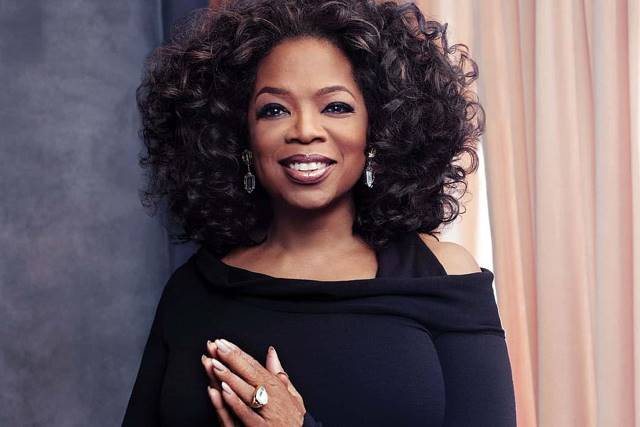
 Born to an unmarried teenage mother in 1954 and raised on a farm in Milwaukee, Mississippi, by her grandmother, Oprah Winfrey’s childhood is the epitome of early life adversities. Winfrey’s experience with sexual abuse, racism and poverty forced her to recognize that she needed to change her perspective on life. She decided to positively transform her life and make the most of it. Winfrey is most known for her talk show, The Oprah Winfrey Show. However, this was only one of the philanthropist’s many successes that led her to become the first female African American billionaire in North America. Below are a few inspirational quotes by humanitarian Oprah Winfrey.
Wise Words from Oprah Winfrey
1997 Wellesley College Commencement Address
“Turn your wounds into wisdom.”
Winfrey followed this quote by acknowledging how life will always be a continuous roller coaster and mistakes will be made along the way. Winfrey’s life story is an example of how wounds shouldn’t define who you are. Instead, the vital aspect of life is how you respond to it. The year following her commencement speech in 1997, Winfrey created a public charity open called Oprah Winfrey’s Angel Network. The charity’s purpose is to encourage people to use their own life to impact others positively.
2007 Howard University Commencement Speech
“My integrity is not for sale, and neither is yours.”
This quote defines Winfrey’s belief that you should never sell yourself out, no matter what happens. She highlights that everyone should always believe in what they stand for. Additionally, Winfrey emphasizes that people should follow their dreams and encourage others to do so by doing precisely that herself.
Watch the full speech here.
2008 Stanford University Commencement Speech
“Every right decision I’ve made—every right decision I’ve ever made—has come from my gut. And every wrong decision I’ve ever made was a result of me not listening to the greater voice of myself.”
Winfrey tells the graduating class to do whatever they set their minds to. She then encourages them to trust their gut feelings and remember to have no doubt when their time arises. In addition to positively impacting millions of people, the humanitarian work Winfrey has done exemplifies that her advice is reputable and she knows what she is doing.
Watch the full speech here.
2018 Commencement Speech at USC Annenberg
“It will take more than you alone to pull 40 million Americans out of poverty, but who will you be if you don’t care enough to try?”
Upon delivering this quote, Winfrey mentions a conversation she had with Maya Angelou. They discussed the school she had established in South Africa, Oprah Winfrey Leadership Academy, which Winfrey believed would be a part of her legacy. But, thanks to Angelou, Winfrey soon learned that her legacy would be the impact she had on every person, not her charity work. This changed her perspective forever.
2018 Golden Globes Future of Women Speech
“Speaking your truth is the most powerful tool we all have.”
During this speech, Winfrey honored and showed her respect for each woman who had experienced forms of abuse and was courageous enough to tell their story. Moreover, her charitable work and foundations demonstrate her determination to encourage women and girls to hold their heads high.
2018 Interview with Reader’s Digest
“I believe every moment is a building block and another step in your journey to being who you are meant to be, and who you are meant to become.”
During this interview, Winfrey recalls meeting Nelson Mandela for the very first time. She describes meeting Mandela as a “defining moment” where she was inspired and enlightened. As a result of this experience, she created the Oprah Winfrey Leadership Academy for Girls in South Africa. The school was the first-ever graduating class consisting of 72 young girls.
Winfrey created the nonprofit Oprah Winfrey Leadership Academy in 2007 for young South African girls suffering from a lack of essential educational resources. The school offers a high-quality education system for grades 8-12 so young girls may have the opportunity to expand their educational background. Consequently, this increases their chances of becoming great female leaders in any career field. More than 400 of the academy’s graduates decided to continue their education by attending college, and in 2018, the graduating class consisted of 58 girls.
The Impact of Winfrey’s Words
Winfrey continues to impact young girls by remaining heavily involved within her foundation. Furthermore, she encourages women worldwide by reassuring them that they have the power to overcome life’s adversities. Not only are inspirational quotes by humanitarian Oprah Winfrey inspiring but they also teach one a few life lessons.
– Montana Moore
Photo: Wikimedia Commons

The Khaled Hosseini Foundation: Making Change in Afghanistan
The Khaled Hosseini Foundation was formed in 2007 after Hosseini traveled Afghanistan with the U.N. Refugee Agency. He noticed the desperate need for intervention in the impoverished villages, as many of these families were barely surviving on $1 a day. After being exposed to these vulnerable populations of women, children and refugees, Hosseini started the foundation to provide these people with the basic resources needed to survive.
The Foundation’s Goals
The Khaled Hosseini Foundation operates as a 501(c)(3) nonprofit that works tirelessly to help the people of Afghanistan. Specifically, the foundation focuses on providing the following services:
Supporting Nonprofit Work
In the past few years, an abundance of work has been done through the foundation. A primary method of their work centers around their Omid Grants. Reviewed on an annual basis, The Khaled Hosseini Foundation gives out grants to nonprofits providing humanitarian aid in Afghanistan. The number of grantees continues to grow, but some of the most notable organizations funded by The Khaled Hosseini Foundation include:
Raising Fundings With Literature
As an author, Hosseini uses the funds raised from the sale of his books to support humanitarian aid in Afghanistan. The proceeds from Hosseini’s latest book “Sea Prayer” are being given to the Khaled Hosseini Foundation, as well as the UNHCR and the U.N. Refugee Agency.
“Sea Prayer” was published in September 2018, which marked the 3 year anniversary of the death of Alan Kurdi, a 3-year-old Syrian refugee. The content of this novel reflects the cause behind the fundraising initiative; “Sea Prayer,” written in the form of a letter, tells the story of a father and son who are fleeing war-torn Syria in hopes of finding a better life.
On the need to support refugees in Afghanistan, Hosseini stated, “We all have an individual duty to let our friends, our families, our communities, our governments know we support refugees, that we want to see the expansion of safe, legal pathways for those in need of international protection, and when, if they should reach our own doorstep in search of safety and sanctuary that we welcome them. We can show solidarity #WithRefugees in so many different ways. Please take action today.”
Moving Forward
Khaled Hosseini, known for his riveting written works, has been working tirelessly to help vulnerable populations in Afghanistan. The Khaled Hosseini Foundation is the most principal example of this effort, fighting for women, children and refugees. Moving forward, it is essential that efforts by the foundation and other related organizations continue in order to help bring these groups out of poverty.
– Hope Shourd
Photo: Flickr
The HIV Epidemic in the Philippines: Affected Populations
Although these statistics indicate some progress, the Philippines still falls far below the 90-90-90 target set by UNAIDS. Aimed at ending the HIV epidemic by 2020, the program wanted to ensure that 90% of people living with HIV would know their HIV status. It also strove to give 90% of people with a diagnosed HIV antiretroviral therapy and induce viral suppression in 90% of those receiving treatment. Unfortunately, the world is not on track to meet these goals, and new targets are being developed for 2025.
Populations Most Affected
The prevalence rate of HIV in the Philippines among adults ages 15 to 49 was 0.2% in 2019. This national rate, however, masks alarmingly high prevalence rates among specific populations. The groups most affected by the HIV epidemic in the Philippines often face social stigma, isolation and legally sanctioned discrimination. These populations include people who inject drugs (PWID), men who have sex with men (MSM), sex workers and transgender people. However, new technologies, programs and initiatives are working to lessen the burden of disease and stigma on these populations.
People Who Inject Drugs
According to UNAIDS, the HIV prevalence rate among people who inject drugs in the Philippines is 29%. Among PWID, only 26.9% have been tested and are aware of their status. Key factors fueling the HIV epidemic in the Philippines among PWID include hostile public opinion and brutal law enforcement. These constitute major barriers to HIV testing and awareness. While official statistics released in 2018 revealed that over 4,500 drug users were victims of extrajudicial killings, civil society estimated the true toll to be as high as 20,000.
Progress in HIV testing is crucial to reduce HIV prevalence among PWID, who struggle to access services due to their criminalized status. Various alternative testing methods, such as rapid finger-prick testing, can reduce barriers to testing for PWID. In particular, self-testing kits, which allow people to test in private, have attracted a large proportion of first-time testers in Thailand and have achieved impressive success in China.
Men Who Have Sex With Men
The HIV prevalence rate among men who have sex with men is 5%, the second-highest among key affected populations. MSM who fear social stigma and discrimination often do not participate in HIV prevention programs. As a result, the participation rate for these programs is 14.6%, and the majority of MSM lack awareness about HIV. Condom use in this population is also low at 40.1%. However, condom distribution and sex education programs would benefit MSM, many of whom reported not using condoms because they were “not available.” Fighting the HIV epidemic in the Philippines means tailoring help to MSM.
Sex Workers
Female sex workers in the Asia and Pacific region are 29 times more likely to be living with HIV than other adult women of reproductive age. The HIV prevalence rate among sex workers in the Philippines is now 0.6%. This group has the highest rates among affected populations for coverage in prevention programs and condom use, which are 71.8% and 85.3%, respectively. Many important national HIV prevention programs raise awareness about HIV and encourage condom use among sex workers. These programs include the 100% Condom Use Program, the HIV Counseling and Testing Service, and programs led by the Philippine National AIDS Council.
Transgender People
Transgender people are one of the populations most affected by the HIV epidemic in the Philippines, with a prevalence rate of 3.9%. However, there is little information or research about the effects of HIV on the transgender community in the Philippines. A key problem is the lack of transgender visibility due to social exclusion and widespread stigma. This challenges efforts to obtain health data and develop targeted programs to support transgender individuals. To raise awareness about gender identities and transgender acceptance, sexual health education and gender studies programs must be more inclusive. This would help reduce the stigma and barriers to healthcare for transgender people in the Philippines and engage them in HIV prevention and treatment programs.
The Effect of COVID-19
Lockdowns in the Philippines due to COVID-19 have blocked access to essential services for HIV patients, including treatment and testing. Eamonn Murphy, UNAIDS regional director for Asia and the Pacific, stressed that the Philippines needs to do more to convince those in high-risk populations to seek out HIV-related services.
Continued attention to these key affected populations is necessary to reduce HIV prevalence rates and make progress toward HIV eradication. In this way, focused programs can work toward lessening the severity of the HIV epidemic in the Philippines.
– Alice Nguyen
Photo: Flickr
Inspirational Quotes by Humanitarian Oprah Winfrey
Wise Words from Oprah Winfrey
1997 Wellesley College Commencement Address
“Turn your wounds into wisdom.”
Winfrey followed this quote by acknowledging how life will always be a continuous roller coaster and mistakes will be made along the way. Winfrey’s life story is an example of how wounds shouldn’t define who you are. Instead, the vital aspect of life is how you respond to it. The year following her commencement speech in 1997, Winfrey created a public charity open called Oprah Winfrey’s Angel Network. The charity’s purpose is to encourage people to use their own life to impact others positively.
2007 Howard University Commencement Speech
“My integrity is not for sale, and neither is yours.”
This quote defines Winfrey’s belief that you should never sell yourself out, no matter what happens. She highlights that everyone should always believe in what they stand for. Additionally, Winfrey emphasizes that people should follow their dreams and encourage others to do so by doing precisely that herself.
Watch the full speech here.
2008 Stanford University Commencement Speech
“Every right decision I’ve made—every right decision I’ve ever made—has come from my gut. And every wrong decision I’ve ever made was a result of me not listening to the greater voice of myself.”
Winfrey tells the graduating class to do whatever they set their minds to. She then encourages them to trust their gut feelings and remember to have no doubt when their time arises. In addition to positively impacting millions of people, the humanitarian work Winfrey has done exemplifies that her advice is reputable and she knows what she is doing.
Watch the full speech here.
2018 Commencement Speech at USC Annenberg
“It will take more than you alone to pull 40 million Americans out of poverty, but who will you be if you don’t care enough to try?”
Upon delivering this quote, Winfrey mentions a conversation she had with Maya Angelou. They discussed the school she had established in South Africa, Oprah Winfrey Leadership Academy, which Winfrey believed would be a part of her legacy. But, thanks to Angelou, Winfrey soon learned that her legacy would be the impact she had on every person, not her charity work. This changed her perspective forever.
2018 Golden Globes Future of Women Speech
“Speaking your truth is the most powerful tool we all have.”
During this speech, Winfrey honored and showed her respect for each woman who had experienced forms of abuse and was courageous enough to tell their story. Moreover, her charitable work and foundations demonstrate her determination to encourage women and girls to hold their heads high.
2018 Interview with Reader’s Digest
“I believe every moment is a building block and another step in your journey to being who you are meant to be, and who you are meant to become.”
During this interview, Winfrey recalls meeting Nelson Mandela for the very first time. She describes meeting Mandela as a “defining moment” where she was inspired and enlightened. As a result of this experience, she created the Oprah Winfrey Leadership Academy for Girls in South Africa. The school was the first-ever graduating class consisting of 72 young girls.
Winfrey created the nonprofit Oprah Winfrey Leadership Academy in 2007 for young South African girls suffering from a lack of essential educational resources. The school offers a high-quality education system for grades 8-12 so young girls may have the opportunity to expand their educational background. Consequently, this increases their chances of becoming great female leaders in any career field. More than 400 of the academy’s graduates decided to continue their education by attending college, and in 2018, the graduating class consisted of 58 girls.
The Impact of Winfrey’s Words
Winfrey continues to impact young girls by remaining heavily involved within her foundation. Furthermore, she encourages women worldwide by reassuring them that they have the power to overcome life’s adversities. Not only are inspirational quotes by humanitarian Oprah Winfrey inspiring but they also teach one a few life lessons.
– Montana Moore
Photo: Wikimedia Commons
The Tony Elumelu Foundation Helps Africa
The Tony Elumelu Foundation
A nonprofit operating since 2010, the Tony Elumelu Foundation (TEF) fights global poverty in Africa through the funding of entrepreneurs and small enterprises, These are the very types of businesses that the pandemic impacted most, both across the world and in Africa. With an endowment of $100 million, the organization has already had significant success propagating what it terms “Africapitalism,” which is the use of the private sector for economic growth and development.
The EU Partnership
In December 2020, the European Union (EU) announced a formal partnership with the Tony Elumelu Foundation. The plan comes as part of two broader EU strategies: the EU External Investment Plan and the EU Gender Action Plan. It involves technical training and financial support for 2,500 female African entrepreneurs in 2021 across all 54 African countries through 20 million euros in increased capital. Speaking on the partnership, Tony Elumelu, the founder of the TEF, expressed delight in being able to partner with the EU and said the partnership will create great opportunities for African women who have “endured systemic obstacles to starting, growing and sustaining their businesses.” The Commissioner for EU International Partnerships, Jutta Urpilainen, stated that empowering female entrepreneurs is an integral part of creating sustainable jobs and growth.
How Entrepreneurship Helps
In Central Africa, approximately 71% of jobs are in the informal sector. These jobs are particularly vulnerable to lockdowns. The strict measures put in place as responses to COVID-19 have left many of these people jobless. Entrepreneurship creates more stable jobs and allows a country to be more self-sufficient and can be just as effective as foreign or philanthropic aid in fighting poverty.
Even after the effects of the pandemic subside, Africa still has much to do to eradicate poverty. Fostering entrepreneurship is an innovative approach to this economic problem, one that the Tony Elumelu Foundation has seen significant results with, with more than 9,000 entrepreneurs mentored before the partnership with the EU. The full impact of these endeavors remains to be seen but the potential exists for African entrepreneurs to have a major impact on poverty in Africa. The TEF’s partnership with the EU will only intensify these positive impacts.
– Bradley Cisternino
Photo: Flickr
US Foreign Aid for People Impacted by Hurricanes
Poverty in Central America
Nicaragua is the second-poorest nation in the Western Hemisphere. Moreover, Nicaragua’s poverty rate sits around 15.1%. Geographically, the poorest area of Nicaragua is the Atlantic Coast of the country. Similarly, Honduras is an impoverished nation located north of Nicaragua. Honduras is also one of the poorest countries in Central America. Furthermore, Honduras’ geographical location leaves it exposed to extreme weather such as heavy rainfall and droughts. The most vulnerable, oftentimes rural and coastal populations, are susceptible to these intense weather changes. Neighboring countries of El Salvador and Guatemala are also impoverished nations with vulnerable populations. The increased climate disasters leave these populations at risk of death, poverty and becoming climate refugees.
Hurricane Eta and Hurricane Iota
On the eve of Hurricane Eta’s landfall, the Nicaraguan government evacuated around 3,000 families living in the coastal area. According to UNICEF, more than a million Nicaraguans, which also includes half a million children, were endangered by the hurricane. El Salvador evacuated people as a precaution and many of Guatemala’s departments declared a state of emergency.
Hurricane Eta made landfall as a Category 4 hurricane. The storm destroyed houses, hospitals and businesses. Widespread flooding and mudslides were responsible for the casualties across the region. Unfortunately, Hurricane Eta was not the only storm blasting through Central America.
Weather forecasters predicted another strong storm, Hurricane Iota. Also a Category 4 hurricane, Iota made landfall 15 miles south of where Hurricane Eta did just days prior. The hurricane further stalled the rescue efforts of the region. In Honduras, the hurricanes impacted around 4 million people with more than 2 million losing access to health care. Moreover, Guatemala had more than 200,000 people seeking shelter after the two hurricanes.
Foreign Aid to Central America
The Central American region is impoverished and vulnerable to natural disasters. Furthermore, many Central American nations depend on foreign aid from the United States. The countries of Guatemala, Honduras and El Salvador (the Northern Triangle) rely on foreign aid from the U.S. to manage rural poverty, violence, food insecurity and natural disasters. Moreover, that aid has been reduced under the Trump administration. Since Donald Trump took office, the aid for these countries has reduced from $750 million to $530 million. In April 2019, Trump froze $450 million of foreign aid to the Northern Triangle, further diminishing the lives of many. Foreign aid keeps Central Americans from plummeting to extreme poverty and also curtails migration to the United States.
Congress Pleads for Foreign Aid
As Hurricane Eta ravaged through Central America, Rep. Norma Torres (CA-35) wrote a letter urging Secretary of State, Mike Pompeo, to increase foreign aid to Central America. Torres (CA-35) wrote, “Hurricane Eta was an unavoidable natural disaster, but its aftermath is a preventable humanitarian crisis in the making.” In addition, the Chairman of the House Foreign Affairs Committee (HFAC), Eliot Engel (NY-16), also showed his support for increased aid to those Hurricane Eta impacted. Engel wrote, “a large-scale U.S. effort is needed to provide much-needed relief to those affected by Eta so that they are not forced to leave their countries and make the perilous journey north.”
USAID Provides Disaster Relief
The U.S. Agency for International Development (USAID) has agreed to increase aid by $17 million to the countries impacted by Hurricane Eta and Hurricane Iota. Studies have shown that foreign aid is a successful policy to reduce global poverty. Any aid given to these countries benefits the lives of those impacted by hurricanes in several significant ways.
– Andy Calderon
Photo: Flickr
Energy Reform: Renewable Energy in Egypt
Shifting to Renewable Energy
The Egyptian Government began its shift toward energy security through increased renewable energy in 2014 when it partnered with the World Bank to institute energy sector reforms and attract $2 billion worth of investment in renewable energy sources. Before that, the government had large, inefficient fuel subsidies that outweighed expenditures on social protection, health and education and did not even target the Egyptian impoverished. This time period also saw frequent power shortages, which contributed to overall social unrest.
By committing to generating 20% of electricity through renewable energy sources by 2022, the Egyptian government showed a comprehensive commitment to energy sector reform. This has helped to create a welcoming political and economic environment for private sector investment, strengthening the shift toward renewable energy in Egypt, which creates the spillover effect of helping the country’s impoverished whom energy shortages may more severely affect.
The Benban Solar Park
The result is several large deals with international banks to finance projects like the Benban Solar Park, which will be the largest solar project in the world once complete. The government received more than $650 million in funding from the International Finance Corporation (IFC), a member of the World Bank Group, to construct the 13 solar power plants that are part of the project. This new initiative will provide power to more than 350,000 Egyptians and create about 6,000 jobs for building greater renewable energy in Egypt.
Other Benefits of Energy Reform
The partnerships with the World Bank and the IFC have other benefits, like freeing government spending to go toward social initiatives. By instituting energy reforms, the Egyptian Government was able to double spending on social protection for the poorest 20% of the population. So, while projects like the Benban Solar Park will themselves contribute to a cleaner, more efficient energy security that will benefit those living in poverty, the means by which these projects are funded also enable the government to focus more of its spending on alleviating poverty.
Energy Reform and Poverty in Egypt
The Egyptian Government has partnered with international institutions like the World Bank to reform its energy sector. Past overdependence on gas and oil along with inefficient fuel subsidies placed Egypt’s future energy security at risk while exacerbating problems the nation’s impoverished face daily. The country has shown a commitment to clean energy initiatives, which benefit Egyptians living in poverty in two main ways. First, the initiatives increase access to power and electricity. Many of those living in rural communities do not have consistent access to electricity, so this reform directly benefits them. Additionally, it benefits the impoverished indirectly by freeing up government spending for increased expenditure on social protection programs. Thus, the future of renewable energy in Egypt is bright and it has the potential to alleviate the struggles of millions of Egyptians.
– Connor Bradbury
Photo: Flickr
The Youngest Country is Also One of the Poorest
History of South Sudan
South Sudan is the world’s newest country. Neighboring Sudan had previously controlled the land and lives of those dwelling there but a public referendum ended that reign in 2011. Quickly, South Sudan looked to become legitimate and joined both the United Nations and the African Union within days. Violence from militia-led uprisings broke out all across the region as many saw the emergence of a new nation as an opportunity to gain power. Additionally, South Sudan harbors much of Sudan’s oil rigs, thus controlling a majority of the economic opportunities in the area.
With few resources present, controlling the oil fields presented a strategic advantage. In 2013, tensions boiled over into a full civil war that claimed the lives of tens of thousands of Sudanese and internally displaced 4 million people. The violence related to this issue did not end until 2018, more than five years after the conflict broke out.
The Situation in South Sudan
The South Sudan civil war damaged an already weakened system and has created one of the worst poverty situations. Currently, 82% of those residing in the youngest country in the world live under the poverty line. Due to recent poor harvests, Oxfam estimates that more than 7 million South Sudanese people are in danger of starvation. With an economy almost entirely dependent on crude oil exports, financial stability is nonexistent. The World Bank reports that while South Sudan experienced a GDP growth of 3.2% in 2019, due to the global pandemic, its GDP will shrink 4.3% after 2020, losing more than gained in the previous year. With one-third of the nation displaced due to the civil war, more than half of the country struggling to eat and a nationally shrinking economy, South Sudan is in danger of becoming a region defined by immense poverty.
Aid to South Sudan
With how dire the situation is in South Sudan, leading humanitarian relief agencies have made the youngest country in the world their top priority. Action Against Hunger helped feed over 500,000 South Sudanese in 2019 alone. With more than 300 team members present in the country, Action Against Hunger is extending its reach every year until the Sudanese can once again retain sustainable harvests.
To help keep the children of South Sudan in school, USAID has created special funding just for education. Since the civil war broke out, USAID has actively helped more than half a million students receive schooling desperately needed to break the poverty cycle. To help bring power and electricity to South Sudan, the African Development Bank stepped up to make it happen. Nearly 99% of people in South Sudan live without electricity. The African Development Bank’s power grid project recently received a $14.6 million loan to help get it started.
The Road Ahead for South Sudan
As the new country of South Sudan looks to gain international recognition and support, it must first prioritize the dire humanitarian crises at home. With the work of Action Against Hunger, USAID and the African Development Bank, hope is on the horizon for the youngest country in the world.
– Zachary Hardenstine
Photo: Flickr
Multifaceted Poverty in Angola
The Rural-Urban Divide
In rural areas, Angolans are less likely to be employed and those who do work are mostly in subsistence agriculture. They also have fewer assets and cannot afford “luxuries” like attending school. Additionally, people in rural areas are more likely to be sick or to die early than those in urban settings.
In urban areas, 44% of households are employed and the majority of the rest are involved in informal economic roles like craftsmen, street vendors or informal shop owners. Despite access to employment, labor conditions are poor and incomes fluctuate. This means that people in rural areas are overall more destitute but they actually have a more predictable situation and at least have access to enough basic food and water to survive, while those in urban settings can experience periods of serious shortages.
Overall, poverty in Angola is multifaceted. In rural areas, it is materially severe but there are stronger safety nets in the form of access to land and agriculture. Urban poverty is less materially severe, with better access to employment and social goods, but people are more vulnerable to sudden shocks. The issue is not that only rural Angolans suffer from poverty but that the country at large is suffering and in need of a comprehensive plan to address all the different aspects of poverty in Angola.
World Vision International
World Vision has operated in Angola since 1989 to aid sustainable development in vulnerable areas, focusing on child protection, land ownership and health services. Overall, it has increased access to clean water for more than 50,000 Angolans and improved the health status of more than 1.5 million Angolan children and 25,000 Angolan mothers in rural areas, through increased access to health care and health education. World Vision helps approximately one million Angolans each year through its efforts at improving access to water and sanitation, strengthening civil society and social protection systems, improving educational access and aiding economic development through land ownership.
UNICEF
Larger NGOs like UNICEF have also addressed poverty in Angola. It has identified millions of people in need, especially children, and has looked to gather $15.8 million in funding to provide humanitarian assistance in the face of recent food insecurity, drought, malnutrition, economic insecurity, education issues and health crises in Angola. The organization’s goals for 2020 included screening almost 400,000 children for malnutrition, providing 150,000 children polio vaccines and providing access to primary education to 25,000 affected children. UNICEF is utilizing partnerships with Angolan government ministries, civil departments and national and international NGOs to accomplish these main goals and others, including hygiene education, increasing overall healthcare aid as well as protecting women and children.
The Road Ahead
Poverty has struck millions of people in Angola and it affects rural and urban Angolans in different ways. Despite the complexity of poverty in Angola, organizations like UNICEF and World Vision have stepped up to alleviate the pressure on Angolan families and children. While the crisis is far from solved, efforts like these provide hope for people in Angola in the face of global and regional disasters like the COVID-19 pandemic, prolonged drought and low crop yields.
– Connor Bradbury
Photo: Flickr
Sentebale: Addressing HIV in Southern Africa
Sentebale
“We teach them that this human immunodeficiency virus does not have to be a death sentence for anyone anymore, that the real enemy we are fighting is stigma and the antiquated attitudes that work against young people coming forward when wanting to take an HIV test,” said Prince Harry in a speech during a dinner for Sentebale in January 2020.
The name Sentebale was chosen by Prince Harry and Prince Seeiso. It means “forget me not” in Sesotho, which is Lesotho’s official language. Princess Diana, Prince Harry’s late mother, and Queen ‘Mamohato, Prince Seeiso’s late mother, were both previously involved in work with children who had been affected by HIV/AIDS. The mission of Sentebale is to become the leading organization for psychosocial support for young people and children with HIV in southern Africa.
The Let Youth Lead Program
In recent years, Sentebale has found that social accountability and peer-to-peer support were central tools to bolstering its mission. In March 2017, Sentebale launched the Let Youth Lead program. The program’s objectives are to eventually have all young people in southern Africa know their HIV status, provide and promote peer-to-peer support and help young people to advocate for themselves at the government level. Another goal of the program is to empower these young advocates with the tools to assist their peers and have their voices heard.
“I volunteered because I wanted to help people. I don’t see this as work, I just want to transform people’s lives,” said Pheto Kutmela, a Sentebale Let Youth Lead advocate. Kutmela has been volunteering in Ha Makunyapane, Thaba-Tseka district, where he lives.
These youth advocates have been able to facilitate community dialogues in 30 community councils, where they are able to discuss challenges they have been facing and suggest improvements for going forward. It can typically be difficult for young people to have their voices heard at the governmental level and this program helps create a platform for them to do so, by giving them the tools to engage with policy leaders and address education and health services.
HIV/AIDS Progress in Botswana
Sentebale has overseen some transformative improvements in the HIV/AIDS epidemic over the past several years. In Botswana, HIV/AIDS infected less than 500 children under the age of 14 in 2018 and more than 95% of pregnant women living with HIV were receiving treatment.
Sentabale is in the process of developing a five-year strategy for the organization. In January 2020, it hosted an “initial workshop” to hear the voices of young people and children so that it can shape the organization’s future vision around their feedback. Looking forward to 2021, with a few adaptations in light of the COVID-19 pandemic, Sentebale will continue to prioritize its commitment toward empowering youth who HIV in southern Africa has affected.
– Katherine Musgrave
Photo: Flickr
Pakistan and India: The Battle for Rice Exports
The Value of Rice in Pakistan and India
The basmati rice industry is one that Pakistan heavily contributes to and relies on. Pakistan contributes to 35% of global basmati rice exports and its trade to the EU has grown from 120,000 tons in 2017 to 300,000 tons in 2019. A whole 40% of Pakistan’s workers work in agriculture, with rice accounting for 20% of agricultural land.
India exported 4.4 million tons of basmati rice between 2019 and 2020, which made up 65% of global basmati rice exports.
Rice Yield Challenges
Despite rice production increasing due to new practices, rice yields in both Pakistan and India are lower than the global average. Growing challenges such as drastic climate change can negatively influence annual rice production. Experts conclude that improving irrigation facilities and increasing the use of new technology will allow the countries to effectively expand their rice yields.
Population Growth & Economic Contraction
Already the fifth most populous nation in the world, projections have determined that Pakistan will grow from 220 million to 345 million by 2045. As its population continues to grow, its economy must grow at least 7% to prevent unemployment. However, in 2019, the economy contracted from 5.5% to 1.9% and the COVID-19 crisis further exacerbated this shrinkage. Unemployment has increased each year since 2014 and currently sits between 4% and 5%. It is imperative that Pakistan jumpstarts its economy or unemployment and poverty will spread.
Poverty in South Asia
Pakistan made great strides in reducing poverty in the early 2000s but has since stalled under more recent governments. By 2015, roughly one in four people, or 50 million Pakistanis, lived under the poverty line. Furthermore, there remains little opportunity for economic improvement.
India also has few opportunities for the poor to improve their lives as it placed 76 out of 82 countries in terms of social mobility. The lack of social mobility means that most people who are born poor will die poor, with minimal chances to jump to a higher social class. India also suffers from severe social inequality and a lack of growth in rural areas. A whole 364 million out of 1.3 billion, or 28% of the world’s poor live in India. However, globalization has allowed India to bring 270 million people out of poverty between 2005 and 2015. Consequently, since 1990, the life expectancy has increased by 11 years, schooling years have increased by three years and India has increased its human development index to above the medium average.
Malnutrition Causes Infant Mortality
Pakistan has an alarmingly high infant mortality rate of 55 deaths per 1,000 live births, which is twice that of India’s. A multitude of factors causes this, most notably, the malnutrition of mothers and their infants. Although wheat and rice are produced in abundant quantities, 44% of children under 5 suffer from stunted growth due to malnutrition. The problem is not whether food is available but it is that food is not accessible for the poor.
Rice as a Key Export
In Pakistan, rice provides value both nutritionally and economically. Rice accounts for 1.4% of the GDP and the traditional basmati rice makes up 0.6% of the GDP. However, most rice is sold as an export and is not used to feed hungry mouths domestically. In 2019, Pakistan exported $2.17 billion worth of rice, of which $790 million was basmati, a 25% increase from 2018.
A whole 90% of the rice grown in India is consumed domestically. Boasting the second-largest population in the world of 1.3 billion people, India accounts for 22% of global rice production but has many more people to feed than Pakistan. India is projected to produce 120 million tons of rice between 2020 and 2021.
Basmati rice exports generate massive profit for each country, If one country were to gain an advantage over the market, it would create enormous value for the winner and dire consequences for the loser. The winner would stand to gain economically and competitively as a result of increased production and profits. Additionally, increased demand for agricultural workers and production in rural areas would create revenue in historically impoverished areas.
– Adrian Rufo
Photo: Flickr