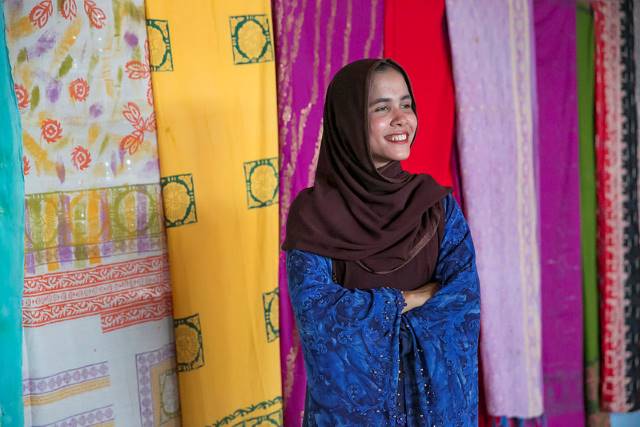
 In Bangladesh, millions of children are living in poverty without any assistance. For this reason, the nonprofit organization, Spreeha Bangladesh Foundation, comes in and fulfills its mission. Spreeha greatly supports Bangladeshi children; the organization uses creative solutions to empower people to reach their full potential.
One Spreeha-run program that guarantees support for Bangladeshi girls is called Progga. The program aims to empower young girls with important life skills, especially leadership values. Approximately 13.7 million Bangladeshi girls feel disorganized and vulnerable during their adolescent years and are lacking the correct guidance. Those who go without counsel are more likely to perform poorly or drop out of school. Additionally, they have a higher risk of mental and physical abuse. This inevitably leads to lower possibilities of female representation in leadership positions.
Spreeha’s solution is to motivate young Bangladeshi girls to become leaders through an interactive method. Progga groups educate young girls on how to make proper judgments that enhance their socio-economic situations and overall security. The organization achieves this goal by encouraging awareness of developmental changes in Bangladesh. The organization mentors young girls using group collaboration with speech and debate to develop their leadership skills and improve their self-confidence.
COVID Complications
The COVID-19 pandemic has made life hard to bear, especially for children in Bangladesh. Thankfully, Spreeha has developed solutions to combat the crisis. Doctors and health care workers make up the primary components of the organization. They engage in door-to-door visits, providing counsel and consciousness to the community. Spreeha also informs the community on how to prevent infections during the pandemic.
In an attempt to support Bangladeshi children, Spreeha has helped prevent infection by temporarily shutting down the before and after-school programs as well as adolescent girls’ clubs. Urban populated areas of Bangladesh are very dense, therefore, they are more susceptible to coronavirus. The young children are unaware of how dangerous the virus is, which is why Spreeha is working tirelessly to ensure their safety. With the economy in disarray, the daily wage-earning Bengali workers are most affected. Spreeha urges the communities to support each other during these uncertain times.
How it Began
Tazin Shahid is the founder of the Spreeha Bangladesh Foundation. He desires to help more Bangladeshi people and ensure that Spreeha can support the children. Along with education and job training services, Spreeha has developed a business incubator called Spreeha Studios. The company promotes startup companies. These services have helped more than 125,000 people, including business owners with families.
Prior to the founding of Spreeha, Shahid worked for Microsoft. This profession pushed him to contact 1 million people by the start of the new decade. He accomplished this by “hitting refresh,” meaning to start anew in a world with less poverty. According to Shahid, the first stage of Spreeha involved ending the succession of poverty. The second was to shatter social obstacles. Finally, the third involves encouraging people to follow their dreams and desires.
The organization began in 2011 when Shahid still worked for Microsoft. He yearned to build a world where those living in poverty can be inspired to improve their lives. At first, Spreeha was a small transportable health clinic with only one doctor and very little medicine. Early on, the funding came from Shahid’s Microsoft companions. The medical center was generous enough to aid 10,000 to 20,000 people in two provinces.
Eventually, Spreeha was reworked to include many other ways to help Bangladeshi families. The Bangladeshi children received affordable health care from the Sneho Diagnostic Center as well as medical diagnoses from the mobile Amar Lab. New ventures included the aforementioned leadership program, Progga, and the early childhood development and daycare center for children and education center for mothers, the Udoy Center. Shahid has reached his objective of helping 1 million people by providing education to 3,669 children in addition to 65,119 receiving health care and 68,033 gaining counseling.
The Overall Mission
The CEO of Spreeha, Ferdouse Oneza, spoke with The Borgen Project. He says, “Our mission is to break the cycle of poverty. We look at the root causes of poverty. Right now we have a clinic in Bangladesh as well as pre and after-school programs. We educate them for fun and teach them social skills.”
With the pandemic, issues of poverty are worsening. Spreeha continues to create safe spaces for the less fortunate. It is a pivotal reason why the communities of Bangladesh are still intact. One issue of safety Bangladeshi children face is the legalization of child marriage. Girls in Bangladesh are in danger of being forced into arranged marriages with significantly older men. Millions of these girls are younger than 15. This is currently legal due to a loophole in the Child Marriage Restraint Act.
Oneza says Spreeha addresses child marriage by raising awareness of the issue and educating children. By going door-to-door to counsel parents, Spreeha hopes to change societal perspectives on child marriage. Oneza describes, “One of our girls was working for Spreeha but was engaged to someone way older than her. She dropped out of her university but after some campaigning, she was allowed to finish her education first and then get married.” Oneza says further that “During the pandemic, a lot of families are moving to the villages. This puts the girls at risk because they don’t have the Spreeha service so their parents marry them off.”
Although the nonprofit does not engage in influencing policymaking, the Spreeha Foundation of Bangladesh still makes a significant impact by supporting Bangladeshi children through active community involvement and inspiring individuals to prosper.
– Shalman Ahmed
Photo: Flickr

Addressing Mental Health Care in Greece
Mental Health Stigma in Greece
Conservative attitudes slowly began to change in 2014 as mental health stigma in Greece reduced from 63.1% to 36%. As the Greek economy slowly began to turn around, the connection between the financial crisis and mental health became even more evident and discussions regarding mental health care in Greece became more acceptable. Organizations fighting the mental health care crisis in Greece include the Greek Health Ministry, the HOME Project and Klimaka NGO.
The Greek Health Ministry
The Greek Health Ministry has carried out campaigns that have been influential in increasing mental health awareness in Greece. In 2019, the Greek Health Ministry coordinated a committee of mental health experts in a mental health awareness campaign. The goal of this committee was to train and equip practitioners to be able to effectively diagnose depression and mental health illnesses. The link between the rise in the economic crisis and the rise in psychiatric admissions could be clearly seen. The Council of Europe noted that “unemployed persons, bankrupt businessmen, or parents who have no means of taking care of or feeding their children” were among new admissions to psychiatric hospitals.
To assist in stabilizing admissions, the Health Ministry ran a pilot program to ensure major areas had at least one psychiatric clinic operating as a walk-in center at any given time. This program has led to the operation of three new clinics in Greek hospitals and there are plans for 16 more to open in the future.
The HOME Project
Children that are homeless or have fled from camps and detention centers can find support and housing through the HOME Project. This NGO has established efforts to support more than 2,500 unaccompanied minor children in Greece that fall outside of any official protection. The HOME Project provides legal, educational, social and mental health support to this at-risk population that ranges from toddlers to teenagers. Many of these children have been subjected to trauma and are more at risk of suffering from mental health issues. The HOME Project advocates for resources for refugee children in Europe that can create long-term child protection solutions.
Klimaka NGO
Mental health care in Greece is being improved by organizations like Klimaka, an NGO committed to caring for those impacted by mental health issues. In Greece, mental health is not a subject that people often discuss. Klimaka is one of the few suicide prevention clinics in Greece that worked collaboratively with the Greek Orthodox Church that had once been criticized for its stance on suicide. According to Klimaka, the Greek Orthodox Church viewed suicide as a sin and priests often refused burial prayers for those that had taken their own lives. Klimaka has been paramount in changing these views and reshaping the church’s role in the prevention of suicide, to the extent that the church now allows burial prayers if the deceased suffered from mental illness.
While older populations do not easily embrace mental illness, the younger generations have recognized depression as a relevant health issue during times of crisis. Mental health care in Greece continues to face challenges due to a shortage of staff, underfunding, reduced medical supplies and insufficient primary healthcare. Nevertheless, organizations are continuing to fight for improved mental health care for the most vulnerable populations.
– Brandi Hale
Photo: Flickr
The Spreeha Foundation of Bangladesh
One Spreeha-run program that guarantees support for Bangladeshi girls is called Progga. The program aims to empower young girls with important life skills, especially leadership values. Approximately 13.7 million Bangladeshi girls feel disorganized and vulnerable during their adolescent years and are lacking the correct guidance. Those who go without counsel are more likely to perform poorly or drop out of school. Additionally, they have a higher risk of mental and physical abuse. This inevitably leads to lower possibilities of female representation in leadership positions.
Spreeha’s solution is to motivate young Bangladeshi girls to become leaders through an interactive method. Progga groups educate young girls on how to make proper judgments that enhance their socio-economic situations and overall security. The organization achieves this goal by encouraging awareness of developmental changes in Bangladesh. The organization mentors young girls using group collaboration with speech and debate to develop their leadership skills and improve their self-confidence.
COVID Complications
The COVID-19 pandemic has made life hard to bear, especially for children in Bangladesh. Thankfully, Spreeha has developed solutions to combat the crisis. Doctors and health care workers make up the primary components of the organization. They engage in door-to-door visits, providing counsel and consciousness to the community. Spreeha also informs the community on how to prevent infections during the pandemic.
In an attempt to support Bangladeshi children, Spreeha has helped prevent infection by temporarily shutting down the before and after-school programs as well as adolescent girls’ clubs. Urban populated areas of Bangladesh are very dense, therefore, they are more susceptible to coronavirus. The young children are unaware of how dangerous the virus is, which is why Spreeha is working tirelessly to ensure their safety. With the economy in disarray, the daily wage-earning Bengali workers are most affected. Spreeha urges the communities to support each other during these uncertain times.
How it Began
Tazin Shahid is the founder of the Spreeha Bangladesh Foundation. He desires to help more Bangladeshi people and ensure that Spreeha can support the children. Along with education and job training services, Spreeha has developed a business incubator called Spreeha Studios. The company promotes startup companies. These services have helped more than 125,000 people, including business owners with families.
Prior to the founding of Spreeha, Shahid worked for Microsoft. This profession pushed him to contact 1 million people by the start of the new decade. He accomplished this by “hitting refresh,” meaning to start anew in a world with less poverty. According to Shahid, the first stage of Spreeha involved ending the succession of poverty. The second was to shatter social obstacles. Finally, the third involves encouraging people to follow their dreams and desires.
The organization began in 2011 when Shahid still worked for Microsoft. He yearned to build a world where those living in poverty can be inspired to improve their lives. At first, Spreeha was a small transportable health clinic with only one doctor and very little medicine. Early on, the funding came from Shahid’s Microsoft companions. The medical center was generous enough to aid 10,000 to 20,000 people in two provinces.
Eventually, Spreeha was reworked to include many other ways to help Bangladeshi families. The Bangladeshi children received affordable health care from the Sneho Diagnostic Center as well as medical diagnoses from the mobile Amar Lab. New ventures included the aforementioned leadership program, Progga, and the early childhood development and daycare center for children and education center for mothers, the Udoy Center. Shahid has reached his objective of helping 1 million people by providing education to 3,669 children in addition to 65,119 receiving health care and 68,033 gaining counseling.
The Overall Mission
The CEO of Spreeha, Ferdouse Oneza, spoke with The Borgen Project. He says, “Our mission is to break the cycle of poverty. We look at the root causes of poverty. Right now we have a clinic in Bangladesh as well as pre and after-school programs. We educate them for fun and teach them social skills.”
With the pandemic, issues of poverty are worsening. Spreeha continues to create safe spaces for the less fortunate. It is a pivotal reason why the communities of Bangladesh are still intact. One issue of safety Bangladeshi children face is the legalization of child marriage. Girls in Bangladesh are in danger of being forced into arranged marriages with significantly older men. Millions of these girls are younger than 15. This is currently legal due to a loophole in the Child Marriage Restraint Act.
Oneza says Spreeha addresses child marriage by raising awareness of the issue and educating children. By going door-to-door to counsel parents, Spreeha hopes to change societal perspectives on child marriage. Oneza describes, “One of our girls was working for Spreeha but was engaged to someone way older than her. She dropped out of her university but after some campaigning, she was allowed to finish her education first and then get married.” Oneza says further that “During the pandemic, a lot of families are moving to the villages. This puts the girls at risk because they don’t have the Spreeha service so their parents marry them off.”
Although the nonprofit does not engage in influencing policymaking, the Spreeha Foundation of Bangladesh still makes a significant impact by supporting Bangladeshi children through active community involvement and inspiring individuals to prosper.
– Shalman Ahmed
Photo: Flickr
Clean Waters: The Ocean Cleanup Organization
Marine Plastic Pollution
At least eight tons of marine plastic enter the oceans each year, where a majority floats on the surface before breaking down into non-biodegradable microplastics. Around 80% of marine debris flows through rivers before reaching the ocean. Because a handful of countries are responsible for a majority of marine debris, cleaning just 10 major polluting rivers of waste would stop a significant amount of debris from ever reaching the ocean.
The Ocean Cleanup Organization
Based in the Netherlands and led by a 26-year-old entrepreneur, Boyan Slat, The Ocean Cleanup organization has plans that include fitting the world’s 1,000 most polluting rivers with waste removal systems over the next five years. The organization’s research indicates that 1,000 specific rivers are responsible for 80% of the pollution.
The Interceptor Concept
Solar powers the waste removal systems, and they are scalable and largely autonomous. Each one uses barriers to direct waste along the river to a floating “interceptor” barge, which loads waste with a conveyor belt into containers that local municipalities can then dispose of. Individual interceptors can collect 50,000 kilograms of waste each day, though “in optimal conditions up to double this amount can be achieved.”
The interceptor concept, designed in 2015, was first utilized in the Cengkareng Drain, Indonesia, where it has remained. The Ocean Cleanup has since partnered with local governments to deploy three more interceptors in Malaysia, Jamaica and the Dominican Republic. By placing each one downstream from the last major source point in a river, they manage to fill all containers every few days, though they sometimes fill up in only a few hours.
Impact of Microplastics
Marine plastics’ widespread and harmful effects on marine life are well-documented, with hundreds of species ingesting, suffocating and entangling themselves in plastics. The global impact of aquatic microplastics, by contrast, is an emerging field of study. Appearing in tap water, beer and salt, they have appeared in water samples taken from every ocean. In 2019, the World Health Organization called for more research into microplastics and a drastic reduction in plastic pollution.
An environmental health report published in 2018 stressed the risk of consuming microplastics in seafood. “Because microplastics are associated with chemicals from manufacturing that sorb from the surrounding environment,” the report finds, “there is concern regarding physical and chemical toxicity.”
Consequences of Marine Plastic Pollution
While microplastics are under-researched, larger marine waste has concrete impacts on water-adjacent communities because marine plastics kill wildlife and disrupt local ecosystems, harming livelihoods and impeding tourism. More pressing, severely polluted waterways exacerbate poverty and poverty-related issues, especially among young children. According to experts at UNICEF, children living in South Asian slums frequently play in rivers and shores contaminated with waste, excrement and agricultural runoff. Since many lack access to clean water and sanitation facilities, this makes poor water-adjacent communities hotbeds for preventable illnesses.
The Ocean Cleanup found that marine plastic is responsible for between $6 billion and $19 billion of economic costs annually. These costs “stem from its impact on tourism, fisheries and aquaculture, and (governmental) cleanups,” and do not even account for the disability-adjusted life years (DALYs) lost because of its public health impact.
Hopes for the Future
The Ocean Cleanup organization hopes to significantly reduce plastic pollution in oceans. Once fully implemented, the waste removal systems aim to reduce the Great Pacific Garbage Patch by 50% every five years. The organization’s latest endeavor is a line of sunglasses made from plastic removed from the Great Pacific Garbage Patch. With all proceeds going toward expanding cleanup efforts, this is the most stylish way an ordinary person can contribute to a greater cause.
– Skye Jacobs
Photo: Flickr
Papua New Guinea Receives Aid for Dual Outbreaks
Resurgence of Polio
Papua New Guinea is one of the most poverty-stricken countries in the pacific region. The country was declared officially polio-free 18 years ago, but in 2018, the virus was rediscovered in a 6-year-old child. Shortly after, the virus also emerged in multiple other children from the same general area. Polio is especially harmful to children under 5 years old and can lead to lifelong paralysis.
A few months after the polio outbreak, the Australian Government stepped in and responded by giving $10 million to Papua New Guinea’s polio immunization crusade. A few weeks later, the Global Polio Eradication Initiative (GPEI) received another $6 million, which an additional $15 million dedication followed in November 2018. Rachel Mason Nunn, an experienced social development worker in Papua New Guinea, stated that “We have a window right now to invest heavily in infectious diseases in Papua New Guinea. Australia should continue to invest in health care in Papua New Guinea, if not just because it is the right thing to do, but because helping our region acquire strong health systems is a vital element of Australia’s own health security.” Australia is the largest contributor to the development of Papua New Guineas’ struggling health care system.
COVID-19 in Papua New Guinea
In an extreme case of bad luck, Papua New Guinea experienced two disease outbreaks within two years of each other. In a frantic request for aid, the government reached out to the World Health Organization (WHO) in an effort to take some weight off its already overburdened health care system. When COVID-19 hit the county, there was a limited number of testing kits available and a shortage of medical staff as well as medical supplies and protective gear. The WHO responded by deploying emergency medical teams and supplying necessary resources to upscale testing in Papua New Guinea.
The Road Ahead
Due to the support of contributors like the WHO and Australia, millions of child polio vaccinations have been administered and a sufficient number of COVID-19 testing kits are available in the country. For a country that is still dealing with diseases like malaria and polio, the people of Papua New Guinea are pushing ahead. This unique situation serves as a global reminder that the prevention and treatment of other diseases should not be neglected during the COVID-19 pandemic and that inter-country support is essential in addressing dual outbreaks.
– Brandon Baham
Photo: Flickr
2021: The International Year of Fruits and Vegetables
The United Nations 74th General Assembly declared 2021 as the International Year of Fruits and Vegetables (IFYV). Thus, the United Nations has four primary focus areas: Raising awareness of nutrition and health benefits, promoting balanced and healthy diets, reducing losses and waste and promoting consumption, sustainability, supply chains and capacity strengthening.
IFYV and Sustainable Development Goals (SDGs)
The International Year of Fruits and Vegetables is in congruence with three SDGs. It works towards achieving zero hunger ensuring healthy lives and promoting well-being and promoting sustainable consumption and production patterns. Consequently, the initiative helps raise awareness about the health benefits of fruits and vegetables and hastens the 2030 Agenda’s attainment.
Cross-cutting Issues to Address
Policies & Measures
The 2021 International Year of Fruits and Vegetables policies’ aim to attain sustainability, boost productivity and ensure profitability in this sector. Thus, it strives to nurture a healthy food environment for consumers to consume fresh produce. Furthermore, it emphasizes the importance of including fruits and vegetables in a balanced diet.
Furthermore, these policies explore opportunities for tax incentives and deductions in business activities. Additionally, it seeks new sources of funding for infrastructure development in developing countries. This enables smooth and timely transportation of the harvest to redistribution facilities and markets.
Policies aim to reduce food waste in developing countries by modifying market standards for fresh produce and facilitating food banks’ access to fruits and vegetables in the field for easy redistribution.
FAO Director-General Qu Dongyu launched the International Year of Fruits and Vegetables. He remarked that promoting healthy diets is crucial for immune system strengthening. The COVID-19 pandemic has made this especially important. It is difficult to assess the project’s progress this early, but it has undoubtedly made progress.
– Divine Mbabazi
Photo: Flickr
The Syrian Mental Health Crisis
The Syrian Mental Health Crisis
The Syrian conflict has caused harm that may not be fully understood for years. More than 511,000 Syrians have lost their lives since the start of the war and around 6.6 million Syrians have faced internal displacement. Syrian refugee children who have suffered during the war are most likely to have mental health issues. The U.N. Refugee Agency notes that almost 80% of Syrian refugee children had suffered a family death and 60% have endured physical attacks. More than half of all Syrian children have PTSD symptoms. They are also facing intellectual and cognitive difficulties. The U.S criminal justice system indicates that the 1.2 billion people who live in conflict exhibit frequent witness to killings and gender-based violence.
Education for Syrian Children
Syrian children face a variety of disruptions that prevent them from receiving an adequate education. Only half of these children were enrolled in schools when they arrived in countries for refuge. In Turkey and Lebanon, the enrollment rates dropped to 20%. Children have also struggled to overcome gaps in their learning. Children are more likely to obtain failing grades or drop out due to untreated psychological trauma. These mental and behavioral disorders also lead to economic productivity losses and substance abuse.
Current Mental Health Treatment
A report issued by Amnesty International in 2006 shows that 117,000 Syrian refugees living in Jordan camps have access to education, health care, food and water provided by the government. Those who live outside of these refugee camps rely on humanitarian aid and private donors. Refugees in Turkey receive free basic health care once registered with the government. However, the language barrier is still a concern, especially with regard to mental health facilities.
Therefore, the International Medical Corps (IMC) has established several ways to enhance the level of mental health care for Syrian refugees in Turkey. This includes bridging the Turkish-Arabic language divide. The IMC will also bundle mental health care with general health care and educate/license more practitioners in mental health. Furthermore, the IMC will identify developmental disabilities in children and improve the provision/policy of national mental health programs.
Humanitarian Response
The humanitarian response in Syria will strongly consider mental health care through coordination with foreign Non-Government Organizations (NGOs) that can offer urgent assistance to those in need. Sustainable capacity needs to be built by degree projects that can incorporate mental health services into the primary health system of Syria. The aim is to improve the region’s mental health workforce.
Improvements in the general accessibility, affordability and consistency of mental health resources offered to Syrian refugees are necessary. Worldwide support is essential to provide adequate mental health care to Syrian refugees. Mental health care providers trained by the World Health Organization need to extend to Syria and countries with high populations of refugees. National budgets for welfare are necessary for more funds for mental health programs. There are inadequate numbers of psychologists in Jordan, Lebanon and Syria due to the absence of academic psychology programs. Therefore, it is essential to train mental health professionals and social workers in the delivery of validated psychological services to communities impacted by the crisis throughout the region.
Children of the Future
When an entire population must concentrate on remaining alive, it becomes difficult to focus on children’s development. But, these children are the future of Syria. Thus, it is crucial to focus on the Syrian mental health crisis today, with refugee children as a priority. More comprehensive emergency and long-term services will help avoid a “lost generation of children” for Syria’s future state-building prospects.
– Aining Liang
Photo: Flickr
Sweden’s Success: The Country with No Lockdown
Poverty and COVID-19
Unsurprisingly, poverty correlates with higher COVID-19 mortality. One Swedish study claimed that low-income, low-education, unmarried and immigrant males have a higher risk of death from COVID-19. Men in the first and second tertiles of disposable income are five times as likely to die. They also experience 80% higher mortality than those in the top tertile. This holds true for immigrants from low and middle-income countries, who have a 2.5 times higher mortality among men and a 1.5 times higher mortality among women, compared to people born in Sweden. Immigrants are more than twice as likely to die than natives.
Income inequality and child poverty have increased, according to poverty expert Tove Samzelius from the Swedish branch of Save the Children. Around 10%, or 186,000 children, live in poverty in Sweden. Samzelius notes that poverty only worsens people’s living conditions. This is especially true for undocumented migrants who share hostels, resulting in cramped conditions and rapidly spreadable sickness. It is commonly stated that COVID-19 does not discriminate, but in light of this research, this is untrue. The virus does discriminate. Those most vulnerable have a lower chance of survival.
COVID-19 Aid
In terms of aid, Sweden has provided fiscal measures to its citizens. For example, Sweden has allotted SEK 264 million toward recovery from the impacts of COVID-19. In addition, SIDA, the Swedish International Development Cooperation Agency, has provided SEK 1.25 billion for COVID-19 relief. SIDA also helped farmers to continue making a living since most regions rely on trade. Through the International Fund for Agricultural Development (IFAD) program Rural Poor Stimulus, SIDA has allocated SEK 30 million for this year and SEK 20 million for next year.
Other countries both admire and criticize Sweden’s approach to COVID-19. Sweden may have passed Denmark, Norway and Finland on the death toll, however, Sweden’s success is still visible in its COVID-19 mortality rate in comparison to countries like the United Kingdom, Spain and Belgium. Even with a lockdown, the elderly in care homes still suffer, experts observe. A lockdown does not in absolute terms decrease mortality from the virus, which is plain to see when comparing the U.K.’s experience with that of other European countries.
– Shelby Gruber
Photo: Flickr
Eradicating Rural Poverty for the Maonan in China
CAS Goals
Just over 100,000 Maonan live in China, most in small rural villages. About 70,000 of them live in Huanjiang.
Maonan villages were located in mountainous, rocky regions known as karst landscapes. These areas are prone to desertification and are unsuitable for farming. CAS started the Kenfu Huanjiang Ecological Migration Pilot Zone in 1996. Its two goals were to relocate people to new villages in areas more suitable for agriculture and to improve the livelihoods of those that refused to relocate.
New Farming Techniques and Solutions
CAS introduced advanced farming techniques that better suit the area. An important change was the shift from farming to livestock. Huanjiang is highly flood-prone so CAS helped plant various grasses that can support animals. Zeng Fuping, a researcher with CAS who has been in Huanjiang since 1994, remarked that “the farmers were unsure initially and they questioned growing something that they could not eat.” However, the results speak for themselves. Income has increased tenfold since the introduction of 200 cattle into the region in 2001. Not only do the grasses support livestock but they also help prevent soil erosion. They have helped prevent widespread desertification, which is a common problem in karst landscapes. This serves as a model for maintaining arable land in karst areas across China.
Eradicating Rural Poverty
The speed of poverty reduction in Huanjiang has been staggering. In 1996, the average resident only earned the equivalent of $45 per year. That number rose to $835 in 2012 and $1600 in 2019.
In 2015, more than 14,000 Maonan people in Huanjiang lived below the Chinese poverty line of $345 per year. This accounted for around 22% of all Maonan peoples living in the county. By 2019, less than 1.5% of Maonan lived in poverty, amounting to 548 people. Due to the efforts of CAS, Huanjiang is no longer an area of extreme poverty in China.
In all of Guanxi, CAS has helped facilitate 400,000 people with relocation to new villages. This includes a majority of the Maonan community. Poverty percentages in Huanjiang have dropped to single digits. Livestock farming has reduced soil erosion and given locals much more disposable income. UNESCO dubbed this strategy the “Kenfu Model” and it is an important example of eradicating rural poverty in China.
– Adam Jancsek
Photo: Flickr
Environmental Impacts on Disease in Sub-Saharan Africa
Indoor Air Pollution
Indoor air pollution is one of the leading environmental impacts on disease and death in sub-Saharan Africa. People living in extreme poverty primarily depend directly on solid fuels (i.e. biomass fuels) for their heating and cooking needs. The harmful biomass fuels such as crop waste, coal and wood cause significant air pollution, especially when burned by inefficient and poorly ventilated stoves.
Biomass smoke contains thousands of health-damaging substances. These pollutants penetrate deep into the lungs and initiate the development of acute lower respiratory disease, cancer and multiple other diseases, including chronic obstructive pulmonary disease. Women and young children face the highest exposure to fumes and have the highest rates of mortality resulting from indoor air pollution. WHO estimates that sub-Saharan Africa has the highest rate of indoor air pollution deaths in the world, along with parts of Southeast Asia.
Improving the Environment and Fighting Disease
Shifting from solid fuels to cleaner energy technologies can have a major impact on indoor air pollution levels. For instance, liquid petroleum gas (LPG), biogas and solar power generation all produce less indoor air pollution. Governments and NGOs alike should plan to help communities make this transition. However, air pollution is just one environmental concern that needs addressing.
Simple solutions to environmental concerns include safer storage of water and dangerous chemicals; these relatively cheap improvements can be highly effective in reducing disease. Ultimately, providing low-cost storage containers to urban and rural communities will result in prominent and lasting gains in health and economic development.
Additionally, improving common household appliances can reduce indoor air pollution in impoverished communities; for example, stoves and ventilation systems often contribute to or fail to reduce indoor air pollution. Lastly, increasing education and public awareness about environmental impacts on disease are critical; many environment-related health issues are preventable. For instance, education can encourage mothers to keep small children away from constant contact with fires while cooking.
In Conclusion
It is imperative to address the upstream determinants of sub-Saharan Africa’s high morbidity and mortality rates. Clean water and air are powerful preventative medicines. Implementing simple, yet effective solutions and sustainable management of natural resources is crucial to ending poverty. By helping people to treat the environment well, governments and NGOs can reduce diseases and child mortality; additionally, their work will improve maternal health and education across sub-Saharan Africa.
– Samantha Johnson
Photo: Flickr
5 Ways Haiti Uses Its Foreign Aid
In addition, Haiti has a history that demonstrates its vulnerability to natural disasters. In 2010, the country was devastated by a 7.0 magnitude earthquake that claimed the lives of nearly 250,000 and displaced 1.5 million Haitians. Matthew, a category 4 hurricane, struck the island in 2015. The disaster claimed the lives of hundreds, displaced thousands and created a humanitarian crisis for over a million residents. The provision of foreign aid in Haiti has tremendously restored much of the damage incurred from these disasters. It has also been crucial in creating momentum in the nation’s development. The following are the five primary sectors in which Haiti has invested the $172.5M it has received in foreign aid from the United States.
Political Infrastructure and Democracy
Given its history of political instability, one of Haiti’s primary focuses is developing its democratic system and providing the means to facilitate the exchange of ideas between its government and constituents. To this end, programs have been instituted to improve the rule of law and the preservation of human rights, as well as investments in infrastructure, which provide mediums for constituents to interact with their political ecosystem. This comes in the form of developing media platforms and the formation of advocacy and interest groups. The country is currently in the midst of political gridlock, so the investments being made toward its democratic development are essential for Haiti’s development.
Economic Development
Like many developing countries, Haiti depends heavily on agriculture for economic output. To this end, the agriculture sector receives much of the aid allocated to economic development. Even with half of the Haitian workforce being employed in the agricultural sector, there is still a shortage of output. As nearly 60% of the country’s food supply has to be imported, there is still much room for development in this sector. Moreover, much of the remaining budgetary allocation that goes toward economic development is invested in infrastructure. This is absolutely essential in facilitating economic activity. This comes in the form of electric power lines and networks, gas stations, airports, railways, and more.
Administrative Costs
Every program instituted to carry out the functions necessary to assist in these developments requires manpower and infrastructure. Thus, it is paramount that a sizable percentage of Haiti’s foreign aid goes to this sector. This is the price of business in a developing country. Any given program or project requires personnel who need to be trained, housed and compensated. Furthermore, the housing programs require funding to compensate the contractors who build them and the cost of executing varying tasks. This expenditure can often be overlooked, but it is vital to development. Aside from the funding necessary to establish these programs, those who oversee these expenditures and evaluate the performance of the instituted programs receive aid compensation.
Humanitarian Efforts
The two natural disasters of the last decade have caused major developmental setbacks and internally displaced persons. Therefore, much of the foreign aid in Haiti goes into natural disaster readiness and the expenses involved in supporting those who have lost everything. It is through foreign aid that Haiti was able to house the 1.5M displaced individuals temporarily in the aftermath of the 2010 earthquake and again with the 188,000 displaced after hurricane Matthew in 2015. In 2020, this aid has helped Haiti battle not only with the health imperatives implicated by COVID-19, but in managing the increasing costs of its food imports. As a result of the pandemic, the global market put a premium on international trade, further straining Haiti’s budget.
Health Issues
Haiti puts the majority of its foreign aid towards health issues. These can include reproductive health, safe water supply, maternal and child health and now mitigating the spread of COVID-19. This investment of foreign aid has led to notable improvements in the state of these issues. An increase from 5% to 20% occurred in women being discharged with a long term contraceptive in place.
Additionally, access to potable water has increased from 43% to 59% in 2016 and there is an ongoing installation of proper sanitation facilities throughout the country. There has also been an increased effort to educate residents on the dangers of poor sanitation. The most pressing health issue that Haiti currently faces is the battle against HIV/AIDS; thus it demands the greatest allocation of aid invested in this sector. Roughly 160,000 Haitian residents live with this disease, and its spread is on the rise. However, through investments made in testing and treatment throughout the country, the progression of the rise in deaths and infections is slowing. Since 2010, deaths have decreased by 45% and the number of new cases per annum has changed from 8,800 to 7,300.
Haiti is a country where political turmoil, a struggling economy, food insecurity and considerable setbacks on all these fronts. Moreover, the results of natural disasters cause achieving a developed status to be difficult. However, foreign aid has played an essential role in Haiti’s recovery and in assisting in creating development momentum.
– Christian Montemayor
Photo: Flickr