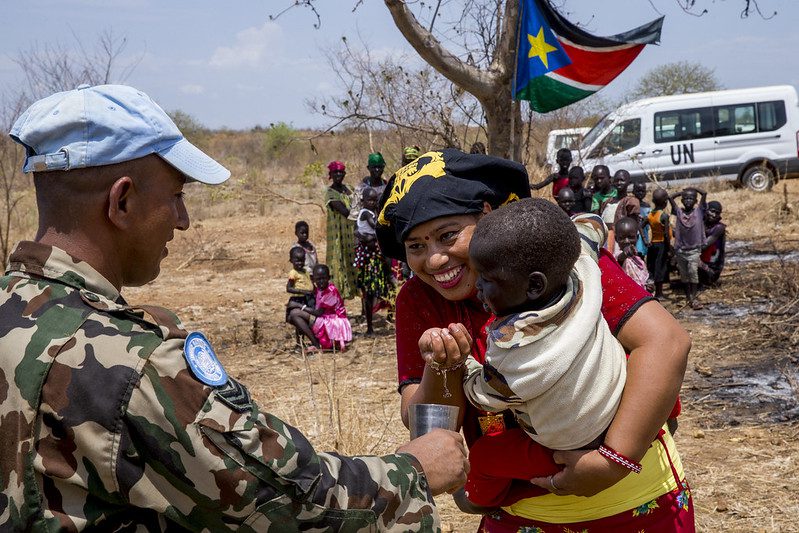
 Prosperous health and well being are the backbone of a progressive society. Unfortunately, countless people in the developing world struggle to access affordable and effective healthcare. South Sudan is an Eastern African country riddled in an ongoing ethnic conflict. In addition, it is one of the hardest-hit nations on the issue of healthcare.
So far, South Sudan has dealt with over 3,500 cases of COVID-19. While that number may seem small, it’s astronomical for a country with such sparse medical supplies and trained personnel.
Thankfully, South Sudan has been working with the international community for the past couple of years. They are working to bolster its progress toward better healthcare, otherwise known as Sustainable Development Goal 3 (SDG 3). As outlined by the United Nations Development Programme, the SDGs are a set of benchmarks to help developing nations overcome structural poverty. The third goal, good health and well-being, focuses on resolving “account widening economic and social inequalities, rapid urbanization, threats to the climate and the environment, the continuing burden of HIV and other infectious diseases and emerging challenges such as non-communicable diseases.” The fundamental goal of SDG 3 is universal healthcare.
Out of the 1.6 billion people worldwide who lack sound healthcare systems, a portion lives in South Sudan. Thus, it is important to understand and explore the implications of SDG 3 in South Sudan.
Progress Overview
As part of Sustainable Development Goal 3, South Sudan has been working with international partners to implement a new universal healthcare system. In 2018, the South Sudanese Ministry of Health (MoH) announced it would be working with the World Health Organization (WHO) and its partners on the Boma Health Initiative (BHI). The BHI will deliver healthcare packages to communities for no charge. It will also place an extra focus on those living in hard-to-reach rural areas.
The program came out to address SDG 3 and the country’s lack of access to healthcare services. As of 2018, “only 44% of the population [is] living within a 5-kilometer radius of a health facility.”
So far, the WHO and South Sudanese MoH are still debating the costs and budget gaps to finance the program. These debates especially focus on maternal care. Fortunately, policymakers have the 40-year-old primary healthcare system to build off of. With the said system in place, the WHO and South Sudanese officials focus on critical areas of healthcare disparities. They want to ensure the universal system will be efficient and effective once it rolls out.
COVID-19 Response
However, with the recent pandemic, South Sudan’s MoH and other officials have focused on the response to COVID-19. So far, they have made substantial progress. In May 2020, South Sudan successfully trained over 100 health workers on “COVID-19 case management and infection prevention and control.” Participants were said to have “knowledge and skills on patient screening, isolation, contact tracing, use of Personal Protective Equipment (PPE) and waste management.” The rapid increase in health management training is especially helpful to expand contract tracing and to limit the severity of COVID-19 in at-risk communities.
Additionally, The South Sudanese MoH recently partnered with the World Food Programme and the International Medical Corps to expand infectious disease units. The initiative has equipped South Sudanese hospitals with a “new 82-bed capacity treatment unit [with] a temperature-controlled dispensing pharmacy and a fully equipped laundry to boost infection prevention and control.”
Aid From Other Countries
Moreover, to ensure long-term success for SDG 3, South Sudan is partnering with other countries to improve its health infrastructure. For instance, CARE, an international non-profit, received part of a $2 million grant to “strengthen healthcare infrastructure through preparedness, surveillance and response; empower, train and educate local women leaders, including community health workers; and increase water, sanitation, and hygiene support.” Furthermore, CARE is also coordinating with the Sudanese Education and Health Ministries. Their goal is to expand medical education in local communities and fight off misinformation.
In addition, the U.S. recently announced a $108 million aid package for South Sudan to develop more advanced health infrastructural systems.
From targeted efforts from international organizations like the WHO to non-profits and world superpowers like the U.S. donating aid, the world is gradually taking action. South Sudan is facing its darkest hour and limited healthcare options. Therefore, the international community must continue its efforts to help South Sudan realize its goal.
– Juliette Reyes
Photo: Flickr

How Ekal Vidyalaya is Adapting for Indian Children
Initial Difficulties and Welcome Surprises
As a non-profit, Ekal Vidyalaya delivers various resources and instructional services through its village-to-village outreach. Establishing schools with a teacher impacts a previously education-lacking community in significant ways. Before the pandemic, various Ekal Vidyalaya’s chapters would host different events per year to raise funds to allow various programs to continue. The Chapter President Senthil Kumar detailed to the Borgen Project how typical efforts would no longer be viable this year. Kumar shared that most of the average fundraisers are cultural events for local Indian communities in various parts of the world. It drew in between $70,000 and $100,000. He carefully notes that just “$1 can keep a school open for a day.”
Moreover, Ekal Vidyalaya seeks to grow its impact in communities 10-20% more than last year. Because of significant differences across India’s economic, geographical and social landscape, funding necessities can vary. In addition, transitioning to online events has its own advantages. Local gatherings can still survive in digital spaces. Because annual events usually bring in singers, actors, and other notable icons from India, overhead fees can be entirely forgoed. Empty seats in auditoriums are not concerns over Zoom or similar platforms. As a result, this diverts resources to more directly meet program financial targets. It makes a tangible change for rural children and has allowed the same level of grassroots fundraising to persist, according to Kumar. Adapting for Indian children might mean venue changes and alterations from a traditional schedule. However, it seems that sacrificing the fundamental missions is not an insurmountable concern.
An Implementation Landscape: Three Things to Know
Kumar told The Borgen Project that “[About 30%] of all schools are self-sustaining.” He spoke on the long-term ability of Ekal Vidyalaya to support students and communities to utilize and provided tools for future improvement. The Standard Social Innovation Review points to “scale and scarcity.” They are the two most essential obstacles that nonprofits and organizations working in India have to overcome. To that end, Ekal Vidyalaya continues to strive forward to meet its ultimate goal of total literacy across India. With well over 120,000 schools running, supported by trained volunteers and others, a necessary review of financial disbursement comes into the forefront.
The usage and allocation of the fund play a crucial role in a nonprofit’s vision. According to Kumar, funds Ekal Vidyalaya raises are divided into the following amounts: 60% is set for teachers and teaching, 27% is for training and capacity, 4% is dedicated for teaching materials and 9% is used for administrative costs. While these numbers alone don’t necessarily signal direct change, a key signifier of the nonprofit’s attentiveness to its mission. By extension, its effectiveness is its recent shift in order to facilitate adapting for Indian children and families during the COVID-19 pandemic.
Efforts in towns and communities, outside of Ekal villages, highlight wide-scale mask distributions and food outreach. There is also information campaigns that make use of Ekal resources to protect Indian communities. The teachers and volunteers served as health volunteers in many situations. Additionally, they keep villages and tribal areas safer under guidelines through checks that might have otherwise been difficult to establish and enforce. While the situation has changed, useful approaches using existing resources also testify to the resiliency of Ekal villages. In many areas, trained villagers are taught through school programs and skills sessions to manufacture materials like face masks. This is to ensure reliable incomes and necessary local health support.
The landscape that Ekal Vidyalaya functions on is perpetually shifting. However, it isn’t beyond the reach of sustained communal efforts and careful elasticity when meeting new intentions and ambitions. Even in light of a public health crisis, Ekal Vidyalaya’s work extends beyond a single facet of nonprofit capability. Due to the nature of its support and of where it’s positioned, Ekal Vidyalaya bears the capacity for change. This change happens in the relatively short term and in the long term. The education, literacy and future of millions of India’s next-generation depend on this.
– Alan Mathew
Photo: Pexels
Foreign Aid to Sudan Goes to the Impoverished
Improved Foreign Relations
In February 2020, Sudan’s ex-president, Omar al-Bashir was prosecuted and convicted for the mass murders of people in the region of Darfur. The declaration was made that the country would cooperate with the ICC (International Criminal Court) for the prosecution. This act could serve as a window of opportunity for improved foreign relations and a new international image. There have also been talks of peace agreements between Sudan and Israel. These issues have attracted a global audience as the world watches to see where things could potentially lead to.
Democracy and Debt
One of the country’s most monumental feats was transitioning to democracy after many years of social discord and oppressive power. Unfortunately, this massive change also came with a damaged political system and an outstanding debt of nearly $60 billion. Necessities such as food and fuel have undergone an extreme rise in price at an 80% estimate and the introduction of COVID-19 could be the potential last straw for Sudan’s already overburdened economy. While Sudan’s army chief of staff, Lt. Gen. Abdal Fatteh al-Burhan, is a member of the Sovereign Council, the relationship between the country’s government and the military is rocky. The prime minister, Abdalla Hamdock, is desperately trying to avoid a potential military takeover and is calling for any available financial support from allies abroad.
Sudan’s Call for Help
Sudan’s call for help had reached many different listening ears. In a joint effort, the World Bank, the European Union and several other countries signed a deal of almost $190 million that would go directly to families in need through the Sudan Family Support Programme (SFSP). The amount of foreign aid to Sudan would equal out to 500 Sudanese pounds (roughly $9) per person, per month for one year and aims to cover the needs of nearly 80% of Sudan citizens. Prime minister Hamdock noted that while willing donors have given $1.8 billion to help, the country is really in need of $8 billion for a real balance to its economy. The distribution of the aid was set to begin in October 2020 and will eventually total $1.9 billion after two years.
The Road Ahead
With the degree of social and political change in Sudan, the country is certainly moving in a positive direction. Reinventing the country’s image and political structure is no easy feat. Sudan has proven that change is certainly possible, even in the most dire circumstances, especially with sufficient international backing and support. Foreign aid to Sudan gives the people of the country hope for a better future.
– Brandon Baham
Photo: Flickr
5 Facts About Child Poverty in Jamaica
Facts About Child Poverty in Jamaica
The Jamaican Childcare and Protection Act
Jamaica still has some work to do in terms of protecting its children from the harsh realities of poverty. However, the country has progressed in this regard, by implementing crucial legislation for the protection of children. The Jamaican Childcare and Protection Act was passed in 2004 and promotes the safety and best interests of children in the country. The Office of the Children’s Advocate (OCA) and the Children’s Register was established under this Act. The OCA was established with the purpose of protecting and enforcing the rights of children and the Children’s Register consists of the information reported regarding suspected ill-treatment of a child. Child labor is also specifically addressed in the Act.
While child poverty in Jamaica is still a significant concern, the country has made progress and will continue to do so in the future as key issues affecting the country’s most vulnerable populations are addressed.
– Natasha Cornelissen
Photo: Flickr
How Foreign Aid in Mozambique is Put to Work
Developing Education
A significant portion of U.S. foreign aid has been invested in providing basic education. This foreign aid in Mozambique has been applied in conjunction with the country’s national budgetary allocation of 15% for basic education. This initiative has led to improved access to education with the abolishment of enrollment fees, an investment in free textbooks, direct funding to schools and the construction of classrooms. With access to education improving, Mozambique now moves to focus on developing the quality of education it provides and extending the initiative of improving access to those who are in the early learning stage. Only 5% of children between the ages of 3 and 5 have access to such services. Moving forward, educational initiatives aim to focus on the improvement of teacher training, the retention of students (as only 8% continue onto secondary level) and optimizing the management and monitoring of education nationally.
Addressing Humanitarian Needs
A large part of foreign aid in Mozambique has been committed to battling humanitarian crises. Cabo Delgado is the northernmost province of the country and is experiencing an insurgency that is decimating its infrastructure and food security. As a result, there is an ongoing displacement of the population. In November 2020 alone, more than 14,300 displaced people arrived in the provincial capital Pemba. The World Food Programme estimates the cost of feeding internally displaced people in northern Mozambique to be at approximately $4.7 million per month, aside from the housing costs and the complexity of managing the crisis amid a global pandemic. This allocation of the country’s foreign aid will be vital in maintaining the wellbeing of people during the conflict and restoring the country’s infrastructure once the insurgency has subdued.
Improving the Health Sector
The bulk of foreign aid in Mozambique goes toward the many challenges the country faces with regard to health issues such as funding family planning, battling tuberculosis, maternal and child health as well as water and sanitation. More than $120 million goes toward this initiative but the most pressing of the issues is mitigating the HIV/AIDS epidemic. In 2014, Mozambique ranked eighth globally for HIV cases. With the support, antiretroviral therapy and testing has expanded, which is evidenced by more than a 40% drop in new cases since 2004. Additionally, with a sharp increase in the treatment of pregnant women who carry the virus, one study recorded a 73% drop in cases among newborns between 2011 and 2014. The executive director of UNAIDS, Michel Sidibe, has claimed that the epidemic could be completely eradicated by 2030 if such a rate of progress continues.
The developmental progress in Mozambique is reflective of the substantial impact that foreign aid has on developing countries. As U.S. foreign aid to developing countries continues, the hope is for other well-positioned countries to follow suit.
– Christian Montemayor
Photo: Flickr
How SDG 3 in South Sudan is Improving Healthcare
So far, South Sudan has dealt with over 3,500 cases of COVID-19. While that number may seem small, it’s astronomical for a country with such sparse medical supplies and trained personnel.
Thankfully, South Sudan has been working with the international community for the past couple of years. They are working to bolster its progress toward better healthcare, otherwise known as Sustainable Development Goal 3 (SDG 3). As outlined by the United Nations Development Programme, the SDGs are a set of benchmarks to help developing nations overcome structural poverty. The third goal, good health and well-being, focuses on resolving “account widening economic and social inequalities, rapid urbanization, threats to the climate and the environment, the continuing burden of HIV and other infectious diseases and emerging challenges such as non-communicable diseases.” The fundamental goal of SDG 3 is universal healthcare.
Out of the 1.6 billion people worldwide who lack sound healthcare systems, a portion lives in South Sudan. Thus, it is important to understand and explore the implications of SDG 3 in South Sudan.
Progress Overview
As part of Sustainable Development Goal 3, South Sudan has been working with international partners to implement a new universal healthcare system. In 2018, the South Sudanese Ministry of Health (MoH) announced it would be working with the World Health Organization (WHO) and its partners on the Boma Health Initiative (BHI). The BHI will deliver healthcare packages to communities for no charge. It will also place an extra focus on those living in hard-to-reach rural areas.
The program came out to address SDG 3 and the country’s lack of access to healthcare services. As of 2018, “only 44% of the population [is] living within a 5-kilometer radius of a health facility.”
So far, the WHO and South Sudanese MoH are still debating the costs and budget gaps to finance the program. These debates especially focus on maternal care. Fortunately, policymakers have the 40-year-old primary healthcare system to build off of. With the said system in place, the WHO and South Sudanese officials focus on critical areas of healthcare disparities. They want to ensure the universal system will be efficient and effective once it rolls out.
COVID-19 Response
However, with the recent pandemic, South Sudan’s MoH and other officials have focused on the response to COVID-19. So far, they have made substantial progress. In May 2020, South Sudan successfully trained over 100 health workers on “COVID-19 case management and infection prevention and control.” Participants were said to have “knowledge and skills on patient screening, isolation, contact tracing, use of Personal Protective Equipment (PPE) and waste management.” The rapid increase in health management training is especially helpful to expand contract tracing and to limit the severity of COVID-19 in at-risk communities.
Additionally, The South Sudanese MoH recently partnered with the World Food Programme and the International Medical Corps to expand infectious disease units. The initiative has equipped South Sudanese hospitals with a “new 82-bed capacity treatment unit [with] a temperature-controlled dispensing pharmacy and a fully equipped laundry to boost infection prevention and control.”
Aid From Other Countries
Moreover, to ensure long-term success for SDG 3, South Sudan is partnering with other countries to improve its health infrastructure. For instance, CARE, an international non-profit, received part of a $2 million grant to “strengthen healthcare infrastructure through preparedness, surveillance and response; empower, train and educate local women leaders, including community health workers; and increase water, sanitation, and hygiene support.” Furthermore, CARE is also coordinating with the Sudanese Education and Health Ministries. Their goal is to expand medical education in local communities and fight off misinformation.
In addition, the U.S. recently announced a $108 million aid package for South Sudan to develop more advanced health infrastructural systems.
From targeted efforts from international organizations like the WHO to non-profits and world superpowers like the U.S. donating aid, the world is gradually taking action. South Sudan is facing its darkest hour and limited healthcare options. Therefore, the international community must continue its efforts to help South Sudan realize its goal.
– Juliette Reyes
Photo: Flickr
Cabarete Sostenible: Identifying the Cause of Hunger
Unemployment Due to COVID-19
Cabarete, Dominican Republic, prides itself on being one of the watersports capitals of the world. Nearly two-thirds of Cabarete’s population depends on the local tourism industry for work and income. These jobs mostly fall under the informal economy.
Before the COVID-19 pandemic, more than 60% of the world’s working population were employed in the informal economy. The informal economy is defined by hourly jobs that offer neither a salary nor employee benefits. The pandemic left many people without a regular source of income and without health insurance.
Compared with the bailout packages that the governments of wealthy nations were able to provide to their citizens, the governments of impoverished nations were unable to provide citizens with such economic support. Around the world, NGOs have attempted to assist in providing the support that impoverished governments are unable to provide.
Cabarete Sostenible Addresses the Root Cause of Hunger
Moraima Capellán Pichardo, a citizen of Cabarete, is a supporter of the concept of food sovereignty. The Borgen Project spoke with Capellán Pichardo about the origins of Cabarete Sostenible and the organization’s long-term goals. Food sovereignty, the principle that individual self-actualization is dependent on having enough to eat, is at the heart of Cabarete Sostenible’s mission.
Capellán Pichardo told The Borgen Project that individual NGOs in Cabarete were working independently of each other when the COVID-19 pandemic began. These separate organizations had a common goal so they came together to form a coalition and increase their impact. This coalition became the nonprofit organization, Cabarete Sostenible. Everyone who works with Cabarete Sostenible is a volunteer. The organization works with local food distributors and organic farms and distributes the foodstuff that it receives to struggling families and individuals in Cabarete. This forms the organization’s first response to the hunger crisis.
Although it began as a method to address an acute crisis, Cabarete Sostenible seeks to address the root cause of hunger. Capellán Pichardo indicated that food sovereignty has been on the minds of Cabarete Sostenible’s volunteers and organizers since its inception. “Very early on, we sat down to discuss where we thought Cabarete Sostenible was going in the future. For us, we wanted to make sure that we did not just stick to giving out food because that does not really address the root problem.”
The Concept of Food Sovereignty
Food insecurity means being without reliable access to sufficient and nutritious supplies of food at any given time and is a common reality for citizens of Cabarete. On the other hand, food sovereignty, organizing society in such a manner that every individual has access to producing his or her own food, is a possible solution to food insecurity. “Food sovereignty is tied to land access,” Capellán Pichardo says. “For us, it is important that the first mission that Cabarete Sostenible focuses on is food sovereignty: access to healthy and appropriate food and using the native agricultural land to provide that.”
Food Sovereignty Addresses Food Insecurity
Since COVID-19, many factors have contributed to a rise in food insecurity and extreme poverty worldwide. Mass rates of unemployment have threatened access to food as even the poorest households spend close to three-fourths of their income on food.
Widespread unemployment, combined with unexpected drops in agricultural production, has created an unprecedented crisis. Because of supply line disruptions and trade barriers, often the result of increased health precautions, citizens of the world’s poorest nations are left without access to food. Some of the suffering caused by such disruptions can be mitigated by food sovereignty policies. Perhaps, a societal approach may be modeled after Cabarete Sostenible’s efforts to address the root causes of hunger.
Sustainable Community Solutions to Hunger
Capellán Pichardo is optimistic about the road ahead as she details how the organization has worked with local landowners to collaborate on solutions. The organization has opened the first community garden and is working to partner up to create a community-style farm. All this is work toward creating a social business model. Cabarete Sostenible seeks to address the root cause of hunger by helping to create a sustainable way of living, where food shortages are less likely and future hunger crises are averted.
– Taylor Pangman
Photo: Flickr
The Silent Truth About Mental Health in Colombia
Trauma Causes Indefinite Effects
According to a scientific research report, the displacement process can cause “physical and psychological consequences associated with exposures to harm and loss during disasters and complex emergencies.” Crime and acts of violence predominantly occur in rural areas; however, displacements then require significant adjustments to life in urban areas. Internally displaced individuals are often victims of armed conflict, often having to flee their own homes. These adjustments to new locations can increase the chances of mental disorders such as “depression, anxiety and post-traumatic stress.”
According to a study, anxiety disorders are prominent in victims who have experienced more vile acts of violence. Even so, side effects and symptoms begin to subside after nearly five years. Individuals also experience more side effects if they have suffered trauma due to the actual act or witnessing of violence rather than the loss of a loved one. Furthermore, pursuing or witnessing violent actions causes behavioral issues. These events induce physiological trauma, which then affects others directly or indirectly.
Substance Abuse Takes Full Control
There are many factors as to why individuals experience mental health issues. However, a pattern has developed among the type of issues between genders. According to a psychological survey conducted in Colombia, women experience a significant increase in depression while men experience increased alcohol addiction due to violent behavior or witnessing violent acts. In terms of the drug market economy, Colombia is well known for supplying cocaine internationally. However, on average, alcohol is the most popular drug of choice, beginning at the age of 14, which increases the risk of alcohol abuse.
The continuous rise in drug addiction can lead to a lack of financial stability, which leads to poverty. In 2018, the poverty rate was 27.8%, a 0.09% decrease from 2016. The lack of finances can lead to more stress on individuals, which exacerbates mental health conditions and proves that the silent truth about mental health in Colombia has a continuous domino effect.
The Aftermath of Gang Violence
Violent gangs are a prominent vessel for drug transportation within Colombia, and according to the United Nations, “violence by criminal gangs battling over drug trafficking areas” has led to the displacement of more than 800 people. After the repercussions of La Violencia in 1948, a peace treaty emerged. Nonetheless, it caused many Colombian natives to break apart into two political groups: paramilitary and guerrillas — both involved in drug trafficking. Gangs are the primary group engaging in drug trafficking and members typically acquire deadly weapons for many purposes. Moreover, weapons can cause years of psychological trauma for gang violence victims.
Street crimes such as robberies are currently the most predominant type of crimes in Colombia. However, gang members usually commit these criminal acts and increase the crime rate countrywide. Although crime rates increase for multiple reasons, including gang activity, Colombia’s government must take further action. The government must take measures to ensure that no more citizens fall victim to gang violence or the aftermath. The consequences of these experiences cause mental disorders for those involved in criminal acts and those associated with the individuals involved.
Addressing the Issue
Although there is a lower rate of conflict in Colombia currently, according to a research report, 8 million people have faced internal displacement since 1985. The Children of the Andes Foundation is an organization working toward protecting the rights of Colombian children and creating a positive environment for children suffering from exposure to violence. The organization is founded on the belief that every at-risk child should have the opportunity to better themselves, standing as a home to “62 boys and girls between the ages of 7 and 18.”
Furthermore, many health institutes have developed in Colombia to combat mental health disorders in hope of decreasing acts of violence. Nevertheless, until the government develops a solution for the ongoing violence, the silent truth about mental health in Colombia will remain.
– Montana Moore
Photo: Flickr
The State of Healthcare in Italy
Many know Italy to have one of the best healthcare systems in the world, with the sixth-highest life expectancy, and a low rate of preventable and treatable deaths. Everyone benefits from high-quality care and the Italian government takes measures to ensure the most vulnerable populations receive care. Unfortunately, the COVID-19 pandemic hit Italy hard which overwhelmed the hospitals and will have lasting damage on the low-income population. Here is some information about how healthcare in Italy works for vulnerable populations.
Everyone Has Access
Healthcare in Italy is universal, meaning that while private insurance options are available, everyone qualifies for public healthcare coverage regardless of income. This covers hospital visits, preventative treatment, medications, pediatrics and all necessary medical procedures for free or a small copay. One drawback is long waiting times to receive services. Italy has greater disparities in healthcare quality between regions and income classes than the rest of the European Union, but even so, less than 6% of low-income residents have any trouble accessing services.
Mental Healthcare sets an Example for the World
In 1978, Italy passed legislation expanding mental health services. The city of Trieste replaced its 1,200-bed mental health hospital with a network of person-centered care facilities, including:
Instead of just treating a mental illness, the mental healthcare system in Trieste works to integrate patients into the community so they can lead fulfilling lifestyles. Instead of police, trained psychiatrists respond to mental health emergencies. In 2017, a group of Los Angeles County officials traveled to Trieste to find that it had eliminated the need for involuntary psychiatric care, there was no mentally ill homeless population and jails were not overcrowded with those needing mental health treatment. By investing in person-centered care, Trieste was able to reduce social injustices and bring vulnerable groups back into the community.
Refugees Qualify for Healthcare
Immediately upon arrival, asylum seekers receive access to public healthcare in Italy. Some difficulties can occur in receiving care, such as language barriers or legal processes delaying healthcare qualification by several months.
Many asylum seekers are torture survivors or deal with other trauma and can be eligible for specific mental health treatments. Redattore Sociale is a Doctors Without Borders project in Rome that has dedicated itself to ensuring torture survivors from all around the world receive the comprehensive psychiatric care they need.
Pandemic Crisis
Italy had an early spike in COVID-19 cases which overwhelmed the healthcare system. Italy has the fifth-highest coronavirus deaths per capita worldwide.
The situation is especially bleak in nursing homes, where the World Health Organization (WHO) estimates that half of all Italy’s COVID-19 deaths have taken place. The country’s failure to properly test, distribute personal protective equipment, isolate residents and staff experiencing symptoms and openly report infection statistics have caused high death tallies and led to lawsuits against many nursing homes by relatives and other concerned parties.
The pandemic has also hit the economy hard, with low-income families suffering the most. Lack of support from the government has forced those who lost their source of income to turn to organizations such as the European Food Bank Federation, founded in 1967, which distributes 4.2 million meals every single day through a network of charities.
Although the economy may not fully recover, COVID-19 cases have been dropping steadily since late November 2020, and with doctors starting to administer vaccinations, there is hope for the future.
Though people usually consider healthcare in Italy to be high-quality in how it provides care for vulnerable groups, it was unprepared to deal with the pandemic, devastating the aging population and low-income families. Accountability for nursing homes and aid to impoverished citizens must be part of the plan going forward, as well as more efficient central planning to deal with future emergencies.
– Elise Brehob
Photo: Flickr
Togo’s Evolving Government and Future Optimism
Political Violence in the Ivory Coast
Political violence has plagued many different regions throughout recent history and Southern Africa is no exception. On November 9, 2020, Côte d’Ivoire held its presidential election and Alassane Ouattara won for a third term in a row.
However, the public rejected the results. Before the election, President Ouattara publicly stated that he would not seek reelection after previously serving two consecutive terms. In response, social pressure quickly mounted and heavy acts of violence began to spark.
This led to the deaths of more than a dozen citizens and several civilians faced injuries. Out of concern for their safety, thousands of Ivorian citizens made a mass exodus into nearby countries by seeking asylum. One of these nations is Togo. Of the hundreds of refugees who have come to Togo, most are women and children. With added strife from the pandemic, neighboring countries have been gracious in allowing their borders to remain unclosed. Additionally, there is an expected food shortage looming due to COVID-19, making the situation even more dire. With more citizens expected to arrive daily, authorities are trying to establish and put into place imperative emergency plans.
Togo’s First Female Prime Minister
As the Ivory Coast held its annual presidential election, Togo held its election 711 kilometers to the east. The political outcomes of each of these elections had polarizing results. The 60-year-old country of Togo made history as Togo appointed Victoire Tomegah Dogbé as the first female prime minister. Dogbé is not new to the world of politics and has built an admirable reputation in the Togolese government. She has a strong track record of working in numerous areas for the current President of Togo.
Perhaps one of Dogbé’s most important characteristics is that she understands the struggles of those in poverty. She has put in time with the United Nations Development Programme (UNDP) and has strong ties with youth employment creation and poverty reduction efforts. Dogbé’s landmark victory has been long overdue since social resentment has been building toward Togo’s re-elected President Faure Gnassingbé. Gnassingbé held the presidential title since 2005 and has faced severe criticism for his failure to repair the country’s damaged economy. He faces backlash for alleged acts of political corruption and social brutality. Many are eager to see the positive difference that Dogbé’s reform policies will ideally bring to the country. Citizens expect her to use hands-on strategies to help combat the country’s severe lack of equal opportunity.
Possibility for Economic Development with Togo’s Evolving Government
There is now a possibility for real substantial economic development. This possibility emerges from the formation of a new investment deal for the agriculture and mineral utilization industry. Togo is currently executing a planned strategy for natural resource development (PND), which began in 2018 and is scheduled to last until 2022.
PND is poised to use the strengths and resources of what comes naturally to the people of Togo: agriculture. Landmass for agriculture and farming accounts for almost three-quarters of Togo’s area and more than half of the people rely on it for sustainable jobs. In April 2020, fDi Intelligence sat down with Togo’s agricultural minister, Noël Koutera Bataka, to discuss further details of the project. Bataka optimistically stated, “the agricultural sector represents the greatest potential in terms of business opportunities and rapid job and wealth creation, particularly for young people and women.” Local farmers will greatly benefit from this economic investment. Evidently, farmers will have many new opportunities to become involved in the agricultural production process.
In the area of mineral excavation, Togo owns slightly less than 60 tons of raw phosphate, a key ingredient for crop nutrition and various electronics. In late 2019, Dangote Group, a company from Nigeria, decided to move forward with putting $2 billion in capital toward the construction of a phosphate refining facility. Other foreign investors have also come on board for new business ventures in the form of a planned cement refinery and organic fabric creation.
Optimism for a Better Future
The new agricultural industry business venture is an ascending step toward equal prosperity for the people of Togo. While there is much still to be reconciled in the social and political areas of Southern Africa, Dogbé’s victory is sure to set a new precedent for gender equality in African politics. As the first female prime minister in Togo’s evolving government, Dogbé has a unique opportunity to demonstrate her humanitarianism by providing assistance and aid to political refugees. This landmark of history will hopefully encourage future girls and women to follow their ambitions.
– Minh-Ha La
Photo: Flickr
Phones to Combat Poverty Wave In India
Increasing Education Opportunities
Many rural villages in India focus on agriculture as their primary form of livelihood. Most farmers only earn around $2 per day. In 2010, a nonprofit organization based in San Francisco, mPowering, partnered with a charity working in Orissa, India to distribute mobile phones to village residents. mPowering relied on cell phone towers in the area to give farmers and other rural families more functionality. The nonprofit’s initiative, conducted in the Indian village of Juanga, saw a 19% increase in its school attendance for children. In addition, more women were able to gain access to important health care needs through a so-called point system loaded onto communal phones. People can then redeem these points for commodities like food and clothing. As a result, the Juanga experiment found a 67% decrease in reported diseases.
Government Intervention for Economic Stimulation
The Indian government has developed a scheme to hand out phones to children and impoverished families because more than 10% of Indian families cannot afford to purchase a cell phone. During the COVID-19 pandemic, the country is distributing phones to children learning online. In the Punjab region, 75 million children should receive a handset. These initiatives are a direct response to the rising fear that more than 24 million children worldwide could lose access to proper education.
According to a UN report, if online school without other alternatives continues, this very fear might become a reality. The Indian government’s push to include children in its mobile phone plan is just one step to introduce mobile devices to the general population. It has also developed a $6.65 billion scheme to increase the production of electronic goods within the country. The move has helped increase the number of phone manufacturers in India, which rose from two to more than 200 in just a few years.
A Variety of Options for a Variety of Users
Estimates show that more than 900 million Indian citizens do not own a smartphone or have access to the internet. However, recent economic growth has turned India into a leading market for cheap phone data options. As a result of this spark in data growth, companies developed a variety of cell phones and cell phone software to reach a wider demographic. There are currently more than 100 smartphone brands that dominate the Indian cell phone market, with Chinese manufacturers holding more than 75% of the space. Recently, companies like Apple have begun to market lower-end budget phones to expand their outreach in India as well. Growing demand and relatively low tariff rates have allowed mobile phone markets to gain millions of users in mere months. The launch and future cultivation of 3G and 4G networks are only expediting initiatives that use phones to combat poverty.
The expanding economy in India is allowing newer technologies to reach a wider range of consumers. The target audience in the country has slowly shifted from urban individuals to inhabitants of impoverished rural regions. As India’s economic prosperity grows, using phones to combat poverty ensures that people receive more education, are better off and experience inclusion.
– Mihir Gokhale
Photo: Flickr