Millions of people around the world own smartphones, tablets and laptop computers, all of which batteries power. Inevitably, as these devices age, their batteries degrade and lose capacity. Nevertheless, even after one grows tired of constantly hunting for the charging cable and decides instead to buy a new one, it turns out that the old battery, the same “dead” battery that will likely end up in your garbage can, just might have some life in it. One startup company has emerged on exactly that premise. With offices in Germany and India, Nunam (which means “for the future” in Sanskrit) repurposes lithium-ion batteries to produce new energy storage systems and provide low-cost power in India. Funding from the Audi Environmental Foundation has recently allowed Nunam to complete a prototype and offer its units for free to street vendors in Bengaluru, India.
Nunam’s Innovation
Founders Darshan Virupaksha and Prodip Chatterjee met in 2017 when both men were looking to apply their technical backgrounds in ways that could create real social impact. Deciding that energy access was an issue they wanted to tackle, they created their lab in Bengaluru and began testing different types of batteries. Eventually, they settled on the lithium-ion cells that power laptop computers and are easily acquirable from scrap dealers.
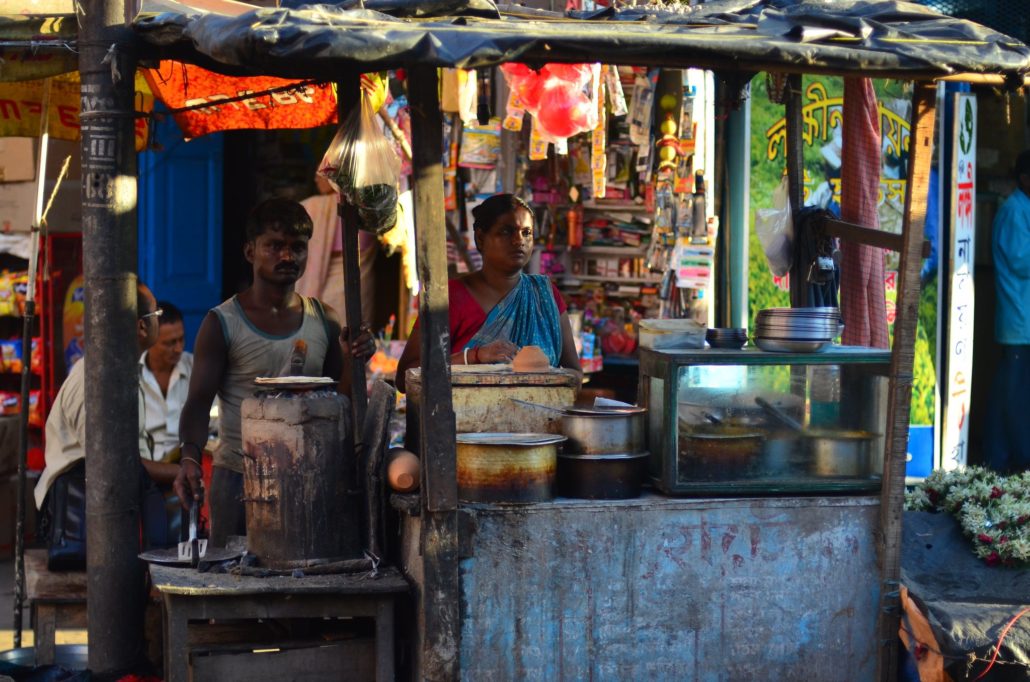
Containing several dozen of these “second life” batteries, each of which still possesses at least two-thirds of its original capacity, Nunam’s prototype is smaller than a briefcase. Yet these units provide enough energy for Bengaluru’s street vendors to light their stalls after dark and to charge their cellphones.
Nunam’s Prototype
Nunam has also developed a different prototype in collaboration with The Energy and Resources Institute (TERI), a research organization based in New Delhi that is concerned with energy, the environment and sustainability. This second model comprises electric-vehicle batteries and can provide energy to multiple shops at the same time.
One unit inside an electrical shop, for instance, powers another 39 stores in the nearby vicinity. In addition, as the owner of the shop pointed out to The Better India, Nunam’s energy devices are cost-effective. Even for those who cannot pay for electricity, a daily supply of candles can cost upward of 10 Indian rupees, while Nunam’s unit reaches 40 shops for one-third of the price, thus providing low-cost power in India.
Plus, by reusing batteries to generate electricity, the new devices reduce waste and pollution. Many countries currently recycle less than 5% of lithium-ion batteries; despite their remaining energy capacity, most discarded batteries simply end up in landfills. In a further effort to minimize its environmental impact, Nunan has also developed an app that allows its engineers to keep track of their energy units and observe the battery cells’ condition. Once Nunam sees that the batteries are nearing the end of their capacity, it retrieves the units and then recycles the fully depleted batteries.
Addressing Energy Access Through Low-Cost Power in India
Although the company is still in the process of development, its creation of energy storage systems that are both affordable and environmentally friendly has important implications for issues surrounding poverty and energy access. In India, although the government has made enormous strides in expanding the reach of power grids, roughly 2.4% of households do not have access to electricity, with most of these concentrated in rural areas. According to the Council on Energy, Environment and Water (CEEW), households without electricity pointed most often to their inability to afford the expense, while others were simply beyond power grids’ geographical reach.
Thus, one wonders if Nunam’s cheap, portable units could offer a potential solution for people who lack access to electricity, even in rural settings. At present, the storage systems can power only low-wattage devices for several hours at a time, but before 100% of Indian households undergo electrification, even charging a smartphone or lighting an electric bulb can bring significant benefits. Especially in the latter case, students are able to continue their schoolwork after dark while adults (like the benefiting street vendors in Bengaluru) can engage in productive activities to generate income.
Looking Ahead
Furthermore, Nunam’s founders hope someday to expand their operations within India and in other developing countries. Globally, more than 1 billion people lack access to light, with most living in sub-Saharan Africa and Asia. While households must spend valuable time and resources procuring fuel, doctors struggle to treat patients after sunset and pollution from indoor fires and kerosene lamps cause millions of deaths.
Therefore, by providing low-cost energy and reducing waste and pollution, Nunam’s innovation tackles several of the U.N.’s Sustainable Development Goals (SDGs) at once. Because ending global poverty necessitates ending light and energy poverty too, it will be exciting to watch the startup strive to live up to the promise of its name: “for the future” indeed.
– Angie Grigsby
Photo: Flickr

Doctors for Madagascar: Improving Medical Care
Doctors for Madagascar
Doctors for Madagascar (DfM) was founded by German doctors in 2011 after they observed the meager amount of healthcare provisions and trained professionals that were available. Its work is concentrated on providing for one of the country’s most poverty-stricken regions, being the remote south of the island.
This organization allocates immediate aid but it also wants to have a lasting impact and work toward sustainable solutions. Therefore, Doctors for Madagascar monitors its projects in the long-term to be sure that each one is reaching its maximum potential in both service and longevity. In keeping with this idea, the organization creates partnerships with doctors that are local to the south of Madagascar to base its aid on what experts in the community believe to be most necessary.
The Obstacles Madagascar Faces
How Doctors for Madagascar Offers a Solution
Doctors for Madagascar does not discriminate against the members of the communities it helps, therefore, the organization takes care of the medical costs for those who cannot afford the treatment they need. Along with covering costs, the organization also provides cost-free maternal healthcare to women. As many women are unlikely to see a doctor throughout their entire pregnancy, DfM provides access to check-ups for women.
Transportation for pregnant women has improved as ambulances are provided and free hotlines have been made accessible for communication between ambulances and Centres de Santé de Base.
DfM builds health facilities and provides construction expertise to help carry out each project. The organization also renovates medical facilities that are necessary to the community’s health, providing medical equipment that is needed in the healthcare facilities and issuing training for its maintenance. Volunteering consists of doctors joining on aid missions. Each doctor that works with the organization must have sufficient experience and have a strong background in the french language to effectively communicate and treat Madagascans as needed. The organization also offers training to local medical professionals by experienced medical professionals that work or volunteer with DfM.
The Onset of COVID-19
As each nation confronts the global COVID-19 pandemic, Madagascar is not facing its first or only crisis. Dengue fever and malaria are killing more people in Madagascar than COVID-19, yet the pandemic is still emphasizing the urgency of improvement needed in medical care and the importance of access to healthcare. In fact, it is even shaping how some of the highest authorities in Madagascar influence this important matter through their advocacy. The Bishops’ Conference of Madagascar (CEM) stated that “The health crisis reveals the importance of an efficient health structure… we believe the time has come to look for ways to improve public health as a whole.”
The Future of Madagascar
The need for medical aid in Madagascar is a pressing issue. Doctors for Madagascar has proven that through awareness, action and understanding, impoverished communities can be helped in both the short and the long term. It is true that the country faces many recurring threats but that does not mean there has been no positive change. These changes can be seen in Madagascar today, which can provide an optimistic outlook on working to reduce poverty in other countries as well.
– Amy Schlagel
Photo: Flickr
US AID for Demining Zimbabwe’s National Park
APOPO: Demining Efforts
The United States has provided a grant of $750,000 to the nonprofit APOPO to demine the Sengwe Wildlife Corridor, where a large portion of the undetonated landmines reside. The Sengwe Wildlife Corridor covers a stretch of land that connects the park to South Africa and is used regularly by migrating elephants.
The area that APOPO has been designated to work is one of the largest in the world: 37 kilometers lengthwise and 75 kilometers in width. With almost 6,000 landmines per kilometer, communities in the surrounding area are unable to access potential land for farming and endangered species are at constant risk.
The presence of the minefield prevents the elephant population of the park from migrating and potentially mixing with other elephant populations. This presents a long-term risk of limiting the already shrinking African elephant gene pool.
APOPO has established a five-year plan for demining Zimbabwe’s national park, expecting to remove all undetonated landmines from the area by 2025. It estimates that it will remove more than 15,000 landmines before the end of its operation in the corridor.
The nonprofit will be working in tandem with the Gonarezhou Conservation Trust to maintain that the process will not impede conservation goals for the park.
The project also complements USAID programs to support community-based natural resource management, provide climate-smart agricultural technologies and improve the value chain for communities to sell their products for a fair market price.
Poverty in Zimbabwe and COVID-19
Zimbabwe is currently facing severe economic hardships that have only worsened due to the COVID-19 pandemic. In 2019, 50% of Zimbabweans experienced food insecurity and 40% faced extreme poverty. This number is projected to increase as conditions worsen with the onset of the pandemic and severe droughts. Inflation in the country has been rampant, with prices of food increasing by 725%, resulting in a severe loss of purchasing power for the poor. The pandemic has impacted the already economically challenged country by decreasing trade and tourism.
Aiding Economic Recovery in Zimbabwe
The United States and APOPO hope that by clearing out the Sengwe Wildlife Corridor, ecotourism in Zimbabwe will begin to thrive. As it stands currently, only 8,000 tourists on average visit Gonarezhou National Park compared to the 1.8 million tourists that visit the neighboring Kruger National Park of South Africa. Demining Zimbabwe’s national park means providing an extended opportunity for increased tourism in the struggling country. The efforts of APOPO, with the support of the United States, may be able to help economic recovery, reduce the impact of the pandemic and uplift communities that are battling poverty.
-Christopher McLean
Photo: Flickr
How Nunam Provides Low-Cost Power in India
Millions of people around the world own smartphones, tablets and laptop computers, all of which batteries power. Inevitably, as these devices age, their batteries degrade and lose capacity. Nevertheless, even after one grows tired of constantly hunting for the charging cable and decides instead to buy a new one, it turns out that the old battery, the same “dead” battery that will likely end up in your garbage can, just might have some life in it. One startup company has emerged on exactly that premise. With offices in Germany and India, Nunam (which means “for the future” in Sanskrit) repurposes lithium-ion batteries to produce new energy storage systems and provide low-cost power in India. Funding from the Audi Environmental Foundation has recently allowed Nunam to complete a prototype and offer its units for free to street vendors in Bengaluru, India.
Nunam’s Innovation
Founders Darshan Virupaksha and Prodip Chatterjee met in 2017 when both men were looking to apply their technical backgrounds in ways that could create real social impact. Deciding that energy access was an issue they wanted to tackle, they created their lab in Bengaluru and began testing different types of batteries. Eventually, they settled on the lithium-ion cells that power laptop computers and are easily acquirable from scrap dealers.
Containing several dozen of these “second life” batteries, each of which still possesses at least two-thirds of its original capacity, Nunam’s prototype is smaller than a briefcase. Yet these units provide enough energy for Bengaluru’s street vendors to light their stalls after dark and to charge their cellphones.
Nunam’s Prototype
Nunam has also developed a different prototype in collaboration with The Energy and Resources Institute (TERI), a research organization based in New Delhi that is concerned with energy, the environment and sustainability. This second model comprises electric-vehicle batteries and can provide energy to multiple shops at the same time.
One unit inside an electrical shop, for instance, powers another 39 stores in the nearby vicinity. In addition, as the owner of the shop pointed out to The Better India, Nunam’s energy devices are cost-effective. Even for those who cannot pay for electricity, a daily supply of candles can cost upward of 10 Indian rupees, while Nunam’s unit reaches 40 shops for one-third of the price, thus providing low-cost power in India.
Plus, by reusing batteries to generate electricity, the new devices reduce waste and pollution. Many countries currently recycle less than 5% of lithium-ion batteries; despite their remaining energy capacity, most discarded batteries simply end up in landfills. In a further effort to minimize its environmental impact, Nunan has also developed an app that allows its engineers to keep track of their energy units and observe the battery cells’ condition. Once Nunam sees that the batteries are nearing the end of their capacity, it retrieves the units and then recycles the fully depleted batteries.
Addressing Energy Access Through Low-Cost Power in India
Although the company is still in the process of development, its creation of energy storage systems that are both affordable and environmentally friendly has important implications for issues surrounding poverty and energy access. In India, although the government has made enormous strides in expanding the reach of power grids, roughly 2.4% of households do not have access to electricity, with most of these concentrated in rural areas. According to the Council on Energy, Environment and Water (CEEW), households without electricity pointed most often to their inability to afford the expense, while others were simply beyond power grids’ geographical reach.
Thus, one wonders if Nunam’s cheap, portable units could offer a potential solution for people who lack access to electricity, even in rural settings. At present, the storage systems can power only low-wattage devices for several hours at a time, but before 100% of Indian households undergo electrification, even charging a smartphone or lighting an electric bulb can bring significant benefits. Especially in the latter case, students are able to continue their schoolwork after dark while adults (like the benefiting street vendors in Bengaluru) can engage in productive activities to generate income.
Looking Ahead
Furthermore, Nunam’s founders hope someday to expand their operations within India and in other developing countries. Globally, more than 1 billion people lack access to light, with most living in sub-Saharan Africa and Asia. While households must spend valuable time and resources procuring fuel, doctors struggle to treat patients after sunset and pollution from indoor fires and kerosene lamps cause millions of deaths.
Therefore, by providing low-cost energy and reducing waste and pollution, Nunam’s innovation tackles several of the U.N.’s Sustainable Development Goals (SDGs) at once. Because ending global poverty necessitates ending light and energy poverty too, it will be exciting to watch the startup strive to live up to the promise of its name: “for the future” indeed.
– Angie Grigsby
Photo: Flickr
CARE: Increasing Access to Education in Pakistan
Barriers to Education
There are several factors that make education inaccessible for children, especially for girls. The first factor is a lack of funding. Education is underfunded in Pakistan. Only 2.8% of its GDP is spent on education, which is underperforming relative to the 4% that the United Nations recommends.
Lack of funding means that there is an unfortunate shortfall of schools and not everyone can attend, decreasing access to education in Pakistan. This issue is especially pertinent in rural areas. In Pakistan’s rural areas, schools are fewer and farther between. This makes it much harder for students to get an education, especially since private schools tend to operate in urban centers.
The second barrier to education in Pakistan is social norms. Some people in Pakistan do not believe that girls should receive an education. Particularly in more conservative communities, female students can face backlash for continuing their education. Girls also tend to be married younger, and thus have to prioritize their new families above their education. This keeps girls from attending school at higher rates relative to boys.
The third obstacle to access to education in Pakistan is instability. Given the relatively unstable nature of the Pakistani government, extremist groups have been able to launch attacks on schools, specifically against girls. This deters girls from attending school since they fear for their lives. It also creates a vicious cycle of instability, where violence hurts economic output, which in turn hurts the government’s ability to fund education.
CARE Foundation: Improving Access to Education
Fortunately, humanitarian organizations are seeking to rectify these barriers to education in Pakistan. One such organization is the CARE Foundation. The Foundation seeks to improve access to education through three key programs.
The first program concentrates on building public-private partnerships. In order to improve the educational system, CARE partners with existing public schools to rebuild infrastructures, improve curriculums and make educational resources more accessible. This program also helps build necessary infrastructure investments and rebuild existing crumbling infrastructure.
Thus far, CARE has adopted 683 government-run schools across Pakistan to improve their efficacy. In adopting schools, the organization has been able to improve its function. Enrollment in CARE’s schools has gone up 400% and a 10% decrease in dropouts. Creating public schools, which are free, is crucial in ensuring students can access education in Pakistan.
The second and third programs focus on building new schools and scholarship programs. CARE is heavily involved in the construction of new schools, where the organization can apply its unique approach to training teachers and administrators. Then, CARE helps teach the government curriculum in order to help students with the existing government tests. CARE has founded and built 33 schools that are now operational and teaching students.
Although enrollment in higher education is rising, only 15% of eligible Pakistanis are enrolled in universities. However, CARE is trying to help resolve this problem through scholarship programs. Picking eligible and high performing students, CARE offers scholarships for students to attend institutes for higher education. Its focus is on students studying medicine, commerce and engineering.
With these efforts and its three key programs, CARE is working to ensure that every student in Pakistan has access to education. While there are many barriers to education in Pakistan to overcome, the government and humanitarian organizations like CARE Foundation are increasing access to education in Pakistan, increasing youth’s opportunities and job prospects.
– Thomas Gill
Photo: Flickr
Protecting African Women from a “Shadow Pandemic” Amid COVID-19
The Gender Gap and Violence against Women
Violence against women in Africa is primarily fueled by the “gender gap,” which is the difference in opportunities, status and attitudes between men and women. This gap fosters violence against women. Unfortunately, violence is so embedded within African culture that 51% of women’s reported beatings from their husbands are justified.
This attitude toward women promotes poverty because it denies basic human rights and support for mental and economic hardship. Women account for more than 50% of Africa’s population, yet only contribute approximately 33% of the continent’s domestic gross product (GDP). As a result, Africa loses approximately $95 billion each year due to the gender gap.
The “Shadow Pandemic”
Africa has called the violence against women an epidemic long before COVID-19. However, violence against women in Africa has been on an alarming rise since the start of COVID-19 and the subsequential lockdowns. The United Nations calls it a “shadow pandemic,” or “in the shadow of the pandemic.”
During COVID-19, countries across the continent have reported much higher cases of violence. In Kenya, nearly 4,000 girls became pregnant during the lockdown from sexual assault. The main issue is that women and girls have such low status in Africa. Women are seen as easily disposable objects for men’s use and pleasure. With the loss of jobs, decreasing resources and being contained inside homes for lockdowns, women are at the mercy of husbands, fathers or other males living in their homes.
Organizations Fighting to End Violence Against Women in Africa
Several organizations have risen up to end the violence against women in Africa. These organizations are working hard to protect and empower women with economic opportunities. Spotlight Initiative and Alliances for Africa are a couple of organizations that are doing tremendous work to lead Africa into their 2063 vision amid COVID-19.
Spotlight Initiative is a partnership between the United Nations and European Union, whose goals are to eradicate violence against women by 2030. It is the largest global initiative working to eliminate violence against women and girls. Currently, the Spotlight Initiative advocates for interventions for African women, such as integrating prevention efforts for violence against women in COVID-19 response plans and addressing gender gaps in legislation and policy on COVID-19.
Alliances for Africa (AfA) is an international African-led organization advocating for human rights, peace and sustainable development. Its vision is to contribute to eliminating the causes of poverty in Africa. The organization’s six focus areas are poverty, hunger, health and well-being, quality education, gender inequality and clean water and sanitation. All of these focus areas are a part of the AU’s 2063 agenda mentioned earlier. AfA partnered with the Open Society Initiative for West Africa to support 120 rural women farmers during COVID-19. Each woman could revive and sustain their production, have access to markets and stay informed on COVID-19 preventive measures.
Countries worldwide are struggling to manage the socio-economic consequences of the COVID-19 pandemic. However, issues like violence against women have risen during the COVID-19 lockdowns, affecting millions of women around the world. In Africa, the “shadow pandemic” is a growing concern amid an unprecedented crisis. Organizations like Spotlight Initiative and Alliances for Africa are working to alleviate the “shadow pandemic” but there is still much to be done to end violence against women and achieve gender equality. African governments and humanitarian organizations must continue their efforts to save women from facing another epidemic amid COVID-19.
– LaCherish Thompson
Photo: Flickr
Addis Guzo: Supporting People with Disabilities in Ethiopia
Aiding People with Disabilities in Ethiopia
Although the country has dedicated itself to helping people with disabilities through agreements like the 2006 African Decades of Disabled Persons, structural barriers have made it rather difficult to truly support people.
However, some organizations are starting to addressing the lack of resources for people with disabilities in Ethiopia. One such program is Addis Guzo. Founded in 2012, this Switzerland-based NGO supports people with disabilities in Ethiopia through integration efforts, as well as by educating the public. In order to benefit the local communities, the NGO is also staffed entirely with people from Ethiopia.
Addis Guzo’s Programs
There are two important programs that Addis Guzo runs to help people with disabilities in Ethiopia. The first is the Wheelchair Workshop. Every year, Addis Guzo collects wheelchairs in Switzerland and sets up a program so that people who need a wheelchair in Ethiopia can get a new wheelchair or repair their existing model. The program has a large impact, collecting around 600 wheelchairs annually.
Wheelchairs can be important tools to drastically improve the lives of their users by enabling mobility. Without wheelchairs, it can be difficult for people with disabilities to live the lives they want, or to do more traditional work. Having a wheelchair can improve this situation by helping people integrate themselves by enabling them to travel long distances for work or be active for longer periods of time. In fact, a study of wheelchair users in Ethiopia estimated that using a wheelchair increased the probability of employment by 15%, as well as increased wages and average hours of work
The second program is Rehabilitation, Economic Empowerment and Sports. The goal of this program is to give people living with disabilities in Ethiopia hope for the future by supporting them in a wide variety of ways. This includes business partnerships, sports leagues and counseling.
Supporting People with Disabilities in Ethiopia
Such programs offered by Addis Guzo are essential to help build skills among people with disabilities in Ethiopia and foster inclusion. Sports can give people leadership and teamwork skills they may not have otherwise developed. Additionally, sports can help build community among players, helping people to network and build important connections that they can use later in life. Programs like the one put forth by Addis Guzo can foster these connections and help people with disabilities integrate themselves into society, something Ethiopia has historically struggled with.
– Thomas Gill
Photo: Flickr
Online Human Trafficking During COVID-19
The Human Trafficking Crisis
Human trafficking has long posed a threat to the safety and well-being of the world’s most vulnerable populations. The U.N. has stated that between 2017 and 2018, approximately 75,000 trafficking victims were identified in 110 countries. During this period, 70% of victims were female, 77% of whom were then trafficked for sexual exploitation and 14% for forced labor.
There are several factors that make a person more vulnerable to human trafficking. The most pressing factor, however, is financial struggles or poverty.
Online Human Trafficking and COVID-19
Human trafficking is on the rise as millions are made desperate by the economic consequences of COVID-19. People employed in informal sectors have been particularly impacted by layoffs, while earlier this year migrant workers were left stranded far from home when borders closed and travel bans were implemented. According to the World Bank, the COVID-19 pandemic will result in global extreme poverty increasing for the first time in two decades, pushing as many as 150 million people into poverty by 2021.
The impact, however, will be felt the hardest by females. As a result of the pandemic, 47 million more women and girls will be pushed into extreme poverty. Estimates even predict that globally, for every 100 men living in poverty in 2030, there could be as many as 121 women.
Besides COVID-19’s economic consequences, traffickers have also benefited from the fact that people are spending more time online during lockdowns. While traffickers have usually operated with a great deal of impunity, the internet allows for easier access to vulnerable populations as well as the benefits of anonymity and false identities.
Addressing Human Trafficking During COVID-19
Human trafficking is a global problem but despite the scale of the threat and the advantages that perpetrators have during COVID-19, governments can take action to protect vulnerable groups, especially women and girls.
In an appeal to social media and messaging companies, CEDAW recommended that safety controls be set up to reduce the risk of exposing women and girls to trafficking and sexual exploitation. CEDAW has called upon online platforms to use data, artificial intelligence and analytics to identify possible patterns that could lead to trafficking. It also urges platforms to “put in place the appropriate governance structure and procedures which will allow them to be reactive in their response and provide the relevant level of information to the concerned authorities.”
CEDAW also urged governments to resolve the underlying issues that allow human trafficking to flourish. These issues include sex-based discrimination, economic insecurity, conflict and unsafe conditions for migrants and displaced people.
In addition, the United Nations has urged national governments to ensure that services for trafficking victims and survivors stay open during lockdowns and that the rights of migrant and informal workers are protected by labor laws. Finally, investments in programs for women’s economic empowerment are encouraged as a means of mitigating the disproportionate economic impacts on females. With the appropriate measures in place, human trafficking during COVID-19 can be prevented.
– Angie Grigsby
Photo: Flickr
Haya Joint Programme Reduces Violence Against Women in Palestine
Program Background
The Haya Joint Programme is a Palestinian human rights program aimed at ending violence against women through education and intervention. The government of Canada funds the initiative, which works with a variety of United Nations organizations, such as U.N. Women, U.N. Office on Drugs and Crime and the U.N. Population Fund. The Haya Joint Programme also works with Palestinian law enforcement and government agencies to implement efforts at local levels.
The program seeks to change existing attitudes about gender violence through community education. It accomplishes this by teaching educators intervention techniques for those facing domestic violence. Furthermore, the program pushes for essential legislative change to provide further legal protection for women.
Forensic Training for Gender Violence Justice
The Palestinian Central Bureau of Statistics reports that an overwhelming number of women have experienced violence by a partner. This emotional and physical hardship has directly affected more than half of all women in the Gaza Strip and 30% of women who have ever married in the West Bank. Only 1% ever reported these events to law enforcement.
In a press release on January 5, 2021, U.N. Women announced its collaboration with the Haya Joint Programme. The announcement indicated a plan to increase forensic science training at the West Bank’s only forensic lab for cases of domestic violence. Training includes instruction of lab equipment, preserving crime scene evidence and forming opinion evidence on behalf of gender violence survivors. In the last year alone, the lab assisted with presenting forensic evidence to the court for 1,690 cases.
Moreover, this training aids in the identification and prosecution of perpetrators in cases of sexual assault and homicide. Police, crime scene and family protection officers also received training for handling and preserving crime scenes through this program.
Training for Teacher Intervention
Another crucial aspect of the Haya Joint Programme is to increase education and awareness surrounding gender and domestic violence. The program conducts training courses for teachers on topics related to intervention and legal rights for women and girls in Palestine.
In the last year, the Palestinian Centre for Human Rights held multiple training sessions with the Haya Joint Programme for educators teaching in United Nations Relief and Works Agency (UNRWA) schools in the Gaza Strip. The training sessions include lessons on how teachers can recognize gender violence among students and provide counseling and other resource referrals to those who need it. Teachers also learn about women’s legal rights in instances of violence and the courses of legal action to take.
The program has had to adapt to COVID-19 precautions in the last year but conducted its training sessions via Zoom during November and December. These sessions were still widely attended by 129 teachers and females accounted for 103 attendees.
A Global Issue
The Haya Joint Programme notes that these efforts to diminish violence against women are in alignment with the United Nations Sustainable Development Goals for 2030. Goal 5 is to reach gender equality by working to increase women’s education, increasing the number of women in government positions and reducing domestic violence.
With one in five women experiencing intimate partner violence every year, initiatives like the Haya Joint Programme are essential. Fortunately, the program is attempting to reduce the prevalence of these offenses by supporting women and girls in obtaining justice. The Haya Joint Programme focuses on core problems by working directly on factors like securing legal rights and changing attitudes. As its efforts are paramount to Palestine’s prosperity, the program looks toward a successful future.
– June Noyes
Photo: Flickr
How Moral Leaders Champion Global Change
Moral Leadership
What makes a moral leader? According to Acumen’s founder, there are five central features: commitment, moral imagination, persistence, courage and faith in improvement. Commitment, persistence, courage and faith are familiar virtues that can be applied to purposeful contributions toward global poverty reduction. Moral imagination is a way of thinking that fosters targeted and more effective innovation. It involves having the humility to see the world as it is and the audacity to imagine the world as it can be. All of the above qualities are important to developing effective solutions to problems of poverty and are exhibited by moral leaders.
Moral Leader Aniket Doegar
Aniket Doegar, an Acumen fellow, is an example of a moral leader that Acumen has invested in. He possesses all five traits of a moral leader and his life’s work has shown this. An issue of particular interest to Doegar was the fact that only 40 million of 125 million farmers in India received full benefits from a national government initiative. One reason for this is that many qualifying citizens do not know about the benefits available to them. Doegar realized this and co-founded Haqdarshak, a mobile platform that connects citizens with the welfare benefits they qualify for.
Doegar took bold steps to solve a problem of poverty on a national level that he believed could be solved. He made a commitment to problem-solving at a young age, influenced by moral leaders in his life. His mother taught at schools for low-income families and his aunt taught children with special needs. Doegar’s dedication, persistence and faith surrounding social change turned into results for those in poverty through morally imaginative and courageous efforts.
Haqdarshak
Haqdarshak has screened 300,000 applicants and connected 250,000 to government welfare benefits. Acumen invested in Haqdarshak in September 2020, noting the fundamental values of the enterprise. Haqdarshak has grown from processing 500 applications a month to 36,000 applications a month. Amid the increased need for welfare benefits and Acumen investment, Doegar has set the goal to reach 100 million connected citizens by 2030.
Acumen Academy for Future Leaders
In 2020, Acumen launched Acumen Academy. Acumen Academy encourages moral leadership globally in a variety of ways. It is available to individuals and organizations as an online library of courses and other resources on leadership, innovation and social change toward global inclusion. Acumen Fellows started in 2006, form a cohort of moral leaders who have completed a year-long program at Acumen Academy that promotes empathy, immersion, understanding and action. Fellows commit to social change and together are more accountable, informed and innovative. Doegar is just one example of many Acumen fellows who have sparked change.
Moral Leaders for Global Poverty Reduction
Investments and support for moral leaders around the world are important for the continued reduction of global poverty. Acumen’s manifesto encourages everyone to embrace the qualities of effective, empathetic leaders. Embracing moral leadership and the perspective that all citizens of the world are born equal, helps further necessary global inclusion amid a time of rapid development and increasing need.
– Payton Unger
Photo: Flickr
5 Facts About Food Security in Kuwait
Top 5 Facts About Food Security in Kuwait
Kuwait Works with FAO
Although fighting domestic poverty has long been a priority for Kuwait, the growing presence in foreign policy is exciting. Kuwait’s current work with the Food and Agriculture Organization (FAO) of the United Nations to combat hunger in Syria is just one example of this transition. In May 2019, Kuwait donated $3 million to the FAO, securing 200 kilograms of enhanced wheat seeds for 20,000 Syrian farmers and their families. Consequently, Kuwait has helped to bolster both agricultural production and food security in Syria. Kuwait’s involvement in eliminating poverty in Syria builds on its partnership with the FAO in Yemen, Somalia, South Sudan and Nigeria, where it has achieved similar success in improving food security.
As collaboration develops between nations to eliminate poverty, the ability to achieve other humanitarian goals will significantly increase as well.
– Alex Berman
Photo: Pexels