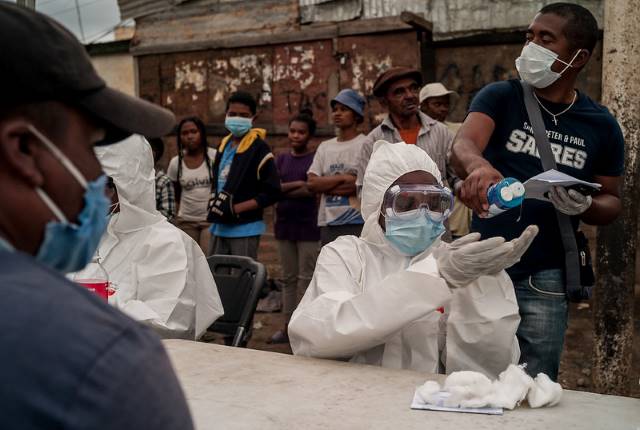
 In 2021, COVID-19 is still rampaging across the globe, and despite efforts from the wealthiest nations, it has yet to drop down to non-pandemic status. Africa, a continent with a population of more than one billion, has reported 1.5 million cases and only 46,000 deaths as of November 2020. The smaller fatality numbers across Africa can be attributed to several different factors that are impacting COVID-19 in Africa.
Fast Action
The first case of COVID-19 in Africa was reported on February 14, 2020, in Egypt. Other countries across the continent immediately took action fearing that the virus would severely affect at-risk communities such as the elderly and those who are immune-compromised. Protocols such as frequent hand washing, avoiding physical touch-based greeting, social distancing and face masks were implemented right away.
Countries such as Lesotho acted before a single case was reported, going into a three-week lockdown on March 18, 2020, along with surrounding countries. A few days after lifting the lockdown, Lesotho announced its first confirmed COVID-19 case. However, despite the country having a population of more than two million people, as of October 2020, only 1,700 cases and 40 total deaths were reported in Lesotho.
Public Cooperation
Public support has contributed to the lower case numbers across Africa, impacting COVID-19 in Africa overall. More populated countries such as South Africa reported the highest number of COVID-19 cases at more than one million while Western Sahara reported only 10 cases.
According to polls taken in August 2020, almost 70% of adults completely adhered to washing their hands and wearing face masks in public and roughly 60% adhered to avoiding handshakes and public gatherings. Furthermore, roughly 45% of adults avoided places of worship.
Lockdown restrictions came at a huge cost across the continent as a reported 2.2 million jobs were lost in South Africa during the first half of 2020. Many countries across the continent were forced to reopen their economies despite high cases. According to a PERC report, six in 10 citizens felt it was necessary for the economies to reopen.
Reports suggest that African citizens continue to see COVID-19 as a serious threat, but the economy remains an equally important factor. Citizens generally agreed to continue to adhere to the restrictions in order to keep cases down while allowing the economy to reopen.
A Younger Population
Africa is home to the largest population of young people in the world, with a median age of 19. The young population is a major contributing factor as to why fatalities from the virus have stayed low. This is due to the vast majority of the population not being in the at-risk range. The World Health Organization reports that 91% of COVID-19 cases in sub-Saharan Africa affected people below the age of 60 and more than 80% of those infected were asymptomatic.
The elderly form only 3% of the population across Africa while continents such as Asia, North America and Europe have the largest population of elderly in the world. Many African countries also do not have many retirement homes, which are superspreaders for the disease. The elderly across Africa move from cities where they worked back to rural areas when they retire. These rural areas are less populated and allow for better social distancing practices, making the spread of the virus less rapid.
Transportation also contributes to fewer cases. With no well-developed transportation system to transport those in and out of the city, the virus has not been able to spread as significantly in comparison to places such as the U.K. with major transportation lines that lead to the rapid spread of viruses such as COVID-19.
The Road Ahead
Many have speculated that Africa’s low case numbers could be attributed to African immunity. The above reasons show that Africa has in fact successfully managed the COVID-19 pandemic due to fast and early action to curb the spread of the virus, adherence to public health measures and a younger population.
– Claire Olmstead
Photo: Flickr

The Tug-of-War Over Women’s Rights in Malaysia
Gender Inequality in Malaysia
As 61.3% of the population are Muslims, there are groups that hold either traditional or progressive views regarding a woman’s place in society. Despite the various views exhibited toward this issue, women are continually moving forward to gain their rightful equality. Although women are taking up increased positions of leadership within the workforce, gender inequality is still prevalent.
In terms of global figures, according to the UNDP, women, in general, earn $0.23 less for each dollar that men make. In addition, one in three women has endured physical or sexual abuse and close to 750 million women have been involved in child marriages while only 13% of females are agricultural landholders. Furthermore, women only constitute 24% of the national parliamentarians as of November 2018.
Sisters In Islam (SIS)
As a majority of Malaysians are Muslims, there is an NGO that focuses on protecting the rights of Muslim women. Sisters in Islam (SIS) is an NGO that works toward fighting for Muslim women’s rights in Malaysia. In 1988, a group of Muslim women created SIS to tackle the issue of unjust treatment of women under Islamic law. SIS believes that because men had the major control of interpreting the Qur’an in history, they have misinterpreted some aspects in order to justify their cultural actions. As a result, women are placed in a lower position than men. Thus, SIS focuses on researching hermeneutical interpretations of the Qur’an that encourage the equal treatment of women within the Islamic framework.
The main focus of SIS is to reform the laws and policies that oppress women’s rights. It also raises awareness of issues such as child marriages, female genital mutilation and polygamy. Additionally, the NGO advocates for women to gain equal rights to their children as well as freedom of expression and religion. The organization also operates a free helpline called Telenisa, providing Muslim families with free legal advice on basic rights and Shariah law.
Pushback on Progressive Women’s Rights
Although NGOs like SIS promote more progressive views on advocating for women’s rights, there are groups that push back against ideals. SIS has been under scrutiny for its attempts to reinterpret the Qur’an. The established principles of Islam state that only those who have had traditional religious education can have the authority to interpret and discuss this doctrine. Thus, the women at SIS do not have any right to interpret the Qur’an as they are doing in the traditional sense, according to critics.
The Selangor Fatwa Committee and the Selangor Islamic Religious Council issued a fatwa on the SIS in 2014. The fatwa stated that the group was deviant as it promoted liberalism. In addition, the religious pluralism that SIS promoted did not follow Islamic teachings. Moreover, in 2019, a court dismissed an attempt to challenge the fatwa. The civil court decided that the fatwa is linked to Shariah state law and not the federal court. Fortunately, the High Court has temporarily suspended the fatwa in 2020 as the SIS continues to appeal its case.
With groups such as SIS fighting for women’s rights in Malaysia, the country is moving toward achieving gender equality. Furthermore, if more women come into leadership, then a greater possibility of reform exists. Humanitarian organizations and Malaysia’s government needs to address the gender inequality in Malaysia in order to open the country to new economic opportunities, progressive growth and equality. By furthering Malaysia’s approach to gender equality, the global community will take one more step toward global justice and equity.
– Hakyung Kim
Photo: Flickr
Factors Impacting COVID-19 in Africa
Fast Action
The first case of COVID-19 in Africa was reported on February 14, 2020, in Egypt. Other countries across the continent immediately took action fearing that the virus would severely affect at-risk communities such as the elderly and those who are immune-compromised. Protocols such as frequent hand washing, avoiding physical touch-based greeting, social distancing and face masks were implemented right away.
Countries such as Lesotho acted before a single case was reported, going into a three-week lockdown on March 18, 2020, along with surrounding countries. A few days after lifting the lockdown, Lesotho announced its first confirmed COVID-19 case. However, despite the country having a population of more than two million people, as of October 2020, only 1,700 cases and 40 total deaths were reported in Lesotho.
Public Cooperation
Public support has contributed to the lower case numbers across Africa, impacting COVID-19 in Africa overall. More populated countries such as South Africa reported the highest number of COVID-19 cases at more than one million while Western Sahara reported only 10 cases.
According to polls taken in August 2020, almost 70% of adults completely adhered to washing their hands and wearing face masks in public and roughly 60% adhered to avoiding handshakes and public gatherings. Furthermore, roughly 45% of adults avoided places of worship.
Lockdown restrictions came at a huge cost across the continent as a reported 2.2 million jobs were lost in South Africa during the first half of 2020. Many countries across the continent were forced to reopen their economies despite high cases. According to a PERC report, six in 10 citizens felt it was necessary for the economies to reopen.
Reports suggest that African citizens continue to see COVID-19 as a serious threat, but the economy remains an equally important factor. Citizens generally agreed to continue to adhere to the restrictions in order to keep cases down while allowing the economy to reopen.
A Younger Population
Africa is home to the largest population of young people in the world, with a median age of 19. The young population is a major contributing factor as to why fatalities from the virus have stayed low. This is due to the vast majority of the population not being in the at-risk range. The World Health Organization reports that 91% of COVID-19 cases in sub-Saharan Africa affected people below the age of 60 and more than 80% of those infected were asymptomatic.
The elderly form only 3% of the population across Africa while continents such as Asia, North America and Europe have the largest population of elderly in the world. Many African countries also do not have many retirement homes, which are superspreaders for the disease. The elderly across Africa move from cities where they worked back to rural areas when they retire. These rural areas are less populated and allow for better social distancing practices, making the spread of the virus less rapid.
Transportation also contributes to fewer cases. With no well-developed transportation system to transport those in and out of the city, the virus has not been able to spread as significantly in comparison to places such as the U.K. with major transportation lines that lead to the rapid spread of viruses such as COVID-19.
The Road Ahead
Many have speculated that Africa’s low case numbers could be attributed to African immunity. The above reasons show that Africa has in fact successfully managed the COVID-19 pandemic due to fast and early action to curb the spread of the virus, adherence to public health measures and a younger population.
– Claire Olmstead
Photo: Flickr
A Seat at the Table of Education: Tutudesk Campaign
Education for Poverty Reduction
An adequate education can be the deciding factor in whether an impoverished child is able to progress out of poverty in adulthood. UNESCO’s Global Education Monitoring (GEM) team conducted an analysis of the influence of education on poverty in 2017. It was found that an estimated 420 million people could be alleviated from poverty with the completion of secondary education, reducing the number of global poor by half and reducing the number of poor people in sub-Saharan Africa and South Asia by two-thirds. Since school desks are essential for education, organizations are putting desks at the forefront of their initiatives.
The Tutudesk Campaign
South African human rights activist, Desmond Tutu, founded the Tutdesk campaign in 2012 in partnership with the United Nations Special Envoy for Education. The Tutudesk campaign recognized the dire need for school desks and workstations for students throughout sub-Saharan Africa. The campaign aims to supply portable and sustainable workstations for children in need of desks both in school and at home. Made from a robust, child-friendly blend of polymers, the Tutudesk workstation can last the duration of a learner’s school career. Since its launch, the nonprofit organization has provided more than 1.5 million desks to disadvantaged children. The Tutudesk campaign believes that the Tutudesk provides a viable solution to literacy development and the general infrastructure crisis. The organization’s current goal is to combat the severe desk scarcity throughout sub-Saharan Africa by delivering 20 million desks to children in need by 2025.
The K.I.N.D. Campaign
Lawrence O’Donnell in collaboration with UNICEF launched the K.I.N.D. (Kids in Need of Desks) campaign in 2010. When visiting Malawi school teachers expressed the dire need for school desks to O’Donnell. O’Donnell collaborated with UNICEF and a local woodworking shop to fund the production of 30 school desks. This small initiative developed into the K.I.N.D. campaign. The organization seeks to provide desks for schools in Malawi as well as secondary school scholarships for Malawian girls. The K.I.N.D. campaign has brought desks to more than 938,000 Malawian children. The K.I.N.D. campaign hopes to enhance education for children in need through its efforts.
Desks, Education and Poverty Reduction
Education is the gateway to economic progression and thus the answer to solving global poverty. School desks play a prominent role in this. Quality education can provide a way out of poverty for poverty-stricken children around the world. By providing desks to the impoverished, the K.I.N.D. campaign and the Tutudesk campaign address both education and poverty simultaneously.
– Imani Smikle
Photo: Flickr
Strategies to Combat Poverty in Romania
Poverty in Romania
At the time these measures passed into law, 40.2% of Romanian people were at risk of poverty and social exclusion. Furthermore, absolute poverty in Romania increased from 23.4% in 2008 to 27.7% in 2012. Low educational attainment, intergenerational transmission of poverty and lack of inter-regional mobility all contribute to the integral causes of poverty in Romania.
However, the Romanian government set a substantial and significant new precedent on how the nation combats poverty by adopting The National Strategy and Strategic Action Plan on Social Inclusion and Poverty Reduction for 2015-2020. These measures hope to reduce the many causes of poverty in Romania.
Key Measures:
These measures were an encouraging shift in political focus that revolved around social benefits and a more community-based and integrated approach that generated widespread support. The World Bank supports these measures, commenting that these measures will strongly contribute to narrowing poverty gaps in the country.
Impact of Poverty Reduction Strategy
Since the adoption of these measures, monthly income per person increased by 10% between 2016 and 2017 and by 16% between 2017 and 2018, in part due to the increases in public-sector wages and improved minimum wages and tax cuts. As a result, poverty rates fell from 28.4% in 2014 to 15.8% in 2017.
Currently, the employment rate at 68.8% is approaching the EU 2020 target and is just below the EU average of 72.2%. Additionally, the unemployment rate is one of the lowest in the EU at 4.9%.
Implementation Delays Cause Concern
Although clear steps toward improving Romania’s struggle with poverty have emerged, these measures have received criticism as expectations have determined that many measures could have delayed or minimal results. These concerns were further exacerbated in 2017 when a change in government occurred. The political change delayed implementation and altered the original plan, putting full implementation in jeopardy.
In addition, more legislation is necessary to address the growing condition of the Roma minority group residing in Romania. A whole 78% of Roma are at risk of poverty compared to 35% for non-Roma citizens. Furthermore, 84% of Roma households do not have access to a water source, sewage or electricity. To successfully combat poverty in Romania, the Roma need to be prioritized.
Poverty Reduction Progress
While no single piece of legislation will be the end all be all to combat poverty in Romania, the anti-poverty measures passed in 2015/2016 have shown that a top-down, legislation-focused approach to fighting poverty can lead to progress, poverty reduction and improved social inclusion.
– Andrew Eckas
Photo: Flickr
Germany and the EU’s Aid to Senegal
Incoming Aid to Senegal
In a press release on November 11, 2020, Germany and the European Union (EU) announced the approval of relief funding for Senegal — €112 million in EU funding and €100 million in funding from Germany itself. The EU has a broader history of aid to Senegal, with more than €1 billion worth of aid sent from 2014 to 2020. Germany also has a history of friendship with Senegal as the two entered into a reform partnership in 2019. The amount of aid rendered illustrates the strong commitment of both the EU and Germany to Senegal’s economy. The money will go toward Senegal’s COVID-19 stimulus program and will enable the government to continue relief efforts for its population.
German development minister, Gerd Müller, is strongly in favor of aid to Senegal and described many problems currently ailing Senegal’s economy. Nearly half of the country faces unemployment and the shrinking economy will especially impact small and medium businesses, which make up 90% of all Senegalese jobs. Müller says, “We must not forget that the consequences of COVID-19 are far more dramatic in developing countries.”
Impact of Aid to Senegal
Müller is optimistic that the aid will enable the protection of jobs and the production of medical equipment necessary to fight COVID-19. The Senegalese government also began a program for businesses to receive cash loans for support.
Although Senegal’s economy is robust, it is still dependent on foreign aid to finance these measures. Aside from the aid coming from the EU and Germany, the World Bank approved $100 million worth of aid back in June 2020, demonstrating a need for further funding to prevent larger setbacks in Senegal’s economy.
An Admirable COVID-19 Reponse
The way that Senegal handled the COVID-19 pandemic itself has received praise throughout the world. It ranks second only to New Zealand on Foreign Policy’s Global COVID-19 Response Index, which measures the response of national leaders to the pandemic. The country took broad health safety measures at the beginning of the crisis, which had an unfortunate impact on Senegal’s economy. International aid to Senegal plays a large role in the country’s recovery from the impact of COVID-19.
– Bradley Cisternino
Photo: Flickr
5 Social Issues Dividing Nigeria
5 Social Issues Dividing Nigeria
Global Giving
Global Giving is an organization that connects other nonprofits with potential donors. It works with individual donors, other nonprofits and companies to help them safely donate anywhere in the world. Since 2002, Global Giving has assisted in raising $526 million for causes around the globe. So far, 27,941 projects are in place in 170 different countries.
One project Global Giving is helping with is the Empowering Victims of Boko Haram Violence in Nigeria project. The Center for Sustainable Development and Education In Africa started this project to help victims of Boko Haram. The project aims to build a “skills acquisition center” in North-Eastern Nigeria to give support to rape victims, widows and others the terrorist group affected. In two years, the project raised $28,500.
The CSDEA has another project called Save Street Children in Nigeria. The goal of this project is to help 1.5 million homeless children get off the streets. If the project raises $25,000 then 10,000 children can go to school and receive food and shelter. In the past two years, the cause has collected $1,055. One can make donations at Global Giving’s projects.
– Jessica LaVopa
Photo: Flickr
Mobile Technology in Kenya Helps Farmers
Cellphone and Internet Acess in Kenya
The mobile phone industry has been steadily growing in Kenya. According to a survey of 577 farming households, 98% of respondents own a mobile phone. The increasing affordability of cellphones and internet access in the country has opened the door to bring new forms of aid to the farmers who produce more than a third of the country’s GDP.
Project FARM
Mobile apps that machine learning powers have emerged to help farmers all over the world make as much from their crops as they can. In Kenya, which has been experiencing unpredictable levels of rainfall each season, a mobile app is working to consolidate data to help determine the best course of action for the farmers during changing weather conditions. Project FARM (Financial and Agricultural Recommendation Models) is a program that can take into account weather, temperature, strains of crops and success rates from other farms in order to determine what actions will produce the largest yield. FARM sends notifications to farmers via text so that they can be readily alerted of any danger as heavy rain can occur suddenly and damage entire fields. Farmers can operate the program from their cellphones so they can easily access and implement the resources. After just one year using FARM, on average, a single farmer increased their yield from six 90kg bags of maize to nine bags.
AI Apps as an Educational Resource
Programs like this also work in conjunction with resources that seek to educate farmers about ways to sell their products as well as how to maximize efficiency and yield. These resources are free and greatly help those who could not afford to hire an agronomist to inspect their farm. This combination helps farmers produce more and know how to manage more products so that they can sell them in the most efficient way possible.
Apps for Crop Pest Control
AI also helps farmers by giving them valuable information about crop-decimating pests. Pests pose a grave threat to African farms and estimates have determined that Africa loses around 50% of all crops each year due to pests and diseases. The Fall Armyworm (FAW) is a type of caterpillar that has recently plagued East Africa and is capable of ruining huge amounts of produce. The Farmers Companion App is a program that AI powers which is capable of determining which crops are infested and the stage of the lifecycle of the pest. This will allow farmers to take the best possible steps to contain the spread. Another app, PlantVillage Nuru, is capable of diagnosing crop diseases without an internet connection.
Mobile Technology in Kenya Helps Agriculture
Mobile technology in Kenya is an important step to help farmers deal with the evolving problems of the 21st century. With agriculture being such an important industry in Kenya and with so much of the produce at risk each year, it is vital for the economy and wellbeing of the country that crops are protected and that yields are produced at an effective rate. These types of developments in AI and mobile technologies have the potential to significantly help the livelihoods of millions of farmers in Kenya and other countries too.
– Jackson Bramhall
Photo: Flickr
Innovations Reducing Poverty in Israel
Situated on the east coast of the Mediterranean Sea, Israel has a population of 8.6 million people and an annual GDP of $350 billion as of 2017. As a global innovator in technology and science, it is often referred to as the “start-up nation”. One might assume that poverty would not plague a country with such a flourishing international economy. However, even people living in countries with strong economies experience poverty.
Poverty in Israel
The challenge of reducing poverty in Israel is at the forefront of low-priority socio-economic issues. The lack of attention can be attributed to the Israeli government’s focus on security. As of 2018, more than 21% of Israel’s population was living below the poverty line. One in three children across the state lives in poverty. For a country that has seen so much economic growth in the last decade alone, the idea that over a fifth of its citizens is unable to sustain themselves is hard to swallow. Nevertheless, several key factors explain just why the number of people living in poverty is so high.
Of those living beneath the poverty line in Israel, several social groups have been particularly affected. Single mothers constitute one group, though in recent years the percentage of Israeli single mothers in poverty has declined. Israel’s disabled population makes up another substantial group of its poor. The groups most significant and crucial to understanding Israel’s poor, however, include Orthodox Jews and Arab communities. Devoted to full-time religious study, many Orthodox Jews do not work and depend on state-issued pensions.
Discrimination in Israel’s social order and workplaces have contributed to the significant increase in unemployment in Arab communities. While these groups continue to struggle, a number of Israeli NGOs have produced innovations that are key to reducing poverty in Israel.
Pitchon-Lev
The largest humanitarian organization in the state of Israel, Pitchon-Lev, aids more than 168,000 Israelis per year. Its campaigns range from ensuring Israel’s children have enough food to lobbying for direct government aid for the poor. Pitchon-Lev’s success in combating poverty in Israel is due to innovation in a surprising arena: personal connections. Pitchon-Lev’s team of volunteers develop close and personal relationships with those whom they aid, giving the impoverished the friendships and tools they need to rebuild their lives. With its personal connections to the people it helps, Pitchon-Lev is truly striving towards reducing poverty in Israel.
Latet
In Hebrew, Latet means “to give,” and the NGO Latet does just that. As the head of Israel’s largest food bank, Latet is known for its continued fight against both poverty and hunger in Israel. Latet has aided a wide range of diverse groups, from Israel’s youth to Holocaust survivors. Its innovation in reducing poverty in Israel appears simple, but it is effective: promoting responsibility. Volunteers of the organization teach ideals of care for others and shared responsibility for the state of the country’s citizens. They aim to spread these values not only to those whom they assist, but also to the general Israeli public. By encouraging these ideals, Latet aims to push the issue of national poverty further into the public eye, and eventually into the government’s priorities as well.
Shalva
As previously mentioned, Israel’s disabled population makes up one of the largest groups of the country’s poor. As Israel’s leading NGO in the care of disabled persons, Shalva provides more than 2,000 services for disabled people in areas ranging from education to vocational training. Shalva’s innovation in combating poverty is perhaps the most important of all: promoting equal opportunity. All of Shalva’s programs are non-denominational. This provides disabled persons from all religious and social backgrounds the help they need to bring themselves out of poverty. Shalva has national recognition from the Israeli Ministry of Social Affairs and Social Services and the Ministry of Health. It continues to be one of Israel’s most innovative NGOs for citizens with special needs.
Despite its global success as an innovator in science and modern technology, Israel still has a long way to go in terms of prioritizing its own people over international beneficiaries. Thankfully, organizations such as Pitchon-Lev, Latet and Shalva have proven that this small nation is working toward a better future.
– Alex Poran
Photo: Flickr
Healthcare Innovations in Africa
Medical Drones
Doctors in Rwanda are able to order blood or medical supplies via text message and have them delivered to remote areas via drones. The drones facilitate the timely availability of blood supply for medical use in hard to reach areas. Transfusions of blood are critical for situations involving significant blood loss due to hemorrhage during pregnancy or child delivery. Blood transfusions are also necessary for women with severe anemia. This innovation thus reduces maternal mortality rates in Africa.
Pelebox
Pelebox is a smart locker that dispenses medication for patients. When the patient’s medicine is ready for pickup, they receive a text with a code that opens the locker. Before Pelebox, patients would wait hours in line with other sick people to receive their medicine which would further spread diseases. The hope is that this innovation will also lighten the load for medical staff, allowing them more time to focus on critical needs.
KidzAlive Talk Tool App
The KidzAlive Talk Tool app uses games and animated videos to educate children in South Africa about HIV/AIDS and combat stigma at the same time. The stigma of HIV/AIDS prevents people from accessing treatment. The KidzAlive Talk Tool app seeks to end this stigma and educate children to prevent the spread.
Crib A’Glow
The Crib A’Glow is a portable, solar-powered crib that utilizes LED lights to treat jaundice in babies. Roughly 3.3 million babies in sub-Saharan Africa do not receive proper treatment for jaundice, which can lead to hearing loss, cerebral palsy, mental struggles and even death. A whole 600 babies with jaundice have already received treatment with Crib A’Glow.
With the onset of COVID-19, innovations emerged to address the issue of limited healthcare resources in Africa and prevent the spread of COVID-19.
Tippy Tap
The Tippy Tap is a hands-free and water-efficient handwashing station. Making a Tippy Tap is low-cost as it requires only simple materials such as sticks, string, a container for water and soap. The Tippy Tap helps prevent the spread of diseases and is currently helping Africa during the COVID-19 pandemic.
The Respire-19 Portable Ventilator
This portable automatic ventilator was created by a Nigerian engineering student. Ventilators are essential to prevent respiratory-related deaths due to COVID-19. The Respire-19 portable ventilator is an easy way to help combat the shortage of ventilators in Africa.
3D Printed Face Masks
South African innovator, Natalie Raphil, is able to create 100 face masks a day from a 3D printer. These masks are then delivered to major South African hospitals to help prevent the spread of COVID-19. Around half of all COVID-19 cases in Africa come from South Africa so face masks are especially essential for the region.
With the healthcare innovations in Africa, quality of life and life expectancy will improve. Especially during a global health pandemic, access to these healthcare innovations proves critical to protecting the health and well-being of people. Africa’s healthcare system can develop even further with the help of more healthcare innovations.
– Hannah Drzewiecki
Photo: Flickr
Ulaanbaatar: Addressing Pollution in Mongolia
Pollution is just as much of a problem in the developing world as it is in the developed world, perhaps even more so. For one, developing countries cannot always afford to fight it. Additionally, oftentimes pollution is created directly by what is needed to survive. This is the case in Ulaanbaatar, the capital city of Mongolia. Efforts to address pollution in Mongolia go hand-in-hand with helping the poor.
Pollution and Poverty
Many people in Ulaanbaatar, often impoverished, rely heavily on coal to keep themselves warm during cold winters. The problem is that the widespread usage of coal concentrated in one area creates a great deal of air pollution. Temperatures in the city rarely reach above the upper 60s, creating an almost yearlong reliance on coal.
In turn, air pollution negatively impacts the impoverished in Ulaanbaatar, where poverty is increasing. Many struggling Mongolian families deal with the unhealthy air firsthand. Air pollution can cause a variety of health problems, including lung and heart diseases. As the impoverished are likely to be unable to afford or access high-quality health care, this often leads to higher mortality rates.
Potential Solutions
The most straightforward solution would be to do away with coal usage. Unfortunately, this is much easier said than done, considering the temperatures in Ulaanbaatar. The government would need to establish more sustainable and better methods of heating to provide people with the necessary heating to survive. It is also essential for these methods to be affordable to ensure the impoverished can use them. Two alternative methods are geothermal heating and underfloor heating.
Geothermal heating involves using the underground to heat a home, as the temperatures underground are often reliably warmer than above-ground temperatures. Installing geothermal heating pumps requires finding suitable areas underground to drill. Unfortunately, the pumps can also be expensive to install; humanitarian organizations would need to provide significant funding to set up this heating system in Ulaanbaatar.
Another viable method of heating is underfloor heating. It is similar to geothermal heating but a bit less work and has significant benefits such as being much cheaper than other heating sources and eliminating drafts entirely. However, it also requires funding for installation. The installation could help those in poverty, however, as it could utilize local workers for the construction.
Underfloor heating may also be the better alternative because many poor Mongolians have a nomadic lifestyle and the installation must take place in unused areas. With an understanding of migration patterns, underfloor heating could be installed in areas that are currently in disuse so that it is ready to be used when people return.
Moving Forward
Pollution in Mongolia continues to be an issue, particularly in cities like Ulaanbaatar. With concerns about health problems associated with high air pollution, it is clear that a sustainable alternative to coal needs to be implemented. Implementation, however, will require significant funding from the Mongolian government and humanitarian organizations. Moving forward, it is essential that these groups make addressing pollution in the country a priority of their efforts. Pollution and poverty are intertwined; pollution must be adequately addressed in order to eradicate poverty.
– Remy Desai-Patel
Photo: Flickr