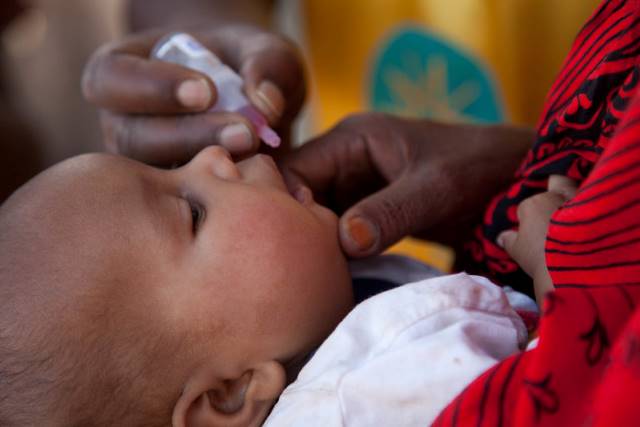
 Most think of polio as a disease of the past, eliminated from the world through scientific advancement. However, the disease remains present in some countries and runs the risk of spreading again if it is not contained. In the words of Ban Ki-moon in 2012, former Secretary-General of the United Nations, “Wild viruses and wildfires have two things in common. If neglected, they can spread out of control. If handled properly, they can be stamped out for good. Today, the flame of polio is near extinction — but sparks in three countries threaten to ignite a global blaze.” The Global Polio Eradication Initiative (GPEI) seeks to finally eradicate polio throughout the world.
The Global Polio Eradication Initiative
It is a truly global project, led by a partnership between the World Health Organization (WHO), the U.S. Centers for Disease Control and Prevention, UNICEF, Rotary International, the Bill & Melinda Gates Foundation and Gavi, the Vaccine Alliance. Furthermore, the Initiative involves 200 countries around the world. The Initiative started “in 1988 after the World Health Assembly passed a resolution to eliminate polio.” Over 33 years, the Initiative has secured more than $17 million worth of contributions from donors and financing.
The Global Polio Eradication Initiative has a well-developed and comprehensive plan which has produced numerous successes and lays out a roadmap to completely eradicate polio. One goal is integration. The GPEI seeks to integrate national governments’ vaccination plans with the polio vaccine, allowing children to get the polio vaccine as part of national immunization schedules. Enhanced integration also includes joint delivery of the polio vaccine with other vaccines, integration of polio surveillance with surveillance of other diseases and harmonizing data systems.
Routine vaccination of children is the crucial part of the plan, along with supplementary vaccination when needed. Areas that are most susceptible to an outbreak often receive supplementary vaccinations in targeted campaigns or through National Immunization Days.
Polio Success Stories
The success of the Global Polio Eradication Initiative since its founding is undeniable. The GPEI estimates that the global incidence of polio has decreased 99.9% since its inception. Polio efforts saved more than 1.5 million lives and prevented 16 million people from polio-induced paralysis. In addition to this, the GPEI administered more than 2.5 billion polio vaccines to children across the world.
Africa is a shining example of the GPEI’s success in eradicating polio. Even after the development of the polio vaccine in 1954, the disease remained endemic for decades and the continent struggled to track cases and vaccinate children. Around 1996, wild polio paralyzed 75,000 African children a year. The GPEI helped to coordinate cooperation between African national leaders and multinational NGOs, leading to greater tracking and quick responses to outbreaks.
As part of the Kick Polio Out of Africa campaign, the GPEI and other contributors provided nine billion doses of the oral polio vaccine and vaccinated 220 million children every year. Thanks to this work, Nigeria became the only country where polio was still endemic by 2016. In 2020, after four years without a polio case, the GPEI declared Africa polio-free. The elimination of a highly contagious and dangerous disease is a remarkable success story.
Remaining Countries and At-Risk Countries
While it is near eradication, polio remains endemic in Afghanistan and Pakistan. While concerning, there were less than 30 reported cases of the disease in these countries in 2018. Children miss out on coverage for polio in Afghanistan and Pakistan for various reasons, including a lack of infrastructure and an unstable political situation. Still, the Global Polio Eradication Initiative continues to vaccinate children, provide surveillance of the disease and work to develop new vaccines, diagnostic tools and antiviral drugs.
The failure to eliminate or contain polio completely could lead to a resurgence. If not contained, this could lead to 200,000 or more global cases a year within 10 years. The GPEI, in support of the governments of Afghanistan and Pakistan, works extensively with leaders in the countries to vaccinate children and provide teams of volunteers.
Children need multiple doses of the vaccine for effective prevention and vaccinations must be widespread in order to prevent any community transmission. For this reason, the GPEI has identified five main at-risk countries that are vulnerable to outbreaks and require greater surveillance:
- China
- Indonesia
- Mozambique
- Myanmar
- Papua New Guinea
Approaching the Finish Line
The Global Polio Eradication Initiative has had major successes so far and is nearly at the finish line of eradicating polio from all nations of the world. Unprecedented global cooperation and collaboration have been the driving forces behind its achievements. Global collaboration is integral for addressing all aspects of global poverty.
– Clay Hallee
Photo: Flickr

Digital Agriculture for Poverty Reduction
Smallholder Farms
The U.N. Food and Agriculture Organization (FAO) states that smallholder farms, farms of two hectares or less, utilize 12% of the world’s agricultural land and family-run farms utilize 75% of global agricultural land. In sub-Saharan Africa, smallholder farms are responsible for 80% of the food produced. These small farms face many challenges. Soil erosion, drought and other environmental issues can completely wipe out crops and leave families with no income. In recent years, environmental catastrophes left 13 million people from Kenya, Ethiopia and Somalia with no choice but to rely on humanitarian assistance. In addition to high susceptibility to weather extremes, rural areas have less access to information and affordable internet services. Digital agriculture reduces poverty by alleviating some of these stressors.
E-commerce in Asia
Digital agriculture reduces poverty through already established concepts like e-commerce. Alibaba, the Chinese e-commerce company, started a project in 2014 called Rural Taobao. The project aims to increase efficiency and lower costs of agricultural distribution, similar to how Airbnb and other service apps optimize supply and demand by digitally matching buyer and seller.
Rural Taobao is an online marketplace where farmers can buy products from manufacturers, have those products delivered, and then, distribute their crop yields using the same transportation that delivered the factory items. Essentially, this online platform ensures that trucks going into rural areas do not go back to the cities empty, but instead, go back full of agricultural products to sell.
Central Asia has 10.7 million farmers and a land per capita endowment that is five times higher than China’s. As a result, Central Asia has the potential to be a major exporter of high-quality agricultural goods. A program like Rural Taobao, and E-commerce in general, are ways that digital agriculture in Central Asia can optimize distribution, fulfill its potential as a competitive agricultural market and bring more financial capital into rural areas.
Access to Information in Niger
NOVATECH, a startup in Niger, developed an Interactive Voice Response Platform (IVR) in 2017 called E-KOKARI. The E-KOKARI platform lets agricultural workers use their cell phones to access information about crops, weather forecasts, market prices and other information relevant to farming or agriculture. It is as simple as dialing a number on a cellphone that will take the individual to a navigatable menu. The platform provides advice and information in all of Niger’s primary languages — French, Hausa and Zarma. The information is also available in voice format. About 70% of the adult population is illiterate so access to spoken information is extremely helpful. The number of people with cell phones has grown over the years. In 2016, more than seven million cellphone users existed in a population of 20 million.
E-KOKARI is still in the prototype phase but has a promising future. Developers of the technology interviewed farmers to find out exactly what problems needed addressing and worked to make the technology sustainable. Moreover, the developers ensured that the technology was reproducible for communities in other countries.
Digital Agriculture Reduces Poverty
Digital agriculture reduces poverty because it makes farmers’ lives easier. Similar to other sectors of society, technology can save time, increase productivity, lower costs and increase access to key information. As digital agriculture evolves and becomes more widespread, it is vital that creators pay attention to who the user is and what the user needs. Historically, marginalized groups such as women, differently-abled people and the elderly have greatly benefited from technology but frequently were not part of the production process. It is imperative that creators and producers of digital agriculture incorporate the voices of all potential users.
– Caitlin Harjes
Photo: Flickr
The Growing Issue of Inequality in Chile
Problems in Chile’s Growing Economy
The Chilean transition to a free-market economy raised the quality of life for many of its citizens and increased foreign investment into the nation’s businesses but made life harder for Chileans living under the poverty line. Tackling poverty and inequality in a country usually occurs in tandem but the Chilean government has historically focused on reducing poverty while overlooking the inequality issues that come soon after.
In 2019, the Chilean government raised subway fare prices that sparked protests. Why would protests occur due to a small change in subway fare when Chile has a high GDP of $282.3 million? Dr. Kubik states that a high GDP is not the sole indicator of economic development. Long-running inequality in Chile has influenced the rise in protests. Dr. Kubik states further that “It is important to recognize as well that protests over inequality are about more than the economics of the day. Inequality has social dimensions as well, that when considered, help to explain events.”
Gender Inequality in Chile
Besides income inequality, Chile is experiencing gender and quality of life discrepancies based on the types of jobs available to different genders working in the lower class. It is no secret that quality of life diminishes with poverty but women in Chile are experiencing gender-based violence with severe income disparities as they hold one of the lowest unemployment rates in South America.
Legislation exists that prohibits sexual harassment in the workplace but there are no criminal implications for perpetrators and no remedies for victims. Furthermore, the legal system does not require equal pay for equal work. It also does not forbid gender discrimination in credit access. Another challenge Chilean women fact is that the default marital property regime automatically makes the husband the head of the house, giving him control of the marital property.
It is possible to have rising rates of inequality in Chile with decreasing poverty rates because experts measure these two rates differently. They measure inequality by the extent to which an economy deviates from an equal distribution of resources, and they look at a variety of marginalized social groups.
Combating Inequality in Santiago and Beyond
Inequality in Chile has reached such an extent that the city of Santiago possesses “high and low class” parks. Public spaces that people can only access due to their income is directly discriminatory against impoverished Chileans.
“Santiago-style inequality” makes poverty harder to track in official statistics. Families that are living above the poverty line are doing so with access to informal credit, which only pushes them further into poverty since they pay 20% more for basic goods. One can blatantly see inequality in the fact that Santiago’s pharmacy chains do not want to operate in impoverished areas of the city. A communist local politician resorted to setting up a “state-run people’s pharmacy” to fill the void.
Some saw the expansion of education as the key to increasing economic growth and opportunity in Chile. As a result, Santiago has multiple universities. However, the existence of stable educational institutions does not mean they are accessible, making it hard to produce the wanted economic expansion. The Chilean government commits just 0.5% of GDP to higher education. Furthermore, “the average university course costs 41% of the average income.” Some university graduates regret the pursuit of tertiary education stating that it did nothing for their job prospects and only increased their debt.
To address this educational barrier, Chile has made some colleges tuition-free for households with the lowest 60% of income. This addresses the issue of high tuition costs that prevent students from enrolling but the secondary costs of education, such as textbooks, transportation and food, do not receive coverage. This still presents a barrier to inclusion and can make completion difficult for many students.
An Inclusive Approach to Development
Dr. Kubik states that development is a complex process. It requires a “coordinated approach that involves political, social and economic dimensions to be successful in the long run.” By focusing less on inequality and more on raising Chile’s GDP, the Chilean government risks different policy conclusions, which can result in clashes between the government and its citizens.
Social and political dimensions include steps the government took to remove all barriers to the completion of education, enforcing inclusionary governmental policies, and in Chile’s case, allowing lower class citizens the same privileges as upper-class citizens. Progress in gender inclusion, education improvements, social acceptance and more, can reduce inequality in Chile.
– Julia Ditmar
Photo: Flickr
Education in Norway: Free Tuition Eradicates Poverty and Inequalities
Public universities in Norway offer free tuition for all students, no matter their country of origin. These universities also offer high-quality education even though it has no cost. This has led students from around the world to seek an education in Norway.
Education in Norway involves the idea that all people should be able to receive a high-quality education, regardless of their socioeconomic status and background. This stems from Norway’s need for people with professional skills. Offering free education to all students provides them with the employees that they need.
Structure of Higher Education in Norway
There are four types of higher education in Norway. The first is a university college degree, which would allow those who receive one the ability to earn a bachelor’s degree. Its length is 120 ECTS, which are credits. The second is a bachelor’s degree, which is 180-240 ECTS. The third level is a master’s degree, which is 120-300 ECTS. Lastly, a Ph.D. is 180 ECTS and is the highest level of education. Many universities offer one-year programs, supplementary programs or short programs, which can be the basis for a branch of professional study. For example, some students choose to take part in these programs for a subject of professional studies, such as psychology.
Norway has also implemented a new system for degrees that follow the 3 + 2 + 3 pathway of a bachelor’s degree, master’s degree and Ph.D. This system has made it easier for international students to study in Norway and maintain their qualifications in other countries.
Results of Norway’s System
People in Norway who have a college education are more likely to get a job and earn a higher salary after graduation. Adults with a bachelor’s degree earn 13% more than upper secondary graduates. Findings determined that adults with a bachelor’s degree participated in cultural and sporting activities more often. There is a 36% difference in participation between those with secondary education and those with tertiary education. As a whole, this system sets an example for other countries as it has a positive impact on the economy and individual citizen’s lives. Pursuing higher education is an influential decision that can shape the course of a person’s future.
Effect on Poverty Rate
One of the most beneficial results of free tuition is the increase in the college graduation rate. Many students struggle with earning enough money for their entire tuition. Therefore, they often can only attend part-time so that they can accommodate a job, or they drop out because they cannot afford the fees. Free tuition completely eliminates this problem and allows students to focus entirely on their studies.
Free education in Norway attracts more people to colleges, especially public universities. Many people globally do not even apply for college because they know that they would not be able to afford it. However, free tuition would give people the chance to attend. It is also difficult for some people to secure loans for their education, especially if tuition is expensive. Private lenders may be hesitant to give that much money to a young student since they are unsure if they will be able to pay it back. Free education stops students from having this worry and eliminates the possibility of crushing loan debt after graduation.
Lastly, free college in Norway ensures that the country’s citizens have more education. As more people become qualified for high-skilled jobs, they may have access to higher-paying careers. As a result, the wealth gap could decrease and lift people out of poverty.
– Miranda Kargol
Photo: Flickr
What Exactly Is Happening in the Northern Triangle?
Latin America is in a vicious circle of crime, poverty and corruption. High crime rates thwart economic opportunities and crime rates push people into poverty, all cumulating into corrupt leaders who use the pain for their power and self-interest. Nevertheless, nowhere is crime more prevalent than in the Northern Triangle.
The Northern Triangle is region in Central America that includes Guatemala, Honduras and El Salvador. It has experienced the worst problems such as poor economic growth, rampant gang violence and political corruption. This three-prong nightmare has fueled an estimated 265,000 people toward the Southern U.S. Border and will continue to grow into the foreseeable future. While some do attempt to find safety in Europe and elsewhere in South America, others take the risk and traverse their way to the U.S-Mexico border, where they risk entering the country illegally. Others surrender to U.S. border patrol and seek asylum. However, it is unlikely that they will receive asylum. On average, only 13% of individuals receive asylum and experience integration into the United States.
Gang Corruption
In 2017, a survey asked the people in El Salvador, “who runs the country?” About 42% of respondents said “Delincuencia/Maras.” For non-Spanish speakers, this translates to gangs, like MS-13.
These answers have visible ramifications that strike at the core of the government. Governments in the Northern Triangle are weak, and the people know this; the gangs know this. People understand the country’s power lies in gangs’ hands, not in the government’s.
For example, in 2012, the Salvadorian government agreed to sign a truce with the criminal organizations to address skyrocketing homicide rates. The profoundly unpopular legislation did lower the homicide rate but the people still had to continue to pay gangs. Tactics like homicide and racketeering are not the only ways these organizations flex their might.
Throughout the Northern Triangle, gangs rely on drug and human trafficking, money laundering, kidnapping and theft to export their criminal enterprise well beyond the Northern Triangle. Issues in the Northern Triangle are not just an inter-state problem but also a problem for the entire Western Hemisphere.
Governance Problem
Northern Triangle nations have made some progress when it comes to corruption. But the total damage that such corruption caused is still in the billions: $13 billion to be precise.
In 2006, Guatemala successfully combated corruption when it appealed to the U.N., which established the International Commission Against Impunity in Guatemala (CICIG). This independent body investigates the infiltration of criminal groups within state institutions. Such an organization resulted in the conviction of hundreds of officials and reduced the homicide rate.
In El Salvador, in 2019, the country created its own independent body called Commission against Corruption and Impunity in El Salvador (CITIES), which could yield the same results as CICIG. Over in Honduras, the hopes of establishing such independent oversight do not seem to be gaining the same traction. After the resignation of President Lobo Sosa in 2013, an investigation into the Honduran Institute of Social Security revealed a scandal that cost the people over $200 million. It also implicated President Orlando Hernández, who admitted to unknowingly using some of the money to fund his presidential campaign.
A Path Forward
In Washington DC, support exists for CICIH and CITIES. Congresswoman Norma Torres and others released a statement in 2019 supporting these institutions. Reinstating the CICIG and implementing the same structure in CICIH and CITIES would stop corruption. This would allow the state to use its monopoly on violence to fight crime and allow positive economic growth. In April 2021, the State Department announced $740,740 in available funding for “competition for organizations interested in submitting applications for projects that empower civil society to combat corruption and protect human rights.”
– Diego Romero
Photo: Flickr
The Success of the Global Polio Eradication Initiative
The Global Polio Eradication Initiative
It is a truly global project, led by a partnership between the World Health Organization (WHO), the U.S. Centers for Disease Control and Prevention, UNICEF, Rotary International, the Bill & Melinda Gates Foundation and Gavi, the Vaccine Alliance. Furthermore, the Initiative involves 200 countries around the world. The Initiative started “in 1988 after the World Health Assembly passed a resolution to eliminate polio.” Over 33 years, the Initiative has secured more than $17 million worth of contributions from donors and financing.
The Global Polio Eradication Initiative has a well-developed and comprehensive plan which has produced numerous successes and lays out a roadmap to completely eradicate polio. One goal is integration. The GPEI seeks to integrate national governments’ vaccination plans with the polio vaccine, allowing children to get the polio vaccine as part of national immunization schedules. Enhanced integration also includes joint delivery of the polio vaccine with other vaccines, integration of polio surveillance with surveillance of other diseases and harmonizing data systems.
Routine vaccination of children is the crucial part of the plan, along with supplementary vaccination when needed. Areas that are most susceptible to an outbreak often receive supplementary vaccinations in targeted campaigns or through National Immunization Days.
Polio Success Stories
The success of the Global Polio Eradication Initiative since its founding is undeniable. The GPEI estimates that the global incidence of polio has decreased 99.9% since its inception. Polio efforts saved more than 1.5 million lives and prevented 16 million people from polio-induced paralysis. In addition to this, the GPEI administered more than 2.5 billion polio vaccines to children across the world.
Africa is a shining example of the GPEI’s success in eradicating polio. Even after the development of the polio vaccine in 1954, the disease remained endemic for decades and the continent struggled to track cases and vaccinate children. Around 1996, wild polio paralyzed 75,000 African children a year. The GPEI helped to coordinate cooperation between African national leaders and multinational NGOs, leading to greater tracking and quick responses to outbreaks.
As part of the Kick Polio Out of Africa campaign, the GPEI and other contributors provided nine billion doses of the oral polio vaccine and vaccinated 220 million children every year. Thanks to this work, Nigeria became the only country where polio was still endemic by 2016. In 2020, after four years without a polio case, the GPEI declared Africa polio-free. The elimination of a highly contagious and dangerous disease is a remarkable success story.
Remaining Countries and At-Risk Countries
While it is near eradication, polio remains endemic in Afghanistan and Pakistan. While concerning, there were less than 30 reported cases of the disease in these countries in 2018. Children miss out on coverage for polio in Afghanistan and Pakistan for various reasons, including a lack of infrastructure and an unstable political situation. Still, the Global Polio Eradication Initiative continues to vaccinate children, provide surveillance of the disease and work to develop new vaccines, diagnostic tools and antiviral drugs.
The failure to eliminate or contain polio completely could lead to a resurgence. If not contained, this could lead to 200,000 or more global cases a year within 10 years. The GPEI, in support of the governments of Afghanistan and Pakistan, works extensively with leaders in the countries to vaccinate children and provide teams of volunteers.
Children need multiple doses of the vaccine for effective prevention and vaccinations must be widespread in order to prevent any community transmission. For this reason, the GPEI has identified five main at-risk countries that are vulnerable to outbreaks and require greater surveillance:
Approaching the Finish Line
The Global Polio Eradication Initiative has had major successes so far and is nearly at the finish line of eradicating polio from all nations of the world. Unprecedented global cooperation and collaboration have been the driving forces behind its achievements. Global collaboration is integral for addressing all aspects of global poverty.
– Clay Hallee
Photo: Flickr
Leaders Tackle Plastic Waste in Indonesia
The Plastic Waste Crisis
Indonesia is currently dealing with a waste crisis both on land and in the oceans surrounding the country’s islands. Indonesia is the second-largest contributor to the abundance of plastic waste in the ocean. This waste has harmful economic consequences for the country and its people.
Indonesia currently produces 6.8 million tons of plastic waste per year, with only about 10% of it ending up in recycling centers. About 625,000 tons of annual plastic waste ends up in the oceans. Landfills are typically in very close proximity to communities, leading to toxic wastewater seeping into nearby farmland and hindering the growth of crops.
This also flows into rivers, impacting the livelihoods of those who depend on the river’s water. The fishing industry also suffers from the impact of plastic pollution in the oceans as marine life is affected. Viral videos of trash-choked beaches in tourist destinations like Bali also alarm the tourist industry, a huge boon for Indonesia’s economy. There is concern about the potential impact of this excessive pollution on tourism. Fortunately, the issue has received acknowledgment and there are plans to address the problem of plastic waste in Indonesia.
Individual and Community Action
Individuals, groups and the government are stepping up to end and mitigate the plastic waste crisis in Indonesia. Awareness of the problem is the first step. Local Indonesians have played a significant role in starting movements and increasing awareness.
For example, Melati and Isabel Wijsen established the environmental nonprofit Bye Bye Plastic Bags when they were just 12 and 10 years old. Bye Bye Plastic Bags has become one of the largest environmental nonprofits in Bali and is helping to educate children on the environmental harm of plastics.
Another individual, Mohamad Bijaksana Junerosano, founded the social enterprise Waste4Change. It educates the populace on sorting and sustainably managing waste.
Community cleanup initiatives have also become popular recently. Beach cleanups are simple and effective ways to get people involved. In August 2018, more than 20,000 people mobilized in 76 locations across Indonesia for a one-day beach cleanup that also raised awareness of the waste crisis.
Government Action
Both local and national levels of government have taken the most important steps to end the crisis of plastic waste in Indonesia. The island of Bali banned all single-use plastics at the end of 2018. The capital of Jakarta also banned single-use plastic bags in its shopping centers and street markets in 2020.
Indonesia’s national government has rolled out a very ambitious plan to end the plastic waste problem. It aims to minimize marine plastic waste by 70% by 2025 and be entirely rid of plastic pollution by 2040. Indonesia created five action points to make it easier to meet these overall goals:
Though reducing plastic waste in Indonesia and its oceans is a challenge, ordinary people and the government of Indonesia are taking proactive steps. These efforts will have a positive impact on livelihoods, the economy and the health of people. The future looks bright for a cleaner Indonesia.
– Clay Hallee
Photo: Flickr
Mali and the TNA Project: Addressing Poverty
Mali is a West African country with a population of 20 million people. The country’s high poverty levels have long-term impacts on the physical health of citizens. With a poverty rate of 42.7% in 2019, many citizens suffer from malnutrition. In response, the Technology Needs Assessment (TNA) project’s overall focus on environmental health helps mitigate the long-term effects of poverty within the country. Mali and the TNA project have helped the country utilize agricultural technology to develop programs and projects centered on these impacts of poverty.
What is TNA?
The U.N. Environment Programme and the UNEP DTU partnership (U.N. Environment and the Technical University of Denmark) created the Technology Needs Assistance project in 2001. The Global Environment Facility helps finance this multi-phased project.
TNA has helped people in more than 80 countries, with a primary focus on environmental health. It uses a country-led approach in order to develop accountability. TNA generally helps countries make improvements to many of the programs and projects already in place.
The work of TNA aligns with the U.N.’s Sustainable Development Goals (SDGs). The SDGs emerged to end poverty and other deprivations through global partnership. TNA recognizes the role technology can have in achieving these goals, especially in the area of environmental health.
Mali and TNA
Mali faces a serious risk of droughts. Droughts can have disastrous economic and environmental effects by damaging agriculture, water supplies and more. In response to this risk, Mali and the TNA project helped develop field contouring. Field contouring prevents soil erosion and water run-off. In one rural part of the country, Koutiala, the water run-off has reduced by at least 20% and the crop yields have increased by 30%. Additionally, Mali and TNA developed micro-hydroelectric stations that benefit the rural and urban areas of the country by providing clean energy.
Although Mali completed its TNA in 2012, the Institute of Rural Economy measures the progress and impacts of the technology that this project introduced. This research agency mainly focuses on agricultural, livestock and food technology. TNA focused on the agriculture, water resources and energy sector of the country to improve overall environmental health. Despite the country’s completion of TNA almost a decade ago, there are still clear benefits from the project. For example, the Institute of Rural Economy continues to hold training sessions and collect data to ensure the country is advancing in technology. Overall, TNA in Mali aligns with five SDGs: clean water and sanitation, affordable and clean energy, responsible consumption and production, climate action and life on land.
CORAF in Mali
Since the TNA project in Mali officially ended, the country has taken steps to continue improving its practices for environmental health. The Conference of the Agricultural Research Leaders in West and Central Africa (CORAF) is an international nonprofit organization that focuses on agricultural production. Currently, Mali has implemented 23 CORAF projects. This organization works with different agricultural programs in Mali to improve and strengthen its agricultural technology. Its main goal is to reduce poverty and malnutrition in the country.
Although Mali has phased out of the TNA project, the nation is still working to improve its agricultural technology. Utilizing technology is one step toward mitigating the impacts of poverty within Mali.
– Mia Banuelos
Photo: Flickr
Fires in Bangladesh Leave Refugees Homeless
Rohingya refugees have been seeking a safe place to dwell for years. The Rohingya people are originally from Myanmar. However, the government has persecuted them for their Muslim beliefs since 1960. Their battle for independence and peace has seen little success. Recently, attacks on this ethnic group have worsened and more and more Rohingya are fleeing to Bangladesh. Unfortunately, some of their struggles continue in Bangladesh. A raging fire in southern Bangladesh left 15 people dead and hundreds missing. Aid workers are providing relief to those the fires displaced in Bangladesh. Meanwhile, government officials are working to end the Rohingya crisis.
Nowhere to Run
Many Rohingya refugees stay in Bangladesh after fleeing Myanmar. Myanmar is located in southeast Asia and is notorious for Muslim persecution. Buddhism is the primary religion in the country, and, as a result, the Muslim Rohingya have experienced persecution. The country recognizes a total of 135 ethnic groups; however, it does not recognize the Rohingya people.
In August 2017, Myanmar used extreme tactics to remove the Rohingya people. Myanmar’s military began attacking Rohingya civilians using deadly force. As a result, the Rohingya people suffered starvation, torture and senseless violence.
The U.N. describes these tactics as a “textbook example of ethnic cleansing.” During the initial attack, a total of 6,700 Rohingya people died, while many others were forced to flee from Myanmar. In refugee camps in Bangladesh, people set up bamboo huts as homes, hoping that they would be safe from further violence. Now, fires in Bangladesh leave these refugees homeless once again. To address this crisis, aid workers are now helping to rebuild communities and government officials are looking into the cause of the fires.
Coming Together
The Red Cross and the Bangladesh Red Crescent are assisting in relief efforts. Aid workers worked quickly to provide necessary supplies to refugees. Through their work, victims of the fire received food, blankets, water and clothing. In addition, rescue efforts are underway, as more than 400 people are missing. There is a dire need for help to search for these missing people.
The work of the humanitarian organizations is paying off for many of the refugees, some of whom have been reunited with their lost family members. One refugee, Ayesha Bibi, was relieved to be reunited with her husband after assuming he was dead.
There has been some speculation that arson is what caused the fires in Bangladesh. At this point in the investigation, government officials have no solid leads and are unable to confirm or refute these suspicions. As the fires have left the refugees homeless, the highest priority is ensuring their safety. Refugees have been using equipment and emergency tents provided by The Red Cross and the Bangladesh Red Crescent Society to survive.
A Brighter Hope
These past few years have brought devastation to the Rohingya people. Fortunately, funding and outreach programs have helped to ease the strains of their hardships. The U.N. has recently allocated about $14 million for the Rohingya people. This money will contribute to rebuilding shelters and providing emergency relief. Although the fires in Bangladesh have left refugees homeless, hope exists for a more secure future.
– Nancy Taguiam
Photo: Flickr
Diamantes Na Cozinha: Lifting Teenagers Out of Poverty
Joao Diamante, a Brazilian chef who trained in Paris under world-renowned chef Alain Duccard, decided to go back home to Rio de Janeiro, a large city in Brazil. In 2016, he began his social project Diamantes Na Cozinha (Diamonds in the Kitchen) in Rio de Janeiro. This project has received a lot of attention from national and international press due to its unique and philanthropic vision.
Who is Joao Diamante?
Diamante himself benefited from social programs in Bahia, Brazil when he was a teenager. His experiences eventually helped him become a chef overseas. Because of his belief in these youth programs, he decided to fund his own. Diamantes Na Cozinha creates cooking, nutrition and hospitality workshops for young people in vulnerable situations living in favelas in Rio de Janeiro. Favelas are low-income neighborhoods in Brazil.
Diamante himself lost a dear friend due to the violence taking place in the favelas, and he believes that teenagers must receive protection from organized crime and drug addiction. Unfortunately, addiction and crime are all too common in these impoverished populations.
About the Workshops
Kids as young as 16 enroll in the courses through Diamantes Na Cozinha, resulting in them learning skills that can land them a job later on. But, the program is also to help kids find their purpose in life. It distracts them from the harsh realities of living in a favela. Through this, Diamante is not only helping individuals emerge from impoverished situations, but also propelling the Brazilian economy.
Diamante currently teaches various courses. Each course contains up to 25 students who can sign up free of charge. There is a wide variety of courses such as hospitality, high cuisine, food anthropology and cocktail-making. During training, students have the opportunity to serve at catering events. This serves not only as an opportunity for students to receive an evaluation but also as a means for them to start making an income. When training is over, Diamante selects his best students to work a the Na Minha Casa restaurant permanently.
Currently, the Diamantes Na Cozinha headquarters includes an archive with more than 200 volumes, a fully equipped kitchen and a media library. The project has gathered international attention, most notoriously in its feature in the Netflix food show “Feed Phil,” where the host visited Diamantes Na Cozinha and presented the foundation’s story. Through this and many other features, the project has gained momentum and donations from businesses and individuals alike.
“We use Gastronomy as a tool for social and professional transformation,” said Diamante. “We don’t just want good professionals, we want our students to evolve as human beings.”
– Araí Yegros
Photo: Flickr
Novissi GiveDirectly Alleviates Poverty in Togo
The Initial Novissi Program
“Novissi” translates to “solidarity” in one of the local languages of Ewe. The initial Novissi program already distributed $22 million via mobile money payments to 600,000 citizens who live in urban areas. Voting registration provided the state with information about a citizen’s financial status and the state used this information to determine eligibility. Then, payment was sent via mobile devices. However, this same methodology could not be applied to the many Togolese who live outside the cities and identify as informal workers. The government wanted to target people in rural areas living on less than $1.25 per day without the means to put themselves on the government’s radar. Presented with this challenge, a second phase of the program emerged: Novissi GiveDirectly.
Novissi GiveDirectly
In Togo, Novissi GiveDirectly utilizes satellite imagery, mobile data and artificial intelligence as a poverty solution. Satellites capture photos from every square kilometer of the country, giving insight into villages’ local infrastructure, the housing materials used and even the size of land plots.
Mobile data also provides researchers with a major clue in the search for those carrying the biggest financial burdens. In general, impoverished people use cellphones less often, receive more calls than they make and have lower mobile money balances. Artificial intelligence then analyzes the mountains of data to identify who is eligible to receive aid from the program by estimating an individual’s wealth. Registration is as simple as a Togolese citizen dialing #855 to register for the program.
The Impact on Locals
Eric Dossekpli is a 49-year-old farmer whose livelihood has experienced a direct impact from COVID-19. His market goods were not selling because people were not buying due to the financial distress of the pandemic. This left him without an income and unable to afford fertilizer to continue growing crops.
When Dossekpli heard about Novissi GiveDirectly, he immediately registered. Once Novissi GiveDirectly confirmed his eligibility, he received an instant mobile payment of $13. Novissi GiveDirectly gives $13 to men and $15 to women every month for five months. Women receive more money due to their roles as caregivers. The money received meant he could pay for his children’s tuition and afford food. “I can’t imagine how I was going to live if not for this money. All I can say is thanks,” said Dossekpli.
The Road Ahead
What makes the program unique is that it operates using data that is already available. This makes it quick and comprehensive, two characteristics that are critical during a crisis. The program aims to distribute $10 million to 114,000 Togolese people over a period of a few months. The Novissi GiveDirectly model is currently being considered for Nigeria and Bangladesh.
Though Novissi GiveDirectly has emerged in response to a crisis, one cannot help but consider the potential benefits of such targeted investments long-term. If $13 can pay for the education of four Togolese children during a global pandemic, a sustained investment of this nature could boost an entire economy, allowing everybody to reap the rewards.
– Greg Fortier
Photo: Flickr