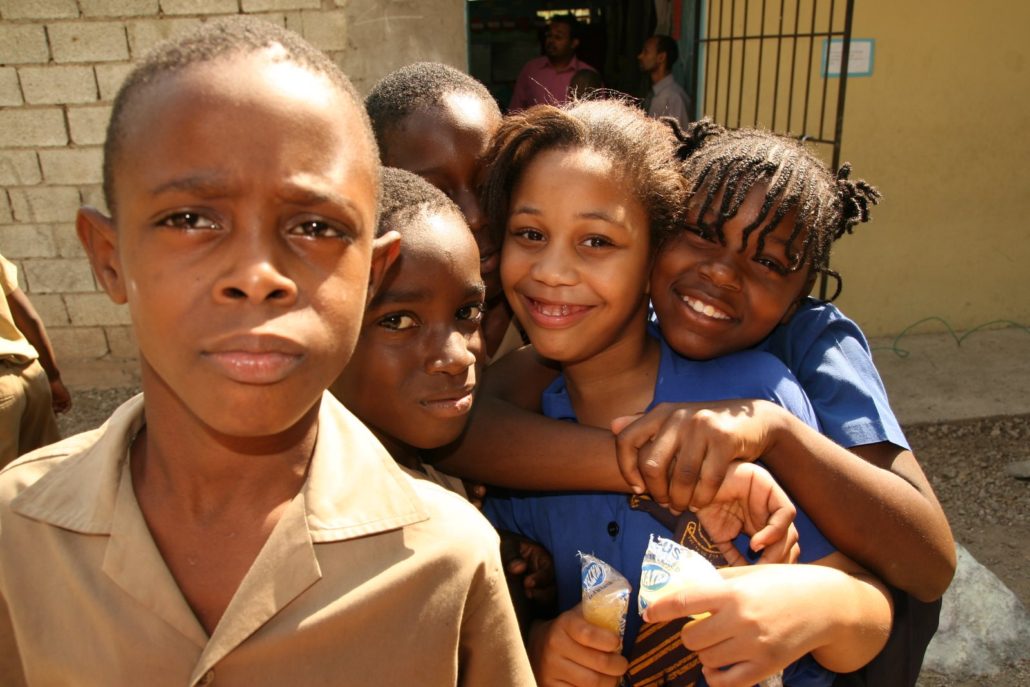
Jamaica is working towards reducing its poverty rate and improving gender equality. The percentage of Jamaica’s population below the poverty line in 2017 was 19.3%. With the impact of COVID-19 in 2020, Jamaica is currently implementing measures to reduce poverty with the help of groups like the National Poverty Reduction Programme (NPRP). The NPRP provides services like care packages, psychosocial support and other services to vulnerable groups in Jamaica. However, work is also necessary to achieve gender equality and improved women’s rights in Jamaica.
Poverty Among Women in Jamaica
According to UN Women, the 2019 poverty rate in Jamaica was 19.9%. Jamaica also has inequality between women and men living in poverty. For example, the ratio of women living in poverty is 121 women to 100 men in the Caribbean and Latin America, according to The Food and Agriculture Organization of the United Nations (FAO). However, some Jamaican women are moving into economic and business positions in the workforce.
Women-led Coalition to Get Women into Corporate Jobs
A coalition back in 2012, called the 51% Coalition, addressed the lack of equity in the Jamaica Stock Exchange (JSE) and began working to provide leadership positions to women in the country. The coalition focuses on recruiting women to buy shares in private sector companies. It also helps provide training to women so they can gain experience at the corporate and public sector level.
As of 2020, eight women made up the 21 members in Jamaica’s Senate. The 51% Coalition may have had a role in advancing women’s participation in the Senate; only five out of 21 seats included women in 2011. Meanwhile, the World Economic Forum’s 2020 Global Gender Gap Report shows 17.5% of women and 82.5% of men in parliament compared to 2012’s report showing 13% of women and 87% of men. However, men still made up 85.8% of 2020’s labor force, showing that more work is necessary to achieve gender equality in Jamaica.
This initiative is one of several efforts that is aiming to achieve legal and social reform regarding discrimination and hostility against women in Jamaica. Successes like high enrollment rates in universities and middle-management leadership for women received recognition in 2019. Data from The World Bank shows that 37% of women and 15.8% of men enrolled in university before the Coalition in 2011 and that 38% of women enrolled in comparison to 16.6% of men in 2013. These statistics show little to no change for women attending university before and after the Coalition as well as little advancement for men. Considering this, the country still has to work to achieve improve women’s rights in Jamaica.
Violence Against Women in Jamaica
On March 10, 2021, the body of accounting clerk Khanice Jackson emerged after she was missing for two days. An outpour of shock and grief by Jamaican citizens turned into advocacy for her justice, as well as justice for women in their country. A 2018 United Nations (UN) database shows that women between ages 15-49 in Jamaica account for 27.8% of physical or intimate partner violence in their lifetime. Meanwhile, 39% of women in Jamaica and Granada experience intimate partner violence per year.
The Jamaican government and private sector responded by showing how it is actively seeking initiatives to achieve gender equality in the country. However, the continued lack of legislative action, despite promises from the government, is causing citizens to express their concerns. Jamaican Prime Minister Andrew Holness called for punishment against the crime against Khanice Jackson. Holness said the violent nature of popular music plays a role in the country’s violent social climate.
However, citizens have said that Jamaica’s leaders are not doing enough to create a safer environment for women. Justice Minister Delroy Chuck called out the current sentencing practices on March 30, 2021, for convicted criminals that include reducing their sentence in an attempt to clear a backlog of cases in court in a parliamentary sitting. Chuck’s address of this issue led to the decision to revisit the case in the future.
In early 2021, WE-Change, a Jamaican women’s rights organization geared towards gender equality in the country, addressed the constant cycle of violence against women and the government’s inaction. WE-Change, which began in 2015, advocates for women and girls using organizational and engagement strategies to advance women towards social change and equal rights. In February 2020, WE-Change recommended the Human and Social Development Committee of parliament to review the Sexual Harassment Bill.
Continued Efforts to Achieve Gender Equality in Jamaica
For now, Jamaican women must defend themselves using protective devices. Legislation is currently working to legalize the use of pepper spray after a petition on the Prime Minister’s website gained 16,876 signatures by the end of March 2021.
With the latest efforts to achieve gender equality in Jamaica, it seems that the country is making progress as more citizens are raising awareness. As the government continues to respond to public outcry, citizens and organizations are continuing to raise awareness regarding the importance of women’s rights in Jamaica.
– Nia Owens
Photo: Flickr

Tackling Human Trafficking in Belize
Within a short distance of the Caribbean sea sits Belize, a small country with dense jungles, ancient ruins and tourist resorts. But recently, the coastal country has received classification on the Tier 2 Watch List for human trafficking. However, the country is paying attention to human trafficking in Belize amid the global COVID-19 pandemic. Its government is actively employing new strategies to relinquish this human rights violation.
The main targets of human trafficking in Belize are women and children. Traffickers often lure them into trafficking with promises of gainful employment.
The Human Trafficking Institute
Belize is on the Tier 2 Watch List according to the U.S. Department of State, meaning it does not meet the necessary requirements to prevent human trafficking. The minimum requirements for a Tier 1 ranking include meeting all standards that the Trafficking Victims Protection Act sets. These standards include decreasing the population of trafficking victims from the previous year, reporting all trafficked victims to appropriate officials and following the judicial system.
Seeking to eliminate human trafficking in Belize are the staff at the Human Trafficking Institute (HTI). The institute first emerged in 2015 and has been working toward implementing anti-trafficking laws and prosecuting traffickers to the fullest extent. The institute has made long strides to improve the overall safety in the community. On March 10, 2020, the country celebrated its second conviction, which found Rosa Anita Garcia Julian guilty of two counts of human trafficking. This proved to be a major milestone for the country, as it was the first conviction since 2016.
Most recently, HTI has partnered with Uganda to fight human trafficking. Over 2020, it helped rescue over 130 victims. Its new CEO, Victor Boutros, says changes need to occur in the way government addresses human trafficking. Through international diplomacy, governments could start contracts that commit to the overall safety and protection of victims of human traffickers. Government involvement is crucial in stopping human trafficking.
Importance of Biometrics
Higher conviction rates often lead to lower criminal activity. Technology is helping to prevent further injustices: an example of this technology in action is personal biometric data. Personal biometric data is any unique physical characteristic, like fingerprints, which can lead to convictions.
This data is also stored for future use. A prosecutor can use a fingerprint from 1990 to secure a conviction in a current case. Statistics can help pinpoint problem areas. Statistics track and monitor problem areas and also help to identify victims of human trafficking. Computers can recreate a single photograph of a child at age 10 to show what the child would look like 5 years later. This use of data and biometrics helps to identify and help victims.
Belize’s TIP Ranking
A yearly report tracks progress in lowering human trafficking rates. The TIP, or Trafficking in Persons Report, tracks each country’s progress ranking them in either Tier 1, Tier 2 or Tier 3 categories. Belize remained in the Tier 2 Watch List category for 2020 but is making fast progress to reach Tier 1 status to end human trafficking in Belize. Together, with the help of its government and police officials, it should be able to achieve this goal.
– Nancy Taguiam
Photo: Flickr
Improving the Water Supply in the Philippines
Water.org’s Contributions
Water.org is an organization that is working to improve the water supply in the Philippines. The organization devotes its efforts to providing reliable access to water resources to populations around the world. Water.org carries out this goal through the use of financing solutions for households that require a reliable water supply. By providing, small affordable loans, Water.org has been able to provide 4.3 million people in the Philippines with reliable water resources since 2014. Water.org will continue to work with utility providers in the Philippines so that it can continue to provide water resources to people that need them.
The Efforts of Water Governance Facility
Water Governance Facility (WFG) is another organization that is trying to improve the water supply in the Philippines. The WFG has similar goals to that of Water.org. It seeks to ensure that people around the world have affordable and reliable access to water supplies.
The WGF has been able to help the people of the Philippines using the GoAL WaSH program. The purpose of this program is to provide clean drinking water and proper sanitation. WGF achieves this goal by not only drilling wells and building toilets but also by engaging the local governance of the area it operates in for sustainable and impactful change. In the Philippines, the WFG has been able to provide 7,169 households with reliable sources of water. The WFG is also able to monitor the quality of drinking water. The WFG can then promptly stop the use of any contaminated water sources detected.
The Manila Water Foundation
Another organization that is trying to help provide citizens of the Philippines with reliable water resources is the Manila Water Foundation. The organization runs a multitude of programs that help achieve this goal. The Lingap program focuses on providing schools and other locations like health institutions and city centers with a reliable water supply. The program started in 2010. In 2019, Lingap helped a total of 46 schools, city halls and health centers. This equates to more than 149,000 beneficiaries across these 46 different locations. The water supply that Lingap provides for these students and staff can be used for drinking, handwashing and toothbrushing. Through its many programs, the Manila Water Foundation is working to improve the water supply in the Philippines.
The Philippines has made notable efforts to improve water resources for its people. With more efforts, even greater strides can be made in the water and sanitation sector.
– Jacob E. Lee
Photo: Flickr
Understanding USAID’S Self-Reliance Framework
In 2017, under then-administrator Mark Green of the United States Agency for International Development (USAID), USAID reorganized its mission of development and aid. In a break from the past, administrator Green initiated a fundamental reorganization. He proposed a mission of providing aid for the very purpose of eventually ending any reliance or need for developmental and humanitarian assistance offered by USAID. Understanding USAID’s self-reliance framework begins with understanding USAID’s mission and new measurement system to end the need for international aid.
Purpose of USAID’S Mission
While USAID’s capabilities and knowledge have not changed, its beliefs about its mission and approach have. In the words of its policy framework, “This approach marks a new direction for USAID, but draws on our deep experience and the lessons we have learned.” Illustrating its shift in thinking, USAID explains its assistance is most effective and compassionate when strengthening its partners’ abilities to provide for themselves and their citizens.
Looking forward to the future, the journey to self-reliance (J2SR) expresses recognition of two opportunities. It works to see the possibility for ending the need for foreign assistance by pointing to the fall in global poverty, improvements in health infrastructure, greater gender parity and safety across the globe. In addition, it also points to continuing barriers and moving challenges impeding progress and self-reliance.
USAID’s Measurement System
Subsequently, helping USAID in ending the need for foreign assistance is a set of concretely defined concepts and measurable figures. They address USAID’s full reorientation towards its mission statement of “ending the need for foreign assistance.”
As a keystone metric, self-reliance gains its weight through the measurement of two factors. The first is capacity. This acts as a measurement of a given country’s capacity to deal with its own developmental challenges. The second is commitment. This measures a country’s demonstration of commitment to using efficacy, inclusivity and accountability when dealing with challenges.
Moreover, USAID selected capacity and commitment for their efficacy in solving three fundamental developmental problems. These include improving productivity and sustainable expansion, equitable distribution of goods to raise well-being and deciding how to share resources fairly and legally. Positive improvements in these three challenges ultimately contribute to the greatest possible gains to set countries moving toward self-reliance.
Congressional Oversight
However, USAID’s J2SR pathway is not without concern. In the same report by the Congressional Research Service, the authors described the 17 indicators as ‘reflective’ of a sweeping theory of development long debated. They explained that the chosen indicators connect to theories that economic growth comes from democratization and open markets.
For instance, the “Trade Freedom” indicator comes from a theory that developing countries must lower trade barriers in order to achieve prosperity. This theory has undergone hot debate. The CRS also notes that the previously mentioned metrics have been worrying to commentators due to the fact that some might use them as excuses to cut aid.
The 17 Metrics
The self-reliance pathway includes 17 unique third-party metrics. These help in determining the degree of a partner country’s commitment or capacity metric. The 17 metrics serve as target goalposts for USAID initiatives and projects. In turn, they guide and measure a country in the metrics of self-reliance.
In the words of a Congressional Research Service (CRS) report on Transformation at USAID, these 17 metrics help to quantify a country’s progress toward ending its need for foreign assistance and have been selected for its “perceived alignment with the self-reliance concept, the reputation of reporting institutions, public availability of the underlying data and methodology, comparability across countries, and comprehensiveness of reporting across countries.”
Understanding USAID’s Self-Reliance Framework
Above all, USAID’s Self-Reliance Framework intends to guide USAID’s programmatic approach to aid. This includes defining and outlining projects and determining a nation’s end state with respect to USAID’s assistance to it. In conclusion, the journey to self-reliance seeks to better serve the U.S. public while advancing individual countries towards greater self-autonomy and independence.
– Marshall Wu
Photo: Flickr
A Look into USAID Support to Yemen
USAID support to Yemen has been incredibly necessary for the past six years. As Yemen enters the sixth year of the largest humanitarian crisis in the world, over 20 million people are on the brink of starvation. There are many factors causing this crisis to persist.
Religious Conflict
The rise of the Houthi movement, fueled by the Shiite rebellion to overthrow the Sunni government, began in 2014. Since then, the former Yemeni president not only joined the insurgence but also died at the hands of the rebels. From airstrikes that the Saudi government issued to the expansion of religious polarization, Yemen’s population remains in the middle of the turmoil.
Humanitarian Issues
Currently, 1.8 million children die each year on average primarily due to malnutrition. Before the start of the internal conflict, the economy was already on the decline. Now, most families lack access to basic necessities like food and vaccinations. The issue is not that these commodities are not physically available. Inflation has caused items such as drinking water or fruits and vegetables to no longer be affordable or accessible.
Still, in the early stages of development, the structural and financial state of Yemen has only worsened in the past six years. Though coalitions exist to help fight the rebellion and offer further support for Yemen, the Houthi continues to retaliate only continuing the warfare. This results in more than 17,500 innocent civilians either severely injured or deceased since the beginning of the war.
USAID Support to Yemen
The United States remains one of the largest donors of support for Yemen and provides help to over 8 million people each month. On March 1, 2021, Secretary of State Antony J. Blinken announced almost $200 million in humanitarian aid for the humanitarian crisis in Yemen. So far, the U.S. has donated approximately $3.4 billion in support of Yemen. While this includes funding towards the United Nations Food Program, the money also helps provide rehabilitation for the economy as well as communities across the country.
The crisis has left the general Yemeni public with dwindling medical support, food and water, and stay caught in the crossfire. With no end in sight, USAID support to Yemen is essential. Without help from the U.S., the statistics aforementioned could perhaps double over the next while. Moreover, although people may best know USAID for contributing financial support, it also works to move other donors into action. With continuous support each year, USAID is the main source of hope and support for not only Yemen but also other countries facing extreme poverty.
– Caroline Kratz
Photo: Flickr
The Push for Improved Women’s Rights in Jamaica
Jamaica is working towards reducing its poverty rate and improving gender equality. The percentage of Jamaica’s population below the poverty line in 2017 was 19.3%. With the impact of COVID-19 in 2020, Jamaica is currently implementing measures to reduce poverty with the help of groups like the National Poverty Reduction Programme (NPRP). The NPRP provides services like care packages, psychosocial support and other services to vulnerable groups in Jamaica. However, work is also necessary to achieve gender equality and improved women’s rights in Jamaica.
Poverty Among Women in Jamaica
According to UN Women, the 2019 poverty rate in Jamaica was 19.9%. Jamaica also has inequality between women and men living in poverty. For example, the ratio of women living in poverty is 121 women to 100 men in the Caribbean and Latin America, according to The Food and Agriculture Organization of the United Nations (FAO). However, some Jamaican women are moving into economic and business positions in the workforce.
Women-led Coalition to Get Women into Corporate Jobs
A coalition back in 2012, called the 51% Coalition, addressed the lack of equity in the Jamaica Stock Exchange (JSE) and began working to provide leadership positions to women in the country. The coalition focuses on recruiting women to buy shares in private sector companies. It also helps provide training to women so they can gain experience at the corporate and public sector level.
As of 2020, eight women made up the 21 members in Jamaica’s Senate. The 51% Coalition may have had a role in advancing women’s participation in the Senate; only five out of 21 seats included women in 2011. Meanwhile, the World Economic Forum’s 2020 Global Gender Gap Report shows 17.5% of women and 82.5% of men in parliament compared to 2012’s report showing 13% of women and 87% of men. However, men still made up 85.8% of 2020’s labor force, showing that more work is necessary to achieve gender equality in Jamaica.
This initiative is one of several efforts that is aiming to achieve legal and social reform regarding discrimination and hostility against women in Jamaica. Successes like high enrollment rates in universities and middle-management leadership for women received recognition in 2019. Data from The World Bank shows that 37% of women and 15.8% of men enrolled in university before the Coalition in 2011 and that 38% of women enrolled in comparison to 16.6% of men in 2013. These statistics show little to no change for women attending university before and after the Coalition as well as little advancement for men. Considering this, the country still has to work to achieve improve women’s rights in Jamaica.
Violence Against Women in Jamaica
On March 10, 2021, the body of accounting clerk Khanice Jackson emerged after she was missing for two days. An outpour of shock and grief by Jamaican citizens turned into advocacy for her justice, as well as justice for women in their country. A 2018 United Nations (UN) database shows that women between ages 15-49 in Jamaica account for 27.8% of physical or intimate partner violence in their lifetime. Meanwhile, 39% of women in Jamaica and Granada experience intimate partner violence per year.
The Jamaican government and private sector responded by showing how it is actively seeking initiatives to achieve gender equality in the country. However, the continued lack of legislative action, despite promises from the government, is causing citizens to express their concerns. Jamaican Prime Minister Andrew Holness called for punishment against the crime against Khanice Jackson. Holness said the violent nature of popular music plays a role in the country’s violent social climate.
However, citizens have said that Jamaica’s leaders are not doing enough to create a safer environment for women. Justice Minister Delroy Chuck called out the current sentencing practices on March 30, 2021, for convicted criminals that include reducing their sentence in an attempt to clear a backlog of cases in court in a parliamentary sitting. Chuck’s address of this issue led to the decision to revisit the case in the future.
In early 2021, WE-Change, a Jamaican women’s rights organization geared towards gender equality in the country, addressed the constant cycle of violence against women and the government’s inaction. WE-Change, which began in 2015, advocates for women and girls using organizational and engagement strategies to advance women towards social change and equal rights. In February 2020, WE-Change recommended the Human and Social Development Committee of parliament to review the Sexual Harassment Bill.
Continued Efforts to Achieve Gender Equality in Jamaica
For now, Jamaican women must defend themselves using protective devices. Legislation is currently working to legalize the use of pepper spray after a petition on the Prime Minister’s website gained 16,876 signatures by the end of March 2021.
With the latest efforts to achieve gender equality in Jamaica, it seems that the country is making progress as more citizens are raising awareness. As the government continues to respond to public outcry, citizens and organizations are continuing to raise awareness regarding the importance of women’s rights in Jamaica.
– Nia Owens
Photo: Flickr
5 Ways Renewable Energy in Nigeria Fights Poverty
With more than 80 million citizens living without electricity, renewable energy in Nigeria helps fight energy poverty. Demand for electricity rose throughout the COVID-19 pandemic, but the country’s notoriously unreliable energy grid struggled to accommodate the strains of remote work. The Nigerian government’s new Economic Sustainability Plan solves this problem and promises to deliver renewable energy to 25 million Nigerians.
The Nigeria Economic Sustainability Plan (NESP) is Nigeria’s response to the COVID-19 pandemic. The country first passed it in July 2020 and it outlines 12 months of government spending in the 2021 fiscal year. The government created this plan to stimulate the Nigerian economy through strategic investments in sectors that it hopes will bring the most lasting growth. This is why Nigeria, Africa’s largest oil and gas producer, is choosing to invest in renewable energy. Here are five ways this plan helps to reduce poverty in Nigeria.
5 Ways the Economic Sustainability Plan Reduces Poverty in Nigeria
Looking Ahead
Renewable energy in Nigeria provides a foundation for economic growth that includes underserved parts of the country. The Economic Sustainability Plan capitalizes on this potential and expands energy access, jobs and economic recovery with the power of renewables. Nigerians who could not benefit from the economic advantages of electricity access due to systematic exclusion from the grid should be able to leave poverty as a result.
– Viola Chow
Photo: Wikipedia Commons
Progress Toward Better Education in India
Advantages of India’s Education System
Despite its learning system needing improvements, India’s learning system does already have some substantial positive aspects to it. One benefit of India’s education system is that it correlates to a decrease in unemployment. School also helps people become self-employed. India’s schools also helped to greatly reduce the amount of child labor taking place in the nation.
India’s educational system also provides a degree of support for people who are especially disadvantaged and impoverished. There are programs in India called reservation systems that help these groups. Reservation systems mean a set percentage of seats will be reserved in all universities and colleges for students who belong to socially and educationally backward categories or castes. Certain scheduled tribes have 7.5% reserved seats, scheduled castes have 15% and “other backward classes” have 27%. However, each state within India can have varying percentages.
The Draft National Education Policy
In 2019, India released its Draft National Education Policy (DNEP). The DNEP is India’s first attempt to reform its education system since the 1986 National Policy on Education. The DNEP outlines some important improvements that India wants to make.
For example, the document suggests an increase in spending for public education in India. The current percentage of India’s GDP that goes to education is 3%. Under the DNEP, that percentage would go up to 6%. Under this policy, Indian school children would start learning at the age of three, which allows more time for children to grow and learn.
Another improvement that India’s education system requires is better training for its teachers. The DNEP will address this challenge by having teachers complete their training at universities. Currently, teachers train at specialist colleges that provide less beneficial teacher training.
Lastly, the DNEP wants to develop around 10,000 to 15,000 multidisciplinary universities. The reason for this is that currently 20% of 40,000 colleges in India only offer one field of study and another 20% of those colleges have less than 100 students on their rosters. Multidisciplinary universities will allow Indians to have more opportunities and educational routes.
A Concerned Citizenry
While the government of India is taking steps to better-learning systems in India, Indian citizens are more than aware that their educational system could use some much-needed change. This has led news outlets such as India Today to publicize their desires for the future of India’s education system. One suggestion that the outlet posed is the removal of lengthy tests that evaluate the knowledge and skills of students. Due to their length and importance, these tests can cause students to become stressed, resulting in underperformance.
India Today suggests that evaluation indicators should include class participation, projects and other key indicators of learning. The equal treatment of all learning subjects is also imperative. Teachers should encourage their students to pursue not just the subjects they need to learn but also the ones that they have a great interest in.
India’s education system still needs improvement but the country has taken significant first steps toward quality education in India. Since education is a key to poverty alleviation, reform is vitally important.
– Jacob E. Lee
Photo: Flickr
The State of Women’s Rights in Ethiopia
The Gender Equality Issues
Ethiopia struggles with massive inequality between the sexes. The Global Gender Gap report in 2010 ranked Ethiopia 121st out of 134 countries in gender disparities. Inequality persists in multiple facets. U.N. Women lists these areas as being of particular concern:
Women suffer from several health inequalities like higher HIV prevalence, high maternal mortality and restricted access to healthcare. Women also participate far less in the workforce and suffer from the impacts of many traditional practices like child marriage and genital mutilation.
Further problems also plague Ethiopian women. In rural communities, women perform most agricultural labor but rarely receive pay or recognition for it. Gender-based violence is a significant problem yet community resources do not reach a lot of women. This is because 80% of Ethiopia’s population lives in rural areas with little infrastructure. Women also experience systemic discrimination regarding land ownership, education and the justice system.
Women’s rights in Ethiopia are not a lost cause. Global actors and Ethiopian organizations are doing plenty to strive for gender equality. These contributions are thus beginning to have a noticeable effect on the country and the fortunes of Ethiopian women.
Leave No Women Behind
U.N. Women’s Leave No Woman Behind program is an example of a concerted effort that had a positive effect on Ethiopian women, targeting Amhara and Tigray regions in 2009. The program focused on the many dimensions of women’s poverty. It aimed to increase women’s human rights at a grassroots level through increased government involvement. Furthermore, the program aimed to “address gender disparities in literacy and educational attainment, sexual and reproductive health services and gender-based violence (GBV).” In addition, it also aimed to provide women better access gender-sensitive reproductive care and help them achieve sustainable and resilient livelihoods.
From February 2009 until February 2012, the program reached more than 100,000 women. Its achievements include reduced child marriage, reduced female genital mutilation, increased access to maternal and HIV care, more equitable division of household labor and more.
Women’s Organizations and Movements
Several Ethiopian women’s organizations have been important in increasing awareness and fighting for women’s rights. The Ethiopian Women with Disability National Association (EWDNA) works toward equal rights and ending social discrimination against women with disabilities. EWDNA serves women with disabilities of all kinds. EWDNA’s work includes the “provision of services in rehabilitation, education and skills training; the promotion of mobility and accessibility, reproductive health and HIV/AIDS education/support” and the comprehensive participation of persons with disabilities on all levels.
Setaweet is a feminist movement based in Addis Ababa, formed in 2014. It is a grassroots movement that seeks to create and espouse a uniquely Ethiopian form of feminism. Setaweet runs gender workshops in secondary schools, provides a gender-based violence call center for women who have experienced abuse, runs a women’s scholar program and presents exhibitions to raise awareness about issues like sexual violence against women.
Gender Equality Progress
Efforts for greater women’s rights in Ethiopia are paying off. In the past two decades, the Ethiopian government has implemented many landmark acts and policies to protect women and afford them more opportunities. This includes legislation that criminalizes domestic violence and several harmful traditional practices that affect women. In 2018, Ethiopia’s parliament appointed Sahle-Work Zewde as the nation’s first female president, a landmark decision for Ethiopian women’s political participation. Women now form half of the cabinet members. Women’s rights in Ethiopia are therefore showing steady and strong signs of improvement, empowering women in the country.
– Clay Hallee
Photo: Flickr
4 Books Bringing Awareness About Honor Killings
“I Should Have Honor: A Memoir of Hope and Pride in Pakistan”
This memoir by Khalida Brohi reflects on honor violence and related systems Brohi witnessed growing up in Pakistan. Her mother was an arranged marriage child bride. Brohi was nearly subject to a similar fate. Brohi was part of an arranged marriage before she was even born. Her father refused to let her become a child bride because he believed in education. The honor killing of her cousin by her uncle prompted her journey to helping women become empowered. Brohi’s uncle murdered her cousin for being in love with a man she was not married to. Brohi tells this story in her memoir and the story of her subsequent activism: empowering women and educating men on how and why these systems must undergo dismantling.
“Honor and Violence against Women in Iraqi Kurdistan”
Unlike Brohi’s deeply personal memoir, this book by Minoo Alinia focuses on applying an intersectional perspective to research concerning honor violence in Kurdistan. Alinia analyzes cultural notions of masculinity and the individual actions that stem from it. This text offers a socio-political perspective and participates in a larger conversation about global gender studies and how colonial history, religion and poverty have an influence. Though less personal, the researched approach to a subject as urgent as honor violence is vital to change advocacy. Alinia attempts to understand the origin of the practice in this region in order to create a cultural conversation about eliminating the practice.
“Inside an Honor Killing: A Father and a Daughter Tell Their Story”
In this book, Lene Wold brings a journalist’s perspective to the subject of honor killings, particularly in Jordan. Wold chose to immerse herself: she spent years in Jordan documenting as many stories as she could. While she witnessed the gender and socioeconomic dynamics of daily life firsthand, she interviewed young women, village elders and men who had murdered a female family member in the name of honor. This book uniquely presents not only the victim’s perspective but the perpetrator’s. It is central to the advocacy surrounding honor violence because it tries to share every side of the story, allowing for the most holistic education and understanding.
“Bliss”
This novel by O.Z. Livaneli is unique because, unlike the others, it is fictional. Livaneli tells the story of a character who experiences rape by her uncle before his son arranges for her death as her rape has dishonored the family. The fictional story set in Turkey hopes to reflect the experiences of Turkish women and families. The most important aspect of this story is the overwhelming hopefulness it conveys. Education and understanding are essential to advocacy but so is hope. Livaneli’s novel brings hope as well as awareness to the issue of honor killings.
By bringing awareness to the issue of honor killings, these writers hope to reduce its occurrence and inspire advocacy and change.
– Samantha Silveira
Photo: Flickr
The Sophia Society Empowers Women in Kurdistan
Women in Kurdistan
Incidents of violence against women are rampant in Kurdistan. Many advocates and women’s rights activists continue to speak out against gender-based violence to lobby for change. Many of the protests and advocation for expanding women’s rights stem from a series of honor killings, domestic violence and human trafficking. Much of the violence thus begins at the family level and the law shrouds it. In a nation where forced marriage is a common practice, a woman’s refusal can thus lead to her death.
Honor killings are justified as a way to quiet a rebellious woman who refuses the will of the man who controls her life. Additionally, these women end up in unmarked graves as a symbol of shame. The Sophia Society aims to put an end to honor killings and other injustices experienced by women, including sexual violence.
Women in Government
The Kurdish government continues to work toward the expansion of rights and the integration of women into leading roles. With a 30% quota of women in parliament and a complete High Council of Women’s Affairs, it appears that the Kurdish government is well advanced on integration. However, critics argue that many of these women serve only as a token and their roles hold no substantial political power.
Political inclusion is a great success for Kurdish women, yet there continue to be cultural aspects that need improvement. From an outsider’s perspective, the number of women in political positions tells a tale of growth and modernization but the lack of domestic safety also makes this questionable.
The Sophia Society
Lanje Khawe established the Sophia Society in 2016, primarily to increase the literacy of Kurdish girls. Since then, the scope of this organization has expanded because it looks to address the multidimensional struggles of women. The members of this Society travel to remote villages via bicycle to deliver books to young girls and women so that they can become literate, educated and empowered in a country that oppresses them. Furthermore, the Society aims to raise awareness about sexual violence against women.
In a patriarchal society, others often deny girls access to books and education because of the misguided fear that they might rebel against patriarchal expectations. However, in many cases, it is this patriarchal society that threatens the security and safety of these girls, as one can see through honor killings.
Impact of the Sophia Society
The Sophia Society continues to use its voice to highlight the horror of honor killings and challenge the status quo within the Kurdish region. The Society, therefore, pushes for acknowledging women’s voices both politically and socially.
The challenge these women face in organizing this group is that if they do anything to bring shame to their families, death becomes a potential outcome.
What Needs to Change?
The most challenging aspect of change in these Kurdish regions is the transformation of societal normalities and cultural expectations. This will therefore require progressive laws and policies as well as public gender equality campaigns. Women learn to be passive and submissive. Because of this, the Sophia Society, therefore, wants to uplift and educate women as the feminine voices of the nation.
The national growth is slow-moving yet hope exists for the future of women’s rights as the Sophia Society commits to change. This group creates an organization of role models for other women who no longer want gender norms to define them. The Sophia Society stands alongside Kurdish women to prepare for a changed future.
– Kate Lucht
Photo: Flickr