Education in Cape Verde
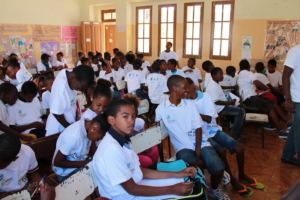 Cape Verde, an island nation in the North Atlantic, has made incredible progress in education since gaining independence in 1975. Back then, less than 40% of adults could read and write; by 2022–23, that figure had risen to almost 91%. Among young people aged 15–24, literacy rates now reach approximately 98%, placing Cape Verde among the highest in West Africa. This gradual rise has become a focal point of national development and contributes to its medium‑income status.
Cape Verde’s formal education follows a 6‑year primary system (ages 6–12), followed by a 5‑year secondary program, which includes a 3‑year general lower-secondary cycle and a 2‑year upper-secondary track focused on either university preparation or vocational training.
Preschool teaches children under 6. Primary net enrollment is reported at about 86%, while gross enrollment, including over‑age or under‑age students, is close to 96%. The country boasts an impressive 99% transition rate to lower secondary schools. However, completion rates remain lower: about 67% for boys and 65% for girls finish primary education. They’re even worse and more gender-disparate for lower secondary education.
Public Spending and Quality Assurance
Cape Verde has maintained high public investment in education for many years, though it declined from 7.5% in 2004 to approximately 5% by 2013. Investment in higher education also increased modestly, from 0.79 % of GDP in 2013 to 0.9% in 2017. Efforts to train teachers and provide textbooks appear effective, as 90% of students have access to textbooks and over 90% of teachers have undergone in-service training.
Despite this commitment, challenges remain. Repetition rates in early primary grades are high, grade 2 sees a repeat rate of about 16.3%, nearly double the average of other grades. Additionally, girls face higher dropout risks, due in part to early childbearing and child marriage, with dropout rates around 24% for girls versus 15% for boys. Such challenges are more prevalent in rural and lower‑income communities, where access to secondary education facilities may be limited and traditional gender roles yield greater influence.
Reforms and International Cooperation
Cape Verde’s inclusive education system is bolstered by national policy and international partnerships. The government collaborates with UNESCO, the U.N., and development partners to improve learning outcomes and equity across islands and vulnerable populations. A key example is a UNICEF‑led initiative under the Global Partnership for Education (GPE), which is funding early childhood and basic education improvements from 2024 to 2029. The program has expanded preschool access to over 5,000 children, many in rural or disadvantaged communities, by providing digital learning rooms and supplying new learning materials. This has helped raise the national preschool enrollment rate to about 86%. The focus on STEM education and vocational training aligns with broader economic ambitions, supported by technical cooperation and external funding.
By combining high literacy targets with strong policy and international support, Cape Verde aims to position education as a transformative national asset. Continued investment in early‑grade learning, improved transition and completion at the secondary level, and expanded opportunities in higher education and vocational training are critical to its vision for sustainable development. With over 90 % adult literacy and near‑universal secondary transition, Cape Verde stands out in its region for educational progress. However, targeted reforms remain crucial to ensure that every child benefits equally from learning.
– Jeff Zhou
Photo: Flickr
