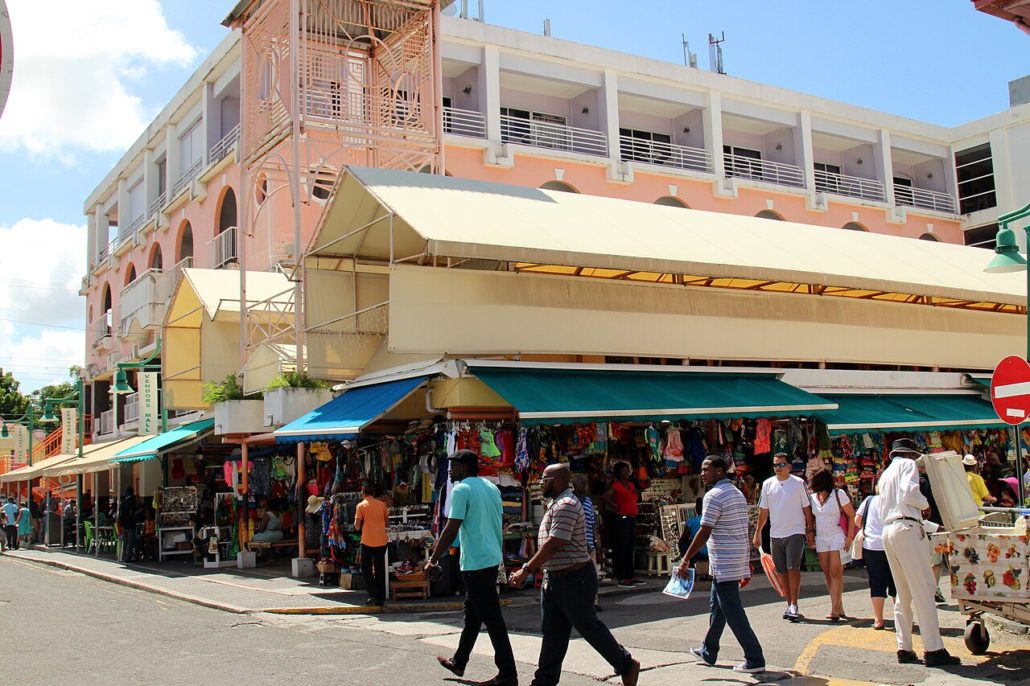
 Energy and climate crises are pushing insular countries, such as Antigua and Barbuda, to the frontlines. Rising fuel costs, combined with hurricanes and a tourism-dependent economy are exposing how fragile a state’s fossil-fueled energy system can become. For years, imported fossil fuels generated electricity entirely, leaving communities vulnerable to fluctuations of the global oil markets.
Now, a different future is being sketched across these islands. It is common for government plans and regional forums to center on renewable energies projects. Rather than being treated as a distant ideal, green energy is increasingly being framed as a matter of survival — economically, environmentally and socially.
Antigua and Barbuda, as many small island developing states, is seeing the transition away from fossil fuels as the pathway to keeping the coasts protected and the economy afloat. Here is more information about the promotion of renewable energy in Antigua and Barbuda.
Antigua and Barbuda
Nestled in the eastern Caribbean’s Leeward chain, Antigua and Barbuda is a twin-islands nation that squeezes a population of nearly 95,000 onto 440 square kilometers of low coral atolls and limestone ridges — Antigua’s volcanic hills peak at just 405 meters, while Barbuda’s pancake-flat expanse is waterless and boasts pink sands.
When it comes to demography, a peculiar distribution characterizes Antigua and Barbuda: nearly all residents — 98% — crowd onto Antigua, with 60% living in St. John Parish and another 26% crammed into the capital and port city of St. John’s.
Having been a check point for the slave trade routes in the 17th century, most islanders (87% of the total) are of African descent navigate a youthful, female-skewed demographic with life expectancy hovering near 79 years.
Green Energy Targets
Antigua and Barbuda is aiming at one of the most ambitious targets in renewable energy among Small Island Developing States (SIDS), targeting 86% of electricity from local renewables by 2030 and 100% for water management essentials like desalination. This vaults it into the ninth spot among the best SIDS for expected MW capacity by 2030 — eyeing 483 MW — despite a population of less than 100,000, far outpacing per capita efforts by giants like Fiji or Cuba, home to millions of inhabitants. This green energy strategy crosses three main sectors: geothermal, wind and solar power, not all equally viable and the current share of renewable energy is only at 7%.
Although a country of very small size, geothermal power could leverage the nation’s perch on the Caribbean Plate. A 2018 pact with Polaris Energy scouts baseload potential on the territory and the government has recently expressed the intention of entering the geothermal market of St. Kitts and Nevis, a neighbor small island country, to strengthen regional energy cooperation.
At an initial look wind may seem like a source perfectly suiting an oceanic nation. However, this power proved to be a double-edged sword: trade winds whip reliably, but 2017’s Hurricane Irma — obliterating 95% of Barbuda — canceled the efforts of erecting resilient turbines, stalling ambitious sites.
It is solar power that steals the spotlight as the most reliable source of green energy, dominating almost 100% of current renewables. Bathing in year-round Caribbean sun, Antigua and Barbuda benefits from more than 4,300 hours of sunlight, making it the perfect spot for accumulating solar energy. A key feature of the sector is the shift from rooftop systems to off-grid systems. Projects like the hurricane‑resistant solar and battery plant on Barbuda are designed not just to generate clean power, but to keep the lights on after storms and also attract foreign capitals.
Changing Weather Patterns
Poverty remains a persistent challenge in Antigua and Barbuda, worsening under the strain of changing weather patterns. Those already on the margins face increasing threats from extreme weather, disrupted livelihoods and limited access to essential services such as health, transport and communications. The combined effects of hurricanes and the lingering fallout from COVID‑19 continue to erode social and economic stability.
Women are disproportionately affected, forming the majority in tourism and public sectors while shouldering household leadership. A UN Women and IISD survey urged retraining of public employees and stronger integration of gender concerns into climate policies. Many women rely on microfinance after disasters, while health risks — from waterborne diseases to mental stress — intensify vulnerabilities.
Expanding renewable energy in Antigua and Barbuda is vital to reversing these trends. Clean energy projects can lower costs, create stable jobs and strengthen climate resilience, ensuring that development benefits vulnerable groups more equitably. For instance, the International Renewable Energy Agency estimated that in a scenario where Antigua and Barbuda make it to 100% renewable energy, including the use of hydrogen and the proliferation of electric vehicles as variables, the cost of energy would decrease from USD 0.15 kWh to USD 0.09.
Why Are SIDS Obsessed With the Green Transition?
SIDS like Antigua and Barbuda, Mauritius, Nauru and others champion the green transition despite contributing a minuscule slice of global GHG emissions — less than 1% collectively, for 39 countries falling into this category.
Changing weather patterns hit them first before any other country in the world: sea-level rise erodes shorelines, hurricanes wreck homes and economies, coral die-offs cripple tourism and fish stocks.
Climate-resilient infrastructure and innovation are advancing at the national level among all SIDS. For instance, the Maldives and Tuvalu are experimenting with adaptive urban designs such as floating cities and artificial islands, adapting to rising sea levels. Collectively, SIDS are speaking out through the Alliance of Small Island States, urging stricter emissions targets and fair financial mechanisms for climate impact mitigation at the international level.
– Riccardo Chiaraluce
Riccardo is based in London, UK and focuses on Technology and Politics for The Borgen Project.
Photo: Flickr

Towards Climate Collaboration: The U.K.–Pakistan Green Compact
In response to these challenges, the U.K.–Pakistan Green Compact stands as a landmark agreement in global climate cooperation, marking a critical step toward safeguarding one of the world’s most at-risk nations.
The Deal
The U.K.–Pakistan Green Compact offers Pakistan a collaborative means to ameliorate some of the most pressing ecological challenges that it has faced in recent years. The agreement unlocks more than $35 million in targeted U.K. funding for projects that support the development of green energy and promote preventative solutions, such as the investment in expanding mangrove conservation.
The compact is centered around five pillars:
Stabilizing Pakistan’s Vulnerable Regions
The accessibility of finance to support sustainable climate projects is one of the major barriers to progress in Pakistan, a central concern that this compact hopes to address. The climate development that this will facilitate will, in turn, stabilize the regions in Pakistan most directly impacted by the floods, droughts and heatwaves that claimed more than 1,000 lives in 2025 alone. In particular, greater efforts in mangrove conservation made possible by this deal will help protect coastal communities from ongoing flooding risks.
These floods weaken local economies, destroy homes and infrastructure and threaten the lives of both people and their livestock. More than 18 million Pakistanis were affected by the 2025 monsoon floods. The disaster led to widespread displacement and the destruction of vital public assets.
Essential cropland exceeding 2.23 million acres was either submerged or destroyed. This loss erased critical resources that support regional food security and an economy partly dependent on agriculture. The macroeconomic effects of the disaster are severe. It is projected to reduce the nation’s GDP for 2025–26 by up to 2%, posing a significant barrier to development.
The targeted solutions that the U.K.–Pakistan Green Compact provides hope to the roughly 60 million people living in poverty in Pakistan. The highest concentration of national poverty is found in the most rurally situated districts. As a result, it is the communities most reliant on agriculture that are made the most vulnerable by the impacts of changing climatic conditions.
Final Thoughts
Collaborative action between international powers, such as the U.K.–Pakistan Green Compact, is essential for building a global framework for climate cooperation. This approach enables the sharing of data, resources, systems and expertise to address the climate crisis and its direct link to high poverty rates.
The future of climate action and poverty reduction is closely interconnected. It depends largely on sustained, large-scale international collaboration. The Green Compact deal stands as a strong example of the kind of coordinated economic action needed to support a more environmentally stable and economically resilient future.
– Evan Meikle
Photo: Flickr
Increase to Scotland’s International Development Fund
What is Scotland’s International Development Fund?
Scotland’s International Development Fund started in 2005 with an annual budget of £3 million after signing an agreement with the Malawi Government to aid in a variety of development projects. In 2008, the programme and fund expanded to include Zambia and Rwanda, and Pakistan has been included since 2016.
In 2012, Scotland also launched their Climate Justice Fund alongside their International Development Fund as the first nation to commit money specifically towards natural disasters. These funds help several projects and organizations in each of the partner countries across several thematic areas of focus:
Global Humanitarian Crisis Projects
Scotland’s International Development Fund has seen gradual annual budget increases over the past 20 years. This year, the Scottish Government has allocated £16 million to Scotland’s International Development Fund in the 2026/2027 budget, which is a 26% increase compared to the 2025/2026 budget, SPICe Spotlight reports. It also exceeds the forecasted £15 million budget set in 2021. One million pounds of this budget will go towards humanitarian crisis response aid. The Climate Justice Fund is also set to receive £12.7 million, although this is a £1 million reduction compared to last year’s budget.
Reduction in UK Foreign Aid Spending
This increase in Scotland’s International Development Fund comes as a welcome surprise in light of the U.K. government announcing that it will reduce foreign aid spending from 0.5% of gross national income (GNI) to 0.3% in 2027. This decrease comes as the Prime Minister, Keir Starmer, has announced an increased investment in defence spending at 3% of gross domestic product (GDP) in 2027, up from previous targets of 2.5%.
In 2027, 0.3% of GNI could be around £9.2 billion available for aid, down from £15.3 billion spent on aid in 2023. This is far from the duty of 0.7% of GNI that the International Development Act of 2016 sets out; 1999 was the last time that aid was at or below 0.3% of GNI. However, the Prime Minister emphasises that the UK will continue to support Sudan, Ukraine, Gaza and global health.
Scotland-Pakistan Scholarships for Women and Girls
According to the Scottish Government, £500,000 pounds from Scotland’s International Development Fund will help remove barriers for women and girls to pursue and finish secondary education, as well as transition to higher education for bachelor’s and master’s degrees in Pakistan. Partnered with regional organizations, young women and girls receive scholarships targeting girls from minority religious groups and disabled students. Funding education continues to be a successful way to help individuals and communities combat extreme levels of poverty.
Kamuzu University of Health Sciences, Malawi
The Fun will help support research advancements for Africans, by Africans, in Africa at Kamuzu University of Health Sciences, which specifically trains health professionals such as doctors, nurses, midwives and pharmacists. This 15-year-long partnership has already helped establish the first dental school in Malawi.
Democratic Republic of the Congo
Scotland’s humanitarian crises budget provided £250,000 in 2025 to help support emergency relief efforts across eastern Democratic Republic of the Congo. DR Congo is one of the poorest and most populous countries in Africa. Almost three in four people, or around 72% of the population, live in extreme poverty with less than $1.90 per day. This situation could only worsen with the ongoing conflict in the eastern provinces, which has displaced hundreds of thousands of people and has resulted in significant civilian casualties. This humanitarian aid funding helped families pay for bare essentials such as food, shelter, fuel and urgent medical care.
Looking Forward
This increase to Scotland’s International Development Fund, including its humanitarian aid spending, is positive news in light of other countries stepping back, such as the U.K. government. Scotland’s refusal to step back “from commitments to the world’s poorest and most vulnerable” offers some hope for a better, more inclusive, more sustainable world to come.
– Stephanie Gable
Photo: Flickr
SDG 6 in Palestine: Water, Sanitation and Life Under Blockade
SDG 6 and What It Promises
SDG 6’s goal is to “ensure availability and sustainable management of water and sanitation for all.” This includes targets for safe drinking water, proper sanitation and hygiene, better water quality and fairer, more efficient water use. Around the world, billions of people still lack safe water and sanitation, and progress is not fast enough to reach everyone by 2030. In Palestine, SDG 6 shows how conflict and political restrictions can make even basic improvements difficult.
Water Access in Palestine Today
Official SDG 6 data indicate that most people in Palestine have access to safely managed drinking water, but these numbers do not reflect the significant differences across regions and communities. In Gaza, years of blockade, over-pumping and damaged infrastructure have made the coastal aquifer very polluted. Even before the latest crisis, about 97% of its water did not meet World Health Organization (WHO) standards. Recent reports show that many families in Gaza get much less than the 50 liters of water per person per day that the U.N. says is needed for health. This forces people to use unsafe water or pay high prices for trucked water.
Gaza: Living With Extreme Water Insecurity
Gaza’s crowded population and broken infrastructure make SDG 6 especially important there. According to Anera, only about 10% of people in Gaza have safe drinking water at home. Most families must buy desalinated or delivered water if they can afford it. Pollution from untreated sewage, flooding and old, rusty pipes worsens water quality and increases the risk of disease.
West Bank: Inequality and Control Over Resources
In the West Bank, SDG 6 is affected by unequal control over water resources and restrictions on Palestinian infrastructure projects. Researchers say Israel has “hydro-hegemony” because it controls the main aquifers and the Jordan River. This means Palestinian communities often have less water per person and face frequent shortages. In many parts of Area C, Palestinians need permits to build or improve water and sanitation facilities, and the risk of demolition makes long-term planning difficult.
Lack of water and sanitation hurts health, education and jobs across Palestine, especially for children and low-income families. Not enough clean water and poor wastewater management lead to more cases of diarrhea and other diseases. Experts warn that crowded places like Gaza could face health crises. When families spend much of their money on water, they have less for food, rent, and school, which makes poverty worse.
Local and International Efforts
Even with these problems, people are working to improve SDG 6 in Palestine by building better infrastructure and making services better. In Gaza, Anera has put in 1 million meters of water pipes, providing 35,700 people in Rafah with steady water at home. It has also connected more than 2,300 homes to safer wastewater systems and added drainage to help with flooding. Other projects, like a sanitation effort in Khan Younis, aim to improve basic services by helping local governments with technical, organizational and financial support.
Strengthening these efforts could help Palestine get closer to SDG 6 and improve health, dignity, and opportunities for millions living through ongoing crisis.
– Niaz Youssefian
Photo: Wikimedia Commons
EDISCA in Brazil
If dance groups are lucky enough, they have the chance to make a difference in the world. In Brazil, using the unique medium of dance as a way to help children create a life for themselves that is safer than the roads on which many young girls fall in Fortaleza.
Background
Escola de Dança e Integração Social para Criança e Adolescente (EDISCA) is a non-governmental group based in Fortaleza, Brazil. Fortaleza faces many challenges with urban poverty, extreme inequality, and a large expanding slum population, and these problems infiltrate the lives of young girls who want to make a life for themselves.
According to the 2025 census data, Fortaleza could have a population of around 2.58-3.24 million. With an estimated 23.1% below the country’s poverty line in 2023-2024. The majority of the children who go to EDISCA cannot read or write, many have health problems, and are close to running away from their violent home lives. EDISCA is important for these young girls to break the habit of global poverty that many children face.
Importance of EDISCA with Poverty
The mission of EDISCA is to promote human development through education, art, and practices that encompass goodness, beauty, and justice. Founded in 1992 by Dora Andrade, EDISCA was made to “provide dance, theater and various other art forms… helps the children understand their and their families’ struggles.”
Andrade first started her dance career in the USA, but quickly changed her pathway when she returned home to teach girls to dance their way out of the slums, along with multiple life skills, critical skills, education, and self-esteem.
Andrade, along with other staff members, teaches the students about health care, nutrition, art, theater, and reading and writing. There is even a psychologist at EDISCA, Madeline Abreu, who talks to the children about the emotional burdens they may carry, according to PassBlue.
EDISCA focuses on children and adolescents who live in the most vulnerable favela communities, offering them an opportunity for an empowering path. The idea is that the girls can become ambassadors of change and take control of their lives by breaking the cycle of poverty and social exclusion. Families and government officials have the opportunity to come and witness the changes being made in EDISCA.
Dance as a Stepping Stone for Change
EDISCA helps outsiders understand that children, specifically from favela communities, can be an important resource for change. Indeed, the performing arts give people the chance to “learn teaching, and teach learning,” SIT study abroad reports. Politicians who come to see some of the work going on at EDISCA see that these underprivileged kids are part of the change, not just the elite
In a country facing extreme poverty, like Brazil, dance serves as an important outlet for young people. For children who go to EDISCA, it is a way to learn basic everyday skills, the chance to turn their life around, and even develop healthy habits, instead of falling down a pathway of prostitution or drug abuse.
EDISCA goes around the world, performing for a wide audience, showcasing the talent that the children have, with the potential to gain more students. It uses dance as a way to push for social justice and build a better future. EDISCA has changed so many lives, and hopes to continue that.
With all the success EDISCA has achieved using dance as a unique medium, it has become a stepping stone for other organizations, including “Dance Out of Poverty” in India, to create their own dance group. The poverty these children face in the favela communities was imposed on them by the higher communities, but EDISCA has flipped the cards by showing them the problems and how EDISCA is making a change.
– Elizabeth Fryer
Photo: Flickr
AI Diagnostics in Rwanda Could Strengthen Frontline Health Care
Why Health Care Access Matters in Rwanda
This matters because poverty and health care are closely connected in Rwanda. World Bank data shows that 27.4% of the population lives below the national poverty line and 38.55% lives below the $3-a-day international poverty line. When families live with limited income, delays in diagnosis, transport costs and shortages in local care can make treatment harder to reach and more expensive in practice.
Rwanda has made major health gains, but access challenges remain. Government information says the country has about 58,000 community health workers and 66% of them are women. These workers are often the first link between communities and the formal health system. They monitor health at the village level, provide basic services and refer patients when cases become more serious. That makes better decision support at the community level especially important.
What the Study Found
A February 2026 study published in Nature Health tested five large language models using real clinical questions from Rwanda’s community health system. Researchers built a dataset of 5,609 questions submitted by 101 community health workers across four districts. They compared responses from Gemini-2, GPT-4o, o3-mini, DeepSeek R1 and Meditron-70B with answers from local clinicians. In a subset of 524 question-and-answer pairs scored across 11 expert-rated metrics, Gemini-2 and GPT-4o performed best and all five models outperformed local clinicians across every metric measured.
The cost difference made the findings even more striking. The study reported that clinician-generated answers cost an average of $5.43 per question for general practitioners and $3.80 for nurses. Model-generated responses cost about $0.0035 in English and $0.0044 in Kinyarwanda. Even when performance dropped slightly in Kinyarwanda, the models still outperformed clinicians and remained more than 500 times cheaper per response. For a health system trying to stretch limited resources, that level of efficiency matters.
Why AI Diagnostics in Rwanda Could Help
The promise of AI diagnostics in Rwanda is not only about answering questions faster. It is also about helping frontline workers decide when a case may be urgent, when symptoms point to a likely condition and when a patient should receive a referral for higher-level care. In settings where staff shortages and access gaps create pressure on the system, stronger support for frontline workers could improve speed, consistency and patient outcomes. Rwanda’s own health labor market analysis has documented workforce constraints and uneven distribution of health professionals, especially in lower-resource settings.
Rwanda is also building systems that could help these tools work at scale. In April 2025, the Ministry of Health launched the National Health Intelligence Center, a platform designed to collect and process real-time health data for evidence-based decisions. That matters because useful AI tools need more than strong models. They also need data systems, implementation planning and oversight.
International support is also growing in that direction. In January 2026, OpenAI and the Gates Foundation announced Horizon 1000, a $50 million initiative beginning in Rwanda. The goal is to support leaders in African countries, starting with Rwanda, and reach 1,000 primary health care clinics and surrounding communities by 2028. Reuters reported that the effort aims to improve health care delivery in places facing severe health worker shortages.
What Still Needs To Be Proven
Still, this story is not just about excitement over new technology. In February 2026, Wellcome, the Gates Foundation and the Novo Nordisk Foundation launched the Evidence for AI in Health initiative, backed by $60 million to support locally led evaluations of AI tools in low- and middle-income countries. That matters because governments need evidence on what works, where it adds value and how it can be used responsibly. In Rwanda, language quality, privacy safeguards, clinical safety and real-world implementation will shape whether these tools truly help patients.
AI will not replace doctors, nurses or community health workers. But it may help them do more with limited time and limited resources. That is what makes AI diagnostics in Rwanda worth watching. If Rwanda continues to pair innovation with evidence, oversight and local implementation, this approach could become a strong example of how technology can expand access to quality care in places that need it most.
– Adriana Carolina Herrera
Photo: Wikimedia Commons
Women in South Sudan Are Creating Their Own Financial Futures
In response, the United Nations Mission in South Sudan has recognized both their resilience and the urgent need for reform. It implemented a multifaceted strategy to advance gender equality, support women’s development and position women as central to the country’s future.
South Sudanese Women Are Shaping Their Financial Futures
Across South Sudan, women have long sustained households and communities through farming, harvesting and trade. Yet conflict, limited access to education and finance and widespread gender-based violence have repeatedly constrained their progress. For decades, many women’s ambitions have far exceeded the opportunities available to them.
That reality is beginning to shift. In 2023, the South Sudan Women’s Social and Economic Empowerment Project (SSWSEEP) launched as a four-year, $52 million government-led initiative funded by the World Bank. The project is expanding opportunities for women by providing business skills training and financial support to help them start, sustain and grow their own businesses.
NGOs Expand Economic Opportunities for Women in South Sudan
Nongovernmental organizations (NGOs) are also helping expand economic opportunities for women in South Sudan. Groups such as the Whitaker Peace & Development Initiative (WPDI), the Women’s Peace and Development Initiative and Women for Women International focus on strengthening women’s entrepreneurial capacity. In 2025, WPDI celebrated 150 women who graduated from its entrepreneurship program in Juba, the capital of South Sudan.
As more women launch businesses, many are gaining greater financial stability for themselves and their families. NGOs continue to play a critical role in advancing women’s rights in South Sudan, especially in areas where government support remains limited. Several organizations are working directly to improve women’s access to justice, economic opportunity and community support:
How Entrepreneurship Is Changing Lives in South Sudan
One recent success story is that of Rose Juru Chaplin, a South Sudanese entrepreneur who owns a boutique in Munuki Market. With support from the SSWSEEP, she gained the training and assistance needed to strengthen her business skills and expand her enterprise. Her boutique now serves as a key source of income for her family while helping her build greater financial security.
Chaplin’s experience reflects a broader shift taking place across South Sudan, where hundreds of women-owned businesses have received similar support. Her story highlights how access to training and financial assistance is helping women strengthen not only their own livelihoods but also those of their families, local economies and communities.
Conclusion
The resilience of South Sudanese women continues to drive a powerful shift from survival to economic participation and growth. While challenges such as weak infrastructure and ongoing economic instability remain, the progress women are making highlights the impact of investing in female entrepreneurship. Programs that combine education, financial access and peer support are proving to be effective tools for long-term development.
As South Sudan continues to rebuild, women entrepreneurs are playing a critical role in shaping the country’s future. Through determination and increased access to opportunity, they are improving their own lives while driving meaningful change across their families, communities and the wider economy.
– Erin Sian Mongillo
Photo: Flickr
Elimination of Leprosy in Chile
Background
Leprosy is a chronic, bacterial infection caused by the ingestion of a specific type of bacteria “Mycobacterium leprae.” Once the virus enters its host’s body, it quickly gets to work infecting the body’s skin and nerves, causing immense physical pain and discomfort to its victims. While the infection is not believed to be fatal, leprosy disease can cause various uncomfortable conditions, including severe itching, muscle fatigue, nerve weakness, and, without adequate recognition and treatment, serious disabilities. While treatment for leprosy eradication is available to those who seek it, it is challenging for victims to pursue a cure, as leprosy disease is difficult to properly identify, and symptoms don’t typically show themselves until years after the infection.
Hope is Still There
While leprosy is a dangerous disease that can leave potentially life-altering side effects, thankfully, hope is still there as there are a handful of treatments that can help with leprosy eradication in the body.
As of early March, both the World Health Organization (WHO) and the Pan American Health Organization (PAHO) have officially verified that Chile has not recorded leprosy for as long as 30 years. While this landmark accomplishment deserves celebration, it’s important to consider that leprosy eradication in Chile not only luck, but rather a set of principles Chile has taken to reduce the spread of leprosy.
A common example includes increased surveillance around the country, intended to closely monitor and detect sicknesses as soon as they come up and treat them accordingly, rather than choosing to wait and risk harmful side effects. Those who are found infected are treated and followed up on for the disease immediately. WHO has implemented a strategic system in place which ensures that anyone who is diagnosed with leprosy receives continuous, long-term health benefits to help aid the recovery process.
Multidrug Therapy
Another important discovery that has led to complete leprosy reduction in Chile is the expanded access that patients now have to multidrug therapy (MDT), a combination of medications used to thoroughly treat leprosy. Both PAHO and WHO have cooperated to pledge their support for the implementation of the MDT method within the Americas, completely free of charge to all of its members. The frequent generosity of donors around the world has made it possible to more effectively identify the disease before it negatively impacts its respective hosts and then cure the disease, effectively reducing leprosy before it takes control.
Chile’s new methods of disease recognition have been successful in allowing for Leprosy eradication within the entire country’s border. Efforts by the WHO and PAHO organizations have paved the way for more positive treatment for disease, including increased surveillance systems to track and monitor viruses and the MDT program, which have been consistently successful as shown by the grand milestone.
The decades of time and effort spent into eradicating the leprosy virus in Chile have finally paid off, and it goes to demonstrate that threatening diseases that may at first seem impossible to truly erase are actually quite easy when governments commit to certain health strategies, as cooperation is essential for not only the elimination of viruses within certain countries, but also as a way to maintain their absence in the following years.
– Will Mancuso
Photo: Flickr
Ambitious Plans: Poverty Reduction in Indonesia
Indonesia’s Economic Landscape
Composed of more than 17,000 islands, Indonesia is the most populous country in Southeast Asia and the fourth most populous in the world. Indonesia has maintained a stable economy over the years, known for its role in managing imports. However, approximately 24.8 million people, or 8.7% of the population, were considered poor as of early 2025. Indonesia aims to target extreme poverty, planning to reduce the percentage to 7% by 2026 and 4.5% by 2029. Indonesia also plans for economic growth to increase by 5.4% to 6% over the next year to support poverty reduction in Indonesia.
Tracking Poverty Through Data
To ensure that these changes hold, Indonesia has launched the National Socio-Economic Single Data System (DTSEN), a method used to identify citizens who live below the poverty line and need social support so that assistance can be provided. The database allows for the distribution of resources to those who need them. The DTSEN provides access to food aid, health insurance and services to those who are struggling. This effort, which involves cooperation from the government as well as various social groups, seeks to benefit citizens’ well-being and increase poverty reduction in Indonesia.
Expanding Access to Education
One of the most notable parts of Indonesia’s plan is the construction of more than 70,000 school units over the course of 2026. Education is a strong focus within Indonesia’s goal to reduce regional poverty through the Indonesia Bright Program (PIP), which offers funding for hundreds of thousands of young students. The program intends not only to raise educational opportunities for young students but also to ensure that the units being built meet high-quality standards, addressing issues such as poor building structures, leaky roofs and a lack of sanitation within schools.
Budgetary Reform and Land Allocation
To make these changes work, leaders met in December 2025 to propose a new strategic framework that allows citizens to access more equal opportunities and provides those who are struggling with the resources they need. Indonesia also plans to allocate state-owned land to more than 1 million poor families in another effort to reduce poverty in the country.
Looking Ahead
Indonesia’s plan to reduce poverty by the end of 2026 is ambitious but has shown early progress. By investing in social assistance, education and economic reform, poverty reduction in Indonesia can move from a goal to a measurable outcome.
– Will Mancuso
Photo: Flickr
Facts About Statistics Regarding Foreign Aid to Tuvalu
Taken at face value, the level of foreign aid to Tuvalu appears encouraging, certainly at a time where humanitarian aid efforts are drastically reducing across the globe. Increasing aid amounts can indicate the existence of significant global commitment. However, Tuvalu’s foreign aid statistics tell several painful stories.
The Sobering Reality
Aid is rising – not due to global commitment – but rather on account of the fact that Tuvalu faces a genuine existential risk. With an average elevation of less than 2 meters above sea level, Tuvalu is one of the most climate vulnerable nations in the world and faces the very real possibility of complete land submergence due to rising sea levels and saltwater intrusion.
Pacific island nations like Tuvalu, Palau and the Marshall Islands bear a negligible responsibility for the consequences of changing weather patterns yet face enormous costs. As of 2024, Tuvalu contributes 0.00003% of global CO2 emissions, but is becoming increasingly uninhabitable due to the consequences of changing weather that it did not create.
As the nation lacks the economic ability to combat rising tides, their unusual dependence on foreign aid and external grants as sources of income demonstrates a growing vulnerability, not global commitment. Climate hazard assessments for 2025 identified more intense cyclones and storm systems that extensively damaged infrastructure and essential services across sectors such as water, health and coastal development. Freshwater availability, agriculture and public health are areas that have all suffered, despite rising amounts of aid. This puts a direct stress on people’s livelihoods, income and wellbeing.
What This Means in the Context of Global Poverty
Due to the nation’s climate vulnerability, a large share of foreign aid to Tuvalu has to be tied to specific climate and infrastructure projects. Tuvalu cannot spend it on health systems, education or long-term economic diversification, due to the extent of climate risk the nation faces. The state has little discretionary fiscal space, even though the headline figures may look large. In a country that already has 26% of its population living below the poverty line, the inability to use foreign aid to help families going through hardship contributes directly to increasing poverty statistics.
As the main focus of foreign aid to Tuvalu is therefore focused on combatting climate risk first, funds that would be used to improve the economic and social wellbeing of Tuvalu’s population are stretched thin. The country’s economy depends heavily on natural resources such as fisheries, small-scale agriculture and coastal land, meaning that environmental changes can quickly translate into economic hardship.
Many homes and community buildings are located near the shoreline because the islands are extremely narrow. As the ocean encroaches inland, families lose land used for housing and farming. As Tuvalu relies largely on subsistence agriculture, where families grow crops such as pulaka (a traditional swamp taro) for their own consumption, land loss directly damages food and economic security.
Changing weather has also increased the salinity of soils and groundwater, as saltwater infiltrates farmland, damaging crops and reducing harvests. As a result, many households must rely more on imported foods, which are expensive due to transport costs. This creates additional financial pressure for families and is increasing food insecurity.
Solutions
However, it is not all doom and gloom for the small island nation. The Tuvalu Coastal Adaptation Project (TCAP) is perhaps one of Tuvalu’s most notable responses to the issues it is facing. Funded by the Green Climate Fund, the United Nations Development Program and the governments of Australia, New Zealand and the U.S. (~$36 million), the project aimed at helping the most vulnerable communities experiencing climate risk. The TCAP successfully reclaimed 8 hectares of land, and is estimated to have helped 60% of Tuvalu’s population suffering further climate driven poverty, offering a model for other small island developing states to “rise above the waves.” By reducing the risk of flooding and erosion, coastal protection projects help preserve livelihoods and reduce the economic losses that often push households into poverty.
Alongside land reclamation, the TCAP has also invested directly in young Tuvaluans, funding scholarships in climate science, coastal engineering and environmental studies. A focus on educating their nation will soon directly help safeguard homes and protect both public infrastructure and agricultural land.
International organizations have also introduced programs to help farmers adapt to changing environmental conditions, such as developing salt-tolerant crops, improving soil management techniques and promoting small-scale home gardens. Such programs help communities maintain food production despite rising salinity and environmental stress.
Concluding Thoughts
While the amount of foreign aid to Tuvalu appears significant, its use is severely hindered by fiscal limitations. Figures showing rising amounts of aid can therefore be misleading, as these correspond to rising climate threats and a growing existential risk, rather than increasing humanitarian aims. In truth, the real problem that Tuvalu faces, is not really a “lack of foreign aid,” but rather a lack of concrete climate change commitments and more accountable Nationally Determined Commitments (NDCs) that COP should make. Indeed, after the disappointment of COP30 last year, Tuvalu’s Minister of Climate Change, Maina Talia, claimed the conference was a “festival for the oil producing countries” who “bury our voice as small developing countries.”
Tuvalu’s experience highlights how changing weather patterns can intensify poverty in vulnerable nations by threatening livelihoods, food security and infrastructure. While foreign aid and international climate adaptation projects have helped strengthen resilience and protect communities, long-term solutions will depend on continued global cooperation and stronger action to address changing weather.
– Max Kenway
Photo: Unsplash
Renewable Energy in Antigua and Barbuda
Now, a different future is being sketched across these islands. It is common for government plans and regional forums to center on renewable energies projects. Rather than being treated as a distant ideal, green energy is increasingly being framed as a matter of survival — economically, environmentally and socially.
Antigua and Barbuda, as many small island developing states, is seeing the transition away from fossil fuels as the pathway to keeping the coasts protected and the economy afloat. Here is more information about the promotion of renewable energy in Antigua and Barbuda.
Antigua and Barbuda
Nestled in the eastern Caribbean’s Leeward chain, Antigua and Barbuda is a twin-islands nation that squeezes a population of nearly 95,000 onto 440 square kilometers of low coral atolls and limestone ridges — Antigua’s volcanic hills peak at just 405 meters, while Barbuda’s pancake-flat expanse is waterless and boasts pink sands.
When it comes to demography, a peculiar distribution characterizes Antigua and Barbuda: nearly all residents — 98% — crowd onto Antigua, with 60% living in St. John Parish and another 26% crammed into the capital and port city of St. John’s.
Having been a check point for the slave trade routes in the 17th century, most islanders (87% of the total) are of African descent navigate a youthful, female-skewed demographic with life expectancy hovering near 79 years.
Green Energy Targets
Antigua and Barbuda is aiming at one of the most ambitious targets in renewable energy among Small Island Developing States (SIDS), targeting 86% of electricity from local renewables by 2030 and 100% for water management essentials like desalination. This vaults it into the ninth spot among the best SIDS for expected MW capacity by 2030 — eyeing 483 MW — despite a population of less than 100,000, far outpacing per capita efforts by giants like Fiji or Cuba, home to millions of inhabitants. This green energy strategy crosses three main sectors: geothermal, wind and solar power, not all equally viable and the current share of renewable energy is only at 7%.
Although a country of very small size, geothermal power could leverage the nation’s perch on the Caribbean Plate. A 2018 pact with Polaris Energy scouts baseload potential on the territory and the government has recently expressed the intention of entering the geothermal market of St. Kitts and Nevis, a neighbor small island country, to strengthen regional energy cooperation.
At an initial look wind may seem like a source perfectly suiting an oceanic nation. However, this power proved to be a double-edged sword: trade winds whip reliably, but 2017’s Hurricane Irma — obliterating 95% of Barbuda — canceled the efforts of erecting resilient turbines, stalling ambitious sites.
It is solar power that steals the spotlight as the most reliable source of green energy, dominating almost 100% of current renewables. Bathing in year-round Caribbean sun, Antigua and Barbuda benefits from more than 4,300 hours of sunlight, making it the perfect spot for accumulating solar energy. A key feature of the sector is the shift from rooftop systems to off-grid systems. Projects like the hurricane‑resistant solar and battery plant on Barbuda are designed not just to generate clean power, but to keep the lights on after storms and also attract foreign capitals.
Changing Weather Patterns
Poverty remains a persistent challenge in Antigua and Barbuda, worsening under the strain of changing weather patterns. Those already on the margins face increasing threats from extreme weather, disrupted livelihoods and limited access to essential services such as health, transport and communications. The combined effects of hurricanes and the lingering fallout from COVID‑19 continue to erode social and economic stability.
Women are disproportionately affected, forming the majority in tourism and public sectors while shouldering household leadership. A UN Women and IISD survey urged retraining of public employees and stronger integration of gender concerns into climate policies. Many women rely on microfinance after disasters, while health risks — from waterborne diseases to mental stress — intensify vulnerabilities.
Expanding renewable energy in Antigua and Barbuda is vital to reversing these trends. Clean energy projects can lower costs, create stable jobs and strengthen climate resilience, ensuring that development benefits vulnerable groups more equitably. For instance, the International Renewable Energy Agency estimated that in a scenario where Antigua and Barbuda make it to 100% renewable energy, including the use of hydrogen and the proliferation of electric vehicles as variables, the cost of energy would decrease from USD 0.15 kWh to USD 0.09.
Why Are SIDS Obsessed With the Green Transition?
SIDS like Antigua and Barbuda, Mauritius, Nauru and others champion the green transition despite contributing a minuscule slice of global GHG emissions — less than 1% collectively, for 39 countries falling into this category.
Changing weather patterns hit them first before any other country in the world: sea-level rise erodes shorelines, hurricanes wreck homes and economies, coral die-offs cripple tourism and fish stocks.
Climate-resilient infrastructure and innovation are advancing at the national level among all SIDS. For instance, the Maldives and Tuvalu are experimenting with adaptive urban designs such as floating cities and artificial islands, adapting to rising sea levels. Collectively, SIDS are speaking out through the Alliance of Small Island States, urging stricter emissions targets and fair financial mechanisms for climate impact mitigation at the international level.
– Riccardo Chiaraluce
Photo: Flickr