Addressing South Africa’s Housing Crisis
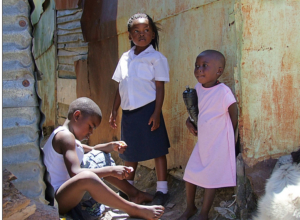 In the developing country of South Africa, the issues of environmental sustainability and a lack of affordable housing for its citizens have permeated throughout the country. Here’s an in-depth look at the environmental and housing crisis within South Africa and a potential solution that could go a long way toward fixing these issues.
Climate Instability in South Africa
Starting with South Africa’s efforts to combat climate hazards, a recent Sustainable Development Report ranked the country 111th out of 167. This ranking measures progress toward the Sustainable Development Goals (SDGs), a set of targets adopted by the U.N. in 2015 to address climate change and other global challenges.
The report outlines that sustainable housing in South Africa has “major challenges remaining.” This suggests that South Africa is a long way from being considered a green country and that significant strides need to be made in sustainable housing.
Housing Crisis in South Africa
Moving on to South Africa’s housing crisis, there are once again hurdles that the country needs to clear. First, South Africa works on a contract-based system, where the government issues contracts for people needing houses. The South African government adopted this model in 1994, which was successful at the onset. According to an article by The Guardian, from 1998 to 1999, South Africa’s government built more than 235,000 houses a year.
However, due to budget cuts and the pandemic, in 2022-2023, that number has dropped to 34,000, even though the municipality’s housing needs register lists more than 375,000 applicants. The article goes on to talk about how many people have died on the waiting list to get a house. This evidence makes it clear that there is a need for a solution to this sustainable housing crisis in South Africa.
Potential Solution for Sustainable Housing in South Africa
A recent study by Alireza Moghayedi and Bankole Osita Awuzie proposes a framework that would, in theory, build low-cost, sustainable housing for low-income citizens in South Africa. Indeed, the study suggests that South Africa could focus on net-zero housing concepts, which are housing models that generate as much renewable energy as they consume through things like solar panels. This model could ensure that new houses don’t add to South Africa’s carbon footprint, bringing it closer to achieving the Sustainable Development Goals.
In addition, the article states that constructing these Low-Income Net Zero Energy Houses (LINZEH) takes only three days to complete, compared to 12 for a conventional low-income housing unit. This efficiency could allow the government to reduce the backlog of people on the waiting list and provide homes for those who desperately need them.
Finally, due to budget cuts in South Africa, these housing units would need to cost less to justify their implementation. According to the article, a conventional low-income house costs $31,555, whereas the proposed LINZEH costs $17,244. To summarize, the proposed LINZEH model for sustainable housing in South Africa would be better for the environment, take less time to construct and cost about half as much as a conventional low-income housing unit.
Conclusion
South Africa’s housing crisis, was brought on by a backlog of people who needed homes and the pandemic, resulted in a budget cuts. A proposed LINZEH housing model would not only greatly assist the government in South Africa by providing energy-efficient, cost-effective and streamlined housing. It would also provide a roof over the heads of thousands of South Africans who need it.
– Charlie Means
Charlie is based in Denver, CO, USA and focuses on Technology and Global Health for The Borgen Project.
Photo: Flickr
