Poverty Alleviation and Women’s SHGs in India
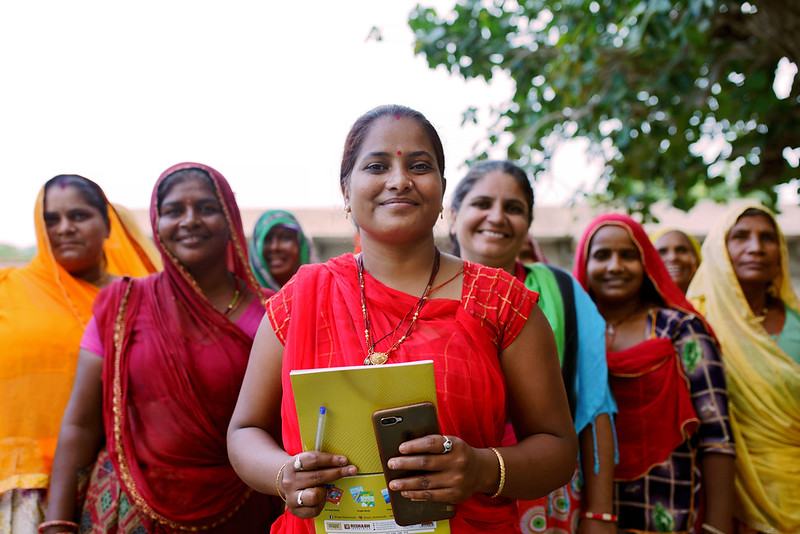 Women-led Self-Help Groups (SHGs) in India are driving the world’s largest poverty alleviation effort, offering credit access and empowerment to more than 70 million women. Women’s groups have become the cornerstone of financial institutionalism in this South Asian economy. The empowerment stems from vesting greater autonomy in the use of their income, savings, credit and asset creation. Organizing into SHGs has tilted the patriarchal balance of the household in women’s favor, enhancing respect, decision-making authority and entrepreneurial drive.
Background
Evidence suggests women organize to cater to two core objectives: to reduce domestic violence and to induce more inclusive delivery of public services such as health, financial and food security.
SHGs are small, federated groups of 10-20 women who organize themselves based on location, income or caste to form community-based financial systems. These groups meet at periodic intervals to deposit money into their group-held account and get steady access to loans in times of need. The entire process is facilitated by government and non-government (NGO) entities that help connect SHGs to bank accounts and formal credit. Many are federated into larger networks.
SHGs represent a shift from traditional banking models, decentralizing financial power and promoting community autonomy. Through the Bank Linkage Program, SHGs help empower the “unreached poor,” offering financial services to underserved populations.
Struggles of the Past
Before SHGs, households primarily relied on informal moneylenders (typically men) with higher interest rates and unfavorable terms, especially to the poor and marginalized. Formal banks were rarely accessible and often provided large, lump-sum loans, rather than what the individual needed.
As of 2014, 33.2% of rural household debt were from informal lenders, according to the Indian government. These lenders charged annual interest rates between 12% to 150%, compared to banks typically charging 6% to 20% on larger loans.
The SHG model reduced informal borrowing by 14.5%, significantly curbing predatory lending, the World Bank reports. It has generated a change in the borrowing habits of households, aiding poverty alleviation efforts, and changing the status of women as participant decision makers and beneficiaries.
State SHGs Programs in India
In high credit regions, with limited banking access, Jeevika in Bihar charges a 2% monthly interest on loans to its SHG members, according to the World Bank. Mission Shakti in Odisha charges 0% monthly interest on loans to women SHGS, on amounts up to ₹10 lakhs ($12,000 equivalent), conditioned on the timely repayment of loans.
U.S. firms like MicroVest and Unitus backed Grama Vidiyal’s microfinance push in South India, and have helped build a $3.75 million loan portfolio.
The nature of these low-interest microcredits extends beyond economics, functioning as vital social safety nets. Among SHG households, 10% of women borrowed for enterprise, while 22% borrowed for health care, exemplifying the importance of women’s SHGs in India during emergencies.
India’s growing women-led SHG model has accelerated an inclusive, bottom-up approach to poverty alleviation by empowering women to revolutionise micro-credit extension and improve their visibility and confidence in community leadership.
– Tanisha Bhattacharyya
Tanisha is based in Bristol, UK and focuses on Good News for The Borgen Project.
Photo: Flickr
