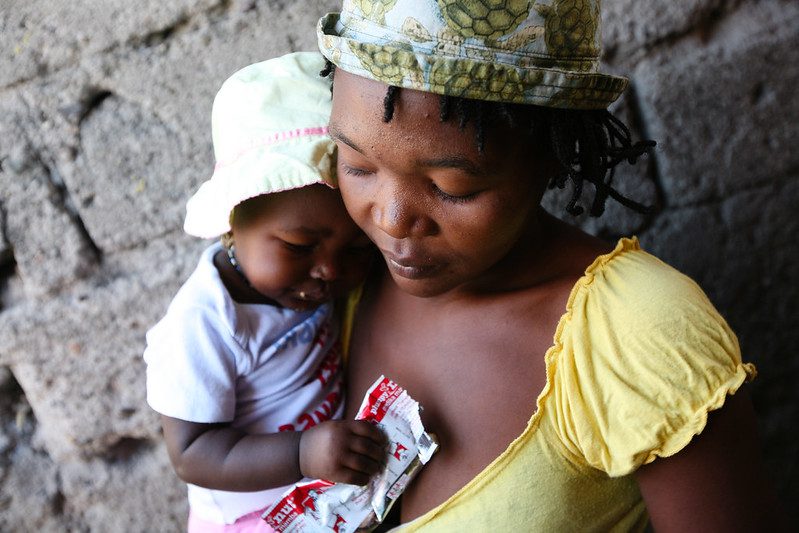
 Childhood malnutrition is a global crisis affecting millions of children younger than the age of 5. The side effects of childhood malnutrition are devastating, such as lower IQs, poor socioemotional skills, weaker immune systems and many more.
Ready-To-Use Therapeutic Food (RUTF) has a significant impact on treating this condition. This life-saving superfood transforms how severe acute malnutrition is treated, allowing children to recover quickly and regain their health. According to the World Health Organization (WHO), well-nourished children are more capable of escaping poverty as adults during the first two years of life.
Why RUTF?
Ready-To-Use Therapeutic Food is a revolutionary food treatment that’s giving hope to millions of children suffering from severe acute malnutrition (SAM), the deadliest form of hunger. The WHO estimated in 2007 that severe acute malnutrition (SAM) accounts for around one million child deaths annually. Approximately 20 million children worldwide suffer from SAM and those affected have a mortality risk of more than nine times greater than their well-nourished peers.
RUTF is an energy-dense, micronutrient paste designed to treat severe wasting in children younger than 5. Wasting is characterized by low weight-for-height and occurs when a child does not receive enough food or adequate quality. If untreated, it significantly increases the risk of death.
History of RUTF
According to the United Nations Children’s Fund (UNICEF), the concept of RUTF was pioneered by pediatric nutritionist André Briend and food processing engineer Michel Lescanne 25 years ago. RUTF is made from powdered milk, peanuts, butter, vegetable oil, sugar and vitamins and minerals. Each sachet of RUTF provides 500 calories and essential micronutrients, allowing malnourished children to gain weight rapidly.
The invention of RUTF marked a revolution in malnutrition treatment, shifting from the traditional therapeutic feeding centers (TFCs) to home-based care. Previously, children with severe acute malnutrition needed round-the-clock care at TFCs, which were scarce and often located far from the communities they served.
This setup required mothers to leave their homes for weeks, causing lost wages and incomplete treatments. The crowded conditions at TFCs also posed infection risks and in conflict areas like Sudan, they were vulnerable to attacks. Recognizing these challenges, Briend aimed to develop a home-administered solution. His goal was to revolutionize the management of severe acute malnutrition, allowing children to receive treatment safely at home.
RUTF’s Role in Community-Based Management
RUTF is vital for community-based management of children with uncomplicated severe acute malnutrition who still have an appetite. Its two-year shelf life makes it convenient for storage and distribution. The appealing taste and easy digestibility ensure that children readily consume it. Most importantly, RUTF requires no preparation. Children can directly have this nutrient-dense food from the packet, making it safe and reducing the risk of contamination.
According to UNICEF, the treatment of children with severe acute malnutrition was traditionally in facilities where they received specialized therapeutic milk under strict regimens. However, many children arrived too late or could not access these centers due to distance, cost and lengthy treatment durations. RUTF has enabled community-based management and transformed it into a home-based treatment. Its single-dose foil sachets do not require refrigeration or mixing with water, making it practical and safe for home use. This innovation has significantly improved treatment outcomes and accessibility.
Success of RUTF
RUTF and the community-based management of acute malnutrition (CMAM) have proven to be powerful. In emergencies like famine, child mortality rates typically range from 20% to 30%. However, with the combined use of CMAM and RUTF, these rates have dropped to 4.5%, saving countless lives. A notable pilot program in Darfur, Sudan, treated 25,000 acutely malnourished children with similarly positive results.
From 2002 to 2006, Concern Worldwide implemented a large-scale pilot in Malawi, yielding excellent treatment, coverage, community acceptance and cost-effectiveness outcomes. This success led to the publication of the CTC field manual in 2006 and a joint recognition by WHO, UNICEF and the World Food Programme in 2007, establishing CMAM as a global best practice. Today, millions of acutely malnourished children have been successfully treated with RUTF through the CMAM approach. In South Sudan, UNICEF and partners treat nearly a quarter of a million children annually with RUTF, achieving a treatment recovery rate of 95% and averting potential deaths.
Challenges in Distributing RUTF
UNICEF plays a pivotal role in the global distribution of RUTF, procuring and delivering 75-80% of the world’s supply. It ensures that RUTF reaches the most vulnerable children, even in challenging environments. Large-scale operations by UNICEF have saved countless lives during emergencies.
Despite its success, RUTF is not universally available. Many countries do not include RUTF in their essential medicines lists and treatment for severe wasting is often poorly integrated into routine health services. Additionally, the COVID-19 pandemic and global conflicts have increased the cost of RUTF, further limiting its availability.
Conclusion
Ready-To-Use Therapeutic Food has proven to be a lifesaving superfood, transforming the treatment of severe acute malnutrition and saving millions of children’s lives. Its success underscores the need for increased global efforts to ensure all children have access to this essential treatment.
– Sumaiya Sultana
Sumaiya is based in London, UK and focuses on Good News and Technology for The Borgen Project.
Photo: Flickr

Fighting Food Insecurity in Laos: Agriculture for Nutrition
With a $120 “Garden Grant” from the AFN, Sengphet purchased 10 chickens, feed and seeds for an at-home garden. From the initial investment, she has expanded her farm’s capacities from chicken to garlic, fish and frogs. This expansion helped her to earn up to $420 monthly since 2021. With AFN, Sengphet has grown her farm to fight food insecurity in Laos, which is faced by one in seven population members.
Malnutrition and Food Insecurity in Laos
Despite falling poverty levels, food insecurity in Laos remains a significant concern, particularly in rural areas where food shortages are twice as high as in urban regions. Three-quarters of households produce subsistence food and two-thirds of farmers grow rice exclusively. The lack of diversity contributes to malnutrition in addition to food shortage.
Limited access to nutritious food has resulted in high stunting rates among children, with 32.8% of those younger than 5 years of age affected. In some of the more impoverished provinces, this rate rises to 54%. The Lao government has prioritized tackling malnutrition by enacting the National Nutrition Strategy for 2025 and the National Nutrition Action Plan for 2021-2025. However, addressing food insecurity remains challenging due to high inflation and strong debt pressure in the past two years.
How APN Is Targeting Food Insecurity
The AFN program implements targeted initiatives to ensure sustainable food access. In 2016, the WFP, IFAD and the government launched the first phase in 400 villages across four provinces in Northern Laos. The program takes a holistic, community-based approach, emphasizing long-term self-sufficiency and various aspects of production. AFN collaborates with villages to develop road infrastructure, irrigation and market access, both with enterprises and through local market facilitation.
A significant part of AFN’s programming is its training initiatives and grants. AFN helps form and funds Agricultural Production Groups to farm selected products such as fish, poultry and vegetables. Furthermore, the program provides training for production techniques and opportunities for learning exchange via its Farmer-to-Farmer Extension Activities. These services are in addition to the Farmer Nutrition School and Garden Grant from which Sengphet benefitted.
Program Success
The first phase, which ended in 2022, has successfully met its targets to reduce food insecurity in Laos. It has reached 210,684 people, representing 92.5% of its goal. Around 57% of the people reached were women. Furthermore, it has helped bring 17,850 households out of poverty out of its targeted 21,000, defined by an income per capita of $270.
AFN’s impacts compound over time. In Nam Lee village, residents participating in a Village Development Planning session expressed a need for better road access to farmland and more profitable crops. With an AFN grant, the villagers constructed a 4km road to support their farming activities. By January 2021, this road access had increased productivity, with families generating $36,000 annually.
Sengpeut also highlights what the added income has provided for her family: “With my additional income,” she says, “I have been able to pay for my children’s education and build a new house. I have learned how to give medicine and vaccines to my animals and I am now part of making decisions in my house with my husband.”
With the success of Phase I, the three cosponsors are launching Phase II of the program. This phase expands to three additional provinces, targeting an extra 168,000 people. As Laos grapples with macroeconomic challenges, the AFN continues to offer sustainable solutions and combat food insecurity across small and medium scales, reaching the nation’s most vulnerable communities.
Final Remark
With the success of Phase I, the three co-sponsors are rolling out Phase II of the program. They have added 3 more provinces to the program, targeting an additional 168,000 people. As Laos continues to face macroeconomic challenges, the AFN provides sustainable solutions and fights food insecurity in Laos across small and medium-scales to the nation’s most vulnerable communities.
– Imme Koolenbrander
Photo: Flickr
Alleviating Poverty in Honduras
Water Crisis and Educational Challenges
According to the 2019 National Survey of Demography and Health, only 50% of Hondurans have access to clean, e-coli-free water. The pandemic and Hurricanes Eta and Iota exacerbated these ongoing issues by damaging critical infrastructure and restricting access to water systems.
As of March 2023, official data revealed 14% of Hondurans could not read or write. Additionally, a study by Bless the Children found that children typically require 9.4 years to complete grades one through six. Financial struggles within families often force children to contribute to household income, significantly complicating their ability to balance school and work.
Government Initiatives Alleviating Poverty in Hondorus
In 2020, along with the United Nations Development Programme (UNDP), the Honduran government launched the Single Voucher Program, supporting families struggling particularly from the pandemic. This initiative gave families a one-time voucher of $82 that can be redeemed for food, medicine and/or medical supplies.
As of 2022, the Inter-American Development Bank approved a $75.9 million loan outlined to support 50,000 households through conditional cash transfers and 165,000 children through nutrition and early child development programs. This loan also works toward keeping children in school until seventh grade, at least. This loan is meant to be dispersed over four years. Honduras has collaborated with various international organizations to improve living conditions.
Nonprofit Initiatives
Food for the Poor, a nonprofit organization, actively improves water quality in areas affected by Hurricanes Eta and Iota. Immediately following the disasters, it installed temporary emergency water treatment systems in Bosques de Santa Lucia, Campo Las Flores and Los Achiotes. In Bosques de Santa Lucia, the organization provided 145 families with safe running water and functioning toilets. Additionally, in Campo Las Flores, Food for the Poor has diligently repaired damaged equipment and pipes affected by the hurricanes.
JustOne International has significantly boosted high school graduation rates in Aguas del Padre, Honduras. Since beginning its mission in 2019, the community has seen a 600% increase in graduation rates, with 89% of graduates advancing to higher education or securing high-paying jobs. This organization is making a substantial impact by helping thousands of young Hondurans complete their education.
Looking Ahead
As the country faces widespread issues, various initiatives are showing promise in alleviating poverty in Hondorus. Efforts by the government, supported by international organizations like the UNDP and the Inter-American Development Bank, are providing essential aid and educational support to vulnerable families and children. Nonprofits like Food for the Poor and JustOne International play crucial roles in improving water quality and boosting educational outcomes, respectively. These ongoing efforts aim to create a more resilient and self-sustaining future for Honduras.
– Madeline Rozmus
Photo: Flickr
3 Ways UNHCR Is Addressing Venezuelan Displacement
More and more children have been separated from their families and reported fleeing alone. This adds another layer of difficulty in getting proper sustenance and education for their growth and development. As a response, a nonprofit organization, the United Nations High Commissioner for Refugees (UNHCR), has stepped up to support the journey of Venezuelans. Here are three ways the UNHCR is addressing Venezuelan displacement:
The Graduation Model Program
One way UNHCR addresses Venezuelan displacement is through the Graduation Model program in Colombia. Launched in 2019, this model includes a series of support programs designed to help displaced Venezuelans. It offers workshops, training and mentorship to assist them in building their own businesses and achieving self-sufficiency. The workshops cover various skills, including business management, finance, marketing and customer service.
Yuli, who relocated to Colombia from Venezuela in 2019, launched her jewelry-making business after participating in the Graduation Model program. Referred to UNHCR by a local humanitarian aid partner, Yuli gained essential skills in budget management and business sustainability through the program. With her business, she could be independent economically and socially, which brought security and hope. She shares her experience: “Everything has changed for the better. Joining the project was my starting point to bring my family happiness, peace of mind and confidence — all I aimed for when I came to Colombia.”
The PPN Program
UNHCR also created the project called Pedagogy and Protection for Refugee and Migrant Children with a Mixed Approach (PPN) in 2019 to help Venezuelan children’s social integration into Colombia. Additionally, the project aims to teach children the value of interculturality through various programs and technical support to school staff.
Mariangelis, an eighth grader from Venezuela, attends Tierra Bomba school in Colombia, where the project has made a significant impact. She expressed her gratitude for receiving quality education and protection. She shared that her experiences have inspired her to pursue studies in human rights. Mariangelis is determined to address the challenges and mistreatment faced by refugees and migrants. Overall, PPN has raised awareness of the importance of quality education, emphasizing interculturality and diversity.
The Trust the Toucan Campaign
In May 2023, UNHCR initiated the Trust the Toucan campaign to address misleading information about relocation on social media that affects Venezuelans’ decisions. The campaign involves creating verified content for Venezuelans through interviews with refugees and sharing their experiences. Many refugees begin their journey without knowing the risk it takes and the dangers along the way, such as crossing the Darién jungle itself.
To ensure that people are well-informed about their journeys, the Trust the Toucan campaign has been informing people’s decisions. The trust aims to mitigate the risk factors with proper preparation. In its first year, it published 334 pieces of content and gained 16 million views.
UNHCR has taken crucial steps to help the refugees through the rebuilding of their lives in search of secure homes in a new country. Furthermore, continuous steps toward long-term solutions for improving the lives of Venezuelan refugees can gradually improve their quality of life and social integration in a new community.
– Sein Kim
Photo: Flickr
Voices of Women: Empowering Women’s Rights in Burkina Faso
Voix des Femmes (VDF), which translates to Voices of Women, was established in September 2000 to empower children’s and women’s rights in Burkina Faso. Recognized by Burkinabe authorities as a nongovernmental organization (NGO), VDF has implemented numerous projects in Burkina Faso.
The Goals and Strategy of Voices of Women
VDF conducts projects geared toward:
Alongside these contributions, VDF primarily mobilizes women to advocate for their rights. Regarding VDF’s strategy, it leverages its diverse human capital, comprising professionals such as lawyers, chemists and health, social work and communication experts. Moreover, in choosing beneficiaries to power these projects, VDF is open to all persons with no discrimination of gender, race or status.
VDF’s Projects in Burkina Faso
One significant VDF project is the “Protection and Promotion of the Rights of Women and Girls, Economic Empowerment and the Fight Against Violence in the Central Region.” The project aims to train people from the community. Those trained will conduct awareness sessions for women and girls and empower their rights. Women involved are trained in “micro-project management” and “income-generating activities.” This training promotes women’s financial liberty and socioeconomic development.
Similarly, men and adolescents are educated on “positive masculinity” to support women’s rights. Positive masculinity is rejecting the negative attributes of traditional masculinity, such as aggression. The focus on this behavior contributes to the reduction of GBV. This project also aims to have 60,000 women as direct beneficiaries, with 200 women for their psychological, legal, medical and social care and 120 women for income-generating activities.
Women, here, are the actors of change and social mobilization. They identify and refer cases of GBV and suggest beneficiaries for income-generating activities. As indirect beneficiaries, 20,000 people, including men, adolescents and 300 community leaders, participate in advocacy sessions to spread awareness.
Furthermore, the AIDS 2024 project involves educational talks on sexual violence and child marriage with internally displaced persons in various communities. On April 30 and May 2, 2024, a meeting was held to discuss and implement the project, known as the “Integrated Emergency Protection Response and Management of GBV in the Boucle du Mouhoun Region.” Moreover, the Sini-Gnèsigui project provides “listening clubs” for young survivors of child marriage and school-related violence. Listening clubs are like counseling groups that empower the youth to combat these abuses.
Projects and Workshops
On May 15, 2024, a workshop was held with Moundasso’s Center for Economic Growth listening club members. The discussion highlighted ways to identify signs of violence and to make an effective report and referral. The project’s objectives strive to enhance the resilience of girls and adolescents.
Finally, the project “Women’s Rights and Health in Burkina Faso: Preventing and Reducing Vulnerabilities in the Context of Crisis and Post-Crisis COVID-19” aimed to enhance medical, legal, judicial and psychological care for women survivors of GBV during the COVID-19 restrictions. VDF partnered with the Association of Women Lawyers of Burkina Faso, the Pananetugri Initiative for Women’s Welfare and Equipop.
The project sought to empower women and girls to address the socioeconomic impacts of the pandemic. This was achieved by fostering young female leaders who could drive positive change within their communities. In two years, the project reached more than 170,000 direct beneficiaries in three regions of Burkina Faso and concluded in March 2023.
Final Remark
The efforts made through the projects of Voices of Women have helped women understand and fully exercise their civil liberties. In addition to empowering women’s rights, VDF provided educational and financial support and contributed to reducing GBV across the country.
For the organization’s significant impact, the president of VDF, Mariam Lamizana, was awarded by the United Nations Population Fund (UNFPA) for “the promotion of the abandonment of female genital mutilation.” This prize recognizes VDF’s substantial achievements in eliminating these harmful traditional practices.
– Caroline Albright
Photo: Pexels
Uplifting Haiti’s Vulnerable: Disability and Poverty in Haiti
Disabled Population in Haiti
In 2010, Haiti saw a significant increase in the number of disabled individuals following an earthquake that injured nearly 10% of households. Disability, affecting about 4% of Haitians aged 5 and over, is defined as experiencing some difficulty in at least two functional domains or serious difficulty or incapacity in one domain. Post-earthquake, 16% of households reported having a family member with a disability, which has drastically impacted individuals’ work capabilities and family financial stability.
Beyond natural disasters, disabilities in Haiti also stem from birth anomalies and noncommunicable diseases. The Disability Data Initiative reports that 24.9% of Haitians aged 15 and older face functional difficulties, with vision issues being the most common. Furthermore, a survey of more than 53,000 people found that 43% suffered from physical mobility disabilities.
How Disabilities Impact Poverty
Disability and poverty in Haiti severely limit the social mobility of a significant portion of the population. Poverty in Haiti often manifests as multidimensional poverty, which encompasses multiple social disadvantages such as unsafe living conditions and low educational attainment.
Approximately 86.2% of Haitians with significant functional difficulties are also multidimensionally poor. Compared to the general population, disabled individuals in Haiti face harsher socioeconomic conditions and have more difficulty entering the workforce. This perpetuates a cycle where impoverished and disabled communities struggle to achieve social mobility, affecting future generations.
According to the 2020 Human Capital Index, children in Haiti are projected to achieve only 45% of their potential productivity if they have access to stable education and health care. Moreover, the literacy rate among the disabled community is under 30%, nearly 30% lower than the national average.
Uplifting the Disabled Community
An initiative tackling disability and poverty in Haiti is the Promoting Inclusion of Persons with Disabilities (PwDs) in Social and Employment Programs. This program strives to enhance the presence of PwDs in the labor force by integrating them into the social registry, offering professional training and conducting awareness campaigns about the status of PwDs in Haiti and how to support them.
The World Bank has funded this initiative with a $2.29 million grant and collaborates with Humanity and Inclusion, a nongovernmental organization that aids people with disabilities. This partnership focuses on providing training and methodologies. So far, 127 PwDs have completed training in various fields, which has enabled them to boost their income and explore opportunities like starting their businesses.
The World Bank funds the Adaptive Social Protection for Increased Resilience (ASPIRE) program, which offers a financial safety net through the Ministry of Social Affairs and Labor. This program ensures that vulnerable households receive regular financial support and health care. ASPIRE aims to give individuals the opportunity to stabilize their lives and seek employment, mitigating the risks of extreme poverty and food scarcity.
PwDs in Haiti often fall victim to violence from natural disasters and gang-related activities. The U.N. Population Fund (UNFPA) supports these individuals by providing crutches, wheelchairs, dignity kits and assistance in organizing work documentation, enhancing their autonomy. These services help PwDs return to work, secure protection from violence and promote economic independence.
Looking Ahead
As Haiti endures another year of economic decline, compounded by environmental hazards and political crises, the disabled community remains particularly vulnerable. Efforts like the Promoting Inclusion of Persons with Disabilities in Social and Employment Programs and the ASPIRE program are crucial in providing professional training and financial support. Additionally, the UNFPA’s initiatives to supply mobility aids and essential services are vital in empowering disabled individuals to achieve economic independence and protection from violence. The ongoing efforts aim to improve the living conditions and prospects for Haiti’s disabled population.
– Astrid Burns
Photo: Flickr
The Afrilearn App: Leading Nigeria’s Educational Future
With supplementation through AI, Afrilearn has envisioned a completely personalized academic pathway for students across West Africa, allowing users to navigate lessons across disciplines at the most appropriate pace. The Afrilearn app has amassed more than 7,000 learners, fueling the rapid international growth of education technology companies throughout the last decade.
Accessibility to Education in Nigeria
More than 40% of Nigeria’s population of more than 200 million people cannot read or write, depriving millions throughout the nation of the opportunity to engage in academia thoughtfully. Despite access to physical and academic settings, Oladipupo views current projections of affordable, quality education within Nigeria as an “illusion.” Statistics indicating the number of Nigerian students attending school do not properly reflect the standards of education they are receiving. For example, more than 83% of West African Senior School Certificate Examination candidates cannot fulfill the national educational guidelines and ultimately do not pass.
Oladipupo views Afrilearn as a way of mitigating these educational inequalities, serving as his inspiration for the company. In an interview with Forbes Africa, he emphasized that “every child, no matter their background or location,” should have “full access to quality education and the tools to prepare them for lifelong success,” with Afrilearn serving as a stepping stone for these future academic aspirations.
Developing a World-Renowned Platform
Afrilearn previously consisted of numerous ventures in education technology led by Oladipupo and Olatunji-Legend. They first created ClassNotes.ng in response to the COVID-19 pandemic, which provided primary and secondary academic tools when Nigerian students could not attend school in person. ClassNotes.ng achieved widespread success, acquiring more than five million users and teachers since its establishment in 2020.
Later that year, they released Exambly, which democratized access to test preparation materials in West African nations to prepare learners for national and international exams. The Afrilearn app combines the ambitions of these prior applications, pairing animated, engaging lesson plans with sample tests and other types of practice documents. The work of Oladipupo and Olatunji-Legend earned them the Digital Innovation of the Year Award in 2020, dictated by the U.S. Chamber of Commerce.
Engagement Tactics
One of the primary goals of Afrilearn is to tailor its content to the needs of each student, influenced by the relatively large teacher-to-student ratio present within the Nigerian education system. While the teacher-to-student ratio in the U.S. can be estimated at around 1:10, in Nigeria, this is closer to 1:70. Despite the scale of educational materials stored within the Afrilearn app, it attempts to create a sense of connection between its users and the expert tutors that it hosts, blending modes of “social learning and storytelling” to replicate a typical student-teacher relationship.
Most of the options within the platform are free; however, a variety of tools become available for an additional subscription. Some of these include downloadable notes, instant homework help and coding lessons, enhancing the personalization features contained within the app. The revenue generated from subscriptions is re-invested into expanding and improving the free curriculums, corresponding to Afrilearn’s overarching goals of affordability and accessibility.
Education in the Digital Age
Afrilearn showcases an innovative approach to navigating education in the digital age, reimagining modern-day technologies through its teaching potential. For those with the restricted financial capacity to attend and thoughtfully engage in academics, Afrilearn proposes a solution through digital incentivization tailored toward younger generations.
– Eileen Lincoln
Photo: Flickr
Legislation Passed: Child Marriage in Sierra Leone is Banned
Law That Aims to Protect
In Sierra Leone, a milestone has been achieved in the country; the Prohibition of Child Marriage Act was recently signed into effect, eradicating all child marriages younger than the age of 18. This includes conspiracy, aiding and abetting a child to enter marriage; violators can expect strict penalties if found guilty, with punishments of up to 15 years in prison and approximately $4,000 fine.
Obligations on community and religious leaders will require them to take strong measures so they don’t officiate child marriages and no person is allowed to attend the ceremony involving a child. It will also prevent cohabitation with a child regardless of whether married or not, criminalizing both as offenses.
The new bill contributes to protecting women, girls and children from harmful practices, even employing marriage prohibition officers who will work within communities to advise and issue reports, ensuring the law is being followed.
The Scale of Child Marriage
According to the United Nations Children’s Fund (UNICEF), an estimated 800,000 child brides reside in Sierra Leone, with half having been married before the age of 15 years. Child marriage is common in the country, with 30% of girls aged 20 to 24 years old married before age 18 and 13% married before age 15.
The reasons for child marriage are complex and vary: poverty, education, gender inequality, religion and even inheritance are all factors related to this ongoing issue. Families with limited resources seek to find ways for their children to gain opportunities; by offering a bride in the form of a child, the motivation is not just economic, but also a custom and local practice.
Education, FGM and Risks
The effects of child marriage have been devasting, resulting in many disadvantages for women and girls throughout their lives. Girls are often less educated and unable to complete secondary school, which limits their employment opportunities. This makes them underrepresented in skilled and professional industries and digital literacy, such as the internet, cell phones and technology that can provide them access to more resources and information.
There is also the divisive practice of Female Genital Mutilation (FGM) used to initiate girls into womanhood and prepare them for marriage. It’s a method of suppressing women’s and girls’ sexual urges and keeping them focused on the woman’s responsibilities and duties she will face within her home. According to the 2019 Sierra Leone Demographic and Health Survey, 83% of women and girls aged between 15 and 49 years have undergone FGM.
Final Remark
Additional concerns that must be addressed are fear of retaliation for having a family member imprisoned and increased poverty, which will prevent many from following the new law. Therefore, it will take much involvement from the community for this law to make a substantial impact. The benefits for women, girls and children are great for now. They can finish school, gain more skills and seek opportunities. Most of all, they can enjoy childhood without the pressures of being forced into child marriage.
– Tanita Love
Photo: Unsplash
Microfinance: Firms Providing Small Loans to Fight Poverty
KIVA and Rachel’s Story
Kiva offers banking services to the international community, functioning similarly to a crowdfunding platform. As a lender, individuals can browse various projects globally and choose whom to lend to. In 2023, Kiva facilitated loans for more than 190,000 people, distributing more than $176 million with an impressive 96.2% repayment rate. Additionally, Kiva has partnered with Novica, an e-commerce platform that allows people in developing communities to sell their products internationally. This partnership has generated more than $130 million for individuals, enabling them to share their skills and products worldwide and drive tangible change.
Rachel, who grew up attending the Odwira Festival in Abiriw, Ghana, was captivated by the colorful garments and accessories celebrated during the harvest. Inspired, she learned to create similar items from a friend and began selling her wares. Although she experienced modest growth, Rachel sought to accelerate her business. Partnering with Kiva, she received $100 from four donors, which she used to buy raw materials, effectively doubling her production and profit. Rachel now employs others, imparts valuable skills and runs outreach programs that teach underprivileged youths how to make tie-dye and batik at no cost.
Micro-loan Foundation and Lydia’s Story
The Micro-loan Foundation has been empowering women in Malawi, Zambia and Zimbabwe since 2002 by providing business training and small loans. To date, it has assisted more than 450,000 women, enhancing food security, health care access and educational opportunities and boosting women’s roles in their communities. Lydia, a single mother of four and caregiver to her mother-in-law, turned her passion for baking into a sustainable business. With a micro-loan of 500 Kwacha (about $30), she invested in her bakery, quadrupling her daily bread production and significantly boosting her income. This increase allowed Lydia to reinvest in her business, repay her loan and improve her family’s living standards while contributing more to her community.
BRAC and Sharmin Akter
BRAC, originally an NGO in Bangladesh, has evolved to provide small loans aimed at alleviating poverty and promoting financial inclusion. Since 2023, BRAC has disbursed more than $6 billion in loans, mainly focusing on women, who constitute 90% of its beneficiaries. These ongoing efforts empower women and address the root causes of poverty, particularly in urban areas of Bangladesh.
Sharmin, who worked for a decade in a toy factory, acquired valuable skills that she leveraged to start her own business. Her high-quality toys quickly garnered demand, but she struggled to keep up with growth. Realizing the need for investment, Sharmin secured a $3,750 loan from BRAC to purchase 12 new sewing machines. This capital infusion allowed her to expand production by hiring staff and increasing output. At the moment, Sharmin’s business is one of the largest soft toy manufacturers in South-West Dhaka.
Looking Ahead
Small loans continue to play a crucial role in the fight against poverty and economic empowerment worldwide. Success stories like those of Rachel, Lydia and Sharmin highlight the transformative potential of these financial services. As microfinance institutions like Kiva, the Micro-loan Foundation and BRAC expand their reach, they can potentially create sustainable livelihoods and foster economic growth in underbanked regions.
– Philip Mundy
Photo: Unsplash
Food Insecurity and the Venezuelan Educational System
Lack of Attendance
According to The New York Times, “In Boca de Uchire, the Caruto family has stopped sending its nine children to a nearby school when the cafeteria doesn’t open. ‘I can’t send them to class hungry,’ said José Luis Caruto, a 36-year-old unemployed father of two.” The Caruto family is just one out of thousands affected by food insecurity within the school system.
According to Global Issues, “Hundreds of thousands of children and young people and thousands of their teachers, drop out of regular schooling in Venezuela year after year and most of those who remain go to the classroom only two or three days a week, highlighting the abysmal backwardness of education in the country.” This is largely attributed to food insecurity plaguing the country, especially those most vulnerable, such as impoverished children.
Lack of Proficient Educators
Not only are students affected by Venezuela’s food insecurity crisis, the educators are, as well. In fact, according to the national teachers’ union, thousands of the country’s 550,000 teachers did not show up to classes when schools reopened in September 2020, abandoning their $8-a-month wages.
Venezuela teachers are among the groups most affected by food insecurity and the economic crisis. According to The New York Times, “The number of graduates at Venezuela’s main teacher training center, the Libertador Experimental Pedagogical University, fell 70% from 2014 to 2018.” As a result, many Venezuelan schools have had to enlist parent volunteers to come in and teach their children, resulting in an insufficient learning environment.
Poor Medical Care
As more and more school-age children have fallen helpless to the food insecurity crisis in Venezuela, there has been a high demand for medical care and attention, most of which is unattainable. In schools all across the country, students are fainting mid-class due to extreme hunger. “You can’t educate skeletal and hungry people,” said Maira Marín, a teacher and union leader in Boca de Uchire.
According to South American Initiative, a nongovernmental organization, “The infant mortality rate has doubled because hospitals and parents have no food to feed them. In some cases, parents are forced to abandon their children and drop them off at orphanages because they simply cannot afford food.” Venezuela’s food insecurity crisis, coupled with the unrealistic expectations for medical facilities and workers, makes the risk of attending schools unnecessary for many families. Instead, many children stay home with their parents to participate in the workforce to gain enough revenue to feed their families.
Solutions
While the food insecurity crisis and its effect on the Venezuelan school system looks like a bleak and lost cause, the World Food Programme (WFP) is working to curb the situation. WFP activities in Venezuela include providing school meals and food assistance for vulnerable populations, supporting climate risk management, building resilience and strengthening food systems infrastructure and logistical capacity. The organization aims to support one million Venezuelans with food by the end of 2025.
Conclusion
The Venezuelan educational system is struggling to provide students with adequate nutrition so that they can attend schools, have proper educators and appropriate medical care. However, nonprofit organizations like WFP are actively working to curb the food crisis in Venezuela.
– London Collins Puc
Photo: Pexels
Ready to Use Therapeutic Food and Childhood Malnutrition
Ready-To-Use Therapeutic Food (RUTF) has a significant impact on treating this condition. This life-saving superfood transforms how severe acute malnutrition is treated, allowing children to recover quickly and regain their health. According to the World Health Organization (WHO), well-nourished children are more capable of escaping poverty as adults during the first two years of life.
Why RUTF?
Ready-To-Use Therapeutic Food is a revolutionary food treatment that’s giving hope to millions of children suffering from severe acute malnutrition (SAM), the deadliest form of hunger. The WHO estimated in 2007 that severe acute malnutrition (SAM) accounts for around one million child deaths annually. Approximately 20 million children worldwide suffer from SAM and those affected have a mortality risk of more than nine times greater than their well-nourished peers.
RUTF is an energy-dense, micronutrient paste designed to treat severe wasting in children younger than 5. Wasting is characterized by low weight-for-height and occurs when a child does not receive enough food or adequate quality. If untreated, it significantly increases the risk of death.
History of RUTF
According to the United Nations Children’s Fund (UNICEF), the concept of RUTF was pioneered by pediatric nutritionist André Briend and food processing engineer Michel Lescanne 25 years ago. RUTF is made from powdered milk, peanuts, butter, vegetable oil, sugar and vitamins and minerals. Each sachet of RUTF provides 500 calories and essential micronutrients, allowing malnourished children to gain weight rapidly.
The invention of RUTF marked a revolution in malnutrition treatment, shifting from the traditional therapeutic feeding centers (TFCs) to home-based care. Previously, children with severe acute malnutrition needed round-the-clock care at TFCs, which were scarce and often located far from the communities they served.
This setup required mothers to leave their homes for weeks, causing lost wages and incomplete treatments. The crowded conditions at TFCs also posed infection risks and in conflict areas like Sudan, they were vulnerable to attacks. Recognizing these challenges, Briend aimed to develop a home-administered solution. His goal was to revolutionize the management of severe acute malnutrition, allowing children to receive treatment safely at home.
RUTF’s Role in Community-Based Management
RUTF is vital for community-based management of children with uncomplicated severe acute malnutrition who still have an appetite. Its two-year shelf life makes it convenient for storage and distribution. The appealing taste and easy digestibility ensure that children readily consume it. Most importantly, RUTF requires no preparation. Children can directly have this nutrient-dense food from the packet, making it safe and reducing the risk of contamination.
According to UNICEF, the treatment of children with severe acute malnutrition was traditionally in facilities where they received specialized therapeutic milk under strict regimens. However, many children arrived too late or could not access these centers due to distance, cost and lengthy treatment durations. RUTF has enabled community-based management and transformed it into a home-based treatment. Its single-dose foil sachets do not require refrigeration or mixing with water, making it practical and safe for home use. This innovation has significantly improved treatment outcomes and accessibility.
Success of RUTF
RUTF and the community-based management of acute malnutrition (CMAM) have proven to be powerful. In emergencies like famine, child mortality rates typically range from 20% to 30%. However, with the combined use of CMAM and RUTF, these rates have dropped to 4.5%, saving countless lives. A notable pilot program in Darfur, Sudan, treated 25,000 acutely malnourished children with similarly positive results.
From 2002 to 2006, Concern Worldwide implemented a large-scale pilot in Malawi, yielding excellent treatment, coverage, community acceptance and cost-effectiveness outcomes. This success led to the publication of the CTC field manual in 2006 and a joint recognition by WHO, UNICEF and the World Food Programme in 2007, establishing CMAM as a global best practice. Today, millions of acutely malnourished children have been successfully treated with RUTF through the CMAM approach. In South Sudan, UNICEF and partners treat nearly a quarter of a million children annually with RUTF, achieving a treatment recovery rate of 95% and averting potential deaths.
Challenges in Distributing RUTF
UNICEF plays a pivotal role in the global distribution of RUTF, procuring and delivering 75-80% of the world’s supply. It ensures that RUTF reaches the most vulnerable children, even in challenging environments. Large-scale operations by UNICEF have saved countless lives during emergencies.
Despite its success, RUTF is not universally available. Many countries do not include RUTF in their essential medicines lists and treatment for severe wasting is often poorly integrated into routine health services. Additionally, the COVID-19 pandemic and global conflicts have increased the cost of RUTF, further limiting its availability.
Conclusion
Ready-To-Use Therapeutic Food has proven to be a lifesaving superfood, transforming the treatment of severe acute malnutrition and saving millions of children’s lives. Its success underscores the need for increased global efforts to ensure all children have access to this essential treatment.
– Sumaiya Sultana
Photo: Flickr