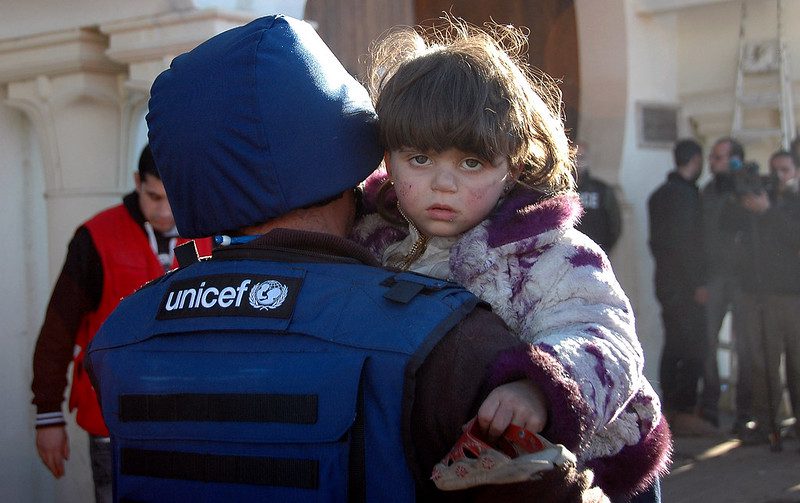
 Syrians urgently need assistance as more than 16 million residents struggle with homelessness, food insecurity, dilapidated infrastructure and inadequate water and sanitation. The United Nations (U.N.) reports that at least 90% of the population lives below the poverty line, placing Syria among the nations facing severe economic challenges. The country’s economic instability is so prolonged that it defies conventional poverty rankings. Compounding these economic issues, changing weather patterns has wreaked havoc, with floods and earthquakes destroying infrastructure and disrupting essential services. As international aid wanes—distracted by global crisّّّis—the burden increasingly falls on government initiatives and nonprofit organizations (NGOs) to provide critical support.
Natural Disasters
Natural disasters such as earthquakes, floods and climate-induced storms are worsening the economic struggles of the impoverished, leading to increased displacement. On Feb. 6, 2023, Northern and Western Syria were struck by a 7.8 magnitude earthquake. This disaster affected more than 8 million people, with a death toll surpassing 50,000. The earthquake also impacted Syrian refugees and humanitarian organizations near the Turkey-Syria border.
More than 10,000 buildings have been destroyed, further damaging Syria’s already crumbling infrastructure. According to the Rapid Damage and Needs Assessment (RDNA), direct physical damages amounted to $5 billion, with an estimated $8 billion required for recovery and reconstruction across six governorates. Additionally, heavy rainfall and flash flooding have disrupted the lives of thousands in northern Syria, adversely affecting more than 40 refugee camps in the Idlib and Aleppo governorates. These floods destroyed camps, closed roads and inundated agricultural lands, exacerbating food insecurity and prolonging the humanitarian crisis in Syria.
Infrastructure
The humanitarian crisis in Syria has severely limited access to water for many residents. As reported by the U.N. in 2022, 52% of Syrians do not have access to piped water, forcing them to rely on alternative sources such as rivers, wells and springs. The deterioration of the water infrastructure results from the ongoing Syrian civil war. Currently, more than 7 million displaced Syrians reside in overcrowded camps and shelters that are either partially or fully damaged, offering inadequate conditions for daily life. In northern Syria, more than 2 million internally displaced persons (IDPs) live in last-resort sites, which are areas with conditions that pose significant health and safety risks.
Government forces have attacked civilian water infrastructure, damaging nearly two-thirds of Syria’s water treatment plants, half of its pumping stations and a third of all water towers. An immense drought in the northeastern, southern and eastern regions of Syria is crippling the agricultural sector, pushing many displaced Syrians into food deprivation. The drought has also decreased water levels, compelling farmers to use contaminated alternatives such as raw sewage, which spreads diseases and heightens health risks.
Food Insecurity in Syria
The humanitarian crisis in Syria has driven up food prices, with prolonged conflict, rising production costs and droughts contributing to widespread food insecurity that affects more than 12 million Syrians—more than half the population. This food insecurity is causing additional problems; millions of children are at risk of malnutrition and acute malnutrition, which has already stunted the growth of more than 600,000 children in the country. As of 2023, more than 3 million children needed nutritional assistance. Additionally, a recent cholera outbreak is placing unprecedented strain on Syria’s health services.
World Vision, a Christian relief organization, has found that female-headed households in Syria suffer most from food insecurity, which often leads to gender-based violence, abuse and exploitation. Meanwhile, the World Food Program, which has aided more than three million people in Syria, recently ended its main aid initiative. This termination has left many who relied on food distribution without alternatives. Cuts were necessary due to rising global economic challenges, donor fatigue and declining funding. Northeast Syria, a region already struggling with these issues, will likely see the most significant effects of the WFP’s reductions, exacerbating extreme poverty among residents.
The City of Aleppo and Government Initiatives
Aleppo, the capital of the Aleppo governorate and Syria’s most populated city stands at the epicenter of the nation’s economic struggles. The humanitarian crisis in Syria spans issues from food insecurity to the changing climate. However, the most significant driver of increased poverty rates remains the prolonged civil war. This conflict, involving the Syrian government with its allies against various militia groups, including ISIS and the Free Syrian Army, has severely impacted civilians. They endure the brunt of the conflict with damaged health facilities, failing water and energy infrastructure and widespread food shortages.
The International Labour Organization (ILO), funded by Japan, has launched a new initiative in partnership with Syria. This project aims to create jobs for Syrians in Aleppo and support the country’s infrastructure recovery efforts. The focus areas include debris removal, sidewalk rehabilitation and repairs to the sewage and stormwater networks in Aleppo’s Kadi Askar district.
The Syrian Recovery Trust Fund (SRTF) is dedicated to enhancing water infrastructure in Aleppo. It is advancing a project to improve the health environment and living conditions across Syria. This initiative includes constructing a water tank, rehabilitating and extending water supply networks and building a new water storage reservoir. These ongoing efforts aim to improve water access for more than 75,000 residents.
IRC and Oxfam’s Efforts in Syria
The International Rescue Committee (IRC) has actively supported various aspects of Syria’s humanitarian crisis. After the 2023 earthquake, the IRC provided affected Syrian communities with essential items such as blankets, feminine products and hygiene supplies. Additionally, the organization supports crucial health services and has implemented classes, counseling and protection services for children in camps for displaced residents and other affected areas. To address the humanitarian crisis in Syria, more than 1,000 staff members are on the ground providing emergency cash and food assistance. They operate clinics and mobile teams offering life-saving support and work to bolster households’ economic stability through job training, apprenticeships and small business support.
Oxfam, a global organization dedicated to ending inequality and poverty, has been working diligently to provide Syrians with clean water, access to materials and proper hygiene practices. The organization has restored water infrastructure and improved sewage systems to enhance the quality of water and public health in Syria. To combat the humanitarian crisis, Oxfam has distributed thousands of hygiene kits, provided cash support and supplied seeds to farmers across several governorates.
Looking Ahead
As Syria continues to face compounding crises, from natural disasters to economic instability, the role of humanitarian aid remains critical. Organizations such as the International Rescue Committee and Oxfam are providing life-saving support, focusing on essential needs like clean water, food assistance and health care. However, the scale of the challenges requires sustained support to help the millions affected by conflict and displacement.
– Immanuel Wiggins
Immanuel is based in Jackson, MI, USA and focuses on Global Health for The Borgen Project.
Photo: Flickr

Aid in Gaza and Yemen: UK Government’s Partnership with Kuwait
The U.K.’s Minister for the Middle East, Hamish Falconer, highlighted the U.K. and Kuwait’s “shared commitment” to dealing with international humanitarian crises. Falconer also acknowledged the role that conflict has had to play in the crises in both Gaza and Yemen, declaring that the U.K. is “pushing for more lifesaving aid to reach those in desperate need,” the U.K. Government reports.
Conditions in Gaza
As an organization centered around children in need, Gaza is a priority for UNICEF. Approximately nine in 10 of Gaza’s population are internally displaced, and half of those 1.9 million people are children.
Children in Gaza are facing countless challenges. From lack of water and food, to fuel and medicine. They are left with injuries and struggle with displacement due to the destruction of their homes and have more than likely lost loved ones. The latest figure by the Palestinian Ministry of Health estimates that more than 14,000 children have been killed in Gaza, UNICEF reports. The conditions for those left are abysmal, meaning UNICEF’s aid in Gaza is essential now more than ever.
Obstacles to delivering aid have made UNICEF’s work in Gaza more difficult. Israel restricted the shipments of food and medicine into the region and this has created famine and starvation as land routes for aid are under strict inspection.
Despite this, UNICEF has been able to dispatch emergency supplies to those in Gaza – this includes water, medicine, and medical equipment. The organization’s programs are also facilitating basic mental health facilities to support children through the unimaginable horror of growing up amidst conflict and destruction, according to its website.
The Need for Aid in Yemen
The humanitarian crisis in Yemen is significant, with around 9.8 million children requiring at least one form of humanitarian assistance. Since April 2022, Yemen has witnessed a reduction in active conflict, meaning civilian casualties specifically have become less of a pressing concern. However, the country naturally continues to suffer as a result of living through nine years of conflict.
Issues in Yemen are numerous, with socioeconomic instability at the core of the country. During the ongoing struggle, children are particularly vulnerable to exploitation, abuse and child labor, according to UNICEF. Families struggle with displacement and exposure to the outbreak of disease. Millions, including children, face daily life with a lack of safe water and adequate sanitation and hygiene. Food is also scarce, causing a nutrition crisis, according to UNICEF.
UNICEF is on the ground to provide aid in Yemen, providing invaluable food and medical supplies that are treating severe acute malnutrition in children. The organization has managed to provide more than 2.5 million children with Vitamin A supplements every six months to combat malnutrition and has vaccinated more than 815,000 children against measles, according to its website.
What the Money Means for UNICEF
The combined £4.5 million will provide vital aid in Gaza and Yemen. The press release specified that this funding will contribute to efforts by UNICEF to restore water and sanitation systems in Gaza and support primary health care services in Yemen, according to the U.K. Government.
With the support of this funding, UNICEF’s work could aid 1 million people in need in Gaza, and a further 1.45 million in Yemen. The organization has publicly expressed its gratitude to the U.K. and Kuwait following the announcement. UNICEF Representative to the Gulf Area, Eltayeb Adam, described the funding as a “beacon of hope” that will “have a transformative impact on the lives of children and families in Gaza and Yemen,” the U.K. Government reports.
– Maeve Relihan
Photo: Unsplash
Educate! Alleviating Poverty Through Skill-Based Teaching in Africa
Educate!
Educate!, founded in 2009, aims to develop young leaders and entrepreneurs in Africa by designing impactful solutions for youth across the continent each year. The organization enhances vocational training in secondary schools across several countries, responding to research from the International Labour Organisation (ILO), which projects that about 90% of African youth will enter the informal economy as they age. This focus is critical given that 60% of Africa’s population is under 25, underscoring the need to fully develop this young talent to foster continental growth.
Educate! implements a standardized, core learning experience in secondary schools which encompasses the most essential skills youth need to transition to the working world. This involves combining tangible skills, training, expert mentorship and practical experience to teach hard skills, such as budgeting, planning, saving and market research. The program also ensures the inclusion of soft skills, such as communication, collaboration, critical thinking and creativity to ensure these budding secondary students can succeed going forward. In addition, it works outside of schools, by delivering live boot camps for youth who do not have access to an education, to ensure they get the same opportunity for future career expansion. This also has a segment focused particularly on young girls and marginalized communities.
Educate! Successes
Educate! reinforces its commitment to affecting genuine change by subjecting itself and its operations to randomized controlled trials and rigorous periodic performance evaluations. These evaluations have yielded the following results: Four years after participating in the program, participants can expect a 25% increase in university enrollment for women, 21% less likelihood of having a child (thus deriving more opportunities to focus on self-growth) and an 18% decrease in inter-partner violence for women. Toward the end of the four-year Educate! program, graduates can earn up to twice the income of their peers who have not participated in Educate! This is the first program in Africa that causally links soft skills to life improvements related to gender and living standards, making it one of the most effective firms for poverty alleviation.
Looking Ahead
Educate! has significantly impacted youth in Rwanda, Kenya and Uganda by providing essential vocational training and skills development. The program’s participants have experienced measurable improvements, including increased university enrollment rates and higher income levels compared to nonparticipants. Educate! also addresses gender-related issues, contributing to a decrease in inter-partner violence and reduced early pregnancies. These outcomes highlight the program’s role in enhancing educational and economic opportunities for young people in these countries.
– Disheta Anand
Photo: Pixabay
What Does Being Poor in the Philippines Look Like?
Whether it is a health crisis, lack of social support, inequality or conflict, these socio-economic factors contribute to today’s poverty data. The barriers to a life without poverty can seem impossible, especially for a developing nation within which these pervasive challenges strike a greater impact — a lower-middle-income country such as the Philippines.
Indeed, poverty continues to be a vicious cycle and a battle for survival for many Filipinos, 40% of whom are grappling to escape the cyclical problem. According to Inquirer, 46% of Filipino households categorize themselves under the “poor” classification as of 2024, while 33% identify themselves as being “food-poor.” Poverty predisposes vulnerable populations to various risks that often bear negative outcomes, and the numbers listed herein account for approximately 12.9 million poor Filipinos in the country. Here is some information about what being poor in the Philippines is like.
“Pagpag”
Today’s increasing living costs coupled with the lack of education and unemployment can make it difficult for Filipinos to put food on the table. Additionally, in times like this, individuals who face adversities tend to find solutions to these challenges by manifesting their skills and available resources. Creativity, in this context, could be the process of developing ideas, while innovation, or its byproduct, could be the process of concretizing these ideas to reach solutions, whereby in such a way, poverty creates an artist.
As a way to meet their basic food demands, Filipinos who are poor in the Philippines innovated the concept of “pagpag.” In English, this term translates to organic waste derived from that nearby fast food chains throw away or frozen edibles that local supermarkets dispose of, which impoverished communities would, later on, recycle and re-fry for consumption.
The usual method is foraging for edible garbage in dump sites, “killing” bacteria by washing and boiling chewed leftovers, coating it in their concocted marination, refrying it in high heat and finally serving it with their preferred garnish. Typically sighted in slum areas, street vendors sell repurposed leftovers as a means to earn a living. It includes the option of adding rice, a staple food in the country, to keep the appetite of their customers full, EFE reports.
While this practice has been helpful for those who are poor in the Philippines, eating pagpag can increase the likelihood of contracting diseases such as diarrhea and Hepatitis A. The concept of pagpag represents the Filipinos’ resilience and can be viewed as a cultural symbol of hard work in the Philippines.
Recycling Water
In October 2022, the inflation in the Philippines reached 7.7%. With the recent water hike in 2024, access to water for impoverished communities further tightens. Food-poor households opened up about their struggle to access basic needs such as water. To adapt to these changes, Marie Acuin, a fellow Filipino, told ABS-CBN News about her approach to saving water. She recycles used laundry water and bath water to either sanitize or flush her toilet, which she sees as a cost-efficient way of coping with price spikes.
Statistically, death from acute diarrhea brought about by the lack of access to safe water took the lives of more than 139,000 Filipinos in 2016. In addition, increased temperatures due to changing weather patterns are desiccating the country’s main sources of water, and obtaining permanent water supply from rivers and lakes is not an alternative solution as it does not prove to be feasible with the long-term realities of changing weather. Therefore, Engineer Bonifacio Magtibay, an environmental health officer working for the World Health Organization (WHO) in the Philippines, recommends “conserving and recycling water,” as well as adopting safe consumption practices, to address this scarcity.
Sleeping with the Dead
As a country demonstrating rapid population growth, along with poverty incidence, not enough roofs are being provided to place overheads. Slums become congested and poor communities cannot afford lodging, which urges them to seek shelter in other areas for cohabitation. Graveyards were free and vast and were thus viewed as an opportunity for refuge. Filipinos improvised habitation by using tarpaulins, wood and plastic covers to create a “house.” They have turned the cemetery into their own local district, using available spaces to install their “karinderya” stores and sell water or candies for a living. These informal settlers generally live day-to-day beside and amongst the dead.
Hunger and Poverty
Indeed, these are just a few of the many consequences of being poor in the Philippines. It helps to paint a picture of what living in poverty can look like for countless Filipinos. While these facts remain true, there is good news: Poverty rates have declined to 15.5% as of July 2024.
Poverty-reduction efforts have significantly reduced the number of food-poor families from 1.04 million in 2021 to 740,000 in 2023. That gap marks a 300,000 difference between food-poor and non-food-poor families within two years. In order to maintain this momentum, the government is implementing policies to improve agriculture and increase high-quality jobs designed to achieve their poverty-reduction mission.
As for eliminating hunger, the government is building inclusive school feeding programs to forge ahead to a nutrition-secure country. The “Walang Gutom 2027: Food Stamp Program” implemented in 2023, for example, is offering monetary support to eligible food-poor families and granting them access to affordable provisions from government-partnered food stores.
Malnutrition and Health Care
As of November 2023, the Department of Health (DOH) has signed a formal agreement with UNICEF and the U.N. to increase efforts in combating malnutrition in the Philippines, achieved through the distribution of health supplies and basic health care needs to targeted communities.
The Ambisyon Natin 2040 outlines the country’s vision of a “middle-class society free of poverty” and serves as a guide for government initiatives. While progress is still being made, promoting the continuity of relevant policies and initiatives that work toward poverty alleviation may soon create the transition they need and personify a picture of Filipinos living vibrant lives.
– Edwynne Lou Miano
Photo: Unsplash
5 Charities Operating in Kashmir
Kashmir often dubbed as ‘heaven on earth’ is a region that is equally beautiful as it is troubled. It has suffered a long history of geopolitical strife, changing weather patterns and natural disasters and the yet unsolvable question of its autonomy still lingers on most lips. The breathtaking landscape is split into areas that India administers on one side of the border and Pakistan on the other, with China also holding stake. Life in Kashmir is not without daily challenges and human rights violations in the region are frequent. The average person struggles to feed his family and children, unemployment rate is high and curfews and martial law is common.
For a region witnessing many upheavals, it is the work of charitable organizations that bring relief and aid in times of great hardship. There are many charities operating in Kashmir that are doing tremendous work to combat the daily struggles faced by the Kashmiri people and to help alleviate some of the difficulties that are widespread in the land. Here are five charities operating in Kashmir.
Unite 4 Humanity
This charity operates on both sides of the border working hard to bring relief to as many parts of the divided region. It recognizes that 27% of the Kashmiri population is living under the poverty line and the rural areas are the ones most affected with the figure rising to 54%. Unite 4 Humanity has implemented many initiatives since 2012. The Borgen Project reached out to the organization which elaborated on its work citing that it has helped many communities in Kashmir. It mentioned that it has sent food packages to 1,454 families, and provided hot meals to 23,700 people and winter packages for 230 children. It is making sure donations reach the most disadvantaged of the population (orphans, widows and disabled).
Helping Hand for Relief and Development
Helping Hand for Relief and Development (HHRD) is another organization operating on either side of the line of control (LOC). It works in tandem with humanitarian teams on the ground in Jammu Kashmir and Azad Kashmir to ensure that the lives of the most vulnerable have protection. It has many different programs such as its seasonal Winter Relief which has been delivered to 336 beneficiaries and Global Qurbani with 29,890 beneficiaries. This charity operating in Kashmir also serves projects such as Skills Development and Medical In-Kind Gifts programmes that aim to reach the most affected, especially children and the elderly. In 2014, when the disastrous floods wrecked the region, HHRD provided instant relief assistance and aid to ensure as many people as possible received support. It continues to work for the displaced people on the ground.
Muslim Hands
Muslim Hands is a notable charity that has been carrying out tremendous work in Kashmir since 1994. Its efforts in the area have spanned more than 25 years. In just 2022 alone, the organization was able to ensure that emergency relief, food parcels and water provisions reached more than 169,000 people. Additionally, the charity has been able to provide medical supplies and treatment to 400,000 people, education to 50,000 children and necessary assistance and support to nearly 3,700 orphans.
CHINAR Kashmir
CHINAR Kashmir is a nonprofit organization that is working to improve the lives of the marginalized Kashmiri people through its advanced projects focusing on health care, education, empowerment and various kinds of relief work. The organization’s work concentrates on gender inequality, quality of education, youth and women empowerment. This also mirrors the objectives of the United Nations’ SDGs which focus on combating such global challenges. CHINAR Kashmir has been able to support 2,500 students and more than 1,000 women and families through its various programs such as the Remote Child Sponsorship Programme (RCSP) and Skills Enhancement and Entrepreneurship Development (SEED).
Orphans in Need
Orphans in Need has been operating in Kashmir for more than a decade. It emphasizes the lasting and devastating effect the many catastrophes have had on the children of Kashmir due to which approximately 215,000 children have lost a parent. The work of this organization is integral as it aims to support and provide relief to orphans in need of necessities and focuses on creating an avenue in which vulnerable children can live a normal life. The organization supplies deprived orphanages with resources and sponsorships to ensure children have the provisions they need. Just last year in 2023, the organization’s Qurbani donations fed thousands of orphans, widows and families.
Looking Ahead
While the issues prevailing in Kashmir are vast, the noteworthy and incredible work that many charities are doing is no small feat. These charities operating in Kashmir and others alike are committed to making a difference to the region.
– Aleena Shahid
Photo: Flickr
New President Prepares to Combat Poverty in Mexico
Pending Pension Promises
Many of the initial items Shinebaum plans to address are continuations of projects AMLO has laid out. One of the biggest overhauls is the changes to Mexico’s pension program that started in 2020. A whole sweet of changes have been proposed and are in the process of implementation to make a pension available to more people and expand just how much goes into the fund.
The American Bar Association lays out the points of change, such as a decrease in the number of weekly contributions needed from 1,250 to 1,000 and an increase in the employers’ contribution by 8% with an increase in the government contribution. Additionally, these changes were laid out as gradual changes to be implemented by 2031; thus, it is expected that Shinebaum will oversee a majority of these rollouts during her term.
Investing in Education
Education reform has been an enduring issue in Mexico, with multiple proposed solutions with varying levels of efficacy. ALMO began his term by scraping his predecessors’ reforms, making way for his programs. He opened publicly funded universities to make higher education accessible to low-income students. Furthermore, this came alongside cuts to funding for higher education stemming from the policies of his predecessor.
He also lowered standardized testing requirements in an attempt to increase graduation rates. Reactions to these reforms have been mixed. Indeed, critics say that a strong focus on higher education has meant less focus on primary and secondary education. The Benito Juarez Welfare Scholarship seeks to provide aid to the families of students 15 and younger. The International Monetary Fund credits it as an important step toward addressing the plight of the 43.5% of Mexican citizens living in poverty. With this, citizens can expect Mexico’s new president to continue and expand on these social services throughout her term.
Final Note
According to the United States Agency for International Development (USAID), the U.S. has contributed $495 million to developmental projects in Mexico. However, this is just 0.03% of its gross domestic product (GDP). Given the close cultural, economic and geographic ties between the two nations, the U.S. may see it in its advantage to do more to help combat poverty in Mexico.
– Thane Zerbe
Photo: Unsplash
Humanitarian Crisis in Syria
Natural Disasters
Natural disasters such as earthquakes, floods and climate-induced storms are worsening the economic struggles of the impoverished, leading to increased displacement. On Feb. 6, 2023, Northern and Western Syria were struck by a 7.8 magnitude earthquake. This disaster affected more than 8 million people, with a death toll surpassing 50,000. The earthquake also impacted Syrian refugees and humanitarian organizations near the Turkey-Syria border.
More than 10,000 buildings have been destroyed, further damaging Syria’s already crumbling infrastructure. According to the Rapid Damage and Needs Assessment (RDNA), direct physical damages amounted to $5 billion, with an estimated $8 billion required for recovery and reconstruction across six governorates. Additionally, heavy rainfall and flash flooding have disrupted the lives of thousands in northern Syria, adversely affecting more than 40 refugee camps in the Idlib and Aleppo governorates. These floods destroyed camps, closed roads and inundated agricultural lands, exacerbating food insecurity and prolonging the humanitarian crisis in Syria.
Infrastructure
The humanitarian crisis in Syria has severely limited access to water for many residents. As reported by the U.N. in 2022, 52% of Syrians do not have access to piped water, forcing them to rely on alternative sources such as rivers, wells and springs. The deterioration of the water infrastructure results from the ongoing Syrian civil war. Currently, more than 7 million displaced Syrians reside in overcrowded camps and shelters that are either partially or fully damaged, offering inadequate conditions for daily life. In northern Syria, more than 2 million internally displaced persons (IDPs) live in last-resort sites, which are areas with conditions that pose significant health and safety risks.
Government forces have attacked civilian water infrastructure, damaging nearly two-thirds of Syria’s water treatment plants, half of its pumping stations and a third of all water towers. An immense drought in the northeastern, southern and eastern regions of Syria is crippling the agricultural sector, pushing many displaced Syrians into food deprivation. The drought has also decreased water levels, compelling farmers to use contaminated alternatives such as raw sewage, which spreads diseases and heightens health risks.
Food Insecurity in Syria
The humanitarian crisis in Syria has driven up food prices, with prolonged conflict, rising production costs and droughts contributing to widespread food insecurity that affects more than 12 million Syrians—more than half the population. This food insecurity is causing additional problems; millions of children are at risk of malnutrition and acute malnutrition, which has already stunted the growth of more than 600,000 children in the country. As of 2023, more than 3 million children needed nutritional assistance. Additionally, a recent cholera outbreak is placing unprecedented strain on Syria’s health services.
World Vision, a Christian relief organization, has found that female-headed households in Syria suffer most from food insecurity, which often leads to gender-based violence, abuse and exploitation. Meanwhile, the World Food Program, which has aided more than three million people in Syria, recently ended its main aid initiative. This termination has left many who relied on food distribution without alternatives. Cuts were necessary due to rising global economic challenges, donor fatigue and declining funding. Northeast Syria, a region already struggling with these issues, will likely see the most significant effects of the WFP’s reductions, exacerbating extreme poverty among residents.
The City of Aleppo and Government Initiatives
Aleppo, the capital of the Aleppo governorate and Syria’s most populated city stands at the epicenter of the nation’s economic struggles. The humanitarian crisis in Syria spans issues from food insecurity to the changing climate. However, the most significant driver of increased poverty rates remains the prolonged civil war. This conflict, involving the Syrian government with its allies against various militia groups, including ISIS and the Free Syrian Army, has severely impacted civilians. They endure the brunt of the conflict with damaged health facilities, failing water and energy infrastructure and widespread food shortages.
The International Labour Organization (ILO), funded by Japan, has launched a new initiative in partnership with Syria. This project aims to create jobs for Syrians in Aleppo and support the country’s infrastructure recovery efforts. The focus areas include debris removal, sidewalk rehabilitation and repairs to the sewage and stormwater networks in Aleppo’s Kadi Askar district.
The Syrian Recovery Trust Fund (SRTF) is dedicated to enhancing water infrastructure in Aleppo. It is advancing a project to improve the health environment and living conditions across Syria. This initiative includes constructing a water tank, rehabilitating and extending water supply networks and building a new water storage reservoir. These ongoing efforts aim to improve water access for more than 75,000 residents.
IRC and Oxfam’s Efforts in Syria
The International Rescue Committee (IRC) has actively supported various aspects of Syria’s humanitarian crisis. After the 2023 earthquake, the IRC provided affected Syrian communities with essential items such as blankets, feminine products and hygiene supplies. Additionally, the organization supports crucial health services and has implemented classes, counseling and protection services for children in camps for displaced residents and other affected areas. To address the humanitarian crisis in Syria, more than 1,000 staff members are on the ground providing emergency cash and food assistance. They operate clinics and mobile teams offering life-saving support and work to bolster households’ economic stability through job training, apprenticeships and small business support.
Oxfam, a global organization dedicated to ending inequality and poverty, has been working diligently to provide Syrians with clean water, access to materials and proper hygiene practices. The organization has restored water infrastructure and improved sewage systems to enhance the quality of water and public health in Syria. To combat the humanitarian crisis, Oxfam has distributed thousands of hygiene kits, provided cash support and supplied seeds to farmers across several governorates.
Looking Ahead
As Syria continues to face compounding crises, from natural disasters to economic instability, the role of humanitarian aid remains critical. Organizations such as the International Rescue Committee and Oxfam are providing life-saving support, focusing on essential needs like clean water, food assistance and health care. However, the scale of the challenges requires sustained support to help the millions affected by conflict and displacement.
– Immanuel Wiggins
Photo: Flickr
Student Mission Trips Making Differences in Poor Communities
ExperienceMission
ExperienceMission has missions for middle school, high school, college and young adults, emphasizing their goal to make relationships with the people in poor countries. For example, one former missionary wrote how the missionaries “were able to make these very emotional connections with the Kosovar Albanians as they ate together and helped work on homes in the towns of Semetisht and Suva Reka. the personal touch in the aftermath of such tragedy (the Kosovo war) was powerful.” On the same mission trip, a businesswoman gave some money to the people there, but “she was overwhelmed by what had meant the most to the local people. It had been the simple fact that she had come to Kosovo along with the money.”
ExperienceMission emphasizes the personal touch of these mission trips, believing in the power of relationships and kindness to the people in poverty. In addition, it practically helps the communities. Donations are used to build and rebuild homes or establish English language schools so that people can get jobs as translators. The missionaries also help youth practice English and support orphanages and dental clinics. The practical work extends to assisting greenhouses, working on farms, helping students with homework, cooking, packing food parcels, playing games with students and sorting storage units.
Mission Discovery
Mission Discovery is another organization that focuses on short-term missions. For its medical mission trips, its volunteers work in daily medical clinics and can also educate school students on health. On medical mission trips, the missionaries also give out water filters and grocery items to people in the community, as Mission Discovery did in Antigua and Guatemala. For its regular mission trips, such as in Bulembu and Eswatini, short-term missionaries work to improve the lives of orphans. They renovated an abandoned mining town to create a self-sustaining community where orphans can live in peace. To do so, the volunteers help with construction projects tutor Bulembu’s students and create sports and school clubs to enrich their education.
LeaderTreks Youth Ministry
LeaderTreks Youth Ministry is an organization that makes youth groups wanting to go on mission trips easier by helping plan the logistics. The youth groups go to underprivileged communities within the U.S. and assist them with learning English, as well as helping build, paint, clean and cook for these people. The volunteers deliver care packages that contain clothes and hygiene products, which they distribute to the community and also travel with mobile clinics to places with no health care. It also has a program called Global Aid Network (GAiN) working in the country of Benin. According to UNICEF, only 67.4% of people in Benin have access to drinking water. GAiN works to provide access to clean drinking water by drilling wells and installing pumps and concrete pads. On top of that, GAiN volunteers help with community development programs to encourage and educate residents on sanitation.
Looking Ahead
These organizations that support youth mission trips focus on Christian youths and young adults who are dedicated to sharing their faith in impoverished communities. In addition to spreading their faith, these missions strive to enhance the living standards in these areas through various initiatives. Not only do professionals and NGOs make a difference worldwide; but students also effect positive change.
– Hannah Chang
Photo: Flickr
The Response to HIV/AIDS in Croatia
HIV/AIDS in Croatia
Croatia, a country nestled between Slovenia and Bosnia and Herzegovina, launched a national response to the ongoing HIV/AIDS crisis within its borders. Starting in 1985, the surveillance of the virus gradually improved as testing and programs were established to combat its spread. Between 1985 and 2015, there were approximately 77 to 116 new cases reported annually. The majority of transmissions occurring through sexual contact in male-homosexual relationships.
The government’s response to HIV/AIDS in Croatia included implementing certain educational and health care pillars to maintain and promote the declining spread of the virus. The pillars of the program include easy access to care for people living with HIV/AIDS. Additionally, youth education is targeted, as well as introducing more protective behaviors in order to stay safe. Making sure that blood or blood-related products are clean and safe are also a key priority.
EmERGE
Part of the easy access to care included investigating the cost-effectiveness of a program called EmERGE, which offers support to those who are in a stable condition with the virus. This program has three primary goals:
One of five clinics was opened in Zagreb, Croatia, where a study soon ensued with 309 initial participants, which later fell to 293 participants. The clinics collected outpatient data one year before and one year after the EmERGE program was implemented. The results of the case study were very promising, as outpatient visits declined by 17%. They led to decreases in all other areas, such as annual costs and costs related to anti-retroviral drugs.
The Future
Croatia’s response to HIV/AIDS has made great progress in making care more accessible. Results from the patients showed that they appreciated the autonomy that it gave them as well as reducing travel and waiting times. The only downside is the safety of the participants’ phones; should privacy not be protected, the information could leak. However, further efforts are being implemented to study and expand mHealth and EmERGE to cover a more broad range of needs.
The effort that has been put in to monitor and reduce HIV will save lives in the future. Croatia’s national plan will further the health and safety of its citizens and create new educated generations who will be less likely to contract the virus. Furthermore, with the success of Emerge, other countries may adopt a similar institution to combat the HIV/AIDS crisis. While the case study focused on five countries, Croatia’s success may inspire others to follow.
– Isabella Chavez
Photo: Pexels
3 Nonprofits Fighting the Effects of Romania’s Orphanage Crisis
The Bucharest Intervention Project launched a study that found institutionalized children took longer to learn language skills and struggled with executive functions such as memory, reasoning and problem-solving. Their IQs were lower than their peers and they progressively decreased as the children aged. After Ceausescu lost control over Romania and the reality of what was happening in orphanages was made public, many organizations began to reverse the damage done.
COTE Foundation
COTE is a nonprofit based in Iasi, Romania. Its mission is to help vulnerable youth achieve high levels of education, build a community of friends and prepare for the workforce. One of its projects, Together for Education, was implemented in 2014 and continues as of 2024. This program invests in children whose families can’t afford necessities and supports them financially throughout their high school years.
The Grigore Ureche school has 78 children who would not have been able to graduate without the support of COTE. Of these 78 kids, 50 have graduated from 8th grade, 46 have continued to high school and 20 are still receiving financial support during the 2024 school year. To break the cycle of poverty that children in Romania’s orphanage system face, education is a key component and COTE’s work is bringing the country closer to that goal.
Popa Soare
Popa Soare is an organization based in Romania’s capital, Bucharest. It aims to advocate for vulnerable groups, including Romania’s orphanage crisis victims. In 2024, one of Popa Soare’s biggest projects seeks to improve the living conditions of two families living in extreme poverty. The beneficiaries are a single mother facing severe health issues who is raising three children and a 45-year-old woman who cares for her grandchildren in a small, worn-down shelter.
Popa Soare will provide contractors and construction/repair work and provide these families with safe and comfortable living spaces. In the long term, it hopes to build a “social cafe” to provide an area where the community can meet and support one another.
Forgotten Faces
In 2008, a group of Romanian-American teenagers living in Seattle founded the nonprofit Forgotten Faces. Although they were born in the United States, their parents emigrated from Romania. These teens are passionate about addressing Romania’s orphanage crisis and giving back to their ancestral country. However, being based in the U.S. presents challenges in directly supporting disadvantaged children in Romania.
To overcome this, they organize fundraisers at their local church. In the past two years, they have raised $20,000. The funds have been used to provide children and their families with clothing, school supplies and other necessities. They have also funded high school students’ educational field trips and cultural immersion experiences.
– Sophia Manole
Photo: Flickr
Improving Conditions for Children with Disabilities in Pakistan
Internal and external conflicts have clouded Pakistan’s current climate. Recorded as of 2023, Pakistan’s political, economic and social crises have taken a toll on the state. Food insecurity and the increase of inflation have led to an outcry of suffering Pakistani people. According to the World Report 2024, the prison system is a breeding ground for the mistreatment of Pakistani people who seek mental health support. Additionally, children with disabilities are facing challenges in Pakistan. Here is what Family Network is doing to help children with disabilities in Pakistan.
Children With Disabilities in Pakistan
The BMC Health Services Research reports that “children with disabilities make up around 150 million of the billion people with disabilities in the world.” Furthermore, the research articulated a big concern among sub-Saharan Africans who are concerned about their children being treated badly by others in the community, causing them to hide or not seek proper treatment for their children. These stigmas exist everywhere, including the Western world, and they harm children with developmental needs by neglecting their ability to have access to the special care they need. Oftentimes, developmental disabilities affect a child’s cognitive growth, potentially hindering the development of their nervous system, behavior and motor skills. Moreover, certain Mexican, Haitian and Latin American cultures may see a disability (physical or intellectual) as a curse, further ostracizing children with additional needs and developmental disorders.
Oftentimes children with disabilities experience neglect in their formative years due to a lack of resources. This issue is ever present in Pakistan as it is riddled with all sorts of conflict. Children who have additional needs often develop at a slower rate than their peers (talking, walking, sitting later than their peers).
Developmental disorders can cause society to ostracize these children as they are unable to conform to societal norms. This can be a burden to these Pakistani parents in rural lower class areas as the children with disabilities may not be able to take care of themselves, placing the pressure on an extremely codependent relationship between parent and child (including but not limited to; not knowing when danger is prevalent, being unable to function by themselves/without a parent present). According to FaNs “Over 6% of children in Pakistan have developmental disorders” Treatment is oftentimes consolidated in urban areas, leaving the rural Pakistani children with these developmental disorders to suffer.
The Family Network for Kids
The Family Network for Kids (FaNs) has committed to bettering life for the children of Pakistan, primarily those with disabilities. FaNs is an organization and supportive network that uses technology to aid people in rural Pakistan who have a child with disabilities (developmental disorders) to provide sufficient care. Using mhGAP tech, FaNs is training families through interactive technology to educate and equip society/families to cater and care for children with disabilities.
Roleplay technology that plays scenarios through three animated children who teach the dismantling of stigma, as well as allow parents to practice parental management and problem-solving skills. Once a family passes the training, they become champions who will then further equip their communities with the skills to care for children through a peer-supervised group focused on building community. These champions have monthly check-ins with health specialists, keeping the program in order while pursuing the self-sustenance of the champion families. Implemented in Rawalpindi Pakistan, roughly 70 trained families, 36 of those being trained “family volunteers” who do further diligence to the community as they are training 270 families to properly care for their children.
Looking Ahead
Every child dreams and deserves to be understood regardless of their circumstance. FaNs is working to ensure that every child with a disability in Pakistan has the support system to do so. Cultural stigmas contribute to the exclusion of children with developmental disabilities being shunned from society. By doing the work to abolish cultural stigma, the Family Network for Kids is making rural Pakistan a safe space for kids who are normally ignored and taught to suppress themselves. By giving children the space to be themselves, the world becomes a place filled with authentic adults who can focus on bringing change to the world instead of changing themselves for the world.
– Petralyn Yeboah-Manson
Photo: Flickr