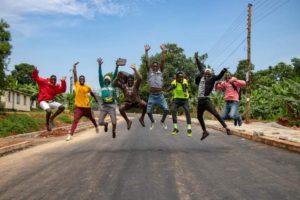
 Mr. Mondo Kyateka, Commissioner of Youth and Children Affairs at the Ministry of Gender, Labour and Social Development (MoGLSD) in Uganda, stated “41% of Ugandan youth are not in employment, education, or any form of training”. This statement, made during a two-day workshop for youth skills development in March 2024, highlights the need for youth empowerment initiatives in Uganda.
The Life Skills Toolkit and Upshift, two UNICEF-supported youth empowerment initiatives in Uganda. Both initiatives implemented programs within local communities in Uganda to empower youth and adolescents with confidence and soft skills. The training offers learning opportunities to school-leavers as the educational content is sensitive toward different experiences with access to education.
Access to Education
UNICEF reports that Uganda has made progress in school attendance. However, it continues to face challenges in developing accessible education for children and adolescents. According to UNICEF, 40% of children aged 3-5 years old access early childhood education compared to 20% in 2011. Eighty percent of 6 to 12-year-olds attend primary school, while 25% of secondary school-aged attend secondary school. Ugandan Empowerment and Career Development (UECD) explains that children can attend primary school for free by four children per family however, families usually have to purchase essential materials i.e. books and uniforms.
Access to education correlates to monetary wealth, as the secondary school attendance of the wealthiest 20% in Uganda is five times higher than that of the poorest 20% of the population, according to UNICEF. UECD suggests that in most cases, the secondary school requires private financing, presenting a great difficulty for families. Additionally, factors that affect access to secondary education include child marriage, pregnancy and abusive environments, UNICEF reports.
The Life Skills Toolkit
In 2022, the government introduced the Life Skills toolkit as one of several youth empowerment initiatives in Uganda targeted at formal and informal educational institutions. The Republic of Uganda Ministry of Education and Sports recommends teaching the program across schools and clubs. The educational content aims to reach adolescents out of school, particularly young women (p.8).
The program is currently active in forty primary and secondary schools across the Kikuube district in West Uganda. Jane Afoyocan, a UNICEF Education Specialist expresses that her office intends to implement the Life Skills toolkit program to its full extent for each adolescent enrolled in education. UNICEF-trained volunteers deliver the program to youth out of school.
Inside the Toolkit
The toolkit’s content targets participants between 10 and 19 years old and is taught in sessions lasting up to an hour. Each session follows a structure of an opening circle, an introduction of the topic, an activity allowing the practice of a skill, time to reflect and a closing circle, according to a 2022 report.
The program works through seven modules teaching resilience-building competencies. One of these competencies is building self-esteem to encourage participants to reflect on their identity, strengths, weaknesses and responsibilities. The program teaches cooperative skills to build and maintain relationships in preparation for an active adult role within the community. It encourages critical thinking through identifying the causes and consequences of conflict, and to detect bias and prejudices, according to a 2022 report.
The competency of communication skills includes active listening, communication of ideas and perspectives, and the function of non-verbal communication. Participants learn strategies for managing emotions and stressful situations. The program also develops an appreciation for diversity in backgrounds and identities. Indeed, it highlighs that within diverse communities, more diverse contributions and solutions can be offered, according to a 2022 report.
The program provides lessons with a strong hope for the future as this positively affects psychosocial well-being. The toolkit helps set goals and develop action plans in personal and community contexts. It fosters creative thinking and expression through arts, innovative problem-solving and imagining new possibilities. Another important competency is leadership skills for which adolescents partake in local transformative projects reflective of their ideas and vision.
Impacts of the Life Skills Toolkit
The toolkit has proven successful in multiple ways. Student’s participation and performance in class has improved. Increased entrepreneurial activities among students have been reported. Early school leavers have been encouraged to re-attend school. Girls’ and boys’ awareness and conversations concerning menstruation has increased and self-confidence is higher among students who participated in a Life Skills Toolkit program, according to UNICEF.
The Upshift Programme
Upshift is another youth empowerment initiative in Uganda supporting entrepreneurial learning and social innovation skills in youth and adolescents. The International Labour Organisation (ILO) reports that Upshift has impacted 2.2 million adolescents across 42 countries through mentorship and workshops. The program teaches its participants a seed-financing model to raise money for their own business startups.
Kyangwali is a refugee settlement in the Kikuube district where 10 groups received mentorship from staff at community-based organizations trained to provide Upshift support. Pupils enrolled in the groups learn to identify challenges and create solutions, UNICEF reports.
Upshift’s Approach
Upshift’s model aims to adapt to local ecosystems and follows several principles. The first principle is experimental learning, linking educational content to real-life situations. The second principle is human-centred design which aims to provide practical tools and approaches that participants can implement across various aspects of life. The social purpose of the program aims to develop the local community, and global citizenship and address Sustainable Development Goals (SDGs). The program nourishes teamwork and cooperation skills and challenges participants take part in larger projects.
Impacts of the Upshift Programme
UNICEF exemplifies how business ideas developed from Upshift training sessions. In an interview, Shukuru Mugenyi, an Upshift participant, shares how Upshift sparked a discussion on the lack of preventative measures against malaria. A business idea to create rosemary-repellent soap to sell in Kyangwali was born. The soap’s mosquito-repellent nature was tested and determined to be effective, enabling entrepreneurs like Mugenyi to scale up their business ventures.
Conclusion
With only 25% of secondary school-aged youth attending education, there is a clear need for youth empowerment initiatives in Uganda to reduce dropout rates, increase access and improve the quality of education. UNICEF Uganda aims to empower young people by creating opportunities for active citizenship, employability and life skills. Mindful development of such programs with the inclusion of insights from local communities is important to respond to specific needs and situations. Initiatives such as the Life Skills toolkit and Upshift help improve the number of youth and adolescents engaging in employment, education or training.
– Tanisha Groeneveld
Tanisha is based in Leeds, UK and focuses on Good News, Global Health for The Borgen Project.
Photo: Wikimedia Commons

The ZAI Method: Reversing Desertification in West Africa
The ZAI Plant Pit system
This system, called the ZAI Plant Pit system, was developed in the ’80s by Burkinabe farmer and agronomist Yacouba Sawadogo. The Zai method was originally used in Mali. However, it was adopted and improved in the northern regions of Burkina Faso. It was used to restore the degraded drylands that were closer to the Sahara Desert. Other countries in Western Africa that also suffer from frequent drought or soil fertility issues have adopted this method to improve their agricultural yields with success.
The system consists of dug holes in the land that are then filled with organic compost during the dry season before planting seeds. The compost attracts termites that burrow into the soil, breaking it up and creating crevices that can hold water. The dimensions of these holes vary according to the type of soil and determine how much water they harvest. The ZAI method is successful in producing crop yields in areas where soils have been so degraded that water can no longer infiltrate deeper into the soil and the topsoil has been washed or blown away.
How It Works
Barren land provides multiple challenges when trying to restore soil fertility. Surface crusts must be broken up to plant seeds, but excessive disturbance can lead to moisture loss. Zai pits break the crust just enough for seeds to germinate without losing additional moisture. During the wet season, when rains are sporadic but intense, water must be used efficiently. Zai pits direct all available water into the soil and toward the plants. The displaced soil forms mounds beside the pits, channeling water down into the surrounding pits.
This method captures surface runoff, concentrates water at the plant roots and improves soil infiltration. Additionally, materials like manure, fertilizers and compost are concentrated at the plant roots, ensuring efficient nutrient absorption. The technique is simple and can be implemented with minimal resources. Zai pits restore organic content and productivity to the soil, making them an effective response to long-term agricultural challenges like climate emergencies. As rainfall becomes more erratic and droughts more frequent and prolonged, methods like the Zai technique are increasingly essential.
By concentrating resources like water for crops and preventing desertification—a process where fertile land turns into desert, often due to drought or deforestation—the Zai method enhances soil productivity and organic content. This technique not only revitalizes the land but also supports the livelihoods of the people who depend on it.
Impact
In the desert lands of West Africa, the Zai method has been highly successful in boosting crop yields. It has shown excellent results in reclaiming abandoned land for agriculture in Burkina Faso and Mali. Due to its success, the Zai method is being adapted for crop cultivation and forest regeneration efforts in Central and East Africa and is gaining global recognition.
Final Note
While the Zai farming system is simple and offers many benefits, its success is geographically limited. Not all areas with low rainfall have the “composting termites” essential for optimal productivity with this method. Although Zai pits can still be used in regions without these termites, water infiltration and crop yields may be lower. Additionally, digging the pits is labor-intensive and can only be done during the dry season, which restricts the timeframe for this work. Proper training is also crucial, as the size and placement of the pits are key to the system’s effectiveness.
– Hodges Day
Photo: Pexels
Child Marriages in Malaysia: Tradition, Law and Reform
Law
Countries like Iraq, Pakistan, Saudi Arabia, Iran and Malaysia all have one thing in common: the Shariah jurisdiction, which is a form of religious law that is based on Islamic scriptures. The Shariah jurisdictions are split into three different systems:
While the jurisdiction of religious laws may appear suitable in some contexts, certain practices may be seen as extreme. For example, in 2019, Brunei’s Sharia jurisdiction introduced a new penal code that mandates death by stoning for offenses such as blasphemy, apostasy, sodomy and insults to Islam.
Correlations
The correlation between child marriages and Sharia courts lies in the fact that Sharia jurisdictions often bypass the legal age requirement for marriage, putting many vulnerable children at risk. One of the most common reasons for child marriages is financial hardship, leading parents to arrange marriages for their children in hopes of securing their future. Unfortunately, this often results in children missing out on their childhood and education and possibly facing abusive relationships.
According to the United Nations Children’s Fund (UNICEF), a total of 1,856 children were married in 2018, 1,372 of whom were female and 170 of whom were male, making 83% of such marriages under the Muslim faith. Unfortunately, according to data from the Shariah Judiciary Department of Malaysia, the approval rate for underage marriage during 2005–2015 was around 82%, with the Law Reform Act 1976 (LRA) unable to detest the Shariah court, allowing the lives of 1,856 children and many more in danger.
Reform
In response, Malaysia’s Ministry of Women, Family and Community Development has launched the National Strategy for Addressing the Causes of Child Marriages, which will run from 2020 to 2025. The plan includes six factors, such as low household income, lack of education and negligent laws. It aims to provide social protection for low-income households, improve access to sexual reproductive health and parenting education, increase school attendance and address stigma around child marriage in communities. The strategy also calls for stricter laws to prevent underage marriages and ensure accurate data on marital status.
This strategic plan has already shown positive results, reducing the number of child marriages in Malaysia from 1,856 in 2018 to 1,042 in 2021, a reduction of approximately 44%. Although there’s still much work to be done, more nongovernmental organizations are collaborating to put an end to child marriage ultimately.
– Rayden Lim Jun Ee
Photo: Flickr
Youth Empowerment Initiatives in Uganda
The Life Skills Toolkit and Upshift, two UNICEF-supported youth empowerment initiatives in Uganda. Both initiatives implemented programs within local communities in Uganda to empower youth and adolescents with confidence and soft skills. The training offers learning opportunities to school-leavers as the educational content is sensitive toward different experiences with access to education.
Access to Education
UNICEF reports that Uganda has made progress in school attendance. However, it continues to face challenges in developing accessible education for children and adolescents. According to UNICEF, 40% of children aged 3-5 years old access early childhood education compared to 20% in 2011. Eighty percent of 6 to 12-year-olds attend primary school, while 25% of secondary school-aged attend secondary school. Ugandan Empowerment and Career Development (UECD) explains that children can attend primary school for free by four children per family however, families usually have to purchase essential materials i.e. books and uniforms.
Access to education correlates to monetary wealth, as the secondary school attendance of the wealthiest 20% in Uganda is five times higher than that of the poorest 20% of the population, according to UNICEF. UECD suggests that in most cases, the secondary school requires private financing, presenting a great difficulty for families. Additionally, factors that affect access to secondary education include child marriage, pregnancy and abusive environments, UNICEF reports.
The Life Skills Toolkit
In 2022, the government introduced the Life Skills toolkit as one of several youth empowerment initiatives in Uganda targeted at formal and informal educational institutions. The Republic of Uganda Ministry of Education and Sports recommends teaching the program across schools and clubs. The educational content aims to reach adolescents out of school, particularly young women (p.8).
The program is currently active in forty primary and secondary schools across the Kikuube district in West Uganda. Jane Afoyocan, a UNICEF Education Specialist expresses that her office intends to implement the Life Skills toolkit program to its full extent for each adolescent enrolled in education. UNICEF-trained volunteers deliver the program to youth out of school.
Inside the Toolkit
The toolkit’s content targets participants between 10 and 19 years old and is taught in sessions lasting up to an hour. Each session follows a structure of an opening circle, an introduction of the topic, an activity allowing the practice of a skill, time to reflect and a closing circle, according to a 2022 report.
The program works through seven modules teaching resilience-building competencies. One of these competencies is building self-esteem to encourage participants to reflect on their identity, strengths, weaknesses and responsibilities. The program teaches cooperative skills to build and maintain relationships in preparation for an active adult role within the community. It encourages critical thinking through identifying the causes and consequences of conflict, and to detect bias and prejudices, according to a 2022 report.
The competency of communication skills includes active listening, communication of ideas and perspectives, and the function of non-verbal communication. Participants learn strategies for managing emotions and stressful situations. The program also develops an appreciation for diversity in backgrounds and identities. Indeed, it highlighs that within diverse communities, more diverse contributions and solutions can be offered, according to a 2022 report.
The program provides lessons with a strong hope for the future as this positively affects psychosocial well-being. The toolkit helps set goals and develop action plans in personal and community contexts. It fosters creative thinking and expression through arts, innovative problem-solving and imagining new possibilities. Another important competency is leadership skills for which adolescents partake in local transformative projects reflective of their ideas and vision.
Impacts of the Life Skills Toolkit
The toolkit has proven successful in multiple ways. Student’s participation and performance in class has improved. Increased entrepreneurial activities among students have been reported. Early school leavers have been encouraged to re-attend school. Girls’ and boys’ awareness and conversations concerning menstruation has increased and self-confidence is higher among students who participated in a Life Skills Toolkit program, according to UNICEF.
The Upshift Programme
Upshift is another youth empowerment initiative in Uganda supporting entrepreneurial learning and social innovation skills in youth and adolescents. The International Labour Organisation (ILO) reports that Upshift has impacted 2.2 million adolescents across 42 countries through mentorship and workshops. The program teaches its participants a seed-financing model to raise money for their own business startups.
Kyangwali is a refugee settlement in the Kikuube district where 10 groups received mentorship from staff at community-based organizations trained to provide Upshift support. Pupils enrolled in the groups learn to identify challenges and create solutions, UNICEF reports.
Upshift’s Approach
Upshift’s model aims to adapt to local ecosystems and follows several principles. The first principle is experimental learning, linking educational content to real-life situations. The second principle is human-centred design which aims to provide practical tools and approaches that participants can implement across various aspects of life. The social purpose of the program aims to develop the local community, and global citizenship and address Sustainable Development Goals (SDGs). The program nourishes teamwork and cooperation skills and challenges participants take part in larger projects.
Impacts of the Upshift Programme
UNICEF exemplifies how business ideas developed from Upshift training sessions. In an interview, Shukuru Mugenyi, an Upshift participant, shares how Upshift sparked a discussion on the lack of preventative measures against malaria. A business idea to create rosemary-repellent soap to sell in Kyangwali was born. The soap’s mosquito-repellent nature was tested and determined to be effective, enabling entrepreneurs like Mugenyi to scale up their business ventures.
Conclusion
With only 25% of secondary school-aged youth attending education, there is a clear need for youth empowerment initiatives in Uganda to reduce dropout rates, increase access and improve the quality of education. UNICEF Uganda aims to empower young people by creating opportunities for active citizenship, employability and life skills. Mindful development of such programs with the inclusion of insights from local communities is important to respond to specific needs and situations. Initiatives such as the Life Skills toolkit and Upshift help improve the number of youth and adolescents engaging in employment, education or training.
– Tanisha Groeneveld
Photo: Wikimedia Commons
UN Women Empowering Women in the Caribbean
The United Nations (U.N.) Women is an organization dedicated to collaborating with Caribbean communities on initiatives aimed at addressing poverty and promoting female empowerment. Additionally, it focuses on promoting gender equality, economic empowerment, leadership and ending violence.
Causes of Gender Poverty in the Caribbean
Numerous factors contribute to the poverty faced by women and girls in the Caribbean. One key factor is education. While girls often outperform boys in school, many women struggle to transition to higher education or the workforce. This is due to unequal family responsibilities, early pregnancies and societal expectations. According to the World Bank, “one in three young women are not engaged in education, employment or training and are constrained due to their unequal role in family responsibilities, early pregnancy and gender norms that relegate them to the domestic sphere.”
The second factor is social norms and gender roles. In the Caribbean, traditional gender roles often confine women to the domestic sphere. This limits their opportunities for economic advancement and reinforces the cycle of poverty. Additionally, a significant contributor to women’s poverty is the prevalence of female-headed households. In many families, women are seen as the primary providers, which increases dependency and places significant financial strain on these households.
About UN Women’s Work in the Caribbean
The U.N. Women is actively engaged in several key areas to promote gender equality and empower women in the Caribbean. The purpose of the organization in the region and also globally is to advance gender equality and women’s empowerment. Some of the key areas it focuses on include:
Successful Programs in the Caribbean
The U.N. Women has implemented highly successful programs that have been instrumental in empowering women in the Caribbean. Some of these include:
Final Remarks
With the ongoing support of U.N. Women, there is hope that women and girls in the Caribbean will one day achieve lasting success and break free from the cycle of poverty. Indeed, by providing resources, education and opportunities, these efforts are paving the way for a brighter, more equitable future for the region’s women and girls.
– Destiny Cobos
Photo: Flickr
Energy Poverty in Portugal
Increasing Energy Performance and Access
A 74-year-old who lives with his wife in Portugal in a social housing apartment said “I cannot keep it [the fan] on for long because it also uses a lot [of electricity]…” DGE aims to apply renovation, and replacement, with new or efficient equipment and sustainable technologies and materials to increase energy performance. As a result, it could help homes stay warm, not compromising the well-being and health of households. This prioritization of efficiency could provide lower energy costs, allowing households to focus on careers and education.
Those living in energy poverty in Portugal will have access to essential energy services, and new forms of energy production. For example, renewable energy communities allow for energy sharing. This would ease the financial strain on households suffering from energy poverty in Portugal as the entire community assists with the payment of energy bills, according to DGE. Independent households living in energy poverty can no longer have to sacrifice time and resources to meet high energy costs through collective energy communities, therefore improving their quality of life and financial stability.
Raising Awareness and Reducing Consumption
By promoting educational campaigns and providing tools for energy efficiency measures, awareness could lead to monitoring of energy consumption and improved energy practices. An example of this was EDP’s “Your Energy: Show Your Power!” initiative that took place in Lisbon for students. It raised awareness of living conditions in homes that suffered energy poverty in the country and energy sustainability through interactive lessons and activities.
Reducing the burden of energy consumption focuses on price support mechanisms and guiding principles. It would lead to a bigger increase in household disposable income as the price of energy will remain affordable, regardless of the consumer’s geographical, economic or social situation, according to DGE. This supports a higher quality of life as households living in energy poverty in Portugal no longer have to sacrifice time and resources to meet high energy costs.
Energy Poverty in Portugal: The Future
The Portuguese National Long-Term Energy Poverty Mitigation Strategy discusses four strong strategies to combat energy poverty in Portugal. By increasing household energy efficiency, this initiative aims to reduce energy poverty in Portugal by replacing old technology with newer, efficient equipment. Universal access to energy services makes energy much more accessible to people who live in rural areas or in socio-economic situations that suffer from energy poverty. Raising awareness of energy poverty in the country is also a significant aspect of fighting energy poverty as it educates people on better energy practices and energy consumption monitoring. And lastly, affordable prices support a higher quality of life and financial stability for households who suffer from energy poverty in Portugal because of expensive costs.
– Chelsey Saya McLeod
Photo: Unsplash
The ABCs for Poverty Reduction in Ghana
Agriculture
Agriculture remains one of Ghana’s oldest and most vital professions, employing 33% of the population and encompassing crops, livestock and fisheries. The sector accounts for an impressive 54% of the country’s total gross domestic product (GDP). Currently, only 5% of agricultural jobs are held by youth. Hence, the government is implementing targeted policies and providing sustainable funding to boost youth participation.
The 8th annual Agricultural Innovation for Africa (AIA) Conference was held in Accra in August 2024. It aims to produce a policy paper on attracting and supporting youth in the agriculture sector. The conference focused on the future of agricultural innovation, youth employment and food security in Africa — all crucial factors in reducing poverty in Ghana.
Count on Crops Hub Limited is an African-led, youth-based organization dedicated to improving agricultural production and driving inclusive agrarian transformation in Ghana. In addition, it runs the Agric4Girls initiative, which addresses the urgent need for economic opportunities and contributions that women and girls can make to the agricultural sector.
Business
Post COVID-19, the Ghana government has created the COVID-19 Alleviation and Revitalisation of Enterprises Support (CARES) specifically to engage youth. CARES aims to:
The Enterprise and Youth Support Fund (EYSF) was started in conjunction with Ghana CARES in 2021. It offers an online investment platform and “youth bank” that will specifically target start-ups for young Ghanaians. They are encouraged to use innovation and fresh perspectives to create a sustainable economy that reinvests in its people.
One business that has flourished under these government initiatives is Gold Coast Tokota, a footwear brand founded by Kwaku Kumi. The Ghana-based company prides itself on using eco-friendly materials that minimize environmental impact. Supporting this brand promotes traditional craftsmanship, strengthens the local economy and advances sustainable fashion — all contributing to poverty reduction in Ghana.
Communicate Knowledge
Ghanaian President Akufo-Addo is urging all citizens who study abroad to return and share what they have learned with their communities. Access to correct information is integral in ending the cycle of poverty. Students and recent graduates can bring new knowledge and ideas back to the country. This knowledge can teach people across many sectors how to grow in their endeavors.
The Oxford and Cambridge Society of Ghana is a significant society for the Ghanaian people. Alums from the two universities work toward spreading and explaining how this knowledge contributes to the transformation of Ghana.
Summary
Ghana is modernizing its agricultural sector by applying the skills of young Ghanaians to create food security. Furthermore, the agriculture sector is providing employment opportunities in one of the country’s oldest professions. Supporting young entrepreneurs is another key focus. Investing in the youth today will help grow businesses that strengthen the economy and create jobs for the community. Additionally, making critical information accessible to all Ghanaians fosters growth across various sectors, ensuring that education and knowledge-sharing drive innovation and progress.
– Alysha Miller
Photo: Flickr
USAID Programs in Botswana Alleviating HIV
However, the country still relies on the help of the United States Agency for International Development’s (USAID) programs. Despite Botswana’s economic prosperity, the health of the nation’s people is largely vulnerable due to the prevalence of HIV. The epidemic has become a burden on the economy, as well as Botswana social services. Almost 21% of adults in Botswana have HIV, which is one of the highest HIV infection rates in the world. Improvements to the health care sector have been implemented, such as increased access to clean water. Yet, the nation’s health remains unstable due to the HIV epidemic.
USAID’s Work in Botswana
USAID is a key implementer of the U.S. President’s Emergency Plan for AIDS Relief (PEPFAR), which combats the HIV epidemic. PEPFAR works to address HIV in more than 50 countries globally. “We have the opportunity to see an AIDS-free generation by 2030,” said Congresswoman Barbara Lee, a PEPFAR advocate. PEPFAR’s goal is to eradicate AIDS and, by extension, HIV in the near future and it is working with USAID to achieve this.
In the past two decades, PEPFAR has received about $120 billion in funding, enabling USAID to fight the HIV epidemic and improve global health, with a significant focus on Botswana. Since 2003, PEPFAR has invested $750 million to combat HIV in Botswana. This funding supports USAID programs, enhancing its effectiveness in the Southern African nation.
Reducing Stigma
HIV has been heavily stigmatized in parts of Botswana and USAID is working to reduce negative perceptions of people with the infection. USAID is engaging with traditional, faith and community leaders to help eradicate the epidemic by addressing the social stigma surrounding HIV.
Support and Counseling
Individuals with HIV aren’t the only ones affected by the virus. In 2022, an estimated 54,000 children in Botswana were orphaned due to HIV/AIDS. USAID supports orphans and other vulnerable groups, including women and children, whom HIV has impacted.
Furthermore, USAID provides counseling services to people living with HIV in Botswana. Infected individuals are supplied with support and guidance, encouraging them to get medical treatment. Counselors can track individuals’ progress as they start or maintain their medical schedules, helping to prevent the transmission of the virus.
Final Thoughts
USAID has been helping Botswana since the ’80s, working to alleviate HIV by improving health services, prevention efforts, public opinion and support for those affected by the disease. The $750 million PEPFAR has provided to Botswana since 2003 has allowed USAID programs to help reduce AIDS-related deaths among adults and children by about 14,100. Additionally, USAID programs have contributed to lowering the estimated number of children living with HIV by 16,900 in the past 20 years. USAID programs continue to combat the HIV epidemic, both in Botswana and globally, working toward eradicating the disease.
– Megan Hall
Photo: Flickr
Women’s Rights in Cabo Verde
Women’s Rights in Cabo Verde
Cabo Verde has made notable developments regarding women’s rights, with the government recognizing gender equality as a critical issue that must be addressed. In 2011 a law protecting women and girls against gender based violence was introduced as well as a legal framework. Since then, continued work has been put in place to uphold the rights of women in the court of law. Despite these efforts, the deep rooted nature of misogyny presents itself as a barrier to achieving gender equality in Cabo Verde.
Gender Equality and Cabo Verde’s Tourism Sector
Cabo Verde depends on its tourism sector for approximately 25% of its GDP, driving the country rapidly forward in terms of its economic state and quality of life for citizens. As a result of Cabo Verde’s flourishing tourist engagement, there is an abundance of job opportunities available. However, the sector faces limitations regarding female participation. This poses a threat to tourism reaching its full potential as well as a threat to female empowerment and women’s rights in Cabo Verde.
Women in Cabo Verde struggle to exercise their rights due to the systemic, deep-rooted nature of misogyny. This ensures that women are presented with less accessible educational opportunities, lower-paying and unstable jobs, expectations to uphold traditional values within the household and the threat of gender-based violence. As a result of these challenges, poverty disproportionately affects the women of Cabo Verde, representing, “53% of the poor population as well as 54% of the population in extreme poverty.” This hinders their ability to effectively participate in the tourism sector and hinders their personal economic potential.
Gender Mainstreaming
Recognizing the gender inequality within the tourism sector, U.N. Women and ICIEG came together to develop an action plan to address this through gender mainstreaming, making Cabo Verde one of the earliest tourist countries to do so. Gender mainstreaming involves creating policies that consider the interests and concerns of both men and women, with this action plan focusing on institutional strengthening, training and capacity building and women’s quality and empowerment. However, upon enacting the action plan, it faced complexities. Gender norms and societal expectations of women affect their career choices, often opting for gender-stereotyped, less entrepreneurial positions. The U.N. Women’s office additionally closed down in Cabo Verde which put the action plan on hold from 2017.
In order to combat these challenges, in 2021 ITCV and ICIEG combined efforts to resume the action plan, also moving forward with new recommendations from the World Bank Group Gender strategy to guarantee that it is as gender responsive as possible, ensuring women ‘better, safe, and more jobs.’ Cabo Verde’s persistence through setbacks highlights their genuine commitment to protecting and improving women’s rights, paving the way for a positive future.
– Imogen Prince
Photo: Flickr
Migration to Bosnia and Herzegovina
Western Balkan Migration Route
Bosnia and Herzegovina falls within the Western Balkan route, popular among migrants who look to enter EU countries. From January to September 2023, the International Organization for Migration (IOM) recorded 128,871 migrant, refugee and asylum seeker arrivals through the corridor. The large number and potential for an unexpected increase of migrants strain Bosnia and Herzegovina’s resources.
However, the IOM, UNHCR and EU provide financial support for the country to ease the pressure of this corridor on countries like Bosnia and Herzegovina and to protect migrants. The “Individual Measure to Strengthen the Response Capacity to Manage Migration Flows in Bosnia and Herzegovina” project aims to transfer the migration response to Bosnian authorities.
This project continues to receive considerable funding. In August 2024, The IOM confirmed 100% of the financing for protection management for the arrival of migrants into Bosnia and Herzegovina.
Accommodation for Migrants
The increased number of migrants in 2018 strained infrastructure in Bosnia and Herzegovina. Collaboration between the country’s Ministry of Security (MoS) and the IOM facilitated the creation of seven temporary reception centers (TRCs) to house more than 8,000 migrants.
In 2018, the IOM revealed that the national infrastructure was not adequate to house the sudden influx of migrants in Bosnia and Herzegovina. The closure of TRC Lipa and Bira in 2020 reduced overall accommodation capacity from 8,282 to 3,540 beds.
Despite the challenges of accommodating migrants, international cooperation has helped resolve these problems. In 2021, a newly built TRC Lipa increased its accommodation capacity to 1,500 migrants compared to its prior 1,400 migrant capacity. Johann Sattler, Head of the EU Delegation, commented on the opening of TRC Lipa: “This is a good reminder for all of us that those crises can be solved, and the only way to resolve crises is through dialogue and a willingness to compromise.”
War and Poverty
In July 2024, the UNHCR reported that the top three countries of origin of migrants in Bosnia and Herzegovina were the Syrian Arab Republic (35%), Afghanistan (29%) and Morocco (8%). The high number of Syrians and Afghans in Bosnia and Herzegovina correlates to the high levels of poverty in these countries due to war. In 2022, poverty affected 69% of Syrians and 90% of Afghans.
Mental Health
Migrants often face traumatic journeys that have psychological impacts. Adil, a Moroccan migrant who resides in TRC Lipa expressed how migration impacted his mental wellbeing to the IOM: “This journey is hard and dangerous. I have seen and experienced things that I do not want to remember.”
There are ongoing efforts by the IOM and Bosnian authorities to provide mental health support for migrants. The IOM continues to provide mental health screening for migrants inside and outside TRCs and aims to increase mental health support access for migrants in Bosnia and Herzegovina.
Between April 2024 and July 2024, the UNHCR assisted 585 migrants with psychosocial support.
Cultural Programs for Migrants
Alongside the efforts of international organizations and the Bosnian government to integrate migrants into the workplace and provide psychological aid for migrants, cultural programs also help improve their well-being.
In 2024, IOM ran creative programs in multiple TRCs. TRC Blažuj held a canvas painting workshop which allowed migrants to express their creativity. TRC Lipa has a creative zone where handcrafting workshops were held for migrants and refugees from Afghanistan, Gambia, Iran and Syria.
Cultural programs extend beyond reception centers in Bosnia and Herzegovina into mainstream society. Migrants from reception centers contributed to a fashion collection for The No Nation Fashion brand showcased at the 30th Sarajevo Film Festival.
Cooperation for Solutions
The impact of global poverty meant the influx of migrants to Bosnia and Herzegovina from 2018 onwards presented challenges to the country’s infrastructure and the safety of migrants. However, cooperation between the former Yugoslav country, international governments and organizations shows the capacity to overcome the potential challenges of migration to improve the quality of life of migrants.
– Sofia Brooke
Photo: Flickr
Moeloco: Ethical Fashion Fighting Poverty
Impoverished communities suffer disproportionately from the environmental damage caused by unsustainable manufacturing practices. They are the least equipped to manage the fallout from pollution, water scarcity and the changing climate. Despite these challenges, the fashion industry is increasingly striving to mitigate its impact and promote ethical fashion to fight poverty. Initiatives like the United Nations (U.N.) Alliance for Sustainable Fashion and social enterprise Moeloco, lead sustainability programs worldwide.
Moeloco
Moeloco, founded by Kathy Wong, is an ethical footwear brand. They produce flip-flops with inspirational messages engraved on the soles, such as ‘Love’ and ‘Be Happy.’ While these messages help spread positivity, the impact of each purchase is even more far-reaching. For every pair of flip-flops sold, the organization donates a pair of locally crafted, closed-toe canvas shoes to impoverished children in India. In many regions across India, many children remain shoeless – this puts them at significant risk of contracting diseases from the ground below them, which may lead to amputation or death and prevent them from going to school due to health regulations enforced at schools. Without education, these children are more likely to remain trapped in the cycle of poverty.
Moeloco alleviates poverty by donating 400 shoes to impoverished children in India, collaborating with the Hope Foundation. This partnership supports local manufacturers who make the shoes, thereby creating local jobs and distributing the footwear. It aims to provide these children access to education and raise awareness about the impact of consumer spending. This initiative represents ethical fashion by directly linking purchases with tangible benefits for impoverished children, demonstrating how consumer choices can significantly alter lives.
Ethnotek
Another impactful brand tackling poverty in the fashion industry is Ethnotek. Founded by Jake Orak, Ethnotek collaborates with artisan communities in Guatemala, Ghana, Vietnam, Indonesia and India to produce beautifully crafted bags that preserve cultural heritage. These artisans use traditional techniques to create colorful, handcrafted textiles which are incorporated into their products. Ethnotek is unique in that it is dedicated to sustainability and fair trade. Rather than providing direct aid, the company guarantees that artisans receive fair wages and work in safe conditions by forming direct partnerships with them.
Since many of these craftspeople reside in rural areas with few job opportunities, selling their handmade goods on international marketplaces enables them to become financially independent. Since Ethnotek’s conception in 2007, the business has now partnered with more than 500 artisans across five countries to generate more than $10 million in revenue in 2024. This economic empowerment aligns with core principles of ethical fashion in fighting poverty as it uplifts impoverished communities through fair wages and employment opportunities.
Fashion Impact Fund
The Fashion Impact Fund, an innovative program, leverages the fashion industry’s broad influence to foster social change. This nonprofit organization offers grants, training and employment opportunities to female-led projects emphasizing environmental sustainability, poverty alleviation and education. It supports female designers, artists and entrepreneurs to cultivate a more diverse and socially conscious fashion industry. The fund’s core objective is to equip women from underprivileged backgrounds with the resources and opportunities they need to succeed in the fashion sector.
Through mentorship, skill development and financial support, this nonprofit helps women establish sustainable careers, lifting them and their families out of poverty. The organization also provides funding for initiatives tackling climate change and environmental degradation – issues disproportionately impacting underprivileged areas. The work of the Fashion Impact Fund contributes to the broader movement of ethical fashion fighting poverty, with a focus on addressing discrimination and lessening the gender-based wealth gap via economic inclusion.
Looking Ahead
These initiatives demonstrate the fashion industry’s potential to drive significant social change. By promoting fair wages, education and economic empowerment, these organizations prove that fashion can potentially serve as a powerful tool for long-term poverty reduction. As consumers increasingly recognize the influence of their purchases, the potential for ethical fashion to fight poverty could grow.
– Viola Cuthbertson
Photo: Flickr